91~135 item / All 685 items
Displayed results
Filter by category

Added to bookmarks
Bookmarks listBookmark has been removed
Bookmarks listYou can't add any more bookmarks
By registering as a member, you can increase the number of bookmarks you can save and organize them with labels.
Free membership registration
Contact this company
Contact Us Online91~135 item / All 685 items
Filter by category

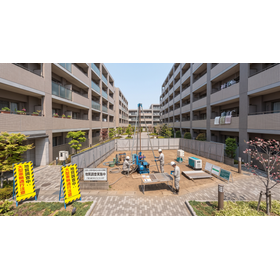
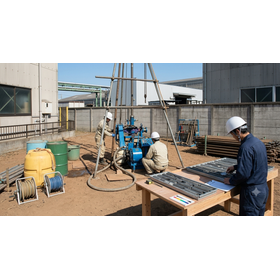
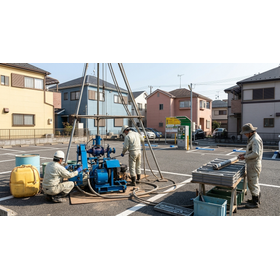
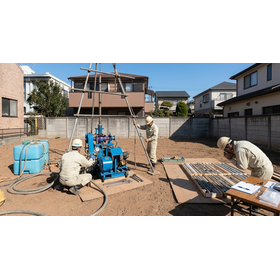
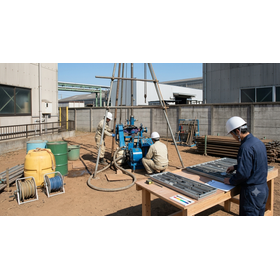
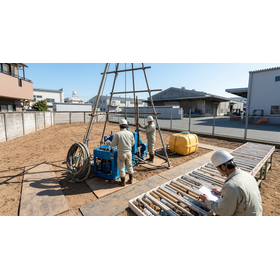
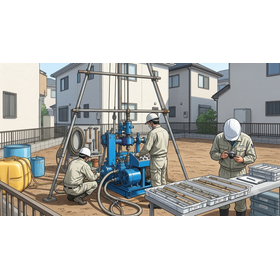
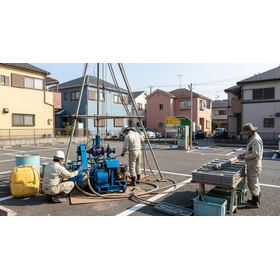
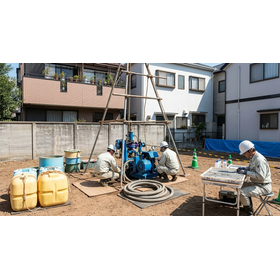
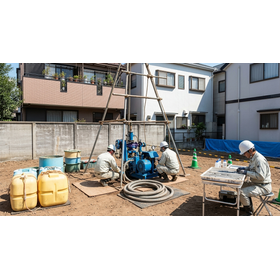
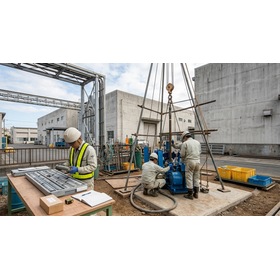
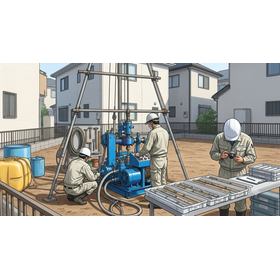
In the factory and production industry, the expansion of factories often involves construction on existing sites or in consideration of the surrounding environment, leading to an increase in building on narrow plots where the transport of large heavy machinery is difficult. In such locations, accurately understanding the depth of the supporting layer is essential for achieving safe and rational structural design. Inadequate ground surveys can lead to excessive pile length designs, increased costs, or risks such as ground subsidence. This service uses a compact self-propelled automatic ram sounding testing machine, providing an optimal solution for smoothly conducting deep ground surveys even in narrow sites or areas with access restrictions. 【Usage Scenarios】 - Expansions in urban areas or within existing factory sites - Sites with narrow front roads or limited access routes - Situations requiring ground surveys within a short timeframe 【Benefits of Implementation】 - Cost reduction by preventing excessive pile length designs - Realization of rational structural design - Assurance and reliability of ground quality
Added to bookmarks
Bookmarks listBookmark has been removed
Bookmarks listYou can't add any more bookmarks
By registering as a member, you can increase the number of bookmarks you can save and organize them with labels.
Free membership registration
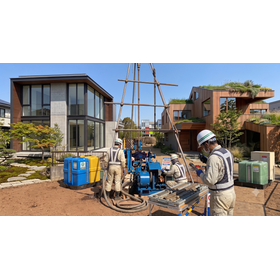
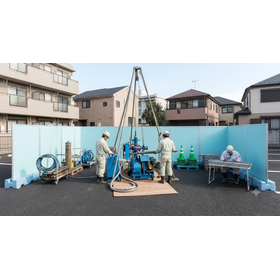
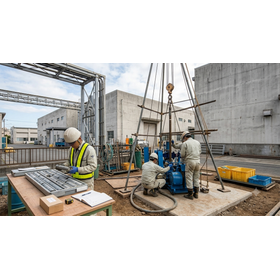
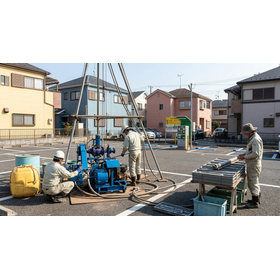
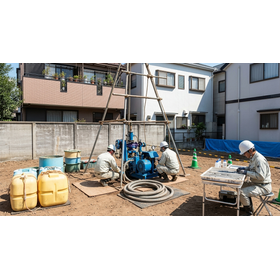
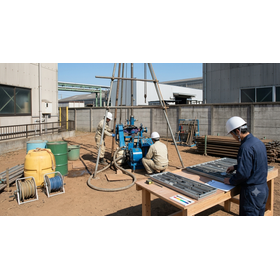
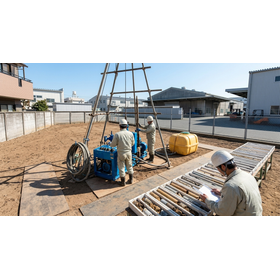
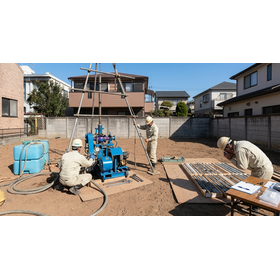
In the construction of small-scale warehouses, it can be difficult to conduct ground surveys using large machinery due to limited site space and restrictions on access roads. In such situations, accurately determining the depth of the supporting layer can be challenging, potentially leading to project delays and unexpected cost increases. This service provides an optimal solution for smoothly conducting deep ground surveys even in narrow sites or locations with access restrictions, by using a compact self-propelled automatic ram sounding testing machine. 【Usage Scenarios】 - Construction sites for small warehouses in urban areas - Sites with narrow access roads - Locations where the transportation of large machinery is difficult 【Benefits of Implementation】 - Prevention of excessive pile length design - Reduction of unnecessary pile reinforcement costs - Realization of rational structural design - Assurance of reliable ground quality
Added to bookmarks
Bookmarks listBookmark has been removed
Bookmarks listYou can't add any more bookmarks
By registering as a member, you can increase the number of bookmarks you can save and organize them with labels.
Free membership registration
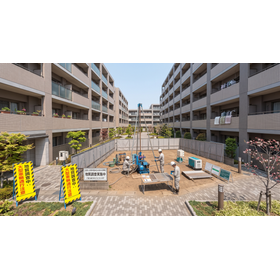
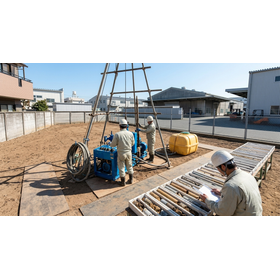
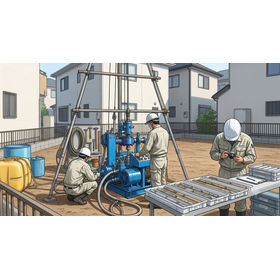
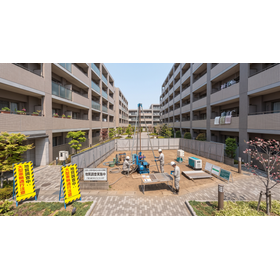
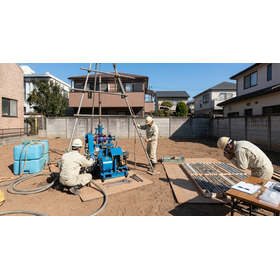
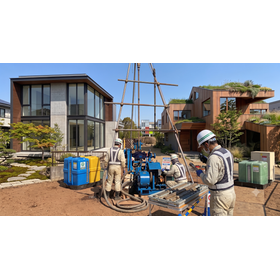
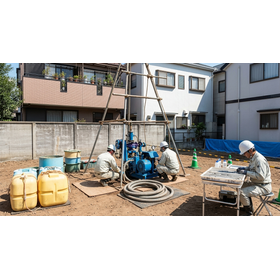
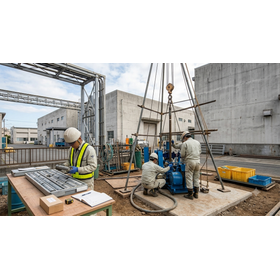
In the establishment of cultural facilities, particularly galleries, it is important to accurately understand the supporting layers of the ground for the stability of the building and long-term maintenance. In cases where the site is narrow or the front road is small, traditional ground surveys using large machinery become difficult, making it challenging to accurately grasp the depth of the supporting layers and the condition of the ground. This service uses a small self-propelled automatic ram sounding testing machine to smoothly conduct deep ground surveys even in such locations. This helps avoid excessive pile length design and contributes to rational structural design and cost reduction. 【Usage Scenarios】 - Construction of galleries on narrow urban sites - Sites where large machinery cannot be brought in due to narrow front roads - Situations requiring ground surveys in limited spaces 【Benefits of Implementation】 - High-precision understanding of supporting layers even on small sites - Cost reduction by preventing excessive pile length design - Assurance of high-quality ground reliability and trustworthiness
Added to bookmarks
Bookmarks listBookmark has been removed
Bookmarks listYou can't add any more bookmarks
By registering as a member, you can increase the number of bookmarks you can save and organize them with labels.
Free membership registration
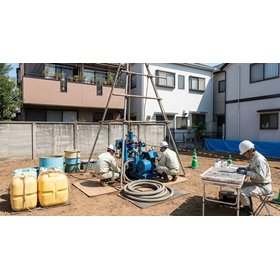
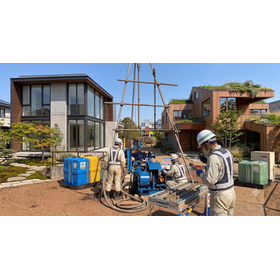
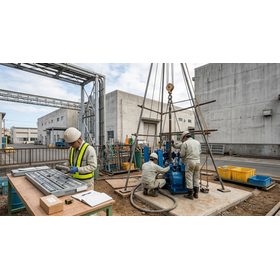
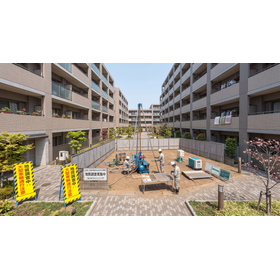
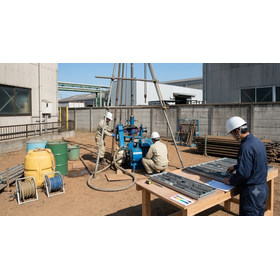
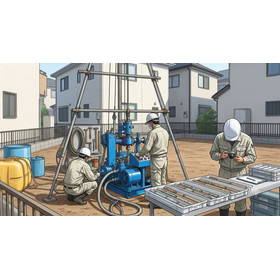
In medical and welfare facilities, expansion plans require minimizing the impact on existing facilities while ensuring safe and reliable ground support. This is particularly challenging in urban areas or sites with limited space, where ground surveys on narrow sites that cannot accommodate large machinery become significant issues. In situations where standard penetration tests are difficult, accurately identifying the support layer can be challenging, potentially leading to design delays or excessive ground improvement. Our automatic ram sounding test uses a compact self-propelled testing machine, providing a solution for smoothly conducting deep ground surveys even in narrow sites or locations with access restrictions. This reduces ground risks in expansion plans and enables safe and rational construction. [Usage Scenarios] - Expansion construction in urban medical and welfare facilities - Sites with narrow access roads where large machinery cannot be brought in - Construction projects that aim to minimize impact on existing facilities - Situations requiring ground surveys in limited spaces [Benefits of Implementation] - High-precision understanding of ground support even in narrow sites - Reduction of excessive pile length design and ground improvement costs - Smooth progress of expansion plans and shortened construction periods - Assurance of a safe and reliable construction foundation
Added to bookmarks
Bookmarks listBookmark has been removed
Bookmarks listYou can't add any more bookmarks
By registering as a member, you can increase the number of bookmarks you can save and organize them with labels.
Free membership registration
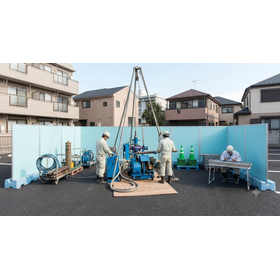
In residential construction, particularly for small detached houses, there is a challenge due to limited site space, which makes it difficult to bring in large machinery and accurately determine the depth of the supporting layer. This is also the case when the front road is narrow. This service uses a small self-propelled automatic ram sounding test machine, providing an optimal solution to this challenge by smoothly conducting deep ground investigations even in narrow sites or locations with access restrictions. 【Usage Scenarios】 - Construction of single-family homes on small urban lots - Sites where the front road is narrow and large machinery cannot be brought in - When accurate understanding of deep supporting layers is required 【Benefits of Implementation】 - Prevention of excessive pile length design - Reduction of unnecessary pile reinforcement costs - Realization of rational structural design - Provision of reliable and trustworthy ground quality
Added to bookmarks
Bookmarks listBookmark has been removed
Bookmarks listYou can't add any more bookmarks
By registering as a member, you can increase the number of bookmarks you can save and organize them with labels.
Free membership registration
In the expansion of commercial facility stores, a safe and reliable construction plan is required even when there are constraints such as limited land and narrow front roads. Particularly in the construction of steel frame buildings on small sites where large machinery cannot be brought in, accurately understanding the depth of the supporting layer becomes a challenge. This service utilizes a compact self-propelled automatic ram sounding testing machine, providing an optimal solution for smoothly conducting deep ground investigations even in such environments. This helps prevent excessive pile length design, reduces unnecessary pile reinforcement costs, and achieves a rational structural design, delivering ground quality that ensures safety and trust. 【Usage Scenarios】 - Store expansion in small urban lots - New store construction in areas with narrow front roads - Expansion work adjacent to existing buildings 【Benefits of Implementation】 - Ground investigation possible in limited spaces - Reduction of unnecessary pile reinforcement costs - Achievement of rational structural design - Assurance of safe and reliable ground quality
Added to bookmarks
Bookmarks listBookmark has been removed
Bookmarks listYou can't add any more bookmarks
By registering as a member, you can increase the number of bookmarks you can save and organize them with labels.
Free membership registration
In urban development, conducting surveys in densely populated areas poses challenges in accurately determining the depth of the supporting layer for steel frame building construction on narrow sites where large machinery cannot access or where the front road is narrow. When it is difficult to bring in large boring machines for standard penetration tests, it becomes challenging to accurately assess the ground conditions. This service utilizes a small self-propelled automatic ram sounding testing machine, providing an optimal solution for smoothly conducting deep ground surveys even in narrow sites or locations with access restrictions. 【Usage Scenarios】 - Construction of steel frame buildings on narrow urban sites - Ground surveys at sites with narrow front roads - Surveys in locations where the transport of large machinery is difficult 【Benefits of Implementation】 - Prevention of excessive pile length design - Reduction of unnecessary pile reinforcement costs - Achieving rational structural design - Providing reliable and trustworthy ground quality
Added to bookmarks
Bookmarks listBookmark has been removed
Bookmarks listYou can't add any more bookmarks
By registering as a member, you can increase the number of bookmarks you can save and organize them with labels.
Free membership registration
In a development project for single-story logistics warehouses where early tenant occupancy and early business commencement are strongly desired, the prolonged construction period due to ground reinforcement work results in significant opportunity losses in terms of business profitability. Excessive safety-side judgments relying solely on general simple sounding surveys lead to unnecessary deep pile driving work and large-scale ground improvement methods, which are major factors causing significant delays in the construction schedule. The plate load test solution provided by Geotech is an advanced technical service that directly applies load to the shallow ground at the actual construction site, quickly and accurately measuring the ultimate bearing capacity and deformation coefficient that the ground inherently retains. By calculating the long-term allowable bearing capacity based on highly reliable objective data, we can immediately determine the feasibility of eliminating pile driving work and opting for "direct foundations (such as mat foundations and strip foundations)." Reducing pile work not only cuts construction costs but also dramatically compresses the construction period and enables speedy approval of building applications, strongly supporting the early start of single-story logistics warehouses and the timely operation of the business as planned.
Added to bookmarks
Bookmarks listBookmark has been removed
Bookmarks listYou can't add any more bookmarks
By registering as a member, you can increase the number of bookmarks you can save and organize them with labels.
Free membership registration
From the perspective of ESG investment and promoting SDGs, the new construction project of single-story logistics warehouses is strongly demanding the reduction of environmental impact during construction and material manufacturing, as well as decarbonization. Excessive design based solely on conventional simple surveys, which is overly cautious, has led to unnecessary installation of steel pipe piles and large-scale cement column improvements, resulting in excessive material consumption and CO2 emissions due to a large number of dump truck trips. The plate load test solution provided by Geotech conducts direct loading on shallow ground at the actual construction site, accurately measuring ultimate bearing capacity and deformation coefficients. By obtaining reliable evidence of ground bearing capacity without relying on assumptions, it scientifically supports the adoption of "direct foundations (slab foundations and strip foundations)" while minimizing or eliminating the use of piles and solidifying materials. The reduction of materials and excavation volume, along with a significant decrease in construction vehicles, strongly promotes sustainable logistics warehouse construction by drastically cutting excessive reinforcement costs and environmental impact simultaneously.
Added to bookmarks
Bookmarks listBookmark has been removed
Bookmarks listYou can't add any more bookmarks
By registering as a member, you can increase the number of bookmarks you can save and organize them with labels.
Free membership registration
In the construction plan for a single-story logistics warehouse occupying a vast area, accurately capturing the variability of ground strength (ground inconsistency) within the site is key to cost management. If deep pile construction or comprehensive ground improvement is uniformly applied across the entire site based solely on the weaknesses of specific measurement points, the foundation construction costs will balloon excessively. The plate load test solution proposed by Geotech directly applies loads at multiple points within the large area site and accurately measures the ultimate bearing capacity and deformation coefficients at the foundation bearing surface. By quantitatively evaluating the allowable bearing capacity for each area, it allows for the adoption of "direct foundations (such as mat foundations and strip foundations)" in areas with sufficient strength, while focusing reinforcement only on weak localized sections through "pinpoint foundation design." Furthermore, it scientifically demonstrates the effectiveness of differential settlement prevention through deformation angle analysis, minimizing excessive reinforcement costs while thoroughly maintaining the structural safety of the expansive single-story logistics warehouse.
Added to bookmarks
Bookmarks listBookmark has been removed
Bookmarks listYou can't add any more bookmarks
By registering as a member, you can increase the number of bookmarks you can save and organize them with labels.
Free membership registration
In the new construction plan for a single-story logistics warehouse, it is often observed that unnecessary piling work and large-scale deep ground improvement methods are specified due to overly cautious judgments from simple ground surveys. The plate loading test service provided by Geotech serves as an effective second opinion investigation to eliminate excessive reinforcement in the initial design and dramatically optimize overall construction costs. In this test, loading plates are directly placed on the foundation bottom level ground at the actual construction site to apply loads, accurately measuring the original ultimate bearing capacity and deformation coefficient in the shallow layer. Based on the reliable long-term allowable bearing capacity data calculated, it scientifically supports design changes to direct foundation methods such as "slab foundations" or "strip foundations," eliminating the need for deep piling work entirely. Furthermore, by visualizing settlement behavior through multi-stage loading, it is possible to present clear technical grounds in the documents submitted to building confirmation review agencies and structural calculation reports. Utilizing experienced qualified staff and our in-house ground database GEODAS to the fullest, we thoroughly cut excessive construction costs while completely ensuring structural safety.
Added to bookmarks
Bookmarks listBookmark has been removed
Bookmarks listYou can't add any more bookmarks
By registering as a member, you can increase the number of bookmarks you can save and organize them with labels.
Free membership registration
In the new construction project of a single-story logistics warehouse, technical inquiries during the building confirmation application and structural conformity assessment (suitability judgment), as well as inquiries regarding soil bearing capacity, can lead to delays in design modifications and the issuance of confirmation certificates. There is an increasing number of cases where examination authorities strictly demand objective evidence of ground strength, relying on estimated values from general sounding surveys. Geotech's plate load testing solution directly loads the shallow ground at the actual construction site to accurately measure ultimate bearing capacity and deformation coefficients, providing scientific and reliable evidence of allowable bearing capacity. By reflecting the obtained accurate soil bearing capacity data in the structural calculation documents, it becomes possible to minimize inquiries from examination authorities and expedite the confirmation application process. Furthermore, it can also be utilized as a technical basis for changing the excessively estimated pile foundation plan to "direct foundations (slab foundations, strip foundations, etc.)," strongly assisting in cost optimization with complete safety assurance and rapid commencement of construction.
Added to bookmarks
Bookmarks listBookmark has been removed
Bookmarks listYou can't add any more bookmarks
By registering as a member, you can increase the number of bookmarks you can save and organize them with labels.
Free membership registration
In the construction project of a single-story logistics warehouse, the large amounts of excavation spoil disposal costs and industrial waste treatment costs arising from pile driving work and large-scale ground improvement work significantly pressure the overall profitability of the project. Data from general simple penetration tests often lead to unnecessary deep reinforcement work being selected due to excessive evaluations on the safe side, resulting in the continuous generation of unnecessary spoil. The plate load test service provided by Geotech is a technical method that directly places a loading plate on the ground at the foundation bottom level to accurately measure the actual ultimate bearing capacity and deformation coefficient. By identifying the objective long-term allowable bearing capacity based on actual measurements, it becomes possible to design foundations using "direct foundations" without pile driving or with minimal surface treatment. By thoroughly eliminating unnecessary excavation work, we can minimize spoil disposal costs and transportation costs, contributing to the reduction of CO2 emissions from construction vehicles. Through advanced analysis and a strict ISO management system, we achieve environmentally conscious eco-friendly logistics warehouse development while fully ensuring safety.
Added to bookmarks
Bookmarks listBookmark has been removed
Bookmarks listYou can't add any more bookmarks
By registering as a member, you can increase the number of bookmarks you can save and organize them with labels.
Free membership registration
In the new construction plan for a single-story logistics warehouse, there are frequent cases of excessive ground reinforcement due to fears of unevenness and settlement risks associated with the installation of high-rise racks, large material handling equipment, and the operation of automated guided vehicles (AGVs) and forklifts on the floor slab. The plate load test proposed by Geotech is an advanced survey solution that accurately measures the inherent ultimate bearing capacity and deformation coefficient of the ground by placing a rigid loading plate directly on the shallow ground beneath the foundation and applying direct loads. By eliminating underestimations that rely on inferred data and calculating accurate long-term allowable bearing capacities, it enables the adoption of "direct foundations" or "minimal shallow reinforcement," avoiding pile work and excessive ground improvement. Furthermore, through the quantitative visualization of settlement behavior under staged loading, it scientifically demonstrates the structural safety of the floor slab capable of withstanding continuous heavy loads. Utilizing Geotech's reliable site management technology and extensive ground database, we support the construction of ideal logistics warehouses that balance reduced construction costs with high floor quality.
Added to bookmarks
Bookmarks listBookmark has been removed
Bookmarks listYou can't add any more bookmarks
By registering as a member, you can increase the number of bookmarks you can save and organize them with labels.
Free membership registration
In the development of single-story logistics warehouses, where there is a strong demand for construction cost reduction and early operation, the prolonged construction period for ground reinforcement is one of the most critical issues to be addressed. Excessive judgments based solely on standard sounding surveys, which are overly cautious, can lead to unnecessary pile work and large-scale ground improvement, significantly extending the construction period. Geotech's plate load testing solution uses a rigid loading plate to apply load directly to the ground surface, accurately and quickly measuring the ultimate bearing capacity and deformation coefficient of the shallow ground in numerical form. By calculating the long-term allowable bearing capacity of the ground from the obtained objective numerical data, it enables a change to "pile-less direct foundations," completely eliminating deep improvement and pile work. Reducing the piling process not only achieves dramatic construction time reduction but also helps minimize excavated soil and reduce CO2 emissions. With our solid technical expertise and rapid analysis system as a ground specialist company, we strongly support the speedy construction and cost-effectiveness of single-story logistics warehouses.
Added to bookmarks
Bookmarks listBookmark has been removed
Bookmarks listYou can't add any more bookmarks
By registering as a member, you can increase the number of bookmarks you can save and organize them with labels.
Free membership registration
In the design of single-story logistics warehouses subjected to heavy loads, there are many cases where unnecessary piling and large-scale ground improvement are adopted due to an excessive fear of ground subsidence and floor irregularities, leading to a significant increase in costs. The plate load test provided by Geotech is an advanced survey solution that directly applies load on the actual foundation bearing surface, accurately measuring the ultimate bearing capacity and deformation coefficient of the ground. By using high-precision measured data instead of estimated values, it is possible to correctly quantify the original soil bearing capacity in the shallow layer beneath the foundation and select direct foundations or minimal shallow improvement plans that eliminate excessive deep reinforcement. Furthermore, through the analysis of settlement-load behavior with multi-stage loading, we can prevent the risk of settlement during the installation of heavy load racks or forklift operations in advance. Our experienced specialized staff provides consistent support from on-site surveys to data recording and report preparation for the reviewing agency, ensuring both structural safety and unparalleled economic efficiency for single-story logistics warehouses.
Added to bookmarks
Bookmarks listBookmark has been removed
Bookmarks listYou can't add any more bookmarks
By registering as a member, you can increase the number of bookmarks you can save and organize them with labels.
Free membership registration
In the construction project of a single-story logistics warehouse, excessive piling work and ground improvement leading to increased construction costs pose significant challenges. Simple sounding surveys, such as the standard screw weight penetration test (SWS test), often result in the strength of shallow ground being underestimated on the safe side, leading to unnecessary reinforcement work being selected. This service conducts a "plate load test," where a rigid loading plate is placed on the ground surface to apply direct load, accurately measuring the ultimate bearing capacity and deformation coefficient directly beneath the foundation as numerical values. By clearly calculating the long-term allowable bearing capacity based on actual measurement data, we can scientifically determine whether direct foundations, such as mat foundations, can be adopted. Furthermore, we visualize the settlement behavior and residual settlement amount under design loads in detail, enabling optimal foundation design that eliminates the risk of floor unevenness during warehouse operations. Utilizing advanced analytical techniques and a vast ground database from Geotech, we ensure structural safety while eliminating excessive reinforcement, contributing to the reduction of construction costs.
Added to bookmarks
Bookmarks listBookmark has been removed
Bookmarks listYou can't add any more bookmarks
By registering as a member, you can increase the number of bookmarks you can save and organize them with labels.
Free membership registration
In the construction of subdivided houses built on filled land, the rising costs associated with unnecessary ground reinforcement work and large-scale disposal of surplus soil have become significant challenges that drive up construction costs. Geotech's ground surveys achieve both safety assurance and reduction of environmental impact and costs through high-precision data measurement and optimization of construction methods. The surveys utilize the SDS test, which automatically identifies soil types, to calculate accurate settlement amounts based on the underground soil layers. By applying our unique three-item, eight-factor criteria based on "strength, shrinkage, and deformation," we can pinpoint the necessity of reinforcement and the required improvement depth. This approach helps avoid excessive columnar improvements and steel pipe piles, allowing us to propose the most cost-effective reinforcement plans, including surface improvements and direct foundations. This significantly reduces surplus soil disposal costs and construction expenses, greatly contributing to builders' profit enhancement and providing high reliability to buyers.
Added to bookmarks
Bookmarks listBookmark has been removed
Bookmarks listYou can't add any more bookmarks
By registering as a member, you can increase the number of bookmarks you can save and organize them with labels.
Free membership registration
When constructing subdivided built-for-sale houses on embankment sites with elevation differences, the risks of differential settlement due to the mixture of cut and fill, known as "cut-and-fill crossing," and the lack of backfill soil near retaining walls become serious challenges. Geotech provides ground investigation solutions that accurately identify these unique vulnerabilities of complex construction sites, achieving a high balance between safety and cost. The investigation combines penetration measurements at multiple locations with level height difference surveys to three-dimensionally identify the position and elevation differences of the cut-and-fill boundary. Additionally, soil classification using torque measurements allows for precise settlement amount simulations based on cohesive and granular soils. The collected data is meticulously examined by experienced specialists, thoroughly eliminating unnecessary improvement works that anticipate excessive safety factors. This results in the provision of well-founded optimal foundation designs, significantly contributing to quality assurance and cost reduction in subdivided built-for-sale projects.
Added to bookmarks
Bookmarks listBookmark has been removed
Bookmarks listYou can't add any more bookmarks
By registering as a member, you can increase the number of bookmarks you can save and organize them with labels.
Free membership registration
In the residential development business conducted on filled land, excessive fears of ground subsidence risks lead to uniform reinforcement assessments, resulting in excessive improvement construction costs that reduce builders' profit margins. The ground investigation services provided by Geotech achieve optimal foundation design by thoroughly suppressing excessive reinforcement through the integration of precise site data and advanced analytical techniques. The investigation accurately assesses soil characteristics and penetration resistance using equipment such as the SDS testing machine, and analyzes the years of fill construction and the properties of the self-sinking layer in detail. Based on the stress propagation mechanisms at depths of 2m and 5m below the foundation, it precisely calculates the maximum subsidence and the deformation angle of the building. It eliminates ambiguous long piles and excessive columnar improvements, minimizing construction costs while maintaining safety. The objective evidence obtained also responds immediately to ground warranty assessments, strongly supporting the improvement of profitability in the residential development business and long-term quality assurance.
Added to bookmarks
Bookmarks listBookmark has been removed
Bookmarks listYou can't add any more bookmarks
By registering as a member, you can increase the number of bookmarks you can save and organize them with labels.
Free membership registration
In the case of residential properties built on filled land, the unevenness of the thickness and compaction of the fill poses a risk of differential settlement, along with excessive ground reinforcement construction costs to mitigate this risk, which has become a significant challenge for builders. Geotech provides an advanced ground investigation solution that combines pre-history analysis based on past site plans and aerial photographs with high-precision penetration tests conducted on-site. The investigation employs the SDS test, which automatically identifies soil types from penetration torque, extracting the soil layer composition and settlement characteristics within the fill as objective numerical data. Furthermore, it conducts a comprehensive analysis of stress propagation at depths of 2m and 5m below the foundation, site elevation differences, and the continuity of compressible layers, calculating an optimal foundation design that eliminates excessive columnar improvements and steel pipe pile work. With a clear technical basis for the assessment report, the process of review and warranty is streamlined, achieving both safety assurance and construction cost reduction simultaneously.
Added to bookmarks
Bookmarks listBookmark has been removed
Bookmarks listYou can't add any more bookmarks
By registering as a member, you can increase the number of bookmarks you can save and organize them with labels.
Free membership registration
In the construction of subdivided built-for-sale houses on developed embankment sites in hilly areas and slopes, the mixed conditions of cut and fill, along with the risk of uneven settlement due to past land history, and the cost pressure from excessive ground reinforcement are significant issues. Geotech provides a ground investigation service that consistently conducts advanced site analysis and expert assessments from preliminary land history investigations, achieving a high balance between safety and cost. The investigation extracts potential risks such as old valleys and ponds from new and old topographic maps and aerial photographs, while obtaining static penetration data from multiple points. It accurately analyzes the risk of differential settlement by three-dimensionally understanding the cut-and-fill boundaries (the boundary between cut and fill) and elevation differences within the site. Utilizing its unique criteria of "strength, shrinkage, and deformation" with eight elements and an annual analysis record of 100,000 cases, it comprehensively evaluates soil quality and environmental factors that are often overlooked in automated calculations. It presents an "optimal foundation design" that eliminates excessive safety margins, significantly contributing to the improvement of profit margins in built-for-sale housing projects and ensuring long-term safety.
Added to bookmarks
Bookmarks listBookmark has been removed
Bookmarks listYou can't add any more bookmarks
By registering as a member, you can increase the number of bookmarks you can save and organize them with labels.
Free membership registration
In the areas where the construction of subdivided built houses is progressing on embankment sites, excessive reinforcement based on overly cautious safety factors is rampant due to concerns about subsurface irregularities and settlement risks after land development, leading to rising construction costs. Geotech offers ground investigation services that ensure safety while cutting unnecessary construction costs through high-precision measurements and logical analysis. This service introduces the SDS test, which automatically identifies soil types (such as sandy soil, clayey soil, and humus soil) through torque measurement, allowing for detailed numerical representation of the embankment's composition. Furthermore, it conducts settlement simulations based on an annual analysis of 100,000 data points, comprehensively evaluating stress distribution at depths of 2m and 5m below the foundation, the number of years since land development, and the deformation angles within the site. This approach eliminates uniform judgments regarding columnar improvements and pile work, presenting an "optimal foundation design" that can be addressed with direct foundations or minimal improvements. It is an ideal ground investigation solution that enhances the profitability of builders while providing a solid basis for safety to buyers of subdivided houses.
Added to bookmarks
Bookmarks listBookmark has been removed
Bookmarks listYou can't add any more bookmarks
By registering as a member, you can increase the number of bookmarks you can save and organize them with labels.
Free membership registration
When constructing subdivided built-for-sale houses on embankment land, the balance between the risk of differential settlement due to uneven compaction of the fill and the high costs of ground reinforcement driven by fear of that risk becomes a significant challenge. The ground investigation solution proposed by Geotech utilizes unique high-precision technology and a vast database to maximize both safety and cost-effectiveness. The investigation employs the SDS (Screw Driver Sounding) test, which can automatically identify soil types and accurately capture the characteristics of cohesive and granular soils through torque measurement. In terms of analysis, in addition to regulatory standards, a unique criterion evaluating "strength, shrinkage, and deformation" based on three items and eight elements is applied. By combining settlement simulations that cover stress propagation at depths of 2m and 5m with evaluations of the years since the embankment was created, we derive an "optimal foundation design" that eliminates excessive columnar improvements and pile work. By issuing ground assessment reports based on objective and reliable evidence, we strongly support the cost optimization and long-term safety assurance of the subdivided built-for-sale housing business.
Added to bookmarks
Bookmarks listBookmark has been removed
Bookmarks listYou can't add any more bookmarks
By registering as a member, you can increase the number of bookmarks you can save and organize them with labels.
Free membership registration
When constructing prefabricated houses on embankment sites such as those created by terracing, there is a hidden risk of significant differential settlement accidents due to the uneven ground bearing capacity within the site and the influence of ancillary structures such as retaining walls and soil supports. Geotech's ground surveys provide a comprehensive risk assessment that goes beyond mere measurements of ground strength. They integrate terrain classification, preliminary investigations of past land history, and on-site inspections to confirm anomalies such as cracks in neighboring houses and deformations of retaining walls. Particularly, vulnerabilities that are often overlooked, such as the boundary between cut and fill (cut-and-fill crossing) and insufficient compaction of backfill soil behind retaining walls, are revealed three-dimensionally through data balance from SWS tests and elevation surveys. The resulting complex data is analyzed from multiple angles by experienced specialized staff, allowing for the calculation of true ground bearing capacity that excludes irregular factors. By preventing the overestimation of ground risks, unnecessary ground reinforcement can be eliminated, strongly supporting "optimal foundation design" that ensures both profit for the prefabricated housing business and reliable safety.
Added to bookmarks
Bookmarks listBookmark has been removed
Bookmarks listYou can't add any more bookmarks
By registering as a member, you can increase the number of bookmarks you can save and organize them with labels.
Free membership registration
In developed embankment areas on hilly or sloped land in urban suburbs, the unevenness of ground compaction raises concerns about the risk of differential settlement in subdivided built homes. As a result, excessive ground reinforcement work, based on an unnecessarily high safety factor, has become the norm, putting pressure on builders' profits. Geotech provides ground investigation services that accurately assess the unique risks of embankment areas and support "optimal foundation design" to prevent excessive reinforcement. Our analysis goes beyond mere N-value measurements to comprehensively evaluate shrinkage risks based on the years of embankment construction and thickness, as well as the consolidation settlement characteristics of different soil types. Based on data from multiple points, we calculate the maximum settlement within the site and the deformation angle (tilt) of the building, comparing these with the standards set by regulations (such as the presence or absence of self-settlement layers at 2m and 5m below the foundation). By calculating precise allowable stress considering load distribution according to depth, we minimize the scale of reinforcement work without compromising safety, achieving a rational foundation design that directly improves the cost performance of the built home business.
Added to bookmarks
Bookmarks listBookmark has been removed
Bookmarks listYou can't add any more bookmarks
By registering as a member, you can increase the number of bookmarks you can save and organize them with labels.
Free membership registration
In the construction of subdivided built-for-sale houses on developed embankment land in hilly and sloped areas, the risks of differential settlement due to ground unevenness and the excessive ground reinforcement costs to avoid this have become significant challenges. Geotech provides unique ground investigation and analysis solutions that accurately capture the complex ground behavior specific to embankment land, achieving a high level of safety and cost efficiency. Our investigations adopt a unique evaluation standard consisting of three items and eight elements: "ground strength, shrinkage, and deformation," in addition to legal standards. Furthermore, by introducing the SDS test, which digitally measures torque and penetration speed, we have achieved accurate automatic identification of soil types that was difficult with traditional SWS tests. We analyze the thickness of the embankment, years elapsed, compaction level, and soil settlement characteristics from multiple angles, allowing us to precisely calculate the allowable stress beneath the foundation. This leads to "optimal foundation design," preventing unnecessary long piles and excessive ground improvement, and strongly supports the reduction of total costs for built-for-sale houses and the assurance of long-term safety.
Added to bookmarks
Bookmarks listBookmark has been removed
Bookmarks listYou can't add any more bookmarks
By registering as a member, you can increase the number of bookmarks you can save and organize them with labels.
Free membership registration
In the construction of steel frame buildings in environments where access roads to densely populated urban sites are extremely narrow, the limitations on the transportation of geological survey equipment become a significant bottleneck. This survey solution employs a compact crawler-type automatic ram-sounding machine with a total width of only 830 to 1000 mm, allowing smooth surveys even in tight spaces where heavy machinery cannot enter. Equipped with an automatic impact penetration device using a 63.5 kg hammer, it continuously measures the Nd value every 200 mm, obtaining high-precision data that can be directly compared to the N value from standard penetration tests, up to a maximum depth of 30 m. It quickly identifies hindrances such as debris hidden underground and uneven sloping strata, preventing troubles with neighbors through thorough pre-site inspections and safety management. By balancing rapid survey setup and data accumulation under harsh site conditions, we strongly support the smooth execution of on-site construction plans and reliable pile foundation selection, providing secure and solid ground consulting without delays in construction schedules.
Added to bookmarks
Bookmarks listBookmark has been removed
Bookmarks listYou can't add any more bookmarks
By registering as a member, you can increase the number of bookmarks you can save and organize them with labels.
Free membership registration
In the construction of steel frame buildings on small plots in urban areas, accurately understanding the bearing layer is essential for designing foundations that can withstand high loads; however, the limitations of large boring machines pose a technical obstacle. This service employs a small crawler-type automatic ram sounding testing machine, providing a solution to complete high-precision deep bearing layer investigations even in densely populated urban areas. The fully automatic striking device allows a 63.5 kg hammer to free fall from 500 mm, automatically recording the Nd value for every 200 mm penetration, thereby continuously visualizing the bearing layer equivalent to an N value of 50 and the stratigraphic composition up to a maximum depth of 30 m. By applying friction correction through torque measurement, we provide high-precision data that can be directly compared to the N values from standard penetration tests, ensuring robust ground evidence necessary for structural calculations. Continuous measurements at multiple locations capture the inclination and thickness variations of the bearing layer, enabling the design of optimal pile lengths on a unit basis, achieving safe and economical foundation quality, and guaranteeing the long-term safety of the building.
Added to bookmarks
Bookmarks listBookmark has been removed
Bookmarks listYou can't add any more bookmarks
By registering as a member, you can increase the number of bookmarks you can save and organize them with labels.
Free membership registration
In urban areas with limited space or narrow access roads, the construction of steel frame buildings faces serious challenges, such as the difficulty of bringing in large boring machines for standard penetration tests and the inability to accurately determine the depth of the supporting layer. This service utilizes a compact, self-propelled automatic ram sounding test machine, providing an optimal solution for smoothly conducting deep ground investigations even in confined sites or areas with access restrictions. By automatically dropping a 63.5 kg hammer from a height of 500 mm, it continuously measures the number of impacts (N_d values) for every 200 mm of penetration, allowing for precise identification of hard strata equivalent to an N value of 50 and accurate stratigraphic composition up to a maximum depth of 30 m. Automatic correction of surrounding friction effects through torque measurement during impacts is also performed, delivering highly accurate data with a strong correlation to standard penetration tests. This helps prevent excessive pile length design, reduces unnecessary pile reinforcement costs, and achieves a balance between rational structural design and reliable ground quality, ensuring safety and trust.
Added to bookmarks
Bookmarks listBookmark has been removed
Bookmarks listYou can't add any more bookmarks
By registering as a member, you can increase the number of bookmarks you can save and organize them with labels.
Free membership registration
When constructing a steel frame building on a small site in an urban area, traditional boring standard penetration tests often face challenges such as securing installation space, high investigation costs, and long temporary periods, making their implementation difficult in many cases. GeoTech's "Automatic Ram Sounding Test" utilizes a super compact self-propelled crawler machine with a width of only 830 mm, allowing for easy self-propelled entry and setup even in sites with limited access routes and working space. Equipped with a fully automatic striking mechanism using a 63.5 kg hammer, it can penetrate hard layers with an N value exceeding 30, which cannot be reached by SWS tests, allowing for excavation up to around 30 meters deep. By measuring the number of strikes and simultaneously measuring the rotational torque to accurately correct for the effects of surface friction, it calculates highly precise ground strength data with correlation equivalent to that of boring tests. The use of dry construction without water and the reduction of the need for large scaffolding assembly minimizes the effort for temporary setup and removal, enabling verification of the bearing layer with overwhelming short construction periods and low costs compared to boring investigations. This effectively mitigates delays in the construction process and budget overruns for steel frame buildings in small urban sites.
Added to bookmarks
Bookmarks listBookmark has been removed
Bookmarks listYou can't add any more bookmarks
By registering as a member, you can increase the number of bookmarks you can save and organize them with labels.
Free membership registration
In mid-rise steel buildings planned on small plots, there are often cases where unnecessary long piles are designed due to excessive safety factor estimates and ambiguous ground data, leading to skyrocketing construction costs. GeoTech's "Automatic Ram Sounding Test" utilizes an ultra-compact self-propelled crawler machine with a width of just 830 mm, enabling high-precision deep investigations even under construction conditions where large machinery cannot enter. The automatic striking mechanism allows for the crushing and excavation of hard layers with an N value exceeding 30, which is difficult in SWS tests, and collects continuous ground resistance data up to a depth of 30 meters. Additionally, by electronically measuring the penetration strike count and simultaneously measuring the rotational torque, the influence of side friction resistance is accurately and automatically eliminated, allowing for the precise derivation of only the tip resistance that strongly correlates with the N value of standard penetration tests. The results are instantly visualized as digital data, improving the accuracy of structural calculations and foundation design. By optimizing pile lengths based on clear numerical evidence, significant reductions in pile construction costs and budget optimization are achieved while maintaining safety and robustness.
Added to bookmarks
Bookmarks listBookmark has been removed
Bookmarks listYou can't add any more bookmarks
By registering as a member, you can increase the number of bookmarks you can save and organize them with labels.
Free membership registration
In urban areas with limited space for construction, there is a challenge where large boring machines cannot access the site due to restrictions on the site frontage and the front road. The automatic ram-sounding test provided by Geotech uses an ultra-compact self-propelled machine with a total width of only 830 mm, allowing for smooth delivery and installation even in densely packed site environments. With a fully automated striking mechanism using a 63.5 kg hammer, it can penetrate hard layers with an N value exceeding 30 and gravel layers that are impossible to penetrate with conventional SWS tests, enabling investigations up to a depth of around 30 m. Additionally, by automatically measuring the number of strikes and rotational torque simultaneously for every 200 mm of penetration, it reliably corrects for the effects of surrounding friction resistance, producing reliable ground data that has a high correlation with the N value from standard penetration tests. This minimizes the setup effort and investigation period of the equipment, allowing for low-cost and rapid confirmation of reaching a reliable bearing layer, thus significantly streamlining the design and construction process of safe pile foundations for steel frame buildings in urban areas with limited space.
Added to bookmarks
Bookmarks listBookmark has been removed
Bookmarks listYou can't add any more bookmarks
By registering as a member, you can increase the number of bookmarks you can save and organize them with labels.
Free membership registration
In the construction of steel frame buildings on narrow sites, it is often difficult to conduct standard penetration tests due to narrow access routes, high costs, and the need for large occupied spaces. GeoTech's "Automatic Ram Sounding Test" employs an ultra-compact self-propelled machine with a width of only 830 mm, allowing for easy access even in urban sites with strict delivery restrictions. The fully automated impact penetration device can break through strata with an N value of 30 or more, which cannot be evaluated by SWS tests, and continuously collects data in 200 mm increments up to a depth of 30 m. By measuring the number of penetration blows and simultaneously measuring the rotational torque, it automatically corrects for the effects of side friction, allowing for the calculation of high-precision data that has a strong correlation with the N value from standard penetration tests. While maintaining data accuracy comparable to boring, it significantly reduces equipment setup and working time, enabling cost-effective identification of bearing layers. Additionally, its ease of use for multi-point investigations proves effective in understanding strata inclinations and localized soft layers, supporting safe and rational pile foundation design.
Added to bookmarks
Bookmarks listBookmark has been removed
Bookmarks listYou can't add any more bookmarks
By registering as a member, you can increase the number of bookmarks you can save and organize them with labels.
Free membership registration
In newly constructed low to mid-rise steel buildings on small plots of land, the inability to accurately identify the position of the supporting layer in the ground leads to excessive reinforcement designs with unnecessary long piles, which is a factor in cost pressure. The "Automatic Ram Sounding Test" developed by Geotech uses an ultra-compact self-propelled machine to conduct high-precision surveys with great mobility even in narrow sites where large machinery cannot enter. Equipped with a dynamic penetration mechanism using a 63.5 kg hammer, it obtains continuous data up to a depth of 30 meters by penetrating hard layers with an N value exceeding 30, which cannot be excavated in SWS tests. Thanks to the surrounding friction correction function, it can calculate reliable N values equivalent to those obtained from standard penetration tests, allowing for the optimization of the specifications and lengths of foundation piles, dramatically reducing construction costs without compromising safety. The results are digitized and quickly visualized, preventing delays in structural calculations and design practices. This is an ideal ground investigation solution that achieves cost reduction for pile foundations and improved design accuracy in the construction of steel buildings on small urban plots.
Added to bookmarks
Bookmarks listBookmark has been removed
Bookmarks listYou can't add any more bookmarks
By registering as a member, you can increase the number of bookmarks you can save and organize them with labels.
Free membership registration
In urban areas, the construction of steel frame buildings on narrow plots often faces challenges due to site width and restrictions on the delivery of large boring survey machinery. The "Automatic Ram Sounding Test" proposed by Geotech utilizes a compact self-propelled survey machine with a width of just 830 mm, enabling smooth surveys even in tight spaces and sites with delivery limitations. Equipped with an automatic continuous penetration mechanism using a 63.5 kg hammer, it can continuously advance and measure through hard layers exceeding an N value of 30, which traditional SWS tests cannot address, as well as deeper layers. Additionally, by automatically acquiring the number of blows (Nd value) and rotational torque every 200 mm of penetration, it corrects for the effects of side friction and calculates highly accurate ground data that correlates well with the N value from standard penetration tests. Since there is no need to assemble scaffolding, installation and removal are easy, allowing for rapid verification of bearing layers while significantly reducing costs. This greatly contributes to the safe design of pile foundations and the efficiency of processes in the construction and renovation of steel frame buildings in urban areas.
Added to bookmarks
Bookmarks listBookmark has been removed
Bookmarks listYou can't add any more bookmarks
By registering as a member, you can increase the number of bookmarks you can save and organize them with labels.
Free membership registration
In steel frame buildings constructed on narrow plots, there is a risk that designers, fearing potential dangers due to insufficient ground investigation data and location restrictions, may fall into "over-design" by extending piles deeper than necessary. Excessive pile lengths lead to increased material costs for steel pipe piles and longer construction durations, putting pressure on the overall construction costs. GeoTech addresses this risk of over-design by integrating space-saving ground investigations conducted in the limited area of the site with a rich database of surrounding ground data. By precisely cross-checking the continuous impact and torque data obtained from on-site investigations with nearby standard penetration test column diagrams, we completely eliminate uncertainty and clearly determine the depth and angle of the bearing layer. We calculate the shortest and optimal pile length on a per-unit basis, directly linked to the load conditions of the superstructure, significantly reducing unnecessary material and construction costs. We propose a highly practical solution that simultaneously establishes structural safety and drastically reduces total construction costs.
Added to bookmarks
Bookmarks listBookmark has been removed
Bookmarks listYou can't add any more bookmarks
By registering as a member, you can increase the number of bookmarks you can save and organize them with labels.
Free membership registration
In the construction of steel frame buildings on small plots in urban areas, situations often arise where large boring machines cannot be brought in due to the proximity of adjacent buildings and narrow front roads. To overcome such site constraints, Geotech provides advanced survey solutions that combine on-site measurements using compact and highly mobile small self-propelled survey machines with comparisons to surrounding ground databases. By employing methods such as automatic ram sounding tests, we can automatically acquire continuous impact and torque data up to a depth of 30 meters in a short time while occupying minimal space. By cross-referencing the obtained in-situ data with nearby boring column diagrams for correction analysis, it is possible to accurately identify the position and inclination of the bearing layer from limited survey points in a three-dimensional and multi-faceted manner. This eliminates uncertainties during the design phase and allows for the calculation of the shortest optimal pile length, trimmed of excessive overlength. It is a practical technology that enables load reduction at construction sites and significant cost savings in construction.
Added to bookmarks
Bookmarks listBookmark has been removed
Bookmarks listYou can't add any more bookmarks
By registering as a member, you can increase the number of bookmarks you can save and organize them with labels.
Free membership registration
In low to mid-rise steel buildings constructed on narrow sites, there are site-specific challenges such as the proximity of adjacent buildings and restrictions on the width of the front road, making it difficult to bring in standard large boring survey machinery and accurately grasp the inclination of the supporting layer. GeoTech addresses this issue fundamentally by integrating the analysis of neighboring data from its extensive geotechnical information database "GEODAS," accumulated mainly in the metropolitan area, with precise on-site surveys using small self-propelled machines. By analyzing existing boring column diagrams and N-value distributions around the planned site from multiple perspectives in advance, we can accurately predict the inclination trends and continuity of the supporting layer. On-site, we conduct optimal sounding tests tailored to site constraints to obtain actual physical data. By precisely correlating and cross-referencing both sets of data, we can clearly identify complex layer thickness variations and the depths of local supporting layers, allowing us to calculate the shortest optimal pile length without excess. This not only significantly reduces material and construction costs by eliminating unnecessary pile length but also ensures the required allowable bearing capacity for the structure. We provide a consistent response from survey proposals to structural calculations, offering optimal foundation solutions that achieve a high level of safety and cost-effectiveness.
Added to bookmarks
Bookmarks listBookmark has been removed
Bookmarks listYou can't add any more bookmarks
By registering as a member, you can increase the number of bookmarks you can save and organize them with labels.
Free membership registration
In the construction of urban steel frame buildings, the excessive consumption of materials due to over-designed pile foundations, as well as the environmental impact from noise, vibration, and exhaust emissions during construction, have become significant ESG issues. Particularly in narrow sites with strict delivery restrictions, traditional boring surveys using heavy machinery are difficult, leading to overly cautious and excessive pile designs that increase environmental impact and costs. The environmentally conscious ground solution proposed by Geotech is an integrated survey technology that references and analyzes nearby boring data accumulated in a wide-area database while employing automatic ram sounding tests using compact self-propelled machines. This space-saving and low-noise compact equipment measures impact penetration (Nd value) to a depth of 30 meters and scientifically identifies the position and strength of the bearing layer using a high-precision N value conversion formula. By optimizing pile lengths based on this evidence, the amount of steel pipe pile materials used can be significantly reduced, thereby minimizing CO2 emissions associated with material transport and construction. This approach simultaneously promotes safety and decarbonization, greatly contributing to the enhancement of the value of environmentally conscious building plans.
Added to bookmarks
Bookmarks listBookmark has been removed
Bookmarks listYou can't add any more bookmarks
By registering as a member, you can increase the number of bookmarks you can save and organize them with labels.
Free membership registration
In the construction of steel frame buildings in densely populated urban areas or on narrow sites of demolition, concerns about existing obstacles and the limitations of transporting large machinery pose significant challenges for accurately understanding ground bearing capacity and ensuring reliable pile foundation construction planning. The construction-responsive solution proposed by Geotech employs a highly mobile self-propelled small automatic ram-sounding testing machine to approach the site, allowing for precise deep ground impact (Nd value) measurements in a compact space. Furthermore, by comparing and correlating real-time data from its own ground database with nearby boring column diagrams and on-site measurement data, it clearly determines the inclination of bearing layers and changes in strata beneath existing structures, which are difficult to identify with single-point investigations. Through advanced matching with on-site data, it preemptively avoids construction issues such as insufficient pile length or excessive overburden during pile driving, ensuring the selection of optimal steel pipe piles and confirming appropriate lengths in accordance with the construction plan. This comprehensive support enhances the safety of construction sites and eliminates fluctuations in construction schedules and costs, providing highly reliable foundation construction management.
Added to bookmarks
Bookmarks listBookmark has been removed
Bookmarks listYou can't add any more bookmarks
By registering as a member, you can increase the number of bookmarks you can save and organize them with labels.
Free membership registration
In newly constructed steel-framed buildings on narrow sites in urban areas, strict ground evaluations and clearly justified pile foundation designs are strongly required for building confirmation applications and structural calculation conformity assessments. However, on narrow sites with restrictions on heavy machinery access, conventional boring surveys can be challenging, often leading to excessive designs based on uncertain data. The ground investigation solution provided by Geotech is an advanced method that combines comparative analysis of neighboring boring column diagrams stored in a wide-area database with automatic ram-sounding tests using self-propelled small equipment. It accurately correlates continuous penetration resistance (Nd values) obtained on-site to the standard penetration test N values, precisely visualizing the depth of the bearing layer and the inclination of the strata. By calculating reliable allowable vertical bearing capacities based on scientific evidence, it eliminates excessive pile length designs while presenting optimal pile specifications and driving depths, all while maintaining structural safety. High-reliability ground investigation reports compliant with academic guidelines prevent inquiries during approvals and confirmation reviews, strongly supporting the efficiency of design work and smooth project commencement.
Added to bookmarks
Bookmarks listBookmark has been removed
Bookmarks listYou can't add any more bookmarks
By registering as a member, you can increase the number of bookmarks you can save and organize them with labels.
Free membership registration
In the construction of steel frame buildings in urban areas and densely populated regions, there is a risk of serious differential settlement accidents if inclined support layers or uneven soft soil layers cannot be accurately assessed. The advanced ground diagnosis solution provided by Geotech analyzes standard penetration test data registered in a wide-area database to identify the distribution of local strata and trends in inclination direction in advance. Subsequently, a compact self-propelled automatic ram sounding test machine is deployed in the limited space of the site to conduct high-precision continuous penetration impact (Nd value) measurements. By highly correlating and verifying neighboring data and site values, we accurately identify and analyze the drop in support layers and localized variations in three dimensions. Through reliable N value conversion and allowable bearing capacity evaluation, we achieve the selection of pile length and diameter that is safe and efficient. The ground analysis report that meets building code requirements and academic guidelines facilitates the confirmation application and structural compatibility assessment, ensuring the structural safety of the building is robustly maintained over time and providing peace of mind for the client.
Added to bookmarks
Bookmarks listBookmark has been removed
Bookmarks listYou can't add any more bookmarks
By registering as a member, you can increase the number of bookmarks you can save and organize them with labels.
Free membership registration
In urban dense areas and on narrow sites, the construction of steel frame buildings faces challenges such as the difficulty of bringing in large survey equipment, ensuring sufficient support layer data, and planning smooth pile driving operations. GeoTech's on-site responsive solutions introduce a compact, mobile automatic ram-sounding testing machine to the site, enabling high-precision automatic ground measurements in a space-saving and time-efficient manner. Furthermore, by real-time correlating and complementing the abundant surrounding boring records and on-site measurement data stored in its own database, it accurately determines the inclination and continuity of support layers that are difficult to discern with single-point investigations. By obtaining accurate data in advance, it prevents on-site troubles such as insufficient pile length or excessive overburden during pile driving, allowing for the appropriate selection and ordering of steel pipe piles and certified methods. This dramatically improves on-site work efficiency and eliminates unnecessary rework, strongly promoting safe and planned construction management, and providing long-term support for the smooth completion of projects on site.
Added to bookmarks
Bookmarks listBookmark has been removed
Bookmarks listYou can't add any more bookmarks
By registering as a member, you can increase the number of bookmarks you can save and organize them with labels.
Free membership registration
In the construction of steel frame buildings on small plots in urban areas, detailed boring surveys are often difficult due to constraints on heavy machinery access and the presence of adjacent structures, leading to excessive design on the safe side that pressures costs. The ground investigation solution proposed by Geotech is a groundbreaking method that combines comparative analysis of neighboring boring data utilizing a wide-area ground database (GEODAS) with precise on-site measurements through automatic ram sounding tests using small self-propelled machines. This method allows for the depth and inclination of the bearing layer to be understood in millimeter units within the limited space of the site, calculating reliable strength indicators equivalent to the N value of standard penetration tests. By eliminating uncertainty and identifying the optimal pile length and diameter, it achieves reductions in material and construction costs for steel pipe pile work. Furthermore, the detailed ground report that includes analysis results compliant with building codes strongly supports smooth passage of structural calculation conformity assessments and building confirmation reviews, thereby facilitating a secure business plan.
Added to bookmarks
Bookmarks listBookmark has been removed
Bookmarks listYou can't add any more bookmarks
By registering as a member, you can increase the number of bookmarks you can save and organize them with labels.
Free membership registration