iPROS Urban Planning
  • Search for products by classification category

    • Building Materials
      Building Materials
      36676items
    • Facilities
      Facilities
      57727items
    • Lighting and Interior
      Lighting and Interior
      17586items
    • Common materials
      Common materials
      37231items
    • Civil Engineering Materials
      Civil Engineering Materials
      10203items
    • Construction, work and methods
      Construction, work and methods
      29182items
    • Surveys, Measurements, and Services
      Surveys, Measurements, and Services
      29725items
    • IT/Software
      IT/Software
      33553items
    • others
      others
      89297items
    • Store and facility supplies
      Store and facility supplies
      4599items
    • Office and commercial supplies
      Office and commercial supplies
      11728items
    • Hospital and welfare facility supplies
      Hospital and welfare facility supplies
      1057items
    • Logistics Equipment
      Logistics Equipment
      7333items
    • Energy and Resources
      Energy and Resources
      11968items
  • Search for companies by industry

    • Information and Communications
      7295
    • others
      7210
    • Building materials, supplies and fixtures manufacturers
      6631
    • Service Industry
      4754
    • Trading company/Wholesale
      3072
    • Other construction industries
      2445
    • Electrical equipment construction business
      719
    • Construction Consultant
      607
    • Interior Design
      519
    • General contractors and subcontractors
      490
    • Facility Design Office
      489
    • Architectural design office
      363
    • retail
      362
    • Housing manufacturers and construction companies
      349
    • Warehousing and transport related industries
      329
    • Building Management
      292
    • Electricity, Gas and Water Industry
      285
    • Interior construction business
      278
    • Medical and Welfare
      275
    • Educational and Research Institutions
      253
    • Renovation and home construction industry
      222
    • Water supply and drainage construction business
      205
    • Transportation
      174
    • Real Estate Developers
      165
    • Fisheries, Agriculture and Forestry
      132
    • Structural Design Office
      65
    • Finance, securities and insurance
      41
    • Restaurants and accommodations
      32
    • self-employed
      31
    • Mining
      26
    • Public interest/special/independent administrative agency
      20
    • Police, Fire Department, Self-Defense Forces
      17
    • Property Owner
      9
    • Store and building owners
      9
    • Government
      9
    • Individual
      9
  • Special Features
  • Ranking

    • Overall Products Ranking
    • Overall Company Ranking
Search for Products
  • Search for products by classification category

  • Building Materials
  • Facilities
  • Lighting and Interior
  • Common materials
  • Civil Engineering Materials
  • Construction, work and methods
  • Surveys, Measurements, and Services
  • IT/Software
  • others
  • Store and facility supplies
  • Office and commercial supplies
  • Hospital and welfare facility supplies
  • Logistics Equipment
  • Energy and Resources
Search for Companies
  • Search for companies by industry

  • Information and Communications
  • others
  • Building materials, supplies and fixtures manufacturers
  • Service Industry
  • Trading company/Wholesale
  • Other construction industries
  • Electrical equipment construction business
  • Construction Consultant
  • Interior Design
  • General contractors and subcontractors
  • Facility Design Office
  • Architectural design office
  • retail
  • Housing manufacturers and construction companies
  • Warehousing and transport related industries
  • Building Management
  • Electricity, Gas and Water Industry
  • Interior construction business
  • Medical and Welfare
  • Educational and Research Institutions
  • Renovation and home construction industry
  • Water supply and drainage construction business
  • Transportation
  • Real Estate Developers
  • Fisheries, Agriculture and Forestry
  • Structural Design Office
  • Finance, securities and insurance
  • Restaurants and accommodations
  • self-employed
  • Mining
  • Public interest/special/independent administrative agency
  • Police, Fire Department, Self-Defense Forces
  • Property Owner
  • Store and building owners
  • Government
  • Individual
Special Features
Ranking
  • Overall Products Ranking
  • Overall Company Ranking
  • privacy policy
  • terms of service
  • About Us
  • Careers
  • Advertising
  1. Home
  2. Other construction industries
  3. ジオテック
  4. Product/Service List
Other construction industries
  • Added to bookmarks

    Bookmarks list

    Bookmark has been removed

    Bookmarks list

    You can't add any more bookmarks

    By registering as a member, you can increase the number of bookmarks you can save and organize them with labels.

    Free membership registration

ジオテック

capital5000Ten thousand
number of employees77
addressTokyo/Toshima-ku/3-20-21 Higashi-Ikebukuro, Kosen Building 3F
phone03-5985-8191
  • Special site
  • Official site
last updated:Jun 12, 2026
ジオテックlogo
  • Contact this company

    Contact Us Online
  • Company information
  • Products/Services(685)
  • catalog(378)
  • news(0)

ジオテック List of Products and Services

  • category

1~45 item / All 120 items

Displayed results

Filter by category

地盤調査 地盤調査
地盤補強(地盤改良)工事 地盤補強(地盤改良)工事
沈下修正工事・曳家工事 沈下修正工事・曳家工事
土壌汚染調査 土壌汚染調査
その他の住宅関連事業 その他の住宅関連事業
地歴調査 地歴調査
残土調査 残土調査
地盤補強(地盤改良)工事

地盤補強(地盤改良)工事

地盤補強工事について
Foundation Reinforcement Construction System "Ganko Oyaji"

A foundation reinforcement construction system with low cost, high safety, and short construction period!

"Ganko Oyaji" is a reinforcement system that improves the shear strength, ductility, and seismic resistance of concrete slab foundations by applying carbon fiber sheets with a matrix resin. Since it involves the application of high-strength carbon fiber, it results in a strong, cost-effective, and aesthetically pleasing finish, making it suitable for existing homes. Reinforcement is done by applying carbon fiber with matrix resin to unreinforced foundations. Additionally, for cracked foundations, epoxy resin is injected under low pressure before applying the carbon fiber. 【Features】 - High strength (the cracked unreinforced foundation becomes significantly stronger than when it was new) - High durability (particularly resistant to salt damage and corrosion) - Increased shear strength, ductility, and seismic resistance - Significantly reduced construction time, making it cost-effective (construction period of 3 to 5 days) - Minimal noise as heavy machinery is not used *For more details, please refer to the PDF materials or feel free to contact us.

Added to bookmarks

Bookmarks list

Bookmark has been removed

Bookmarks list

You can't add any more bookmarks

By registering as a member, you can increase the number of bookmarks you can save and organize them with labels.

Free membership registration

Ground reinforcement construction [Certified method] ETP method

Steel pipe piles with advanced wings, Ministry of Land, Infrastructure, Transport and Tourism Minister Certification

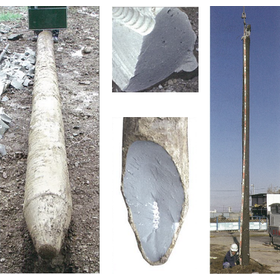
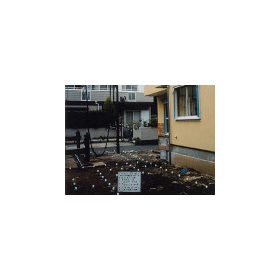
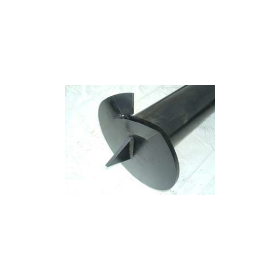
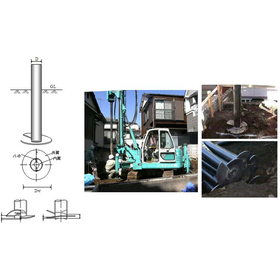
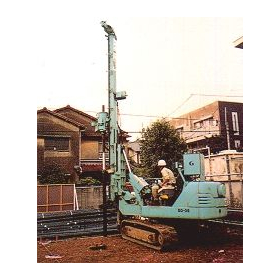
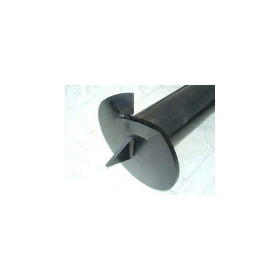
The ETP method is a type of rotary penetration steel pipe pile with a tip wing, which is driven into the ground by rotating a steel pipe that has a triangular excavation auxiliary blade with a circular enlarged base welded to its tip.

Added to bookmarks

Bookmarks list

Bookmark has been removed

Bookmarks list

You can't add any more bookmarks

By registering as a member, you can increase the number of bookmarks you can save and organize them with labels.

Free membership registration

Ground reinforcement work [Performance certification method] Cross-wing column method

Slurry-type mechanical stirring deep mixing method

High quality It is a reliable quality backed by numerous experimental results. Performance confirmation tests conducted on sandy soil, clayey soil, and loam have confirmed that the coefficient of variation is below 25%. Since the variability setting values have been obtained through performance confirmation tests, quality inspection is primarily conducted using "Inspection Method A." We will carry out highly reliable construction based on the technical guidelines of this method.

Added to bookmarks

Bookmarks list

Bookmark has been removed

Bookmarks list

You can't add any more bookmarks

By registering as a member, you can increase the number of bookmarks you can save and organize them with labels.

Free membership registration

Ground reinforcement construction [Performance certification method] Pure pile method

Pile foundation reinforcement method for detached houses

The Pure Pile Method (PP Method) uses a drilling rod equipped with a conical-shaped excavation head to excavate while pushing the ground laterally, constructing a pile-like column by replacing it with cement milk up to the support depth.

Added to bookmarks

Bookmarks list

Bookmark has been removed

Bookmarks list

You can't add any more bookmarks

By registering as a member, you can increase the number of bookmarks you can save and organize them with labels.

Free membership registration

Ground reinforcement construction [Performance certification method] DM method

Pile-type ground reinforcement method using small-diameter steel pipes with tip wings.

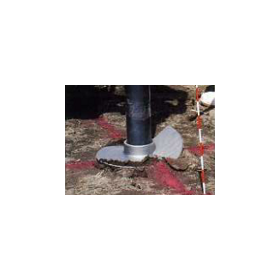
High-performance steel pipes are equipped with tip wings that are 3.0 times and 3.5 times the diameter of the steel pipe at the tip, suitable for clayey and sandy ground with equivalent N values of 5 to 15. Design using the equivalent N values from the SWS test (screw weight penetration test) is possible.

Added to bookmarks

Bookmarks list

Bookmark has been removed

Bookmarks list

You can't add any more bookmarks

By registering as a member, you can increase the number of bookmarks you can save and organize them with labels.

Free membership registration

Ground reinforcement work [Performance certification method] Σ-i method

A culmination of all the elements necessary for steel pipe piles.

Compatible with all types of ground The Σ-i method is a highly versatile ground reinforcement technique that is compatible with all types of ground, including sandy, gravelly, and clayey soils. Design using the converted N values from SWS tests (screw weight penetration tests) and ram sounding tests is possible.

Added to bookmarks

Bookmarks list

Bookmark has been removed

Bookmarks list

You can't add any more bookmarks

By registering as a member, you can increase the number of bookmarks you can save and organize them with labels.

Free membership registration

Ground reinforcement work [Performance certification method] Tiger pile

High-performance hybrid column

The Tiger Pile method combines the stable material strength of steel pipe pile methods with the large frictional force of soil cement column methods, compensating for the variability in column strength that is a disadvantage of the soil column cement method with the steel pipe, while the soil cement column method compensates for the small frictional force that is a disadvantage of the steel pipe pile method, effectively canceling out the shortcomings of both methods and demonstrating high bearing capacity.

Added to bookmarks

Bookmarks list

Bookmark has been removed

Bookmarks list

You can't add any more bookmarks

By registering as a member, you can increase the number of bookmarks you can save and organize them with labels.

Free membership registration

Ground reinforcement construction [Performance certification method] RES-P method

Strengthening weak ground to protect the safety of homes.

The RES-P method is a type of piled raft foundation method. It involves driving pipes (thin steel tubes) into weak ground, strengthening the ground through the combined effect of the ground and the pipes to prevent settlement, and is a foundation reinforcement method for residential buildings.

Added to bookmarks

Bookmarks list

Bookmark has been removed

Bookmarks list

You can't add any more bookmarks

By registering as a member, you can increase the number of bookmarks you can save and organize them with labels.

Free membership registration

Ground reinforcement work [Performance Guarantee Method] ETP-G Method

Rotary driven steel pipe piles suitable for small-scale buildings.

Leading Edge Wing Easy to penetrate with a simple shape. Design possible with simple testing Design possible with SWS testing and ram sounding testing. Low noise, low vibration, and no spoil, environmentally friendly Extremely low vibration and noise, considerate of the surrounding environment, with no generation of residual soil, making it an environmentally friendly clean construction method.

Added to bookmarks

Bookmarks list

Bookmark has been removed

Bookmarks list

You can't add any more bookmarks

By registering as a member, you can increase the number of bookmarks you can save and organize them with labels.

Free membership registration

Ground reinforcement construction [Certified method] SMD method

Three-story, reinforced concrete structure, retaining wall, etc., optimal as a ground reinforcement method requiring government approval!

When planning a basement for structures that exceed the design ground bearing capacity of 30 kN/m² → When it is necessary to embed the foundation to the angle of repose (30° line) For structures that are difficult to approve with ground improvement and would be over-spec with PC piles → Steel-framed buildings of 3 to 4 stories / retaining walls with a design ground bearing capacity of less than 100 kN/m², etc.

Added to bookmarks

Bookmarks list

Bookmark has been removed

Bookmarks list

You can't add any more bookmarks

By registering as a member, you can increase the number of bookmarks you can save and organize them with labels.

Free membership registration

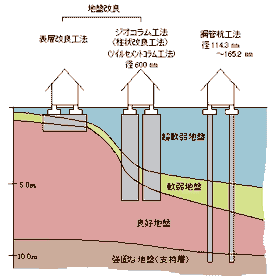
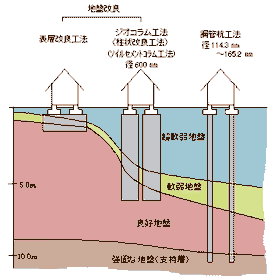
Ground reinforcement work using small-diameter steel pipe pile method.

Support your important home with a strong foundation.

A support pile method using general structural carbon steel pipes STK-400 to support small-scale houses when the column improvement method cannot be applied, and when the building's load is supported only by the tip of the pile. This method is applicable when soft layers continue to a depth of GL-8.0m or more. In the case of steel pipe pile methods, there is a relationship between the building and the surrounding ground, and if adopted in areas where extreme ground subsidence occurs, it may lead to the phenomenon of the building lifting up (such as when embankment is done on extremely soft ground or ground with thick deposits of humus). The supporting ground for determining the length of the steel pipe pile is defined as having an N value of ≧15. The thickness of the supporting ground layer should, in principle, be continuous for more than 2.0m.

Added to bookmarks

Bookmarks list

Bookmark has been removed

Bookmarks list

You can't add any more bookmarks

By registering as a member, you can increase the number of bookmarks you can save and organize them with labels.

Free membership registration

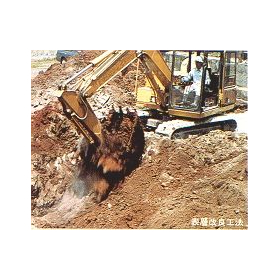
Ground improvement work - surface improvement method

Support the important home with an improved version on the board.

A method that involves spreading cement-based solidifying materials on soft ground, mixing, stirring, and compacting them with the original soil to create a slab-like solidified body. This method is applicable when the soft layer is distributed at a depth of GL-2.0m or shallower. However, it is not applicable if there is a water level within the improvement depth that makes mixing and stirring difficult, or if the improvement area extends to neighboring properties or roads, raising concerns about impacts on boundary blocks, neighboring houses, roads, etc. Good ground for determining the improvement depth is generally defined as a continuous layer of cohesive soil with an N value greater than 3 for cohesive soil and greater than 4 for granular soil.

Added to bookmarks

Bookmarks list

Bookmark has been removed

Bookmarks list

You can't add any more bookmarks

By registering as a member, you can increase the number of bookmarks you can save and organize them with labels.

Free membership registration

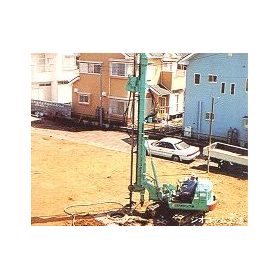
Ground reinforcement work using the Geo-column method.

Support the important house with pillars of improvement.

A method of injecting and mixing cement milk (a mixture of cement-based solidifying material and water) into soft ground to create columnar improved piles underground. This method is applicable when the soft layer extends from GL-2.0m to approximately GL-8.0m. However, it is not applicable in cases where most of the soft layer consists of humus soil, where industrial or household waste is accumulated, where there is groundwater, or where buildings are constructed immediately after earthworks on former marshland. Good ground for determining the improvement depth is defined as a continuous layer of cohesive soil with an N value greater than 3, or granular soil with an N value greater than 4.

Added to bookmarks

Bookmarks list

Bookmark has been removed

Bookmarks list

You can't add any more bookmarks

By registering as a member, you can increase the number of bookmarks you can save and organize them with labels.

Free membership registration

Ground reinforcement construction lineup

https://www.jiban.co.jp/service/kouji/index.htm#01

Geo-column method Surface improvement method Small diameter steel pipe pile method ETP method SMD steel pipe pile method ETP-G method RES-P method Tiger pile Σ-i method DM method Pure pile method Cross-wing column method

Added to bookmarks

Bookmarks list

Bookmark has been removed

Bookmarks list

You can't add any more bookmarks

By registering as a member, you can increase the number of bookmarks you can save and organize them with labels.

Free membership registration

i-LIFT Method

Easily lift up tilted or sunken houses!

The "i-LIFT method" is a technique that injects grout into the ground to lift and restore tilted or sunken buildings while also enhancing the ground's bearing capacity. Since the injection is performed while continuously measuring with a high-precision leveling instrument, fine adjustments to the level are possible. Additionally, construction can be carried out with compact machinery, making it feasible even in areas with limited space between adjacent houses. This method allows for a reduction in construction time compared to conventional methods. 【Features】 ■ Fine adjustments to the level are possible ■ Construction is possible in areas with limited space between adjacent houses ■ Reduction in construction time ■ Can be implemented even if ground improvement has already been performed ■ Can be applied to measures against ground subsidence *For more details, please refer to the PDF materials or feel free to contact us.*

Added to bookmarks

Bookmarks list

Bookmark has been removed

Bookmarks list

You can't add any more bookmarks

By registering as a member, you can increase the number of bookmarks you can save and organize them with labels.

Free membership registration

Ground reinforcement work: Proposal for optimal ground reinforcement.

Optimal ground reinforcement without reverting from advanced construction methods.

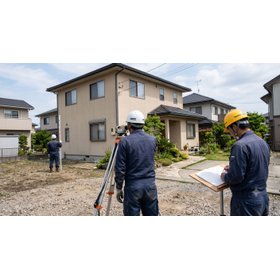
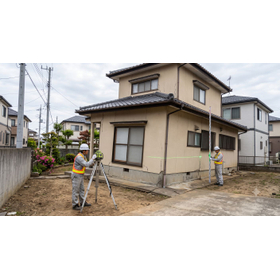
We provide evidence-based ground reinforcement construction that meets the needs of professionals involved in design and construction. Our company covers a diverse range of methods, including cement-based columns, steel pipe piles, and high-performance hybrid methods that combine these techniques, all of which have obtained building technology performance certifications and ministerial approvals. The biggest feature is the "optimal selection of methods" tailored to soil quality, surrounding environment, and structural loads. For example, we compare and examine the technical advantages of methods such as the Pure Pile method, which prevents soil mixing; the Tiger Pile method, which addresses humus soil; and the DM/ETP method, which minimizes environmental impact and excess soil costs without soil discharge, to derive the most economical and reliable design. By proposing a rational plan that thoroughly eliminates risks from an engineer's perspective, without biasing towards a single method, we strongly support your company's smooth project progress and ensure reliable quality management without setbacks.

Added to bookmarks

Bookmarks list

Bookmark has been removed

Bookmarks list

You can't add any more bookmarks

By registering as a member, you can increase the number of bookmarks you can save and organize them with labels.

Free membership registration

Ground reinforcement work DM method [Performance certification method]

Advanced winged steel pipe ground reinforcement method that has obtained architectural technical performance certification.

This is a pile-type ground reinforcement method using small-diameter steel pipes that has received the architectural technology performance certification (GBRC Performance Certification No. 10-01) from the Japan Architectural Institute Foundation. A cast iron spiral wing (tip wing) is attached to the tip of the small-diameter steel pipe, and it is rotated and driven into the ground using a non-discharging construction method with rotation torque. Since the tip wing and steel pipe are bolted together, the welding strength does not limit the bearing capacity. The construction is low-noise and low-vibration, taking into consideration the surrounding environment, and since it does not use cement milk, there are no costs for residual soil disposal. The entire process from component manufacturing to transportation and construction has been thoroughly reviewed, achieving both high performance and excellent economic efficiency.

Added to bookmarks

Bookmarks list

Bookmark has been removed

Bookmarks list

You can't add any more bookmarks

By registering as a member, you can increase the number of bookmarks you can save and organize them with labels.

Free membership registration

Ground reinforcement work ETP-G method [Performance guarantee method]

ETP-G method for ground reinforcement using steel pipe with advanced wings that has obtained GBRC performance certification.

This is an environmentally friendly ground reinforcement method using advanced winged steel pipes, which has obtained the architectural technical performance certification from the Japan Architectural Comprehensive Testing Institute (GBRC Performance Certification No. 09-19 Revision 5). It employs steel pipe piles equipped with disc-shaped wings at the ends, enhancing penetration by providing 30mm notches above and below the wings, and effectively suppressing deviation during construction with the aid of a drilling assist bit at the tip. Ground surveys are typically conducted using the Screw Weight Penetration Test (SWS Test), and in cases where the supporting layer is deep or the ground is difficult to penetrate, a large dynamic cone penetration test (SRS Test) can be accurately employed. This method offers a clean, environmentally friendly solution with low vibration, low noise, and no generation of residual soil.

Added to bookmarks

Bookmarks list

Bookmark has been removed

Bookmarks list

You can't add any more bookmarks

By registering as a member, you can increase the number of bookmarks you can save and organize them with labels.

Free membership registration

Ground reinforcement work ETP method [Certified method]

Ministerial certification and performance proof acquisition for advanced winged rotary driven steel pipe piles ETP method.

The ETP method is a type of rotary driven steel pipe pile construction that features a tip with a disc-shaped wing and a triangular excavation auxiliary bit. It has received certification from the Minister of Land, Infrastructure, Transport and Tourism (for sandy soil: TACP-0665, for clayey soil: TACP-0666) and a performance certification from the General Incorporated Foundation Japan Building Disaster Prevention Association (GBRC Performance Certification No. 12-20 Rev. 4), ensuring high bearing capacity and smooth construction. By avoiding the use of cement, it mitigates the risk of soil and groundwater contamination, and the no-excavation construction eliminates the need for soil disposal costs. Additionally, it allows for the removal of piles through reverse rotation and employs compact machinery, enabling low-noise and low-vibration construction, thus achieving an economical design and construction that considers the surrounding environment.

Added to bookmarks

Bookmarks list

Bookmark has been removed

Bookmarks list

You can't add any more bookmarks

By registering as a member, you can increase the number of bookmarks you can save and organize them with labels.

Free membership registration

Ground reinforcement construction RES-P method [Performance certification method]

RES-P method for planar ground reinforcement that has obtained architectural technical performance certification.

This is a type of piled raft foundation method that has obtained the architectural technical performance certification (Performance Evaluation No. 04-02) from the Japan Architectural Comprehensive Testing Institute. It involves driving pipes (thin steel pipes) into weak ground, enhancing the bearing capacity through the combined action of the ground and the pipes, and preventing building settlement. Although this method arranges the pipes in a pile-like manner, it is categorized as a planar ground reinforcement method similar to "surface improvement methods" due to the close placement of the pipes rather than being a pile reinforcement. The design, construction, and supervision are centralized under the "Single-Family Housing Foundation Ground Reinforcement Research Association," and a reliable quality management system is provided under the guidance of Soil Design Office Co., Ltd.

Added to bookmarks

Bookmarks list

Bookmark has been removed

Bookmarks list

You can't add any more bookmarks

By registering as a member, you can increase the number of bookmarks you can save and organize them with labels.

Free membership registration

Ground reinforcement work SMD method [Certified method]

The closing effect of the inner wing and reliable high bearing capacity, Ministry of Land, Infrastructure, Transport and Tourism certified SMD pile method.

The "SMD (Super Mini Drill) Pile Method," which has received certification from the Ministry of Land, Infrastructure, Transport and Tourism, utilizes steel pipe piles equipped with outer wings that are 2 to 3 times the diameter of the pile at the tip, along with unique inner wings and bites. During the rotary penetration, the tip is open, allowing soil to enter the steel pipe, which helps suppress misalignment during construction. Upon completion of penetration, the inner wings compact the soil inside firmly, achieving a high bearing capacity equivalent to complete closure, with a tip bearing capacity coefficient of α = 250. This method is a high-quality and eco-friendly foundation technique that generates no construction waste above ground, thereby eliminating industrial waste and reducing environmental impact and the risk of secondary pollution.

Added to bookmarks

Bookmarks list

Bookmark has been removed

Bookmarks list

You can't add any more bookmarks

By registering as a member, you can increase the number of bookmarks you can save and organize them with labels.

Free membership registration

Ground reinforcement work Σ-i method [Performance certification method]

Advanced pile-type ground reinforcement Σ-i method that has obtained architectural technical performance certification.

This is a highly reliable pile foundation reinforcement method for small-scale buildings, including residential structures. It features a new spiral-shaped tip wing integrated with four excavation blades at the tip, allowing it to penetrate the ground while rotating. The rotary insertion construction minimizes vibration and noise, and it establishes an environmentally friendly design that generates no excavated soil (residual soil) during construction. Furthermore, by adopting an improved tapered tip wing, it allows for the selection of several types of steel pipes for a single tip structure, successfully achieving dramatic cost reductions and economical design while maintaining high construction performance and safety.

Added to bookmarks

Bookmarks list

Bookmark has been removed

Bookmarks list

You can't add any more bookmarks

By registering as a member, you can increase the number of bookmarks you can save and organize them with labels.

Free membership registration

Ground reinforcement work Cross Wing Column Method [Performance Certification Method]

High-precision deep mixing method that has obtained GBRC performance certification.

This is a slurry-based mechanical mixing deep mixing treatment method that has obtained the Architectural Technical Performance Certification from the Japan Architecture Comprehensive Testing Institute (GBRC Performance Certification No. 12-17 Revision 1). It achieves extremely stable mixing performance with minimal variation, unaffected by soil type, thanks to a patented, uniquely developed mixing and stirring device. Numerous performance verification tests conducted on sandy soil, clay, and loam have demonstrated a reliable high quality with a coefficient of variation of 25% or less, providing highly reliable construction based on technical guidelines. Additionally, due to the small markup factor for quality control, excessive material usage can be suppressed, and strict quality inspections can be conducted at minimal cost by adopting "Inspection Method A" as a principle.

Added to bookmarks

Bookmarks list

Bookmark has been removed

Bookmarks list

You can't add any more bookmarks

By registering as a member, you can increase the number of bookmarks you can save and organize them with labels.

Free membership registration

Ground reinforcement work 【Geocore method】

High-precision geo-column method that prevents settlement with reliable lateral friction force.

This is a ground improvement method that involves mechanically mixing cement milk and the soil of the original ground to a specified depth, creating a strong columnar improvement body underground. Due to the large diameter of the improvement body, it is expected to provide excellent lateral friction, ensuring effective settlement prevention even in very soft underlying ground with an equivalent N value of around 4. It can be widely adapted to thick soft layers, reliably transmitting the building's load to stable ground and supporting it from below. During construction, a construction machine equipped with multiple measuring devices is used, offering high-quality construction accuracy based on reliable engineering evidence and high reliability through strict quality control.

Added to bookmarks

Bookmarks list

Bookmark has been removed

Bookmarks list

You can't add any more bookmarks

By registering as a member, you can increase the number of bookmarks you can save and organize them with labels.

Free membership registration

Ground reinforcement work Tiger Pile [Performance Certification Method]

Acquisition of construction technical performance certification, Tiger Pile method using stepped steel pipes.

This is a soil-cement column method (deep mixing method) that uses a stepped steel pipe as the core material, which has obtained the architectural technology performance certification (GBRC Performance Certification No. 06-12 Revision 4) from the Japan Architectural Comprehensive Testing Institute, a general incorporated foundation. It is a high-performance hybrid method that combines the stable material strength of steel pipe pile methods with the large friction force of column methods, compensating for the disadvantages of each method, such as the variability in the strength characteristics of the columns and the small friction force of small-diameter steel pipe piles, thereby ensuring reliable high load-bearing capacity. Due to the core material effect, it prevents stress concentration at the head and supports the load along the entire length, significantly improving resistance to bending and shear forces during earthquakes, and minimizing the impact even if localized solidification issues occur.

Added to bookmarks

Bookmarks list

Bookmark has been removed

Bookmarks list

You can't add any more bookmarks

By registering as a member, you can increase the number of bookmarks you can save and organize them with labels.

Free membership registration

Ground reinforcement work Pure Pile method [Performance certification method]

Pure pile method that exhibits stable high strength unaffected by soil conditions.

This is a reliable and secure method for reinforcing the ground with pile-like structures for single-family homes, which solidifies cement milk directly underground into pile shapes, demonstrating high quality and strength regardless of soil type. Using a drilling rod equipped with a conical excavation head, it advances to the support depth while laterally expanding the original ground and fills it with cement milk, creating high-quality pile-like columns. The greatest advantage is that the quality of the columns is not affected at all by the soil type, as the cement milk is not mixed with the local soil. By adopting a conical head, the risk of mixing excavated soil clumps is eliminated, and the construction principle that does not loosen the ground ensures stable and significant vertical bearing capacity.

Added to bookmarks

Bookmarks list

Bookmark has been removed

Bookmarks list

You can't add any more bookmarks

By registering as a member, you can increase the number of bookmarks you can save and organize them with labels.

Free membership registration

Ground improvement work 【Surface improvement method】

Plate-type ground improvement and surface improvement methods that demonstrate excellent effectiveness in shallow soft layers.

This is a ground improvement method that can be selected when weak layers are distributed at shallow depths. It involves uniformly mixing and stirring powdered cement-based solidifying materials with the original ground soil using heavy machinery, and carefully compacting it to construct a strong "slab-like improved body." This method demonstrates extremely excellent engineering effects in preventing differential settlement, increasing ground bearing capacity, and preventing liquefaction, reliably supporting important structures from the ground up. The construction process is characterized by low noise, low vibration, and short construction time, minimizing the impact on the surrounding environment. Through clear construction procedures and engineering approaches, it achieves reliable ground bearing capacity reinforcement as required by designers and supervisors.

Added to bookmarks

Bookmarks list

Bookmark has been removed

Bookmarks list

You can't add any more bookmarks

By registering as a member, you can increase the number of bookmarks you can save and organize them with labels.

Free membership registration

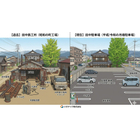
Subsidance Correction Work 【i-LIFT Method】

i-LIFT method that lifts buildings from the ground through grout injection.

This method involves injecting grout (injection material) into the ground to lift and restore tilted or sunken buildings while simultaneously enhancing the ground's bearing capacity. The method consists of three "i (injection)" processes. First, repeated injections are made to form a "support plate" on the supporting layer. Next, injections are made beneath the foundation to create a "lift plate." Finally, "lift-up injection" is performed between the support plate and the lift plate to precisely raise the entire building. Utilizing laser measurement devices and computer-controlled three-dimensional tilt measurement systems, the tilt is continuously measured in real-time, allowing for precise leveling adjustments, making this a highly accurate, reliable, and safe construction technique.

Added to bookmarks

Bookmarks list

Bookmark has been removed

Bookmarks list

You can't add any more bookmarks

By registering as a member, you can increase the number of bookmarks you can save and organize them with labels.

Free membership registration

Shallow Correction Work Foundation Reinforcement Work System 【Ganko Oyaji】

Carbon fiber reinforcement system that revives non-reinforced and cracked foundations beyond new construction.

This is a carbon fiber reinforcement system for existing concrete strip foundations that has obtained housing disaster prevention technology evaluation (evaluation number DPA-Housing Technology-23) from the Japan Architectural Disaster Prevention Association and has been registered as a utility model. By firmly adhering high-strength carbon fiber sheets to the foundation surface using matrix resin, it significantly improves shear strength, ductility, and seismic resistance. Unlike traditional underpinning methods that face many challenges in terms of weight, construction period, and cost, this system can reliably restore existing foundations with no reinforcement or deteriorated cracks to a robust supporting structure that far exceeds the original strength at the time of construction, without significantly changing the weight or cross-section of the structure.

Added to bookmarks

Bookmarks list

Bookmark has been removed

Bookmarks list

You can't add any more bookmarks

By registering as a member, you can increase the number of bookmarks you can save and organize them with labels.

Free membership registration

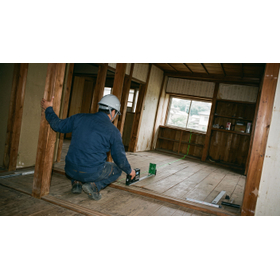
Subsidance correction work | Construction plan for jack-up work on a detached house while living in it.

A plan for jack-up construction of single-family homes to maintain the residents' living conditions. The tilt of the building will be corrected to the millimeter without the need for temporary housing, while you continue to live in your home.

This is a specialized document that clearly summarizes the overall plan for the jack-up construction of single-family homes to maintain the residents' living conditions. It covers advanced methods for correcting uneven settlement in wooden houses without the need for moving to temporary housing or relocating belongings, allowing for precise correction of building tilt down to the millimeter while residents remain in their homes. Utilizing a computer-controlled hydraulic jack system linked to high-precision laser measuring devices, the building is safely lifted to a horizontal line without imposing undue deformation stress on the structure. The plan includes meticulous project management that considers limited construction hours, reliable dust protection, and attention to vibration and noise, enabling the completion of work without disrupting daily activities such as remote work, house chores, and childcare. It dramatically alleviates health issues caused by floor tilt, such as dizziness, headaches, and insomnia, while simultaneously repairing issues like malfunctioning doors and windows and wall cracks. This comprehensive construction plan also includes measures to prevent re-settlement through the insertion of steel pipe piles beneath the foundation, minimizing the psychological and economic stress for the client.

Added to bookmarks

Bookmarks list

Bookmark has been removed

Bookmarks list

You can't add any more bookmarks

By registering as a member, you can increase the number of bookmarks you can save and organize them with labels.

Free membership registration

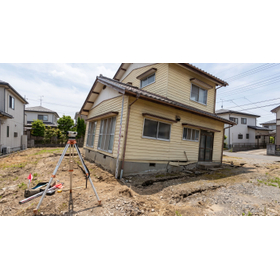
Settlement correction work | Partial correction of cracks in the base foundation and localized settlement using steel pipe pile driving!

Fundamental solution for local subsidence and cracks in the foundation! A partial repair technique that utilizes the building's own weight to drive steel pipe piles into deep support layers, preventing further subsidence.

Localized subsidence and cracking occurring in the fabric foundation of a residence are serious structural defects caused by localized weakening of the ground or uneven soil pressure due to neighboring embankments or excavations. If left unaddressed, the building's tilt will progress, leading to significant disruptions in daily life, such as wall cracks and malfunctioning window frames. In GeoTech's subsidence correction work, we employ a steel pipe pile driving method that uses hydraulic jacks to vertically press steel pipe piles into a hard support layer deep below the surface, utilizing the building's own weight as a reaction force. Piles are precisely placed at specific locations where localized subsidence has occurred, and the building is accurately jacked up to restore it to a level state. Additionally, cracks in the foundation are treated with epoxy resin injection or U-cut repairs, and ground fissures or voids beneath the floor are filled with high-density air milk, thoroughly reinforcing the overall stability of the structure and the strength of the foundation. The work can be carried out while residents remain in the building, with low vibration and low noise. This is the optimal method for resolving fabric foundation issues at low cost and in a short construction period, regardless of the building's age.

Added to bookmarks

Bookmarks list

Bookmark has been removed

Bookmarks list

You can't add any more bookmarks

By registering as a member, you can increase the number of bookmarks you can save and organize them with labels.

Free membership registration

Settlement correction work | Fundamental repair of settlement at retaining walls and uneven ground with steel pipe piles!

Eliminate the settlement of strip foundations occurring at the backfill of retaining walls and the boundaries of cut and fill! A high-durability settlement correction technology that fixes to a hard support layer by driving steel pipe piles under the weight of the building.

In residential land development, there are many cases where uneven ground, such as backfilling behind retaining walls and the intersection of cut and fill, leads to ground consolidation settlement and differential settlement due to lateral flow. When differential settlement places excessive stress on the foundation, it can cause cracks in the foundation and ground fissures beneath the floor, increasing the risk to the building structure. The settlement correction work provided by Geotech resolves this issue by utilizing the weight of the building as jack reaction force and employing a steel pipe pile driving method that directly presses high-strength steel pipe piles into stable supporting ground. The foundation on the settlement side is carefully lifted with hydraulic jacks and accurately corrected to a horizontal state. Additionally, high-resin repair materials are injected into the cracks of the foundation, and lightweight, self-hardening air milk is filled without gaps into the voids created underground by the settlement. Construction can be carried out while residents are living in the home, eliminating the need for relocation, and foundation reinforcement is achieved in a safe and secure environment with significantly reduced noise and vibration. We provide optimal construction plans tailored to the customer's needs.

Added to bookmarks

Bookmarks list

Bookmark has been removed

Bookmarks list

You can't add any more bookmarks

By registering as a member, you can increase the number of bookmarks you can save and organize them with labels.

Free membership registration

Settlement correction work | Partial repair of settlement and cracks in the cloth foundation with steel pipe piles while residing.

No need to move; construction can be done while living in the space! Smartly repair local subsidence and cracks in the fabric foundation using steel pipe pile driving methods, minimizing costs and construction time with partial reinforcement.

The sinking and cracking of strip foundations caused by the aging of residential buildings and localized ground softening lead to issues that result in stress in daily life and a decrease in the asset value of the property. Large-scale demolition and reconstruction or house-moving work require high costs and temporary housing, but with Geotech's steel pipe pile driving method, it can be safely and reasonably corrected while living in your familiar home. This method utilizes the building's own weight as a reaction force to steadily drive steel pipe piles down to a stable support layer using a small hydraulic jack, accurately jacking up and correcting the sinking areas. Since it can be constructed with partial excavation, the construction period can be minimized, optimizing construction costs. Additionally, high-viscosity resin injection is applied to the cracks in the damaged strip foundation, and lightweight, durable air milk is filled and injected into the voids created by sinking under the floor and underground to restore ground bearing capacity. It generates minimal vibration and noise for neighbors and is the definitive method for correcting residential sinking with excellent cost performance. We will continue to support your important home with a reliable construction system.

Added to bookmarks

Bookmarks list

Bookmark has been removed

Bookmarks list

You can't add any more bookmarks

By registering as a member, you can increase the number of bookmarks you can save and organize them with labels.

Free membership registration

Underpinning Renovation Work | A Plan for Jacking Up Detached Houses to Restore Client Trust

A construction plan for jack-up work on single-family homes to maintain the residents' living conditions. This is a site management guideline for contractors to promptly respond to complaints and defects while the owner is still residing in the home.

This is a technical and management guide for house lifting construction plans specifically designed for construction companies and house manufacturers, aimed at maintaining the residents' quality of life. It comprehensively covers the process management guidelines for professionals to correct building tilt in the shortest time possible while residents continue to live in the property, without imposing the burden of moving or temporary housing on the owners when issues of differential settlement are discovered after handover. Based on ground investigation data, it accurately combines the use of existing columns, steel pipe jacking methods, and pressure slab methods to detail the process of returning the entire building to a level position without distortion. It includes a checklist of management considerations unique to occupied sites, such as attention to noise reduction, selection of low-noise and low-vibration equipment, and dust prevention measures. This practical document is essential for builders to restore trust and address warranty issues, covering everything from dialogue techniques to alleviate the psychological stress of owners, to various procedural steps for reattaching ground guarantees and insurance application processes.

Added to bookmarks

Bookmarks list

Bookmark has been removed

Bookmarks list

You can't add any more bookmarks

By registering as a member, you can increase the number of bookmarks you can save and organize them with labels.

Free membership registration

Settlement correction work | Repairing cracks in the foundation and local settlement with steel pipe piles to restore value!

Fundamental solution for local subsidence and cracks in the foundation! A structural repair that utilizes the building's own weight to drive steel pipe piles into the supporting layer, protecting asset value.

Localized subsidence and cracking occurring in the foundation of residential buildings are significant structural issues caused by uneven ground subsidence and localized softening. If left unaddressed, the tilt of the building will further increase, leading to a substantial decrease in asset value and reduced seismic resistance. The subsidence correction work provided by Geotech utilizes the building's own weight as jack reaction force and employs a steel pipe pile pressing method, where high-strength steel pipe piles are driven deep into a hard support layer. Piles are precisely anchored at the locations of localized subsidence, and accurate leveling is restored through precise jacking. Additionally, epoxy resin injection is applied to the cracks in the foundation concrete to restore structural strength, and high-density filling of air bubble mortar is used to raise the ground bearing capacity in areas of subsidence and underground voids. Construction can be carried out while residents are living in the home, minimizing noise and vibration, and compressing the construction period and costs to a minimum. We will permanently protect the structural safety and asset value of your important home.

Added to bookmarks

Bookmarks list

Bookmark has been removed

Bookmarks list

You can't add any more bookmarks

By registering as a member, you can increase the number of bookmarks you can save and organize them with labels.

Free membership registration

Settlement correction work | High-precision horizontal repair of foundation settlement and cracks using steel pipe piles!

Thoroughly solving local subsidence and cracking of fabric foundations caused by earthquakes and ground movement! A technology that performs millimeter-level horizontal restoration and structural reinforcement using steel pipe pile driving and high-precision measurement.

Local subsidence and cracks in the foundation caused by seismic shaking and consolidation changes in weak ground lead to significant tilting and a dramatic decrease in the seismic resistance of homes. The subsidence correction work carried out by Geotech resolves these issues using a steel pipe pile driving method, where steel pipe piles are driven into a hard support layer under the weight of the building, monitored in real-time to the millimeter with the latest laser measurement systems. Hydraulic jacks are linked to precisely lift the building without adding stress, correcting it to its original level at the time of construction. At the same time, high-adhesion epoxy resin is injected into the cracks of the damaged foundation to fully restore structural strength and waterproofing performance, while high-strength bubble mortar (air milk) is densely injected to fill the cracks and voids that have formed in the subfloor due to subsidence. The work can be done while residents are living in the home, with no need to move to temporary housing, and is completed in a short period with minimal noise and vibration. This simultaneously improves the building's seismic performance and ensures lasting structural stability.

Added to bookmarks

Bookmarks list

Bookmark has been removed

Bookmarks list

You can't add any more bookmarks

By registering as a member, you can increase the number of bookmarks you can save and organize them with labels.

Free membership registration

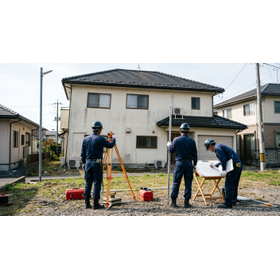
Settlement correction work|Clarifying foundation settlement cracks through SWS investigation and partial jack correction.

Scientifically clarify the partial subsidence and cracks in the foundation through SWS investigation! We will accurately correct and reinforce it while living in the space using partial jacking and steel pipe pile insertion.

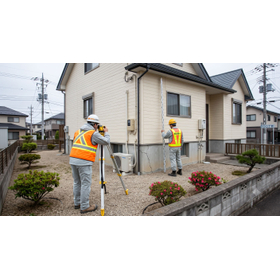
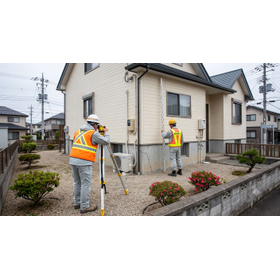
This construction method is a groundbreaking settlement correction solution for single-family homes that have experienced partial sinking of the foundation or structural cracks. It scientifically identifies the causes based on SWS (Screw Weight Penetration) tests and precise building level measurements, followed by partial jacking and ground reinforcement. For localized tilting caused by weak ground or uneven consolidation of fill, we use small hydraulic jacks and high-precision laser measurement devices to safely and reliably restore the level to within millimeters. Cracked areas of the foundation are repaired with epoxy resin injection and U-cut seals, and, if necessary, we optimally combine steel pipe pile driving methods and pressure slab methods to fundamentally eliminate the risk of future settlement. Our method fully accommodates construction while residents are living in the home, without the need for moving or temporary housing, allowing work to proceed while maintaining the residents' daily routines. We significantly reduce the financial and mental burden on homeowners, ensuring structural integrity and enhancing long-term asset value, so you can rest assured.

Added to bookmarks

Bookmarks list

Bookmark has been removed

Bookmarks list

You can't add any more bookmarks

By registering as a member, you can increase the number of bookmarks you can save and organize them with labels.

Free membership registration

Settlement correction work | Partial correction of settlement and cracks in the fabric foundation during occupancy completed with SWS investigation.

During residence, we will clarify the sinking and cracks of the slab foundation through SWS investigation! We will ensure safe construction while protecting your life with partial jack adjustments, eliminating the need for temporary housing.

This plan is a resident-friendly subsidence correction solution that precisely and safely repairs partial subsidence of the foundation and structural cracks while protecting the daily lives of residents. By conducting a pre-implementation SWS (Screw Weight Insertion) test and high-precision measurements of the floor levels inside and outside, we visualize the localized causes of subsidence and the unevenness of the ground. Based on the diagnostic results, we ensure dust prevention measures and safe pathways to prevent dust from entering the living space, and we carry out partial jacking using small hydraulic jacks. By lifting and correcting in millimeter increments while monitoring the building's minute movements in real-time with a 3D laser level measuring device, we can restore it to a level position without placing undue stress on walls or columns. For foundation cracks, we apply epoxy resin injection and, if necessary, use steel pipe pile driving and pressure plate reinforcement to prevent re-subsidence. We promise to achieve a worry-free construction process that incurs no temporary housing costs or moving expenses, minimizing the mental and financial stress for the client.

Added to bookmarks

Bookmarks list

Bookmark has been removed

Bookmarks list

You can't add any more bookmarks

By registering as a member, you can increase the number of bookmarks you can save and organize them with labels.

Free membership registration

Settlement correction work|Partial jack correction of settlement cracks in the fabric foundation through SWS investigation.

Accurate clarification of partial subsidence and cracks in the foundation through SWS investigation! We will safely restore it by reducing costs with efficient jack adjustments.

This proposal is a settlement correction method that effectively repairs partial subsidence and cracking issues in strip foundations without incurring excessive construction costs. By conducting a preliminary SWS (Screw Weight Insertion) test, we can pinpoint the specific soft layers or subsidence areas causing the settlement. By applying a "partial jack-up method" that selectively lifts and corrects only the necessary areas without jacking up the entire building, we minimize construction equipment and personnel, achieving significant cost reductions. Furthermore, for structural cracks in the foundation, we combine high-viscosity epoxy resin injection and carbon fiber sheet reinforcement to significantly enhance the durability and toughness of the foundation structure beyond the level of new construction. If necessary, we will implement deep pile driving or pressure slab methods to completely contain the risk of future settlement recurrence. This method is chosen by many contractors and clients as a rational option that balances smart cost management with reliable safety structures and the preservation of the building's asset value.

Added to bookmarks

Bookmarks list

Bookmark has been removed

Bookmarks list

You can't add any more bookmarks

By registering as a member, you can increase the number of bookmarks you can save and organize them with labels.

Free membership registration

Settlement correction work | Correction of settlement cracks in the mat foundation using SWS survey and partial jacking.

The SWS survey scientifically clarifies partial settlement and cracks in the fabric foundation! We will safely restore it with partial jack adjustments that do not stop the lifelines and steel pipe pile driving.

This construction method is a subsidence correction solution for single-family homes that have experienced partial sinking of the foundation or structural cracks. It scientifically investigates the causes based on SWS (Screw Weight Penetration) tests and high-precision level measurements, allowing for partial jacking up while maintaining the living infrastructure. By implementing flexible piping measures that do not disrupt lifelines such as city gas and water supply and drainage, we achieve complete construction while residents remain in their homes, without the need for temporary housing or relocation. For cracks in the foundation caused by uneven subsidence, we apply structural repairs such as epoxy resin injection, and during lifting, we use small hydraulic jacks and laser measuring devices to safely and precisely restore levelness to the millimeter. Furthermore, by combining the driving of steel pipe piles into the supporting ground and the installation of pressure-resistant slabs, we fundamentally eliminate the risk of future re-subsidence. We dramatically reduce the financial and mental burden on homeowners while ensuring the safety of their homes and enhancing property value, so you can trust us to handle it with confidence.

Added to bookmarks

Bookmarks list

Bookmark has been removed

Bookmarks list

You can't add any more bookmarks

By registering as a member, you can increase the number of bookmarks you can save and organize them with labels.

Free membership registration

Settlement correction work | Repairing settlement cracks in the fabric foundation using SWS investigation and partial jacking.

Investigating the causes of partial subsidence of the foundation and structural cracks through SWS surveys! We will reliably restore the client's trust with partial jacking up and re-attaching ground guarantees.

This plan is a solution for contractors and house manufacturers that covers everything from the scientific clarification of the causes of partial subsidence of the foundation and structural cracks that occur in homes after delivery, to precise corrections and warranty provisions. By conducting SWS (Screw Weight Insertion) tests and high-precision measurements of the building in advance, we visualize the factors of uneven subsidence in the ground and present a correction plan based on clear evidence. We adopt an approach of "repairing while living" that does not require temporary housing or moving, and we prevent secondary complaints through thorough site management with dust protection and low-noise construction. In the construction process, we use a small hydraulic jack in conjunction with a laser measurement device to accurately return the building to a level position without applying pressure to it, down to the millimeter. Along with repairing foundation cracks, we perform permanent ground reinforcement using steel pipe piles and pressure plates, providing a one-stop solution that includes reissuing ground warranties. We aim to transform the trust of clients who have been discouraged by troubles into a solid positive impression by providing "greater peace of mind than at the time of new construction."

Added to bookmarks

Bookmarks list

Bookmark has been removed

Bookmarks list

You can't add any more bookmarks

By registering as a member, you can increase the number of bookmarks you can save and organize them with labels.

Free membership registration

Settlement correction work | Settlement cracks in the mat foundation addressed with SWS investigation and partial jacking.

We will conduct pinpoint analysis of partial subsidence and cracks in the foundation using SWS investigation! We will rationally restore it through targeted jack adjustments and foundation reinforcement, eliminating waste.

This proposal is a settlement correction and structural reinforcement solution that effectively repairs partial settlement of the mat foundation and structural cracks without incurring excessive construction costs. By conducting a preliminary SWS (Screw Weight Insertion) test, we can pinpoint the specific soft layers or settlement areas causing the subsidence. By applying a "partial jack-up method" that selectively lifts and corrects only the necessary areas without jacking up the entire building, we minimize construction equipment and personnel, significantly reducing construction costs and time. Furthermore, for structural cracks in the foundation, we combine high-viscosity epoxy resin injection, carbon fiber sheet application, and additional foundation reinforcement to dramatically enhance the durability and toughness of the foundation structure beyond its original level. After jacking up, we will perform steel pipe pile insertion, pressure plate installation, and mortar filling to completely eliminate the risk of future subsidence recurrence. We provide a rational option that balances cost-effectiveness with reliable safety structures and the preservation of the building's asset value.

Added to bookmarks

Bookmarks list

Bookmark has been removed

Bookmarks list

You can't add any more bookmarks

By registering as a member, you can increase the number of bookmarks you can save and organize them with labels.

Free membership registration

Settlement correction work | Seismic recovery of fabric foundation settlement cracks through SWS investigation and partial jacking.

Clarifying partial subsidence and cracks in the foundation through SWS investigation! We will reliably restore the building's seismic resistance and structural strength with partial jacking and carbon fiber reinforcement.

This construction method is a specialized solution that combines ground analysis based on the SWS (Screw Weight Penetration) test and partial jacking up for single-family homes where some settlement of the foundation and structural cracks have occurred. By conducting a preliminary survey, the causes of uneven settlement in the ground are identified as objective data, and small hydraulic jacks are placed in the settling foundation areas to perform precise horizontal corrections in millimeter increments. For structural cracks in the cloth foundation caused by settlement stress, high-viscosity epoxy resin injection and carbon fiber sheet reinforcement are applied, enhancing the strength of the concrete structure beyond that of a new build. Furthermore, by optimally combining the underpinning method of driving steel pipe piles into the supporting ground, we fundamentally eliminate the risks of future resettlement and uneven settlement during major earthquakes. This method allows for complete construction while residents remain in their homes, ensuring that the homeowner's daily rhythm and comfort are preserved while broadly restoring the overall structural safety of the house, so you can trust us with confidence.

Added to bookmarks

Bookmarks list

Bookmark has been removed

Bookmarks list

You can't add any more bookmarks

By registering as a member, you can increase the number of bookmarks you can save and organize them with labels.

Free membership registration

Seismic recovery of residential fabric foundation settlement cracks using SWS investigation and partial jacking.

Clarifying the subsidence and cracks of the foundation through SWS investigation, and restoring seismic resilience with partial jacking up.

In residential foundation reinforcement, it is essential to address issues such as foundation settlement and cracking early on to maintain the long-term safety and comfort of the building. Particularly in the case of strip foundations, certain settlements and structural cracks can potentially impact the building's seismic resistance and structural strength. Ignoring these problems can accelerate the deterioration of the building and increase the risk of major repairs in the future or during an earthquake. Our settlement correction work addresses these challenges with scientific investigation and precise repair techniques, restoring the safety of the building. 【Usage Scenarios】 - Detached houses with partial settlement or structural cracks in strip foundations - Cases requiring recovery of the building's seismic resistance and structural strength - Situations where there is a desire to reduce the risk of future settlement or differential settlement during a major earthquake - Cases where construction needs to proceed while residents are still living in the home 【Benefits of Implementation】 - Reliable recovery of the building's seismic performance and structural strength - Stabilization of the foundation through precise horizontal correction at the millimeter level - Improvement of concrete structural strength through carbon fiber reinforcement - Fundamental elimination of future settlement risks through steel pipe pile driving - Construction that respects the residents' daily routines while they continue to live in the home

Added to bookmarks

Bookmarks list

Bookmark has been removed

Bookmarks list

You can't add any more bookmarks

By registering as a member, you can increase the number of bookmarks you can save and organize them with labels.

Free membership registration

Subsurface Correction Work | Epoxy Injection Pressure-Supported Slab Method to Repair Foundation Cracks and Partial Settlements

Simultaneously overcome foundational cracks and partial subsidence! We will strongly repair the base of your home using a combination of high-adhesion epoxy resin injection and pressure-resistant slab methods.

This is a reliable sinking correction solution that fundamentally addresses the issue of building subsidence accompanied by foundation cracks. For structural cracks in the foundation caused by uneven ground or localized softening, high-viscosity epoxy resin is injected and filled under high pressure and density to restore the compromised structural strength and significantly improve waterproofing. At the same time, a pressure plate is precisely installed directly beneath the sunken foundation, and high-precision millimeter-level lift-up is performed using hydraulic jacks to restore the tilted building to a precise horizontal state. After the jacking is completed, air bubble mortar (air milk) is poured into the fine gaps that have formed between the foundation and the ground, filling and solidifying them without any gaps, significantly increasing the contact area to prevent future re-sinking or differential settlement. Since this solution accommodates construction while residents are living in the home without the need for large machinery, extensive demolition, or temporary relocation, it greatly reduces the burden on homeowners' daily lives and secondary costs such as temporary housing rent. With reliable construction techniques and uncompromising quality control, we dramatically restore the seismic resistance, durability, and asset value of homes, providing long-lasting peace of mind.

Added to bookmarks

Bookmarks list

Bookmark has been removed

Bookmarks list

You can't add any more bookmarks

By registering as a member, you can increase the number of bookmarks you can save and organize them with labels.

Free membership registration
Prev 123 Next
  • 目的・課題から技術・サービスを探せるメディカルケア専門サイト
    • Contact this company

      Contact Us Online

    Products

    • Search for Products

    Company

    • Search for Companies

    Special Features

    • Special Features

    Ranking

    • Overall Products Ranking
    • Overall Company Ranking

    support

    • site map
    IPROS
    • privacy policy Regarding external transmission of information
    • terms of service
    • About Us
    • Careers
    • Advertising
    IPROS Services
    • >IPROS GMS | Search site for the manufacturing industry
    • >IPROS | Search site for the B2B industry
    COPYRIGHT © 2001-2026 IPROS CORPORATION ALL RIGHTS RESERVED.
    Please note that the English text on this page is automatically translated and may contain inaccuracies.