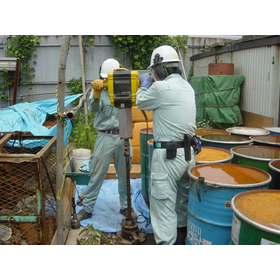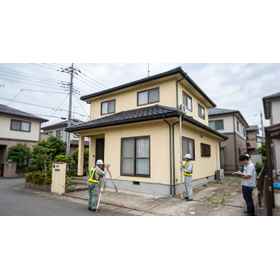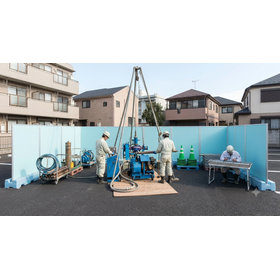
Ground investigation | Plate load test and foundation assessment to prevent excessive reinforcement of the floor slab in logistics warehouses.
Ground investigation

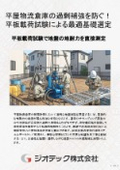
Prevent the sinking of the concrete floor in single-story logistics warehouses! Directly quantify the shallow soil bearing capacity through plate loading tests to achieve optimal foundation and floor structures that allow safe operation of AGVs and heavy machinery.
In the new construction plan for a single-story logistics warehouse, there are frequent cases of excessive ground reinforcement due to fears of unevenness and settlement risks associated with the installation of high-rise racks, large material handling equipment, and the operation of automated guided vehicles (AGVs) and forklifts on the floor slab. The plate load test proposed by Geotech is an advanced survey solution that accurately measures the inherent ultimate bearing capacity and deformation coefficient of the ground by placing a rigid loading plate directly on the shallow ground beneath the foundation and applying direct loads. By eliminating underestimations that rely on inferred data and calculating accurate long-term allowable bearing capacities, it enables the adoption of "direct foundations" or "minimal shallow reinforcement," avoiding pile work and excessive ground improvement. Furthermore, through the quantitative visualization of settlement behavior under staged loading, it scientifically demonstrates the structural safety of the floor slab capable of withstanding continuous heavy loads. Utilizing Geotech's reliable site management technology and extensive ground database, we support the construction of ideal logistics warehouses that balance reduced construction costs with high floor quality.
Inquire About This Product
basic information
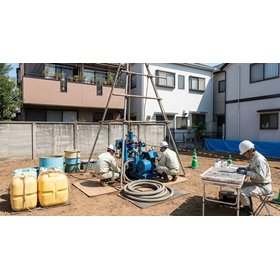
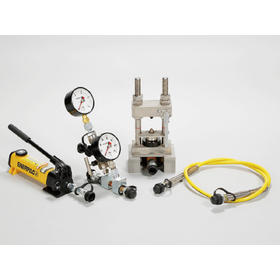
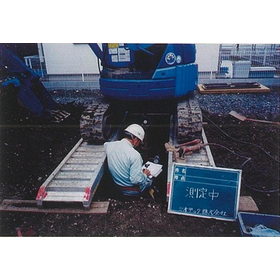
In accordance with the Geotechnical Engineering Society Standard JGS 1521, we will implement staged loading using reaction heavy machinery (such as backhoes) and a rigid loading plate (30 cm in diameter) based on the design load at the site. For load measurement, we will use high-precision load cells (compression load gauges), and for displacement measurement, we will use digital displacement gauges (such as CDP-50) with a resolution of 1/100 mm, automatically recording the settlement behavior with a self-recording device. We will thoroughly calibrate and inspect the equipment beforehand, including leveling the magnetic stands, and accurately calculate the ultimate bearing capacity, long-term allowable bearing capacity, and deformation coefficient from the obtained P-S curve to create a highly reliable analysis report.
Price range
Delivery Time
Applications/Examples of results
It is optimal for selecting the best foundation type (such as strip foundations or mat foundations) and evaluating ground bearing capacity in new construction plans for single-story logistics warehouses and distribution centers. It can be used to reduce costs associated with excessive piling or deep ground improvement, verify the load-bearing capacity of the floor slab where automated guided vehicles (AGVs) and heavy forklifts operate, and devise measures to prevent floor slope and cracking. Additionally, it can be utilized for second opinion evaluations on unnecessary ground reinforcement proposals, attaching supporting data to structural calculation documents, and providing technical justifications for confirmation applications and to clients and general contractors throughout the planning and design processes.
catalog(3)
Download All Catalogs

Company information

-



![Fence foundation dual-purpose decorative boundary block [Shikīru]](https://image.www.ipros.com/public/product/image/6d4/2000203792/IPROS6592272567679821523.gif?w=280&h=280)