Site Investigation | Plate Load Test and Direct Foundation Selection to Prevent Excessive Reinforcement of Single-Story Logistics Warehouses
Ground investigation

Reduce construction costs for single-story logistics warehouses! Directly evaluate the allowable bearing capacity of shallow ground through plate load tests to prevent excessive piling work and ground improvement, ensuring optimal foundation selection.
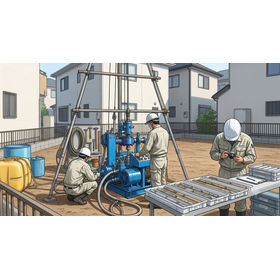
In the construction project of a single-story logistics warehouse, excessive piling work and ground improvement leading to increased construction costs pose significant challenges. Simple sounding surveys, such as the standard screw weight penetration test (SWS test), often result in the strength of shallow ground being underestimated on the safe side, leading to unnecessary reinforcement work being selected. This service conducts a "plate load test," where a rigid loading plate is placed on the ground surface to apply direct load, accurately measuring the ultimate bearing capacity and deformation coefficient directly beneath the foundation as numerical values. By clearly calculating the long-term allowable bearing capacity based on actual measurement data, we can scientifically determine whether direct foundations, such as mat foundations, can be adopted. Furthermore, we visualize the settlement behavior and residual settlement amount under design loads in detail, enabling optimal foundation design that eliminates the risk of floor unevenness during warehouse operations. Utilizing advanced analytical techniques and a vast ground database from Geotech, we ensure structural safety while eliminating excessive reinforcement, contributing to the reduction of construction costs.
Inquire About This Product
basic information
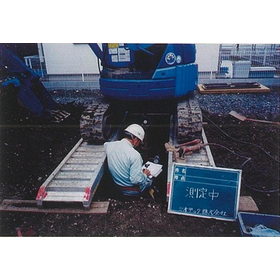
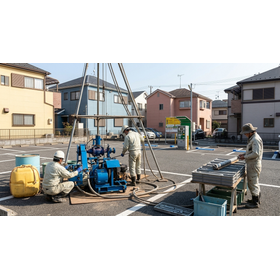
This test is conducted in accordance with the Geotechnical Engineering Society standard JGS 1521, using a backhoe and other equipment as a reaction device to apply multi-stage loads to a rigid loading plate (diameter 30 cm, etc.). High-precision compression load cells and displacement gauges (such as CDP-50) are employed for measurement, allowing for precise automatic recording of load and settlement amounts over time. Safety checks for the reaction device and pre-calibration of horizontal measurement levels are thoroughly conducted to obtain stable, high-precision data in millimeter units. From the test data, ultimate bearing capacity, long-term allowable bearing capacity, and deformation coefficients are calculated, and an analysis report based on objective technical evidence is prepared.
Price range
Delivery Time
Applications/Examples of results
It is optimal for evaluating ground bearing capacity in the selection of foundation types for newly constructed single-story logistics warehouses and distribution centers. It is particularly effective when determining the necessity of pile work or when wanting to switch to direct foundations such as strip foundations or mat foundations to reduce overall construction costs. Additionally, it can be used in a wide range of practical applications from the initial planning stage to the completion of design, including verifying the risk of localized settlement in areas where high-load racks or large forklifts operate, reviewing excessive ground improvement specifications (as a second opinion), and providing technical evidence for structural calculation documents and to review agencies.
catalog(2)
Download All Catalogs
Company information

-
![[For Construction Sites] Met the Standards for Accepting Excavated Soil in the Metropolitan Area | Designated Survey Agency Geotech](https://image.www.ipros.com/public/product/image/321794/IPROS7646055602274348654.png?w=280&h=280)

![Fence foundation dual-purpose decorative boundary block [Shikīru]](https://image.www.ipros.com/public/product/image/6d4/2000203792/IPROS6592272567679821523.gif?w=280&h=280)