Site Investigation | Application and Pile Length Optimization for Small Steel Buildings Using Preliminary Data and On-Site Surveys
Boring survey

We support optimal pile length design that clears appropriate judgments and confirmation applications by coordinating neighboring ground data comparisons and on-site surveys in the construction of steel frame buildings on narrow lots.
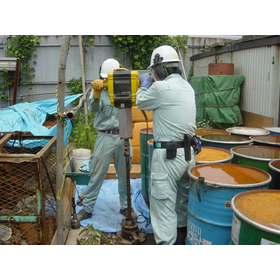
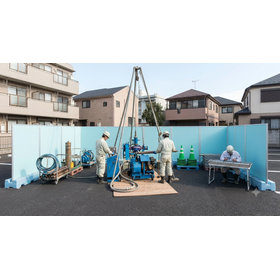
In newly constructed steel-framed buildings on narrow sites in urban areas, strict ground evaluations and clearly justified pile foundation designs are strongly required for building confirmation applications and structural calculation conformity assessments. However, on narrow sites with restrictions on heavy machinery access, conventional boring surveys can be challenging, often leading to excessive designs based on uncertain data. The ground investigation solution provided by Geotech is an advanced method that combines comparative analysis of neighboring boring column diagrams stored in a wide-area database with automatic ram-sounding tests using self-propelled small equipment. It accurately correlates continuous penetration resistance (Nd values) obtained on-site to the standard penetration test N values, precisely visualizing the depth of the bearing layer and the inclination of the strata. By calculating reliable allowable vertical bearing capacities based on scientific evidence, it eliminates excessive pile length designs while presenting optimal pile specifications and driving depths, all while maintaining structural safety. High-reliability ground investigation reports compliant with academic guidelines prevent inquiries during approvals and confirmation reviews, strongly supporting the efficiency of design work and smooth project commencement.
Inquire About This Product
basic information
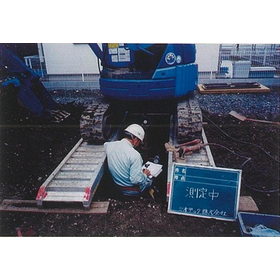
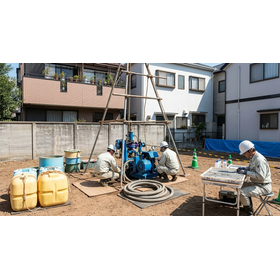
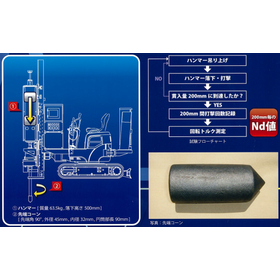
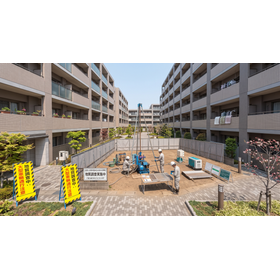
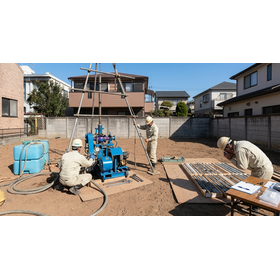
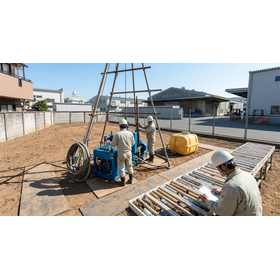
Using an automated self-propelled automatic ram sounding test machine (width 0.83m), high-density penetration measurements will be conducted in confined spaces. A weight of 63.5kg will be dropped continuously from a height of 50cm, recording the number of impacts (Nd value) and rotational torque for every 200mm of penetration up to a depth of 30m. By using a correlation analysis formula with the neighboring boring N values (N values of 50 or more) from the GEODAS ground database, high-precision converted resistance values will be calculated, correcting for N value conversion and the effects of excess pore water pressure. The data structure is designed to comply with the design allowable bearing capacity calculations as per building code notifications and academic guidelines.
Price range
Delivery Time
Applications/Examples of results
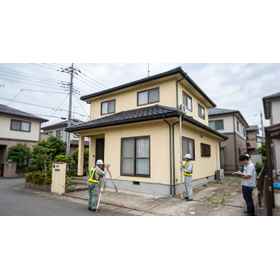
It is ideal for the structural design practice of mid-rise steel buildings, tenant buildings, and apartments planned in densely populated urban areas. It is particularly useful for ground bearing capacity evaluation at sites where the front road or site width is narrow and the installation of large boring machines is impossible. It demonstrates its effectiveness in optimizing pile lengths during foundation pile design by structural design offices and in considering reductions in material costs and construction costs associated with excessive design. Additionally, it is widely chosen as a technical support tool for smoothly advancing design reviews, including the preparation of submission documents for designated confirmation inspection agencies and structural calculation conformity assessment agencies, as well as responding to specialized inquiries from review agencies with evidence.
catalog(3)
Download All Catalogs

Company information

-
![Fence foundation dual-purpose decorative boundary block [Shikīru]](https://image.www.ipros.com/public/product/image/6d4/2000203792/IPROS6592272567679821523.gif?w=280&h=280)