
i-LIFT method that lifts buildings from the ground through grout injection.
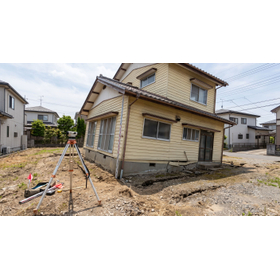
This method involves injecting grout (injection material) into the ground to lift and restore tilted or sunken buildings while simultaneously enhancing the ground's bearing capacity. The method consists of three "i (injection)" processes. First, repeated injections are made to form a "support plate" on the supporting layer. Next, injections are made beneath the foundation to create a "lift plate." Finally, "lift-up injection" is performed between the support plate and the lift plate to precisely raise the entire building. Utilizing laser measurement devices and computer-controlled three-dimensional tilt measurement systems, the tilt is continuously measured in real-time, allowing for precise leveling adjustments, making this a highly accurate, reliable, and safe construction technique.

Inquire About This Product
basic information
The grout used is primarily a chemically extremely stable quick-setting type of cement-based injection material, which has minimal dissipation during injection and maintains strength over the long term. The standard formulation per 400L consists of 100L of sodium silicate No. 3, 100L of main agent liquid water, 30kg of special hardener, 80kg of Portland cement, and 160L of water. It is supported by engineering evidence such as uniaxial compressive strength tests and volume change tests (maintaining 97.6% after 5 years) with 100% before water immersion. It can be constructed with compact machinery, allowing for implementation in narrow spaces without being affected by weather, and can be executed in a short construction period, providing excellent flexibility even when there are existing improved ground conditions (such as the RES-P method) without restrictions on foundation structures.
Price range
Delivery Time
Applications/Examples of results
It is applicable to the correction of building tilting and settlement due to insufficient ground support caused by terrain and surrounding environment. Specifically, it addresses cases of uneven consolidation settlement due to the installation of basements and underground garages, the mixing of natural ground and backfill or insufficient consolidation of embankments, landslide terrain, and imbalances in ground bearing capacity due to underground construction in adjacent areas. Furthermore, it can also be applied to "settlement prevention and liquefaction prevention measures" for the ground. It has a wealth of application results as an approach to solving various risks of ground deformation, such as support reinforcement in soft ground (using small-diameter pipes in combination with inclined piles and composite piles), prevention of consolidation settlement in embankment ground, and injection to prevent liquefaction during earthquakes in sandy layers.
catalog(2)
Download All Catalogs
Company information

-

![[Construction Example] Construction without moving the rack: Warehouse subsidence correction (Fukushima Prefecture)](https://image.www.ipros.com/public/product/image/9b5/2001208679/IPROS53995014472166850092.png?w=280&h=280)

![[Cart Customization Support] Blind spot confirmation that can be installed on any bridge inspection cart.](https://image.www.ipros.com/public/product/image/2101191/IPROS10664339049652487136.png?w=280&h=280)