iPROS Urban Planning
  • Search for products by classification category

    • Building Materials
      Building Materials
      36420items
    • Facilities
      Facilities
      58095items
    • Lighting and Interior
      Lighting and Interior
      17661items
    • Common materials
      Common materials
      37181items
    • Civil Engineering Materials
      Civil Engineering Materials
      10187items
    • Construction, work and methods
      Construction, work and methods
      29267items
    • Surveys, Measurements, and Services
      Surveys, Measurements, and Services
      29652items
    • IT/Software
      IT/Software
      33661items
    • others
      others
      96090items
    • Store and facility supplies
      Store and facility supplies
      4652items
    • Office and commercial supplies
      Office and commercial supplies
      11755items
    • Hospital and welfare facility supplies
      Hospital and welfare facility supplies
      1067items
    • Logistics Equipment
      Logistics Equipment
      7381items
    • Energy and Resources
      Energy and Resources
      11964items
  • Search for companies by industry

    • Information and Communications
      7296
    • others
      7237
    • Building materials, supplies and fixtures manufacturers
      6676
    • Service Industry
      4796
    • Trading company/Wholesale
      3103
    • Other construction industries
      2460
    • Electrical equipment construction business
      766
    • Construction Consultant
      655
    • General contractors and subcontractors
      593
    • Interior Design
      520
    • Facility Design Office
      487
    • Housing manufacturers and construction companies
      450
    • Architectural design office
      368
    • retail
      364
    • Warehousing and transport related industries
      333
    • Building Management
      303
    • Electricity, Gas and Water Industry
      286
    • Interior construction business
      283
    • Medical and Welfare
      277
    • Educational and Research Institutions
      256
    • Renovation and home construction industry
      226
    • Water supply and drainage construction business
      203
    • Transportation
      179
    • Real Estate Developers
      170
    • Fisheries, Agriculture and Forestry
      136
    • Structural Design Office
      65
    • Finance, securities and insurance
      41
    • Restaurants and accommodations
      33
    • self-employed
      30
    • Mining
      26
    • Public interest/special/independent administrative agency
      20
    • Police, Fire Department, Self-Defense Forces
      17
    • Property Owner
      9
    • Store and building owners
      9
    • Government
      9
    • Individual
      9
  • Special Features
  • Ranking

    • Overall Products Ranking
    • Overall Company Ranking
Search for Products
  • Search for products by classification category

  • Building Materials
  • Facilities
  • Lighting and Interior
  • Common materials
  • Civil Engineering Materials
  • Construction, work and methods
  • Surveys, Measurements, and Services
  • IT/Software
  • others
  • Store and facility supplies
  • Office and commercial supplies
  • Hospital and welfare facility supplies
  • Logistics Equipment
  • Energy and Resources
Search for Companies
  • Search for companies by industry

  • Information and Communications
  • others
  • Building materials, supplies and fixtures manufacturers
  • Service Industry
  • Trading company/Wholesale
  • Other construction industries
  • Electrical equipment construction business
  • Construction Consultant
  • General contractors and subcontractors
  • Interior Design
  • Facility Design Office
  • Housing manufacturers and construction companies
  • Architectural design office
  • retail
  • Warehousing and transport related industries
  • Building Management
  • Electricity, Gas and Water Industry
  • Interior construction business
  • Medical and Welfare
  • Educational and Research Institutions
  • Renovation and home construction industry
  • Water supply and drainage construction business
  • Transportation
  • Real Estate Developers
  • Fisheries, Agriculture and Forestry
  • Structural Design Office
  • Finance, securities and insurance
  • Restaurants and accommodations
  • self-employed
  • Mining
  • Public interest/special/independent administrative agency
  • Police, Fire Department, Self-Defense Forces
  • Property Owner
  • Store and building owners
  • Government
  • Individual
Special Features
Ranking
  • Overall Products Ranking
  • Overall Company Ranking
  • privacy policy
  • terms of service
  • About Us
  • Careers
  • Advertising
  1. Home
  2. Other construction industries
  3. ジオテック
  4. Product/Service List
Other construction industries
  • Added to bookmarks

    Bookmarks list

    Bookmark has been removed

    Bookmarks list

    You can't add any more bookmarks

    By registering as a member, you can increase the number of bookmarks you can save and organize them with labels.

    Free membership registration

ジオテック

capital5000Ten thousand
number of employees77
addressTokyo/Toshima-ku/3-20-21 Higashi-Ikebukuro, Kosen Building 3F
phone03-5985-8191
  • Special site
  • Official site
last updated:Jun 12, 2026
ジオテックlogo
  • Contact this company

    Contact Us Online
  • Company information
  • Products/Services(924)
  • catalog(504)
  • news(3)

ジオテック List of Products and Services

  • category

226~267 item / All 267 items

Displayed results

Filter by category

地盤調査 地盤調査
地盤補強(地盤改良)工事 地盤補強(地盤改良)工事
沈下修正工事・曳家工事 沈下修正工事・曳家工事
土壌汚染調査 土壌汚染調査
その他の住宅関連事業 その他の住宅関連事業
地歴調査 地歴調査
残土調査 残土調査
地盤補強(地盤改良)工事

地盤補強(地盤改良)工事

地盤補強工事について
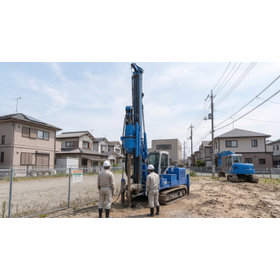
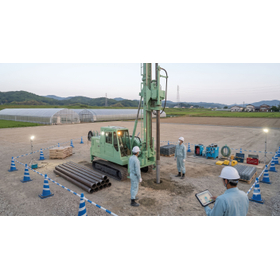
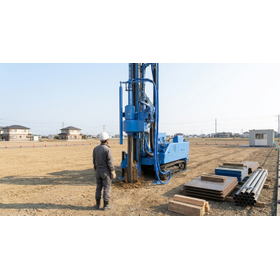
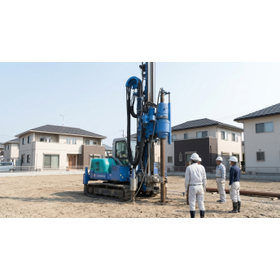
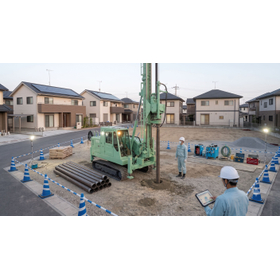
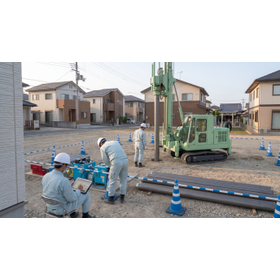
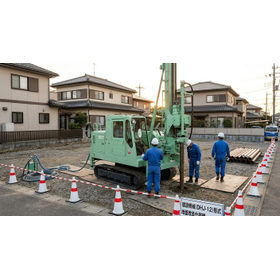
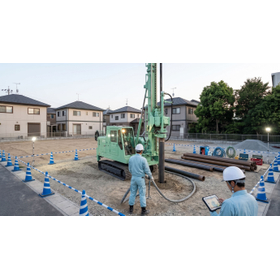
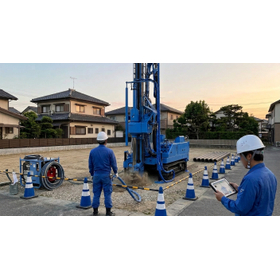
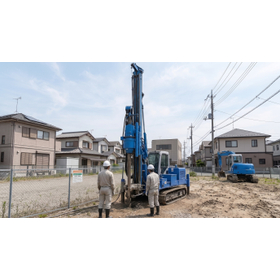
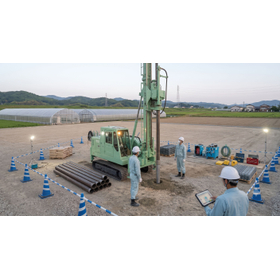
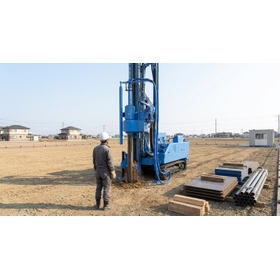
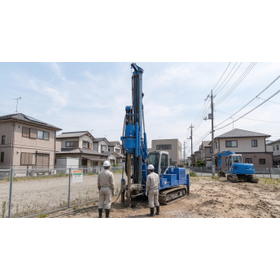
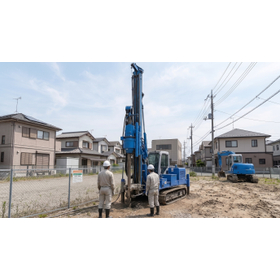
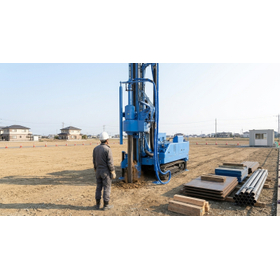
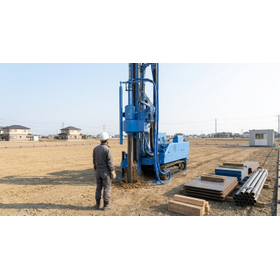
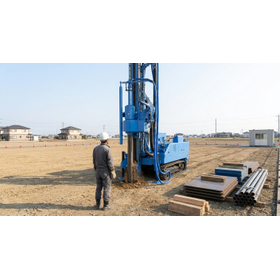
Ground reinforcement work | Preventing earthquake subsidence with strong small-diameter steel pipe piles for pushing and pulling.

Small-diameter steel pipe piles with enlarged tips respond to both pushing and pulling loads. They effectively prevent differential settlement and the overturning of structures caused by major earthquakes and strong winds.

This proposal presents a ground reinforcement solution using small-diameter steel pipe piles that maximizes seismic resistance and safety against complex external forces such as seismic motion and wind loads. During a major earthquake, structures on soft ground experience strong horizontal and uplift forces, raising concerns that traditional reinforcement relying solely on vertical bearing capacity may not prevent differential settlement or overturning accidents. The small-diameter steel pipe pile method exhibits extremely high resistance not only to compressive loads from above but also to tensile stresses that occur during earthquakes, thanks to the special enlarged wings equipped at the tip that firmly anchor to the bearing layer. The rotation-driven insertion method, which does not use cement, allows for construction without disturbing the ground and maintains stable strength immediately after installation. With a clear bearing capacity and uplift force calculation formula that has obtained official performance certification, advanced structural calculations focusing on disaster prevention can be conducted. GeoTech digitally records construction data throughout the entire process, providing clients with reliable quality and high seismic resistance backed by data.

Added to bookmarks

Bookmarks list

Bookmark has been removed

Bookmarks list

You can't add any more bookmarks

By registering as a member, you can increase the number of bookmarks you can save and organize them with labels.

Free membership registration

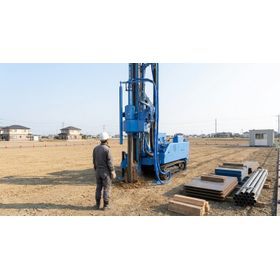
Ground reinforcement work | Supporting challenging sites with existing retaining walls and elevation differences using small-diameter steel pipe piles.

A small-diameter steel pipe pile method that does not exert lateral pressure on existing retaining walls. It enables safe and reliable foundation installation even under harsh site conditions such as elevation differences and proximity to cliffs.

This proposal is a small-diameter steel pipe pile ground reinforcement solution that addresses challenges in harsh site environments, such as properties close to existing retaining walls, irregularly shaped land with elevation differences, and areas subject to cliff regulations. In areas with elevation differences, uneven settlement is likely to occur due to uneven loading on buildings and soil pressure, necessitating careful consideration of the impact on retaining walls. The small-diameter steel pipe pile method uses a rotary penetration method without cement solidifying agents, allowing for installation without applying unnecessary lateral pressure to existing retaining walls, thereby minimizing the risk of landslides and wall damage to zero. By employing a compact and highly mobile specialized construction machine, smooth access is possible even in elevated or narrow areas near retaining walls. With a rich lineup of steel pipes, piles can be installed without soil displacement to depths that reliably exceed the angle of repose, and allowable bearing capacity is calculated based on clear formulas. At Geotech, we ensure thorough management from preliminary site surveys to digital management during construction, with consistent oversight by qualified personnel, guaranteeing safe and reliable foundation installation even in challenging sites.

Added to bookmarks

Bookmarks list

Bookmark has been removed

Bookmarks list

You can't add any more bookmarks

By registering as a member, you can increase the number of bookmarks you can save and organize them with labels.

Free membership registration

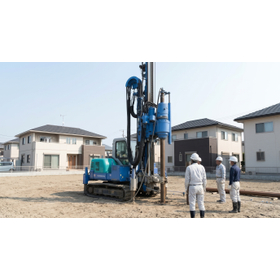
Ground reinforcement work | Achieving immediate foundation construction and shortening of construction period with zero curing time for rotary penetration.

Elimination of the curing period with a small-diameter steel pipe pile method that does not use cement. This enables the start of foundation work immediately after pouring, achieving a significant reduction in overall construction time and cost savings.

This proposal is a small-diameter steel pipe pile ground reinforcement solution aimed at construction projects that prioritize thorough efficiency and shortening of construction periods. Ground reinforcement to prevent settlement accidents in soft ground is essential, but traditional cement improvement methods have made the curing period a bottleneck in the process until strength is achieved. The small-diameter steel pipe pile method involves the complete dry construction of high-strength steel pipes being rotated and driven into the ground, eliminating the need to wait for cement curing, allowing for immediate commencement of foundation work right after pile installation is completed. There are no concerns about mud accumulation or site contamination due to rain, dramatically reducing the risk of delays in the process. The application range is extensive, covering single-family homes and stores up to three stories above ground, as well as retaining walls, with clear bearing capacity calculations possible from data such as SWS tests. GeoTech provides smooth construction without rework by combining rapid equipment arrangements with real-time quality verification through digital management devices, strongly supporting our clients' tight project schedules.

Added to bookmarks

Bookmarks list

Bookmark has been removed

Bookmarks list

You can't add any more bookmarks

By registering as a member, you can increase the number of bookmarks you can save and organize them with labels.

Free membership registration

Ground reinforcement work | Piles that tackle humus soil and ultra-soft ground with sealing effects and high load-bearing capacity.

A small-diameter steel pipe pile method that eliminates concerns about poor solidification even in humus soil and high-water-content clay. The tip closure effect penetrates soft layers and eradicates long-term consolidation settlement.

This proposal is a small-diameter steel pipe pile ground reinforcement solution that fundamentally addresses the settlement issues in difficult ground conditions where humus layers and highly water-saturated ultra-soft clay are deposited. In weak ground such as peatlands and old riverbeds, there is a high risk of poor solidification due to the inhibition of chemical reactions of cement-based solidifying agents, and conventional surface and columnar improvements cannot adequately prevent future consolidation settlement or building tilt. The small-diameter steel pipe pile method features a special enlarged tip that firmly anchors into a strong support layer through rotational penetration, demonstrating tremendous end bearing capacity due to the complete closure effect of the soil inside the pipe. As a method based on steel materials that does not use chemicals, it is not affected by soil conditions and reliably penetrates thick soft layers to provide stable support for buildings. Its application range covers residential buildings up to three stories and retaining walls, allowing for high-precision bearing capacity calculations based on SWS tests and boring data. GeoTech conducts digital recording of all installation data through torque monitoring, ensuring the delivery of the highest quality foundation installation without defects, even in difficult ground conditions.

Added to bookmarks

Bookmarks list

Bookmark has been removed

Bookmarks list

You can't add any more bookmarks

By registering as a member, you can increase the number of bookmarks you can save and organize them with labels.

Free membership registration

Ground reinforcement work | High-support-capacity small-diameter steel pipe piles suitable for large-scale facilities to stores.

A small-diameter steel pipe pile method equipped with a rich variety of pile diameters. It achieves optimal foundation reinforcement tailored to design loads, from small residential buildings to large stores.

This proposal is a flexible ground reinforcement solution using small-diameter steel pipe piles that responds to the diverse building scales and design loads, ranging from single-family homes to large retail stores, medical and welfare facilities, logistics warehouses, and retaining walls. To ensure long-term safety while minimizing excessive design in construction planning, it is crucial to select a foundation reinforcement method that fits the site conditions and structural loads perfectly. The small-diameter steel pipe pile method enables extremely rational and efficient structural design tailored to the design ground bearing capacity, thanks to its rich lineup of shaft diameters and various enlarged tips. As it employs a completely non-displacement rotary insertion method that does not use cement, it generates no construction waste even at large sites requiring mass pouring, significantly reducing disposal costs and the labor involved in removal. The applicable geology is broad, including sandy soil, clay, and loam layers, ensuring safety through a clear bearing capacity calculation formula. GeoTech is equipped with a nationwide construction network and a data tracking system using digital management devices, providing highly reliable and top-quality foundation reinforcement for all types of construction projects.

Added to bookmarks

Bookmarks list

Bookmark has been removed

Bookmarks list

You can't add any more bookmarks

By registering as a member, you can increase the number of bookmarks you can save and organize them with labels.

Free membership registration

Ground reinforcement work | Protecting structures with the high bearing capacity Σ-i method to prevent uneven settlement.

Eliminate the risk of uneven settlement of buildings! With the Σ-i method, which has excellent penetration and high tip support capacity, we achieve long-term safe structural design.

To ensure the long-term structural safety of buildings, it is essential to accurately assess the bearing capacity of the site ground and carry out optimal ground reinforcement work. Improper construction on weak ground can lead to tilting and cracking of buildings due to uneven settlement, which can diminish asset value. The "Σ-i Method" proposed by Geotech is a pile-type ground reinforcement method that uses a small-diameter steel pipe equipped with four cutting blades and an integrally molded spiral wing at its tip. Its unique tip structure generates high thrust power, allowing it to smoothly anchor into hard supporting layers and achieve significant tip bearing capacity. Additionally, the construction method does not use cement and generates no construction waste, maintaining a clean site environment with low noise and low vibration, thereby reducing environmental impact. It has obtained GBR-C performance certification from the Japan Building Disaster Prevention Association, enabling reliable foundation design utilizing SWS tests and dynamic cone penetrometer test results. Under a solid construction management system, we continue to safely support important structures from the ground up.

Added to bookmarks

Bookmarks list

Bookmark has been removed

Bookmarks list

You can't add any more bookmarks

By registering as a member, you can increase the number of bookmarks you can save and organize them with labels.

Free membership registration

Ground reinforcement work | Zero leftover soil and construction in narrow spaces achieved with the no-discharge Σ-i method technology.

Eco-friendly construction that generates no construction waste! The Σ-i method addresses the challenges of working in narrow spaces with compatible compact machinery, achieving overall cost reduction for the project.

In ensuring the safety of buildings, it is extremely important to scientifically evaluate the bearing capacity of the foundation ground and implement appropriate reinforcement. Constructing buildings on insufficiently strong ground can lead to tilting and cracking of structures due to differential settlement, which can have a serious negative impact on the durability of homes. The "Σ-i Method" (Sigma-i Method) provided by Geotech Co., Ltd. is an environmentally friendly pile foundation reinforcement technology that eliminates such ground risks. The integrated spiral wings and the excavation blade at the tip of the steel pipe exhibit strong self-advancing power, allowing for rotary insertion and placement without the use of chemical agents like cement milk. As a result, no construction-generated soil (excess soil) is produced, dramatically reducing disposal costs and transportation processing costs. Furthermore, the high penetration performance enables the use of compact construction machinery, facilitating smooth construction even in narrow road widths or densely populated residential areas with limited gaps between neighboring properties. A strict internal management system and real-time measurement of construction data ensure the objectivity and high quality of the work.

Added to bookmarks

Bookmarks list

Bookmark has been removed

Bookmarks list

You can't add any more bookmarks

By registering as a member, you can increase the number of bookmarks you can save and organize them with labels.

Free membership registration

Ground reinforcement work | The Σ-i method backed by excellent reliability with GBR-C performance certification.

Obtained performance certification from the Japan Architectural Comprehensive Testing Institute! We promise high-precision foundation anchoring with advanced rotary penetration technology and comprehensive parts management.

To maintain the structural stability of buildings over the long term, scientifically grounded ground reinforcement work tailored to the soil conditions at the construction site is essential. Building on weak ground can lead to serious issues such as tilting of the structure and cracks in the exterior walls due to uneven settlement. The "Σ-i Method" (Sigma-I Method) developed by Geotech Co., Ltd. is a highly reliable pile-type ground reinforcement technology that has obtained the Building Technical Performance Certification (GBRC Performance Certification No. 10-13) from the Japan Architectural Institute Foundation. The excavation blade installed at the tip of the steel pipe, along with the integrally molded spiral wings, generates strong penetration thrust, allowing for smooth anchoring into hard ground and ensuring reliable tip support. The rotary penetration method, which does not use cement milk, generates no construction waste, significantly reducing environmental impact as well as vibrations and noise to nearby areas. Under strict design and construction management by certified professional engineers and a real-time data monitoring system, we provide the highest level of construction quality and peace of mind to our clients.

Added to bookmarks

Bookmarks list

Bookmark has been removed

Bookmarks list

You can't add any more bookmarks

By registering as a member, you can increase the number of bookmarks you can save and organize them with labels.

Free membership registration

Ground reinforcement work | Gravel soil strategy! Achieving reliable bearing capacity with the advanced Σ-i method.

Smoothly conquer hard layers and gravelly ground! The Σ-i method, equipped with four excavation blades and integrally molded wings, provides reliable anchoring and powerful support to deep supporting layers.

To maintain the stability of architectural structures, it is essential to accurately diagnose the bearing capacity of the local ground and implement ground reinforcement work according to the risk of settlement. When differential settlement occurs, excessive stress concentrates on the structure, leading to damage issues such as structural cracks and distortion of openings. The "Σ-i Method" proposed by Geotech is a small-diameter steel pipe pile method equipped with four excavation blades and an integrally formed spiral wing at the tip of the steel pipe. Its unique four-blade structure exhibits powerful drilling capability, allowing it to penetrate hard gravelly ground and compacted sandy layers that are difficult to construct with conventional rotary penetration techniques, achieving high penetration thrust to reach the target bearing layer. By using a rotary pressure insertion method that does not utilize cement-based solidifying materials, it achieves a completely zero-dirt construction with no construction waste generated. It has obtained the GBR-C performance certification from the Japan Building Comprehensive Testing Institute (No. 10-13 Rev. 2), enabling the calculation of highly accurate allowable bearing capacity from SWS tests and dynamic cone penetration tests. Certified construction management engineers monitor construction data with the latest measuring equipment, ensuring the establishment of high-quality foundation slabs.

Added to bookmarks

Bookmarks list

Bookmark has been removed

Bookmarks list

You can't add any more bookmarks

By registering as a member, you can increase the number of bookmarks you can save and organize them with labels.

Free membership registration

Ground reinforcement work | Achieving cost reduction with zero leftover soil and low-noise construction using the Σ-i method.

Achieving zero construction waste and low noise/low vibration construction! The Σ-i method thoroughly reduces environmental impact while simultaneously preventing neighborhood troubles and reducing construction costs.

In construction projects in urban areas and densely populated residential areas, there is a strong demand for safety to prevent ground subsidence accidents, as well as meticulous consideration for the surrounding environment. If weak ground with insufficient strength is left unattended, differential settlement can occur, leading to tilting and cracking damage of structures. The "Σ-i Method" (Sigma-i Method) provided by Geotech is a soil-displacement-free small-diameter steel pipe reinforcement technology that does not use solidifying materials such as cement and is installed solely through rotary insertion. Since no construction-generated soil (excess soil) is produced during excavation, it dramatically reduces the costs of soil disposal and the effort required for on-site processing, contributing to significant cost reductions and shortened construction periods. Additionally, it is compatible with small installation machines that allow for low-noise and low-vibration construction, enabling safe work even in narrow sites or where there is limited space between neighboring buildings. It has obtained GBR certification from the Japan Building Disaster Prevention Association, achieving a high level of environmental conservation and advanced structural support capability. Through strict management of construction data in-house, we provide transparent and safe ground reinforcement work.

Added to bookmarks

Bookmarks list

Bookmark has been removed

Bookmarks list

You can't add any more bookmarks

By registering as a member, you can increase the number of bookmarks you can save and organize them with labels.

Free membership registration

Ground reinforcement work | Supported by GBR-C performance certification and construction management data, Σ-i method

Obtained performance certification from the Japan Architectural Comprehensive Testing Institute! Demonstrating high reliability and safety through real-time construction data analysis and comprehensive parts management.

To ensure the structural safety of buildings over a long period, it is essential to conduct objective ground evaluations based on public standards and to carry out ground reinforcement work backed by reliable data. Accidents caused by insufficient ground bearing capacity, leading to differential settlement, are the primary factors that result in structural damage and a significant drop in asset value. The "Σ-i Method" (Sigma-i Method) provided by Geotech Co., Ltd. is an extremely reliable ground reinforcement technology that has obtained the Building Technical Performance Certification (GBRC Performance Certification No. 10-13 Rev. 2) from the Japan Building Disaster Prevention Association. The advanced four-blade excavation cutter and integrally molded spiral wings generate excellent penetration thrust, ensuring secure anchoring into hard bearing layers and demonstrating powerful end bearing capacity. During construction, a dedicated management device installed on all construction machines automatically measures and tracks the rotational torque and installation depth, objectively proving the performance as planned through numerical data. Furthermore, thorough lot management of all end wing parts ensures high quality assurance and compliance.

Added to bookmarks

Bookmarks list

Bookmark has been removed

Bookmarks list

You can't add any more bookmarks

By registering as a member, you can increase the number of bookmarks you can save and organize them with labels.

Free membership registration

Ground reinforcement work | Highly supportive Σ-i method that flexibly responds from retaining walls to buildings.

Flexible support from small buildings to high retaining walls! The Σ-i method provides overwhelming penetration performance and support strength with its monolithic wing, safely supporting a variety of structures.

To safely maintain structures such as buildings and retaining walls over the long term, it is essential to accurately assess the allowable stress of the local ground and implement optimal ground reinforcement work. If construction is carried out on insufficiently strong soft ground, differential settlement can occur, leading to catastrophic damage such as distortion of the structure and cracks in the exterior walls. The "Σ-i Method" (Sigma-i Method) provided by Geotech is an advanced pile-type ground reinforcement technology equipped with four excavation blades and a monolithic spiral wing at the tip of a small-diameter steel pipe. Its unique four-blade structure and spiral wing generate high-efficiency penetration thrust, allowing it to smoothly reach hard supporting ground and exhibit powerful end-bearing capacity. The rotary insertion method, which does not use cement milk or similar materials, generates no construction waste, reducing disposal costs and minimizing noise and vibration to neighboring areas. It has obtained GBR-C performance certification from the Japan Building Comprehensive Testing Institute, reliably meeting a wide range of design needs from single-family homes to retaining wall foundations.

Added to bookmarks

Bookmarks list

Bookmark has been removed

Bookmarks list

You can't add any more bookmarks

By registering as a member, you can increase the number of bookmarks you can save and organize them with labels.

Free membership registration

Ground reinforcement work | Delivering trust through full lot management and data management with the Σ-i method.

Thorough management of all parts and real-time construction data recording! The Σ-i method delivers trust with high-precision termination judgment and a highly transparent quality assurance system.

To ensure the long-term structural safety of buildings, it is essential to accurately assess the performance of the foundation subsoil and carry out appropriate ground reinforcement work. Proceeding with construction while the soil strength is insufficient can lead to distortions and cracks in the structure due to differential settlement, significantly compromising the overall durability of the building. The "Σ-i Method" (Sigma-i Method) provided by Geotech Co., Ltd. is a pile-type ground reinforcement technology that combines excellent penetration capability with reliable quality control. The four excavation blades at the tip of the steel pipe and the integrally molded spiral wings generate powerful thrust, allowing for smooth anchoring to the target bearing layer and ensuring reliable end bearing capacity. During construction, a construction management device, standardly equipped on all machines, automatically records rotational torque and penetration depth, enabling objective termination judgment based on data. Additionally, high traceability is established through lot management with serial numbers for all tip wing parts. It has obtained GBR-C performance certification from the Japan Building Comprehensive Testing Institute, firmly supporting the foundation of structures with solid quality.

Added to bookmarks

Bookmarks list

Bookmark has been removed

Bookmarks list

You can't add any more bookmarks

By registering as a member, you can increase the number of bookmarks you can save and organize them with labels.

Free membership registration

Ground reinforcement work | Σ-i method generates tremendous support strength with integrally molded spiral wings.

A one-piece molded spiral wing with a maximum diameter of three times the axis diameter achieves tremendous support strength! It smoothly adheres to hard layers, fundamentally eliminating the risk of sinking with the Σ-i method.

To achieve the long-term structural safety of buildings, it is essential to scientifically assess the bearing capacity of the local ground and carry out optimal ground reinforcement work. Constructing buildings without appropriate measures on weak ground or uneven strata can lead to tilting due to settlement and damage to the structure, significantly reducing seismic performance and asset value. The "Σ-i Method" proposed by Geotech is a high-bearing-capacity pile-type ground reinforcement technology that features four excavation blades and an integrally molded spiral wing at the tip of a steel pipe. The diameter of the tip wing is designed to be 2.5 to 3.0 times larger than the shaft diameter, providing tremendous vertical bearing capacity by deeply penetrating and anchoring into the hard supporting ground. By adopting a rotary penetration method that does not use cement emulsion, there is no construction-generated soil (excess soil), achieving a reduction in disposal costs and zero environmental pollution. It has obtained the GBR-C performance certification (No. 10-13 revised 2) from the Japan Building Comprehensive Testing Institute, allowing for objective allowable bearing capacity calculations utilizing SWS tests and dynamic cone penetration test results. Through strict in-house construction management, we build the highest quality foundation slabs.

Added to bookmarks

Bookmarks list

Bookmark has been removed

Bookmarks list

You can't add any more bookmarks

By registering as a member, you can increase the number of bookmarks you can save and organize them with labels.

Free membership registration

Ground reinforcement work | The Σ-i method generates reliable bearing capacity through calculations directly linked to survey data.

Directly calculate the allowable bearing capacity from SWS tests and ram soundings! The Σ-i method supports reliable structural design with clear technical basis and digital management.

To ensure the structural safety of buildings, it is essential to correctly evaluate the soil data and equivalent N values obtained from ground surveys and to select the optimal ground reinforcement work. If the foundation is laid while the ground strength is insufficient, uneven settlement can occur, leading to irreparable issues such as distortion of the structure and damage to the walls. The "Σ-i Method" (Sigma-i Method) provided by Geotech Co., Ltd. is a pile-type ground reinforcement technology that has established a rational method for calculating allowable bearing capacity using the results of SWS tests and automatic ram sounding tests. The four excavation blades at the tip of the steel pipe and the integrally formed spiral wings exhibit excellent penetration thrust, smoothly reaching the target bearing layer and acquiring significant tip bearing capacity. The rotary insertion method, which does not use cement-based solidifying materials, generates no construction waste (excess soil), thereby reducing disposal costs and on-site processing costs. It has obtained GBR-C performance certification from the Japan Building Comprehensive Testing Institute and provides highly transparent and reliable construction under a digital construction data management system.

Added to bookmarks

Bookmarks list

Bookmark has been removed

Bookmarks list

You can't add any more bookmarks

By registering as a member, you can increase the number of bookmarks you can save and organize them with labels.

Free membership registration

Ground reinforcement work using the CWC method for detached houses | Geotech

Real-time visualization of construction data. Reliable ground reinforcement to prevent differential settlement in single-family homes.

In the construction of detached houses, it is important to objectively demonstrate the quality of ground reinforcement work to prevent differential settlement in the future and ensure the safety of the home. If the digital visualization of construction management is insufficient, there is a risk that it will be difficult to confirm whether the required bearing capacity is achieved as per the design. The CWC method from Geotech automatically measures the number of rotations and the amount of curing material injected during construction, and by saving accurate pouring records, it ensures reliable construction quality. 【Usage Scenarios】 - Measures to prevent differential settlement in newly built detached houses - Reinforcement for various ground types such as sandy soil, clay, and loam layers - Construction sites for houses requiring long-term ground guarantees 【Benefits of Implementation】 - Objective quality proof through automatic recording of all construction data - Smooth application of ground guarantee insurance through secured traceability - Reliable ground reinforcement using methods that obtain GBRC performance certification

Added to bookmarks

Bookmarks list

Bookmark has been removed

Bookmarks list

You can't add any more bookmarks

By registering as a member, you can increase the number of bookmarks you can save and organize them with labels.

Free membership registration

Ground reinforcement using CWC method for residential buildings | Geotech

Visualizing construction data and ground reinforcement work that supports the long-term asset value of apartment buildings.

In the operation of residential complexes, ensuring the safety of buildings and maintaining asset value are extremely important. To reduce the risk of uneven ground subsidence and ensure the long-term stability of buildings, a management system that can objectively demonstrate construction quality is essential. If construction records are unclear, it may affect future repair plans and asset value assessments. GeoTech Co., Ltd.'s CWC method provides accurate data that supports the acquisition of bearing capacity as designed through digital visualization of construction management, offering reliable ground guarantees. 【Usage Scenarios】 - Foundation ground reinforcement for newly constructed residential complexes - Ensuring ground safety aimed at maintaining long-term asset value - Large-scale construction projects requiring traceability 【Benefits of Implementation】 - Objective quality assurance through automatic measurement and storage of all construction data - Reliable ground reinforcement using methods that obtain GBRC performance certification - Smooth application of ground guarantee insurance for risk management

Added to bookmarks

Bookmarks list

Bookmark has been removed

Bookmarks list

You can't add any more bookmarks

By registering as a member, you can increase the number of bookmarks you can save and organize them with labels.

Free membership registration

Ground reinforcement using the CWC method for logistics warehouses | Geotech

Supporting floor load with full data visualization. The CWC method supports stable operations of logistics warehouses.

In the construction of logistics warehouses, high floor load stability that can withstand heavy stored items and frequent forklift traffic is required. Ground subsidence not only reduces logistics efficiency within the warehouse but also directly impacts the safety of the building, making objective proof of construction quality essential. The CWC method from Geotech supports the long-term stable operation of logistics warehouses by ensuring the required bearing capacity as per design through digital visualization of construction management and achieving uniform column formation. 【Application Scenarios】 - Foundation ground reinforcement for large logistics warehouses storing heavy items - Subsidence suppression of floor surfaces frequently traversed by forklifts - Construction under various ground conditions such as sandy soil, clay, and loam layers 【Benefits of Implementation】 - Objective quality proof through automatic recording of all construction data - Stability of floor load through uniform column formation based on design strength standards - Smooth application of ground guarantee insurance through secured traceability

Added to bookmarks

Bookmarks list

Bookmark has been removed

Bookmarks list

You can't add any more bookmarks

By registering as a member, you can increase the number of bookmarks you can save and organize them with labels.

Free membership registration

Ground reinforcement and quality visualization using CWC method for commercial facilities | Geotech

Automatic recording of all construction data. Quality control system of the CWC method that supports the safety of commercial facilities.

In large-scale buildings such as commercial facilities, it is extremely important to objectively prove the quality of ground reinforcement work to ensure long-term safety and reliability. If construction management is unclear, there are concerns about the risk of future differential settlement and its impact on asset value. GeoTech's CWC method provides reliable assurance to clients and stakeholders by automatically measuring and recording all data in real-time during construction, objectively confirming the acquisition of support capacity as designed. 【Usage Scenarios】 - Ground reinforcement work in the construction of new commercial facilities - Large-scale construction projects requiring high-quality proof of construction - Sites where the application of ground guarantee with an emphasis on traceability is necessary 【Benefits of Implementation】 - Realization of objective quality proof through automatic recording of construction data - Assurance of uniform column formation through real-time monitoring - Smooth application of ground guarantee insurance through secured traceability

Added to bookmarks

Bookmarks list

Bookmark has been removed

Bookmarks list

You can't add any more bookmarks

By registering as a member, you can increase the number of bookmarks you can save and organize them with labels.

Free membership registration

Ground reinforcement using the CWC method for medical facilities | Geotech

Visualizing all construction data. Reliable ground reinforcement supporting the seismic resistance of medical facilities.

In medical facilities, maintaining functionality during an earthquake and ensuring patient safety is the top priority. To enhance the seismic resistance of buildings, it is essential to secure uniform bearing capacity of the ground supporting the foundation, as variations in construction quality may pose risks of future differential settlement. GeoTech's CWC method objectively proves the designed bearing capacity through digital visualization of construction management, ensuring long-term safety. 【Usage Scenarios】 - Ground reinforcement for seismic foundations in newly constructed medical facilities - Ground improvement for hospitals and clinics requiring high reliability - Sites aiming to reduce the risk of differential settlement and extend the lifespan of buildings 【Benefits of Implementation】 - Objective quality assurance through automatic recording of construction data for all units - Smooth application of ground guarantee insurance through secured traceability - Stable bearing capacity achieved through uniform column formation using patented technology

Added to bookmarks

Bookmarks list

Bookmark has been removed

Bookmarks list

You can't add any more bookmarks

By registering as a member, you can increase the number of bookmarks you can save and organize them with labels.

Free membership registration

Ground reinforcement using CWC method for data centers | Geotech

Visualizing construction data and supporting stable operation of equipment through ground reinforcement. Providing reliable bearing capacity with the CWC method.

In the operation of data centers, the stability of the floor where precision equipment such as servers is installed is extremely important from the perspective of vibration control and long-term operational continuity. Uneven ground settlement and insufficient strength pose risks that can adversely affect the operation of the equipment. Therefore, construction management that ensures the designed support capacity is reliably demonstrated and forms a uniform foundation is required. The CWC method by Geotech supports the safety of the ground that serves as the foundation for data centers by digitally managing construction data and providing objective quality assurance. 【Usage Scenarios】 - Ground reinforcement during the construction of new data centers - Suppression of uneven settlement in precision equipment installation areas - Formation of a robust foundation to reduce the impact of vibrations 【Benefits of Implementation】 - Objective verification of construction quality through automatic measurement of all boreholes - Stable support capacity through uniform column formation based on design strength standards - Application of ground guarantees ensured by traceability

Added to bookmarks

Bookmarks list

Bookmark has been removed

Bookmarks list

You can't add any more bookmarks

By registering as a member, you can increase the number of bookmarks you can save and organize them with labels.

Free membership registration

Ground reinforcement work using the CWC method for factory plants | Geotech

Visualizing the quality of the ground that supports the production line. Reliable ground reinforcement achieved with the CWC method.

In factory plant production lines, a long-term stable foundation is required to withstand vibrations and weight loads associated with equipment operation. Differential settlement of the ground directly leads to a decrease in the precision of the production line and an increased risk of equipment shutdown, making objective proof of construction quality and high reliability essential. GeoTech Corporation's Cross-Wing Column Method (CWC Method) provides a ground environment that supports stable factory operations by digitally visualizing construction management and substantiating the designed bearing capacity. 【Application Scenarios】 - Ground reinforcement associated with the installation of heavy production equipment and large machinery - Measures against differential settlement aimed at maintaining the precision of the production line - Ground surveys and reinforcement work during factory expansions 【Benefits of Implementation】 - Objective quality proof through automatic recording of all construction data - Smooth application of ground guarantee insurance through secured traceability - Provision of stable bearing capacity through uniform column formation using patented technology

Added to bookmarks

Bookmarks list

Bookmark has been removed

Bookmarks list

You can't add any more bookmarks

By registering as a member, you can increase the number of bookmarks you can save and organize them with labels.

Free membership registration

Ground Reinforcement Work for Detached Houses using the Geo-Column Method | Geotech

Real-time visualization of construction data. Thorough quality control and ground reinforcement technology to prevent differential settlement in single-family homes.

In the construction of detached houses, it is essential to prevent differential settlement of the ground to ensure long-term safety. Particularly, objectively managing and visualizing the quality of underground improvement bodies, which become invisible, is extremely important for supporting the building's foundation. Variability in construction quality can lead to future differential settlement, making reliable construction management necessary. The Geo-Column method is a technology that demonstrates quality according to design by recording and collecting construction data in real-time using automatic management measurement devices. 【Usage Scenarios】 - Ground reinforcement work for newly built detached houses - Improvement of ground where the risk of differential settlement needs to be reduced - Reliable anchoring of support layers in cohesive and sandy soils 【Benefits of Implementation】 - Objective quality proof through automatic recording of construction data - Long-term peace of mind ensured by traceability - Formation of homogeneous and robust soil-cement columns based on design values

Added to bookmarks

Bookmarks list

Bookmark has been removed

Bookmarks list

You can't add any more bookmarks

By registering as a member, you can increase the number of bookmarks you can save and organize them with labels.

Free membership registration

Ground reinforcement using the GeoColumn method for logistics warehouses | Geotech

By visualizing construction data, we achieve reliable ground quality that supports the floor load of logistics warehouses.

In the construction of logistics warehouses, a high floor load-bearing capacity and a stable foundation that can withstand the storage of heavy goods and frequent forklift traffic are required to prevent differential settlement. If the ground's bearing capacity is insufficient, it can lead to floor settlement and cracking, posing risks of halting logistics operations and increasing repair costs. The Geo-Column method ensures the formation of a robust ground improvement body as designed by automatically recording and visualizing construction data in real time, thereby guaranteeing long-term safety. 【Application Scenarios】 - Ground reinforcement for logistics warehouse floors storing heavy goods - Foundation stabilization in areas subjected to load from forklift traffic - New construction projects aiming to reduce the risk of differential settlement and ensure long-term facility operation 【Benefits of Implementation】 - Quality assurance through objective construction data - Ensured floor load-bearing capacity with homogeneous and robust soil-cement columns - Improved peace of mind in facility management through secured traceability

Added to bookmarks

Bookmarks list

Bookmark has been removed

Bookmarks list

You can't add any more bookmarks

By registering as a member, you can increase the number of bookmarks you can save and organize them with labels.

Free membership registration

Foundation reinforcement using the Geo Column method for commercial facilities | Geotech

Ensure reliable quality control for large-scale foundations of commercial facilities through the visualization of construction data.

In large-scale buildings such as commercial facilities, it is essential to objectively and rigorously manage the quality of the ground improvement body to ensure long-term safety. Proving the construction quality underground, which is not visible, directly relates to maintaining the reliability of the facility. The Geo-Column method supports the construction of a reliable foundation by demonstrating the establishment of the support layer and the formation of a homogeneous improvement body according to design through real-time data collection using automated management measurement devices. 【Usage Scenarios】 - Ground reinforcement during the construction of large commercial facilities - Construction of foundation slabs requiring high bearing capacity - Projects that require objective proof of construction quality 【Benefits of Implementation】 - Ensured transparency of quality through real-time visualization of construction data - Reliable establishment of support layers based on numerical data - Long-term traceability maintained through electronic storage

Added to bookmarks

Bookmarks list

Bookmark has been removed

Bookmarks list

You can't add any more bookmarks

By registering as a member, you can increase the number of bookmarks you can save and organize them with labels.

Free membership registration

Geocore Method for Factory Plants | Geotech

Real-time visualization of construction data. Achieving high-precision ground reinforcement essential for vibration countermeasures.

In the operation of factory plant equipment, it is extremely important to suppress vibrations during operation and maintain a stable production environment. Uneven ground support can lead to amplified vibrations of the equipment and differential settlement, resulting in decreased production efficiency and equipment troubles. Therefore, high construction quality that ensures the designed strength is essential for ground reinforcement. The Geo-Column method supports the reliability required as a foundation for factory plants by forming a homogeneous ground improvement body through objective numerical management using automated monitoring devices. 【Usage Scenarios】 - Vibration suppression measures for ground associated with the installation of large machinery and rotating equipment - High-precision foundation ground reinforcement during plant expansion - Ground improvement to reduce the risk of differential settlement and ensure the stability of equipment operation 【Effects of Implementation】 - Realization of objective and rigorous quality management through automatic collection of construction data - Assurance of a stable support layer through the formation of homogeneous soil-cement columns - Long-term quality assurance after construction through a complete traceability system

Added to bookmarks

Bookmarks list

Bookmark has been removed

Bookmarks list

You can't add any more bookmarks

By registering as a member, you can increase the number of bookmarks you can save and organize them with labels.

Free membership registration

Ground Improvement Work for Data Centers | Geo-Column Method | Geotech

Managing quality through construction data visualization. High-precision ground reinforcement supporting the stable operation of data centers.

In the construction of data centers, extremely high ground support performance and reliability are required to stably support heavy equipment such as servers and precision instruments over a long period. Variations in the quality of ground improvement materials can lead to future differential settlement risks, potentially affecting the overall safety of the facility. Therefore, it is essential to strictly manage and visualize the quality of the underground improvement materials, which will be hidden from view, using objective numerical data. The Geo-Column method supports the stable operation of data centers by recording construction data in real-time with automated management measurement devices and building a robust foundation as per the design. 【Usage Scenarios】 - Foundation ground reinforcement for data centers that install heavy server equipment - Ground improvement for critical facilities requiring long-term differential settlement suppression - Large-scale construction projects that require objective quality certification 【Benefits of Implementation】 - Realization of objective and rigorous quality management through automatic collection of construction data - Establishment of support layers as designed and formation of homogeneous soil-cement columns - Assurance of long-term traceability through electronic storage of all construction data

Added to bookmarks

Bookmarks list

Bookmark has been removed

Bookmarks list

You can't add any more bookmarks

By registering as a member, you can increase the number of bookmarks you can save and organize them with labels.

Free membership registration

Ground reinforcement using the Tiger Pile method for detached houses | Geotech

We achieve shorter construction periods and cost reductions for single-family homes through improved support strength and construction efficiency.

In the construction of detached houses, shortening the construction period and controlling costs for ground improvement work are crucial issues that affect business profitability. If appropriate methods are not chosen for weak ground, it can lead to risks of uneven settlement, excessive construction, and large amounts of soil disposal, which can strain the budget. The Tiger Pile method is a hybrid technology that uses high-strength stepped steel pipes as core materials in soil cement columns. By increasing the vertical bearing capacity per improved body, it shortens the construction length, enabling optimization of the construction period and costs. 【Usage Scenarios】 - Foundation work for detached houses on weak ground - Residential construction projects requiring shortened construction periods - Sites aiming to reduce construction waste generation 【Benefits of Implementation】 - Significant reduction in construction length leading to shortened construction periods - Reduction in disposal and transportation costs due to decreased soil waste generation - Budget control through reduced number of pouring locations

Added to bookmarks

Bookmarks list

Bookmark has been removed

Bookmarks list

You can't add any more bookmarks

By registering as a member, you can increase the number of bookmarks you can save and organize them with labels.

Free membership registration

【For Logistics Warehouses】Floor Settlement Prevention Using Tiger Pile Method | Geotech

Reduce the risk of floor subsidence in logistics warehouses with high support capacity and shortened construction periods. Achieve cost-effective ground reinforcement.

In the construction and operation of logistics warehouses, uneven settlement of the floor due to the storage of heavy goods poses a significant risk that can lead to decreased logistics efficiency and increased repair costs. To maintain a stable floor surface, it is essential to ensure the ground's bearing capacity and implement ground reinforcement to prevent settlement in advance. The Tiger Pile method enhances the vertical bearing capacity per improved body by combining soil-cement columns with high-strength stepped steel pipes, achieving the high ground quality required for logistics warehouses. 【Application Scenarios】 - Ground reinforcement for the floor of logistics warehouses storing heavy goods - Measures against uneven settlement during warehouse construction on soft ground - Foundation work for large-scale logistics facilities requiring shortened construction periods 【Benefits of Implementation】 - Reduced risk of settlement and ensured stability of the floor surface through high bearing capacity - Cost reduction through shortened construction time and reduced amount of surplus soil generated - Early commencement of facility operations due to shortened construction periods

Added to bookmarks

Bookmarks list

Bookmark has been removed

Bookmarks list

You can't add any more bookmarks

By registering as a member, you can increase the number of bookmarks you can save and organize them with labels.

Free membership registration

Ground reinforcement using the Tiger Pile method for commercial facilities | Geotech

By improving high support capacity and construction efficiency, we achieve both early opening of commercial facilities and cost optimization.

In commercial facility development projects, early opening through shortened construction periods is a crucial factor that influences business profitability. Choosing inappropriate construction methods for weak ground can lead to excessive construction lengths and large amounts of construction waste, resulting in risks of delays and budget overruns. The Tiger Pile method enhances the vertical bearing capacity per improved body by placing high-strength stepped steel pipes as core materials in soil cement columns, achieving significant reductions in construction length and overall construction time. 【Usage Scenarios】 - Ground reinforcement in the construction of new commercial facilities - Development projects requiring shortened construction periods - Sites aiming to minimize the generation of construction waste 【Benefits of Implementation】 - Significant compression of construction periods due to reduced construction lengths - Reduction in disposal and transportation costs due to decreased waste generation - Control of total budget through reduced number of pouring locations

Added to bookmarks

Bookmarks list

Bookmark has been removed

Bookmarks list

You can't add any more bookmarks

By registering as a member, you can increase the number of bookmarks you can save and organize them with labels.

Free membership registration

Ground reinforcement using the Tiger Pile method for data centers.

Achieving high support capacity and shortened construction time. A rational ground reinforcement solution that supports the seismic resistance of data centers.

In the construction of data centers, high ground support strength to support a vast amount of server equipment and the shortening of the construction period until the start of operations are extremely important. If appropriate reinforcement is not carried out for weak ground, there is a risk of load on the building due to differential settlement and a decrease in seismic performance. The Tiger Pile method enhances the vertical support strength per improved body through a hybrid technology that combines soil-cement columns and high-strength stepped steel pipes, achieving a robust foundation structure. This enables the optimization of construction period and costs while ensuring the high seismic resistance and reliability required for data centers. 【Application Scenarios】 - Measures against weak ground during the construction of new data centers - Construction of high-support foundations to support building weight - Construction projects requiring shortened construction periods - Sites wanting to minimize the generation of construction waste 【Effects of Implementation】 - Securing high vertical support strength with stepped steel pipe core materials - Compression of construction period and reduction of total costs through shortened construction length - Reduction of disposal costs due to decreased generated waste - Stabilization of construction quality through real-time monitoring

Added to bookmarks

Bookmarks list

Bookmark has been removed

Bookmarks list

You can't add any more bookmarks

By registering as a member, you can increase the number of bookmarks you can save and organize them with labels.

Free membership registration

Ground reinforcement using the Tiger Pile method for factory plants | Geotech

Efficient ground reinforcement for heavy objects. A hybrid technology that achieves shortened construction periods and cost reduction.

In the construction of factory plants and the expansion of equipment, ensuring ground support strength to support heavy objects is a crucial issue directly linked to the stable operation of the business. Choosing inappropriate construction methods for weak ground can lead to equipment troubles due to differential settlement, as well as delays in construction time and increased costs for disposing of excess soil, putting pressure on the overall project budget. The Tiger Pile method, using a hybrid technology that combines soil cement columns and high-strength stepped steel pipes, demonstrates high vertical support strength and efficiently achieves ground reinforcement suitable for heavy loads. 【Application Scenarios】 - Foundation reinforcement associated with the installation of heavy equipment in factory plants - Ground improvement work in weak ground with a short construction period - Construction projects that want to minimize the generation of excess soil 【Effects of Implementation】 - Reduction of placement locations and construction length due to improved support strength per improved body - Compression of disposal and transportation costs due to reduced amount of generated excess soil - Improvement of overall project profitability due to shortened construction period

Added to bookmarks

Bookmarks list

Bookmark has been removed

Bookmarks list

You can't add any more bookmarks

By registering as a member, you can increase the number of bookmarks you can save and organize them with labels.

Free membership registration

Ground reinforcement using the Tiger Pile method for communication base stations | Geotech

Achieving high support capacity and short construction periods. A ground reinforcement solution that supports the rapid installation of communication base stations.

In the installation of communication base stations, rapid infrastructure development within a limited construction period and the assurance of adequate bearing capacity based on the ground conditions of the installation site are required. Choosing inappropriate construction methods on weak ground can lead to prolonged construction periods and increased costs due to soil disposal, which can negatively impact the overall profitability of the project. The Tiger Pile method, utilizing a hybrid technology that combines soil cement columns and high-strength stepped steel pipes, enhances the vertical bearing capacity per improved body and shortens the construction length, thereby strongly supporting the rapid installation of base stations. 【Application Scenarios】 - New installation and expansion work of communication base stations - Rapid foundation construction on weak ground - Sites that want to minimize the generation of construction waste 【Effects of Implementation】 - Significant compression of the construction period due to shortened construction length - Reduction of disposal and transportation costs due to decreased generated waste - Realization of reduced pouring locations and rational construction specifications through increased bearing capacity

Added to bookmarks

Bookmarks list

Bookmark has been removed

Bookmarks list

You can't add any more bookmarks

By registering as a member, you can increase the number of bookmarks you can save and organize them with labels.

Free membership registration

Ground Reinforcement Method for Detached Houses 'Σ-i Method' | Geotech

Reliable support capacity calculation based on survey data. Ground reinforcement technology that ensures safety by preventing differential settlement.

In the construction of detached houses, if the foundation is laid without sufficient ground strength, uneven settlement may occur, leading to issues that affect the safety of the home, such as distortion of the structure and cracks in the walls. To achieve a home where residents can live safely for a long time, it is essential to accurately evaluate ground survey data and select appropriate ground reinforcement work. GeoTech's "Σ-i Method" employs a rational design approach that directly calculates allowable bearing capacity from the results of SWS tests and dynamic cone penetration tests, supporting reliable structural design. 【Usage Scenarios】 - Ground reinforcement for newly built detached houses - Measures for weak ground with risks of differential settlement - Sites looking to reduce soil disposal costs 【Benefits of Implementation】 - Secure bearing capacity based on objective data - Zero generation of construction soil (excess soil) through rotary insertion method - High transparency in construction quality through digital construction data management

Added to bookmarks

Bookmarks list

Bookmark has been removed

Bookmarks list

You can't add any more bookmarks

By registering as a member, you can increase the number of bookmarks you can save and organize them with labels.

Free membership registration

Ground reinforcement using the Pure Pile method for residential construction | Geotech

We prevent uneven settlement of houses with high-strength cement milk replacement piles that are not affected by soil conditions.

In residential construction sites, it is essential to accurately assess the ground bearing capacity and implement appropriate reinforcement work to prevent differential settlement, in order to maintain the safety of the building over the long term. Depending on the nature of the ground, traditional mixing methods may pose a risk of quality variation, making it challenging to ensure stable support strength. The Pure Pile method is chosen as a solution to reduce the risk of settlement in homes, as it does not mix site-generated soil with cement, allowing for the formation of high-strength pile-like reinforcements as planned, unaffected by soil quality. 【Usage Scenarios】 - Ground reinforcement during the construction of single-family homes - Measures against differential settlement in diverse ground conditions such as humus layers - Construction sites looking to reduce soil disposal costs - Small-scale buildings with three stories or fewer and a total floor area of less than 1,500 square meters 【Benefits of Implementation】 - High quality stability with 100% cement milk replacement piles - Reduction of site burden and costs by minimizing generated soil - Distributed support of building loads through evenly spaced piles with a design diameter of 20 cm - Assurance provided by technology that has obtained GBRC performance certification

Added to bookmarks

Bookmarks list

Bookmark has been removed

Bookmarks list

You can't add any more bookmarks

By registering as a member, you can increase the number of bookmarks you can save and organize them with labels.

Free membership registration

Ground reinforcement using pure pile method for logistics warehouses | Geotech

A ground reinforcement technology that stabilizes the floor load of logistics warehouses through high-strength cement milk replacement.

In the construction of logistics warehouses, strong and uniform floor load support that can withstand heavy stored items and the movement of forklifts is required. Uneven ground settlement can cause floor cracking and unevenness, leading to decreased logistics efficiency and hindrances to cargo handling, making reliable ground reinforcement essential. The Pure Pile method from Geotech forms pile-like reinforcements using high-strength cement milk without mixing with the local soil, providing stable support unaffected by soil conditions. 【Application Scenarios】 - Reinforcement of the ground beneath the floor slab of logistics warehouses - Measures against uneven settlement in small warehouses storing heavy items - Floor load support in areas with harsh ground conditions, such as humus layers 【Benefits of Implementation】 - Distributed support of building loads through evenly arranged reinforcements - High quality stability achieved through 100% replacement with cement milk - Reduced on-site burden by controlling the generation of residual soil

Added to bookmarks

Bookmarks list

Bookmark has been removed

Bookmarks list

You can't add any more bookmarks

By registering as a member, you can increase the number of bookmarks you can save and organize them with labels.

Free membership registration

Ground reinforcement using pure pile method for commercial facilities | Geotech

We reduce the risk of differential settlement in commercial facilities with high-strength cement milk replacement piles that are not affected by soil conditions.

In the construction of commercial facilities, long-term building safety and stable ground support are essential. Especially in sites with diverse soil types, the unevenness of the ground poses a risk of differential settlement, necessitating reliable reinforcement techniques. The Pure Pile method forms pile-like reinforcement bodies using high-strength cement milk without mixing on-site generated soil and cement, thereby providing stable support unaffected by soil quality. 【Application Scenarios】 - Ground reinforcement during the construction of new commercial facilities - Foundation work in various soil types such as sandy soil, clayey soil, and humus soil - Sites where it is necessary to distribute building loads and prevent differential settlement in advance 【Benefits of Implementation】 - High quality stability ensured by replacement piles made of 100% cement milk - Minimal generation of residual soil, reducing disposal costs and site burden - Reliable construction data management through an ISO-certified quality control system

Added to bookmarks

Bookmarks list

Bookmark has been removed

Bookmarks list

You can't add any more bookmarks

By registering as a member, you can increase the number of bookmarks you can save and organize them with labels.

Free membership registration

Ground reinforcement using the Pure Pile method for communication base stations | Geotech

It supports a stable foundation for communication towers with high-strength cement milk piles that are not affected by soil quality.

In the installation of communication base station towers, it is essential to accurately assess the ground bearing capacity and implement appropriate ground reinforcement to prevent differential settlement, ensuring the structure is safely maintained against external forces such as strong winds and earthquakes. Depending on the ground conditions, conventional methods may struggle to ensure quality stability; however, the Pure Pile method does not mix local soil with cement, eliminating the influence of soil quality and allowing for the formation of high-strength pile-like reinforcements as planned. This enables the construction of a robust foundation that supports the stable operation of communication infrastructure. 【Application Scenarios】 - Ground reinforcement at the planned site for communication towers - Foundation construction for towers in areas with unstable soil conditions, such as humus layers - Construction in narrow sites or where soil disposal is restricted 【Benefits of Implementation】 - Ensures stable bearing capacity that is not affected by ground conditions through 100% cement milk replacement piles - Reduces generated soil and lowers disposal costs and environmental impact on the site - Evenly distributes reinforcement bodies with a design pile diameter of 20 cm, reducing the risk of settlement in structures

Added to bookmarks

Bookmarks list

Bookmark has been removed

Bookmarks list

You can't add any more bookmarks

By registering as a member, you can increase the number of bookmarks you can save and organize them with labels.

Free membership registration

Ground reinforcement using the Σ-i method for logistics warehouses | Geotech

We achieve ground reinforcement that supports the floor load resistance of logistics warehouses through reliable support capacity calculations based on survey data.

In the construction of logistics warehouses, a high floor load-bearing capacity that can withstand heavy cargo and the passage of large vehicles is required. If the ground strength is insufficient, uneven settlement may occur, leading to issues such as floor surface tilting and structural distortion. Therefore, it is essential to accurately assess ground investigation data and implement ground reinforcement to ensure appropriate bearing capacity. Geotech's Σ-i method adopts a rational design approach that directly calculates allowable bearing capacity from the results of SWS tests and dynamic cone penetration tests, supporting the structural safety required for logistics warehouses. 【Usage Scenarios】 - Ground reinforcement for the flooring of logistics warehouses storing heavy items - Foundation reinforcement for facilities with frequent access by large vehicles - Designing new warehouses to reduce the risk of uneven settlement 【Benefits of Implementation】 - Securing bearing capacity based on clear technical evidence through calculations directly linked to investigation data - High transparency in construction quality through digital construction data management - Reducing on-site costs by minimizing construction-generated soil (excess soil) through the rotary press-in method

Added to bookmarks

Bookmarks list

Bookmark has been removed

Bookmarks list

You can't add any more bookmarks

By registering as a member, you can increase the number of bookmarks you can save and organize them with labels.

Free membership registration

Reliable ground reinforcement using the Σ-i method for commercial facilities | Geotech

The Σ-i method supports the structural safety of commercial facilities through calculations directly linked to survey data and digital management.

In large-scale buildings such as commercial facilities, accurate structural design based on ground investigation data is essential to prevent distortion of the structure and damage to walls caused by uneven settlement. Pouring the foundation while the ground strength is insufficient directly leads to operational risks for the facility. The Σ-i method utilizes the converted N values from SWS tests and dynamic cone penetration tests to calculate a reasonable allowable bearing capacity, ensuring reliable structural reinforcement. 【Application Scenarios】 - Ground reinforcement in the construction of new commercial facilities - Foundation design for large buildings aiming to reduce the risk of differential settlement - Reinforcement work under various ground conditions such as sandy soil and clayey soil 【Benefits of Implementation】 - Ensures design transparency through allowable bearing capacity calculations based on objective data - Improves construction quality reliability through digital construction data management - Reduces construction-generated soil through the rotary insertion method, minimizing environmental impact on the site

Added to bookmarks

Bookmarks list

Bookmark has been removed

Bookmarks list

You can't add any more bookmarks

By registering as a member, you can increase the number of bookmarks you can save and organize them with labels.

Free membership registration

【For Factories】Ground Reinforcement using Σ-i Method | Geotech

We achieve ground reinforcement that supports stable factory operations through reliable support capacity calculations based on survey data.

In factory facilities, high structural safety is required to prevent differential settlement of buildings due to vibrations and heavy loads from large machinery. If the foundation is laid without sufficient ground strength, it can lead to distortion of the structure and issues with the floor surface, potentially causing production line stoppages and increased repair costs. The Σ-i method supports the establishment of a stable foundation for factories through rational allowable bearing capacity calculations based on ground investigation data. 【Application Scenarios】 - Reinforcement of floor surfaces in factories installing large machinery and heavy equipment - Foundation reinforcement in areas manufacturing precision instruments that are susceptible to vibrations - Piling into reliable support layers during the construction of new factories 【Benefits of Implementation】 - Structural design based on clear technical foundations derived from investigation data - Reduction of soil displacement and cost savings through rotary insertion methods - High transparency in construction quality through digital construction data management

Added to bookmarks

Bookmarks list

Bookmark has been removed

Bookmarks list

You can't add any more bookmarks

By registering as a member, you can increase the number of bookmarks you can save and organize them with labels.

Free membership registration

Ground reinforcement work using the Σ-i method for data centers | Geotech

We achieve a robust foundation structure that supports precision equipment through reliable bearing capacity calculations based on ground investigation data.

In the operation of data centers, uneven settlement of the building structure poses a significant risk to the operation of precision equipment. If the foundation is laid without sufficient ground strength, it may lead to minor distortions and inclinations, potentially hindering the stable operation of precision equipment such as servers. Therefore, selecting optimal ground reinforcement work based on accurate ground survey data is essential. Geotech's "Σ-i Method" directly calculates the allowable bearing capacity from the results of SWS tests and dynamic cone penetration tests, supporting reliable structural design and ensuring the safety of the building. 【Application Scenarios】 - Ground reinforcement during the construction of new data centers - Foundation work for critical facilities where reducing uneven settlement risk is desired - Sites requiring rational design based on ground survey data 【Benefits of Implementation】 - Improved structural reliability through bearing capacity calculations based on objective data - Maintenance of highly transparent construction records through digital construction data management - Reduction of construction-generated soil and cost savings due to the non-use of cement-based solidifying agents

Added to bookmarks

Bookmarks list

Bookmark has been removed

Bookmarks list

You can't add any more bookmarks

By registering as a member, you can increase the number of bookmarks you can save and organize them with labels.

Free membership registration
Prev 123456 Next
  • 高校生に直接出会える! 国内最大級の合同企業説明会 ジョブドラフトFes 全国19都府県で実施!
  • 目的・課題から技術・サービスを探せる鉄道技術・交通インフラ専門サイト
    • Contact this company

      Contact Us Online

    Products

    • Search for Products

    Company

    • Search for Companies

    Special Features

    • Special Features

    Ranking

    • Overall Products Ranking
    • Overall Company Ranking

    support

    • site map
    IPROS
    • privacy policy Regarding external transmission of information
    • terms of service
    • About Us
    • Careers
    • Advertising
    IPROS Services
    • >IPROS GMS | Search site for the manufacturing industry
    • >IPROS | Search site for the B2B industry
    COPYRIGHT © 2001-2026 IPROS CORPORATION ALL RIGHTS RESERVED.
    Please note that the English text on this page is automatically translated and may contain inaccuracies.