

Acquisition of construction technical performance certification, Tiger Pile method using stepped steel pipes.
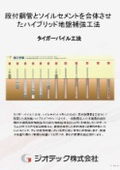
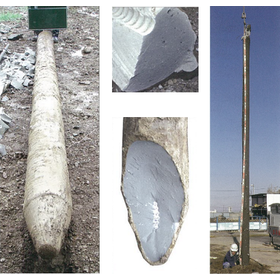
This is a soil-cement column method (deep mixing method) that uses a stepped steel pipe as the core material, which has obtained the architectural technology performance certification (GBRC Performance Certification No. 06-12 Revision 4) from the Japan Architectural Comprehensive Testing Institute, a general incorporated foundation. It is a high-performance hybrid method that combines the stable material strength of steel pipe pile methods with the large friction force of column methods, compensating for the disadvantages of each method, such as the variability in the strength characteristics of the columns and the small friction force of small-diameter steel pipe piles, thereby ensuring reliable high load-bearing capacity. Due to the core material effect, it prevents stress concentration at the head and supports the load along the entire length, significantly improving resistance to bending and shear forces during earthquakes, and minimizing the impact even if localized solidification issues occur.

Inquire About This Product
basic information
The applicable ground range is a tip ground N' of 0.15$ and an average surrounding ground value of 0.6$. The soil cement columns have diameters of 400, 500, and 600 mm, with a design standard strength of 600 kN/m² (ranging from 600 to 1200 kN/m² during mix testing), and a number of blade cuts of at least 600 cuts/m for cohesive soil and 500 cuts/m for sandy soil. Ribbed (blade) stepped steel pipes manufactured by hot working (standard SGP-MD, diameters of 76.3, 114.3 mm, etc.) are used for the core material to enhance adhesion with the columns. The coefficient values for calculating bearing capacity are high, with a tip bearing capacity coefficient of 150 and a side friction coefficient of 13.9 specified. Compared to general methods, it boasts a bearing capacity performance that is 2 to 4 times higher (at the tip and sides) depending on the conditions.
Price range
Delivery Time
Applications/Examples of results
It can be applied to ground reinforcement measures for a wide range of buildings and structures. Even in humus soil foundations, where very soft ground and poor solidification due to organic matter are likely to occur, making conventional soil column design difficult, it enables reliable design and planning by considering the material strength of the core material (60-400 kN). When compared to general methods under the same ground conditions, the high load-bearing capacity significantly shortens the improvement length, reducing the amount of improved soil, solidification materials (cement-based solidifying agents), and generated residual soil to each be less than about one-fourth of the original (design example: 27 columns, improved soil volume 37.11 m³ → 8.97 m³, solidification material 12 t → 3.5 t, residual soil volume 7.4 m³ → 1.8 m³). It has demonstrated excellent economic efficiency and environmental performance, achieving shortened construction periods and reductions in CO2 and exhaust gases from construction equipment.
catalog(2)
Download All Catalogs
Company information

-

![Ground reinforcement construction [Performance certification method] RES-P method](https://image.www.ipros.com/public/product/image/321794/IPROS6263428337976322716.png?w=280&h=280)
![[For Infrastructure] RES-P Method Ground Reinforcement Work | Geotec Co., Ltd.](https://image.www.ipros.com/public/product/image/321794/IPROS17074742153304037571.png?w=280&h=280)


