iPROS Urban Planning
  • Search for products by classification category

    • Building Materials
      Building Materials
      36690items
    • Facilities
      Facilities
      57748items
    • Lighting and Interior
      Lighting and Interior
      17591items
    • Common materials
      Common materials
      37226items
    • Civil Engineering Materials
      Civil Engineering Materials
      10216items
    • Construction, work and methods
      Construction, work and methods
      29224items
    • Surveys, Measurements, and Services
      Surveys, Measurements, and Services
      29757items
    • IT/Software
      IT/Software
      33584items
    • others
      others
      89348items
    • Store and facility supplies
      Store and facility supplies
      4609items
    • Office and commercial supplies
      Office and commercial supplies
      11746items
    • Hospital and welfare facility supplies
      Hospital and welfare facility supplies
      1057items
    • Logistics Equipment
      Logistics Equipment
      7344items
    • Energy and Resources
      Energy and Resources
      11971items
  • Search for companies by industry

    • Information and Communications
      7295
    • others
      7211
    • Building materials, supplies and fixtures manufacturers
      6636
    • Service Industry
      4759
    • Trading company/Wholesale
      3075
    • Other construction industries
      2446
    • Electrical equipment construction business
      721
    • Construction Consultant
      606
    • Interior Design
      520
    • General contractors and subcontractors
      491
    • Facility Design Office
      489
    • Architectural design office
      363
    • retail
      362
    • Housing manufacturers and construction companies
      351
    • Warehousing and transport related industries
      330
    • Building Management
      294
    • Electricity, Gas and Water Industry
      285
    • Interior construction business
      278
    • Medical and Welfare
      276
    • Educational and Research Institutions
      253
    • Renovation and home construction industry
      222
    • Water supply and drainage construction business
      205
    • Transportation
      174
    • Real Estate Developers
      166
    • Fisheries, Agriculture and Forestry
      132
    • Structural Design Office
      65
    • Finance, securities and insurance
      41
    • Restaurants and accommodations
      32
    • self-employed
      31
    • Mining
      26
    • Public interest/special/independent administrative agency
      20
    • Police, Fire Department, Self-Defense Forces
      17
    • Property Owner
      9
    • Store and building owners
      9
    • Government
      9
    • Individual
      9
  • Special Features
  • Ranking

    • Overall Products Ranking
    • Overall Company Ranking
Search for Products
  • Search for products by classification category

  • Building Materials
  • Facilities
  • Lighting and Interior
  • Common materials
  • Civil Engineering Materials
  • Construction, work and methods
  • Surveys, Measurements, and Services
  • IT/Software
  • others
  • Store and facility supplies
  • Office and commercial supplies
  • Hospital and welfare facility supplies
  • Logistics Equipment
  • Energy and Resources
Search for Companies
  • Search for companies by industry

  • Information and Communications
  • others
  • Building materials, supplies and fixtures manufacturers
  • Service Industry
  • Trading company/Wholesale
  • Other construction industries
  • Electrical equipment construction business
  • Construction Consultant
  • Interior Design
  • General contractors and subcontractors
  • Facility Design Office
  • Architectural design office
  • retail
  • Housing manufacturers and construction companies
  • Warehousing and transport related industries
  • Building Management
  • Electricity, Gas and Water Industry
  • Interior construction business
  • Medical and Welfare
  • Educational and Research Institutions
  • Renovation and home construction industry
  • Water supply and drainage construction business
  • Transportation
  • Real Estate Developers
  • Fisheries, Agriculture and Forestry
  • Structural Design Office
  • Finance, securities and insurance
  • Restaurants and accommodations
  • self-employed
  • Mining
  • Public interest/special/independent administrative agency
  • Police, Fire Department, Self-Defense Forces
  • Property Owner
  • Store and building owners
  • Government
  • Individual
Special Features
Ranking
  • Overall Products Ranking
  • Overall Company Ranking
  • privacy policy
  • terms of service
  • About Us
  • Careers
  • Advertising
  1. Home
  2. Other construction industries
  3. ジオテック
  4. Product/Service List
Other construction industries
  • Added to bookmarks

    Bookmarks list

    Bookmark has been removed

    Bookmarks list

    You can't add any more bookmarks

    By registering as a member, you can increase the number of bookmarks you can save and organize them with labels.

    Free membership registration

ジオテック

capital5000Ten thousand
number of employees77
addressTokyo/Toshima-ku/3-20-21 Higashi-Ikebukuro, Kosen Building 3F
phone03-5985-8191
  • Special site
  • Official site
last updated:Jun 12, 2026
ジオテックlogo
  • Contact this company

    Contact Us Online
  • Company information
  • Products/Services(685)
  • catalog(378)
  • news(0)

ジオテック List of Products and Services

  • category

91~135 item / All 145 items

Displayed results

Filter by category

地盤調査 地盤調査
地盤補強(地盤改良)工事 地盤補強(地盤改良)工事
沈下修正工事・曳家工事 沈下修正工事・曳家工事
土壌汚染調査 土壌汚染調査
その他の住宅関連事業 その他の住宅関連事業
地歴調査 地歴調査
残土調査 残土調査
地盤調査

地盤調査

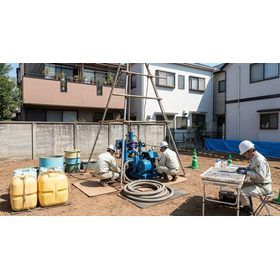
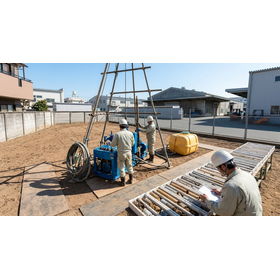
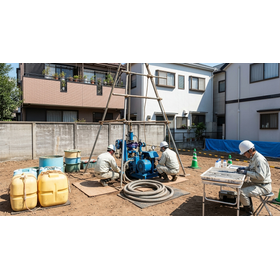
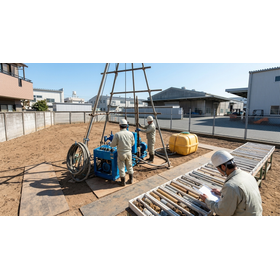
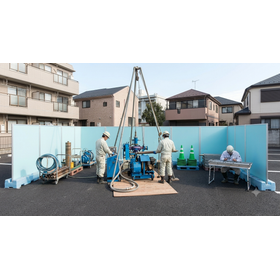
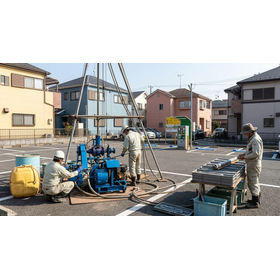
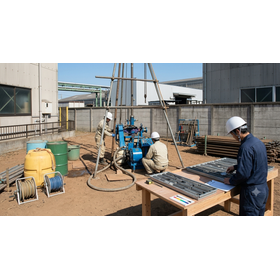
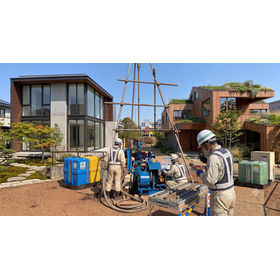
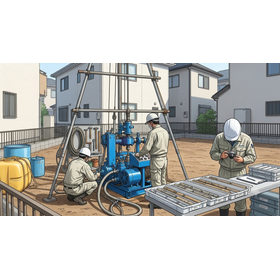
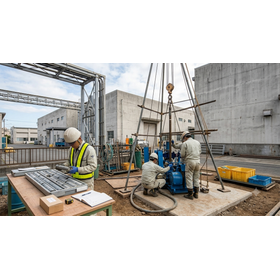
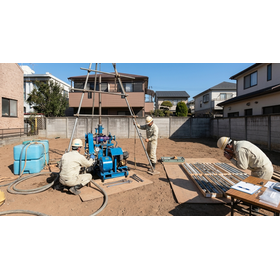
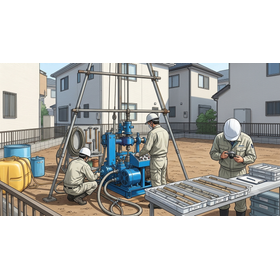
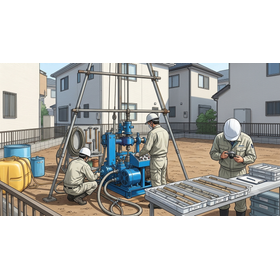
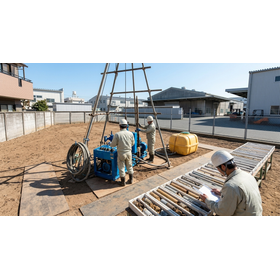
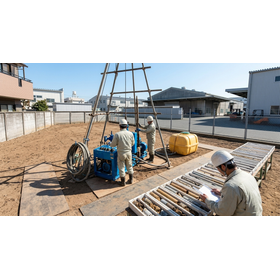
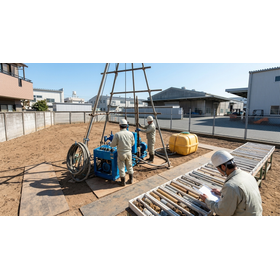
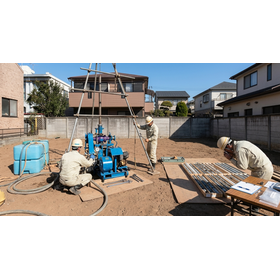
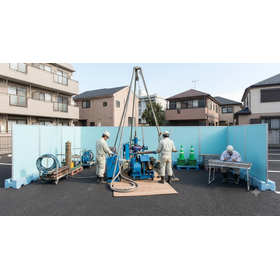
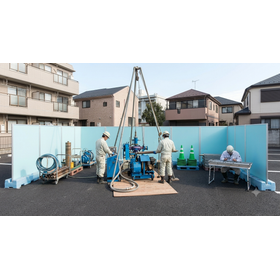
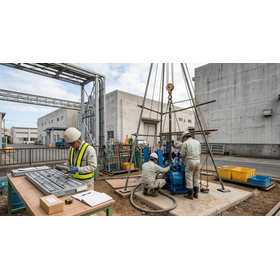
戸建て住宅の地盤調査で一般的なSWS試験(スクリューウエイト貫入試験)をはじめ、 大規模建築物に適したボーリング調査、各種土質試験にも幅広く対応いたします。
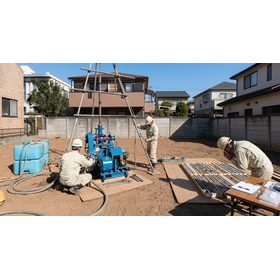
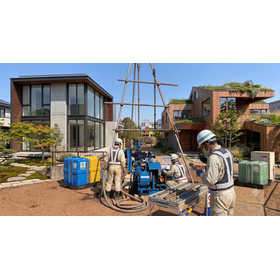
Ground Investigation | Ground Guarantee Examination Compliance Measurement and Analysis Method at the Site of a Demolished Wooden Apartment

Assess the risk of uneven ground at demolition sites using a rich database and rigorous judgment from qualified professionals, ensuring a smooth process for ground guarantee reviews and confirmation applications.

This technology is a ground diagnosis service that establishes reliable quality evidence and enables smooth application for confirmation and ground guarantee passage at the site of a wooden apartment demolition, where uneven ground due to the removal of old buildings is a concern. At demolition sites, there are worries about future settlement defects due to underground residual materials and uneven backfill density, making objective data that satisfies third-party organizations highly sought after. This measurement method utilizes not only penetration test data from multiple points but also the neighboring ground information from our proprietary database "GEODAS," which boasts an analysis record of 100,000 cases annually. By comparing and correlating the surrounding topographical and geological data with on-site measurement data, we conduct a highly advanced analysis of the unique deformation behavior and the spread of uneven strata specific to the demolition site. Furthermore, qualified staff, such as residential ground chief engineers, rigorously evaluate using a unique three-item, eight-factor standard, eliminating underestimation or misjudgment of data. We issue a highly reliable ground survey judgment report with clear grounds, fully supporting business owners and builders in meeting guarantee examination standards and ensuring safe apartment construction.

Added to bookmarks

Bookmarks list

Bookmark has been removed

Bookmarks list

You can't add any more bookmarks

By registering as a member, you can increase the number of bookmarks you can save and organize them with labels.

Free membership registration

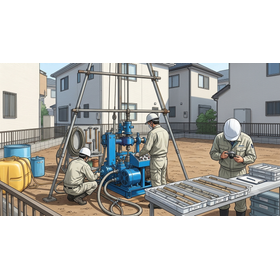
Ground Investigation | Analysis of Subsurface Remnants and Uneven Ground at the Site of a Demolished Wooden Apartment

Visualize the risks of residual materials and uneven ground subsidence lurking in the site of a dismantled structure through multi-point penetration tests, fundamentally preventing differential settlement accidents in wooden apartments.

This technology is a ground investigation method that precisely identifies and evaluates the risk of settlement caused by old foundations, demolition debris, and uneven backfill layers remaining on the site of a demolished wooden apartment building. In post-demolition land, the presence of underground remnants and insufficient compaction can easily lead to significant variations in strength within the site, which can cause differential settlement and distortion of structures after new construction. Our service employs multi-point screw weight penetration tests (SWS tests) to finely measure penetration resistance values at various depths, accurately analyzing the stratigraphic profile while appropriately eliminating the influence of obstacles. Furthermore, we conduct comparisons of resistance values between measurement points and simulate estimated deformation angles to quantitatively calculate the differential settlement behavior that affects buildings. Based on the analysis data, we propose rational ground reinforcement plans that best fit the characteristics of uneven ground, such as surface improvement, columnar improvement, and small-diameter steel pipe pile methods. We aim to prevent troubles unique to demolition sites in advance and ensure the structural safety and high-quality evidence of wooden apartments.

Added to bookmarks

Bookmarks list

Bookmark has been removed

Bookmarks list

You can't add any more bookmarks

By registering as a member, you can increase the number of bookmarks you can save and organize them with labels.

Free membership registration

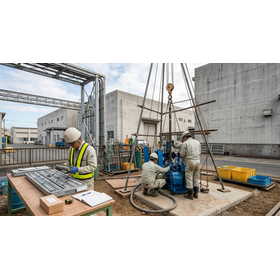
Ground Investigation | Rapid Settlement Analysis Method for Uneven Ground at the Site of a Demolished Wooden Apartment

Quickly measure and analyze the risk of uneven ground subsidence at demolition sites, strongly supporting the shortening of construction periods and early commencement of wooden apartment buildings.

This technology is a ground measurement and analysis service that quickly evaluates the risk of uneven ground subsidence at the site of a demolished wooden apartment, enabling a shortened construction timeline and early commencement of building projects. After demolition, concerns about subsidence due to inadequate backfilling and variations in strata can lead to delays in ground assessment, which can hinder the overall construction schedule. This measurement method employs a fully automated screw weight penetration test (SWS test) to rapidly and accurately collect data on-site. The acquired real measurement data is immediately shared with a dedicated analysis system, allowing for quick numerical comparisons between measurement points and simulations of estimated deformation angles. With speedy assessments by specialized analysts, the risks of differential subsidence in uneven ground are promptly clarified. An optimal reinforcement plan that avoids excessive improvement work is quickly presented, completely preventing design revisions and construction delays. This strongly supports the rapid commencement of apartment projects and adherence to the overall schedule, facilitating safe and smooth project advancement.

Added to bookmarks

Bookmarks list

Bookmark has been removed

Bookmarks list

You can't add any more bookmarks

By registering as a member, you can increase the number of bookmarks you can save and organize them with labels.

Free membership registration

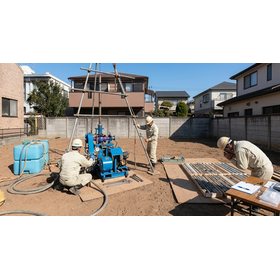
Ground Investigation | Uneven Ground Settlement Asset Preservation Analysis at the Site of a Demolished Wooden Apartment Building

Thoroughly analyze the settlement risk due to the uneven ground of the demolition site, firmly achieving the longevity of wooden apartments and the preservation of future asset value.

This technology is a high-precision ground diagnosis service that analyzes the risk of uneven ground settlement at the site of demolished wooden apartment buildings from multiple perspectives, ensuring the long-term structural safety and preservation of asset value of the buildings. At the site of the demolished old building, differences in the compaction of backfill soil and stratification can lead to differential settlement after new construction, posing risks of damage that can compromise asset value, such as distortion of the structure and unevenness of fittings. This method involves conducting screw weight penetration tests (SWS tests) at multiple points to precisely obtain and digitize penetration resistance values at various depths. By estimating the deformation angle (tilt of the building) from the strength differences between adjacent measurement points, we can predict the settlement behavior specific to uneven ground from multiple angles. Through rational reinforcement design based on the calculated data, we ensure the necessary load-bearing capacity for wooden apartments while preventing excessive improvements. By preemptively blocking future settlement accident risks and providing unwavering quality evidence to building owners and investors, we significantly contribute to the longevity of apartments and the maximization of business value.

Added to bookmarks

Bookmarks list

Bookmark has been removed

Bookmarks list

You can't add any more bookmarks

By registering as a member, you can increase the number of bookmarks you can save and organize them with labels.

Free membership registration

Site Investigation | Structural Calculation Assessment of Uneven Ground at the Site of a Demolished Wooden Apartment

Quantifying the uneven ground hidden in the site of the demolished building through multi-point measurements, and supporting the compliance of wooden apartment buildings with structural calculations and analyses for safe design.

This technology is a ground diagnosis service that precisely measures the risk of uneven ground subsidence remaining at the site of demolished wooden apartment buildings, facilitating structural calculations and building confirmation applications. In sites after demolition, differences in ground strength are likely to occur due to inadequate backfilling and remnants of old foundations, posing a risk of differential settlement after new construction. This measurement method uses multi-point screw weight penetration tests (SWS tests) to finely measure penetration resistance values at various depths, clearly data-fying the allowable bearing capacity of the entire site. From the obtained measurement results, we simulate the estimated deformation angles (tilt of the building) between measurement points and quantitatively verify the impact on the superstructure. By conducting analyses in accordance with the Ministry of Land, Infrastructure, Transport and Tourism notifications and the latest guidelines from the Architectural Institute of Japan, we enable smooth data reflection in structural calculation documents, allowing for the seamless progression of review procedures by designated confirmation inspection agencies. This allows for a rational foundation design that eliminates excessive reinforcement work, providing high structural safety and reliable evidence.

Added to bookmarks

Bookmarks list

Bookmark has been removed

Bookmarks list

You can't add any more bookmarks

By registering as a member, you can increase the number of bookmarks you can save and organize them with labels.

Free membership registration

Site Investigation | Prevention of Settlement Defects in Uneven Ground at the Site of a Demolished Wooden Apartment Building

Quantify the risk of uneven ground subsidence lurking in the site of a demolished structure through multi-point penetration tests, in order to prevent accidents and defects after the handover of wooden apartments.

This technology is a ground diagnosis service that precisely identifies the risk of uneven ground subsidence lurking in the demolition site of wooden apartment buildings, preventing uneven subsidence accidents and defect liability issues after handover. In the demolition site of old structures, insufficient compaction of backfill soil and underground obstacles can easily lead to significant strength discrepancies within the site, raising concerns about tilting incidents occurring after the building's completion. This service employs multi-point screw weight penetration tests (SWS tests) to meticulously measure penetration resistance values at various depths, visualizing uneven strata structures and localized weak areas. By calculating and simulating the estimated deformation angles (building tilt) from the resistance differences between measurement points, we quantitatively verify the impact on the structure. By providing objective and highly reliable ground data along with detailed analysis reports, we facilitate the smooth passage of third-party ground guarantee reviews and dramatically reduce after-risk for business owners and builders. We protect the asset value and business reliability of the completed apartments over the long term.

Added to bookmarks

Bookmarks list

Bookmark has been removed

Bookmarks list

You can't add any more bookmarks

By registering as a member, you can increase the number of bookmarks you can save and organize them with labels.

Free membership registration

Ground Investigation | Settlement Analysis of Uneven Ground at the Site of a Demolished Wooden Apartment Building

Analyze the uneven ground of the demolition site with height differences and cut-and-fill transitions through multi-point measurements, and propose an optimal foundation design to prevent differential settlement of wooden apartments.

This technology is a ground investigation method that precisely identifies the risk of settlement caused by uneven ground due to cut and fill in the demolition site of wooden apartments with elevation differences and terraced history. In ground conditions where hard cut soil and soft fill soil coexist, known as "cut and fill crossing," there is a risk of catastrophic differential settlement occurring after new construction due to significant differences in bearing capacity. This service integrates and analyzes screw weight penetration tests (SWS tests) at multiple points with elevation survey data to three-dimensionally grasp the position of the cut and fill boundary and changes in the thickness of the fill layer. By simulating the estimated deformation angles (tilt of the building) between measurement points from the acquired continuous data, we quantify the impact of uneven settlement on the structure. Based on the analysis results, we propose targeted measures focused only on the fill areas that require reinforcement, rather than conducting uniform and costly improvement work across the entire site. We strongly support safe and secure apartment construction while eliminating potential issues with uneven ground and optimizing reinforcement costs.

Added to bookmarks

Bookmarks list

Bookmark has been removed

Bookmarks list

You can't add any more bookmarks

By registering as a member, you can increase the number of bookmarks you can save and organize them with labels.

Free membership registration

Site Investigation | Eco Reinforcement and Settlement Measurement Method for Uneven Ground at Wooden Apartment Demolition Sites

Precise measurements of the uneven ground at the demolition site will be conducted, and pinpoint reinforcement design will significantly reduce the excavation residual soil and CO2 emissions during the construction of wooden apartments.

This technology is an eco-ground measurement service that avoids excessive ground reinforcement in uneven ground at the site of demolished wooden apartments, achieving the suppression of drilling residual soil generation and reducing environmental impact. In sites after demolition work, high-cost pile construction or deep improvement is often selected uniformly across all points due to localized soft layers, resulting in a significant amount of industrial waste soil. This measurement method precisely identifies ground bearing capacity and soil classification using multi-point screw weight penetration tests (SWS tests) and optional SDS tests. It reflects the ground propagation characteristics of building loads (reduction effects at 2 meters and 2-5 meters below the foundation) in the analysis, leading to pinpoint reinforcement design limited to truly necessary locations and depths. This significantly reduces disposal costs for drilling residual soil and CO2 emissions associated with transportation, promoting environmentally conscious construction (ESG/SDGs). While ensuring high-level safety in uneven ground, it dramatically shortens and reduces construction costs, maximizing profitability for business owners.

Added to bookmarks

Bookmarks list

Bookmark has been removed

Bookmarks list

You can't add any more bookmarks

By registering as a member, you can increase the number of bookmarks you can save and organize them with labels.

Free membership registration

Site Investigation | Deep Soil Bearing Capacity Assessment and Settlement Risk Mitigation at DC Construction Site

Precise evaluation of deep ground bearing capacity and consolidation analysis of cohesive soil layers at the data center construction site to proactively avoid settlement risks due to ultra-high loads.

In construction projects for advanced facilities such as data centers and large-scale logistics facilities, accurately understanding the bearing capacity of deep ground and preventing long-term settlement are the most critical issues. GeoTech's specialized ground investigation services precisely measure the layer thickness and N-value distribution of the supporting layers located at great depths through deep boring surveys and standard penetration tests. Furthermore, we conduct indoor staged loading consolidation tests using undisturbed samples from alluvial clay layers to quantitatively clarify the potential long-term consolidation settlement and the timing of settlement convergence by identifying the consolidation yield stress, compression index, and overconsolidation ratio. Additionally, we calculate the ground deformation coefficient through in-situ horizontal loading tests and perform multi-domain stratigraphic analysis using our proprietary database "GEODAS." We provide reliable ground bearing capacity evaluations and settlement risk mitigation strategies based on abundant measured data and advanced technical foundations, strongly supporting the smooth passage of building confirmation reviews and the safe, long-term continuous operation of data centers.

Added to bookmarks

Bookmarks list

Bookmark has been removed

Bookmarks list

You can't add any more bookmarks

By registering as a member, you can increase the number of bookmarks you can save and organize them with labels.

Free membership registration

Ground Investigation | Deep Support Capacity Assessment for Data Centers Supporting Ultra High Loads

To prevent differential settlement accidents occurring under ultra-high loads in data centers, a precise evaluation of long-term allowable bearing capacity is conducted through deep boring and viscous soil consolidation tests.

In the architecture of data centers that support a highly information-oriented society, a vast number of heavy server racks and uninterruptible power supplies are concentrated, resulting in ground pressures that far exceed those of typical buildings. If there are uneven layers of viscous soil or weak layers in the deep ground, minor yet serious differential settlement may occur after the facility begins operation, posing risks of equipment malfunction and structural damage. Geotechnical ground investigations clarify the properties of deep supporting layers through deep drilling and standard penetration tests. Furthermore, by conducting laboratory consolidation tests using undisturbed samples to identify consolidation yield stress and compression index, we can highly simulate future settlement amounts and convergence behavior. Additionally, by calculating deformation coefficients through in-situ horizontal loading tests and combining them with comparisons of surrounding ground using the database "GEODAS," we present a clearly substantiated long-term allowable bearing capacity. This helps prevent facility accidents and ensures robust structural safety.

Added to bookmarks

Bookmarks list

Bookmark has been removed

Bookmarks list

You can't add any more bookmarks

By registering as a member, you can increase the number of bookmarks you can save and organize them with labels.

Free membership registration

Site Investigation | Optimization of Pile Length and Foundation Costs through Deep Soil Bearing Capacity Evaluation for DC New Construction

Precisely measure the deep soil bearing capacity at the data center construction site to eliminate excessive safety factors that lead to long piles and excessive ground improvement, dramatically optimizing the total construction cost.

In the foundation design of data center construction, excessive setting of pile lengths and large-scale ground improvement works are often carried out due to an overestimation of safety factors stemming from the uncertainty of ground information, leading to soaring construction costs. GeoTech's deep ground bearing capacity evaluation service accurately identifies the true depth of deep supporting layers through deep boring surveys and standard penetration tests, eliminating unnecessary excess length. Furthermore, by conducting undisturbed sample collection of alluvial clay layers and laboratory consolidation tests, we clarify the original consolidation yield stress and consolidation characteristics of the soil, thereby eliminating unnecessary reinforcement works. Additionally, we accurately measure the ground deformation coefficient through in-situ lateral loading tests (LLT), review excessive lateral reinforcement designs, and integrate and cross-verify our proprietary database "GEODAS" with field measurement values to construct high-precision structural evidence. While perfectly ensuring structural safety, we significantly reduce unnecessary foundation construction costs and material expenses, strongly assisting in maximizing the cost performance of the entire construction project.

Added to bookmarks

Bookmarks list

Bookmark has been removed

Bookmarks list

You can't add any more bookmarks

By registering as a member, you can increase the number of bookmarks you can save and organize them with labels.

Free membership registration

Site Investigation | Deep Soil Bearing Capacity Assessment Supporting 24/7 Operation of Data Centers

To ensure 24-hour operation of the data center, we completely avoid the risks of micro-subsidence and settlement due to ultra-high loads through deep boring and viscous soil consolidation analysis.

In data centers and ultra-high-load facilities where continuous operation 24 hours a day, 365 days a year is an absolute requirement, even slight ground subsidence or distortion poses a significant threat, potentially causing malfunction of server equipment or structural damage. GeoTech's dedicated ground investigation services precisely measure the continuity of support layers and the distribution of N values at great depths through deep boring surveys and standard penetration tests. Furthermore, we conduct laboratory stage loading consolidation tests using undisturbed samples taken from alluvial clay layers to calculate constants such as consolidation yield stress, compression index, and overconsolidation ratio, allowing us to highly predict future long-term subsidence amounts and the timing of subsidence convergence. In addition, we calculate the ground deformation coefficient through in-situ lateral loading tests (LLT) and combine this with comparative analysis using our proprietary ground information system "GEODAS" and neighboring data, enabling multifaceted geological investigations. We present scientifically backed, high-precision long-term allowable bearing capacities, proactively mitigating the risk of uneven subsidence during facility operations, and robustly supporting the stable operation of data centers over the long term.

Added to bookmarks

Bookmarks list

Bookmark has been removed

Bookmarks list

You can't add any more bookmarks

By registering as a member, you can increase the number of bookmarks you can save and organize them with labels.

Free membership registration

Site Investigation | Deep Soil Bearing Capacity Assessment to Facilitate Structural Review of Data Center Construction

To facilitate the structural suitability assessment of data centers, establish clear evidence of bearing capacity through deep boring and viscous soil consolidation analysis.

In the new construction project of a data center, the smooth and reliable passage of building confirmation applications and structural conformity assessments is an extremely important issue from the perspective of adhering to the project schedule and controlling development costs. GeoTech's dedicated ground investigation service rigorously obtains data on the depth and continuity of the supporting layers present in the deep strata through deep borehole surveys and standard penetration tests. Furthermore, by conducting laboratory consolidation tests using undisturbed samples from alluvial clay layers, we establish a solid objective basis for long-term consolidation settlement simulations, which are strictly required by third-party review organizations, by accurately determining physical constants such as consolidation yield stress and compression index. In addition, by visualizing the ground deformation coefficient through in-situ horizontal loading tests and conducting multifaceted stratum verification using our proprietary database "GEODAS," we create detailed ground analysis reports that do not generate points of concern or technical inquiries during the review process. We strongly support the elimination of unnecessary delays in the review process, ensuring reliable approval acquisition and shortening the construction schedule.

Added to bookmarks

Bookmarks list

Bookmark has been removed

Bookmarks list

You can't add any more bookmarks

By registering as a member, you can increase the number of bookmarks you can save and organize them with labels.

Free membership registration

Ground Investigation | Early Identification of Ground Risks and LCC Optimization in Data Center Development

Early identification of ground risks in data center development, optimizing lifecycle costs through deep boring and viscous soil consolidation analysis.

To successfully lead a large-scale data center development project, it is essential to fully identify ground risks in the early planning stages and optimize the life cycle cost (LCC) with a long-term operational perspective. Geotech's specialized ground investigation services precisely measure the depth, continuity, and layer thickness variations of deep supporting layers through deep boring surveys and standard penetration tests, ensuring that budget overruns and schedule delays due to misestimations in the early development stages are effectively prevented. Furthermore, by conducting indoor loading consolidation tests using undisturbed samples from alluvial clay layers, we accurately identify consolidation yield stress and compression indices to clarify future settlement behavior, thereby preventing the occurrence of substantial equipment renovation costs and repair expenses after facility operation. Additionally, by measuring the ground deformation coefficient through in-situ lateral loading tests (LLT) and utilizing our proprietary database "GEODAS" for multifaceted stratigraphic analysis, we ensure safety while eliminating unnecessary excessive foundation construction costs. We strongly support the reduction of business investment risks and the maximization of project profitability with reliable ground consulting technology.

Added to bookmarks

Bookmarks list

Bookmark has been removed

Bookmarks list

You can't add any more bookmarks

By registering as a member, you can increase the number of bookmarks you can save and organize them with labels.

Free membership registration

Site Investigation | Deep Soil Bearing Capacity Assessment to Reduce Environmental Impact by DC Construction

To reduce the environmental impact of data center construction, unnecessary excavation and excessive reinforcement are eliminated through deep boring and viscous soil consolidation analysis.

In the construction of environmentally considerate (ESG and SDGs compliant) data centers, it is essential to ensure structural safety while also reducing CO2 emissions associated with construction and minimizing excavation waste. Geotech's specialized ground investigation services rigorously assess the depth of deep support layers through deep boring surveys and standard penetration tests, eliminating unnecessary excessive pile lengths and additional drilling work due to miscalculations. Furthermore, by conducting indoor stage loading consolidation tests using undisturbed samples from alluvial clay layers, we identify consolidation yield stress and over-consolidation ratios, thereby reducing excessive ground improvement work that relies heavily on cement solidification materials. Additionally, we propose optimal foundation types, including the possibility of direct foundations, by utilizing in-situ horizontal loading tests to measure ground deformation coefficients and leveraging the wide-area analysis of the database "GEODAS." With solid numerical evidence, we thoroughly minimize material usage and environmental impact, strongly supporting the sustainable and robust development of data centers.

Added to bookmarks

Bookmarks list

Bookmark has been removed

Bookmarks list

You can't add any more bookmarks

By registering as a member, you can increase the number of bookmarks you can save and organize them with labels.

Free membership registration

Site Investigation | Deep Soil Bearing Capacity Assessment to Ensure Proximity Construction of Urban DC Buildings

To protect the proximity construction of urban-type data centers, deep drilling and viscous soil consolidation analysis are used to prevent deformation and settlement risks in the surrounding ground.

When constructing or expanding data centers in urban areas or densely built environments, it is extremely important to implement proximity construction measures that minimize the impact of super high loads due to self-weight on the surrounding ground and adjacent structures. Geotech's specialized ground investigation service precisely visualizes the depth of supporting layers and the composition of strata through deep borehole surveys and standard penetration tests, supporting the selection of construction methods that prevent ground loosening and vibration damage during construction. Furthermore, by conducting indoor loading consolidation tests using undisturbed samples from alluvial clay layers, we calculate the consolidation yield stress and compression index to simulate the propagation behavior of underground stress, thereby preemptively blocking residual settlement effects on neighboring properties and roads. In addition, by combining measured lateral deformation coefficients from in-situ lateral loading tests (LLT) with surrounding data from our proprietary database "GEODAS," we derive safe foundation structures that minimize neighboring impacts. With reliable ground data that prevents neighbor disputes and fulfills accountability to third-party organizations, we strongly support the smooth construction of urban-type data centers.

Added to bookmarks

Bookmarks list

Bookmark has been removed

Bookmarks list

You can't add any more bookmarks

By registering as a member, you can increase the number of bookmarks you can save and organize them with labels.

Free membership registration

Site Investigation | Deep Soil Bearing Capacity and Dynamic Analysis to Mitigate Earthquake Risks in DC

To mitigate the earthquake risk of data centers, we clarify the seismic bearing capacity and liquefaction and settlement behavior through deep boring and viscous soil consolidation analysis.

In earthquake-prone Japan, to perfectly establish a business continuity plan (BCP) for data centers, it is essential to accurately assess the dynamic behavior of the ground and the deep bearing capacity against large earthquakes and unexpected tremors. Geotech's dedicated ground investigation services rigorously obtain the depth and thickness of supporting layers present at great depths, as well as continuous N-value data, through deep boring surveys and standard penetration tests, visualizing the foundation bearing capacity that can withstand seismic forces. Furthermore, by conducting indoor staged loading consolidation tests using undisturbed samples of alluvial clay layers, we identify the consolidation yield stress and over-consolidation ratio, allowing us to quantitatively simulate the risks of post-earthquake consolidation settlement and differential settlement that may occur after a major earthquake. In conjunction, we combine in-situ measurements of lateral deformation coefficients through in-situ horizontal loading tests (LLT) and multi-faceted wide-area ground analysis using our proprietary database "GEODAS" to highly elucidate the response characteristics during earthquakes. We demonstrate complete seismic safety from both shaking and settlement perspectives, robustly supporting the operation of data centers as social infrastructure that never stops, 24 hours a day.

Added to bookmarks

Bookmarks list

Bookmark has been removed

Bookmarks list

You can't add any more bookmarks

By registering as a member, you can increase the number of bookmarks you can save and organize them with labels.

Free membership registration

Site Investigation | Deep Soil Bearing Capacity Assessment to Enhance Asset Value in DC Investment Development

To enhance the asset value of data center investment development, eliminate underground risks through deep boring and viscous soil consolidation analysis, optimizing business viability.

In the development of data centers led by institutional investors and developers, the accuracy of due diligence (DD) in the process from site selection to commercialization and the long-term preservation of the overall asset value of the facility are extremely important success factors. GeoTech's specialized ground investigation services precisely clarify the properties and depth of the supporting layers through deep boring surveys and standard penetration tests, eliminating the risk of unexpected foundation construction cost increases after land acquisition. Furthermore, by conducting indoor loading consolidation tests using undisturbed samples from alluvial clay layers, we calculate the consolidation yield stress and compression index to elucidate future settlement behavior, preventing asset value depreciation due to building tilting or equipment failures during long-term holding. Additionally, by measuring the ground deformation coefficient through in-situ lateral loading tests (LLT) and utilizing our own database "GEODAS" for comparative analysis of surrounding areas, we minimize excessive reinforcement design and maximize capital efficiency. We provide high-precision ground evaluations based on clear evidence, strongly supporting the reduction of investment risks and the maximization of business profitability.

Added to bookmarks

Bookmarks list

Bookmark has been removed

Bookmarks list

You can't add any more bookmarks

By registering as a member, you can increase the number of bookmarks you can save and organize them with labels.

Free membership registration

Site Investigation | Optimization of Foundation Costs for Custom Homes to Prevent Excessive Improvement on Weak Ground

An optimization method that prevents excessive improvement through soil quality assessment and soil strength evaluation using the SDS test, significantly reducing foundation costs while maintaining the safety of custom-built homes.

This technical proposal is a ground investigation and analysis solution that prevents excessive ground improvement work in soft ground and optimizes the foundation costs of custom homes. By digitally measuring soil conditions that were difficult to distinguish with conventional simple sounding tests using the SDS test, we objectively identify sandy soils, clayey soils, loam, and humus based on rotational torque and penetration resistance. Furthermore, by combining depth-specific stress propagation analysis of building loads with our unique judgment criteria based on an annual track record of 100,000 cases, we accurately evaluate the inherent bearing capacity of the ground (allowable bearing capacity). This approach avoids uniform deep improvement and excessive pile work, maximizing the potential for direct foundations such as slab foundations and strip foundations. Additionally, clear reports that visualize subsurface cross-sections and settlement predictions facilitate technical explanations to clients and streamline consensus building. Through appropriate design based on evidence-based technical data, we contribute to significant reductions in construction costs and improvements in builders' gross profit margins, while also smoothly addressing the review of ground warranty systems, strongly supporting the creation of safe and secure homes.

Added to bookmarks

Bookmarks list

Bookmark has been removed

Bookmarks list

You can't add any more bookmarks

By registering as a member, you can increase the number of bookmarks you can save and organize them with labels.

Free membership registration

Site Investigation | Optimization of Residential Foundation Costs on Soft Ground through Settlement Analysis and Load Distribution

An advanced analytical method that prevents excessive improvements through stress distribution analysis of building loads and settlement amount simulation, optimizing the foundation costs of custom-built homes.

This technical solution is an analytical proposal that optimizes the foundation costs of custom homes on soft ground by utilizing the stress dispersion mechanism of building loads and precise settlement simulation. It conducts a detailed evaluation of load propagation from the foundation base at depths of 2 meters and 2 to 5 meters, accurately calculating the correlation between the long-term allowable stress of the ground and the building's ground pressure. Furthermore, it numerically simulates future consolidation settlement and deformation angles using multiple sounding data, proving structural safety. This approach helps to suppress unnecessary deep improvements and pile work that anticipate excessive safety factors, enabling the proactive adoption of direct foundations such as strip and mat foundations. With a unique evaluation standard encompassing three items and eight elements that cover legal regulations, it ensures high structural safety while preventing excessive reinforcement. The highly reliable technical evidence is also optimal for confirmation applications and explanations to clients, strongly supporting the reduction of housing project costs while maintaining high-quality construction. We provide optimal ground consulting for designers and construction companies struggling with excessive improvements.

Added to bookmarks

Bookmarks list

Bookmark has been removed

Bookmarks list

You can't add any more bookmarks

By registering as a member, you can increase the number of bookmarks you can save and organize them with labels.

Free membership registration

Site Investigation | Optimization Method for Housing Foundation Costs to Prevent Excessive Improvement of Embankments and Weak Ground

A solution that prevents excessive improvements by evaluating the number of years since the land was filled and selecting the optimal reinforcement method, thereby balancing the safety of custom-built homes with the reduction of foundation costs.

This solution is a proposal for ground evaluation and method selection that avoids excessive reinforcement work in embankment construction sites and soft ground, optimizing the foundation costs for custom-built homes. It precisely analyzes the thickness of the embankment and backfill, the number of years since construction, and the compaction state to objectively assess future settlement and shrinkage risks. Even when reinforcement is necessary, it does not rely solely on uniform columnar improvements but suggests the best plan suitable for the site's soil quality and depth from options such as surface improvement, columnar improvement, pure piles, steel pipe piles, and eco-friendly methods. By incorporating eco-design to reduce soil disposal and waste disposal costs, the ground guarantee review is smoothly passed with annual analysis performance data of 100,000 cases and advanced considerations by qualified personnel. This achieves both improved project profit margins and high construction quality simultaneously. For businesses struggling with ground assessment in embankment construction sites, we provide evidence-based cost reduction and reliable ground measures. Furthermore, the evaluation results are presented in an easy-to-understand graphical report, making the explanation of safety to potential buyers clear and serving as an effective sales tool to enhance their sense of security and understanding.

Added to bookmarks

Bookmarks list

Bookmark has been removed

Bookmarks list

You can't add any more bookmarks

By registering as a member, you can increase the number of bookmarks you can save and organize them with labels.

Free membership registration

Measurement and Analysis Method for Uneven Ground Subsidence at the Site of Demolished Wooden Apartment Buildings for Real Estate Development

Evaluate and prevent differential settlement risks at the demolition site through multi-point SWS testing.

In real estate development, it is essential to accurately understand the potential risks of the land and avoid future troubles. Particularly in the case of sites where wooden apartments have been demolished, the presence of remnants of old foundations and the unevenness of backfill can easily lead to the formation of "uneven ground," where the ground strength varies by location, increasing the risk of differential settlement in new buildings. To prevent this risk in advance, precise ground surveys that accurately predict and evaluate ground settlement behavior are indispensable. This service identifies the specific ground risks associated with demolition sites and supports the safety of buildings and the preservation of asset value. 【Usage Scenarios】 - New development on sites of demolished wooden apartments - Evaluation of differential settlement risks due to ground unevenness - Risk assessment before purchasing development land 【Benefits of Implementation】 - Early detection of differential settlement risks and planning of countermeasures - Improvement of structural safety of buildings - Maintenance and enhancement of asset value

Added to bookmarks

Bookmarks list

Bookmark has been removed

Bookmarks list

You can't add any more bookmarks

By registering as a member, you can increase the number of bookmarks you can save and organize them with labels.

Free membership registration

Method for Analyzing Uneven Ground Settlement at the Site of Demolished Wooden Apartment Buildings for Architectural Design

Measured the uneven ground of the demolition site using multiple-point SWS tests to reduce the risk of differential settlement.

In architectural design, particularly in structural design, it is essential to accurately understand the characteristics of the ground to ensure the safety and long-term quality of buildings. Especially in the case of sites where wooden apartments have been demolished, the presence of remnants of old foundations and the unevenness of backfill can lead to the formation of "uneven ground," where the ground strength varies by location, increasing the risk of differential settlement after new construction. To prevent this risk, detailed ground surveys and appropriate analyses are indispensable. This service provides ground survey methods to identify the settlement risks associated with uneven ground at demolition sites. By conducting screw weight penetration tests (SWS tests) at multiple points, we can measure penetration resistance values in detail at various depths and continuously collect data on the hardness and softness of soil layers and the bias of self-sinking layers. Based on the acquired data, we evaluate the comparison of penetration resistance values between measurement points and estimate the deformation angle (tilt of the building) to quantify future settlement behavior. 【Usage Scenarios】 - New construction plans on sites of demolished wooden apartments - Sites where uneven ground is a concern - Assessment of differential settlement risks and development of countermeasures 【Benefits of Implementation】 - Avoidance of ground troubles specific to demolition sites - Provision of high structural safety and quality evidence - Support for the longevity of buildings and preservation of asset value

Added to bookmarks

Bookmarks list

Bookmark has been removed

Bookmarks list

You can't add any more bookmarks

By registering as a member, you can increase the number of bookmarks you can save and organize them with labels.

Free membership registration

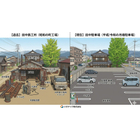
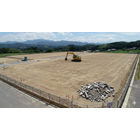
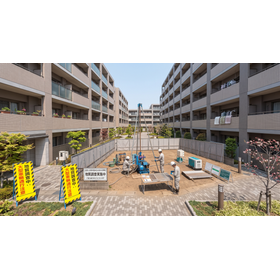
[Urban Planning] Analysis Method for Measuring Settlement of Uneven Ground in Demolition Sites | Geotech

Analyzing the uneven ground of the demolition site using multiple-point SWS tests to reduce the risk of differential settlement.

In urban planning and regional development, managing the ground conditions of sites where existing structures have been demolished is crucial. At demolition sites, the removal of old foundations and the unevenness of backfilling can lead to the formation of "uneven ground," where the ground strength varies by location, raising concerns about future settlement and differential settlement risks. This can potentially impact the safety of new development projects and their long-term asset value. This service precisely evaluates the unique ground risks associated with such demolition sites and supports the planning of safe development projects. 【Usage Scenarios】 - Preliminary ground surveys for new development projects - Site evaluations after the demolition of existing buildings - Understanding ground risks in regional development plans - Confirming ground stability in infrastructure development plans 【Benefits of Implementation】 - Early detection of differential settlement risks and planning of countermeasures - Improved safety of development projects - Maintenance and enhancement of long-term asset value - Visualization of ground risks during the planning stage

Added to bookmarks

Bookmarks list

Bookmark has been removed

Bookmarks list

You can't add any more bookmarks

By registering as a member, you can increase the number of bookmarks you can save and organize them with labels.

Free membership registration

Precise bearing capacity evaluation survey for new building construction on soft ground for real estate development.

Prevent construction troubles and reduce costs in new building projects on soft ground.

In the real estate development industry, issues such as insufficient pile length, excessive piling, and rework during construction can increase project risks when building new structures on soft ground. Particularly in cases where there are uneven soft soil layers or sloped bearing layers, conventional surveys may misidentify the bearing layer, leading to unexpected situations that can cause construction delays and additional costs. Our high-precision ground investigation service reduces these risks and optimizes site management. Using a fully automated continuous measurement system, we collect high-density data from multiple points within the site, clearly visualizing the three-dimensional undulations of the bearing layer and the allowable vertical bearing capacity. This allows us to identify the minimum necessary pile length and pile arrangement for each column in advance, preventing unnecessary work and delays on site. [Usage Scenarios] - New building projects on soft ground - Complex ground where understanding the bearing layer is difficult - Reducing the risk of cost increases due to excess or insufficient pile length - Preventing construction troubles in advance [Benefits of Implementation] - Controlling cost increases due to excess or insufficient pile length - Preventing rework issues during construction - Optimizing site management - Reducing overall construction costs and project duration

Added to bookmarks

Bookmarks list

Bookmark has been removed

Bookmarks list

You can't add any more bookmarks

By registering as a member, you can increase the number of bookmarks you can save and organize them with labels.

Free membership registration

[For House Manufacturers] Precise Bearing Capacity Evaluation Survey for New Building on Weak Ground

Preventing construction troubles and improving quality in new building projects on weak ground.

For house builders aiming to improve quality in new building construction, construction troubles on soft ground are an unavoidable challenge. In particular, insufficient pile length, excessive driving, and the resulting rework can complicate site management and increase costs, potentially affecting the final quality of the building. When there are uneven soft soil layers or sloped bearing layers, traditional investigation methods can lead to misjudgment of the bearing layers, resulting in unexpected subsidence of the bearing layer, additional pile length requirements, or construction interruptions. Our high-precision ground investigation service collects high-density data at multiple points within the site using a fully automated continuous measurement system, clearly visualizing the three-dimensional undulations of the bearing layers and their allowable vertical bearing capacity. This allows us to pre-identify the minimum necessary accurate pile lengths and configurations based on the placement positions under each column, enhancing construction accuracy and contributing to quality improvement. 【Usage Scenarios】 - New building projects on soft ground - Ensuring quality through optimization of pile placement - Prevention of construction troubles - Efficiency in site management 【Benefits of Implementation】 - Improved construction accuracy by preventing excess or insufficient pile lengths - Reduced rework leading to shortened construction periods - Compression of overall construction costs - Realization of safe and smooth site operations

Added to bookmarks

Bookmarks list

Bookmark has been removed

Bookmarks list

You can't add any more bookmarks

By registering as a member, you can increase the number of bookmarks you can save and organize them with labels.

Free membership registration

[For Design Offices] Optimization of Pile Layout and Precise Evaluation of Ground Bearing Capacity for New Building on Weak Soil

Support for new building construction on soft ground with high-precision ground information that enhances design freedom.

Design firms are required to ensure design flexibility while minimizing the risks of future construction troubles and cost increases when constructing buildings on weak ground. In particular, the unevenness of the ground and the undulations of the supporting layer can affect the determination of pile placement and length during the design phase, potentially leading to unexpected design changes or additional construction work. Our high-precision ground investigation service allows for the acquisition of detailed ground data at multiple points within the site, enabling a three-dimensional understanding of the supporting layer and accurate calculation of allowable vertical bearing capacity. This allows for the pre-identification of the minimum necessary pile lengths and placements under each column from the design stage, supporting the realization of safe and economical construction plans without compromising design flexibility. 【Utilization Scenarios】 - Design of high-rise and mid-rise buildings on weak ground - Ensuring design flexibility under complex ground conditions - Improving the accuracy of pile placement and length determination during the design phase - Reducing the risk of construction troubles 【Benefits of Implementation】 - Managing ground risks while maintaining design flexibility - Preventing excess or insufficient pile lengths and supporting construction as per design - Suppressing the occurrence of design changes and additional construction work - Contributing to the optimization of construction costs and timelines

Added to bookmarks

Bookmarks list

Bookmark has been removed

Bookmarks list

You can't add any more bookmarks

By registering as a member, you can increase the number of bookmarks you can save and organize them with labels.

Free membership registration

[For commercial facilities] Optimization of pile layout and precise evaluation of ground bearing capacity for new building on soft ground.

Prevent construction troubles in new buildings on weak ground! Avoid excess or shortage of pile length and reduce costs.

In the construction of new commercial facility buildings, the stability of the structure and long-term operation, which are essential for improving customer attraction, are required. Particularly in construction on weak ground, unexpected issues related to pile length and placement can arise due to the unevenness of the ground and the difficulty in understanding the supporting layers, leading to risks of project delays and additional costs. These troubles can also affect delays in the planned opening date and the associated opportunity losses. Geotech's precise evaluation survey of ground bearing capacity utilizes a fully automated continuous measurement system to obtain high-density ground data from multiple points within the site, clearly visualizing the three-dimensional undulations of the supporting layers and the allowable vertical bearing capacity. This allows for the prior identification of the minimally required accurate pile lengths and placements under each column, preventing construction troubles before they occur. 【Usage Scenarios】 - New construction of commercial facilities on weak ground - Avoiding cost increase risks due to insufficient or excessive pile lengths - Preventing loss of customer attraction opportunities due to construction interruptions 【Benefits of Implementation】 - Prevention of rework troubles caused by insufficient pile lengths or excessive driving - Optimization of site management and reduction of construction time - Reduction of total construction costs

Added to bookmarks

Bookmarks list

Bookmark has been removed

Bookmarks list

You can't add any more bookmarks

By registering as a member, you can increase the number of bookmarks you can save and organize them with labels.

Free membership registration

Precision evaluation of bearing capacity to optimize pile layout on soft ground for data centers.

Supporting stable operation of data centers! Preventing construction troubles with high-precision ground surveys.

In the data center industry, long-term stable operation is the most important challenge, and for that, a robust and highly reliable foundation structure is essential. Particularly in soft ground, the unevenness of the soil and the difficulty in understanding the support layers can lead to errors in the length and arrangement of piles, posing risks of future building settlement and structural issues. These problems can have serious impacts on the operation of data centers. This survey service collects high-density ground information at multiple points on the site through a fully automated continuous measurement system, enabling a three-dimensional understanding of the support layers and accurate calculation of allowable vertical bearing capacity. This allows for the pre-identification of the minimum necessary pile lengths and arrangements under each column, preventing construction troubles in advance. 【Usage Scenarios】 - New construction of data centers on soft ground - Precise pre-identification of pile lengths and arrangements - Prevention of construction troubles - Optimization of site management 【Benefits of Implementation】 - Cost reduction by preventing excess or insufficient pile lengths - Elimination of rework-related troubles - Reduction in total construction costs and overall project duration - Establishment of a foundation for the long-term stable operation of data centers

Added to bookmarks

Bookmarks list

Bookmark has been removed

Bookmarks list

You can't add any more bookmarks

By registering as a member, you can increase the number of bookmarks you can save and organize them with labels.

Free membership registration

Geotechnical investigation regarding the slope of the supporting layer for riverfront condominium development.

A multifaceted examination of the slope of the supporting layer of riverfront condominiums!

In the construction project of condominium buildings along riverbanks, it is essential to thoroughly examine the underground risks, such as the complex strata and the inclination of supporting layers caused by changes in the river's flow. Relying solely on single measurement data or automated assessments may overlook the unevenness of microtopography and potential subsidence risks, which could lead to future building subsidence or structural damage. Geotech provides multifaceted ground investigations conducted by qualified staff in accordance with ISO 9001 standards. In addition to on-site data, we analyze and correlate tens of thousands of neighboring data points to accurately identify the inclination of supporting layers. We support safe foundation design with clear reports and a ground warranty system. 【Usage Scenarios】 - Ground risk assessment for condominium construction along riverbanks - Ground investigation in areas where steep inclinations of supporting layers are a concern - Understanding the unevenness of microtopography and potential subsidence risks - Reducing the risk of future building subsidence and structural damage 【Benefits of Implementation】 - Accurate understanding of ground risks and formulation of appropriate countermeasures - Ensuring long-term safety and reliability of buildings - Risk avoidance and cost optimization during the design phase - Gaining trust from stakeholders and facilitating smooth project advancement

Added to bookmarks

Bookmarks list

Bookmark has been removed

Bookmarks list

You can't add any more bookmarks

By registering as a member, you can increase the number of bookmarks you can save and organize them with labels.

Free membership registration

【For Real Estate Development】Slope of Support Layers for Riverfront Condominiums: A Multifaceted Analysis

A multifaceted examination of the slope of the supporting layer of riverside condominium developments! Trust is established through nearby data and assessments by qualified professionals in precise geotechnical ground investigations.

In the new construction project of condominium developments along riverbanks, thorough verification of risks in the invisible underground areas, such as the complex alluvial deposits and steep inclines of support layers resulting from changes in river flow, is strongly required. Relying solely on measurement data from a single location or automated judgment programs for ground evaluation poses the risk of overlooking the unevenness of micro-topography and potential subsidence risks, leaving concerns about future building subsidence and structural damage. Geotech provides a rigorous operational system compliant with the ISO 9001 quality management system and offers multifaceted ground assessments conducted by experienced qualified staff, including geological survey engineers. In addition to on-site measurement data, we conduct comparative analyses with tens of thousands of neighboring columnar diagrams and surface geological maps stored in our proprietary database "GEODAS," accurately identifying the steep inclines of support layers that vary significantly over short distances. With clearly visualized ground assessment reports and a ground warranty system of up to 10 years, we strongly support the acquisition of trust from developers and safe foundation design. 【Usage Scenarios】 - Evaluation of ground risks in condominium development along riverbanks - Acquisition of objective data regarding the ground during property value assessments - Reduction of future building subsidence risks

Added to bookmarks

Bookmarks list

Bookmark has been removed

Bookmarks list

You can't add any more bookmarks

By registering as a member, you can increase the number of bookmarks you can save and organize them with labels.

Free membership registration

【For Architectural Design】Slope of Support Layers for Riverfront Condominiums: A Multidimensional Analysis

A multifaceted examination of the slope of the supporting layer of riverside condominium developments! Trust is established through neighboring data and assessments by qualified professionals in Geotech's precise ground investigation.

In the new construction project of condominiums along the river, thorough verification of risks in the invisible parts of the ground, such as the complex alluvial deposits and the steep inclines of support layers that have arisen due to changes in the river's course, is strongly required. Relying solely on measurement data from a single location or automated judgment programs for ground evaluation poses the risk of overlooking the unevenness of microtopography and potential subsidence risks, leaving concerns about future building subsidence and structural damage. Geotech provides a rigorous operational system compliant with the ISO 9001 quality management system and offers multifaceted ground analysis conducted by experienced qualified staff, including geological survey engineers. In addition to on-site measurement data, we conduct comparative analysis with tens of thousands of neighboring columnar diagrams and surface geological maps stored in our proprietary database "GEODAS," accurately identifying the steep inclines of support layers that vary significantly over short distances. Our clearly visualized ground assessment reports and a ground warranty system of up to 10 years strongly support the trust of project developers and ensure safe foundation design. 【Usage Scenarios】 - Construction of condominiums along the river - Building in areas where support layer inclines are a concern - Reducing future building subsidence risks - Achieving safe foundation design

Added to bookmarks

Bookmarks list

Bookmark has been removed

Bookmarks list

You can't add any more bookmarks

By registering as a member, you can increase the number of bookmarks you can save and organize them with labels.

Free membership registration

Ground risk and LCC optimization in data center development for real estate development.

Early identification of ground risks in data center development and optimization of LCC.

In the real estate development industry, accurately understanding ground risks in the early planning stages and optimizing lifecycle costs (LCC) with a long-term perspective are essential for the success of large-scale projects and the maintenance of long-term asset value. This is particularly true in data center development, where the stable operation of buildings and the control of future renovation costs are directly linked to business profitability. Inadequate ground surveys carry the risk of unexpected additional construction, delays in project timelines, and even equipment troubles after operations begin. Geotech's ground survey services address these challenges by identifying risks in the early development stages through deep boring surveys and cohesive soil consolidation analysis, clarifying future settlement behavior, thereby reducing excessive foundation construction costs and long-term operational costs. [Usage Scenarios] - Ground surveys for planned data center construction sites - Assessment of settlement risks in long-term facility operations - Optimization of the balance between initial investment and operational costs [Benefits of Implementation] - Prevention of budget overruns and project delays in the early development stages - Mitigation of future equipment renovation and repair costs - Reduction of business investment risks and improvement of project profitability

Added to bookmarks

Bookmarks list

Bookmark has been removed

Bookmarks list

You can't add any more bookmarks

By registering as a member, you can increase the number of bookmarks you can save and organize them with labels.

Free membership registration

Infrastructure Investment: Data Center Development Site Survey | Geotech

Early identification of ground risks in data center development and optimization of LCC.

In the infrastructure investment industry, accurately understanding risks in the early planning stages and managing costs with a long-term perspective are essential to ensure the success of large-scale projects and their long-term profitability. Particularly in data center development, the characteristics of the ground significantly impact the stable operation of the facility and future maintenance costs, making early identification of ground risks and optimization of life cycle costs (LCC) indispensable. Inadequate ground surveys can lead to increased investment risks and decreased project profitability through unexpected additional construction, equipment renovation costs, and delays in project timelines. Geotech's dedicated ground survey services address these challenges by supporting the reduction of business investment risks and maximizing project profitability through precise ground assessments. [Usage Scenarios] - Early planning stages of data center development projects - Ground risk assessment in large-scale infrastructure investments - Optimization of long-term facility operating costs [Benefits of Implementation] - Prevention of budget overruns and delays due to miscalculations in the early development stages - Mitigation of equipment renovation costs and repair expenses after facility operation - Reduction of unnecessary excessive foundation construction costs - Decrease in business investment risks and improvement in project profitability

Added to bookmarks

Bookmarks list

Bookmark has been removed

Bookmarks list

You can't add any more bookmarks

By registering as a member, you can increase the number of bookmarks you can save and organize them with labels.

Free membership registration

Ground risks and LCC optimization in data center development for telecommunications operators.

Early identification of ground risks in data center development and optimization of LCC.

In the development of data centers by telecommunications operators, a robust foundation that supports stable network operations is essential. In particular, optimizing the lifecycle cost (LCC) with a long-term operational perspective is crucial for business continuity. Our ground investigation services identify ground risks in the early planning stages and help mitigate future equipment renovation costs and repair expenses, thereby contributing to the stable operation of data centers and improving business profitability. 【Usage Scenarios】 - Selection of sites for new data center construction - Expansion and renovation plans for existing data centers - Infrastructure development for communication systems requiring high reliability 【Benefits of Implementation】 - Prevention of budget overruns and delays in the early stages of development - Reduction of future equipment renovation costs and repair expenses - Lowering of business investment risks and improvement of project profitability - Realization of long-term stable operation of data centers

Added to bookmarks

Bookmarks list

Bookmark has been removed

Bookmarks list

You can't add any more bookmarks

By registering as a member, you can increase the number of bookmarks you can save and organize them with labels.

Free membership registration

Ground risks in data center development for cloud services

Early identification of ground risks in data center development and optimization of LCC.

In the cloud services industry, ensuring the stable operation of data centers and service continuity is the most critical issue. Particularly in large-scale data center development, accurately assessing ground risks in the early planning stages and optimizing long-term life cycle costs (LCC) are essential. Ground uncertainties can lead to unexpected additional construction work and increased future facility renovation costs, potentially resulting in delays in service provision and increased costs. Geotech's dedicated ground survey services are designed to mitigate these risks and balance the reliability and economic efficiency of data centers. 【Usage Scenarios】 - New data center construction projects - Expansion and renovation projects for existing data centers - Development in areas with high risks of ground subsidence or fluctuations - When wanting to reduce long-term operational costs 【Benefits of Implementation】 - Prevention of budget overruns and delays in construction schedules in the early development stages - Mitigation of future facility renovation and repair costs - Cost optimization through the reduction of excessive foundation construction expenses - Reduction of business investment risks and improvement of project profitability - Safe and stable long-term operation of data centers

Added to bookmarks

Bookmarks list

Bookmark has been removed

Bookmarks list

You can't add any more bookmarks

By registering as a member, you can increase the number of bookmarks you can save and organize them with labels.

Free membership registration

Foundation cost optimization through ground surveys for detached house construction | Geotech

Advanced analytical methods to optimize foundation costs even on weak ground.

In the detached housing construction industry, cost management of residential foundations on weak ground is a significant challenge. In particular, if excessive improvements are made without accurately understanding the characteristics of the ground, it can lead to unexpected cost increases. To ensure the safety of the building while reducing unnecessary costs, appropriate foundation design that considers ground settlement analysis and load distribution is required. Our ground investigation solutions prevent excessive ground improvement and achieve optimization of foundation costs for custom homes through stress distribution analysis of building loads and precise settlement simulations. 【Usage Scenarios】 - Construction of custom detached houses on weak ground - Projects aiming to reduce foundation costs - Situations requiring documentation for confirmation applications or explanations to clients 【Benefits of Implementation】 - Suppression of excessive deep improvement and pile work - Promotion of the adoption of direct foundations such as strip foundations and mat foundations - Balancing cost reduction and high-quality construction in housing projects

Added to bookmarks

Bookmarks list

Bookmark has been removed

Bookmarks list

You can't add any more bookmarks

By registering as a member, you can increase the number of bookmarks you can save and organize them with labels.

Free membership registration

Optimization of Foundation Costs for Weak Soil in Condominium Development | Geotech

Reduce ground risk and optimize the foundation costs of condominium developments.

In condominium development, the long-term safety of the building and cost management during the planning stage are crucial. Particularly in the case of weak ground, there are concerns about increased costs due to ground improvement and pile construction, which could impact the overall financial balance of the project. Inadequate ground measures may increase the risk of future differential settlement, potentially affecting residents and leading to repair costs. Our advanced analysis methods utilize stress distribution analysis of building loads and precise settlement simulations to optimize foundation costs in weak ground. This helps to suppress unnecessary deep improvements or pile work based on excessive safety factors, enabling the adoption of direct foundations. By employing evaluation criteria that cover legal standards, we ensure high structural safety while preventing excessive reinforcement, and reliable technical evidence can be used for application submissions and explanations to clients. 【Application Scenarios】 - Condominium construction projects on weak ground - Assessment of ground risks and consideration of mitigation measures - Optimization of foundation construction costs - Ensuring structural safety and preparing explanatory materials 【Effects of Implementation】 - Reduction of excessive ground improvement costs - Improved cost efficiency for the entire project - Enhanced long-term safety of the building - Planning based on reliable ground data

Added to bookmarks

Bookmarks list

Bookmark has been removed

Bookmarks list

You can't add any more bookmarks

By registering as a member, you can increase the number of bookmarks you can save and organize them with labels.

Free membership registration

Optimization of Housing Foundation Costs for Custom Home Builders on Weak Soil

Optimize foundation costs through settlement analysis and load distribution, enhancing design flexibility.

For custom home builders, there is a demand to enhance design flexibility while keeping the costs of residential foundations on weak ground under control. In particular, appropriate foundation design tailored to the characteristics of the ground is essential for balancing building safety and cost performance. Excessive ground improvement can lead to increased costs and may impose design constraints. Our advanced analysis methods prevent over-improvement through stress distribution analysis of building loads and precise settlement simulations, achieving optimization of foundation costs for custom homes. 【Usage Scenarios】 - Construction of custom homes on weak ground - Consideration of strip foundations or mat foundations - Balancing cost reduction with structural safety - Materials for explaining to clients 【Benefits of Implementation】 - Reduction of unnecessary deep improvements and pile work - Cost savings through proactive adoption of direct foundations - Assurance of high structural safety - Increased design flexibility

Added to bookmarks

Bookmarks list

Bookmark has been removed

Bookmarks list

You can't add any more bookmarks

By registering as a member, you can increase the number of bookmarks you can save and organize them with labels.

Free membership registration

[For House Manufacturers] Ground Survey | Optimization of Housing Foundation Costs for Weak Ground

Advanced analytical methods for optimizing foundation costs on weak ground.

For house manufacturers, shortening construction periods and reducing costs are always important challenges. Particularly in residential construction on weak ground, it is not uncommon for ground improvement and foundation work to take more time and incur higher costs than expected. Inadequate ground measures can lead to delays in construction schedules and budget overruns, potentially impacting the overall progress of the project. Our advanced analysis methods enable the suppression of excessive ground improvement and pile work through stress distribution analysis of building loads and precise settlement simulations, allowing for the adoption of direct foundations. This achieves a reduction in construction periods and optimization of foundation costs, supporting the business advancement of house manufacturers. 【Usage Scenarios】 - Construction of custom single-family homes on weak ground - Projects aiming to balance shortened construction periods with cost reduction - Situations requiring reliable explanations to clients 【Effects of Implementation】 - Shortened construction periods by suppressing unnecessary ground improvement work - Cost reduction through optimization of foundation costs - Maintenance of quality by ensuring structural safety

Added to bookmarks

Bookmarks list

Bookmark has been removed

Bookmarks list

You can't add any more bookmarks

By registering as a member, you can increase the number of bookmarks you can save and organize them with labels.

Free membership registration

[For Construction Companies] Ground Survey | Optimization of Housing Foundation Costs for Weak Soils

Advanced analytical methods for optimizing foundation costs on weak ground.

Are you struggling with foundation costs for custom homes in areas with soft ground? Accurately understanding the characteristics of the ground and avoiding excessive improvements is crucial for balancing cost reduction and maintaining quality. Our ground investigation technology offers analytical proposals to optimize foundation costs for custom homes on soft ground through stress distribution analysis of building loads and precise settlement simulations. We evaluate load transmission from the foundation base in detail and calculate the correlation between the long-term allowable stress of the ground and the building's ground pressure. Furthermore, we simulate future consolidation settlement and deformation angles to demonstrate structural safety. This helps to suppress unnecessary deep improvements and pile work, enabling the adoption of direct foundations. Our unique evaluation criteria, which cover legal standards, ensure high structural safety while preventing excessive reinforcement. Reliable technical evidence can also be utilized for confirmation applications and explanations to clients, supporting cost reduction and high-quality construction in housing projects. We provide optimal ground consulting for designers and construction companies struggling with excessive improvements. 【Usage Scenarios】 - Construction of custom single-family homes on soft ground - Projects aiming to balance cost reduction and structural safety - Explanations regarding ground conditions to clients

Added to bookmarks

Bookmarks list

Bookmark has been removed

Bookmarks list

You can't add any more bookmarks

By registering as a member, you can increase the number of bookmarks you can save and organize them with labels.

Free membership registration

Optimization of Housing Foundation Costs on Weak Soils for Real Estate Developers

Optimize foundation costs for soft ground with high-resolution analysis, contributing to increased asset value.

In the real estate development industry, cost management in development projects and the long-term stability of properties are essential. Particularly in soft ground, excessive ground improvement can lead to increased costs, potentially squeezing the profitability of properties. Additionally, future settlement and differential settlement can pose risks of declining asset value and increased management costs. Our ground investigation and analysis technology enables the optimization of residential foundation costs in soft ground by suppressing excessive improvements through stress distribution analysis of building loads and precise settlement simulations, allowing for the adoption of direct foundations. This enhances the overall cost efficiency of development projects and supports the reliability and asset value of properties. 【Usage Scenarios】 - Ground risk assessment in new development projects - Residential development in soft ground areas - Projects aiming to balance cost reduction and quality assurance 【Effects of Implementation】 - Improved profitability through reduced foundation construction costs - Reduced environmental impact by suppressing excessive improvements - Enhanced reliability of properties through ensured structural safety - Maintenance and enhancement of asset value by reducing future settlement risks

Added to bookmarks

Bookmarks list

Bookmark has been removed

Bookmarks list

You can't add any more bookmarks

By registering as a member, you can increase the number of bookmarks you can save and organize them with labels.

Free membership registration

Ground investigation and settlement analysis for existing buildings for renovation and extension.

Reduce the ground risk of existing buildings and achieve safe renovations and expansions.

In renovations and extensions, it is important to accurately understand the impact of existing buildings on the ground and manage the risks of future settlement and differential settlement. Particularly when it involves expanding or altering the structure of a building, new loads are placed on the ground, making the evaluation of ground bearing capacity and settlement behavior essential. Inadequate ground evaluation can lead to tilting, cracking, and even structural problems in the building. Our ground investigation and settlement analysis services assess the ground risks of existing buildings through stress distribution analysis of building loads and precise settlement simulations, determining the necessity for appropriate foundation reinforcement or ground improvement. This helps prevent excessive improvement work and supports cost-effective renovations and extensions. 【Usage Scenarios】 - Expanding existing buildings or changing floor plans - Large-scale renovation projects - When signs of ground subsidence or differential settlement are observed - Renovations aimed at extending the lifespan of buildings 【Benefits of Implementation】 - Accurate understanding of ground risks for existing buildings - Cost reduction by suppressing excessive foundation reinforcement work - Ensuring long-term stability of buildings - Achieving safe and secure renovations and extensions

Added to bookmarks

Bookmarks list

Bookmark has been removed

Bookmarks list

You can't add any more bookmarks

By registering as a member, you can increase the number of bookmarks you can save and organize them with labels.

Free membership registration

Optimization of foundation costs for soft ground for small-scale stores and commercial facilities.

Ground investigation to prevent excessive improvements and control initial investment through load distribution analysis.

In the construction of small-scale stores and commercial facilities, controlling initial investment costs is a crucial issue. Particularly in the case of weak ground, the costs for ground improvement can exceed expectations, potentially straining the overall project budget. Excessive ground improvement can lead not only to unnecessary financial burdens but also to increased future maintenance costs. Our ground investigation and analysis services utilize the stress distribution mechanisms of building loads and precise settlement simulations to optimize foundation costs in weak ground. This helps to suppress unnecessary deep improvements and pile work that are based on excessive safety factors, making the adoption of direct foundations possible. Our unique evaluation criteria, which cover legal standards, ensure structural safety while preventing excessive reinforcement. 【Usage Scenarios】 - Construction of new stores and commercial facilities - Renovation and expansion of existing facilities - Construction on land where weak ground is anticipated 【Benefits of Implementation】 - Reduction of initial investment costs through decreased ground improvement expenses - Elimination of unnecessary costs due to excessive improvements - Assurance of structural safety and realization of construction as planned

Added to bookmarks

Bookmarks list

Bookmark has been removed

Bookmarks list

You can't add any more bookmarks

By registering as a member, you can increase the number of bookmarks you can save and organize them with labels.

Free membership registration

Ground Survey for Small Factories and Warehouses | Optimization of Foundation Costs for Weak Ground

Advanced analytical methods to optimize foundation costs on weak ground for stable equipment operation.

In the stable operation of small-scale factories and warehouses, it is essential to minimize the impact of building settlement and deformation on the equipment. Particularly in the case of weak ground, uneven distribution of the building's load can lead to settlement and differential settlement, which may affect the precise operation of the equipment. This can result in risks such as decreased equipment performance, malfunctions, and production line stoppages. Our ground investigation and settlement analysis enable the suppression of excessive ground improvement through stress distribution analysis of building loads and precise settlement simulation, allowing for safe and economical foundation design. This builds a solid foundation that supports the stable operation of the equipment. 【Application Scenarios】 - New construction and expansion of small-scale factories and warehouses - Areas where precision equipment is installed - Facilities where stable operation of the production line is essential - Construction projects on weak ground 【Benefits of Implementation】 - Minimizing the impact on equipment and achieving stable operation - Reducing excessive ground improvement costs - Ensuring long-term safety of the building - Maintaining planned productivity

Added to bookmarks

Bookmarks list

Bookmark has been removed

Bookmarks list

You can't add any more bookmarks

By registering as a member, you can increase the number of bookmarks you can save and organize them with labels.

Free membership registration
Prev 1234 Next
  • 目的・課題から技術・サービスを探せるリスク対策&危機管理専門サイト
    • Contact this company

      Contact Us Online

    Products

    • Search for Products

    Company

    • Search for Companies

    Special Features

    • Special Features

    Ranking

    • Overall Products Ranking
    • Overall Company Ranking

    support

    • site map
    IPROS
    • privacy policy Regarding external transmission of information
    • terms of service
    • About Us
    • Careers
    • Advertising
    IPROS Services
    • >IPROS GMS | Search site for the manufacturing industry
    • >IPROS | Search site for the B2B industry
    COPYRIGHT © 2001-2026 IPROS CORPORATION ALL RIGHTS RESERVED.
    Please note that the English text on this page is automatically translated and may contain inaccuracies.