Site Investigation | Deep Soil Bearing Capacity Assessment Supporting 24/7 Operation of Data Centers
Boring survey

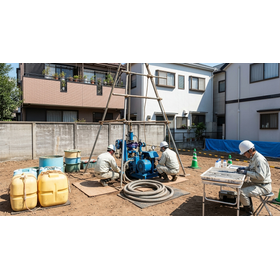
To ensure 24-hour operation of the data center, we completely avoid the risks of micro-subsidence and settlement due to ultra-high loads through deep boring and viscous soil consolidation analysis.
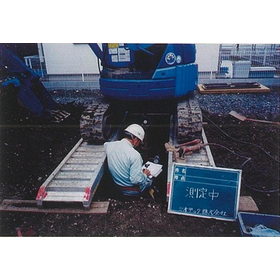
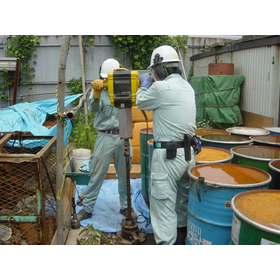
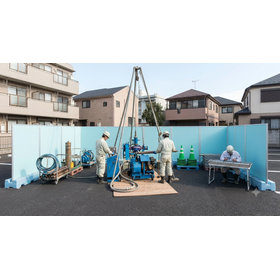
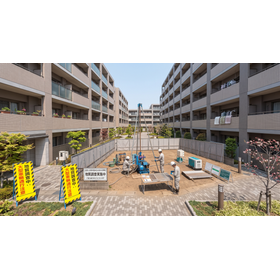
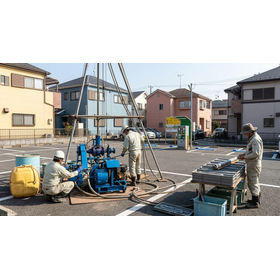
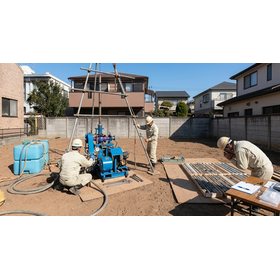
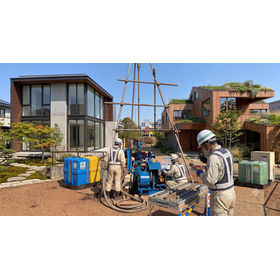
In data centers and ultra-high-load facilities where continuous operation 24 hours a day, 365 days a year is an absolute requirement, even slight ground subsidence or distortion poses a significant threat, potentially causing malfunction of server equipment or structural damage. GeoTech's dedicated ground investigation services precisely measure the continuity of support layers and the distribution of N values at great depths through deep boring surveys and standard penetration tests. Furthermore, we conduct laboratory stage loading consolidation tests using undisturbed samples taken from alluvial clay layers to calculate constants such as consolidation yield stress, compression index, and overconsolidation ratio, allowing us to highly predict future long-term subsidence amounts and the timing of subsidence convergence. In addition, we calculate the ground deformation coefficient through in-situ lateral loading tests (LLT) and combine this with comparative analysis using our proprietary ground information system "GEODAS" and neighboring data, enabling multifaceted geological investigations. We present scientifically backed, high-precision long-term allowable bearing capacities, proactively mitigating the risk of uneven subsidence during facility operations, and robustly supporting the stable operation of data centers over the long term.
Inquire About This Product
basic information
The basic specifications include excavation using a deep-depth drilling machine and standard penetration tests (continuous measurement of N values) based on JIS standards. For cohesive soil layers, undisturbed sample collection (using triple tube samplers, etc.) will be conducted, and constants such as consolidation yield stress Pc, compression index Cc, and consolidation coefficient Cv will be calculated through JIS A 1217 step-loading consolidation tests. Additionally, the lateral deformation coefficient E value of the ground will be directly calculated from the applied water pressure and borehole wall displacement using in-situ lateral loading tests (LLT). The acquired data will be analyzed in conjunction with our company's ground data database GEODAS and compiled into a technical report.
Price range
Delivery Time
Applications/Examples of results
It is ideal for the foundation structural design and long-term allowable bearing capacity verification of ultra-high load structures such as data centers, AI server buildings, and hyperscale data centers. It can be used for the quantitative assessment of localized settlement and differential settlement risks associated with the arrangement of high-density server racks and power equipment, as well as for the selection and judgment of pile foundations and shallow foundations. Additionally, it can be widely utilized for ground risk verification in the formulation of BCP (Business Continuity Plan) for facilities operating 24/7, submission of supporting documents to verification agencies, and demonstration of long-term safety for large industrial buildings.
catalog(3)
Download All Catalogs
Company information

-
![Fence foundation dual-purpose decorative boundary block [Shikīru]](https://image.www.ipros.com/public/product/image/6d4/2000203792/IPROS6592272567679821523.gif?w=280&h=280)