Site Investigation | Deep Soil Bearing Capacity Assessment to Reduce Environmental Impact by DC Construction
Ground investigation

To reduce the environmental impact of data center construction, unnecessary excavation and excessive reinforcement are eliminated through deep boring and viscous soil consolidation analysis.
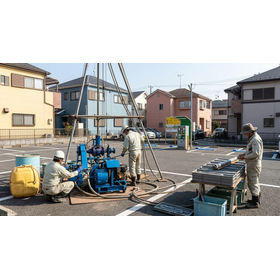
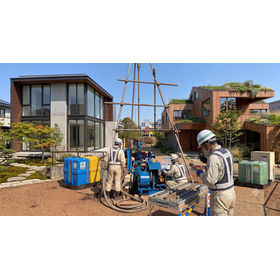
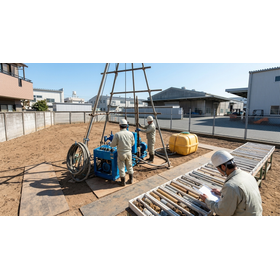
In the construction of environmentally considerate (ESG and SDGs compliant) data centers, it is essential to ensure structural safety while also reducing CO2 emissions associated with construction and minimizing excavation waste. Geotech's specialized ground investigation services rigorously assess the depth of deep support layers through deep boring surveys and standard penetration tests, eliminating unnecessary excessive pile lengths and additional drilling work due to miscalculations. Furthermore, by conducting indoor stage loading consolidation tests using undisturbed samples from alluvial clay layers, we identify consolidation yield stress and over-consolidation ratios, thereby reducing excessive ground improvement work that relies heavily on cement solidification materials. Additionally, we propose optimal foundation types, including the possibility of direct foundations, by utilizing in-situ horizontal loading tests to measure ground deformation coefficients and leveraging the wide-area analysis of the database "GEODAS." With solid numerical evidence, we thoroughly minimize material usage and environmental impact, strongly supporting the sustainable and robust development of data centers.
Inquire About This Product
basic information
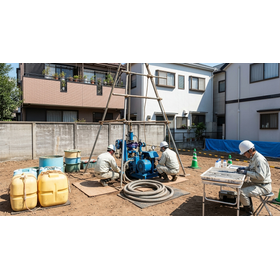
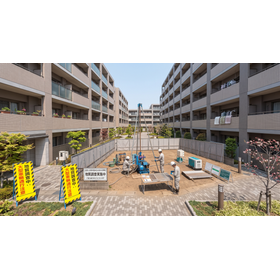
We will conduct deep drilling with a deep drilling machine suitable for deep excavation and perform standard penetration tests (continuous N-value acquisition) in accordance with JIS standards. For cohesive soil layers, we will collect undisturbed samples using a triple tube sampler, and we will measure the consolidation yield stress Pc and compression index Cc through JIS A 1217 staged loading consolidation tests. Additionally, we will measure the lateral deformation coefficient E value of the ground in situ through in-hole lateral loading tests (LLT). The acquired data will be cross-referenced with our in-house ground information system GEODAS, and we will prepare a technical report that balances environmental impact reduction and safety.
Price information
Please contact us.
Delivery Time
※Please contact us.
Applications/Examples of results
It is ideal for optimizing the foundational structure and reducing environmental impact design in the construction and renovation of environmentally friendly data centers and green IT infrastructure facilities. It will be utilized to obtain empirical evidence for direct foundation construction and appropriate pile length design, which helps to minimize excavation waste disposal costs and CO2 emissions during construction. Additionally, it can be widely used as a solution for developers and designers to simultaneously assess ground risks and environmental risks in the development of facilities eligible for ESG investment, as well as to ensure structural compatibility and optimize building materials.
catalog(3)
Download All Catalogs

Company information

-
![[Not Public] Soil Contamination | Category B](https://image.www.ipros.com/public/product/image/321794/IPROS4400175568595756491.jpg?w=280&h=280)