Construction method Product List and Ranking from 1589 Manufacturers, Suppliers and Companies | IPROS

Last Updated: Aggregation Period:May 13, 2026~Jun 09, 2026
This ranking is based on the number of page views on our site.

Construction method Manufacturer, Suppliers and Company Rankings

Last Updated: Aggregation Period:May 13, 2026~Jun 09, 2026
This ranking is based on the number of page views on our site.

  1. AP工法協会 Tokyo//Interior construction business
  2. 水研 Shiga//Building materials, supplies and fixtures manufacturers
  3. アーキヤマデ Osaka//Building materials, supplies and fixtures manufacturers
  4. 4 アウロステクノロジーズ Ishikawa//others
  5. 5 徳和工業 Miyagi//Other construction industries

Construction method Product ranking

Last Updated: Aggregation Period:May 13, 2026~Jun 09, 2026
This ranking is based on the number of page views on our site.

  1. Wet-type spray seismic reinforcement method "AP Method" AP工法協会
  2. Vacuum concrete construction method 徳和工業
  3. APLAS Sheet Method for Shortening Construction Periods of Aging Infrastructure Reinforcement アウロステクノロジーズ
  4. 4 Soil Coating Method "PoliSoil Greening" <NETIS Registered> 丸八土建
  5. 5 Install the valve without stopping the water! 'EM Continuous Water Valve Method' 水研

Construction method Product List

3931~3960 item / All 4313 items

Displayed results

[Document] Construction and Quality Control Guidelines for the Super Rappuru El Nido Method

[NETIS Registration] A detailed introduction to standard construction methods, along with construction management and quality management associated with them!

This document introduces the construction and quality control guidelines for the Super Rappuru Elniido method. It provides detailed information on the overview of the method, its features, the construction flow, the setting of mix strength, indoor mixing tests, core sampling methods, and more. Using diagrams, it serves as a useful reference when considering implementation. Please feel free to download it and read through it. 【Contents】 ■ Chapter 1 General Provisions ■ Chapter 2 Construction Policy ■ Chapter 3 Mixing Plan ■ Chapter 4 Construction and Construction Management ■ Chapter 5 Quality Control *For more details, please download the PDF or feel free to contact us.

  • Ground foundation construction method
  • Construction method

Added to bookmarks

Bookmarks list

Bookmark has been removed

Bookmarks list

You can't add any more bookmarks

By registering as a member, you can increase the number of bookmarks you can save and organize them with labels.

Free membership registration

Super Rappuru Erunido Construction Method Building Technology Performance Certificate

【NETIS Registration】A technology that allows for direct confirmation of the supporting ground and enables construction while adjusting the amount of solidifying material and water!

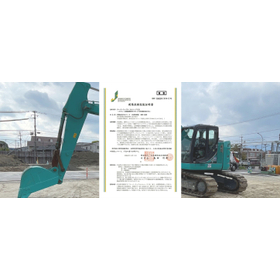
This document is a performance certificate for the Super Rappuru Elniido construction method. It includes an overview of the technology, the purpose of technology development, and details about the application case, as well as the methods and content of the performance certification. This technology is a ground improvement method that involves excavating loosened soil and adding solidifying agents and water, then mixing them with a uniquely shaped bucket to create block-like improved bodies. [Contents] ■ Overview ■ Details of Performance Certification *For more information, please download the PDF or feel free to contact us.

  • Ground foundation construction method
  • Construction method

Added to bookmarks

Bookmarks list

Bookmark has been removed

Bookmarks list

You can't add any more bookmarks

By registering as a member, you can increase the number of bookmarks you can save and organize them with labels.

Free membership registration

Super Rappu El Nido Method

Over 3,000 construction achievements nationwide! Ground improvement that realizes shortened construction periods and cost reduction.

We would like to introduce the excellent economic efficiency of the "Super Lapple Elneed Method." Since it is constructed through direct excavation, it reduces the processes of over-excavation and the setting and removal of formwork. The construction can be completed in a short time from excavation to site development for each location, achieving cost reduction. By conducting preliminary test constructions in various ground conditions, we have established know-how in testing systems, mix planning, construction management, and the development of mixing buckets, enabling us to create high-quality development bodies with minimal variation in strength. 【Features】 ■ Easy confirmation of support layers ■ Shortened construction period and high-quality development bodies ■ Minimal excess soil on site (amount of disposal soil) ■ Agile response to various sites *For more details, please download the PDF or feel free to contact us.

  • スクリーンショット 2025-02-28 9.09.12.png
  • スクリーンショット 2025-02-28 9.09.58.png
  • Ground foundation construction method
  • Construction method

Added to bookmarks

Bookmarks list

Bookmark has been removed

Bookmarks list

You can't add any more bookmarks

By registering as a member, you can increase the number of bookmarks you can save and organize them with labels.

Free membership registration

[NETIS Registration] For sites concerned about groundwater and soft ground. Reliable construction methods.

A clear move that can be judged visually at sites with abundant groundwater and soft ground!

The "Super Rappuru Erunido Method" allows for visual and tactile confirmation of the support layer during construction, enabling accurate decision-making even in sites where construction judgments may be uncertain. It supports reliable on-site judgments without relying on estimates or experience as in the past. This leads to a reduction in construction time and stabilization of quality, while minimizing the risk of construction errors. It can also accommodate complex ground conditions, significantly reducing uncertainties on site. 【Features】 ■ Reliable confirmation of the support layer during construction ■ Completion of construction in a short period at low cost ■ Achievement of high-quality embankments ■ Flexible construction tailored to the site environment

  • 20230420-102444-289_13d019ec24c7dab07c60e314ffa9a800.jpg
  • 20230417-101454-365_b6007c0ba031c1820bebdcbb3e6d570e.jpg
  • Ground foundation construction method
  • Construction method

Added to bookmarks

Bookmarks list

Bookmark has been removed

Bookmarks list

You can't add any more bookmarks

By registering as a member, you can increase the number of bookmarks you can save and organize them with labels.

Free membership registration

【NETIS Registration】 "Defect Rate 0%" High-density ground improvement for reliable prevention of settlement

"0% defect rate" Reliable ground improvement with high density to prevent sinking.

In response to the risk of re-softening after ground improvement, the "Super Rappu El Nido Method" ensures the stability of high-quality fill. Utilizing years of testing and construction know-how, we achieve construction quality with minimal strength variation. It can be confidently implemented not only immediately after improvement but also in projects requiring long-term ground stability. 【Features】 ■ Construction of high-strength fill ■ Improved stability after improvement ■ Zero risk of settlement after construction ■ High-precision construction management

  • フロー値.jpg
  • Ground foundation construction method
  • Construction method

Added to bookmarks

Bookmarks list

Bookmark has been removed

Bookmarks list

You can't add any more bookmarks

By registering as a member, you can increase the number of bookmarks you can save and organize them with labels.

Free membership registration

[Column] The El Niño Method That Can Be Applied Even in Areas with Abundant Groundwater

Even in sites with abundant groundwater, the El Niño method can be applied.

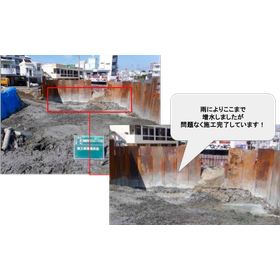
**Challenges of Sites with High Groundwater** In construction and civil engineering sites, there are many concerns related to "groundwater," such as: - Groundwater springs up immediately upon excavation. - The groundwater level is high, preventing excavation to the required depth. - There is a risk of construction interruption or quality issues due to rainwater and other factors. - Particularly in cases where the groundwater level is high, it is not uncommon for traditional methods to be deemed "impossible to construct." **Reasons for Choosing the Elneed Method** ◎ Flexibility to handle groundwater The Elneed method incorporates an "adjusted water content ratio" in its mix design and manages the water volume within the fill using "flow values," allowing for the utilization of "sprung water and sudden rain." **Reasons for Feasibility of Construction in High Water Level Sites** - Adoption of excavation and mixing methods that suppress groundwater inflow. - Setting a higher elevation for the initial finish, then shaving down to the required height the next day to avoid the effects of water level. - Establishing a reliable construction system through quality assurance and N-value determination during the design phase. **Conclusion** Do not give up on a site just because the water level is high. With the Elneed method, construction is possible even under conditions of groundwater volume, groundwater level, and during the rainy season.

  • sekou.png
  • Ground foundation construction method
  • Construction method

Added to bookmarks

Bookmarks list

Bookmark has been removed

Bookmarks list

You can't add any more bookmarks

By registering as a member, you can increase the number of bookmarks you can save and organize them with labels.

Free membership registration

[Column] What is the Elneed method that reduces quality, cost, and environmental impact?

What is the Elneed method that reduces quality, cost, and environmental impact?

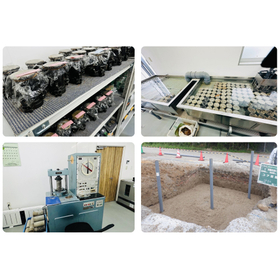
In ground improvement work on site, we will explain the differences between other methods and the "El Nido Method" from two perspectives this time. ▼Difference 1: Soil Disposal and Environmental Consideration▼ For example, in columnar improvement, it is common for the excavated soil to be discarded. As a result, the leftover soil is often treated as industrial waste, leading to increased disposal costs and greater environmental impact. On the other hand, the El Nido Method reuses the soil generated on site during excavation. The amount of leftover soil is about 35% for cohesive soil, and nearly zero for sandy ground. ▼Difference 2: Quality Control that Allows for "Direct Achievement" of Target Strength▼ In many ground improvement methods, there tends to be a significant difference between pre-mixing tests and actual on-site strength, necessitating a large safety factor due to variability in strength. For example, in conventional methods, the ratio of [on-site test specimen strength / pre-mixing test strength] is typically around 0.2 to 0.8. (Note: The "=" here indicates a range, so please recognize it as "nearly equal.") However, with the El Nido Method, we achieve [test specimen strength / mixing test strength ≧ 1.0]. In other words, the strength obtained on site is equal to or greater than that from the pre-laboratory tests.

  • 7b952ec5901f2cdbb45a3f17563d67d5.jpg
  • Ground foundation construction method
  • Construction method

Added to bookmarks

Bookmarks list

Bookmark has been removed

Bookmarks list

You can't add any more bookmarks

By registering as a member, you can increase the number of bookmarks you can save and organize them with labels.

Free membership registration

[Column] Visible Support Layers! What Excavation Methods Enhance Ground Reliability?

Visible support layers! What excavation methods enhance the reliability of the ground?

I am anxious about whether we are truly reaching the "support layer" that serves as the foundation of the building. In other methods, the conditions underground can only be estimated from machine readings, making it difficult to determine their accuracy. The Super Rappu Elneed method allows us to "directly see and touch" the most important part of ground improvement. ⬛︎ The challenge of "invisibility" faced by other methods While other methods use specialized large machines to dig underground, the Super Rappu Elneed method employs the most common equipment on site, the "backhoe." Instead of estimating "numbers" like torque values or ammeter readings, we verify with the technician's "eyes." This simple and direct approach creates an overwhelming "certainty" that other methods lack. ⬛︎ "Visible reassurance" achieves optimization of quality and cost The advantage of being able to "visualize" the support layer goes beyond mere peace of mind. - Proof of overwhelming quality - Cost optimization - Prevention of troubles before they occur Because the work underground is invisible, we ensure reliable construction.

  • Ground foundation construction method
  • Construction method

Added to bookmarks

Bookmarks list

Bookmark has been removed

Bookmarks list

You can't add any more bookmarks

By registering as a member, you can increase the number of bookmarks you can save and organize them with labels.

Free membership registration

地下水・軟弱地盤対応の基礎工法『スーパーラップルエルニード工法』

掘削バケットの使い分けで、多様な土質・地下水量に対応。掘削・混練・充填がワンストップで工期短縮に貢献

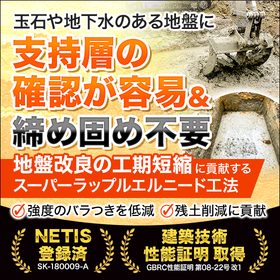
『スーパーラップルエルニード工法』は、バックホウを用いた 掘削・セメント系固化材の混練・充填により、均等性の高い造成体を形成する基礎工法です。 現場に合わせてバケットを使い分けることで、 支持層の正確な確認と、土質や地下水量の変化位への柔軟な対応を実現。 湧水・地下水が流入する現場や軟弱地盤、玉石交じりの地盤にも対応でき、 徹底した品質管理により高品質な施工が可能です。 【こんなお悩みございませんか?】 ■ラップル工法(生コン打設)などの掘削・型枠配置などの工程を短縮・簡略化できる工法はないか? ■推定・経験だけでなく、目視・数値で施工品質を確認出来る地盤改良工法はないか? ■雨天時や地下水が湧き出てくる現場でも、バラツキを抑えて高品質な施工はできないか? 【スーパーラップルエルニード工法の特長】 ■締め固めが不要   ■残土が少ない   ■支持層の確認が容易 ■強度管理が適宜可能 ■自然土含水量変化に機敏に対応可能 ■周囲の地盤との一体性に優れ、液状化を抑制 ※詳しくはPDFをダウンロードしていただくか、お気軽にお問い合わせください。

  • Ground foundation construction method
  • Construction method

Added to bookmarks

Bookmarks list

Bookmark has been removed

Bookmarks list

You can't add any more bookmarks

By registering as a member, you can increase the number of bookmarks you can save and organize them with labels.

Free membership registration

[Column] The Problem-Solving Power of the El Niño Method to Avoid Construction Inability on "Vacant Land"

Introducing the capabilities of the Elniido method that overcomes the muddy ground of "vacant land."

Properties that are "vacant land delivery" appear to be ready for immediate construction. However, there are many cases where unexpected softness in the ground is discovered during the ground survey right after construction begins, significantly impacting the budget and schedule. ⬛︎ Why does "vacant land" become muddy? - Demolition contractors are professionals at tearing down buildings, but they are not experts in solidifying the ground. - Many sites are seen where the ground, which has absorbed water and become muddy, has not been properly treated, and only the surface has been leveled. ⬛︎ Three strengths of the Elneed method that is resistant to "mud": 1. An innovative approach to "manage and utilize" water. 2. Real-time responsiveness on site. 3. High mobility using general heavy machinery (backhoes). If you find yourself in a situation where "you bought vacant land, but the ground is mushy and heavy machinery cannot enter," please feel free to consult with us.

  • 01cc8b1475ae063a1cc2b24ad18ad23b5c38ecd5.jpg
  • 226cb92da847e70d8218334e755f7ea877e89fbf.jpg
  • Ground foundation construction method
  • Construction method

Added to bookmarks

Bookmarks list

Bookmark has been removed

Bookmarks list

You can't add any more bookmarks

By registering as a member, you can increase the number of bookmarks you can save and organize them with labels.

Free membership registration

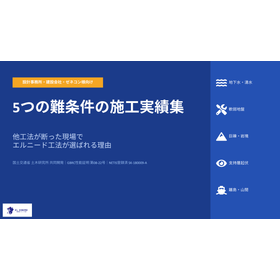
Collection of Construction Achievements under Five Difficult Conditions | Elneed Method

Selected for sites where other methods have been rejected. Approximately 4,000 cases of challenging construction achievements disclosed.

This document summarizes the construction achievements and technical foundations for five challenging conditions in ground improvement that design offices, construction companies, and general contractors often find difficult to address and may decline due to "strict conditions." 【The five challenging conditions included】 1. Sites with groundwater or spring water 2. Muddy or weak backfill ground 3. Ground mixed with large gravel, boulders, and rock masses 4. Ground with undulating support layers that are difficult to verify 5. Remote islands, mountainous areas, and sites with difficult access For each site, it specifically explains why other methods (column improvement, rubble, cast-in-place piles) are challenging and how the Elneed method can solve these issues with specific technologies, along with the regions where these achievements have been made. The overall picture of the ground improvement method, with a cumulative construction record of approximately 4,000 cases by the National Elneed Association, a reinforced concrete ratio of 36.2%, and a site test body strength ratio of 1.0 or higher, can be understood in 9 pages.

  • Ground foundation construction method
  • Construction method

Added to bookmarks

Bookmarks list

Bookmark has been removed

Bookmarks list

You can't add any more bookmarks

By registering as a member, you can increase the number of bookmarks you can save and organize them with labels.

Free membership registration

[Column] A Must-See for Structural Designers! A Thorough Cost Comparison with Columnar Improvement Methods

A must-see for structural design professionals! A thorough cost comparison with columnar improvement methods.

The choice of construction method not only affects the cost of the improved body alone but also changes the size of the foundation itself. The answer to "which is cheaper" varies depending on whether the size of the foundation is already determined. 1. Differences in bearing capacity change foundation design - Column improvement: ~300 kN/m² * Due to low bearing capacity, a large foundation is required. - Super Rappu Elneed method: ~1,000 kN/m² * High bearing capacity allows for a compact foundation design. 2. The competition for comparison occurs before the foundation size is determined Because the high bearing capacity allows for a smaller required foundation area, it becomes easier to achieve cost reductions that exceed the volume increase of the improved body. The Elneed method allows for foundation optimization at 10 cm intervals, which is a feature not available with column improvement. 3. Estimated cost comparison (based on actual results) Instead of using large specialized machines typically used for column improvement, we use a backhoe with excellent mobility. The diagram below compares the column improvement method and the Super Rappu Elneed method under the conditions of RC8F. As a result of optimizing the foundation size from the design stage, all excavation volume, material costs, and working time are compressed.

  • Ground foundation construction method
  • Construction method

Added to bookmarks

Bookmarks list

Bookmark has been removed

Bookmarks list

You can't add any more bookmarks

By registering as a member, you can increase the number of bookmarks you can save and organize them with labels.

Free membership registration

[Column] The Appeal of the El Niño Method for Pebbles and Boulders on Solid Bedrock

How to absorb risks that are not visible in preliminary surveys through design, such as point-embedded boulders, rolling stones, and solid bedrock?

Boring surveys are an important means of understanding the ground. However, it is realistically difficult to fully capture the scattered boulders and cobbles, as well as the hard and uneven bedrock, from data points collected at only 3 to 5 locations. When unexpected issues arise on-site after the design has been finalized, it leads to a triple burden of changes in construction methods, extended timelines, and additional costs. This time, we will explain how to approach cobbles, boulders, and solid bedrock from the perspective of incorporating "uncertainty" during the design phase. 1. Why are boulders and cobbles "difficult to see in preliminary surveys"? Boulders and cobbles are typically distributed sporadically in river basins, fan-shaped deposits, and old river channels. 2. The significance of choosing a construction method that "allows for unexpected issues" during the design phase. The resilience to unexpected issues varies greatly depending on the construction method. 3. Solid bedrock can also be "cut and leveled." Alongside cobbles and boulders, the unevenness of the bedrock when reaching the support layer is also difficult to see during the design phase. When encountering hard bedrock with slopes and steps, many construction methods find it challenging to adapt. The Elneed method is designed with the assumption of changes occurring on-site. Being able to absorb this uncertainty regarding cobbles, boulders, and solid bedrock on-site directly contributes to the reliability of the design and the stability of the construction timeline.

  • Ground foundation construction method
  • Ground improvement
  • Construction method

Added to bookmarks

Bookmarks list

Bookmark has been removed

Bookmarks list

You can't add any more bookmarks

By registering as a member, you can increase the number of bookmarks you can save and organize them with labels.

Free membership registration

[Dyed Q Technology Construction Case] Nitto Zinc Co., Ltd.

Revitalize the strength and appearance of aging factories with the Dye Q Technology reinforcement method!

We would like to introduce a case where the Dye Q Technology reinforcement method was applied at Nitto Zinc Co., Ltd. In the company's manufacturing plant, the steel structures and roofing materials had deteriorated over many years of use, with rust and corrosion becoming prominent. Since dismantling or new construction would require high costs and a long construction period, they were looking for a method to repair the facility in a short time while keeping the plant operational. Therefore, they adopted the Dye Q Technology reinforcement method, which allowed them to permeate new materials into the deteriorated areas and restore strength in a short period. Because the work could be carried out while the plant was operational, they were able to minimize the impact on production. [Challenges] - The steel structures and roofing materials had deteriorated over many years of use, with rust and corrosion becoming prominent. - In particular, the external stairs had fallen below safety standards in terms of strength. - There was a need to ensure the safety of employees. - They were looking for a method to repair the facility in a short time while keeping the plant operational. *For more details, please refer to the PDF document or feel free to contact us.*

  • Renovation and repair methods
  • Construction method

Added to bookmarks

Bookmarks list

Bookmark has been removed

Bookmarks list

You can't add any more bookmarks

By registering as a member, you can increase the number of bookmarks you can save and organize them with labels.

Free membership registration

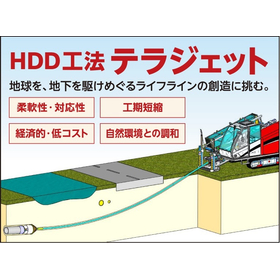
Innovative construction method! HDD method (Horizontal Directional Drilling) TerraJet

Piping and wiring burial system! Avoid obstacles with vertical and horizontal curves! Reduce total costs! "Challenging the creation of lifelines that run through the Earth and underground!"

With the acceleration and advancement of urban functions, the development of various lifelines such as water supply and drainage, electricity, gas, and communications is becoming increasingly important. The HDD method (Horizontal Directional Drilling) / TerraJet is a construction method for burying pipes and cables without excavation, which reduces traffic disruption and soil disposal issues. It allows for clean and highly safe construction by detecting the construction position from above ground and pushing in an arc direction both vertically and horizontally. Additionally, it eliminates the need for traditional shaft construction, allowing for simpler shafts, which shortens construction time and reduces total costs. In recent years, disasters have become more severe, and as lifelines age, the renewal and seismic reinforcement of aging pipes are being promoted from the perspective of improving disaster resilience. The HDD method (Horizontal Directional Drilling) / TerraJet is gaining attention as a method for burying water supply and drainage pipes, gas pipes, power cables, and communication lines underground. 【Features】 - Flexibility and adaptability - Shortened construction period - Economical low cost - Harmony with the natural environment - Safety For more details, please contact us or download the catalog.

  • Water Supply Facilities
  • Sewerage facilities
  • Agricultural civil engineering works
  • Construction method

Added to bookmarks

Bookmarks list

Bookmark has been removed

Bookmarks list

You can't add any more bookmarks

By registering as a member, you can increase the number of bookmarks you can save and organize them with labels.

Free membership registration

ASE-MS method

Heavy metals can be reduced to below soil environmental standards! Strength improvement and handling improvement are possible.

The "ASE-MS method" is a technique that allows for the simultaneous addition of liquid along with powder. It complies with soil environmental standards for heavy metals. It can improve strength and handling, and convert insoluble and difficult-to-dissolve compounds through chemical reactions. An astonishing four-component mixture. Chelating agents and pH adjustments are added while managing flow rates. [Examples (excerpt)] ■ Nagano Prefecture Target: Arsenic 0.024 mg/L ■ Miyagi Prefecture Target: Arsenic 0.022 mg/L ■ Tokyo Metropolis Target: Arsenic 0.97 mg/L ■ Tokyo Metropolis Target: Arsenic 0.017 mg/L ■ Niigata Prefecture Target: Mercury 0.0013 mg/L *For more details, please download the PDF or feel free to contact us.

  • Soil improvement material
  • Ground improvement
  • Construction method

Added to bookmarks

Bookmarks list

Bookmark has been removed

Bookmarks list

You can't add any more bookmarks

By registering as a member, you can increase the number of bookmarks you can save and organize them with labels.

Free membership registration

ASE-OS method

Transform into reusable soil for various applications as fill material and backfill!

The "ASE-OS method" is a technique designed to address oil-contaminated soil, sludge, and mud caused by accidents or the aging of equipment. By mixing "Oil Shut (OS)" at 3-6% with oil-contaminated soil and ensuring a curing period of several hours, the removal of oil films and odors can be confirmed. Additionally, by controlling the amount of additive, it can adapt to various types of oil and is effective even in cases of high concentration contamination. 【Features】 ■ Immediately purifies oil content and removes oil films and odors ■ Improves strength and handling ■ No need for hexavalent chromium leaching tests *For more details, please download the PDF or feel free to contact us.

  • Soil improvement material
  • Ground improvement
  • Construction method

Added to bookmarks

Bookmarks list

Bookmark has been removed

Bookmarks list

You can't add any more bookmarks

By registering as a member, you can increase the number of bookmarks you can save and organize them with labels.

Free membership registration

Off-site construction method for air conditioning equipment "MOVER"

Solving the building equipment seismic design and construction guideline a + b < 250 by installing the independently developed Catalyzer!

"Muva" is an off-site construction method for air conditioning equipment designed for ceiling cassette-type package air conditioners. Since the position of the main unit can be adjusted after hanging the equipment, there is no need for re-hanging even if the ceiling opening is misaligned. The adjustment range is ±250mm in the front, back, left, and right. Please feel free to contact us if you have any requests. 【Product Composition】 ■ Main Beams: 2 ■ Sub Beams: 2 ■ Equalizers: 4 ■ Fixing Bolts: 8 *For more details, please download the PDF or feel free to contact us.

  • Earthquake-resistant construction method
  • Construction method

Added to bookmarks

Bookmarks list

Bookmark has been removed

Bookmarks list

You can't add any more bookmarks

By registering as a member, you can increase the number of bookmarks you can save and organize them with labels.

Free membership registration

RAKUYU-Z Method

Water replacement measures for the maintenance management era! Please feel free to consult us regarding any water replacement matters.

We would like to introduce the "RAKUYU-Z Method," which is promoted and advertised by our association. By using this method for water replacement, we can create an environment where the construction site remains completely dry (or at a water level suitable for construction) for a certain period without implementing drainage restrictions for local residents. This ensures safety and hygiene on-site, enhances the efficiency of the main construction work, and makes it easier to secure construction quality. Additionally, our association holds technical guidance, training sessions, and workshops related to the method. 【Features】 ■ Resolves interruptions in construction due to clogging ■ Numerous suction vehicles are deployed, moving away from piston transport ■ Suitable even in locations where submersible pumps cannot be installed inside manholes ■ Minimal impact on surrounding traffic for water replacement ■ Labor-saving through automatic pump control and patrol monitoring, with rapid response in case of accidents ■ Smooth installation and removal even for large-capacity water replacements *For more details, please download the PDF or feel free to contact us.

  • Sewerage facilities
  • Drainage and water removal
  • Construction method

Added to bookmarks

Bookmarks list

Bookmark has been removed

Bookmarks list

You can't add any more bookmarks

By registering as a member, you can increase the number of bookmarks you can save and organize them with labels.

Free membership registration

Dynamic Resin Strong Guard P Method

A lineup of "low-temperature" products that can be installed at temperatures ranging from -5℃ to 15℃ is also available!

The "Dynamic Resin Strong Guard P Method" is a concrete spalling prevention method that complies with the "East Japan, Central Japan, and West Japan Expressway Company Structural Construction Management Guidelines for Spalling Prevention." The process includes substrate treatment, primer application, adhesive application (first coat), fiber sheet installation, adhesive application (top coat), and finish material application. Please feel free to contact us when you need our services. 【Structure】 ■ Finish material "JDB-95U" ■ Adhesive "JDB-790E" ■ Continuous fiber sheet "SCM 1810A" ■ Adhesive "JDB-790E" ■ Primer "JDB-EX" ■ Concrete surface *For more details, please download the PDF or feel free to contact us.

  • Civil Engineering Method
  • Construction method

Added to bookmarks

Bookmarks list

Bookmark has been removed

Bookmarks list

You can't add any more bookmarks

By registering as a member, you can increase the number of bookmarks you can save and organize them with labels.

Free membership registration

Dynamic Resin Strong Guard TNK Method

Flame-retardant epoxy resin-based adhesive can be used to ensure flame resistance, self-extinguishing properties, and safety of generated gases!

The "Dynamic Resin Strong Guard TNK Method" is a construction method designed to prevent spalling in tunnels (small piece spalling prevention) and bridge concrete spalling. The applicable temperature range for spalling prevention performance is -30 to +50°C (suitable for cold regions). By using a special continuous fiber sheet, it maintains high push-out performance. Additionally, by using a flame-retardant epoxy resin-based adhesive, it ensures fire resistance, self-extinguishing properties, and safety of generated gases. 【Features】 ■ Applicable for spalling prevention in tunnels (small piece spalling prevention) and bridge concrete. ■ Spalling prevention performance applicable temperature range: -30 to +50°C (suitable for cold regions). ■ High push-out performance can be maintained by using a special continuous fiber sheet. ■ Weather-resistant inorganic paint is adopted for the finishing coat. *For more details, please download the PDF or feel free to contact us.

  • Civil Engineering Method
  • Construction method

Added to bookmarks

Bookmarks list

Bookmark has been removed

Bookmarks list

You can't add any more bookmarks

By registering as a member, you can increase the number of bookmarks you can save and organize them with labels.

Free membership registration

Bond VM Netless Method

Introducing a peeling prevention method that can be implemented without using nets in sub-zero temperatures!

The "Bond VM Netless Method" is a construction technique that allows for anti-peeling measures simply by applying a tough urethane resin. By ensuring a uniform film thickness when applied to complexly shaped concrete structures, it reliably demonstrates anti-peeling effectiveness. Furthermore, this method can be executed even in winter, when construction is often concentrated, in sub-zero environments (above -5°C). It alleviates concerns related to winter project management and is beneficial for both quality control and project management. 【Features】 ■ Excellent anti-peeling performance achieved just by applying ■ Shortest construction period of 2 days, reducing total costs ■ Usable in sub-zero winter environments (applicable temperature range: -5°C to 40°C) ■ Demonstrates good anti-peeling performance across various temperature ranges without a net (with a pull-off strength of over 1.5 kN and a displacement of over 10 mm at -30°C, 23°C, and 50°C) *For more details, please download the PDF or feel free to contact us.

  • Civil Engineering Method
  • Construction method

Added to bookmarks

Bookmarks list

Bookmark has been removed

Bookmarks list

You can't add any more bookmarks

By registering as a member, you can increase the number of bookmarks you can save and organize them with labels.

Free membership registration

Atlas method

Compatible with a wide range of soil types including soft soil, sandy soil, clayey soil, gravelly soil, and hard soil!

We would like to introduce the "Atlas Method" handled by our association. By analyzing the abundant data and experience gained from construction achievements, we have created a unique cost estimation method for the association. By adopting machinery and equipment depreciation based on the market, we have realized a construction method that is more cost-effective than open-cut methods, environmentally friendly, safe, and highly precise. Additionally, the propulsion machine for the Atlas Method, "Condor II," can start from a vertical shaft with a diameter of 2000mm and is designed to accommodate a wide range of soil types. 【Condor II Features】 ■ Full stroke of 120mm with a single control lever ■ Easy operation improves work efficiency ■ Starts from a vertical shaft with a diameter of 2000mm ■ Lightweight and compact ■ Wide range of soil type compatibility *For more details, please download the PDF or feel free to contact us.

  • Other earthworks, foundation works, and exterior floors
  • Construction method

Added to bookmarks

Bookmarks list

Bookmark has been removed

Bookmarks list

You can't add any more bookmarks

By registering as a member, you can increase the number of bookmarks you can save and organize them with labels.

Free membership registration

ARUR (Asbestos Roof Urethane Renewal) method

Recommended as a construction method with excellent cost performance that can be implemented relatively inexpensively!

The "ARUR (Asbestos Roof Urea Renewal) Method" is a system that achieves long-term protection and maintenance-free longevity for asbestos-containing slate roofs over a period of 30 years. To realize this, we used advanced one-component reaction-curing urethane resin paint. Additionally, it is an environmentally considerate system that prevents the release of asbestos into the environment during the process. 【Features】 ■ Maintenance-free for 30 years, allowing for the longevity of the factory ■ A cost-effective method with waterproofing and heat insulation functions ■ Conducts asbestos treatment with environmental considerations, preventing troubles with neighboring residents *For more details, please download the PDF or feel free to contact us.

  • Roof and gutter construction
  • Construction method

Added to bookmarks

Bookmarks list

Bookmark has been removed

Bookmarks list

You can't add any more bookmarks

By registering as a member, you can increase the number of bookmarks you can save and organize them with labels.

Free membership registration

Drug solution injection method

Construction is possible on any type of ground! You can continue your daily life as usual during the construction.

The "liquid injection method" is a technique used when the ground on which a building has already been constructed is weak. By injecting expandable resin into weak ground or gaps and cavities created by tilting, the issue of tilting can be resolved. This method can be applied to any type of ground, and normal life can continue during construction. Please feel free to contact us when you need our services. 【Other Methods】 ■ Pressure Plate Method ■ Underpinning Method ■ Side Pinning Method ■ Foundation Lifting Method *For more details, please download the PDF or feel free to contact us.

  • Ground foundation construction method
  • Construction method

Added to bookmarks

Bookmarks list

Bookmark has been removed

Bookmarks list

You can't add any more bookmarks

By registering as a member, you can increase the number of bookmarks you can save and organize them with labels.

Free membership registration

Underpinning method

Adjust the building's level with hydraulic jacks! Construction is possible even if further sinking is anticipated.

We would like to introduce the "Underpinning Method" that we propose. This method involves excavating the ground beneath the building's foundation and inserting steel pipes until reaching a hard and stable ground. The foundation is then placed on top of these pipes, supporting the building. The building's level is adjusted using hydraulic jacks. Even if future settlement is anticipated, construction can still be carried out, and it is suitable for narrow spaces. Additionally, you can continue your daily life as usual during the construction. 【Main Benefits】 ■ Construction is possible even if future settlement is expected ■ Suitable for narrow spaces ■ You can continue your daily life as usual during construction *For more details, please download the PDF or feel free to contact us.

  • Ground foundation construction method
  • Construction method

Added to bookmarks

Bookmarks list

Bookmark has been removed

Bookmarks list

You can't add any more bookmarks

By registering as a member, you can increase the number of bookmarks you can save and organize them with labels.

Free membership registration

Foundation raising method

A construction method that can be used when there are no issues with the foundation soil! It can also be applied in narrow spaces.

We would like to introduce our proposed "Foundation Lifting Method." This method involves inserting claw jacks or hydraulic jacks under the foundation of the building and performing a jack-up to correct any tilting. It can be used when there are no issues with the foundation ground. Compared to other methods, it is cost-effective and can be applied in narrow spaces. Additionally, one of the benefits is that normal living can continue during the construction. Please feel free to contact us when you need our services. 【Other Methods】 ■ Chemical Injection Method ■ Pressure Plate Method ■ Underpinning Method ■ Side Pinning Method *For more details, please download the PDF or feel free to contact us.

  • Ground foundation construction method
  • Construction method

Added to bookmarks

Bookmarks list

Bookmark has been removed

Bookmarks list

You can't add any more bookmarks

By registering as a member, you can increase the number of bookmarks you can save and organize them with labels.

Free membership registration

APLAS sheet method

A reinforcement method that excels in construction period, cost, and workability to address on-site challenges!

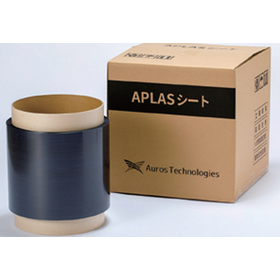
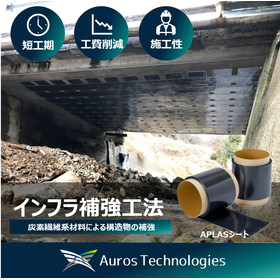
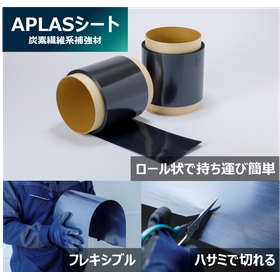
The "APLAS Sheet Method" is a new technique for reinforcing concrete structures using CFRTP sheets that are impregnated with thermoplastic resin (PPS resin). Unlike the currently mainstream carbon fiber adhesive method, which requires resin impregnation and curing processes, this method achieves reinforcement simply by adhering the sheets with a specialized adhesive. This results in a reduction in construction time, which can lead to lower direct construction costs and a decrease in the burden on on-site workers. The APLAS sheets used in this method are a new reinforcement material that has been given high adhesion properties through a unique plasma treatment technology. They meet the quality standards for reinforcement materials set by NEXCO, making them safe for use in infrastructure fields such as bridges. 【Features】 ■ Short construction period: Reduces the number of work hours after surface preparation by half. ■ Reduction in direct construction costs: Expected savings on labor costs and rental fees for temporary scaffolding. ■ Workability: Can be cut with a cutter or scissors, allowing for dimension adjustments on-site. *For more details, please download the PDF or feel free to contact us.

  • others
  • Special Construction Method
  • Construction method

Added to bookmarks

Bookmarks list

Bookmark has been removed

Bookmarks list

You can't add any more bookmarks

By registering as a member, you can increase the number of bookmarks you can save and organize them with labels.

Free membership registration

No paint leaks from the gaps in the protective covering! Edge painting protective method LCL method.

Since the paint does not leak out from the gaps in the masking, it is possible to efficiently create clear lines! *Catalog available.

The "LCL Method" is a painting masking technique called "Liquid Clear Line" for edge finishing. By using a clear liquid (amorphous) material for edge masking, it is possible to efficiently create clear (distinct) lines at the junctions with uneven finished surfaces. For this method, we provide materials such as "Acrylic-based Acrico NB" and "Modified Silicone-based Hensei Chiri Cork NB." 【Features】 ■ Efficiently create clear lines ■ Prevent paint from leaking out from gaps *For more details, please refer to the PDF document or feel free to contact us.

  • Special Construction Method
  • others
  • Construction method

Added to bookmarks

Bookmarks list

Bookmark has been removed

Bookmarks list

You can't add any more bookmarks

By registering as a member, you can increase the number of bookmarks you can save and organize them with labels.

Free membership registration

The Bio Water (BW System) Pipeline Magnetite Method

Measures against the deterioration of water supply pipes! A piping magnetite method to reduce the costs of large-scale renovations.

By installing The Bio Water in the water supply pipe, it changes the quality of the water and slows down the oxidation rate of iron, promoting the formation of a stable oxide film (black rust) inside the piping. Existing red rust will also transform into black rust. Since black rust has a density about ten times higher than red rust, the blockage rate of the piping will improve. Additionally, piping that has lost thickness due to deterioration and is on the verge of leaking can be restored to its original thickness through black rust formation, thus avoiding the risk of leakage. 【Features】 ○ Low cost ○ Short construction period ○ Essentially maintenance-free ○ Can be safely used in water supply pipes until the building's lifespan *For more details, please contact us or download the catalog. *The section titled 'What sparked your interest?' displayed during the PDF download is generated by Ipros Co., Ltd.'s AI.

Added to bookmarks

Bookmarks list

Bookmark has been removed

Bookmarks list

You can't add any more bookmarks

By registering as a member, you can increase the number of bookmarks you can save and organize them with labels.

Free membership registration