Site Investigation | Deep Soil Bearing Capacity and Dynamic Analysis to Mitigate Earthquake Risks in DC
To mitigate the earthquake risk of data centers, we clarify the seismic bearing capacity and liquefaction and settlement behavior through deep boring and viscous soil consolidation analysis.
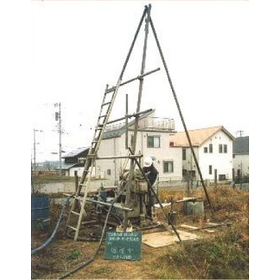
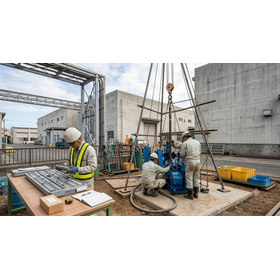
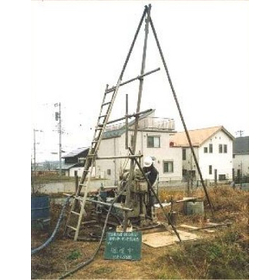
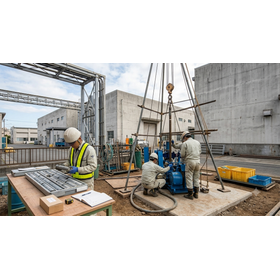
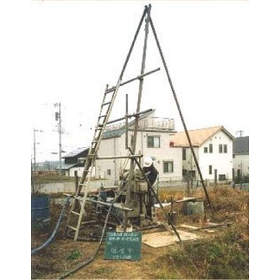
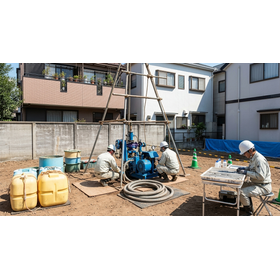
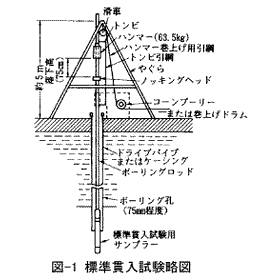
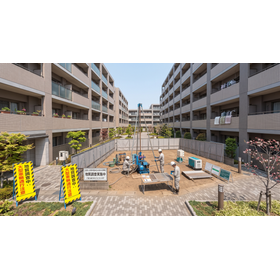
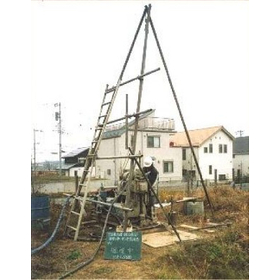
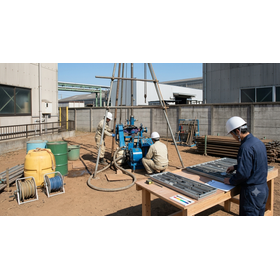
In earthquake-prone Japan, to perfectly establish a business continuity plan (BCP) for data centers, it is essential to accurately assess the dynamic behavior of the ground and the deep bearing capacity against large earthquakes and unexpected tremors. Geotech's dedicated ground investigation services rigorously obtain the depth and thickness of supporting layers present at great depths, as well as continuous N-value data, through deep boring surveys and standard penetration tests, visualizing the foundation bearing capacity that can withstand seismic forces. Furthermore, by conducting indoor staged loading consolidation tests using undisturbed samples of alluvial clay layers, we identify the consolidation yield stress and over-consolidation ratio, allowing us to quantitatively simulate the risks of post-earthquake consolidation settlement and differential settlement that may occur after a major earthquake. In conjunction, we combine in-situ measurements of lateral deformation coefficients through in-situ horizontal loading tests (LLT) and multi-faceted wide-area ground analysis using our proprietary database "GEODAS" to highly elucidate the response characteristics during earthquakes. We demonstrate complete seismic safety from both shaking and settlement perspectives, robustly supporting the operation of data centers as social infrastructure that never stops, 24 hours a day.
- Company:ジオテック
- Price:Other