Construction method Product List and Ranking from 1572 Manufacturers, Suppliers and Companies | IPROS

Last Updated: Aggregation Period:Sep 16, 2026~Oct 13, 2026
This ranking is based on the number of page views on our site.

Construction method Manufacturer, Suppliers and Company Rankings

Last Updated: Aggregation Period:Sep 16, 2026~Oct 13, 2026
This ranking is based on the number of page views on our site.

  1. Taiyo Kisokogyo Co.,Ltd. Aichi//General contractors and subcontractors
  2. SIKA JAPAN Ltd. Tokyo//Building materials, supplies and fixtures manufacturers
  3. エルニード協会 Kagawa//Other construction industries
  4. 4 ロンタイ Osaka//Building materials, supplies and fixtures manufacturers
  5. 5 ジオテック Tokyo//Other construction industries

Construction method Product ranking

Last Updated: Aggregation Period:Sep 16, 2026~Oct 13, 2026
This ranking is based on the number of page views on our site.

  1. Landslide Prevention Greening Method "Long Strong Net Method" to be released in January 2025. ロンタイ
  2. 側溝修繕工法『ネプラス工法』<施工前後の写真付き資料進呈> ネプラス工法全国会 本部
  3. Install the valve without stopping the water! 'EM Continuous Water Valve Method' SUIKEN Co., LTD
  4. 4 Integrated mattress basket reinforced earth wall method Terra Mesh エターナルプレザーブ
  5. 5 Temporary bridge temporary pier cable-stayed construction method "LIBRA Method" 横山基礎工事

Construction method Product List

91~120 item / All 4430 items

Displayed results

Ground reinforcement work | A reliable structure that prevents differential settlement accidents of buildings using the high-support capacity DM method.

Large cast iron wings and bolt-fixed structures boasting a diameter up to 3.5 times that of steel pipes. The DM method demonstrates tremendous tip support strength, eliminating subsidence accidents in small-scale buildings.

GeoTech Co., Ltd. offers the "DM Method (Double Metal Method)" nationwide, which is a small-diameter steel pipe pile ground reinforcement technology that completely prevents differential settlement accidents in buildings and ensures long-term safety. In ground reinforcement work that firmly supports buildings, this method employs a unique design that attaches large ductile cast iron tip wings with diameters of 3.0 times (290mm) and 3.5 times (350mm) the shaft diameter of 101.6mm steel pipes. By enhancing joint strength with robust bolt fixation, it exhibits tremendous tip support strength in the ground. The construction method, which does not use cement and employs non-displacement rotary penetration, does not disturb the ground and enables low-noise and low-vibration construction in the surrounding environment. It has obtained GBRC performance certification (No. 10-01) and allows for reliable allowable bearing capacity calculations based on SWS testing. Through in-house component management, a nationwide network of construction association members, and real-time data tracking using construction management devices, it strongly protects the asset value of clients over an extended period with high strength and complete quality assurance.

  • Ground improvement
  • Ground foundation construction method
  • Pile and foundation work
  • Construction method

Added to bookmarks

Bookmarks list

Bookmark has been removed

Bookmarks list

You can't add any more bookmarks

By registering as a member, you can increase the number of bookmarks you can save and organize them with labels.

Free membership registration

Iron cover multi-replacement circle cutter method

Iron cover multi-replacement circle cutter method

The circle cutter method uses the multi-paving cutter machine "Maruk Cutter" to replace round and square manhole covers with circular and oval finishes in a low-cost and speedy manner. ○ Safety Features As a measure against internal flooding in sewers, the use of high-strength adhesive anchors for the lower manhole is standard practice. ○ Cost Features In the case of light and medium traffic, using the narrow area compaction machine "Maruk TEN" allows for compaction of the subbase in narrow areas, making road restoration significantly cheaper compared to the conventional circular method with non-shrink mortar subbase finishing. For more details, download the catalog!

  • Special Construction Method
  • Construction method

Added to bookmarks

Bookmarks list

Bookmark has been removed

Bookmarks list

You can't add any more bookmarks

By registering as a member, you can increase the number of bookmarks you can save and organize them with labels.

Free membership registration

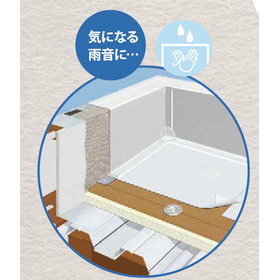
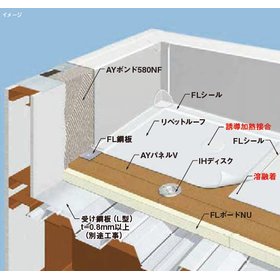
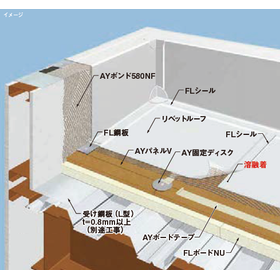
New LCS Method for Rivet Roof Waterproofing with Reduced Rain Noise Specification

Improving indoor environments with external insulation methods while also addressing the challenges of metal roofs!

The "Ribbed Roof Waterproofing New LCS Method with Rain Sound Reduction Specification" contributes to the reduction of rain noise hitting the roof by sandwiching rigid boards. Depending on the required level of noise reduction, it is also possible to incorporate boards such as rigid wood wool cement boards. Additionally, internal sound leakage is reduced, leading to its adoption in places like cinemas and theaters. 【Main Components】 ■ AY Panel V (Volcanic Glass Composite Multi-layer Board) ■ FL Board NU (Rigid Polyurethane Foam) ■ IH Disk (Stainless Steel Disk with Adhesive Layer) ■ AY Fixing Disk (Stainless Steel Plate Disk) *For more details, please download the PDF or feel free to contact us.

  • 1-2.png
  • 1-3.png
  • Roof and gutter construction
  • Waterproof sheet
  • Construction method

Added to bookmarks

Bookmarks list

Bookmark has been removed

Bookmarks list

You can't add any more bookmarks

By registering as a member, you can increase the number of bookmarks you can save and organize them with labels.

Free membership registration

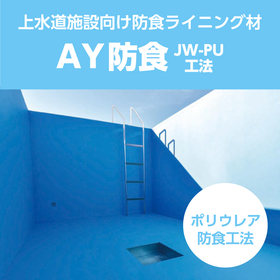
Water Supply Facility Polyurea Corrosion Protection - AY Corrosion Protection JW-PU Method

"Yamade's corrosion protection" protects facilities safely from concrete corrosion in water supply systems.

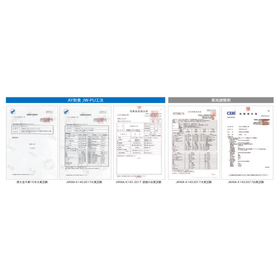
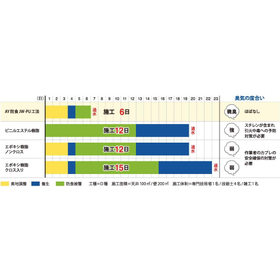
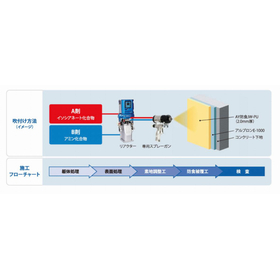
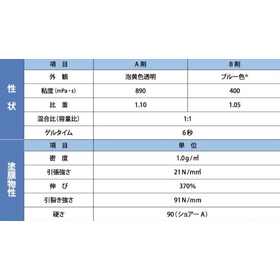
To protect water supply facilities from concrete corrosion, it is necessary to apply an anti-corrosion lining material that has adhesion and protective effects on concrete, and does not adversely affect water quality for drinking water use. The AY Anti-Corrosion JW-PU method is a polyurea anti-corrosion construction method developed for water supply facilities. It possesses excellent durability, workability, and safety, and protects concrete structures such as water purification plants and distribution reservoirs over the long term. Main applications: water supply facilities, irrigation channels, water storage tanks, receiving tanks, distribution reservoirs, water purification ponds, fish farming facilities, marine structures, etc. 1. Compliance with water quality standards The entire method, including the anti-corrosion lining material and substrate adjustment materials, is a highly safe anti-corrosion method that complies with water quality tests and physical property tests. 2. Safety It is solvent-free and VOC-free, resulting in minimal odor generation. This significantly reduces the burden on workers and surrounding residents. 3. Workability Due to its ultra-fast curing type, the construction period from substrate adjustment to anti-corrosion coating can be significantly shortened compared to other methods (vinyl ester resin / epoxy resin non-woven / epoxy resin with woven fabric). 4. Short construction period Because it is mechanically applied using a dedicated reactor and spray gun, it minimizes variations in craftsmen's skill levels, achieving a stable quality of the coating film.

  • mode3_w1200-AY防食1_2.jpg
  • mode3_w1200-AY防食4.jpg
  • mode3_w1200-AY防食施工性修正.jpg
  • mode3_w1200-AY防食2.jpg
  • mode3_w1200-AY防食3.jpg
  • Water Supply Facilities
  • Flood prevention facilities, fire tanks, and flood control ponds
  • Construction method

Added to bookmarks

Bookmarks list

Bookmark has been removed

Bookmarks list

You can't add any more bookmarks

By registering as a member, you can increase the number of bookmarks you can save and organize them with labels.

Free membership registration

Dairin-style greening method (non-decaying bark soil "E Soil")

A low-cost, low-maintenance greening method using "Non-Rotting Bark Soil E Soil," a building material made from 100% natural materials with specially processed bark from cedar and cypress trees.

The Obayashi-style greening method has a significant feature of using "E Soil," a non-decaying bark soil developed by Obayashi Environmental Technology Research Institute Co., Ltd. "E Soil" is made from specially processed bark of cedar and cypress, and is a 100% natural recycled building material. The characteristics of "E Soil" are as follows: 1. It has the natural antibacterial and insect-repelling properties of cedar and cypress, which suppresses the growth of root rot fungi and other bacteria in the soil, thereby reducing the occurrence of diseases in grass and flowers. 2. Since the bark of cedar and cypress does not decompose, it maintains its fibrous state for a long time, eliminating the need for soil replacement or addition. 3. It is lightweight, allowing it to accommodate the load-bearing capacity of existing structures. 4. It does not get blown away by the wind or washed away by rain, making it easy to install by simply placing "E Soil." There is no need for the drainage layer typically required in conventional greening. 5. Due to its high gas phase ratio, the soil can be kept shallower than usual, while sufficiently storing and supplying oxygen, water, and nutrients to plants, promoting good root growth and supporting plant development over many years. These features allow for low-cost installation, and after installation, the use of pesticides and other chemicals is almost eliminated, enabling low maintenance.

  • Wall and rooftop greenery
  • Construction method

Added to bookmarks

Bookmarks list

Bookmark has been removed

Bookmarks list

You can't add any more bookmarks

By registering as a member, you can increase the number of bookmarks you can save and organize them with labels.

Free membership registration

TB Board Method: An External Insulation Construction Method with Ant-Proof Performance

Protect the underfloor environment of wooden buildings from termites and condensation! A revolutionary building material that is easy to install.

The "TB Board Method" by Fujikasei Kogyo is an external insulation method for wooden house foundations that has excellent termite resistance. The external insulation method offers several advantages, including increased durability of the foundation, improved thermal environment under the floor, and labor-saving construction. Additionally, by incorporating termite resistance, it effectively addresses the weaknesses of traditional external insulation methods against termite damage. In the unlikely event that termites cause damage to the building, a 10-year termite insurance policy is provided for peace of mind. 【Features】 ■ Safe termite resistance ■ Non-combustibility ■ Insulation properties ■ Moisture and water resistance ■ Lightweight and easy to process *For more details, please refer to the catalog or feel free to contact us.

  • Housing structure technology/long-term superior housing technology
  • Heat insulation and heat shielding methods
  • Renovation and repair methods
  • Construction method

Added to bookmarks

Bookmarks list

Bookmark has been removed

Bookmarks list

You can't add any more bookmarks

By registering as a member, you can increase the number of bookmarks you can save and organize them with labels.

Free membership registration

High water-retaining pavement material Libio[ai] Water Retention

Simple, functional, and quietly expressive.

A concrete high water-retention paving material that stores rainwater with its water retention function and suppresses temperature rise through the cooling effect of evaporation as moisture is released with rising temperatures. With a modern design that embodies a monochromatic tranquility and natural warmth, it harmonizes well in both Western and Japanese spaces.

  • Car and bicycle parking facilities
  • Paving of sidewalks, roads, parking lots and stadiums
  • Pavement construction
  • Construction method

Added to bookmarks

Bookmarks list

Bookmark has been removed

Bookmarks list

You can't add any more bookmarks

By registering as a member, you can increase the number of bookmarks you can save and organize them with labels.

Free membership registration

[Hot Spring / Hot Water Pipe PXE] Maximum usage temperature 95℃!

Long-length delivery and flexibility enable shortened construction periods! With excellent heat resistance, abrasion resistance, and chemical resistance, we have numerous achievements in heat supply piping and chemical piping for factories!

PXE is a pipe made of cross-linked polyethylene with excellent chemical properties. Nominal diameter: 25 to 250 Maximum operating temperature: 95°C 【Features】 ○ Pipes with a nominal diameter of W100 or less can be delivered to the site as long-length pipes (tab-wound). ○ The use of long-length pipes can reduce labor and shorten construction time, leading to cost savings. ○ They are flexible and can be extended while being bent. ○ Ideal for soft ground such as marshy areas and landfill sites, and they also have excellent seismic resistance. ○ They have excellent corrosion and chemical resistance, and the addition of carbon black enhances their weather resistance, making them suitable for exposed piping. ○ They use cross-linked polyethylene EF sockets for connection joints, eliminating concerns about corrosion. ○ Their excellent wear resistance makes them suitable for transporting soil and slurry.

  • Power generation facilities
  • Water Supply Facilities
  • Construction method

Added to bookmarks

Bookmarks list

Bookmark has been removed

Bookmarks list

You can't add any more bookmarks

By registering as a member, you can increase the number of bookmarks you can save and organize them with labels.

Free membership registration

Deep Vacuum Drainage and Consolidation Dewatering Method - Super Well Point Method

This is a new drainage method that solves the disadvantages of (gravity drainage + forced drainage) while incorporating their advantages.

The Super Well Point Method enables forced drainage while maintaining a vacuum inside the well by using a special double-pipe structure (special separate screen) for the trainer section, as opposed to conventional well point methods (forced drainage), deep well methods (gravity drainage), and vacuum deep well methods. ◎ For more details, please download and view the catalog.

  • Ground improvement
  • Roof and gutter construction
  • Special Construction Method
  • Construction method

Added to bookmarks

Bookmarks list

Bookmark has been removed

Bookmarks list

You can't add any more bookmarks

By registering as a member, you can increase the number of bookmarks you can save and organize them with labels.

Free membership registration

Characteristics and Application Technologies of the Super Well Point Method

I asked the branch manager of Asahi Techno Tokyo about the characteristics and application technologies of the SWP method.

The document is an interview article with Mr. Tetsuji Ozaki, the branch manager of Asahi Techno Co., Ltd. Tokyo. It introduces the characteristics and application technologies of the "Super Well Point Method." This method significantly improves groundwater collection capacity by utilizing suction force (negative pressure) from a vacuum pump in addition to gravity. It demonstrates a collection capacity that is 1.5 to over 20 times greater than that of gravity drainage wells, and it also requires less than half the number of construction points compared to conventional methods, contributing to substantial cost savings. Additionally, the technology is applied in ground improvement and soil contamination countermeasures, as well as in methods such as consolidation dewatering for soft cohesive soil layers. 【Contents】 ■ Introduction ■ Features of the SWP Method ■ Social Recognition and Basic Research ■ Application Technologies of the SWP Method ■ Conclusion *For more details, please refer to the PDF document or feel free to contact us.

  • Special Construction Method
  • Water Treatment Plant
  • Construction method

Added to bookmarks

Bookmarks list

Bookmark has been removed

Bookmarks list

You can't add any more bookmarks

By registering as a member, you can increase the number of bookmarks you can save and organize them with labels.

Free membership registration

Method for lowering groundwater levels associated with the construction of sewage treatment facilities in coastal lowland areas.

Prior to the SWP construction method, a pumping test was conducted! Successfully achieved a favorable drop in groundwater levels.

In the construction of the sewage treatment facility (inflow pump building) under construction in Nishi Ward, Fukuoka City, we conducted a "pumping test prior to the implementation of the Super Well Point method." The test site was under pressure, and to achieve the necessary water level for preventing heave, a significant amount of groundwater needed to be pumped out, raising concerns about the lowering of the surrounding groundwater level. Therefore, we conducted a comparative study of methods for lowering groundwater levels. By utilizing the "SWP method," which has a high pumping capacity, we aimed to lower the groundwater level, and as a result of the pumping test, it was confirmed that the intended objectives were achieved. [Test Details] ■ Test Site: Sewage treatment facility construction in coastal lowland area (Nishi Ward, Fukuoka City) ■ Method Used: Super Well Point Method ■ Test Content: Pumping Test *For more details, please refer to the PDF document or feel free to contact us.

  • Water Treatment
  • Water Treatment Plant
  • Special Construction Method
  • Construction method

Added to bookmarks

Bookmarks list

Bookmark has been removed

Bookmarks list

You can't add any more bookmarks

By registering as a member, you can increase the number of bookmarks you can save and organize them with labels.

Free membership registration

New groundwater lowering method using a vacuum pump

Significant, rapid, and efficient lowering of groundwater levels! Development of a construction method using vacuum pumps!

We would like to introduce a new method developed for lowering groundwater levels, which is used when constructing structures underground: "A new method utilizing vacuum pumps." In this newly developed method, the height of the groundwater level in the well is adjusted using a vacuum pump, allowing for the simultaneous recovery of underground air around the well along with the groundwater. This method achieves a significant, rapid, and efficient lowering of the groundwater level, while ensuring that the surrounding groundwater level does not decrease significantly when surrounded by steel sheet piles. This method addresses concerns that have been raised regarding the lowering of groundwater levels around excavation sites in conventional deep well methods used for underground excavation. 【Features】 ■ Significant, rapid, and efficient lowering of groundwater levels ■ Surrounding groundwater levels do not decrease when surrounded by steel sheet piles ■ Also gaining attention as a method for recovering oil and other substances from contaminated soil and for ground consolidation dewatering *For more details, please refer to the PDF document or feel free to contact us.

  • Water Treatment
  • Water Treatment Plant
  • Special Construction Method
  • Construction method

Added to bookmarks

Bookmarks list

Bookmark has been removed

Bookmarks list

You can't add any more bookmarks

By registering as a member, you can increase the number of bookmarks you can save and organize them with labels.

Free membership registration

Three-dimensional analysis of groundwater flow around pumping wells under negative pressure propagation effects.

Investigation of flow characteristics through three-dimensional analysis! Introducing insights gained from the results.

This document summarizes the "Three-Dimensional Analysis of Groundwater Flow around Pumping Wells under Negative Pressure Propagation Effects." We applied a three-dimensional saturated-unsaturated numerical analysis model, developed for the negative pressure well method, which considers the water balance within the well, to a simulated excavation site. We conducted an analysis of groundwater level reduction due to the negative pressure well method and examined its flow characteristics. As a result of the study, we gained insights that by aligning the boundary conditions provided by the well with the negative pressure well method in the numerical analysis model of groundwater reduction by the well, we could express the water level reduction of the negative pressure well method. [Contents] ■ Introduction ■ Overview of the Structure and Water Absorption Principle of the Negative Pressure Well Method ■ Basic Equations of the Negative Pressure Well Method ■ Results of Numerical Analysis Assuming Excavation Work ■ Conclusion *For more details, please refer to the PDF document or feel free to contact us.

  • Special Construction Method
  • Water Treatment
  • Water Treatment Plant
  • Construction method

Added to bookmarks

Bookmarks list

Bookmark has been removed

Bookmarks list

You can't add any more bookmarks

By registering as a member, you can increase the number of bookmarks you can save and organize them with labels.

Free membership registration

Study on Water Level Decline in Improved Vacuum Deep Well Method

Numerical analysis of conventional water surface lowering methods and improved types! Let me introduce the research content.

This document summarizes the study on "Investigation of Water Level Decline in Improved Vacuum Deep Well Method through Saturated-Unsaturated Flow Analysis." A comparison of the amount of water level decline when adopting the improved vacuum deep well method and the deep well method within an area enclosed by incomplete penetration sheet piles was conducted using three-dimensional saturated-unsaturated flow numerical analysis. The numerical analysis results indicated that the improved vacuum deep well method leads to a deeper decline. [Contents] ■ Introduction ■ Fundamental Equations ■ Numerical Calculation Method ■ Analysis Area and Calculation Conditions ■ Numerical Analysis Results and Discussion *For more details, please refer to the PDF document or feel free to contact us.

  • Water Treatment
  • Water Treatment Plant
  • Special Construction Method
  • Construction method

Added to bookmarks

Bookmarks list

Bookmark has been removed

Bookmarks list

You can't add any more bookmarks

By registering as a member, you can increase the number of bookmarks you can save and organize them with labels.

Free membership registration

Catalog "Overview of SWP Method"

When the groundwater level drops, it draws in underground air! Introducing the groundwater level lowering method 'SWP Method'.

This catalog introduces the "SWP method," which collects groundwater using a vacuum pump (negative pressure) in addition to gravity, and lifts the groundwater with a submersible pump. We provide clear explanations of the structure and verification content, as well as comparisons of groundwater level lowering methods, accompanied by diagrams and photographs. 【Contents】 ■ SWP well structure ■ Mechanism of the SWP method ■ Comparison of groundwater level lowering methods ■ Verification through experiments ■ Verification through analysis ■ Case studies *For more details, please refer to the PDF materials or feel free to contact us.

  • Special Construction Method
  • Water Treatment
  • Water Treatment Plant
  • Construction method

Added to bookmarks

Bookmarks list

Bookmark has been removed

Bookmarks list

You can't add any more bookmarks

By registering as a member, you can increase the number of bookmarks you can save and organize them with labels.

Free membership registration

Introduction of News Article: "Super Well Point Method"

Received the Commissioner of the Patent Office Encouragement Award! Tackling groundwater issues and steadily expanding results!

We would like to introduce an article from the Construction Communication News featuring the "Super Well Point Method." The SWP method is a type of dewatering method that applies vacuum pressure to a dewatering well installed underground, efficiently lowering the groundwater level in the surrounding soil through a special screen. This article includes interviews with seven individuals involved in the SWP method and explanations of various groundwater lowering methods, all featured on the front page. [Contents] ■ Interviews - Shigekichi Takahashi, President of the Super Well Point Association - Takayuki Yamane, Deputy Director of the National Institute for Land and Infrastructure Management, Ministry of Land, Infrastructure, Transport and Tourism, among others ■ Recipient of the "Commissioner of the Patent Office Encouragement Award" ■ Explanation of groundwater lowering methods (SWP method, VPRW method, SWPJr method) *For more details, please refer to the PDF document or feel free to contact us.

  • Special Construction Method
  • Water Treatment
  • Water Treatment Plant
  • Construction method

Added to bookmarks

Bookmarks list

Bookmark has been removed

Bookmarks list

You can't add any more bookmarks

By registering as a member, you can increase the number of bookmarks you can save and organize them with labels.

Free membership registration

Development of a New Soft Ground Improvement Method Using Pore Water Suction and Superimposed Load

Introduction of the improvement principles, operation methods, and improvement effects regarding the development of a new soft ground improvement method.

This document summarizes the development of a new soft ground improvement method using pore water suction and surface load application. The Super Well Point method (SWP) is an improved version of the vacuum deep well technique, which enables efficient drainage of pore water from various types of ground, including cohesive soils, by separating and suctioning pore water and air within the ground. Using this SWP method, we have developed a technique to promote the settlement of soft cohesive soil layers and improve soil properties. As a result of the improvement, applying this method to alluvial cohesive soil layers and introducing air temporarily caused ground uplift, and continued suctioning has shown to promote settlement. [Contents] ■ Introduction ■ Improvement Principles ■ Arrangement and Operation Procedures of Suction Mechanisms ■ Improvement Effects ■ Future Developments *For more details, please refer to the PDF document or feel free to contact us.

  • Civil Engineering Method
  • Ground foundation construction method
  • Special Construction Method
  • Construction method

Added to bookmarks

Bookmarks list

Bookmark has been removed

Bookmarks list

You can't add any more bookmarks

By registering as a member, you can increase the number of bookmarks you can save and organize them with labels.

Free membership registration

Long-life technology for concrete structures "Ever Protect"

【NETIS Registered Product!】A simple application protective material that achieves extended lifespan and increased durability of concrete at about one-third the price of paint.

Ever Protect (silicate-based surface impregnation method) is a silicate-based concrete protective material developed for the prevention of deterioration, maintenance, and repair, aimed at extending the lifespan and improving the durability of concrete structures (such as bridges, elevated highways, and buildings). It is a simple, pollution-free, and highly safe construction method. If there are voids in the concrete, it allows water, which is a cause of deterioration, to penetrate. By applying Ever Protect's protective material to the surface of the concrete, a membrane is formed that prevents water molecules from passing through, thus stopping water infiltration! 【Features】 ■ NETIS - Certified product by the Ministry of Land, Infrastructure, Transport and Tourism! → Holds the number KT-080005-V, ensuring exceptional reliability. ■ Extends the lifespan of concrete! → Demonstrates further longevity effects not only in the initial stage but also when reapplied. ■ Easy to apply! → Less affected by weather conditions, allowing for quick application without the need for large temporary facilities.

  • Renovation and repair methods
  • Construction method

Added to bookmarks

Bookmarks list

Bookmark has been removed

Bookmarks list

You can't add any more bookmarks

By registering as a member, you can increase the number of bookmarks you can save and organize them with labels.

Free membership registration

Blow-off Roof Renovation Method "SOSEI Method" *Materials with test data provided

A roof that is strong against typhoons and earthquakes. Spray to create a seamless roof surface. Ideal for the renovation of slate roofs. Achieved 1 million square meters nationwide.

The "SOSEI Method" is a unique method developed by Toyoko that allows for waterproofing, reinforcement, and insulation to be performed in a single application, making it suitable for the renovation of slate roofs. By spraying three layers of special resin to seamlessly integrate the surface, it prevents gaps and cracks by blocking drafts from entering the slate joints and edges. Additionally, with a roof load of 2.3 to 2.5 kg/m2, it is lighter compared to steel plate covering methods, which reduces the burden on the building structure and lowers reinforcement costs during seismic work. 【Features】 ■ Integrates the overlaps of slate, hook bolts, and ventilation joints ■ Contributes to reducing the risk of roof and ceiling materials falling inside the building ■ Improves insulation, helping to suppress the rise in attic room temperature even on extremely hot days ■ Proven track record of 1 million m2 nationwide, including major manufacturers ■ Reliable leak compensation for up to 10 years (for slate roofs) *You can view documents that include test data by downloading the PDF. Please feel free to contact us with any inquiries.

  • Earthquake-resistant construction method
  • Heat insulation and heat shielding methods
  • Construction method

Added to bookmarks

Bookmarks list

Bookmark has been removed

Bookmarks list

You can't add any more bookmarks

By registering as a member, you can increase the number of bookmarks you can save and organize them with labels.

Free membership registration

Tracer gas method! Goodman

No experience or skilled techniques required! Effective for minor leaks that appear as seepage due to the deterioration of packing. Ideal for detecting leaks in PVC pipes!

The "Tracer Gas Method" involves injecting a harmless tracer gas into pipes with leaks, detecting the tracer gas that escapes from the leak point using an external detection device, and identifying the location of the leak. Unlike existing acoustic methods, this method is effective for difficult leaks in resin pipes (such as polyethylene and PVC). It does not require experience or specialized skills. Additionally, it can detect leaks regardless of the condition of the surface, whether it is soil, asphalt, or concrete. 【Features】 ■ Effective for difficult leaks in resin pipes (such as polyethylene and PVC) ■ Effective for minor leaks that seep due to deterioration of seals ■ Detectable even in noisy environments such as around vehicles or factories ■ Effective for newly installed pipes that do not pass pressure tests ■ Detectable regardless of the condition of the surface, whether it is soil, asphalt, or concrete *For more details, please refer to the PDF document or feel free to contact us.

  • Measurement and Inspection
  • Construction method

Added to bookmarks

Bookmarks list

Bookmark has been removed

Bookmarks list

You can't add any more bookmarks

By registering as a member, you can increase the number of bookmarks you can save and organize them with labels.

Free membership registration

Simple Ground Treatment Method "FC Crack Method"

Chronic pavement joint cracks have occurred, and this can be considered when the entire section is being repaved.

The "FC Crack Method" involves laying an elastic pavement material called "Falcon" on small-scale bridges, joint areas, and other cracked road surfaces to suppress cracking through deformation performance. Additionally, if there are joints or gaps, a high-performance waterproofing material called "Meji Aid" can be installed in the joint areas to enhance waterproofing. This method can be considered when there is a desire to address the frequent damage to concrete joint areas, or when waterproofing treatments for the joint areas are desired without the need to install expansion devices. 【Examples of Construction】 ■ Cracked pavement areas ■ Concrete pavement joint areas ■ Reflection cracks in composite pavements ■ Joint areas of small-scale bridges - PC/RC bridges approximately up to 15m - Steel bridges approximately up to 10m *For more details, please refer to the PDF document or feel free to contact us.

  • Renovation and repair methods
  • Construction method

Added to bookmarks

Bookmarks list

Bookmark has been removed

Bookmarks list

You can't add any more bookmarks

By registering as a member, you can increase the number of bookmarks you can save and organize them with labels.

Free membership registration

Stone protector

Stone protector

It is a penetrating protective agent with surface water repellency that effectively prevents the deterioration and weathering of stone for a long time. It maintains the beauty, color, and elegance of the stone for an extended period. Compared to other products, it boasts an outstanding duration of effectiveness (up to about 15 years on walls).

  • others
  • Construction method

Added to bookmarks

Bookmarks list

Bookmark has been removed

Bookmarks list

You can't add any more bookmarks

By registering as a member, you can increase the number of bookmarks you can save and organize them with labels.

Free membership registration

Super lightweight greening method, planting base system, car top method.

Ultra-lightweight greening method, planting base system, car top method.

The Cultop method is a construction technique that uses trays to create ultra-lightweight rooftop lawns. 【Features】 ○ The weight of the lawn, including the grass, is approximately 40 kg/square meter for standard specifications. The ultra-lightweight version is about 30 kg/square meter. ○ It is an innovative method that allows roots to thrive on the underside of the raised section, similar to hydroponics. ○ Instead of growing plant roots in the soil of the tray, moisture is provided in the space created behind the lightweight tray to serve as a root growth area. ○ Each tray is secured with two steel rods, allowing it to withstand strong wind and rain pressure. ● For other functions and details, please download the catalog.

  • Wall and rooftop greenery
  • Construction method

Added to bookmarks

Bookmarks list

Bookmark has been removed

Bookmarks list

You can't add any more bookmarks

By registering as a member, you can increase the number of bookmarks you can save and organize them with labels.

Free membership registration

Introduction to the case study of the integration of RPA and inspection sheet systems.

30% more efficient quality management! Introducing examples of RPA utilization in manufacturing sites.

We would like to introduce a case where we improved quality control efficiency by 30% based on consultations for improvement from our customer. The customer faced challenges such as quantifying the process capability of on-site machinery, reviewing quality management, and effectively utilizing inspection data. We implemented a combination of RPA tools and an inspection sheet system. After implementation, the time required to create inspection sheets became almost zero, and the inspection sheets became easier to read. Furthermore, since the robot automatically performs this task daily, it led to the visualization of production patterns and improved efficiency in quality management, resulting in the enhancement of excessive quality control through data analysis. 【Implementation Effects】 ■ Quantification of process capability for each machine operating on-site ■ Improvement of excessive quality inspections through data analysis ■ Inspection sheet creation time reduced to almost zero

  • Drawing, tracing, CAD
  • RPA
  • Other Software
  • Construction method

Added to bookmarks

Bookmarks list

Bookmark has been removed

Bookmarks list

You can't add any more bookmarks

By registering as a member, you can increase the number of bookmarks you can save and organize them with labels.

Free membership registration

Fire-resistant insulation and RCF regulation compliant product Isover BSSR bulk.

RCF regulation exempt: IsoLite Industries' fireproof insulation material, bio-soluble fiber (AES wool) bulk (fluffy) products.

It is a biocompatible dissolvable fiber (AES wool) with the following properties: - It is resistant to high temperatures. - It has high thermal insulation properties. - It is lightweight and has low heat storage capacity. - It is chemically stable. - It can withstand rapid heating and cooling. In addition to heat resistance and thermal insulation, it has excellent filling properties and resistance to thermal shock, making it suitable for use as an expansion filler, as backup insulation for various industrial furnaces, and as a raw material for various secondary processed products. - Filling density guideline: Generally, it can be filled and used in the range of 60 to 250 kg/m³, according to the desired density.

  • Exterior tiles
  • Interior and exterior tiles
  • Insulation work
  • Construction method

Added to bookmarks

Bookmarks list

Bookmark has been removed

Bookmarks list

You can't add any more bookmarks

By registering as a member, you can increase the number of bookmarks you can save and organize them with labels.

Free membership registration

Maintenance and repair construction method: Parabola method

Maintenance and repair construction method: Parabola method

Roads will be opened within 2 to 3 hours of implementation. The non-shrink mortar for filling materials reaches over 10 N/mm² in one hour. There is a very narrow traffic restriction area, and immediate restoration to Japan without temporary repairs is possible. The surface materials specified by the association include various resin-based and asphalt-based options. 【Features】 ○ No cut cross sections occur as it is cut in a circular shape. ○ The cutting surface is curved, preventing subsidence (steps). ○ Spherical cutting section shape and cross-section. ○ Due to its spherical shape, the cutting section can be easily raised. ● For other functions and details, please contact us.

  • Dam construction
  • Other civil engineering works
  • Construction method

Added to bookmarks

Bookmarks list

Bookmark has been removed

Bookmarks list

You can't add any more bookmarks

By registering as a member, you can increase the number of bookmarks you can save and organize them with labels.

Free membership registration

Post-construction anchor bolt installation support method "Anchor Takeru Method"

Achieve high construction precision! Introducing installation aids convenient for the installation of various anchor bolts.

The "Anchor Taker Taro Method" is a post-construction anchor bolt installation assistance method utilizing spacer and stopper functions. Thanks to the stopper function, temporary fixing of the anchor bolts is unnecessary even before the adhesive strength develops. Additionally, the spacer function ensures that the anchor bolts are automatically positioned at the center of the hole, regardless of the installation direction, achieving high construction accuracy. Yoshimitsu Steel Pipe Co., Ltd. is a member of the Anchor Taker Taro Promotion Council. 【Features】 ■ Convenient for the installation of various anchor bolts including fully threaded bolts and deformed rebar ■ Easy and accurate installation and construction by anyone ■ No need for temporary fixing of anchor bolts ■ Temporary fixing work can be performed simultaneously with the insertion of anchor bolts ■ Reduction of construction time through labor-saving Customers wishing to purchase or request a quote are encouraged to visit the Yoshimitsu Steel Pipe access home (link below).

  • Special Construction Method
  • Construction method

Added to bookmarks

Bookmarks list

Bookmark has been removed

Bookmarks list

You can't add any more bookmarks

By registering as a member, you can increase the number of bookmarks you can save and organize them with labels.

Free membership registration

Anchor Ryu Taro Method

Spacer & stopper function! Post-installed anchor bolt installation assistance method.

The "Anchor Tamer Method" can be used with both deformed rebar and fully threaded bolts, and can be easily installed by pushing it in by hand. By attaching the Anchor Tamer to the anchor bolt, this method demonstrates both "spacer function" and "stopper function," assisting in the installation of the anchor bolt. Even under vibrations, such as during vehicle passage, the "stopper function" is effective in preventing the anchor bolt from shifting. 【Features】 ■ Convenient for the installation of various anchor bolts for fully threaded bolts and deformed rebar ■ Anyone can easily and accurately install and construct ■ No need for temporary fixing of the anchor bolt even when the adhesive strength has not yet developed ■ The anchor bolt is automatically positioned at the center of the hole regardless of the installation direction, achieving high construction accuracy ■ Temporary fixing work can be carried out simultaneously with the insertion of the anchor bolt, reducing labor and shortening construction time Customers wishing to purchase or request a quote can do so through the Yoshimitsu Steel Pipe Access Home (link below).

  • Special Construction Method
  • Construction method

Added to bookmarks

Bookmarks list

Bookmark has been removed

Bookmarks list

You can't add any more bookmarks

By registering as a member, you can increase the number of bookmarks you can save and organize them with labels.

Free membership registration

【Low Cost & No Maintenance Required】 Infrared Welding Method

No daily maintenance or regular upkeep required! Non-contact heating welding method!

The infrared welding method is a non-contact welding technique that melts and bonds non-metals such as resins through infrared irradiation. Compared to vibration welding and hot plate welding, it has fewer components in the equipment and is more cost-effective. Additionally, it does not produce noise like vibration welding and does not require constant heating like hot plate welding, preventing high-temperature environments. 【Features】 ■ No generation of fluff ■ Compact equipment ■ No maintenance required ■ Low initial capital investment ■ Improved working environment on site *For more details, please download the PDF or feel free to contact us.

  • others
  • Construction method

Added to bookmarks

Bookmarks list

Bookmark has been removed

Bookmarks list

You can't add any more bookmarks

By registering as a member, you can increase the number of bookmarks you can save and organize them with labels.

Free membership registration