1~19 item / All 19 items
Displayed results
Filter by category

Added to bookmarks
Bookmarks listBookmark has been removed
Bookmarks listYou can't add any more bookmarks
By registering as a member, you can increase the number of bookmarks you can save and organize them with labels.
Free membership registration
Contact this company
Contact Us OnlineBefore making an inquiry
Download PDF1~19 item / All 19 items
Filter by category

More than 60% of domestic companies are facing "legacy systems." These aging systems, which hinder digital transformation (DX), are transforming into a serious management issue directly linked to the risk of violating the "Revised Logistics Efficiency Act," which was fully enforced in April 2026, known as the "2025 cliff." This article thoroughly explains the substantial risks associated with continuing to operate outdated paper and Excel management systems and old on-premise systems, such as "administrative penalties" and "serious loss of delivery capability." Furthermore, we will smartly overcome the two major barriers to renewal: "IT talent shortage" and "enormous renovation costs," through high-quality, low-cost offshore development in Vietnam provided by VNEXT (costs around one-third of the average, with team formation in as little as one week). We will propose a realistic DX roadmap to gradually achieve the cloudification of warehouse management systems (WMS) and dispatch and operation systems. *For more details, you can view the related links. For more information, please download the PDF or feel free to contact us.
Added to bookmarks
Bookmarks listBookmark has been removed
Bookmarks listYou can't add any more bookmarks
By registering as a member, you can increase the number of bookmarks you can save and organize them with labels.
Free membership registration
For many years, the term "the cliff of 2025" has been an essential keyword in discussing digital transformation (DX) in Japan. Industry experts, technology vendors, and the Ministry of Economy, Trade and Industry (METI) have sounded the alarm that the increasing reliance on aging legacy systems poses a risk of many Japanese companies losing their innovation, agility, and long-term competitiveness. However, as we welcome 2026, has the "cliff of 2025" truly become a thing of the past? In this article, we will explain what the "cliff of 2025" means, why legacy systems continue to be a serious issue for many companies, the impact on departments and businesses, and what companies can do to strengthen the foundation for promoting DX. *For more detailed content of the blog, please refer to the related links. For more information, you can download the PDF or feel free to contact us.
Added to bookmarks
Bookmarks listBookmark has been removed
Bookmarks listYou can't add any more bookmarks
By registering as a member, you can increase the number of bookmarks you can save and organize them with labels.
Free membership registration
Japan's digital transformation (DX) is showing rapid acceleration, while facing structural challenges that fundamentally shake the sustainable growth of companies. The most significant factor is the chronic shortage of skilled system engineers and development resources. As the demand for the implementation of artificial intelligence (AI), migration to cloud computing, and advanced custom application development expands across all industries, it is becoming increasingly impossible to rely solely on the domestic talent market to build and expand engineering teams. This report meticulously analyzes the underlying factors contributing to the anticipated IT talent shortage by 2030 and discusses the physical limitations of traditional hiring and training strategies. Furthermore, even under the constraints of the domestic labor market, we present the effectiveness of utilizing structural external resources through an offshore dedicated team model (lab-type development) as a third option to maximize corporate development capabilities and promote system migration and DX without delay. *For more details, please refer to the related links. For further information, feel free to download the PDF or contact us.
Added to bookmarks
Bookmarks listBookmark has been removed
Bookmarks listYou can't add any more bookmarks
By registering as a member, you can increase the number of bookmarks you can save and organize them with labels.
Free membership registration
Outsourcing software development is originally a strategic means to enhance development speed, leverage advanced expertise, and optimize cost performance. However, many system development projects end without achieving the expected results. In this article, we will systematically explain the factors leading to the failure of the "throw it over the wall" type of outsourcing that frequently occurs in development environments, and the process of transitioning to an "Agile co-creation model" that can flexibly respond to market changes. *You can view the detailed content of the blog through the related links. For more information, please download the PDF or feel free to contact us.*
Added to bookmarks
Bookmarks listBookmark has been removed
Bookmarks listYou can't add any more bookmarks
By registering as a member, you can increase the number of bookmarks you can save and organize them with labels.
Free membership registration
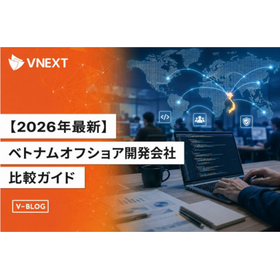
For many years, companies have viewed "Vietnam offshore development" as a means to reduce software development costs. Amid the continued rise in labor costs for highly skilled IT engineers in Japan, there was indeed a time when the primary objective of adopting offshore development was to outsource operations to Southeast Asia, significantly cutting initial costs and operational expenses. However, as of 2026, Vietnam offshore development has undergone a significant transformation from merely securing "cheap labor (cost-cutting)" to becoming a "strategic DX partnership with advanced technical capabilities and agility." As the pace of technological innovation accelerates and system modernization and AI utilization become urgent priorities for companies following the "2025 cliff," this article will thoroughly explain the trends in Vietnam offshore development, the criteria for truly successful selection, a recommended list of 10 development companies, and key points. *For more detailed content of the blog, you can view it through the related links. For more information, please download the PDF or feel free to contact us.*
Added to bookmarks
Bookmarks listBookmark has been removed
Bookmarks listYou can't add any more bookmarks
By registering as a member, you can increase the number of bookmarks you can save and organize them with labels.
Free membership registration
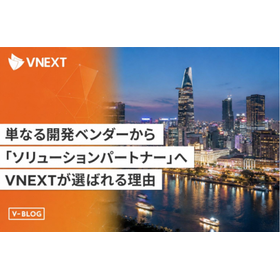
What is now required in the field of DX promotion is no longer just software development capabilities. It is the presence of a "solution partner" that consistently supports early involvement in requirements definition, the renewal of legacy systems, AI implementation, and long-term business growth. In this article, we will explain the reasons why many companies in the Japanese offshore development market choose VNEXT from among numerous partner candidates, from four perspectives: governance structure, AI expertise, enterprise development capabilities, and BPO functions. *For more details, you can view the related links. For further information, please download the PDF or feel free to contact us.*
Added to bookmarks
Bookmarks listBookmark has been removed
Bookmarks listYou can't add any more bookmarks
By registering as a member, you can increase the number of bookmarks you can save and organize them with labels.
Free membership registration
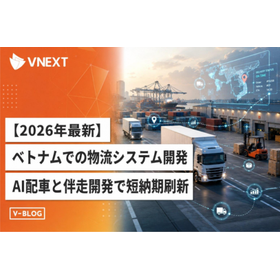
Among Japanese companies, there is a growing movement to consider the development of logistics systems in Vietnam, driven by the acceleration of DX (digital transformation) initiatives. However, many companies are facing two common challenges. One is that the dispatch operations heavily rely on the experience of specific personnel, and the other is the difficulty in clearly defining requirements, raising concerns that outsourced development projects may become prolonged. This article explains how logistics systems utilizing AI can simultaneously address these two challenges. Additionally, while introducing VNEXT's logistics system development case, we will delve into how the collaborative development approach from requirement definition can shorten the lead time to implementation. *For more detailed information, please refer to the related links. For further details, you can download the PDF or feel free to contact us.*
Added to bookmarks
Bookmarks listBookmark has been removed
Bookmarks listYou can't add any more bookmarks
By registering as a member, you can increase the number of bookmarks you can save and organize them with labels.
Free membership registration
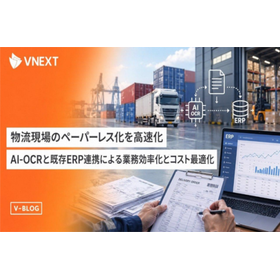
In Japan's logistics industry, while digital transformation (DX) is progressing, handwritten and paper forms with different formats for each business partner, such as shipping slips and invoices, remain. Manual data entry into ERP systems has become a bottleneck for achieving a paperless environment. This article explains how to use AI-OCR to read various forms and reduce manual work by integrating with existing ERP systems. Additionally, we will introduce the concept of utilizing offshore development in Vietnam to optimize implementation costs and project duration. *For more details, you can view the related links. For further information, please download the PDF or feel free to contact us.*
Added to bookmarks
Bookmarks listBookmark has been removed
Bookmarks listYou can't add any more bookmarks
By registering as a member, you can increase the number of bookmarks you can save and organize them with labels.
Free membership registration
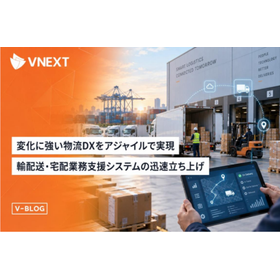
The Japanese logistics industry is undergoing unprecedented changes at an incredible speed. Transportation and delivery companies are constantly expanding their businesses by acquiring new customers, entering new service areas, and introducing additional delivery services. At the same time, on-site business processes are continuously evolving in response to customer requirements, labor shortages, efforts for efficiency, and changes in market needs. While these changes create opportunities for growth, they also place a significant burden on the systems that support logistics operations. This article explains how agile development can launch a system that integrates shipping label issuance and on-site operations using two-dimensional codes as a Minimum Viable Product (MVP), and how it can be flexibly expanded according to actual business needs. Additionally, we will introduce how VNEXT, as a DX partner equipped with the consulting and proposal capabilities necessary to outline the optimal MVP and long-term development roadmap, supports this process. *For more details, you can view the blog through the related links. For further information, please download the PDF or feel free to contact us.*
Added to bookmarks
Bookmarks listBookmark has been removed
Bookmarks listYou can't add any more bookmarks
By registering as a member, you can increase the number of bookmarks you can save and organize them with labels.
Free membership registration
We would like to introduce a case study of a specialized company that offers security services focused on crime prevention and locks, which has implemented a "smart key app." There was a demand for the development of the app to be completed as quickly as possible while keeping costs down and ensuring high quality, as it was difficult to recruit and secure in-house engineers for the project. By flexibly securing an optimal team through a combination of lab-type and contract-type arrangements, we built a system that allows users to apply for property viewings and unlock and lock doors using just their smartphones. 【App Overview (General Features and Characteristics)】 ■ Communication between the key device and smartphone via Bluetooth ■ Unlocking and locking of doors ■ One-time password ■ Request for unlocking permissions ■ Alert function for forgetting to lock ■ User information management (registration, editing, deletion) *For more details, please download the PDF or feel free to contact us.
Added to bookmarks
Bookmarks listBookmark has been removed
Bookmarks listYou can't add any more bookmarks
By registering as a member, you can increase the number of bookmarks you can save and organize them with labels.
Free membership registration
We would like to introduce a case study of implementing a "Security Management App/System" for an IT service company that supports business efficiency and labor cost reduction. Amid a high volume of work and a short development period, there was a demand for a solution that could be built as quickly as possible to resolve issues with the existing system. A team was formed with engineers who have over two years of system development experience, and by managing the schedule appropriately, everything progressed in a clearer and more realistic manner. 【App Overview (General Functions and Features)】 ■ Customer information management (add new, display, edit, delete) ■ Project management (add new, edit, search) ■ Clear management of working hours for each project ■ Notification sending ■ Evaluation of security personnel's capabilities ■ Management and approval of holidays and work shifts *For more details, please download the PDF or feel free to contact us.
Added to bookmarks
Bookmarks listBookmark has been removed
Bookmarks listYou can't add any more bookmarks
By registering as a member, you can increase the number of bookmarks you can save and organize them with labels.
Free membership registration
We would like to introduce a case where a transportation system development company, whose main product is a digital ticket sales system, implemented a "Digital Ticket Platform." The company lacked an in-house development team and was short on resources, and although they wanted to introduce offshore development, they were concerned about whether communication could be conducted smoothly. By adopting a lab-type model, they secured a team with technical expertise and know-how, resulting in a platform that allows for smooth transfers between transportation services using just a smartphone. 【App Overview (General Features)】 ■ Reservation of transportation services (bus, taxi) ■ Ticket search/purchase ■ Real-time route search ■ Nearby information (with GPS) ■ Credit card payment ■ My Number Card authentication *For more details, please download the PDF or feel free to contact us.
Added to bookmarks
Bookmarks listBookmark has been removed
Bookmarks listYou can't add any more bookmarks
By registering as a member, you can increase the number of bookmarks you can save and organize them with labels.
Free membership registration
We would like to introduce a case study of a solution company specialized in ballet that has implemented a "dance learning app." The learning information for ballet was scattered, making it difficult to manage and share, and there was no means to learn lessons anywhere or share information about events. With the introduction of the app, communication with teachers became easier and more effective, and by sharing plans and progress with classmates, learning could be actively promoted. 【App Overview (General Features and Characteristics)】 ■ Set personal goals and share them with teachers and other students ■ Manage training progress with graphs and notes ■ Share practice videos in a social media-like manner and interact with other students ■ Teachers and students communicate via chat and video ■ Teachers track students' learning status and progress, providing support to each student *For more details, please download the PDF or feel free to contact us.
Added to bookmarks
Bookmarks listBookmark has been removed
Bookmarks listYou can't add any more bookmarks
By registering as a member, you can increase the number of bookmarks you can save and organize them with labels.
Free membership registration
We would like to introduce a case study of a company that provides a business communication platform utilizing AI and has implemented "business chat." When it came to internal communication, existing tools were cumbersome and made data difficult to verify, leading to the need for a common and secure tool. After implementation, concerns about information leakage to the outside were eliminated due to three levels of encryption, allowing for reliable and speedy use regardless of company size or industry. 【App Overview (General Features)】 ■ One-on-one chat ■ Group chat ■ Secure communication achieved through multi-layered encryption ■ Integration with internal company systems ■ User-friendly, unaffected by age or IT knowledge *For more details, please download the PDF or feel free to contact us.
Added to bookmarks
Bookmarks listBookmark has been removed
Bookmarks listYou can't add any more bookmarks
By registering as a member, you can increase the number of bookmarks you can save and organize them with labels.
Free membership registration
We would like to introduce a case requested by a major publicly listed IT vendor company that specializes in the implementation and maintenance services of SAP ERP systems. The company faced challenges such as the ongoing shortage of human resources in Japan and the need to continuously secure a development team for the future. In response, a team was quickly built around engineers with proven SAP development experience and know-how, including training members. Standardization of the development process and optimization of projects are progressing. [Client Requirements] - They want engineers with extensive SAP development experience. - They want someone to handle everything from the development phase to maintenance and operations. - They want to efficiently manage multiple projects and improve quality and development progress while leveraging accumulated experience. - They want to assign a resident BrSE to facilitate smooth communication. *Details of the case can be viewed through the related link. For more information, please download the PDF or feel free to contact us.
Added to bookmarks
Bookmarks listBookmark has been removed
Bookmarks listYou can't add any more bookmarks
By registering as a member, you can increase the number of bookmarks you can save and organize them with labels.
Free membership registration
We provide research on cosmetics and a raw material database, as well as overseas expansion. Here, we would like to introduce a case requested by a cosmetics sales trading company. The company had implemented a CRM system, but as it expanded its business, it became clear that the existing CRM was no longer sufficient to keep up with current operations. Therefore, we participated from the requirements definition stage and supported the investigation and design of internal business workflows. We contributed to a large DX project that involved the entire organization, making the customer management system more convenient and improving operational efficiency. **Client Requirements:** - We want to create a CRM management system that fits our business. - We want to shorten the development period and release it as soon as possible. - We want to customize our original CRM system while using Salesforce's standard features. *For more details about the case, you can view it through the related links. For more information, please download the PDF or feel free to contact us.*
Added to bookmarks
Bookmarks listBookmark has been removed
Bookmarks listYou can't add any more bookmarks
By registering as a member, you can increase the number of bookmarks you can save and organize them with labels.
Free membership registration
We would like to introduce a case where we received a development request for a visualization system for agricultural IT sensor information from a major electrical equipment manufacturer. The company's challenge was to develop an easy-to-use app for elderly agricultural workers. To address this, we assigned engineers with experience in IoT fields, such as the MQTT protocol, and established a development system that facilitates collaboration with the client. It has become possible to easily check the condition of rice fields from home using smartphones and tablets. 【Client Requirements】 ■ Flexibility to accommodate additional development ■ Based on rich knowledge and experience in offshore development, we want to achieve the establishment and improvement of the testing process ■ Maintain a continuous development system without changing core team members *Details of the case can be viewed via the related link. For more information, please download the PDF or feel free to contact us.
Added to bookmarks
Bookmarks listBookmark has been removed
Bookmarks listYou can't add any more bookmarks
By registering as a member, you can increase the number of bookmarks you can save and organize them with labels.
Free membership registration
We would like to introduce a case where we developed a system applying AI to pupil analysis at the request of a medical device manufacturing company. While searching for a partner capable of handling both system development and AI development, we were approached by the client due to our track record in both areas. Our company participated from the requirements definition stage, supporting the development and operation of both the front-end and back-end, as well as testing and maintenance. As the system became complex and sometimes had conflicting requirements, we made accurate judgments and provided feedback. [Client's Challenges] - There are many specialized processes in pupil analysis, and since this is the first project in this domain, there is a need to acquire knowledge in this new area. - Although there are IT personnel within the company, they are not from an SIer, so we would like them to propose everything from process definition. *Detailed information about the case can be viewed through the related links. For more details, please download the PDF or feel free to contact us.
Added to bookmarks
Bookmarks listBookmark has been removed
Bookmarks listYou can't add any more bookmarks
By registering as a member, you can increase the number of bookmarks you can save and organize them with labels.
Free membership registration
We would like to introduce a case study requested by Willtech Co., Ltd., a major IT staffing company. The company's requirement was to build a matching system for overseas engineers who want to work in Japan and domestic Japanese companies facing a shortage of human resources. We proposed a contract-based model that makes it easier to understand development costs according to the client's requests and project status. By matching information between overseas engineers and domestic Japanese companies, we were able to significantly contribute to meeting the challenges and needs of both parties. [Client's Challenges] - There is no matching system for overseas engineers and domestic Japanese companies, resulting in fewer opportunities for overseas engineers to work in Japan. - Domestic Japanese companies continue to face a shortage of talent but are unable to hire quality engineers. *For more details on the case study, please refer to the related link. For more information, feel free to download the PDF or contact us.
Added to bookmarks
Bookmarks listBookmark has been removed
Bookmarks listYou can't add any more bookmarks
By registering as a member, you can increase the number of bookmarks you can save and organize them with labels.
Free membership registration