bolt Product List and Ranking from 173 Manufacturers, Suppliers and Companies | IPROS

Last Updated: Aggregation Period:Jan 14, 2026~Feb 10, 2026
This ranking is based on the number of page views on our site.

bolt Manufacturer, Suppliers and Company Rankings

Last Updated: Aggregation Period:Jan 14, 2026~Feb 10, 2026
This ranking is based on the number of page views on our site.

  1. ヨシモトポール Tokyo//Building materials, supplies and fixtures manufacturers
  2. 岡部 Tokyo//Building materials, supplies and fixtures manufacturers
  3. 八州電工 Osaka//Building materials, supplies and fixtures manufacturers
  4. 4 null/null
  5. 5 大鳥機工 Tottori//Building materials, supplies and fixtures manufacturers

bolt Product ranking

Last Updated: Aggregation Period:Jan 14, 2026~Feb 10, 2026
This ranking is based on the number of page views on our site.

  1. Pole adapter for electrical material joint parts of different diameters and shapes. 八州電工
  2. Construction hardware products Auto Flash Bolt (Automatic French Drop Bolt) 大鳥機工
  3. Disaster Prevention Administrative Wireless Column "Ace Mast" ヨシモトポール
  4. 4 Self-drilling lock bolt "OSDP Lock Bolt" 岡部
  5. 5 Sanko-style one-sided bolt "Stratite SH type"

bolt Product List

661~690 item / All 725 items

Displayed results

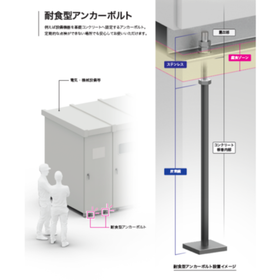
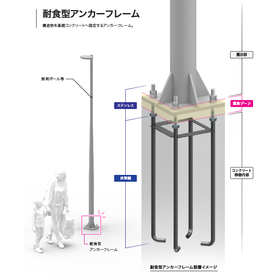
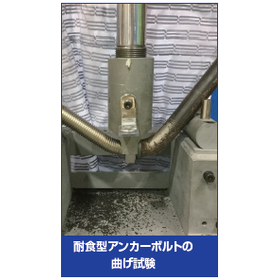
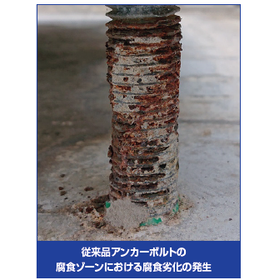
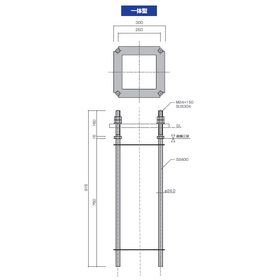
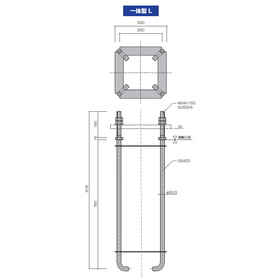
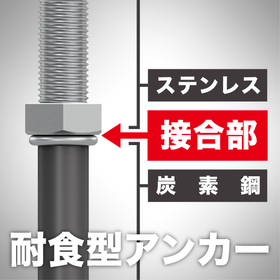
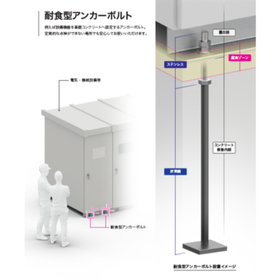
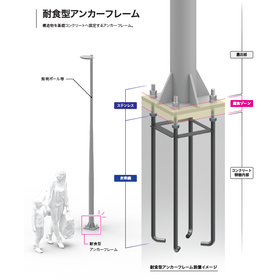
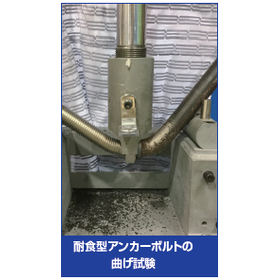
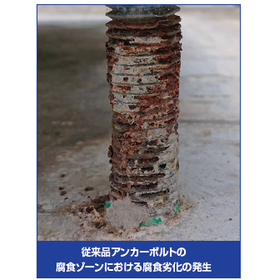
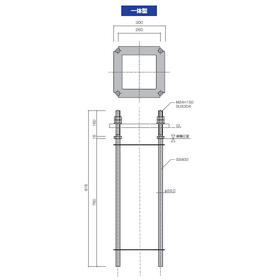
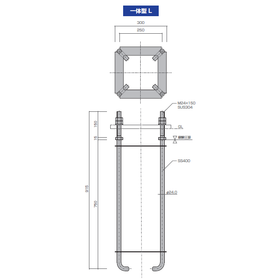
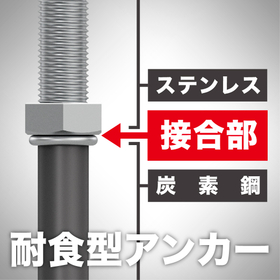
Corrosion-resistant anchor bolts for marine structures

Protect structures from salt damage! Stainless steel x carbon steel hybrid anchor bolts.

In marine structures, metal corrosion due to salt damage is a significant challenge. The corrosion of anchor bolts can lead to serious issues related to the reduction of structural strength and safety. Particularly in structures installed in coastal areas or offshore, the corrosion of anchor bolts is accelerated by the influence of salt-laden sea breezes and splashes. Our corrosion-resistant anchor bolts protect structures from corrosion caused by salt damage by using highly corrosion-resistant stainless steel in vulnerable areas, ensuring long-term safety. 【Application Scenarios】 - Port facilities - Marine platforms - Breakwaters - Bridges 【Benefits of Implementation】 - Extended lifespan of anchor bolts - Reduced maintenance costs - Improved safety of structures - Technical evaluation through NETIS registration

  • FireShot Capture 437 - ”ステンレスx炭素鋼”『耐食型アンカーボルト 』 ヨシモトポール - イプロス都市まちづくり - kensetsu.ipros.jp (4).png
  • 耐食型アンカーフレーム イメージ.png
  • image_05.png
  • image_09.png
  • image_06.png
  • image_07.png
  • Subsidiary materials
  • bolt

Added to bookmarks

Bookmarks list

Bookmark has been removed

Bookmarks list

You can't add any more bookmarks

By registering as a member, you can increase the number of bookmarks you can save and organize them with labels.

Free membership registration

Corrosion-resistant anchor bolts for bridges to extend the lifespan of bridges.

Hybrid anchor bolts that protect bridges from corrosion and contribute to their longevity.

In the bridge industry, extending the lifespan of structures is a crucial issue to ensure safety and durability. Particularly in areas susceptible to salt damage and freeze-thaw agents, the corrosion of anchor bolts is a significant factor that accelerates the deterioration of structures. Corroded anchor bolts can reduce the seismic performance of bridges and may necessitate large-scale repairs or replacements. Our corrosion-resistant anchor bolts contribute to the longevity of bridges even in corrosive environments. 【Application Scenarios】 - Bridges in coastal areas - Bridges in snow-prone regions - Repairs of aging bridges - Construction of new bridges 【Benefits of Implementation】 - Suppression of anchor bolt corrosion - Improved durability of bridges - Reduction in maintenance costs - Enhanced safety

  • FireShot Capture 437 - ”ステンレスx炭素鋼”『耐食型アンカーボルト 』 ヨシモトポール - イプロス都市まちづくり - kensetsu.ipros.jp (4).png
  • 耐食型アンカーフレーム イメージ.png
  • image_05.png
  • image_09.png
  • image_06.png
  • image_07.png
  • Subsidiary materials
  • bolt

Added to bookmarks

Bookmarks list

Bookmark has been removed

Bookmarks list

You can't add any more bookmarks

By registering as a member, you can increase the number of bookmarks you can save and organize them with labels.

Free membership registration

We will make proposals tailored to your needs【Custom-made screw production】.

We can accommodate sizes from small to large! We also offer suggestions for manufacturing methods to help reduce costs.

At Koshin Co., Ltd., we handle "special fasteners (custom items)." The necessary parts vary for each customer, and we can accommodate needs such as "I want a bolt with a special shape," "I want a bolt that is slightly different from the standard," or "I want just one special bolt." Depending on the requirements, we also propose manufacturing methods such as forging and cutting, contributing to cost reduction. Please feel free to contact us with your requests. [For such concerns] ■ I want a bolt with a special shape ■ I want a bolt that is slightly different from the standard ■ I want just one special bolt *For more details, please refer to the related links or feel free to contact us.

  • Parts and Materials
  • bolt

Added to bookmarks

Bookmarks list

Bookmark has been removed

Bookmarks list

You can't add any more bookmarks

By registering as a member, you can increase the number of bookmarks you can save and organize them with labels.

Free membership registration

Railway-related products: dog spikes

It is still used for rail fastening and is highly regarded both domestically and internationally.

At Teikoku Seibou, a leading company in rail fastening component manufacturing, we handle "dog spikes" used for fastening rails to wooden and synthetic sleepers. The commonly used standard dog spike "Dog Spike (Standard) JISE-1108" was established as a JIS in 1990 and is available for general use and N rails. In addition, we offer "Dog Spike (Round Head Spike)" for use with N rail switches (using wit screws), floor plates for expansion joints, and switch-type plates for fastening sleepers, as well as "Dog Spike (Square Head Spike)" for use with N rail switches (using metric screws) and floor plates for expansion joints and switch-type plates for fastening sleepers. 【Features】 <Dog Spike (Standard)> ■ The commonly used standard dog spike ■ Established as JIS in 1990 (JIS-E1108) ■ Available for general use and N rails *For more details, please refer to the PDF document or feel free to contact us.

  • Railway Construction
  • others
  • bolt

Added to bookmarks

Bookmarks list

Bookmark has been removed

Bookmarks list

You can't add any more bookmarks

By registering as a member, you can increase the number of bookmarks you can save and organize them with labels.

Free membership registration

The world's most reliable Unbrako cap, Unify UNBRAKO.

We also have the UNBRAKO hex socket bolts, which have the highest strength and precision among commercially available products, in stock according to the Unified standard!

UNBRAKO hex socket bolts possess the highest levels of strength and fatigue resistance available in commercial products. We also have a stock of Unified sizes ready for immediate delivery. Please feel free to contact us.

Added to bookmarks

Bookmarks list

Bookmark has been removed

Bookmarks list

You can't add any more bookmarks

By registering as a member, you can increase the number of bookmarks you can save and organize them with labels.

Free membership registration

Resin glass adhesive bolt curing in 4 seconds or less onsert

Rapid and reliable fastening with light-curing adhesive. It can be used on various materials with a short curing time.

Onserts can be used not only with standard materials such as steel, aluminum, and resin, but also with glass and CFRP. In situations where mechanical fastening or welding cannot be used, a transparent plastic mount-shaped fastener is bonded using a light-curing adhesive. Onserts are effective in cases where it is difficult to process the base material, such as drilling pilot holes, in locations where welding is impossible, or where appearance is a major concern. For assembly, dedicated hand tools and automation options are available. 【Features】 - Short curing time (< 4 seconds) - No need for pilot holes - Fastening to thin plates - Usable on surface-treated base materials - Excellent design quality - Compatible with various base materials - No heat generation

  • Plate glass and mirrors
  • bolt

Added to bookmarks

Bookmarks list

Bookmark has been removed

Bookmarks list

You can't add any more bookmarks

By registering as a member, you can increase the number of bookmarks you can save and organize them with labels.

Free membership registration

Blind bolt load setting, thickness variation acceptable.

Since the load value is set for assembly, anyone can easily assemble the blind studs without any assembly failures.

Since it is a load setting, if the optimal part number is selected, assembly is easy. Unlike stroke setting tools, there are no failures even with a double pull. As long as the trigger is pulled until the crimping is complete, the crimping quality remains consistent regardless of who assembles it. <Features> Compatible with various types of tips from M3 to M10 using a single tool. Also compatible with stud types. No thermal stress. Unlike welded studs, it does not generate heat during assembly. Variations for various materials. Suitable for iron, stainless steel, and resin, with SFC being effective for crack prevention in PP products. Many part numbers. Over 3000 types for nut types. Over 170 types for stud types, including catalog items. <Basic Information> 1. Easy assembly. 2. No thermal stress during assembly. 3. Compatible with various base materials (iron, aluminum, CFRP, PP, magnesium). 4. Various materials available (iron, aluminum, stainless steel). 5. Some options come with sealing functions. 6. Compatible with soft plates. 7. High-strength thread profiles available. 8. Many adoption records globally. 9. Battery tools are ideal for work in areas without air supply.

  • Duct related equipment
  • bolt

Added to bookmarks

Bookmarks list

Bookmark has been removed

Bookmarks list

You can't add any more bookmarks

By registering as a member, you can increase the number of bookmarks you can save and organize them with labels.

Free membership registration

Anchor Bolt Offset Countermeasure 'Parent-Child Filler'

Avoid performance-related issues such as re-leveling of the platform and re-drilling of the base plate holes that have been carried out in some areas until now! *Sample available upon request.

The "parent-child filler" consists of two steel components of different sizes, each with an eccentric hole. By using this in the base of steel columns, there is no need for corrective measures such as "straightening the anchor bolts" or "enlarging the base plate holes," allowing for the installation of steel columns with precision without damaging the important architectural components of anchor bolts and base plates. The corresponding anchor bolt sizes range from M12 to M80. 【Four Types】 ■ Parent-child filler L type (OF-L) with performance equivalent to exposed column bases as specified in the Ministry of Construction Notification No. 1456 of 2000. ■ Parent-child filler S type (OF-S) compatible with large diameters M52 to M80. ■ Parent-child filler K type (OF-K) specifically for stairs. ■ Parent-child filler Q type (OF-Q) capable of transmitting shear forces to the anchor bolts. *For more details, please download the PDF or contact us.

  • Steel construction
  • bolt

Added to bookmarks

Bookmarks list

Bookmark has been removed

Bookmarks list

You can't add any more bookmarks

By registering as a member, you can increase the number of bookmarks you can save and organize them with labels.

Free membership registration

Anchor Bolt Offset Countermeasure 'Parent-Child Filler L Type (OF-L)'

"Ah! It's misaligned, what should I do?" Have you ever had trouble with misalignment of anchor bolts? *Sample available.

The parent-child filler L type can be treated as equivalent to the general exposed column base specified in the Ministry of Construction Notification No. H12-1456. The applicable anchor bolts range from M16 to M48, and steel types with a tensile strength of 490 N/mm² or less can be used. There are specific conditions unique to the parent-child filler L, so please refer to the "L Type Design and Construction Standard Drawings" and "Design Manual." *For more details, please refer to the PDF materials or feel free to contact us.*

  • Steel construction
  • bolt

Added to bookmarks

Bookmarks list

Bookmark has been removed

Bookmarks list

You can't add any more bookmarks

By registering as a member, you can increase the number of bookmarks you can save and organize them with labels.

Free membership registration

Staircase Exclusive "Parent-Child Filler K Type (OF-K)"

Stair-Specific K Type: Compatible with anchor bolt diameters M16 and M20! Base plate oversized hole filling material *For stair use only*

The parent-child filler type K is a parent-child filler specifically for stairs. The applicable ABt is only two types: M16 and M20. It is characterized by a larger installation tolerance range for ABt compared to OF-L (OF-S), approximately double the value. As a design condition, it is specified that no tensile force should be applied to ABt. Shear force is treated similarly to OF-S. There are specific conditions unique to the parent-child filler K, so please refer to the "K Type Design and Construction Standard Drawings" and the "Design Manual." *For more details, please refer to the PDF materials or feel free to contact us.*

  • Steel construction
  • bolt

Added to bookmarks

Bookmarks list

Bookmark has been removed

Bookmarks list

You can't add any more bookmarks

By registering as a member, you can increase the number of bookmarks you can save and organize them with labels.

Free membership registration

Anchor bolt, no need for leveling - "Parent-Child Filler"

Avoid performance-related issues such as re-leveling and re-drilling holes in base plates that have been carried out in some areas until now! *Sample available upon request.

The "parent-child filler" consists of two steel components of different sizes, each with an eccentric hole. By using this in the base of steel columns, there is no need for corrective measures such as "straightening the anchor bolts" or "enlarging the base plate holes," allowing for the installation of steel columns with precision without damaging the important building components, which are the anchor bolts and base plates. The corresponding anchor bolt sizes range from M12 to M80. 【Four Types】 ■ Parent-child filler L type (OF-L) with performance equivalent to exposed column bases as specified in the Ministry of Construction Notification No. 1456 of 2000. ■ Parent-child filler S type (OF-S) compatible with large diameters M52 to M80. ■ Parent-child filler K type (OF-K) specifically for stairs. ■ Parent-child filler Q type (OF-Q) that can transmit shear forces to the anchor bolts. *For more details, please download the PDF or contact us.

  • Steel construction
  • Special Construction Method
  • Structural Design Office
  • bolt

Added to bookmarks

Bookmarks list

Bookmark has been removed

Bookmarks list

You can't add any more bookmarks

By registering as a member, you can increase the number of bookmarks you can save and organize them with labels.

Free membership registration

No need for anchor bolt base adjustment - "Parent-Child Filler Type S (OF-S)"

Compatible with anchor bolt diameters M12 and M52 to M80! Base plate oversized hole filling material.

The parent-child filler type S has the same functions as type L, but it cannot transmit the shear force acting on the column base to the bolts in the primary and secondary design. Applicable anchor bolts range from M52 to M80, and steel types with a tensile strength of 490 N/mm² or less can be used. There are specific conditions for the parent-child filler type S, so please refer to the "S Type Design and Construction Standard Drawings" and the "Design Manual." *For more details, please refer to the PDF materials or feel free to contact us.

  • Steel construction
  • Special Construction Method
  • Structural Design Office
  • bolt

Added to bookmarks

Bookmarks list

Bookmark has been removed

Bookmarks list

You can't add any more bookmarks

By registering as a member, you can increase the number of bookmarks you can save and organize them with labels.

Free membership registration

Parent-child filler at the column-beam joint

Avoid performance-related issues such as the previously conducted adjustments to the table and re-drilling of holes in the base plate! *Sample available for provision.

The "parent-child filler" consists of two steel components of different sizes, each with an eccentric hole. By using this in the base of steel columns, it eliminates the need for corrective measures such as "straightening the anchor bolts" or "enlarging the base plate holes," allowing for the precise installation of steel columns without damaging the important building components of anchor bolts and base plates. The corresponding anchor bolt sizes range from M12 to M80. 【Four Types】 ■ Parent-child filler L type (OF-L) with performance equivalent to exposed column bases as specified in the Ministry of Construction Notification No. 1456 of Heisei 12. ■ Parent-child filler S type (OF-S) compatible with large diameters M52 to M80. ■ Parent-child filler K type (OF-K) specifically for stairs. ■ Parent-child filler Q type (OF-Q) capable of transmitting shear forces to the anchor bolts. *For more details, please download the PDF or contact us.

  • Steel construction
  • Special Construction Method
  • Structural Design Office
  • bolt

Added to bookmarks

Bookmarks list

Bookmark has been removed

Bookmarks list

You can't add any more bookmarks

By registering as a member, you can increase the number of bookmarks you can save and organize them with labels.

Free membership registration

Staircase Exclusive "Parent-Child Filler K Type (OF-K)"

Stair-specific K type: Compatible with anchor bolt diameters M16 and M20! Base plate oversized hole filling material *For stairs only*

The parent-child filler type K is a parent-child filler specifically for stairs. The applicable ABt is only two types: M16 and M20. It is characterized by a larger installation tolerance range for ABt compared to OF-L (OF-S), approximately double the value. As a design condition, it is specified that no tensile force should be applied to ABt. Shear force is treated similarly to OF-S. There are specific conditions unique to the parent-child filler K, so please refer to the "K Type Design and Construction Standard Drawings" and "Design Manual." *For more details, please refer to the PDF materials or feel free to contact us.*

  • Steel construction
  • bolt

Added to bookmarks

Bookmarks list

Bookmark has been removed

Bookmarks list

You can't add any more bookmarks

By registering as a member, you can increase the number of bookmarks you can save and organize them with labels.

Free membership registration

Staircase RC column and S beam joint "Parent-Child Filler K Type (OF-K)"

"Stair-Specific K Type" Anchor Bolt Diameter M16/M20 Compatible! Base Plate Oversized Hole Filling Material *For Stair Use Only*

The parent-child filler type K is a parent-child filler specifically for stairs. The applicable ABt is only two types: M16 and M20. It is characterized by a larger installation tolerance range for ABt compared to OF-L (OF-S), approximately twice the value. As a design condition, it is specified that no tensile force should be applied to ABt. Shear force is treated in the same manner as OF-S. There are specific conditions unique to the parent-child filler K, so please refer to the "K Type Design and Construction Standard Drawings" and the "Design Manual." *For more details, please refer to the PDF materials or feel free to contact us.*

  • Steel construction
  • bolt

Added to bookmarks

Bookmarks list

Bookmark has been removed

Bookmarks list

You can't add any more bookmarks

By registering as a member, you can increase the number of bookmarks you can save and organize them with labels.

Free membership registration

Parent-child filler L type (OF-L) at the ABt of the RC column and S beam joint.

"Ah! It's misaligned, what should I do?" Have you ever had trouble with misaligned anchor bolts? *Sample available.

The parent-child filler L type can be treated as equivalent to the general exposed column base specified in the Ministry of Construction Notification No. H12-1456. The applicable anchor bolts range from M16 to M48, and steel types with a tensile strength of 490 N/mm² or less can be used. There are specific conditions unique to the parent-child filler L type, so please refer to the "L Type Design and Construction Standard Drawings" and the "Design Manual." *For more details, please refer to the PDF materials or feel free to contact us.*

  • Steel construction
  • bolt

Added to bookmarks

Bookmarks list

Bookmark has been removed

Bookmarks list

You can't add any more bookmarks

By registering as a member, you can increase the number of bookmarks you can save and organize them with labels.

Free membership registration

Parent-child filler type Q (OF-Q) at the ABt of the RC column and S beam joint.

Compatible with anchor bolt diameters M12 to M80! Base plate oversized hole filling material.

The Parent-Child Filler Q type is the only type among parent-child fillers that can transmit shear force to anchor bolts in primary and secondary designs. To achieve this, a specialized grout material called OF-Q grout is used in addition to the steel parent and child fillers. Furthermore, the shear force that can be transmitted is 70% of the allowable shear strength of the anchor bolts used; if this is exceeded, the size or number of anchor bolts must be increased to accommodate it. Applicable anchor bolts range from M12 to M80, and steel types with a tensile strength of 490 N/mm² or less can be used. There are specific conditions unique to the Parent-Child Filler Q, so for design, please refer to the "Q Type Design and Construction Standard Drawings" and the "Design Manual," and for construction, please refer to the various "Construction Manuals." *For more details, please refer to the PDF materials or feel free to contact us.

  • Steel construction
  • bolt

Added to bookmarks

Bookmarks list

Bookmark has been removed

Bookmarks list

You can't add any more bookmarks

By registering as a member, you can increase the number of bookmarks you can save and organize them with labels.

Free membership registration

Post-construction anchor offset measures: "Parent-child filler"

Avoid performance-related issues such as re-leveling and re-drilling holes in base plates that have been carried out in some areas until now! *Sample available upon request.

The "parent-child filler" consists of two steel components of different sizes, each with an eccentric hole. By using this in the base of steel columns, there is no need for corrective measures such as "straightening the anchor bolts" or "enlarging the base plate holes," allowing for the installation of steel columns with precision without damaging the important building components of anchor bolts and base plates. The corresponding anchor bolt sizes range from M12 to M80. 【Four Types】 ■ Parent-child filler L type (OF-L) with performance equivalent to exposed column bases as specified in the Ministry of Construction Notification No. 1456 of Heisei 12. ■ Parent-child filler S type (OF-S) compatible with large diameters M52 to M80. ■ Parent-child filler K type (OF-K) specifically for stairs. ■ Parent-child filler Q type (OF-Q) that can transmit shear forces to the anchor bolts. *For more details, please download the PDF or contact us.

  • Steel construction
  • bolt

Added to bookmarks

Bookmarks list

Bookmark has been removed

Bookmarks list

You can't add any more bookmarks

By registering as a member, you can increase the number of bookmarks you can save and organize them with labels.

Free membership registration

Repair of injection molding machine platen screw holes, platen repair, rubber vulcanization machine repair, screws.

We will repair damaged screw holes, bolt holes, and broken threads to their original size. Unlike conventional products, this can be used as a permanent solution.

【Product PR】 The MS method (Mechanical Stitching) for thread repair demonstrates outstanding effectiveness in terms of precision, durability, and cost compared to conventional methods. It is a technology that repairs using our company's special bolts. Since it can be implemented on-site, it allows for reduced lead times and cost savings. Compared to conventional products, it enables permanent solutions. 【Features of the MS Method】 ■ No hardening due to heat and no residual stress ■ Elimination of secondary damage ■ Maintenance of stable quality → Integrated system repairs using jigs, etc. → Accumulation of know-how, experience, and track record ■ Completion of construction in a short period → Does not significantly reduce the operating rate of equipment ■ Advantages in safety and environmental aspects → No use of fire, thus no impact on the operating rate of other equipment or the environment For more details, please contact us.

Added to bookmarks

Bookmarks list

Bookmark has been removed

Bookmarks list

You can't add any more bookmarks

By registering as a member, you can increase the number of bookmarks you can save and organize them with labels.

Free membership registration

April 2012 Issue MS Newsletter Aluminum Exhaust Manifold

April 2012 Issue MS Newsletter Aluminum Exhaust Manifold

【Product PR】 The "MS Method (Mechanical Stitch)" is a revolutionary repair technique (Mechanical Stitching Method) that addresses metal cracks using mechanical methods. Since no heat is applied at all, there is no "thermal distortion." Residual stress in other areas does not occur, preventing secondary damage such as new cracks. Metal cracks are one of the concerns in equipment maintenance operations. In typical welding repair methods, the base material around the crack changes due to heat, leading to residual stress and distortion, which always carries the risk of "crack recurrence" and "secondary damage." 【Features of the MS Method】 ■ No hardening or residual stress due to heat ■ Elimination of secondary damage ■ Maintenance of stable quality → Integrated system repairs using jigs, etc. → Accumulation of know-how, experience, and achievements ■ Completion of construction in a short period → No significant decrease in equipment operating rates ■ Advantages in safety and environmental aspects → No use of fire, so there is no impact on the operating rates of other equipment or the environment For more details, please contact us.

Added to bookmarks

Bookmarks list

Bookmark has been removed

Bookmarks list

You can't add any more bookmarks

By registering as a member, you can increase the number of bookmarks you can save and organize them with labels.

Free membership registration

September 2012 Issue MS Newsletter Aluminum Intercooler

September 2012 Issue MS Newsletter Aluminum Intercooler

【Product PR】 The "MS Method (Mechanical Stitch)" is a groundbreaking repair technique (Mechanical Stitching Method) that uses mechanical methods to address cracks in metal. Since no heat is applied at all, there is no "thermal distortion." Residual stress in other areas does not occur, preventing secondary damage such as new cracks. Metal cracks are one of the concerns in equipment maintenance operations. In typical welding repair methods, heat alters the base material around the crack, leading to residual stress and distortion, which always carries the risk of "crack recurrence" and "secondary damage." 【Features of the MS Method】 ■ No hardening or residual stress from heat ■ Elimination of secondary damage ■ Maintenance of stable quality → Integrated system repairs using jigs, etc. → Accumulation of know-how, experience, and achievements ■ Completion of construction in a short period → No significant reduction in equipment operating rates ■ Advantages in safety and environmental aspects → No use of fire, thus no impact on the operating rates of other equipment or the environment For more details, please contact us.

Added to bookmarks

Bookmarks list

Bookmark has been removed

Bookmarks list

You can't add any more bookmarks

By registering as a member, you can increase the number of bookmarks you can save and organize them with labels.

Free membership registration

July 2013 Issue MS Newsletter Ship Engine Block Structure

July 2013 Issue MS Newsletter Ship Engine Block Framework

【Product PR】 The "MS Method (Mechanical Stitch)" is a revolutionary repair technique (Mechanical Stitch Method) that uses mechanical methods to address cracks in metal. Since it does not apply any heat, there is no "thermal distortion." It prevents residual stress in other areas and also avoids secondary damage such as new cracks. Metal cracks are one of the concerns in equipment maintenance operations. In typical welding repair methods, the base material around the crack changes due to heat, leading to residual stress and distortion, which always carries the risk of "crack recurrence" and "secondary damage." 【Features of the MS Method】 ■ No hardening or residual stress from heat ■ Elimination of secondary damage ■ Maintenance of stable quality → Integrated system repairs with jigs, etc. → Accumulation of know-how, experience, and track record ■ Completion of work in a short period → Does not significantly reduce the operational rate of equipment ■ Advantages in safety and environmental aspects → No use of fire, thus no impact on the operational rate of other equipment or the environment For more details, please contact us.

Added to bookmarks

Bookmarks list

Bookmark has been removed

Bookmarks list

You can't add any more bookmarks

By registering as a member, you can increase the number of bookmarks you can save and organize them with labels.

Free membership registration

Transfer and continuation of the business of the former LOCK-N-STITCH JAPAN.

Regarding the transfer and continuation of the business of the former LOCK-N-STITCH JAPAN.

As you are aware, the former LOCK-N-STITCH JAPAN Co., Ltd. (hereinafter referred to as "the former Lock-N-Stitch Japan Co.") was liquidated in March 2011. Our company, having previously conducted business with the former company, has taken over the materials of the former Lock-N-Stitch Japan Co. and accepted employees who had been involved in metal crack repair and other projects at that company, establishing the MS (Mechanical Stitch) department. In our MS department, we have developed the "Mechanical Stitch method," which builds upon the skills and construction know-how that the former Lock-N-Stitch Japan Co. possessed, and we are engaged in the business of repairing metal cracks and bolt holes. Customers interested in the "Mechanical Stitch method" are encouraged to contact our MS department. (Contact number: 092-476-0565)

Added to bookmarks

Bookmarks list

Bookmark has been removed

Bookmarks list

You can't add any more bookmarks

By registering as a member, you can increase the number of bookmarks you can save and organize them with labels.

Free membership registration

December 2014 Issue MS Newsletter Cast Iron Casing

December 2014 Issue MS Newsletter Cast Casing

【Product PR】 The "MS Method (Mechanical Stitch)" is a revolutionary repair technique (Mechanical Stitch Method) that employs mechanical methods to address metal cracks. Since it does not apply any heat, there is no "thermal distortion." It prevents residual stress in other areas and avoids secondary damage such as new cracks. Metal cracks are one of the challenges in equipment maintenance. Repairs using conventional welding methods change the base material around the crack due to heat, leading to residual stress and distortion, which constantly carries the risk of "crack recurrence" and "secondary damage." 【Features of the MS Method】 ■ No hardening or residual stress from heat ■ Elimination of secondary damage ■ Maintenance of stable quality → Integrated system repairs using jigs, etc. → Accumulation of know-how, experience, and track record ■ Completion of work in a short period → No significant reduction in equipment operating rates ■ Advantages in safety and environmental aspects → No use of fire, thus no impact on the operating rates of other equipment or the environment For more details, please contact us.

Added to bookmarks

Bookmarks list

Bookmark has been removed

Bookmarks list

You can't add any more bookmarks

By registering as a member, you can increase the number of bookmarks you can save and organize them with labels.

Free membership registration

March 2015 Issue MS Newsletter Cement Mill

March 2015 Issue MS Newsletter Cement Mill

【Product PR】 The "MS Method (Mechanical Stitch)" is a revolutionary repair technique (Mechanical Stitch Method) that addresses metal cracks using mechanical methods. Since it does not apply any heat, there is no "thermal distortion." It prevents residual stress from occurring in other areas and also prevents secondary damage such as new cracks. Metal cracks are one of the concerns in equipment maintenance operations. In typical welding repair methods, the base material around the crack changes due to heat, leading to residual stress and distortion, which always carries the risk of "crack recurrence" or "secondary damage." 【Features of the MS Method】 ■ No hardening or residual stress due to heat ■ Elimination of secondary damage ■ Maintenance of stable quality → Integrated system repairs using jigs, etc. → Accumulation of know-how, experience, and track record ■ Completion of construction in a short period → Does not significantly reduce the operational rate of equipment ■ Advantages in safety and environmental aspects → Since no fire is used, there is no impact on the operational rate of other equipment or the environment For more details, please contact us.

Added to bookmarks

Bookmarks list

Bookmark has been removed

Bookmarks list

You can't add any more bookmarks

By registering as a member, you can increase the number of bookmarks you can save and organize them with labels.

Free membership registration

Casting repair, casting refurbishment, casting crack repair, permanent measures for screw hole repair, bolt hole.

We will repair metal cracks without applying heat. It is possible to carry out the repair without causing any distortion.

The "MS Method (Mechanical Stitch)" is a groundbreaking repair technique (Mechanical Stitch Method) that uses mechanical methods to address cracks in metal. Unlike welding repairs that involve heat curing, this method does not apply any heat, thus preventing "thermal distortion." It does not generate residual stress in other areas, preventing secondary damage such as new cracks. 【Features】 ■ No hardening or residual stress due to heat ■ Elimination of secondary damage ■ Maintenance of stable quality → Integrated system repairs using jigs, etc. → Accumulation of know-how, experience, and track record ■ Completion of construction in a short period → Does not significantly reduce the operational rate of equipment ■ Advantages in safety and environmental aspects → Since no fire is used, there is no impact on the operational rate of other equipment or the environment For more details, please contact us.

Added to bookmarks

Bookmarks list

Bookmark has been removed

Bookmarks list

You can't add any more bookmarks

By registering as a member, you can increase the number of bookmarks you can save and organize them with labels.

Free membership registration

December 2015 Issue MS Newsletter Aluminum Exhaust Manifold

December 2015 Issue MS Newsletter Aluminum Exhaust Manifold

【Product PR】 The "MS Method (Mechanical Stitch)" is a groundbreaking repair technique (Mechanical Stitch Method) that addresses metal cracks using mechanical methods. Since it does not apply any heat, there is no "thermal distortion." It prevents the occurrence of residual stress in other areas and also prevents secondary damage such as new cracks. Metal cracks are one of the concerns in equipment maintenance operations. In typical welding repair methods, the base material around the crack changes due to heat, leading to residual stress and distortion, which always carries the risk of "crack recurrence" and "secondary damage." 【Features of the MS Method】 ■ No hardening or residual stress due to heat ■ Elimination of secondary damage ■ Maintenance of stable quality → Integrated system repairs using jigs, etc. → Accumulation of know-how, experience, and achievements ■ Completion of construction in a short period → Does not significantly reduce the operating rate of equipment ■ Advantages in safety and environmental aspects → No use of fire, thus no impact on the operating rate of other equipment or the environment For more details, please contact us.

Added to bookmarks

Bookmarks list

Bookmark has been removed

Bookmarks list

You can't add any more bookmarks

By registering as a member, you can increase the number of bookmarks you can save and organize them with labels.

Free membership registration

June 2016 Issue MS Newsletter Cylinder Head Exhaust Pipe

June 2016 Issue MS Newsletter Cylinder Head Exhaust Pipe

【Product PR】 The "MS Method (Mechanical Stitch)" is a groundbreaking repair technique (Mechanical Stitching Method) that uses mechanical methods to address cracks in metal. Since it does not apply any heat, there is no "thermal distortion." It prevents residual stress from occurring in other areas and also prevents secondary damage such as new cracks. Cracks in metal are one of the concerns in equipment maintenance operations. In conventional welding repair methods, the base material around the crack changes due to heat, leading to residual stress and distortion, which always carries the risk of "crack recurrence" and "secondary damage." 【Features of the MS Method】 ■ No hardening or residual stress due to heat ■ Elimination of secondary damage ■ Maintenance of stable quality → Integrated system repairs using jigs, etc. → Accumulation of know-how, experience, and achievements ■ Completion of construction in a short period → Does not significantly reduce the operating rate of equipment ■ Advantages in safety and environmental aspects → Since no fire is used, there is no impact on the operating rates of other equipment or the environment For more details, please contact us.

Added to bookmarks

Bookmarks list

Bookmark has been removed

Bookmarks list

You can't add any more bookmarks

By registering as a member, you can increase the number of bookmarks you can save and organize them with labels.

Free membership registration

Bolt hole repair, screw hole repair, permanent measures, metal crack repair, screw hole regeneration method.

We will repair damaged female threads, bolt holes, and broken female threads to the same size as the original. Unlike conventional products, this can be used as a permanent solution.

The "MS Method (Mechanical Stitch)" is a groundbreaking repair technique (Mechanical Stitching Method) that uses mechanical methods to address cracks in metal. Since it does not apply any heat at all, there is no "thermal distortion." It prevents residual stress in other areas and also prevents secondary damage such as new cracks. 【Features】 ■ No hardening or residual stress due to heat ■ Elimination of secondary damage ■ Maintenance of stable quality → Integrated system repairs using jigs, etc. → Accumulation of know-how, experience, and track record ■ Completion of construction in a short period → Does not significantly reduce the operating rate of equipment ■ Advantages in safety and environmental aspects → Since no fire is used, there is no impact on the operating rate of other equipment or the environment For more details, please contact us.

Added to bookmarks

Bookmarks list

Bookmark has been removed

Bookmarks list

You can't add any more bookmarks

By registering as a member, you can increase the number of bookmarks you can save and organize them with labels.

Free membership registration

Permanent solution for metal cracks without applying heat! Metal crack repair! Thermal distortion and fractures.

Heat distortion and secondary cracking-free welding-less method. Metal crack repair without applying heat! Permanent solution for screw hole repair!

【Product PR】 The "MS Method (Mechanical Stitch)" is a revolutionary repair technique (Mechanical Stitch Method) that addresses metal cracks using mechanical methods. Since it does not apply any heat, there is no "thermal distortion." It prevents residual stress in other areas and avoids secondary damage such as new cracks. Metal cracks are one of the concerns in equipment maintenance. In typical welding repair methods, the base material around the crack changes due to heat, leading to residual stress and distortion, which always carries the risk of "crack recurrence" and "secondary damage." 【Features of the MS Method】 ■ No hardening or residual stress due to heat ■ Eliminates secondary damage ■ Maintains stable quality → Integrated system repairs using jigs, etc. → Accumulation of know-how, experience, and track record ■ Completion of construction in a short period → Does not significantly reduce the operating rate of equipment ■ Advantages in safety and environmental aspects → No use of fire, so there is no impact on the operating rate of other equipment or the environment For more details, please contact us.

Added to bookmarks

Bookmarks list

Bookmark has been removed

Bookmarks list

You can't add any more bookmarks

By registering as a member, you can increase the number of bookmarks you can save and organize them with labels.

Free membership registration