Coating Product List and Ranking from 342 Manufacturers, Suppliers and Companies | IPROS

Last Updated: Aggregation Period:Feb 25, 2026~Mar 24, 2026
This ranking is based on the number of page views on our site.

Coating Manufacturer, Suppliers and Company Rankings

Last Updated: Aggregation Period:Feb 25, 2026~Mar 24, 2026
This ranking is based on the number of page views on our site.

  1. メンテックカンザイ Tokyo//Building Management
  2. ゆはかのこ Saitama//Service Industry
  3. TOAシブル Chiba//Other construction industries
  4. 4 エスケー化研 Osaka//Building materials, supplies and fixtures manufacturers
  5. 5 ONZ Tokyo//Interior construction business

Coating Product ranking

Last Updated: Aggregation Period:Feb 25, 2026~Mar 24, 2026
This ranking is based on the number of page views on our site.

  1. Powerful anti-rust coating agent "Guard Scepter 101P" TOAシブル
  2. Fire-resistant sheet "SK Taika Sheet" エスケー化研
  3. DRYSURF: A fast-drying lubricant that replaces grease. ハーベス 潤滑剤・コーティング剤事業部
  4. Signal Grip メンテックカンザイ
  5. 4 Glass Coating G-POWER 88 G-POWER

Coating Product List

91~120 item / All 1074 items

Displayed results

Contract testing at the Thunder Technology Center (equipped with testing facilities and equipment related to thunder).

Contract testing and tours (by appointment) are available at the Thunder Technology Center (equipped with testing facilities and equipment related to lightning).

The Lightning Technology Center is Japan's only specialized lightning testing center equipped with various testing devices, including lightning test equipment that utilizes OTOWA's technology. We accept commissioned testing using Otowa Electric Industry's testing facilities and equipment. We conduct development tests for lightning protection products and evaluation tests for various electrical devices, contributing to a safe and secure society. ■ Target Tests (also compatible with JIS and IEC standards) Lightning surge withstand tests for various electrical devices (impulse voltage tests, current tests) Commercial frequency withstand voltage tests for various electrical devices Operational responsibility tests for high-voltage and low-voltage lightning arresters Protection coordination tests using high-voltage and low-voltage lightning arresters Mechanical strength: vibration tests, tensile and compression tests Various environmental tests: cold heat, salt spray, sunlight, etc. *We have prepared materials regarding facility information and commissioned testing. Please request them through the inquiry form. Lightning Technology Center: Amagasaki City, Hyogo Prefecture (10 minutes by train from JR Osaka Station to JR Amagasaki Station, within walking distance)

  • Lightning protection
  • Coating

Added to bookmarks

Bookmarks list

Bookmark has been removed

Bookmarks list

You can't add any more bookmarks

By registering as a member, you can increase the number of bookmarks you can save and organize them with labels.

Free membership registration

Electrodynamic vibration testing equipment - Contract testing at the Thunder Technology Center.

Kansai's largest electromagnetic vibration testing equipment is available for contracted testing at the Thunder Technology Center (equipped with testing facilities and equipment related to lightning).

■Environmental Testing and Vibration Testing We can conduct various environmental and vibration tests to ensure the reliability of products used over many years. *The electrodynamic vibration testing equipment is one of the largest in the Kansai region. ■Electrodynamic Vibration Testing Equipment Excitation Force: Sine Wave 16kN Frequency: 5 to 3000Hz Maximum Displacement: 51mm p-p The Lightning Technology Center (Amagasaki City) is a facility equipped with various testing devices, including lightning test equipment that utilizes OTOWA's technology. We accept contract testing using the testing facilities and equipment of Otowa Electric Industry. Lightning Technology Center: Amagasaki City, Hyogo Prefecture (10 minutes by train from JR Osaka Station to JR Amagasaki Station, within walking distance)

  • Lightning protection
  • Coating

Added to bookmarks

Bookmarks list

Bookmark has been removed

Bookmarks list

You can't add any more bookmarks

By registering as a member, you can increase the number of bookmarks you can save and organize them with labels.

Free membership registration

[Coating] Contamination Prevention Coating Agent 'AS Series' (with video)

Repels ink from oil-based and water-based pens!

The contamination prevention coating agent - AS series - is a functional coating developed through our urethane acrylate synthesis technology and unique paint formulation technology. In addition to the conventional heat-curing types of fluorine-based and silicone-based coatings, we have also added UV-curing types to our lineup. Its applications include contamination prevention and adhesion prevention for films, resin parts, PVC leather, synthetic leather, and more, as well as being ideal for water-repellent treatment in kitchens, bathrooms, and other wet areas.

  • paint
  • others
  • Coating

Added to bookmarks

Bookmarks list

Bookmark has been removed

Bookmarks list

You can't add any more bookmarks

By registering as a member, you can increase the number of bookmarks you can save and organize them with labels.

Free membership registration

Self-repairing anti-fouling coating agent with video.

Wound disappearing!? Stain-resistant coating agent

We have newly developed a functional coating agent that combines dirt-repellent and self-repairing functions through our unique paint formulation technology. It is ideal for coating surfaces that are prone to dirt, such as touch panels and the casing of laptops, which are easily scratched. We have posted a demonstration video, so please take a look at our new paint technology.

  • paint
  • others
  • Coating

Added to bookmarks

Bookmarks list

Bookmark has been removed

Bookmarks list

You can't add any more bookmarks

By registering as a member, you can increase the number of bookmarks you can save and organize them with labels.

Free membership registration

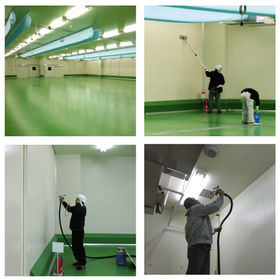
[Construction Example] Toilet Anti-Soiling and Deodorization Measures

Decomposing odor-causing substances and improving maintenance! Introducing examples of installation on floors, ceilings, and walls.

We would like to introduce a case where UDD catalytic glass coating and photocatalytic coating were applied for anti-soiling and deodorization measures in the restroom. The floor was coated with UDD catalytic glass coating, which has antibacterial, deodorizing, and anti-mold functions. The inorganic and durable glass film provides long-term anti-soiling, waterproofing, deodorization, and antibacterial properties, suppressing the growth of bacteria and moisture absorption in the coated areas, thereby improving maintainability. The walls and ceiling were coated with photocatalytic material that has anti-soiling, antibacterial, deodorizing, and anti-mold functions. The organic decomposition function of titanium oxide breaks down the substances causing unpleasant odors, reducing and eliminating bad smells lingering in the restroom for an extended period. 【Features of UDD Catalytic Glass Coating】 - Has antibacterial, deodorizing, and anti-mold functions - Provides long-term anti-soiling, waterproofing, deodorization, and antibacterial properties due to the inorganic and durable glass film, suppressing the growth of bacteria and moisture absorption in the coated areas, thereby improving maintainability. *For more details, please refer to the PDF document or feel free to contact us.

  • Photocatalysts and various wall materials (exterior and interior walls, etc.)
  • Coating

Added to bookmarks

Bookmarks list

Bookmark has been removed

Bookmarks list

You can't add any more bookmarks

By registering as a member, you can increase the number of bookmarks you can save and organize them with labels.

Free membership registration

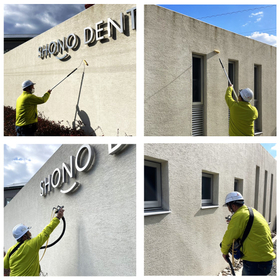
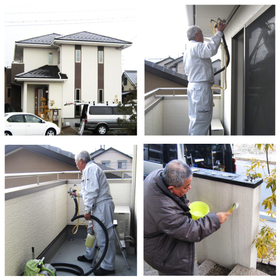
This is an example of photocatalytic treatment for anti-dirt measures on the exterior walls of a dental clinic.

The hydrophilic effect of photocatalysts (self-cleaning effect) makes it easier for rain to wash away dirt from the glass of detached houses, creating a clean environment.

By applying a titanium dioxide aqueous solution, which is the raw material for photocatalysts, to the ceilings and walls of buildings, it exhibits effects such as dirt resistance, deodorization, antibacterial properties, antiviral properties, and mold prevention. When light hits the surface of the indoor photocatalyst application, reactive oxygen species are generated on the surface, breaking down organic substances that cause dirt and odors into harmless water and carbon dioxide. Additionally, the surface of the outdoor photocatalyst application utilizes a hydrophilic effect, where rainwater spreads thinly under the dirt, contributing to self-cleaning as the dirt flows away with the water, thus maintaining the building's aesthetic and reducing cleaning costs. Since the raw material for the photocatalyst, titanium dioxide, is inorganic, it does not degrade due to ultraviolet rays or other factors, and its effectiveness continues for a long time.

  • Photocatalysts and various wall materials (exterior and interior walls, etc.)
  • Coating

Added to bookmarks

Bookmarks list

Bookmark has been removed

Bookmarks list

You can't add any more bookmarks

By registering as a member, you can increase the number of bookmarks you can save and organize them with labels.

Free membership registration

This is an example of photocatalytic treatment for anti-dirt measures on the exterior wall of a dental clinic.

The hydrophilic effect of photocatalysts (self-cleaning effect) makes it easier for rain to wash away dirt from the exterior walls of dental clinics, creating a clean environment.

By applying a titanium dioxide aqueous solution, which is the raw material for photocatalysts, to the ceilings and walls of buildings, it exhibits effects such as dirt resistance, deodorization, antibacterial properties, antiviral properties, and mold prevention. When light hits the surface of the indoor photocatalyst, reactive oxygen species are generated, which decompose organic substances that cause dirt and odors into harmless water and carbon dioxide. Additionally, the surface of the outdoor photocatalyst, when exposed to rain, utilizes a hydrophilic effect that spreads water thinly beneath the dirt, allowing for self-cleaning as the dirt flows away with the water, contributing to the maintenance of the building's appearance and reducing cleaning costs. Since the raw material for the photocatalyst, titanium dioxide, is inorganic, it does not degrade due to ultraviolet rays or other factors, and its effects continue for a long time.

  • Photocatalysts and various wall materials (exterior and interior walls, etc.)
  • Coating

Added to bookmarks

Bookmarks list

Bookmark has been removed

Bookmarks list

You can't add any more bookmarks

By registering as a member, you can increase the number of bookmarks you can save and organize them with labels.

Free membership registration

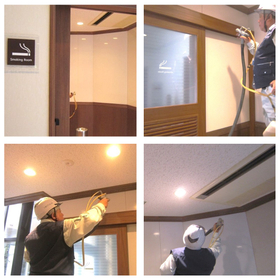
This is a case study of photocatalytic treatment for stain prevention and odor removal in smoking rooms of resort hotels.

The photocatalytic oxidation power decomposes and suppresses/reduces the causes of indoor odors, bacteria, and viruses, creating a clean environment.

By applying a titanium dioxide aqueous solution, which serves as the raw material for photocatalysts, to the ceilings and walls of buildings, it exhibits effects such as anti-soiling, deodorization, antibacterial properties, antiviral properties, and mold prevention. When light hits the surface of the indoor photocatalyst application, reactive oxygen species are generated on the surface, decomposing organic substances that cause dirt and odors into harmless water and carbon dioxide. Additionally, the surface of the outdoor photocatalyst application utilizes a hydrophilic effect, where rainwater spreads thinly beneath the dirt, contributing to self-cleaning as the dirt flows away with the water, thus maintaining the aesthetic of the building and reducing cleaning costs. Since the raw material for the photocatalyst, titanium dioxide, is inorganic, it does not degrade due to ultraviolet rays or other factors, and its effectiveness continues for a long time.

  • Photocatalysts and various wall materials (exterior and interior walls, etc.)
  • Coating

Added to bookmarks

Bookmarks list

Bookmark has been removed

Bookmarks list

You can't add any more bookmarks

By registering as a member, you can increase the number of bookmarks you can save and organize them with labels.

Free membership registration

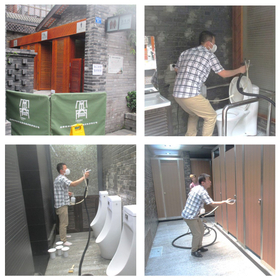
This is a case study of photocatalytic treatment for anti-soiling, deodorization, and antibacterial measures in public restrooms (Chengdu, China).

The photocatalytic oxidation power decomposes and suppresses/reduces odor, bacteria, viruses, and other causative substances in the room, creating a clean environment.

By applying a titanium dioxide aqueous solution, which is the raw material for photocatalysts, to the ceilings and walls of buildings, it exhibits effects such as dirt resistance, deodorization, antibacterial properties, antiviral properties, and mold prevention. When light hits the surface of the indoor photocatalyst, reactive oxygen species are generated, which decompose organic substances that cause dirt and odors into harmless water and carbon dioxide. Additionally, the surface of the outdoor photocatalyst, when exposed to rain, utilizes a hydrophilic effect that allows water to spread thinly beneath the dirt, contributing to self-cleaning as the dirt flows away with the water, thus maintaining the aesthetic of the building and reducing cleaning costs. Since the raw material for the photocatalyst, titanium dioxide, is inorganic, it does not degrade due to ultraviolet rays or other factors, and its effects continue for a long time.

  • Photocatalysts and various wall materials (exterior and interior walls, etc.)
  • Coating

Added to bookmarks

Bookmarks list

Bookmark has been removed

Bookmarks list

You can't add any more bookmarks

By registering as a member, you can increase the number of bookmarks you can save and organize them with labels.

Free membership registration

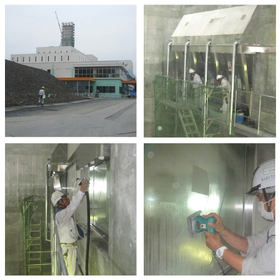
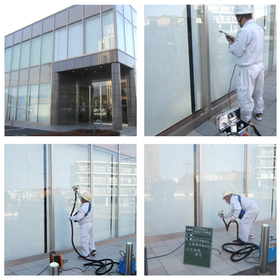
This is a case study of photocatalytic application for anti-soiling measures on glass at a waste treatment facility.

The decomposition of organic dirt using photocatalysts and self-cleaning creates a clean environment by breaking down substances that cause dirt, odors, bacteria, and mold both inside and outside the building.

By coating a titanium dioxide aqueous solution, which is the raw material for photocatalysts, on the ceilings and walls of buildings, it exhibits effects such as dirt resistance, deodorization, antibacterial properties, antiviral properties, and mold prevention. When light hits the surface of the indoor photocatalyst, reactive oxygen species are generated on the surface, decomposing organic substances that cause dirt and odors into harmless water and carbon dioxide. Additionally, the surface of the outdoor photocatalyst, when exposed to rain, utilizes a hydrophilic effect that spreads water thinly beneath the dirt, allowing for self-cleaning as the dirt flows away with the water, contributing to the maintenance of the building's aesthetics and reducing cleaning costs. Since the raw material for the photocatalyst, titanium dioxide, is inorganic, it does not degrade due to ultraviolet rays or other factors, and its effects continue for a long time.

  • Photocatalysts and various wall materials (exterior and interior walls, etc.)
  • Coating

Added to bookmarks

Bookmarks list

Bookmark has been removed

Bookmarks list

You can't add any more bookmarks

By registering as a member, you can increase the number of bookmarks you can save and organize them with labels.

Free membership registration

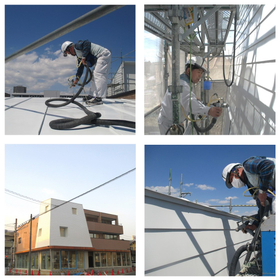
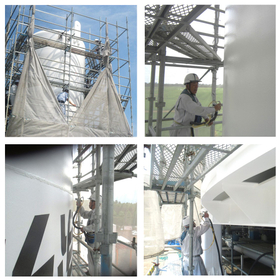
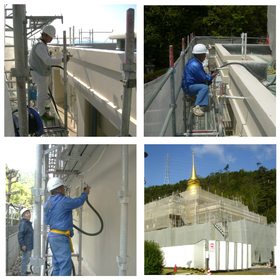
This is an example of photocatalytic treatment for anti-fouling measures on large tanks.

The decomposition of organic dirt using photocatalysts and self-cleaning creates a clean environment by breaking down substances that cause dirt, odors, bacteria, and mold both inside and outside buildings.

By coating the titanium dioxide aqueous solution, which is the raw material for photocatalysts, on the ceilings and walls of buildings, it exhibits effects such as anti-soiling, deodorization, antibacterial properties, antiviral properties, and mold prevention. When light hits the surface of the indoor photocatalyst application, reactive oxygen species are generated on the surface, decomposing organic substances that cause dirt and odors into harmless water and carbon dioxide. Additionally, the surface of the outdoor photocatalyst application has a hydrophilic effect, where rainwater spreads thinly under the dirt, contributing to self-cleaning as it washes away the surface dirt, thus maintaining the aesthetic of the building and reducing cleaning costs. Since the raw material for the photocatalyst, titanium dioxide, is inorganic, it does not degrade due to ultraviolet rays or other factors, and its effectiveness continues for a long time.

  • Photocatalysts and various wall materials (exterior and interior walls, etc.)
  • Coating

Added to bookmarks

Bookmarks list

Bookmark has been removed

Bookmarks list

You can't add any more bookmarks

By registering as a member, you can increase the number of bookmarks you can save and organize them with labels.

Free membership registration

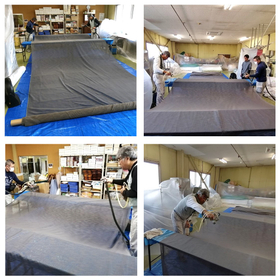
This is a case study of photocatalytic treatment for mold prevention on hotel curtains.

The photocatalytic oxidation power decomposes and suppresses/reduces the causes of indoor odors, bacteria, viruses, and mold, creating a clean environment.

By applying a titanium dioxide aqueous solution, which is the raw material for photocatalysts, to the ceilings and walls of buildings, it exhibits effects such as dirt resistance, deodorization, antibacterial properties, antiviral properties, and mold prevention. When light hits the surface of the indoor photocatalyst application, reactive oxygen species are generated, which decompose organic substances that cause dirt and odors into harmless water and carbon dioxide. Additionally, the surface of the outdoor photocatalyst application has a hydrophilic effect that allows water to spread thinly beneath the dirt when it rains, contributing to self-cleaning as the dirt flows away with the water, thus maintaining the aesthetic of the building and reducing cleaning costs. Since the raw material of the photocatalyst, titanium dioxide, is inorganic, it does not degrade due to ultraviolet rays or other factors, and its effectiveness lasts for a long time.

  • Photocatalysts and various wall materials (exterior and interior walls, etc.)
  • Coating

Added to bookmarks

Bookmarks list

Bookmark has been removed

Bookmarks list

You can't add any more bookmarks

By registering as a member, you can increase the number of bookmarks you can save and organize them with labels.

Free membership registration

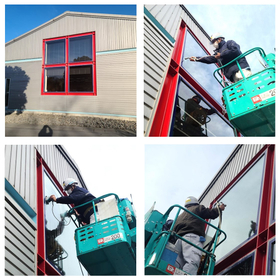
This is a case study of photocatalytic application for anti-soiling measures on glass at a waste disposal facility.

The hydrophilic effect of photocatalysts (self-cleaning effect) makes it easier for rain to wash away dirt from building exteriors and glass, creating a clean environment.

By applying a titanium dioxide aqueous solution, which is the raw material for photocatalysts, to the ceilings and walls of buildings, it exhibits effects such as dirt resistance, deodorization, antibacterial properties, antiviral properties, and mold prevention. When light hits the surface of the indoor photocatalyst application, reactive oxygen species are generated on the surface, breaking down organic substances that cause dirt and odors into harmless water and carbon dioxide. The surface of the outdoor photocatalyst application utilizes a hydrophilic effect, where rainwater spreads thinly beneath the dirt, contributing to self-cleaning as the dirt flows away with the water, thus maintaining the aesthetic of the building and reducing cleaning costs. Since the raw material for the photocatalyst, titanium dioxide, is inorganic, it does not degrade due to ultraviolet rays or other factors, and its effectiveness lasts for a long time.

  • Photocatalysts and various wall materials (exterior and interior walls, etc.)
  • Coating

Added to bookmarks

Bookmarks list

Bookmark has been removed

Bookmarks list

You can't add any more bookmarks

By registering as a member, you can increase the number of bookmarks you can save and organize them with labels.

Free membership registration

This is an example of photocatalytic treatment for deodorization, antibacterial, and antiviral measures inside an apartment.

The photocatalytic oxidation power decomposes and suppresses/reduces the substances causing odors, bacteria, and viruses in the room, creating a clean environment.

By coating the ceilings and walls of buildings with a titanium dioxide aqueous solution, which is the raw material for photocatalysts, it exhibits effects such as dirt resistance, deodorization, antibacterial properties, antiviral properties, and mold prevention. When light hits the surface of the indoor photocatalyst, reactive oxygen species are generated on the surface, breaking down organic substances that cause dirt and odors into harmless water and carbon dioxide. The surface of the outdoor photocatalyst, when exposed to rain, utilizes a hydrophilic effect that allows water to spread thinly beneath the dirt, contributing to self-cleaning as the dirt flows away with the water, thus maintaining the aesthetic of the building and reducing cleaning costs. Since the raw material for the photocatalyst, titanium dioxide, is inorganic, it does not degrade due to ultraviolet rays or other factors, and its effects last for a long time.

  • Photocatalysts and various wall materials (exterior and interior walls, etc.)
  • Coating

Added to bookmarks

Bookmarks list

Bookmark has been removed

Bookmarks list

You can't add any more bookmarks

By registering as a member, you can increase the number of bookmarks you can save and organize them with labels.

Free membership registration

This is a case study of photocatalytic treatment for dirt prevention on baseball field fences.

The decomposition of organic dirt using photocatalysts and self-cleaning creates a clean environment by breaking down substances that cause dirt, odors, bacteria, and mold both inside and outside buildings.

By coating the ceilings and walls of buildings with a titanium dioxide aqueous solution, which is the raw material for photocatalysts, it exhibits effects such as anti-soiling, deodorization, antibacterial properties, antiviral properties, and mold prevention. When light hits the surface of the indoor photocatalyst, reactive oxygen species are generated, which decompose organic substances that cause dirt and odors into harmless water and carbon dioxide. The surface of the outdoor photocatalyst, when exposed to rain, utilizes a hydrophilic effect that allows water to spread thinly beneath the dirt, contributing to self-cleaning as the dirt flows away with the water, thus maintaining the aesthetic appeal of the building and reducing cleaning costs. Since the raw material for the photocatalyst, titanium dioxide, is inorganic, it does not degrade due to ultraviolet rays or other factors, and its effectiveness continues for a long time.

  • Photocatalysts and various wall materials (exterior and interior walls, etc.)
  • Coating

Added to bookmarks

Bookmarks list

Bookmark has been removed

Bookmarks list

You can't add any more bookmarks

By registering as a member, you can increase the number of bookmarks you can save and organize them with labels.

Free membership registration

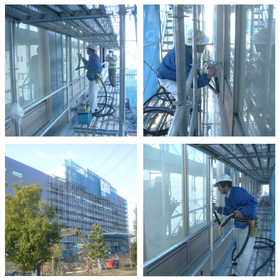
This is a case study of photocatalytic application for anti-dirt measures on glass in logistics facilities.

The hydrophilic effect of photocatalysts (self-cleaning effect) makes it easier for rain to wash away dirt from building exteriors and glass, creating a clean environment.

By applying a titanium dioxide aqueous solution, which is the raw material for photocatalysts, to the ceilings and walls of buildings, it exhibits effects such as dirt resistance, deodorization, antibacterial properties, antiviral properties, and mold prevention. When light hits the surface of the indoor photocatalyst application, reactive oxygen species are generated, which decompose organic substances that cause dirt and odors into harmless water and carbon dioxide. The surface of the outdoor photocatalyst application utilizes a hydrophilic effect, where rainwater spreads thinly beneath the dirt, allowing for self-cleaning as the dirt flows away with the water, contributing to the maintenance of the building's aesthetics and reducing cleaning costs. Since the raw material for the photocatalyst, titanium dioxide, is inorganic, it does not degrade due to ultraviolet rays or other factors, and its effects continue for a long time.

  • Photocatalysts and various wall materials (exterior and interior walls, etc.)
  • Coating

Added to bookmarks

Bookmarks list

Bookmark has been removed

Bookmarks list

You can't add any more bookmarks

By registering as a member, you can increase the number of bookmarks you can save and organize them with labels.

Free membership registration

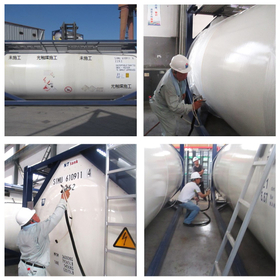
This is a case study of photocatalytic application for anti-fouling measures on ISO tanks.

Decomposing organic dirt with photocatalysts and cleaning hard-to-clean ISO tank stains, making them clean with the power of rain.

By applying a titanium dioxide aqueous solution, which is the raw material for photocatalysts, to the ceilings and walls of buildings, it exhibits effects such as anti-fouling, deodorization, antibacterial properties, antiviral properties, and mold prevention. When light hits the surface of the indoor photocatalyst application, reactive oxygen species are generated on the surface, breaking down organic substances that cause dirt and odors into water and carbon dioxide, rendering them harmless. The surface of the outdoor photocatalyst application has a hydrophilic effect, which causes water to spread thinly under dirt when it rains, allowing for self-cleaning as the surface dirt flows away, contributing to the maintenance of the building's appearance and reducing cleaning costs. Since the raw material of the photocatalyst, titanium dioxide, is inorganic, it does not degrade due to ultraviolet rays or other factors, and its effects continue for a long time. A glass coating on floor tiles creates a strong water-repellent surface. The water-repellent effect prevents the penetration of wastewater, such as urine, making it easier to clean, and also reduces odors caused by bacteria and other sources. A glass coating on floor tiles creates a strong water-repellent surface. The water-repellent effect prevents the penetration of wastewater, such as urine, making it easier to clean, and also reduces odors caused by bacteria and other sources.

  • Photocatalysts and various wall materials (exterior and interior walls, etc.)
  • Coating

Added to bookmarks

Bookmarks list

Bookmark has been removed

Bookmarks list

You can't add any more bookmarks

By registering as a member, you can increase the number of bookmarks you can save and organize them with labels.

Free membership registration

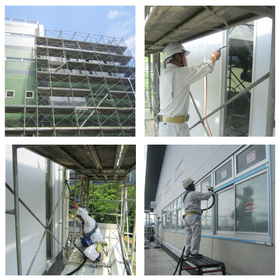
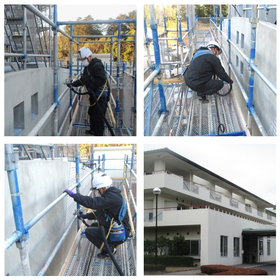
This is an example of photocatalytic application for anti-soiling measures on the exterior walls of a support facility for people with disabilities.

The decomposition of organic contaminants using photocatalysts and self-cleaning creates a clean environment by breaking down the substances that cause dirt and mold on building facades.

By applying a titanium dioxide aqueous solution, which is the raw material for photocatalysts, to the ceilings and walls of buildings, it exhibits effects such as dirt resistance, deodorization, antibacterial properties, antiviral properties, and mold prevention. When light hits the surface of the indoor photocatalyst, reactive oxygen species are generated, which decompose organic substances that cause dirt and odors into harmless water and carbon dioxide. The surface of the outdoor photocatalyst, when exposed to rain, utilizes a hydrophilic effect that allows water to spread thinly beneath the dirt, contributing to self-cleaning as the dirt flows away with the water, thereby maintaining the aesthetic of the building and reducing cleaning costs. Since the raw material for the photocatalyst, titanium dioxide, is inorganic, it does not degrade due to ultraviolet rays or other factors, and its effectiveness continues for a long time.

  • Photocatalysts and various wall materials (exterior and interior walls, etc.)
  • Coating

Added to bookmarks

Bookmarks list

Bookmark has been removed

Bookmarks list

You can't add any more bookmarks

By registering as a member, you can increase the number of bookmarks you can save and organize them with labels.

Free membership registration

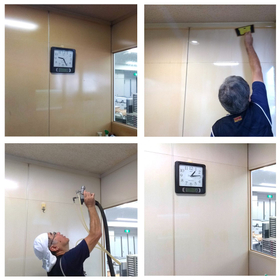
This is an example of photocatalytic treatment in a smoking room (for stain prevention and odor removal).

The photocatalytic oxidation power decomposes and reduces the components of tar stains in smoking rooms, creating a clean environment.

■Titanium Dioxide Raw Material By applying a titanium dioxide aqueous solution, which serves as the raw material for photocatalysts, to the ceilings and walls of buildings, it exhibits effects such as dirt resistance, deodorization, antibacterial properties, antiviral properties, and mold prevention. ■Indoor Photocatalyst When light hits the surface of the indoor photocatalyst, reactive oxygen species are generated on the surface, breaking down organic substances that cause dirt and odors into water and carbon dioxide, rendering them harmless. ■Outdoor Photocatalyst When rain falls on the surface of the outdoor photocatalyst, a hydrophilic effect causes water to spread thinly under the dirt, allowing for self-cleaning as the dirt flows away with the water, contributing to the maintenance of the building's appearance and reduction of cleaning costs. ■Duration of Photocatalytic Effect Since titanium dioxide, the raw material for photocatalysts, is inorganic, it does not degrade due to ultraviolet light or other factors, and the effect continues for a long time as long as the coating substrate's paint surface or wallpaper does not peel off.

  • Photocatalysts and various wall materials (exterior and interior walls, etc.)
  • Coating

Added to bookmarks

Bookmarks list

Bookmark has been removed

Bookmarks list

You can't add any more bookmarks

By registering as a member, you can increase the number of bookmarks you can save and organize them with labels.

Free membership registration

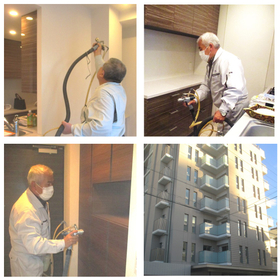
This is an example of photocatalytic treatment in a condominium interior (deodorization, antibacterial, and mold prevention).

The photocatalytic oxidation power decomposes and suppresses/reduces the substances causing indoor odors, bacteria, viruses, and mold, creating a clean environment.

■Titanium Dioxide Raw Material By coating a titanium dioxide aqueous solution, which serves as the raw material for photocatalysts, on the ceilings and walls of buildings, it exhibits effects such as dirt resistance, deodorization, antibacterial properties, antiviral properties, and mold prevention. ■Indoor Photocatalyst When light hits the surface of the indoor photocatalyst, reactive oxygen species are generated on the surface, decomposing organic substances that cause dirt and odors into harmless water and carbon dioxide. ■Outdoor Photocatalyst When rain hits the surface of the outdoor photocatalyst, a hydrophilic effect causes water to spread thinly beneath the dirt, contributing to self-cleaning as the dirt flows away with the water, thus maintaining the aesthetic of the building and reducing cleaning costs. ■Duration of Photocatalytic Effect Since titanium dioxide, the raw material for photocatalysts, is inorganic, it does not degrade due to ultraviolet light or other factors, and the effect continues for a long time as long as the coating substrate's paint surface or wallpaper does not peel off.

  • Photocatalysts and various wall materials (exterior and interior walls, etc.)
  • Coating

Added to bookmarks

Bookmarks list

Bookmark has been removed

Bookmarks list

You can't add any more bookmarks

By registering as a member, you can increase the number of bookmarks you can save and organize them with labels.

Free membership registration

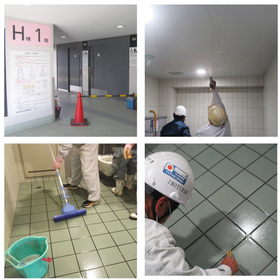
This is a case study of photocatalytic treatment for airport parking lot restrooms (anti-soiling and deodorization measures).

The photocatalytic oxidation power decomposes and reduces the odor-causing substances in the toilet. Additionally, the glass coating on the floor tiles suppresses the penetration of urine and other substances.

■Titanium Dioxide Raw Material By coating a titanium dioxide aqueous solution, which serves as the raw material for photocatalysts, on the ceilings and walls of buildings, it exhibits effects such as dirt resistance, deodorization, antibacterial properties, antiviral properties, and mold prevention. ■Indoor Photocatalyst When light hits the surface of the indoor photocatalyst, reactive oxygen species are generated on the surface, breaking down organic substances that cause dirt and odors into water and carbon dioxide, rendering them harmless. ■Outdoor Photocatalyst When rain hits the surface of the outdoor photocatalyst, a hydrophilic effect causes water to spread thinly beneath the dirt, allowing for self-cleaning as the dirt flows away with the water, contributing to the maintenance of the building's aesthetics and reducing cleaning costs. ■Duration of Photocatalytic Effect Since titanium dioxide, the raw material for photocatalysts, is inorganic, it does not degrade due to ultraviolet rays or other factors, and the effect continues for a long time as long as the coating substrate's paint surface or wallpaper does not peel off. ★A glass coating on floor tiles creates a strong water-repellent surface. The water-repellent effect prevents the penetration of waste water such as urine, making it easier to clean, and also reduces odors caused by bacteria and other sources.

  • Photocatalysts and various wall materials (exterior and interior walls, etc.)
  • Coating

Added to bookmarks

Bookmarks list

Bookmark has been removed

Bookmarks list

You can't add any more bookmarks

By registering as a member, you can increase the number of bookmarks you can save and organize them with labels.

Free membership registration

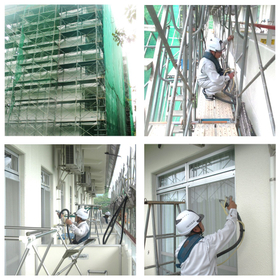
This is an example of photocatalytic application for the exterior walls (anti-soiling measures) of a support facility for people with disabilities.

The photocatalytic decomposition of organic dirt and self-cleaning will break down the substances causing dirt both inside and outside the walls of facilities supporting people with disabilities, creating a clean environment.

■Titanium Dioxide Raw Material By coating a titanium dioxide aqueous solution, which is the raw material for photocatalysts, on the ceilings and walls of buildings, it exhibits effects such as dirt resistance, deodorization, antibacterial properties, antiviral properties, and mold prevention. ■Indoor Photocatalyst When light hits the surface of the indoor photocatalyst, active oxygen is generated on the surface, which decomposes organic substances that cause dirt and odors into water and carbon dioxide, rendering them harmless. ■Outdoor Photocatalyst When rain hits the surface of the outdoor photocatalyst, a hydrophilic effect causes water to spread thinly beneath the dirt, contributing to self-cleaning as it flows away along with the surface dirt, thereby maintaining the aesthetic of the building and reducing cleaning costs. ■Duration of Photocatalytic Effect Since titanium dioxide, the raw material for photocatalysts, is inorganic, it does not degrade due to ultraviolet rays or other factors, and the effect continues for a long time as long as the coating substrate's paint surface or wallpaper does not peel off.

  • Photocatalysts and various wall materials (exterior and interior walls, etc.)
  • Coating

Added to bookmarks

Bookmarks list

Bookmark has been removed

Bookmarks list

You can't add any more bookmarks

By registering as a member, you can increase the number of bookmarks you can save and organize them with labels.

Free membership registration

【Free samples available!】 PEEKCOAT®

[IPROS Exclusive Project] 'PEEKR Resin' with excellent wear resistance, corrosion resistance, electrical insulation, and machinability.

PEEK® resin has the highest levels among existing thermoplastic resins in terms of sliding properties, tensile strength, flexural strength, compressive strength, surface hardness, thermal conductivity, and more. Furthermore, by forming a composite coating with fluororesin, it is possible to obtain a coating that adds properties such as lubricity and non-stickiness. =======≪Campaign Information≫========= ◎Everyone who contacts us will receive a sample!◎ 【Conditions for Receiving the Gift】 Please fill in the following two points in the 'Inquiry Details' section at the bottom of the page and contact us. ■Material to be coated ■Required properties *Please select from the options below. Take this opportunity to try it out! ========================== 【Coating Target Materials】 ・Stainless Steel ・Aluminum ・Iron ・Rubber 【Required Properties】 ・Corrosion Resistance ・Non-stickiness ・Heat Resistance ・Low Friction ・Sliding Properties ・Insulation ・Conductivity ・Ion Leaching Prevention ・Wear Resistance ・Water Repellency ・Antibacterial ・ECO Coating ・Others *We will send a comprehensive catalog free of charge to those who request it.

  • others
  • Coating

Added to bookmarks

Bookmarks list

Bookmark has been removed

Bookmarks list

You can't add any more bookmarks

By registering as a member, you can increase the number of bookmarks you can save and organize them with labels.

Free membership registration

[Free samples available!] Nano Clear Coat

[IPROS Exclusive Project] The fluorine laminated film is strongly bonded to the substrate, providing excellent durability.

Nano Clear Coat has a film thickness on the nano order, yet it possesses water and oil repellency that surpasses even fluororesins. Additionally, it has excellent transparency, so coating it on glass substrates does not compromise light transmission. =======≪Campaign Information≫========= ◎Everyone who contacts us will receive a sample!◎ 【Conditions for Receiving the Gift】 Please fill in the following two points in the 'Inquiry Details' section at the bottom of the page and contact us. ■Material to be coated ■Required properties *Please select from the options below. Take this opportunity to try it out! ========================== 【Coating Target Materials】 - Stainless Steel - Aluminum - Iron - Rubber 【Required Properties】 - Corrosion Resistance - Non-Stick - Heat Resistance - Low Friction - Sliding Properties - Insulation - Conductivity - Ion Leaching Prevention - Wear Resistance - Water Repellency - Antibacterial - ECO Coating - Others *We will send a comprehensive catalog free of charge to those who request it.

  • others
  • Coating

Added to bookmarks

Bookmarks list

Bookmark has been removed

Bookmarks list

You can't add any more bookmarks

By registering as a member, you can increase the number of bookmarks you can save and organize them with labels.

Free membership registration

[Free samples available!] Non-stick coating for pipe interiors.

[IPROS Exclusive Project] Achieving productivity, ensuring safety, and improving quality is now possible!!

The internal coating of pipes has made it possible to achieve productivity, safety, and quality improvement. For more details, please contact us or refer to our catalog. =======≪Campaign Information≫========= ◎Everyone who contacts us will receive a sample!◎ 【Conditions for Receiving the Gift】 Please fill in the following two points in the 'Inquiry Details' section at the bottom of the page when contacting us. ■Material to be coated ■Required properties *Please select from the options below. We encourage you to take this opportunity to try it out! ========================== 【Coating Target Materials】 ・Stainless Steel ・Aluminum ・Iron ・Rubber 【Required Properties】 ・Corrosion Resistance ・Non-Stick ・Heat Resistance ・Low Friction ・Sliding Properties ・Insulation ・Conductivity ・Ion Leaching Prevention ・Wear Resistance ・Water Repellency ・Antibacterial ・ECO Coating ・Others *We will send a comprehensive catalog free of charge to those who request it.

  • Water and sewerage pipe fittings
  • Coating

Added to bookmarks

Bookmarks list

Bookmark has been removed

Bookmarks list

You can't add any more bookmarks

By registering as a member, you can increase the number of bookmarks you can save and organize them with labels.

Free membership registration

【Free samples available!】 Fluorine-based ceramic coating

[IPROS Exclusive Project] Sample of coating agent available! A fluorine-based ceramic coating that combines non-stick properties and heat resistance.

Baiselam 100 has excellent features that enhance surface performance, such as non-stick properties, high hardness, and thermal conductivity! =======≪Campaign Information≫========= ◎Everyone who contacts us will receive a sample!◎ 【Conditions for Receiving the Gift】 Please fill in the following two points in the 'Inquiry Details' section at the bottom of the page and contact us. ■Material to be coated ■Required properties *Please select from the options below. Don't miss this opportunity to try it out! ========================== 【Coating Target Materials】 ・Stainless Steel ・Aluminum ・Iron ・Rubber 【Required Properties】 ・Corrosion Resistance ・Non-stick Properties ・Heat Resistance ・Low Friction ・Lubricity ・Insulation ・Conductivity ・Ion Leaching Prevention ・Wear Resistance ・Water Repellency ・Antibacterial ・ECO Coating ・Others *We will send a comprehensive catalog free of charge to those who request it.

  • Heating and cooling equipment and facilities
  • Coating

Added to bookmarks

Bookmarks list

Bookmark has been removed

Bookmarks list

You can't add any more bookmarks

By registering as a member, you can increase the number of bookmarks you can save and organize them with labels.

Free membership registration

【Now available in a video demonstration!】Amazing ultra non-stick coating technology!

【Now available on YouTube!】A super non-stick coating technology that breaks the common sense of non-stick technology! 'Nonstick'

This is a composite coating technology developed to prevent the adhesion of strong adhesive substances that cannot be handled by fluororesin or silicone resin. *We do not sell the paint as a standalone product.* =======≪Campaign Information≫========= ◎We are giving away samples to those who inquire!◎ 【Conditions for Receiving the Gift】 Please contact us by filling in the following points in the "Inquiry Details" section at the bottom of the page. ■The substrate you want to coat (the item you want to apply the coating to) ■The adhesive substance (the item that sticks) ■Usage environment and purpose Please take this opportunity to try it out! *Please write the items as follows.* ========================== ■The substrate you want to coat (the item you want to apply the coating to) - Types of metal substrates such as steel, stainless steel, aluminum, etc. - Types of parts such as cutters, rolls, transport plates, etc. ■The adhesive substance (the item that sticks) - Types of sticking items such as duct tape, resin, etc. ■Usage environment and purpose - The environment where the current substrate is placed and the purpose for which it is used. ==========================

  • others
  • Coating

Added to bookmarks

Bookmarks list

Bookmark has been removed

Bookmarks list

You can't add any more bookmarks

By registering as a member, you can increase the number of bookmarks you can save and organize them with labels.

Free membership registration

"Super Defense Coat" for corrosion resistance with a thick film resin coating.

[IPROS Exclusive Project] Capable of construction from micrometer to millimeter scale! Providing corrosion resistance through thick film resin coating on metal substrates!

"Super Defense Coat" is a surface treatment technology provided by Nikken Coating Industry Co., Ltd. that specializes in imparting corrosion resistance to metal substrates through thick resin coatings. By applying "Super Defense Coat" to tanks containing highly corrosive liquids, piping that carries highly corrosive gases, and other environments where metals cannot withstand chemically, we offer extended lifespan and other added value. ☆★Important Notes for Inquiries★☆ The following information is required for estimates and proposals: 1. Design drawings (confirmation of shape, dimensions, welding parts, painting surfaces, etc.) 2. Types of corrosive substances (type of liquid or gas) 3. Temperature conditions If you have any questions, please feel free to consult us. ===≪Campaign Information≫=== ◎A sample will be given to those who inquire!◎ 【Sample Sending Conditions】 Please fill in the following points in the "Inquiry Details" section at the bottom of the page when making your inquiry. *Please write the items as follows: ■The substrate you want to coat (the item you want to apply the coating to) ■What will come into contact with the surface ■Usage environment and application Please take this opportunity to try it out!

  • Plastering accessories
  • Coating

Added to bookmarks

Bookmarks list

Bookmark has been removed

Bookmarks list

You can't add any more bookmarks

By registering as a member, you can increase the number of bookmarks you can save and organize them with labels.

Free membership registration

Pyramid drill titanium coating

Pyramid drill with a titanium coating that extends its lifespan by approximately 2 to 4 times.

We offer the 'Pyramid Drill with Titanium Coating,' which demonstrates excellent performance with its unique cutting edge configuration, boasting both strength and durability. No center punch work is required. It can also be used for various applications such as deburring, enlarging holes, and chamfering. 【Features】 ■ Improved cutting ability with spiral grooves ■ Capable of drilling holes of different diameters with a single bit ■ No wobbling, allowing for precise drilling *For more details, please download the PDF or feel free to contact us.

  • Work tools
  • Coating

Added to bookmarks

Bookmarks list

Bookmark has been removed

Bookmarks list

You can't add any more bookmarks

By registering as a member, you can increase the number of bookmarks you can save and organize them with labels.

Free membership registration

NTC Nano Tech Coating

Optimal NTC nano-tech coating for magnesium-aluminum alloys.

1. Organic-inorganic hybrid polymer using sol-gel technology 2. Easy-to-follow one-coat system 3. Chrome-free coating 4. High corrosion resistance 5. Thin film coating 6. High water repellency 7. High heat resistance 8. High hardness 9. Adhesion, coupling resistance, and impact resistance 10. Colorable

  • paint
  • Coating

Added to bookmarks

Bookmarks list

Bookmark has been removed

Bookmarks list

You can't add any more bookmarks

By registering as a member, you can increase the number of bookmarks you can save and organize them with labels.

Free membership registration