Designated Investigation Agency | Comprehensive Soil Investigation Procedure to Prevent Delays in Factory Reconstruction
Soil contamination survey

A method to confirm risks at low cost and with a short delivery time through phased sampling in phases 1 to 3, in order to prevent the factory reconstruction plan from being halted.
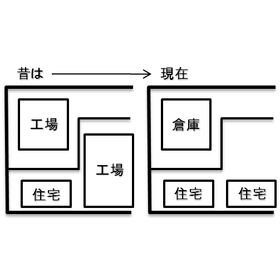
This document is a guide for utilizing phased comprehensive soil investigations to prevent unexpected construction delays and the occurrence of sudden remedial costs in factory and facility reconstruction and equipment renewal projects. There are often risks of chemical leaks from the past to the present within operating factory sites, and starting excavation work without prior understanding can lead to a complete halt in construction due to the discovery of contamination. This document begins with a thorough historical examination in Phase 1 and provides a detailed explanation of the method for narrowing down target areas based on the usage history of specific hazardous substances. Furthermore, by introducing "incremental sampling" to eliminate unnecessary excavation in healthy areas, it presents a concrete process that minimizes the number of analysis points and on-site workdays while ensuring optimal investigation cost management. Utilizing the advanced expertise of Geotech, a designated investigation agency by the Ministry of the Environment, along with specialized boring techniques for confined indoor spaces that do not halt factory operations, we deliver optimal solutions that fully comply with legal requirements while robustly protecting the company's valuable assets and reconstruction schedule.
Inquire About This Product
basic information
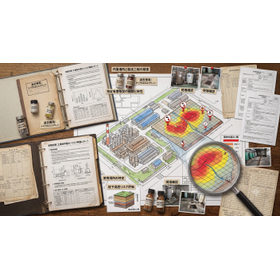
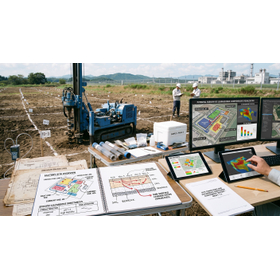
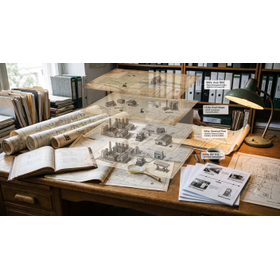
As a technical specification for comprehensive soil investigation for factory reconstruction purposes, we will establish procedures fully compliant with Article 3 of the law and the environmental conservation regulations of each municipality. In Phase 1, document review will involve the integrated analysis of historical operational data of the factory, MSDS (Material Safety Data Sheets) for handled chemicals, drainage route diagrams, and other past data. In Phase 2, overview sampling will focus on high-risk areas such as around pits and chemical storage warehouses, where surface soil gas and soil liquid samples will be collected, and the levels of specific harmful substances will be measured through officially registered analytical methods for quantitative certification. In Phase 3, detailed investigation will accurately determine the three-dimensional distribution of contamination through self-propelled boring drilling to a maximum depth of 10 meters.
Price information
Price range
P3
Delivery Time
P4
Applications/Examples of results
This survey method is used to identify and eliminate potential contamination risks on-site before the commencement of reconstruction or renovation work at chemical plants, metal processing facilities, plating factories, and automobile maintenance shops, as well as during the rearrangement of production lines. It is suitable for field practices that require rapid on-site sampling within limited time frames, including nights and holidays, without disrupting ongoing production activities or the movement of logistics trucks on-site. By obtaining accurate data in advance, it supports the formulation of foundation construction plans that serve as the basis for architectural design and provides public evidence to facilitate progress reporting to authorities and the smooth application for construction permits.
catalog(2)
Download All Catalogs

Company information

-

![[Case Study] Successful "Monetization" of Waste Plastics through Sensor Utilization! Japan Special Ceramics Co., Ltd.](https://image.www.ipros.com/public/product/image/245/2001484916/IPROS11668876257031716160.jpg?w=280&h=280)