
Designated Investigation Agency | Efficient Practical Procedures for Article 3 Investigations Related to the Abolition of Specific Facilities
Soil contamination survey

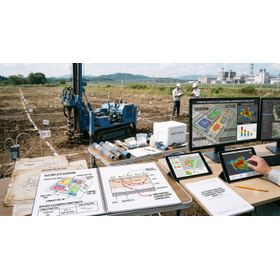
Streamlining the soil contamination investigation under Article 3 of the law due to the abolition of specific facilities using harmful substances. Supporting accurate sampling from efficient historical investigations to the governor's report without waste.
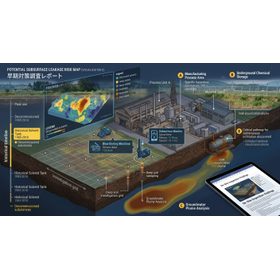
This theme thoroughly explains efficient practical procedures for conducting soil contamination status investigations under Article 3 of the Soil Contamination Countermeasures Act, aimed at preventing schedule delays during operational shutdowns or factory closures. It covers points to minimize costs and construction periods regarding the progression of soil contamination status investigations imposed on landowners, triggered by the notification of the closure of specified facilities. At the crucial stage of historical investigation, we meticulously identify underground infiltration risks from public notification materials and past operational records, rationally narrowing down the areas that require sampling. In the subsequent soil sampling process, we conduct soil gas investigations for first-class substances and soil collection for second- and third-class substances in an efficient arrangement, establishing legally compliant, high-precision numerical data. Furthermore, we provide comprehensive support, condensing the know-how of our designated investigation agency, Geotech, from the preparation of reliable administrative reports that eliminate the risk of re-investigation orders to the practical submission to the prefectural governor. This content is practical for avoiding legal contract risks and development delays, ensuring the safe and swift maintenance of asset value.
Inquire About This Product
basic information
This practical optimization service is a statutory investigation package conducted by a designated investigation agency in full compliance with Article 3, Paragraph 1 of the Soil Contamination Countermeasures Act. In Phase 1, the historical investigation identifies the handling history of 26 types of specified hazardous substances and the risk of underground infiltration at the target site through administrative information, historical documents, and interviews with operational personnel, and creates a land classification map according to the level of concern. In Phase 2, the sampling process establishes optimal unit plots (10m grid and 30m grid) based on the site shape and building layout, and conducts soil gas surveys and surface and depth soil sampling in accordance with official methods. It encompasses measurements by registered analytical institutions based on the Measurement Act, written audits by technical managers, and the preparation of reports for submission to the governor.
Price information
-
Price range
P3
Delivery Time
P4
Applications/Examples of results
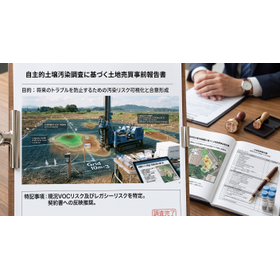
The main application scenarios include responding to investigations under Article 3 of the law related to the cessation of operations, demolition of buildings, and closure of facilities such as plating factories, chemical plants, and printing companies that use hazardous substances. It is used to quickly determine the presence of soil contamination without halting the schedule for demolition work or land use planning, and to fulfill the reporting obligation to the governor. Additionally, it is utilized for preemptively identifying defect risks before land sales, clarifying the responsibilities between sellers and buyers, and building legal evidence for contract practices that ensure the isolation of environmental liabilities during M&A. Furthermore, it serves as an extremely effective risk management tool to demonstrate the safety of underground areas in advance as a voluntary investigation during operations, thereby preventing the erosion of corporate value.
catalog(3)
Download All Catalogs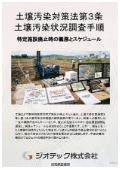
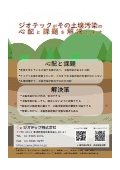
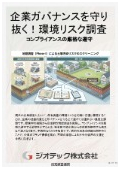
Company information

-



![Data [Introduction Case] Remote Site Inspection of Erosion Control Dams via Drone using Zoom/Teams](https://image.www.ipros.com/public/product/image/2101191/IPROS6336284040604908073.jpg?w=280&h=280)
![[For Plants] Aftermarket cameras can confirm crane loads and landing points.](https://image.www.ipros.com/public/product/image/2101191/IPROS1660441553731007724.png?w=280&h=280)