Ground reinforcement work | Achieving shortened construction time with zero curing and no soil displacement using the RES-P method.
Ground reinforcement work

Significantly shorten construction time with zero waste! The RES-P method reduces total construction costs through a no-dirt-disposal approach and the combined effect of small-diameter steel pipes.
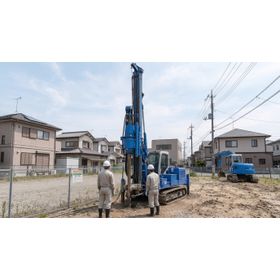
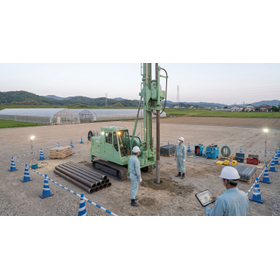
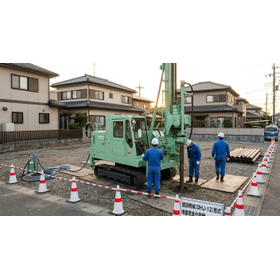
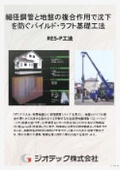
To ensure the long-term structural safety of buildings, appropriate ground reinforcement work based on ground surveys is essential. If the allowable stress of the ground is insufficient, uneven settlement can occur due to the building's load, leading to serious issues such as tilting or damage to the structure. The RES-P method, a piled raft foundation construction technique, efficiently addresses these problems. This method involves continuously driving small-diameter steel pipes (with an outer diameter of 48.6 mm) into soft ground, significantly enhancing the load-bearing capacity beneath the foundation through the combined action of the ground and the pipes. Since it does not use cement-based solidifying agents, there is zero residual soil generated on-site, which greatly reduces industrial waste disposal costs and transportation expenses. Furthermore, because there is no curing period required for the solidifying agent, work on the next phase of foundation construction can begin immediately after the pipe installation is completed, allowing for a reduction in the overall construction timeline. The use of lightweight 2-ton compact machinery minimizes noise and vibration, keeping the site environment clean. GeoTech Co., Ltd. offers reinforcement work that ensures reliable quality and cost optimization under precise management using construction management devices.
Inquire About This Product
basic information
The reinforcement members used in the RES-P method are general structural carbon steel pipes with an outer diameter of 48.6 mm and a wall thickness of 2.4 mm. The surface of the members is treated for rust prevention, providing long-term stability and durability when buried underground. The applicable targets are small-scale buildings with three stories or fewer, a height of 13 meters or less, and a total floor area of 1,500 square meters or less (for single-story buildings, 3,000 square meters or less). It can accommodate shallow foundations with a long-term design load of 50 kN/square meter or less, or slab foundations with 80 kN/square meter or less. The applicable ground conditions are cohesive soil and sandy soil, with a maximum construction depth of 14 meters. It is a reliable specification that has obtained GBRC technical performance certification and evaluation from the Japan Building Center.
Price information
Delivery Time
Applications/Examples of results
The main application is foundation ground reinforcement work during the construction of single-family homes, low-rise apartment buildings, and small-scale stores. It is ideal for projects that want to avoid the risk of settlement due to insufficient ground bearing capacity and aim to shorten the overall construction period. It is effective in sites where there is a desire to reduce disposal costs for generated residual soil associated with cement-based improvements and in tight project schedules where immediate commencement of foundation work after pouring is required. Additionally, it is widely used in various construction sites that cannot afford a curing period, have difficulty transporting large heavy machinery to narrow sites, and prioritize hygiene maintenance and cost control.
catalog(3)
Download All Catalogs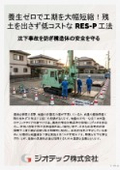
Company information

-