Site Investigation | Smart Foundation Selection Technique to Significantly Improve Design Efficiency and Prevent Excessive Reinforcement
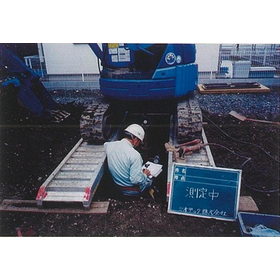
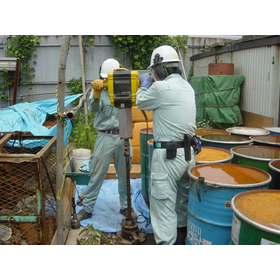
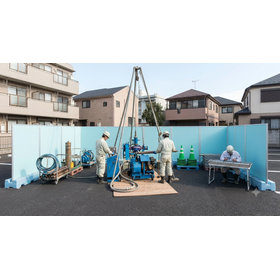
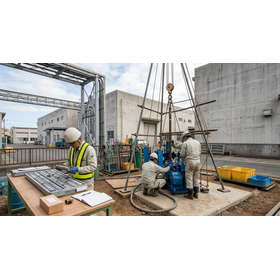
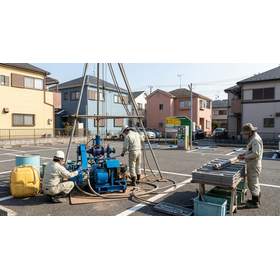
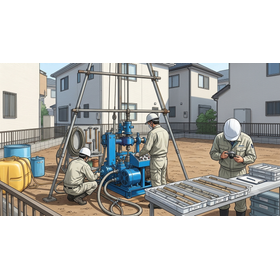
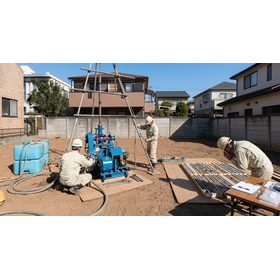
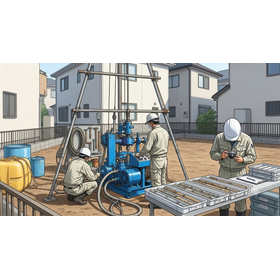
Boring survey

Enhance design efficiency and eliminate excessive reinforcement! By conducting detailed settlement calculations and soil bearing capacity analysis, derive optimal foundation specifications to significantly improve explanatory power to clients and increase order rates.
In the practice of residential architectural design, mistakes in ground evaluation and cost increases due to inappropriate reinforcement work are significant challenges for contractors and designers. There are cases where excessive reinforcement work is arranged based on overly cautious safety factors, prioritizing safety above all else, and instances where insufficient explanations to clients lead to distrust. This document provides a detailed explanation of the know-how for utilizing ground assessment to improve design efficiency while also offering smart explanations to clients. Geotech conducts high-precision analyses based on objective data, from preliminary database verification to detailed settlement calculations (mv method) and the calculation of allowable bearing capacity using official and academic recommended methods. It clarifies the rationale for adopting direct foundations such as mat foundations by eliminating unnecessary improvement work, and outlines the process for selecting the most cost-effective methods from surface improvement, column improvement, and various pile methods in case reinforcement is necessary. By providing persuasive explanatory materials, we aim to gain client understanding and contribute to speeding up design work and improving order acceptance rates.
Inquire About This Product
basic information
The specifications and specs described in this document are based on the data analysis flow of the Screw Weight Penetration Test (SWS Test/JIS A 1221), SDS Test, and Standard Penetration Test for boring. It is possible to select the ground bearing capacity calculation formulas (Inada's equivalent N value calculation, recommended formulas by the Housing and Urban Development Corporation, notification formulas, and formulas recommended by the Architectural Institute for calculating allowable bearing capacity qa). For differential settlement determination, a weighted average Nsw calculation based on foundation depth and a four-rank evaluation (A to D rank) for loess and alluvial classifications are applied. Additionally, it covers self-sinking layer evaluations and the application judgment criteria for various reinforcement methods (surface improvement, geo-columns, pure piles, and steel pipe piles).
Price range
Delivery Time
Applications/Examples of results
It can be used for determining basic specifications in the design practice of wooden houses and light steel structures, obtaining the basis for structural calculation data, and optimizing construction budgets. It is effective in creating proposals for reducing construction costs by avoiding excessive ground reinforcement work, providing technical support for foundation selection in uneven ground and embankment sites, and standardizing in-house design criteria. Additionally, it can be utilized as an explanation and presentation tool for construction companies and house manufacturers' design and estimation departments and sales departments to logically present a balanced construction cost and safety to customers, facilitating quick consensus building.
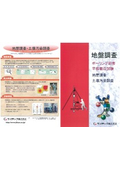
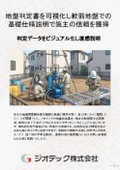
catalog(3)
Download All Catalogs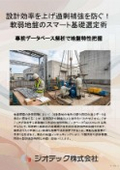
Company information

-

![Fence foundation dual-purpose decorative boundary block [Shikīru]](https://image.www.ipros.com/public/product/image/6d4/2000203792/IPROS6592272567679821523.gif?w=280&h=280)