Ground Investigation | Excessive Ground Improvement Prevention Measurement and Analysis Method at the Site of a Demolished Wooden Apartment
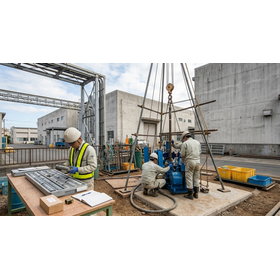
Boring survey

Reassess the excessive ground improvement costs due to the uneven ground of the demolition site from the ground up, and optimize the construction budget for wooden apartments through precise ground bearing capacity measurements and soil classification.
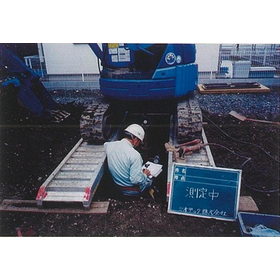
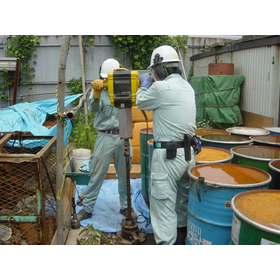
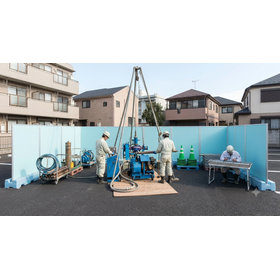
This technology is a high-precision ground measurement service aimed at significantly reducing the often opaque ground improvement costs on the site of demolished wooden apartments, thereby optimizing the construction budget. On demolition sites, expensive piling work and large-scale ground improvement based on excessive safety factors are often proposed, which can pressure the profitability of the project. This measurement method utilizes the SDS test (optional), which digitally measures the rod's rotational torque and friction in addition to the conventional SWS test, to scientifically identify differences in soil types. By precisely evaluating the settlement characteristics of sandy soil, clay, and humus soil without being misled by mere apparent strength values, we eliminate the risk of excessive reinforcement. Furthermore, we incorporate the load diffusion mechanism from the foundation downwards (damping effects at depths of 2 meters and 2-5 meters) into our analysis, enabling us to provide rational foundation and ground reinforcement proposals limited to only the truly necessary locations and depths. We strongly support the reduction of construction costs and high safety for project owners, facilitating profitable apartment management.
Inquire About This Product
basic information
This survey system is based on the screw weight penetration test (SWS test) and can introduce the SDS testing machine as an option for soil classification to prevent excessive reinforcement. The SDS test automatically measures torque, load, and speed in real-time, calculating the characteristics of soil layers such as sandy soil, clayey soil, loam, and humus soil. The analysis system is equipped with the Inada-type conversion N-value calculation formula (for clay: 3.0 × Wsw + 0.05 × Nsw, etc.), enabling quantitative assessment that eliminates ambiguity in settlement evaluation. Additionally, it comes standard with a load propagation calculation function that separates the evaluation of the direct influence range (2 meters below the foundation) and the reduction range (2 to 5 meters).
Price range
Delivery Time
Applications/Examples of results
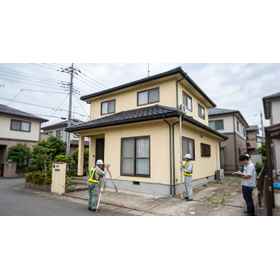
It is used in new construction projects on the sites of demolished wooden apartments, where there is a desire to reduce excessive ground improvement costs and optimize construction expenses. In uneven ground where backfill soil and embankment soil are mixed after demolition, it is useful as a decision-making tool to avoid uniformly high-cost pile work at all points and to reinforce only the necessary areas precisely. It serves as a cost reduction rationale document for apartment builders, real estate developers, and construction companies to explain the reasonableness of construction costs to clients. Additionally, it is widely used in projects that aim to verify the feasibility of adopting direct foundations (strip foundations and slab foundations) and maximize the cost-effectiveness of the entire construction.
catalog(3)
Download All Catalogs

Company information

-


![[Free Gift!] Collection of Case Studies on 3D Measurement for Business Trips](https://image.www.ipros.com/public/product/image/008/2000100873/IPROS8145039113342348023.JPG?w=280&h=280)

![Fence foundation dual-purpose decorative boundary block [Shikīru]](https://image.www.ipros.com/public/product/image/6d4/2000203792/IPROS6592272567679821523.gif?w=280&h=280)