Submergence correction work | Achieving the longevity of wooden houses through carbon fiber foundation regeneration method.
Subsidance correction work

Proven strength through third-party testing! Achieving long lifespan and high structural durability of wooden houses through the fusion of carbon fiber-based rehabilitation methods and settlement correction work.
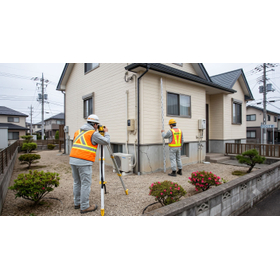
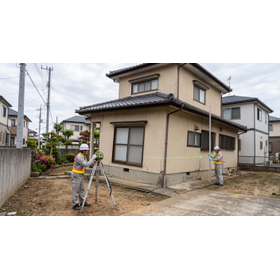
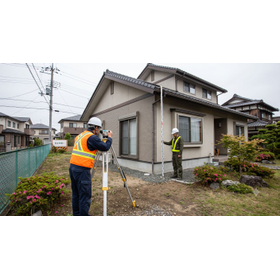
This catalog presents a technical document introducing the latest residential longevity solution that combines the "carbon fiber foundation regeneration method," which has demonstrated exceptional structural strength through full-scale tests by public institutions, with high-precision ground subsidence correction technology. For existing foundations of wooden houses that have developed cracks due to aging and differential settlement, we dramatically improve the bending strength and shear resistance of the foundation structure by integrally molding carbon fiber sheets, which have ten times the tensile strength of steel, with high-adhesion epoxy resin, without the need for demolition or additional construction. Furthermore, through subsidence correction work using small hydraulic jacks, we restore the building's tilt to a horizontal state within millimeters and prevent the risk of re-subsidence by securing it to the support layer with methods such as steel pipe pile driving. Throughout the entire construction process, we ensure constant monitoring with digital measuring equipment and the collection of scientific evidence, allowing for flexible responses to the re-attachment of defect guarantees and ground guarantees. We provide clients and related businesses with solid technical backing and long-term structural safety.
Inquire About This Product
basic information
It is a multi-layer reinforcement system consisting of high tensile strength carbon fiber sheets (with a tensile strength of 3400 N/mm² or more), epoxy-based anchoring primers, high-adhesion impregnating matrix resins, and non-shrinking decorative mortars. By applying a thin layer of approximately 2 to 3 mm, it prevents an increase in the weight of the foundation and impacts on construction restriction areas. The sinking correction equipment employs a compact hydraulic jack with a maximum capacity of 150 kN, as well as high-precision digital levels and three-dimensional displacement sensors, enabling automatic height management within millimeter accuracy. Full-scale loading tests conducted by public institutions such as the Better Living Tsukuba Architectural Testing Center have demonstrated seismic and bending strengths equivalent to or greater than those of new foundations.
Price range
Delivery Time
Applications/Examples of results
It is ideal for seismic reinforcement of old wooden houses and non-reinforced foundations from the Showa period, as well as for repairing structural cracks and fissures due to aging. It is used for correcting building inclinations caused by uneven ground subsidence and for enhancing the supporting capacity at the base, as well as for repair plans associated with the application of defect liability insurance. Additionally, it is widely utilized in aftercare maintenance of public facilities and residences, restoration of foundation strength pointed out in building inspections, and real estate regeneration projects that require the reattachment of various guarantees. It is chosen for sites where there is a desire to provide a sense of security by presenting objective data to the clients.
catalog(4)
Download All Catalogs



Company information

-