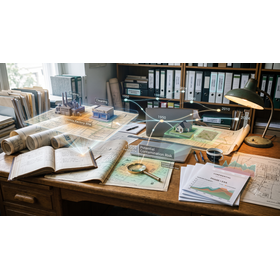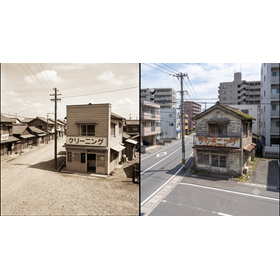
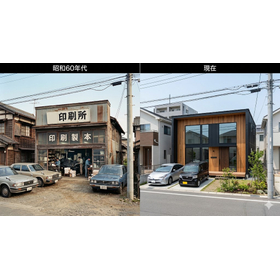
Soil contamination investigation in the case of land transactions for printing factories.
Soil contamination survey

Know the risks of cleaning agents and plating solutions in printing factories in advance to facilitate land transactions.
In transactions and redevelopment of former printing factories and binding shops, early detection of invisible soil contamination risks is essential. The harmful substances handled on-site vary greatly depending on the printing method and process, such as organic chlorine solvents widely used for offset blanket cleaning, hexavalent chromium as gravure cylinder plating solution, cyanide for undercoating, and lead derived from letterpress type. In particular, the drainage routes of organic chlorine solvents that were consumed and disposed of in large quantities during daily roller cleaning and plate development, as well as the risk of penetration into the floor, are the most critical points to focus on. The advantage of conducting early investigations lies in scientifically identifying these specific contamination risks, which can completely eliminate future risks of land value decline, construction delays, and legal setbacks considered illegal dumping, thereby enabling safe and rational land asset management and redevelopment planning.
Inquire About This Product
basic information
We provide a high-precision investigation specification that is completely specialized for the operational characteristics of printing and binding factories, with no rework. In the historical investigation (Phase 1), we thoroughly examine the printing methods used at the time (lithography, intaglio, relief, and screen printing) and verify the presence or absence of plate-making, plating, and typesetting departments. Based on this, we set pinpoint sampling locations, focusing on areas of concern such as the workshop floor where ink roller cleaning agents may have penetrated, drainage routes, and former plating tank sites. The analysis items cover all substances directly handled as listed in the documentation, including organic chlorine solvents such as trichloroethylene and dichloromethane, hexavalent chromium and total cyanide originating from the plating process, lead from typesetting and foil stamping, cadmium from ink pigments, and boron and fluorine from dampening water and adhesives. We guarantee data that is substantiated and will not be questioned by disposal sites or authorities.
Price information
-
Price range
P3
Delivery Time
P4
Applications/Examples of results
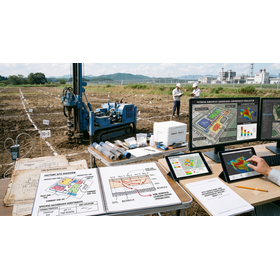
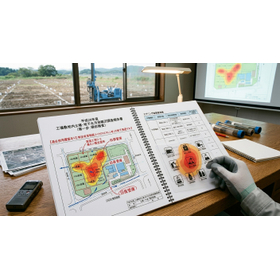
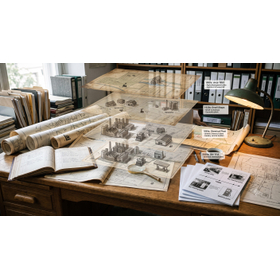
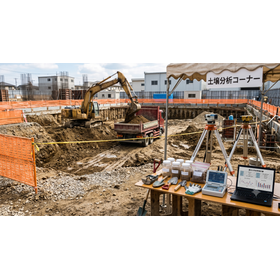
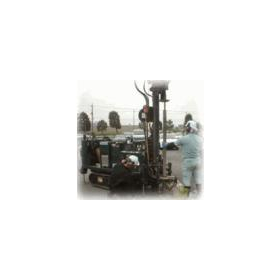
■ Specific Procedures 1. Hearing and Confirmation of Operational History: Conduct interviews to gather information about the printing methods used at the time (such as offset, gravure, letterpress, silk screen, etc.), the presence of in-house plate-making and plating equipment, typecasting, and bookbinding adhesive processes, to initially assess the use of hazardous substances. 2. Conducting Historical Investigation (Phase 1): Identify the exact locations of ink cleaning work areas, plating tanks, drainage pits, and material storage areas from past factory layout diagrams and registration information. 3. Developing a Sampling Plan: Select strategic sampling locations targeting areas with the highest risk of leakage for organic chlorine solvents, as well as drainage systems for hexavalent chromium and cyanide. 4. Soil Overview Investigation (Phase 2) and On-Site Sampling: Focus on substances associated with specific printing and binding methods (such as dichloromethane, hexavalent chromium, total cyanide, lead, boron, etc.) and collect soil and gas samples at precise depths and locations. 5. Precise Laboratory Analysis and Result Reporting: Analyze the collected samples to confirm compliance with environmental standards. Clearly define the extent of contamination and connect this to land valuation for future sales or redevelopment, as well as the calculation of appropriate remediation costs as needed.
catalog(2)
Download All Catalogs

Company information

-

![[Not Public] Soil Contamination | Category B](https://image.www.ipros.com/public/product/image/321794/IPROS4400175568595756491.jpg?w=280&h=280)