
Soil contamination investigation: Early investigation is essential for operating factories.
Early investigation of factories in operation.

Early investigation is essential for factories in operation! Control contamination risks while continuing business.
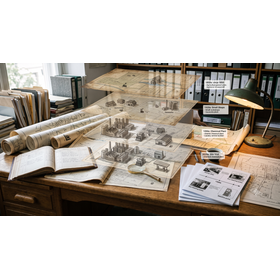
In an operating factory, conducting an early soil contamination survey and quickly understanding the risks is extremely important to prevent potentially fatal losses in management and operations. By conducting the survey while the factory is in operation, appropriate measures can be swiftly implemented to prevent the spread of contamination to surrounding areas, even if contamination is discovered. Additionally, the greatest benefit is the increased likelihood of being able to "carry out soil contamination measures while continuing operations." Not only can one gain peace of mind by confirming the presence or absence of contamination early on, but it also allows for budgeting and planning for soil contamination remediation costs in preparation for future rebuilding or land sales. By anticipating risks from past land use through a historical survey (Phase 1) and confirming the presence of contamination and estimating appropriate costs through a soil condition survey (Phase 2), it is possible to avoid sudden declines in asset value and troubles during land transactions, thereby protecting long-term asset value and social credibility.

Inquire About This Product
basic information
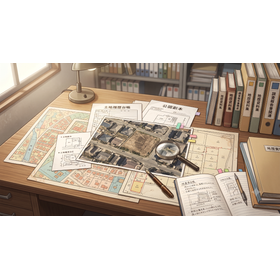
Our soil contamination investigation will be conducted as a "designated investigation agency" under the Soil Contamination Countermeasures Act, using highly reliable and certain technical specifications. First, we will conduct a "historical investigation (Phase 1)" to thoroughly analyze past land use conditions using information such as residential maps and registration records, and assess the possibility of contamination. Based on these results, we will transition to a "soil overview investigation (Phase 2)" where we will sample and analyze the actual soil on-site to scientifically confirm the presence or absence of contamination. In particular, when the excavation area of a building is long in the direction of extension, we will implement a flat consideration where five sampling points are treated as one sample. In cases where the excavation depth exceeds 5 meters, we will adopt specifications that increase the number of samples by dividing them in the depth direction to prevent overlooking of contaminated soil, as well as specifications that combine prior sample collection through boring. This approach will thoroughly eliminate the risks associated with simple investigations limited to near the surface and guarantee high-precision data that fully meets disposal and administrative standards.
Price range
Delivery Time
Applications/Examples of results
Specific Procedures 1. Inquiry and Consultation: We will ask about the factory's operating conditions, future plans for rebuilding or closure, and past operational history to design the optimal investigation and analysis plan. 2. Historical Investigation (Phase 1): We will examine past land use based on objective information such as residential maps and registration records, narrowing down areas with potential soil contamination risks. 3. Sampling Plan Development: Based on the site area and excavation depth (e.g., over 5m), we will establish appropriate sampling points, including boring, to comply with environmental regulations and prevent overlooking subsurface contamination. 4. Soil Overview Investigation (Phase 2) and On-site Sampling: We will properly collect soil samples from the site. 5. Laboratory Analysis and Confirmation of Contamination: We will conduct precise analysis of the collected samples in the lab to accurately investigate and confirm the presence of harmful substances and their levels against regulatory standards. 6. Cost Estimation and Countermeasure Planning: In the event that contamination is confirmed, we will estimate and plan countermeasure costs with a focus on continuing or preventing the expansion of factory operations, leading to a safe handover or rebuilding.
Detailed information
-
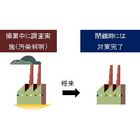
There is ample time and many options for selecting countermeasures. Handover can be done immediately after the factory closure.
catalog(2)
Download All Catalogs
Company information

-
![[For the Chemical Industry] Historical Investigation of Land Use Change for Former Factory Sites | Designated Investigation Agency](https://image.www.ipros.com/public/product/image/321794/IPROS2333850330246519476.png?w=280&h=280)
![[For the Automotive Industry] Historical Investigation of Land Use Change for Former Factory Sites | Designated Investigation Agency](https://image.www.ipros.com/public/product/image/321794/IPROS6741640546083229948.png?w=280&h=280)
![[For Financial Institutions] Ensuring Collateral Evaluation through Historical Investigations | Designated Investigation Agency](https://image.www.ipros.com/public/product/image/321794/IPROS6903166725444755314.png?w=280&h=280)
![[Case Study] Successful "Monetization" of Waste Plastics through Sensor Utilization! Japan Special Ceramics Co., Ltd.](https://image.www.ipros.com/public/product/image/245/2001484916/IPROS11668876257031716160.jpg?w=280&h=280)
![[Case Study] Utilizing Sensors for Material Inspection! Val Corporation](https://image.www.ipros.com/public/product/image/2113824/IPROS2851298067058129490.jpg?w=280&h=280)
![[Case Study] Utilizing Sensors for the Valorization of Waste Plastics! Fuji Kasei Co., Ltd.](https://image.www.ipros.com/public/product/image/2113824/IPROS8141173142511549749.jpg?w=280&h=280)
![[Case Study] Visualizing the Value of Waste Plastics! LIXIL](https://image.www.ipros.com/public/product/image/2113824/IPROS7223626806004004614.jpg?w=280&h=280)
![[Case Study] Utilized for the identification of waste plastics! Mazda](https://image.www.ipros.com/public/product/image/2113824/IPROS11293733218906178171.jpg?w=280&h=280)