1~45 item / All 95 items
Displayed results
Filter by category

Added to bookmarks
Bookmarks listBookmark has been removed
Bookmarks listYou can't add any more bookmarks
By registering as a member, you can increase the number of bookmarks you can save and organize them with labels.
Free membership registrationContact this company
Contact Us Online1~45 item / All 95 items
Filter by category

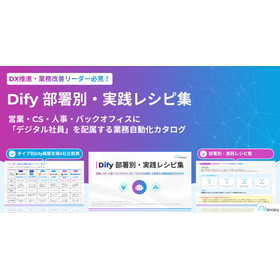
This document is a practical guide for learning "how to use" rather than "functions." It explains the definitive differences between "chat-type AI" like ChatGPT and Dify, such as "autonomous execution through tool integration" and "workflow creation," and summarizes specific processing flows that can be used from tomorrow for departments like sales, customer service, human resources, and back office. Additionally, it includes a comparison table of "six recommended Dify construction support partners by type" and an "implementation diagnosis chart" to address the three barriers faced when transitioning from PoC to full-scale operation: "security, system integration, and maintaining accuracy." This is not just an introduction to tools; it is a practical book that outlines a roadmap for the introduction, establishment, and company-wide deployment of AI.
Added to bookmarks
Bookmarks listBookmark has been removed
Bookmarks listYou can't add any more bookmarks
By registering as a member, you can increase the number of bookmarks you can save and organize them with labels.
Free membership registration
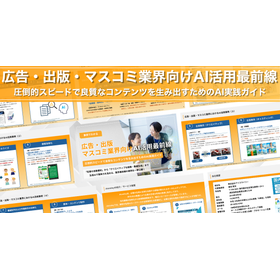
This document explains three reasons why the advertising, publishing, and mass media industries should accelerate the adoption of AI, and summarizes specific examples of AI utilization to respond to the digital shift. It includes cutting-edge know-how that dramatically enhances the "speed" and "volume" of content production, such as automatic summarization of vast articles, proofreading support based on past data, the use of AI talent, and automatic generation of ad creatives in multiple sizes. Additionally, it introduces practical approaches that expand creative possibilities, such as improving the efficiency of translation and localization, and scriptwriting in collaboration with AI trained on past works.
Added to bookmarks
Bookmarks listBookmark has been removed
Bookmarks listYou can't add any more bookmarks
By registering as a member, you can increase the number of bookmarks you can save and organize them with labels.
Free membership registration
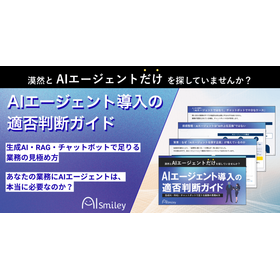
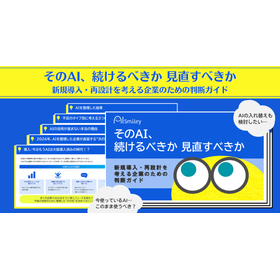
This document focuses on the "dilemma of choice" that many companies face at the entry point of AI implementation, such as "I am unsure whether to introduce an AI agent," "I don't understand the difference between chatbots and generative AI," and "I am just looking for an AI agent, but I am not confident that it is the right choice." With the rapid rise in expectations for "autonomous AI" due to the evolution of generative AI, the concept of AI agents is gaining attention as the next trend. However, AI agents are not an "evolved version" of generative AI. This guide organizes the reasons why AI agents are not a "superior version" of AI and explains the conditions under which chatbots, generative AI, RAG, and AI agents each become the optimal solution for specific business needs. Additionally, it includes a checklist to confirm whether the AI category you are currently exploring is indeed the right one.
Added to bookmarks
Bookmarks listBookmark has been removed
Bookmarks listYou can't add any more bookmarks
By registering as a member, you can increase the number of bookmarks you can save and organize them with labels.
Free membership registration
In the trucking industry, route optimization requires efficient delivery planning. In response to challenges such as rising fuel costs and driver shortages, selecting the optimal route is essential for cost reduction and shortening labor hours. This chaos map systematically organizes AI services that assist with route optimization and supports the consideration of their implementation. 【Use Cases】 - Optimization of delivery routes - Reduction of fuel costs - Management of driver working hours 【Benefits of Implementation】 - Reduction of delivery costs - Improvement of operational efficiency - Enhancement of safety
Added to bookmarks
Bookmarks listBookmark has been removed
Bookmarks listYou can't add any more bookmarks
By registering as a member, you can increase the number of bookmarks you can save and organize them with labels.
Free membership registration
In the warehouse industry, inventory forecasting is crucial for responding to demand fluctuations and maintaining appropriate inventory levels. Excess inventory increases storage costs, while shortages can lead to lost opportunities. This chaos map comprehensively covers AI services that assist with inventory forecasting, helping you find solutions that fit your company's challenges. 【Usage Scenarios】 - Appropriate inventory management based on demand forecasting - Optimal layout planning within the warehouse - Streamlining inbound and outbound management 【Benefits of Implementation】 - Cost reduction through inventory optimization - Reduced risk of stockouts - Improved operational efficiency
Added to bookmarks
Bookmarks listBookmark has been removed
Bookmarks listYou can't add any more bookmarks
By registering as a member, you can increase the number of bookmarks you can save and organize them with labels.
Free membership registration
In the machinery industry, design reviews require improvements in design quality and efficiency. Particularly in increasingly complex product designs, design errors and oversights can lead to increased manufacturing costs and quality issues. This document introduces examples of how to achieve efficiency and quality improvement in design reviews using AI. It explains specific approaches to innovate the design review process, such as automatic checks of design data by AI and extracting insights from past design data. 【Usage Scenarios】 * Automatic checks of design data * Extracting insights from past design data * Reducing design review time 【Effects of Implementation】 * Improvement in design quality * Reduction in review man-hours * Shortening of product development periods
Added to bookmarks
Bookmarks listBookmark has been removed
Bookmarks listYou can't add any more bookmarks
By registering as a member, you can increase the number of bookmarks you can save and organize them with labels.
Free membership registration
In the electronics industry, it is important to stabilize the manufacturing process and minimize the risk of failures to ensure product quality and reliability. Especially in electronic devices that use advanced technology, unexpected failures can lead to a decline in product performance and customer complaints. This document supports problem-solving in the manufacturing field through AI-powered failure prediction. 【Use Cases】 * Anomaly detection in manufacturing equipment on the production line * Early detection of defective products in quality inspections * Improvement of yield through optimization of the manufacturing process 【Benefits of Implementation】 * Reduction of equipment downtime * Decrease in the occurrence rate of defective products * Improvement in production efficiency
Added to bookmarks
Bookmarks listBookmark has been removed
Bookmarks listYou can't add any more bookmarks
By registering as a member, you can increase the number of bookmarks you can save and organize them with labels.
Free membership registration
In the semiconductor industry, improving yield is a critical issue directly linked to profitability. Minor abnormalities and defects in the manufacturing process can lead to significant losses. By utilizing AI, we can optimize manufacturing processes, detect defects early, and strengthen quality control, thereby contributing to yield improvement. This document presents specific solutions and success stories related to the use of AI. 【Application Scenarios】 - Anomaly detection in manufacturing processes - Improvement of accuracy in visual inspections - Analysis of the causes of defects 【Effects of Implementation】 - Increased yield - Reduction of defects - Strengthened quality control
Added to bookmarks
Bookmarks listBookmark has been removed
Bookmarks listYou can't add any more bookmarks
By registering as a member, you can increase the number of bookmarks you can save and organize them with labels.
Free membership registration
In the automotive industry, quality inspections require high precision to ensure product safety and reliability. Particularly in visual inspections, it is crucial not to overlook minute scratches or foreign substances. Oversights can lead to serious accidents. This document introduces examples of over-detection suppression in visual inspections using AI, contributing to the efficiency and accuracy of quality management. 【Application Scenarios】 - Detection of scratches and foreign substances in visual inspections - Early detection of defective products in the manufacturing process - Streamlining inspection operations in the quality management department 【Effects of Implementation】 - Improved quality through enhanced inspection accuracy - Cost reduction by preventing the outflow of defective products - Optimization of human resources through the efficiency of inspection operations
Added to bookmarks
Bookmarks listBookmark has been removed
Bookmarks listYou can't add any more bookmarks
By registering as a member, you can increase the number of bookmarks you can save and organize them with labels.
Free membership registration
In the credit card industry, credit screening is required to be conducted quickly and appropriately while minimizing the risk of fraudulent use. Particularly, with the increase and diversification of customer data, traditional screening methods are reaching their limits. This document explains the efficiency and accuracy improvements of credit screening using AI. 【Use Cases】 - Advanced fraud detection using AI - Streamlining customer interactions - Revenue enhancement 【Benefits of Implementation】 - Reduction in screening time - Decrease in the risk of fraudulent use - Improvement in customer satisfaction
Added to bookmarks
Bookmarks listBookmark has been removed
Bookmarks listYou can't add any more bookmarks
By registering as a member, you can increase the number of bookmarks you can save and organize them with labels.
Free membership registration
In the insurance industry, accurate data analysis and quick decision-making are essential for risk assessment. Properly evaluating the diverse risks of customers and setting appropriate insurance premiums leads to a balance between customer satisfaction and profitability. By utilizing AI, it becomes possible to analyze past data and external information, enabling more accurate risk assessments. 【Usage Scenarios】 - Risk assessment based on customer attributes and past accident history - Rapid situation understanding and response during natural disasters or accidents 【Effects of Implementation】 - Optimization of insurance premiums through improved accuracy of risk assessment - Increased efficiency and speed in customer response - Early detection of fraudulent claims and mitigation of losses
Added to bookmarks
Bookmarks listBookmark has been removed
Bookmarks listYou can't add any more bookmarks
By registering as a member, you can increase the number of bookmarks you can save and organize them with labels.
Free membership registration
In the securities industry, optimal portfolio proposals for clients' asset management are required. It is particularly important to pursue maximum returns while minimizing the risks of market fluctuations. By utilizing AI, it becomes possible to make highly accurate predictions based on the analysis of past data, enabling personalized portfolio proposals tailored to the needs of each individual client. 【Use Cases】 - Risk analysis and optimization of portfolios using AI - Proposals for asset allocation aligned with clients' investment goals - Real-time portfolio adjustments based on market trends 【Effects of Implementation】 - Increased customer satisfaction - Improved operational efficiency - Maximization of revenue opportunities
Added to bookmarks
Bookmarks listBookmark has been removed
Bookmarks listYou can't add any more bookmarks
By registering as a member, you can increase the number of bookmarks you can save and organize them with labels.
Free membership registration
In the banking industry, there is a growing demand for advanced fraud detection to prevent customer losses due to fraudulent use and to maintain the credibility of financial institutions. In particular, it is crucial to respond to increasingly sophisticated fraudulent methods and to establish a rapid detection system. This document presents specific solutions to these challenges through examples of AI-based credit card fraud detection. [Usage Scenarios] - AI-based credit card fraud detection [Effects of Implementation] - Mitigation of customer losses due to fraudulent use - Maintenance of the credibility of financial institutions
Added to bookmarks
Bookmarks listBookmark has been removed
Bookmarks listYou can't add any more bookmarks
By registering as a member, you can increase the number of bookmarks you can save and organize them with labels.
Free membership registration
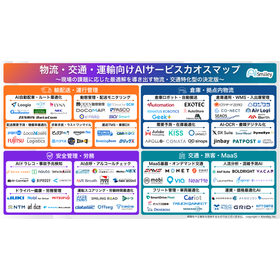
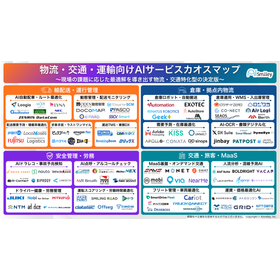
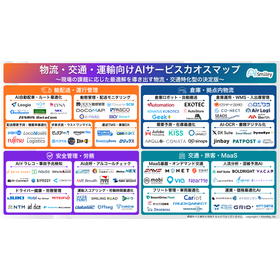
This chaos map is a document that uniquely investigates AI services that are actually utilized in the logistics, transportation, and shipping industries, mapping them by application and challenges. As a chaos map to smoothly advance measures and considerations for the 2026 issue, it systematically organizes industry-specific solutions ranging from automation of dispatch planning, robot transportation within warehouses, and driver safety management to MaaS (next-generation mobility services). It can be used as a comparative study material to identify your company's bottlenecks and achieve improvements in operational efficiency and safety.
Added to bookmarks
Bookmarks listBookmark has been removed
Bookmarks listYou can't add any more bookmarks
By registering as a member, you can increase the number of bookmarks you can save and organize them with labels.
Free membership registration
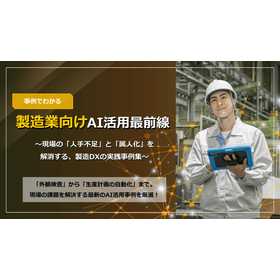
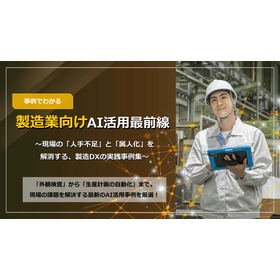
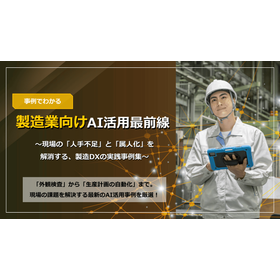
This document introduces specific solutions and success stories for the manufacturing industry, which is facing serious labor shortages and challenges in technology transfer, through the use of AI. It summarizes practical approaches to updating operations that have relied on years of experience and processes that have had to depend on manual labor. Specifically, it presents six practical use cases directly related to solving on-site issues, including inventory optimization using demand forecasting AI, suppression of over-detection in visual inspections using cameras and AI, prevention of defective products through work analysis, and a skills transfer system that verbalizes the "tacit knowledge" of skilled workers.
Added to bookmarks
Bookmarks listBookmark has been removed
Bookmarks listYou can't add any more bookmarks
By registering as a member, you can increase the number of bookmarks you can save and organize them with labels.
Free membership registration
This document introduces specific solutions and success stories of AI utilization aimed at enhancing fraud detection, improving customer response efficiency, and ultimately increasing revenue in the financial and insurance industries. It presents practical use cases directly addressing on-site challenges, such as AI-driven credit card fraud detection learned from the expertise of a specialized team, accident reporting using AI voice bots that enable rapid response even during disasters, and personalized sales for each customer utilizing generative AI.
Added to bookmarks
Bookmarks listBookmark has been removed
Bookmarks listYou can't add any more bookmarks
By registering as a member, you can increase the number of bookmarks you can save and organize them with labels.
Free membership registration
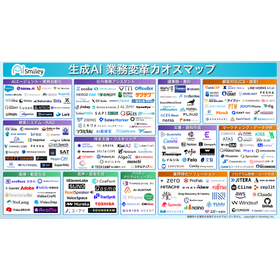
Generative AI has now completed its experimental introduction phase and is transitioning into a full-fledged "establishment phase" in practical applications. It has evolved from a simple chat tool that only answers questions to "AI agents" that autonomously handle tasks and "RAG (Retrieval-Augmented Generation)" that utilizes internal data, entering a stage where it directly optimizes business operations. This chaos map comprehensively and systematically covers key AI solutions that are directly linked to improving organizational productivity, taking this background into account. It not only streamlines specific tasks but also organizes a wide range of services in line with business contexts, serving as a comparative resource for finding products that suit your company. For those who request the chaos map, we will also provide a free "List of Companies Providing Generative AI Business Transformation Services (Excel)" containing detailed information such as product URLs. *You can view the detailed content of the article through the related links. For more information, please download the PDF or feel free to contact us.*
Added to bookmarks
Bookmarks listBookmark has been removed
Bookmarks listYou can't add any more bookmarks
By registering as a member, you can increase the number of bookmarks you can save and organize them with labels.
Free membership registration
This document focuses on the "next challenges" faced by companies that have surpassed the AI implementation phase, such as "We have introduced AI, but we are not seeing the expected results" and "There are multiple AI tools scattered throughout the company, and we don't know which ones to continue using." The percentage of companies that have either implemented or are considering generative AI has reached 75.8%, and AI is already being used as part of operations in many organizations. The next question being asked is "How do we continue to manage that AI?" This guide categorizes the reasons for insufficient AI utilization into three areas: "lack of functionality," "lack of design," and "lack of systems," and explains the optimal options for each. *For more detailed information, please refer to the related links. For further inquiries, feel free to download the PDF or contact us.*
Added to bookmarks
Bookmarks listBookmark has been removed
Bookmarks listYou can't add any more bookmarks
By registering as a member, you can increase the number of bookmarks you can save and organize them with labels.
Free membership registration
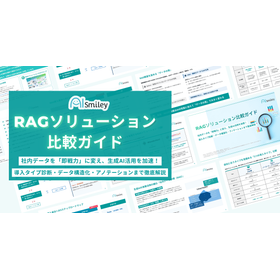
This document is a practical guide for selecting the most suitable service from the diversifying RAG solutions and overcoming the "accuracy barrier" after implementation. It classifies the main RAG solutions into three types and compares them based on their characteristics and implementation speed. Additionally, it includes a "diagnostic chart" that allows you to determine the suitable implementation type for your company by answering just three questions. Furthermore, it provides detailed explanations on "data structuring (text conversion of drawings and forms)" and "annotation (evaluation of response accuracy)," which are crucial for the success of RAG utilization. It covers solutions to address challenges in each phase, as well as a roadmap from implementation to operation, encompassing the know-how needed to lead projects to success. *For detailed content of the article, you can view it through the related links. For more information, please download the PDF or feel free to contact us.*
Added to bookmarks
Bookmarks listBookmark has been removed
Bookmarks listYou can't add any more bookmarks
By registering as a member, you can increase the number of bookmarks you can save and organize them with labels.
Free membership registration
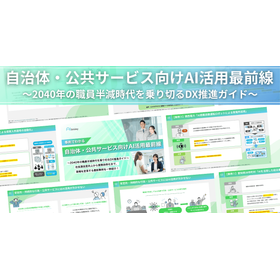
This document introduces AI-based solutions and successful examples for municipalities and public service providers facing serious challenges such as population decline and staff shortages. Looking ahead to 2040, when staff is expected to be halved, what kind of AI implementation is progressing on the ground to achieve stable and sustainable service delivery? It presents three practical use cases directly related to solving on-site issues, including the efficiency of resident responses through chatbots, the automation of nursery school admission selection using AI matching, and infrastructure inspections conducted by robots. *For more detailed information, you can view the related links. For further details, please download the PDF or feel free to contact us.*
Added to bookmarks
Bookmarks listBookmark has been removed
Bookmarks listYou can't add any more bookmarks
By registering as a member, you can increase the number of bookmarks you can save and organize them with labels.
Free membership registration
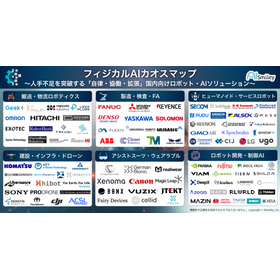
This document categorizes and visualizes over 100 domestic robot and AI solutions aimed at addressing challenges in the era of physical AI through the approaches of "autonomy, collaboration, and enhancement." It consolidates various types of robotic hardware (bodies), such as autonomous mobile robots (AMRs), collaborative robots, humanoids, and drones, along with "development and control AI (brains)" that provide them with advanced judgment, vision, and tactile capabilities, into a single map. *For more detailed information, please refer to the related links. You can download the PDF for more details or feel free to contact us.*
Added to bookmarks
Bookmarks listBookmark has been removed
Bookmarks listYou can't add any more bookmarks
By registering as a member, you can increase the number of bookmarks you can save and organize them with labels.
Free membership registration
In the credit card industry, it is a significant challenge to suppress customer churn. Customer attrition directly leads to a decrease in revenue, so it is necessary to identify the causes and implement appropriate measures. This document is organized into five major categories and twelve subcategories, based on the latest AI solutions for the financial and insurance industries, taking into account the latest trends in FinTech and InsurTech. It is structured to make it easier to find solutions that help address churn. 【Usage Scenarios】 - Customer behavior analysis - Analysis of reasons for cancellation - Churn prediction 【Effects of Implementation】 - Reduction in churn rate - Improvement in customer lifetime value - Optimization of churn prevention measures
Added to bookmarks
Bookmarks listBookmark has been removed
Bookmarks listYou can't add any more bookmarks
By registering as a member, you can increase the number of bookmarks you can save and organize them with labels.
Free membership registration
In the insurance industry, fraud detection requires the ability to identify increasingly sophisticated fraudulent activities and respond quickly. It is crucial to detect fraudulent claims and suspicious behaviors early to minimize losses. This document is a chaos map summarizing AI solutions specifically focused on fraud detection in the insurance industry. It contributes to strengthening risk management and gaining trust from customers. 【Use Cases】 - Detection of fraudulent insurance claims - Identification of suspicious policyholders - Extraction of cases with high fraud risk 【Benefits of Implementation】 - Reduction of losses due to fraud - Increased efficiency in investigation operations - Enhanced reliability from customers
Added to bookmarks
Bookmarks listBookmark has been removed
Bookmarks listYou can't add any more bookmarks
By registering as a member, you can increase the number of bookmarks you can save and organize them with labels.
Free membership registration
In the securities industry, risk management requires the swift and accurate identification of a wide range of risks, including market fluctuations and customer trading conditions. In particular, compliance adherence and the prevention of fraudulent transactions are essential for maintaining a company's credibility. Establishing an appropriate risk management framework serves as a foundation for the sustainable growth of a company. This document organizes the latest AI solutions for the financial and insurance industries into five major categories and twelve subcategories, taking into account the latest trends in FinTech and InsurTech. It includes the latest solutions that cover the value chain of financial institutions and insurance companies, from risk management to revenue enhancement and back-office reform. The structure is designed to make it easier to find the optimal solutions based on the challenges and objectives within the industry. 【Usage Scenarios】 - Analysis of market risk - Assessment of credit risk - Compliance adherence - Detection of fraudulent transactions 【Benefits of Implementation】 - Early detection and response to risks - Improvement of operational efficiency - Strengthening of compliance systems
Added to bookmarks
Bookmarks listBookmark has been removed
Bookmarks listYou can't add any more bookmarks
By registering as a member, you can increase the number of bookmarks you can save and organize them with labels.
Free membership registration
In banking credit operations, it is important to accurately assess the credit risk of customers and minimize the risk of default. By utilizing AI technology, it becomes possible to analyze past data and external information, enabling more accurate credit judgments. This document is organized into five major categories and twelve subcategories, based on the latest trends in FinTech and InsurTech, and is aimed at the financial and insurance industries. It includes the latest solutions that cover the value chain of financial institutions and insurance companies, from risk management to revenue enhancement and back-office reform. The structure is designed to make it easier to find the optimal solutions according to the challenges and objectives within the industry. 【Usage Scenarios】 - Streamlining credit screening - Enhancing risk assessment - Fraud detection 【Benefits of Implementation】 - Accelerating credit judgments - Reducing default risk - Improving operational efficiency
Added to bookmarks
Bookmarks listBookmark has been removed
Bookmarks listYou can't add any more bookmarks
By registering as a member, you can increase the number of bookmarks you can save and organize them with labels.
Free membership registration
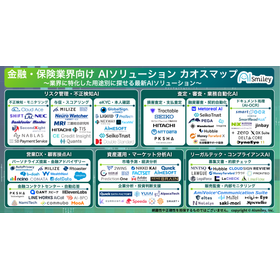
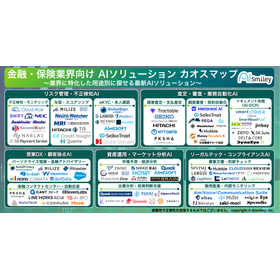
This document categorizes the latest AI solutions for the financial and insurance industries into five major categories and organizes them into twelve subcategories, taking into account the latest trends in FinTech and InsurTech. It includes the latest solutions that cover the value chain of financial institutions and insurance companies, from risk management to revenue enhancement and back-office reform. The structure is designed to make it easier to find the optimal solutions based on the challenges and objectives within the industry. *For detailed content of the article, you can view it through the related links. For more information, please download the PDF or feel free to contact us.*
Added to bookmarks
Bookmarks listBookmark has been removed
Bookmarks listYou can't add any more bookmarks
By registering as a member, you can increase the number of bookmarks you can save and organize them with labels.
Free membership registration
In the hotel industry, flexible pricing that adjusts to demand fluctuations is key to maximizing revenue. In particular, price adjustments that take into account various factors such as competitor hotel trends, event occurrences, and seasonality are complex and time-consuming tasks. Appropriate pricing is essential for improving room occupancy rates. This document introduces AI solutions that assist with price adjustments. 【Usage Scenarios】 * Competitor hotel price research * Pricing based on demand forecasting * Price adjustments during events 【Benefits of Implementation】 * Improved room occupancy rates * Maximized revenue * Streamlined pricing operations
Added to bookmarks
Bookmarks listBookmark has been removed
Bookmarks listYou can't add any more bookmarks
By registering as a member, you can increase the number of bookmarks you can save and organize them with labels.
Free membership registration
In the e-commerce industry, personalized recommendations are essential to stimulate customer purchasing intent and maximize sales. Proposing products based on customers' past purchase history, browsing history, and interests enhances customer satisfaction and leads to acquiring repeat customers. However, addressing diverse customer needs and achieving effective recommendations require advanced AI technology and expertise. This document introduces AI recommendation solutions that contribute to solving challenges faced by e-commerce sites. 【Usage Scenarios】 * Product recommendations on e-commerce sites * Personalized product suggestions for customers * Increased sales and enhanced customer satisfaction 【Benefits of Implementation】 * Stimulates customer purchasing intent and boosts sales * Improves customer site engagement rates * Enhances customer satisfaction and creates repeat customers
Added to bookmarks
Bookmarks listBookmark has been removed
Bookmarks listYou can't add any more bookmarks
By registering as a member, you can increase the number of bookmarks you can save and organize them with labels.
Free membership registration
In the food and beverage industry, optimizing operations is essential to address labor shortages and the diversification of customer needs. In particular, improving the efficiency of order management, inventory management, and staff allocation is crucial for reducing costs and enhancing customer satisfaction. This document summarizes the latest AI solutions that innovate operational efficiency and customer experience in restaurants. 【Use Cases】 * Optimization of order management systems * Automation of inventory management * Optimization of staff allocation * Automation of customer interactions * Efficiency in menu development 【Benefits of Implementation】 * Significant improvement in operational efficiency * Reduction in labor costs * Increased customer satisfaction * Potential for increased sales * Data-driven decision making
Added to bookmarks
Bookmarks listBookmark has been removed
Bookmarks listYou can't add any more bookmarks
By registering as a member, you can increase the number of bookmarks you can save and organize them with labels.
Free membership registration
In the travel industry, there is a demand for faster response times and improved quality in handling customer inquiries. In particular, 24/7 availability, multilingual support, and personalized information provision are essential. To meet the diverse needs of customers and provide a smooth travel experience, the implementation of AI chatbots is indispensable. 【Use Cases】 * Handling reservation changes and cancellations * Providing tourist information * Responding to FAQs * Multilingual support * Handling customer inquiries 【Benefits of Implementation】 * Increased customer satisfaction * Improved operational efficiency * Cost reduction * 24/7 availability * Multilingual support
Added to bookmarks
Bookmarks listBookmark has been removed
Bookmarks listYou can't add any more bookmarks
By registering as a member, you can increase the number of bookmarks you can save and organize them with labels.
Free membership registration
In the retail industry, accurate demand forecasting is essential for optimizing inventory management and reducing lost opportunities. Particularly, predicting the demand for products that are susceptible to seasonal fluctuations, promotions, and external factors is crucial for maximizing profits. Inaccurate demand forecasts can lead to lost sales opportunities due to excess inventory or stockouts. This document introduces AI solutions that can assist with demand forecasting in the retail industry. 【Use Cases】 * Demand forecasting by product in stores * Demand forecasting for online stores * Demand forecasting for seasonal products 【Benefits of Implementation】 * Cost reduction through inventory optimization * Increased sales through maximization of sales opportunities * Improved customer satisfaction
Added to bookmarks
Bookmarks listBookmark has been removed
Bookmarks listYou can't add any more bookmarks
By registering as a member, you can increase the number of bookmarks you can save and organize them with labels.
Free membership registration
This document is a practical report that visualizes the "real challenges" companies are currently facing and the "specific solutions" to those challenges, based on the latest industry trend explanations and the vast amount of inquiry data received daily by AIsmiley. It explains rapidly growing hot categories such as "AI agents" and "RAG construction" by contrasting the 【Before (challenges faced by companies)】 and 【After (image of AI utilization)】. You can gain insights into the "current state" of AI utilization and the "next themes to come" by 2026. 【Contents (partial)】 - Trend words in the AI industry - AI news that changes business - Top 5 popular contents chosen on the ground - Top 5 applications and categories of AI utilization - Challenges and AI utilization images by category *For more details, please download the PDF or feel free to contact us.
Added to bookmarks
Bookmarks listBookmark has been removed
Bookmarks listYou can't add any more bookmarks
By registering as a member, you can increase the number of bookmarks you can save and organize them with labels.
Free membership registration
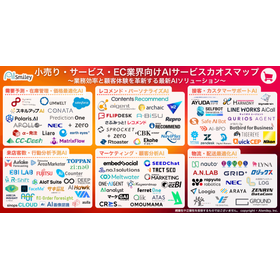
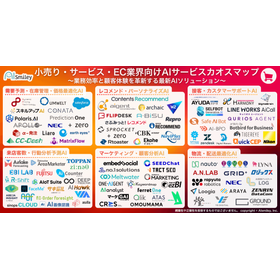
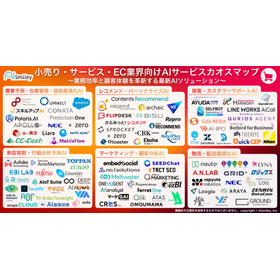
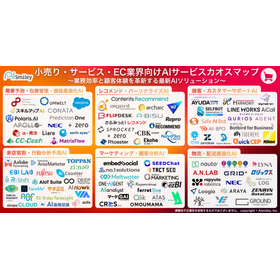
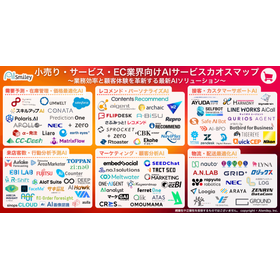
This document summarizes the latest AI solutions that innovate operational efficiency and customer experience for the retail, service, and e-commerce industries. With the remarkable evolution of generative AI and the practical implementation of AI agents, the use of AI in the retail, service, and e-commerce sectors is rapidly expanding. Support is now possible across a wide range of activities, not limited to traditional data analysis and advertising optimization, but also including content generation, customer interactions, campaign design, and demand forecasting. *For detailed content of the article, please refer to the related links. For more information, feel free to download the PDF or contact us.*
Added to bookmarks
Bookmarks listBookmark has been removed
Bookmarks listYou can't add any more bookmarks
By registering as a member, you can increase the number of bookmarks you can save and organize them with labels.
Free membership registration
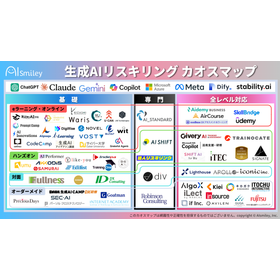
This document is intended to cultivate personnel who can utilize generative AI within the company. It organizes the challenges companies face regarding the "skill sets required for AI utilization" and "building an internal reskilling system," and presents a list of reskilling services categorized by level. *For detailed content of the article, you can view it through the related links. For more information, please download the PDF or feel free to contact us.*
Added to bookmarks
Bookmarks listBookmark has been removed
Bookmarks listYou can't add any more bookmarks
By registering as a member, you can increase the number of bookmarks you can save and organize them with labels.
Free membership registration
This document presents the latest trends in the use of AI in call center operations, along with comparative information on key AI tools that contribute to operational efficiency. We introduce AI solutions that are being actively implemented and utilized, such as "voice bots" that automate customer interactions and improve the quality of inquiry responses, as well as "speech recognition AI" and "AI operator support tools" that assist operators. The content is designed to serve as a reference for company representatives considering implementation, allowing them to compare and select suitable options. Please feel free to download it. [Contents (partial)] ■ Current status and challenges of AI utilization in call center operations ■ Key AI solutions supporting operational efficiency (voice bots / chatbots / operator support, etc.) ■ List of features, strengths, and providers of each product ■ Case studies *For more details, please download the PDF or feel free to contact us.


Added to bookmarks
Bookmarks listBookmark has been removed
Bookmarks listYou can't add any more bookmarks
By registering as a member, you can increase the number of bookmarks you can save and organize them with labels.
Free membership registration
We would like to introduce five points to consider when choosing a Dify construction support service. To select the right partner, we recommend checking their track record and expertise in AI agent construction, their ability to develop integrations with existing systems, and the breadth of their service areas (from upstream to downstream). Please feel free to contact us when you need assistance. 【Points】 ■ Track record and expertise in AI agent construction ■ Ability to develop integrations with existing systems ■ Breadth of service areas (from upstream to downstream) ■ Understanding of industry and business ■ Development structure and communication *For more details, please download the PDF or feel free to contact us.
Added to bookmarks
Bookmarks listBookmark has been removed
Bookmarks listYou can't add any more bookmarks
By registering as a member, you can increase the number of bookmarks you can save and organize them with labels.
Free membership registration
When introducing Dify, an important point is whether to develop it from scratch in-house or to build it with the support of a specialized company. The choice will significantly affect the development speed, cost, and the degree of accumulated in-house know-how. Please feel free to contact us when you need assistance. 【Comparison Items】 ■Speed ■Cost ■Know-how ■Customization Flexibility ■Human Resources ■Accumulated Know-how *For more details, please download the PDF or feel free to contact us.
Added to bookmarks
Bookmarks listBookmark has been removed
Bookmarks listYou can't add any more bookmarks
By registering as a member, you can increase the number of bookmarks you can save and organize them with labels.
Free membership registration
"Dify" is an open-source LLMOps platform that allows for the rapid development and operation of generative AI-native applications with no-code/low-code. It comprehensively provides prompt engineering, RAG, agent functionalities, and more, enabling the implementation of AI features without the need for specialized backend development. In particular, it excels in building AI agents that enable autonomous task execution by integrating external APIs and proprietary business logic as "tools" for the AI. 【Features】 ■ Intuitive GUI ■ Fast AI agent development ■ Support for a wide range of LLMs ■ Standard BaaS functionality ■ Flexibility of OSS *For more details, please download the PDF or feel free to contact us.
Added to bookmarks
Bookmarks listBookmark has been removed
Bookmarks listYou can't add any more bookmarks
By registering as a member, you can increase the number of bookmarks you can save and organize them with labels.
Free membership registration
This document is a comprehensive comparison guide for Dify construction support services. "Dify" is a powerful tool that allows for the development of high-functionality AI applications through intuitive GUI-based operations. However, to fully leverage its potential and build an AI agent optimized for your company's operations, specialized knowledge and expertise are essential. We will provide a thorough explanation of the basic overview of Dify, the advantages and disadvantages of in-house development versus expert construction support services, and the service offerings, strengths, and features of the top 10 companies providing Dify construction support in Japan. We hope this will assist companies considering the use of this tool for operational efficiency in finding the right partner. [Contents (excerpt)] ■ About this document ■ What is Dify? ■ Options for Dify implementation: Comparison of in-house development and construction support services ■ Five points for choosing Dify construction support services (checklist format) ■ Companies providing Dify construction support services ■ Company overview *For more details, please download the PDF or feel free to contact us.
Added to bookmarks
Bookmarks listBookmark has been removed
Bookmarks listYou can't add any more bookmarks
By registering as a member, you can increase the number of bookmarks you can save and organize them with labels.
Free membership registration
In recent years, with the evolution of generative AI and large language models, chatbots have expanded their potential beyond traditional FAQ responses and customer support to various fields such as marketing, sales, operational efficiency, and even internal communication support. In the future, chatbots are expected to become mainstream with multi-platform support and multi-modal communication that includes voice and video, increasingly attracting attention as important tools for promoting digital transformation (DX) in companies. By identifying appropriate solutions to the challenges faced by various companies and utilizing chatbots, significant improvements in customer satisfaction and operational efficiency can be anticipated. We hope that this document will assist you in formulating a suitable chatbot implementation strategy for your company, taking into account advanced market trends and technological developments, as well as addressing future business challenges. *For detailed content of the document, please refer to the PDF. For more information, feel free to contact us.
Added to bookmarks
Bookmarks listBookmark has been removed
Bookmarks listYou can't add any more bookmarks
By registering as a member, you can increase the number of bookmarks you can save and organize them with labels.
Free membership registration
A chatbot is a coined term that combines "chat" (conversation) and "robot," referring to a program that automatically engages in dialogue with users. Traditionally, its main applications were automated responses to standard inquiries, such as FAQ handling and customer support. However, in recent years, advancements in generative AI technology have enabled more natural and flexible conversations. With the emergence of new large-scale language models (e.g., the GPT-4 series), chatbots are increasingly capable of understanding user intent and context accurately, generating appropriate responses based on the situation, rather than being limited to fixed answers. This document aims to support companies in smoothly implementing chatbots by comparing the features, implementation costs, and ease of operation of major products, focusing on chatbot services equipped with the latest class of AI technology. *For detailed content of the document, please refer to the PDF. For more information, feel free to contact us.*
Added to bookmarks
Bookmarks listBookmark has been removed
Bookmarks listYou can't add any more bookmarks
By registering as a member, you can increase the number of bookmarks you can save and organize them with labels.
Free membership registration
This document introduces hints and ways to utilize generative AI to transform operations across all industries and job roles. Starting with examples of utilization and success stories aimed at supporting the sales department, we have included 15 specific use cases categorized by department, such as marketing, human resources and general affairs, and accounting and finance. Please feel free to use this as a reference for your company's implementation. [Contents] ■ Introduction / Background ■ [By Department] Specific Use Cases / Success Stories ■ Three Key Points for Successful AI Utilization ■ Introduction to AIsmiley / Service Overview *For more details, please download the PDF or feel free to contact us.
Added to bookmarks
Bookmarks listBookmark has been removed
Bookmarks listYou can't add any more bookmarks
By registering as a member, you can increase the number of bookmarks you can save and organize them with labels.
Free membership registration
To successfully implement AI company-wide without limiting to specific departments or job types, there are some key points to consider. During implementation, it is important to take existing systems and costs into account. It is necessary to think about how to ensure smooth utilization of AI. Additionally, since there are certain risks associated with usage, it is essential to thoroughly check whether AI utilization could lead to information leaks or whether it poses any legal or logical risks. Furthermore, implementing AI is not the end of the process. There needs to be a common understanding among all employees about its use throughout the business, and they must be able to effectively utilize it. Continuous support after implementation is crucial for successful AI utilization. **Three Key Points for Successful AI Utilization** - Consider existing systems and costs during implementation - Aim for operations that address risks - Provide ongoing support until users are proficient *For more details, please download the PDF or feel free to contact us.*
Added to bookmarks
Bookmarks listBookmark has been removed
Bookmarks listYou can't add any more bookmarks
By registering as a member, you can increase the number of bookmarks you can save and organize them with labels.
Free membership registration
We will introduce examples of utilizing generative AI aimed at supporting SE in the research and development department. It is possible to automate routine tasks such as automatic generation of programming code and scripts for test code. We provide an environment where beginners and non-engineers can develop prototypes. Additionally, we have successfully established a system development method incorporating generative AI that reduces development man-hours by approximately 70% compared to traditional methods. 【Utilization Details】 ■ AI automatically generates programming code, reducing development man-hours ■ Automation of routine tasks such as scripts for test code ■ Reduces the workload of engineers, allowing them to focus on upstream processes and advanced design ■ Provides an environment where beginners and non-engineers can develop prototypes *For more details, please download the PDF or feel free to contact us.
Added to bookmarks
Bookmarks listBookmark has been removed
Bookmarks listYou can't add any more bookmarks
By registering as a member, you can increase the number of bookmarks you can save and organize them with labels.
Free membership registration
Here are some examples of how generative AI is utilized in the research and development department. AI is also used for summarizing texts and checking content against relevant regulations. As a result, it can transform long texts containing specialized terminology into a format that can be understood in a short time, and it can be combined with translation to efficiently grasp the content of foreign language papers. 【Utilization Details】 ■ AI automatically summarizes research papers and foreign specialized literature ■ Transforms long texts containing specialized terminology into an understandable format in a short time ■ Combined with translation to efficiently grasp the content of foreign language papers ■ Automatically generates summaries optimized for reports and presentations *For more details, please download the PDF or feel free to contact us.
Added to bookmarks
Bookmarks listBookmark has been removed
Bookmarks listYou can't add any more bookmarks
By registering as a member, you can increase the number of bookmarks you can save and organize them with labels.
Free membership registration