46~53 item / All 53 items
Displayed results
Filter by category
Added to bookmarks
Bookmarks listBookmark has been removed
Bookmarks listYou can't add any more bookmarks
By registering as a member, you can increase the number of bookmarks you can save and organize them with labels.
Free membership registration
Contact this company
Contact Us Online46~53 item / All 53 items
Filter by category

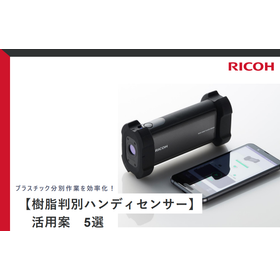
We would like to introduce an example of using the "resin identification handheld sensor" as a tool in experiential environmental education. Education related to recycling tends to become a one-sided lecture with only board writing or slides. By holding the sensor and experiencing sorting, knowledge acquisition is accelerated. Participants become aware of the reality that recyclable materials are being discarded and learn that sorting can be easily done due to technological advancements, which enhances their awareness of environmental conservation. [Case Overview] ■ Target Institutions: Schools, Local Governments, Environmental Organizations ■ Challenge: Difficult to relate to environmental learning focused on lectures ■ Effect: Learning in a fun and active way that can be applied to daily actions *For more details, please refer to the PDF document or feel free to contact us.
Added to bookmarks
Bookmarks listBookmark has been removed
Bookmarks listYou can't add any more bookmarks
By registering as a member, you can increase the number of bookmarks you can save and organize them with labels.
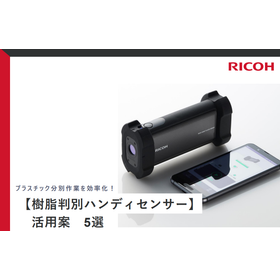
Free membership registrationWe would like to introduce a case study on the use of the "resin identification handheld sensor" in the acceptance/shipping inspection of recycled pellets. There are cases where variations in the PP and PE ratios occur during the crushing and molding processes of recycled pellets. When the purity of the target material decreases, it ultimately affects the quality of the finished product. Therefore, inspections are conducted during the shipping and acceptance of recycled pellets to classify them by grade. By using pellets with consistent purity of PP and PE, the quality of recycled material products is stabilized. [Case Overview] ■ Target Companies: Pellet manufacturers, waste plastic recycling manufacturers ■ Challenges: Inconsistent purity of PP and PE affecting the quality of recycled material products ■ Effects: Identification by grade and provision of products with consistent quality *For more details, please refer to the PDF document or feel free to contact us.
Added to bookmarks
Bookmarks listBookmark has been removed
Bookmarks listYou can't add any more bookmarks
By registering as a member, you can increase the number of bookmarks you can save and organize them with labels.
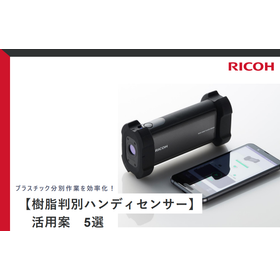
Free membership registrationWe would like to introduce a case study on the use of the "Resin Discrimination Handy Sensor" in quality inspection of incoming goods from both domestic and international sources. When accepting recycled products or parts manufactured overseas, there is a lack of know-how in quality inspection, leading to the use of external organizations. This sometimes results in the need for on-site visits to domestic and international factories for sampling inspections. Even toy parts, which have strict standards, can be easily inspected, ensuring product quality and preventing unnecessary costs. 【Case Overview】 ■ Target Companies: Plastic product manufacturers, electronics manufacturers, toy manufacturers, cosmetics manufacturers ■ Challenges: Quality inspections are outsourced, requiring on-site visits for sampling inspections ■ Benefits: In-house quality inspections, reducing outsourcing and travel costs *For more details, please refer to the PDF document or feel free to contact us.
Added to bookmarks
Bookmarks listBookmark has been removed
Bookmarks listYou can't add any more bookmarks
By registering as a member, you can increase the number of bookmarks you can save and organize them with labels.
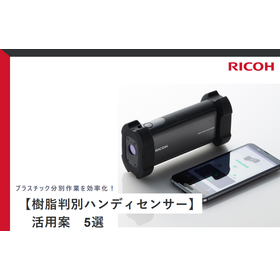
Free membership registrationWe would like to introduce a case study on the use of the "Resin Identification Handheld Sensor" for distinguishing packaging materials. The types of packaging materials handled vary by supplier, but due to the vast quantity and the labor-intensive sorting process, there are cases where they are simply discarded. By just applying the sensor, the material can be identified instantly and accurately. With data accumulation, trends in the materials used by each supplier can also be understood, enabling valuable transactions that were previously impossible. 【Case Overview】 ■ Target Companies: Food manufacturers, automotive manufacturers, electronics manufacturers ■ Challenge: A wide variety of materials from each supplier, unable to identify in-house ■ Effect: Materials that could not be identified before can be specified in just 2 seconds *For more details, please refer to the PDF document or feel free to contact us.
Added to bookmarks
Bookmarks listBookmark has been removed
Bookmarks listYou can't add any more bookmarks
By registering as a member, you can increase the number of bookmarks you can save and organize them with labels.
Free membership registrationWe would like to introduce a case study utilizing the "Resin Discrimination Handy Sensor" for the identification of waste plastics from scrap materials and offcuts. In this case, waste materials generated in our own factory and offcuts produced during the manufacturing process are being disposed of collectively, leading to a lack of proper sorting. By sorting the waste materials and offcuts, they can be handed over to intermediate processing companies, reducing processing costs and allowing for valuable transactions. [Case Overview] ■ Target Companies: Plastic product manufacturers, package printing manufacturers, electronics manufacturers ■ Issue: Collective disposal of waste materials and offcuts, neglecting sorting ■ Effect: Sorting materials that should be discarded, resulting in cost savings of several million yen *For more details, please refer to the PDF document or feel free to contact us.
Added to bookmarks
Bookmarks listBookmark has been removed
Bookmarks listYou can't add any more bookmarks
By registering as a member, you can increase the number of bookmarks you can save and organize them with labels.
Free membership registration
The "Resin Identification Handy Sensor" is a product that allows for speedy identification of various incoming materials, with results available in just 2 seconds. It features a lightweight and compact design that can be handled with one hand. Simply take it to the field, place the resin you want to identify against the measurement area, and press the measurement button. We have independently developed an optical engine that has achieved miniaturization and significant cost reduction. 【Features】 ■ Standard registration of 13 commonly used resin data types ■ Ability to add up to 100 custom data types ■ Capable of determining mixed resins and calculating their ratios ■ Ability to save images of measured resins ■ Data can be exported to a computer *For more details, please refer to the PDF document or feel free to contact us.
Added to bookmarks
Bookmarks listBookmark has been removed
Bookmarks listYou can't add any more bookmarks
By registering as a member, you can increase the number of bookmarks you can save and organize them with labels.
Free membership registration
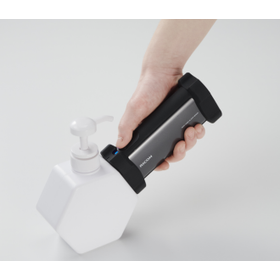
The "Resin Identification Handy Sensor" is a lightweight and compact product that can be handled with one hand. It allows for on-the-spot resin identification, eliminating the need to take samples back, thus contributing to an efficient workflow. Once the power is turned on, simply place the resin you want to identify against the measurement section and press the measurement button. We have pursued a simple operability so that anyone can easily use it. 【Features】 ■ Safe design intended for both indoor and outdoor use ■ Wireless connection that is not cumbersome during work ■ Easy to grip shape even when wearing work gloves ■ Standard registration of 13 commonly used resin data types ■ Ability to add up to 100 types of unique data *For more details, please refer to the PDF document or feel free to contact us.
Added to bookmarks
Bookmarks listBookmark has been removed
Bookmarks listYou can't add any more bookmarks
By registering as a member, you can increase the number of bookmarks you can save and organize them with labels.
Free membership registration
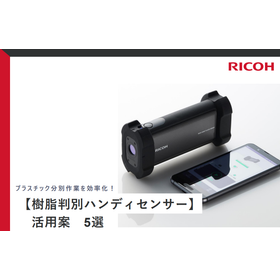
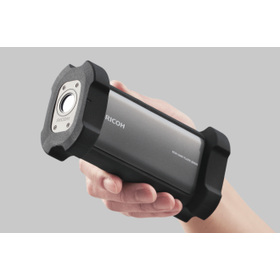
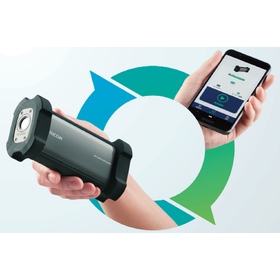
The "RICOH HANDY PLASTIC SENSOR B150" is a handheld resin identification sensor that allows for the speedy and easy differentiation of various types of plastics. It achieves a lightweight and compact size that can be handled with one hand. Since resin identification can be performed on-site, it contributes to an efficient workflow by eliminating the need to take samples back. Once the power is turned on, simply place the resin you want to identify against the measurement area and press the measurement button. We have pursued a simple operability so that many people can easily use it. 【Features】 ■ Compact and always portable ■ Simple operability that is easy for beginners and experts alike ■ Wireless connection with smartphones ■ Application that informs results via voice and screen ■ Selection of identification model data to improve resin identification efficiency *For more details, please refer to the PDF document or feel free to contact us.
Added to bookmarks
Bookmarks listBookmark has been removed
Bookmarks listYou can't add any more bookmarks
By registering as a member, you can increase the number of bookmarks you can save and organize them with labels.
Free membership registration