1~18 item / All 18 items
Displayed results
Added to bookmarks
Bookmarks listBookmark has been removed
Bookmarks listYou can't add any more bookmarks
By registering as a member, you can increase the number of bookmarks you can save and organize them with labels.
Free membership registration
Contact this company
Contact Us Online1~18 item / All 18 items

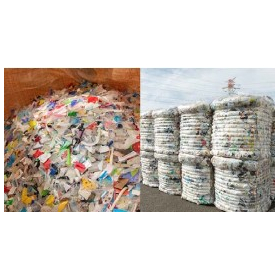
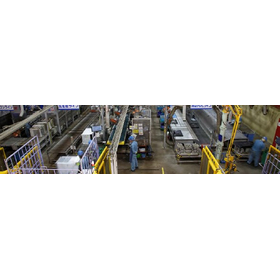
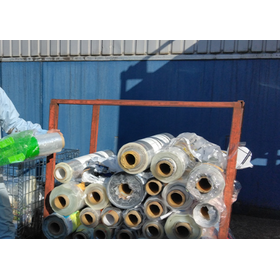
We would like to introduce a case study of the introduction of the "Ricoh Resin Identification Handheld Sensor" at Yodo Sho Co., Ltd. The company is a recycling operator engaged in the acceptance, regeneration, and processing and sales of waste plastics. Since 2017, they have been strengthening their domestic waste plastic recycling efforts. The high-value-added recycled plastics, which have been colored and pelletized, are highly regarded as environmentally friendly, high-quality plastic raw materials. To improve the purity of recycled plastics, they utilized subsidies with the cooperation of a consulting labor and social security attorney and introduced the RICOH Handheld Sensor. 【Previous Challenges】 ■ Risks and health concerns associated with identification work through combustion ■ Inefficiency due to reliance on experience and intuition in personnel-dependent tasks ■ Decreased identification accuracy when mixing different types of plastics *For more details, please refer to the PDF document or feel free to contact us.
Added to bookmarks
Bookmarks listBookmark has been removed
Bookmarks listYou can't add any more bookmarks
By registering as a member, you can increase the number of bookmarks you can save and organize them with labels.
Free membership registration
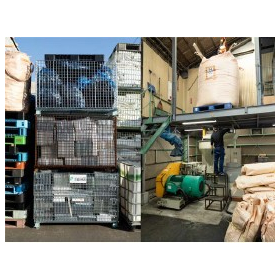
We would like to introduce a case study of the introduction of the "Ricoh Resin Identification Handy Sensor" at Nishimatsu Construction Co., Ltd. Since the fiscal year 2015, the company has formulated a medium-term management plan related to environmental management, focusing on three pillars: "CO2 reduction in business activities," "biodiversity conservation," and "3R for construction waste." They have been actively promoting specific activities on-site. In 2016, they received certification as an "Eco-First Company" and have been exploring various initiatives as a leading company in environmental efforts within the construction industry. Here, we introduce their initiative for sorting waste plastics implemented at the Shiga Konan branch, which is a construction site. 【Previous Challenges】 ■ At construction sites, waste plastics were disposed of in a single container and collected for disposal without any efforts towards recycling. *For more details, please refer to the PDF document or feel free to contact us.
Added to bookmarks
Bookmarks listBookmark has been removed
Bookmarks listYou can't add any more bookmarks
By registering as a member, you can increase the number of bookmarks you can save and organize them with labels.
Free membership registration
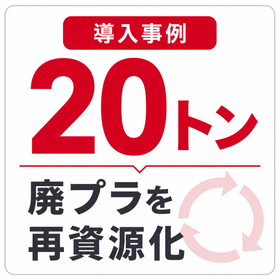
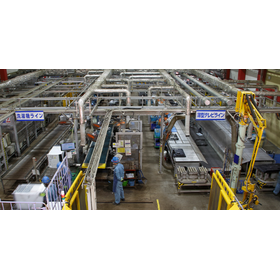
We would like to introduce a case study of the introduction of the "RICOH Resin Identification Handheld Sensor" at Nippon Tokushu Tōgyō Co., Ltd. At the company's Komaki plant, 111 tons of waste plastic are generated annually, and until now, thermal recycling has been conducted. However, the company has decided to aim for the monetization of waste plastic. After the introduction of the RICOH handheld sensor, it became possible to accurately sort materials, allowing for the monetization of 20 tons of waste plastic out of the 111 tons. 【Previous Challenges】 - The company aimed to transition from thermal recycling of 111 tons of waste plastic to monetization. - To have recyclers accept the materials at a value, sorting by material type is necessary, but manual sorting has its limitations. - There was a lack of awareness about sorting waste that could be monetized among the production staff, necessitating a change in mindset across various production departments. *For more details, please refer to the PDF document or feel free to contact us. ★ Webinar Announcement! ★ We will also hold a webinar introducing other case studies. For more details, please refer to the related link or feel free to contact us. Date: December 11 (Wednesday) from 15:00 to 15:50 Participation fee: Free
Added to bookmarks
Bookmarks listBookmark has been removed
Bookmarks listYou can't add any more bookmarks
By registering as a member, you can increase the number of bookmarks you can save and organize them with labels.
Free membership registration
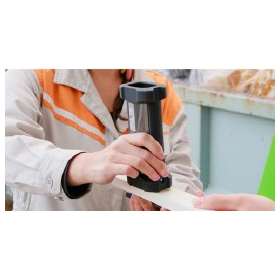
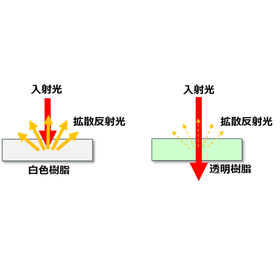
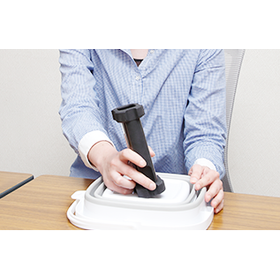
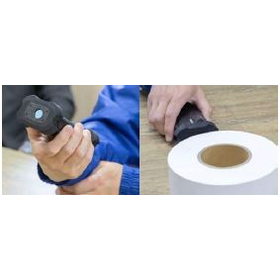
Ricoh's resin identification sensor irradiates the target object with infrared light and detects the diffused reflected light to identify the resin type. For resins like white, diffused reflected light can be obtained, but in the case of transparent resins, the irradiated light passes through, making it impossible to obtain diffused reflected light. Therefore, when measuring transparent resins, the included reflection plate is used. *For more detailed information, please refer to the related links. Feel free to contact us for further inquiries.
Added to bookmarks
Bookmarks listBookmark has been removed
Bookmarks listYou can't add any more bookmarks
By registering as a member, you can increase the number of bookmarks you can save and organize them with labels.
Free membership registration
We would like to introduce a case study on the implementation of the "RICOH Resin Identification Handheld Sensor" at Takeda Corporation. The company develops and plans its products in-house, while manufacturing is carried out at overseas partner factories. They faced challenges with time lags and costs associated with external material inspections. Previously, inspections took about two weeks, but after the implementation, results can now be obtained in just a few seconds, significantly improving speed. [Challenges] - Due to the increasing consumer interest in quality and materials, there was a need to strengthen quality control. - The method of outsourcing material inspections to third-party organizations took about two weeks for results, lacking in speed. - When sending for external inspections, there were specifications regarding the size and shape of the samples, necessitating the processing or destruction of sample products. *For more details, please refer to the PDF document or feel free to contact us.
Added to bookmarks
Bookmarks listBookmark has been removed
Bookmarks listYou can't add any more bookmarks
By registering as a member, you can increase the number of bookmarks you can save and organize them with labels.
Free membership registration
We would like to introduce the application of the "Resin Identification Handy Sensor" that we handle. It is effective for challenges such as "wanting to understand the materials used in equipment that comply with HACCP" and "external inspection agencies cannot identify materials non-destructively." Since it allows for non-destructive identification of materials in food manufacturing equipment, it enables reliable quality control. 【Overview】 ■ Challenge: Unable to identify plastic materials of existing equipment ■ Solution - On-site material identification - Quality control capability - Reduction of inspection outsourcing costs *For more details, please refer to the PDF document or feel free to contact us.
Added to bookmarks
Bookmarks listBookmark has been removed
Bookmarks listYou can't add any more bookmarks
By registering as a member, you can increase the number of bookmarks you can save and organize them with labels.
Free membership registration
We would like to introduce the utilization proposal for the "Resin Identification Handy Sensor" that we handle. It is effective for challenges such as "We cannot increase personnel because technical skills are required" and "We use external organizations due to a lack of know-how in material identification." Even amateurs can identify materials, which reduces inspection costs and labor hours. In addition to skilled workers, we can increase personnel, allowing for an increase in handling volume. 【Overview】 ■ Challenges - Use of external organizations due to lack of know-how in material identification - Identification is not possible for anyone other than skilled workers ■ Solutions - Reduction of inspection costs and labor hours - Ability to increase handling volume by adding personnel in addition to skilled workers *For more details, please refer to the PDF document or feel free to contact us.
Added to bookmarks
Bookmarks listBookmark has been removed
Bookmarks listYou can't add any more bookmarks
By registering as a member, you can increase the number of bookmarks you can save and organize them with labels.
Free membership registration
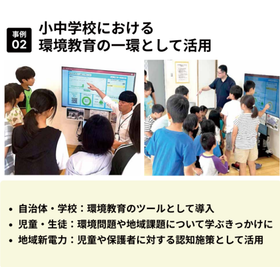
We would like to introduce the utilization proposal for the "Resin Identification Handy Sensor" that we handle. It is effective for challenges such as "environmental learning centered on lectures feels distant" and "board writing and slides tend to lead to one-sided lectures." By holding the sensor and experiencing sorting, knowledge acquisition is accelerated. Awareness of the reality that recyclable materials are being discarded and the ease of sorting due to technological advancements will increase consciousness towards environmental conservation. 【Overview】 ■Challenges - Environmental learning centered on lectures feels distant - Board writing and slides tend to lead to one-sided lectures ■Solutions - Accelerated knowledge acquisition - Increased awareness of environmental conservation *For more details, please refer to the PDF materials or feel free to contact us.
Added to bookmarks
Bookmarks listBookmark has been removed
Bookmarks listYou can't add any more bookmarks
By registering as a member, you can increase the number of bookmarks you can save and organize them with labels.
Free membership registration
We would like to introduce the utilization proposal for the "Resin Identification Handy Sensor" that we handle. It is effective for challenges such as "using external organizations due to lack of know-how in material identification" and "unable to increase personnel because technical skills are required." Since sales representatives can determine on-site whether purchases are possible, it reduces the costs and man-hours associated with returning for inspection. Additionally, it eliminates the need for skilled workers, allowing for an increase in personnel and ensuring that opportunities for resource acquisition are not missed. [Overview] ■ Challenge: Sales representatives cannot determine on-site whether purchases are possible. ■ Solution - Reduces costs and man-hours associated with returning for inspection. - Allows for an increase in personnel, ensuring that opportunities for resource acquisition are not missed. *For more details, please refer to the PDF document or feel free to contact us.
Added to bookmarks
Bookmarks listBookmark has been removed
Bookmarks listYou can't add any more bookmarks
By registering as a member, you can increase the number of bookmarks you can save and organize them with labels.
Free membership registration
We would like to introduce the application of our "Resin Identification Handy Sensor." In-house and simplified analysis of competitor products. Reducing analysis costs and man-hours, enabling speedy analysis of resin materials. It allows for easy inspection and prevents unnecessary costs from arising. Please feel free to contact us when you need assistance. 【Overview】 ■Issue: Analyzing resin materials using FT-IR and DSC incurs high costs and man-hours. ■Solution - Speedy analysis of resin materials. - Easy inspection of competitor products, preventing unnecessary costs. *For more details, please refer to the PDF document or feel free to contact us.
Added to bookmarks
Bookmarks listBookmark has been removed
Bookmarks listYou can't add any more bookmarks
By registering as a member, you can increase the number of bookmarks you can save and organize them with labels.
Free membership registration
We would like to introduce the utilization of our "Handheld Sensor for Resin Identification." This is effective for challenges such as "analyzing resin materials with FT-IR or DSC, which is costly and time-consuming." It allows for speedy analysis of resin materials, enabling easy inspection of purchased components and preventing unnecessary costs. 【Overview】 ■ Challenge: Analyzing purchased components for molding processing is cumbersome. ■ Solution: - In-house and simplified analysis of purchased components. - Reduction of analysis costs and labor. *For more details, please refer to the PDF document or feel free to contact us.
Added to bookmarks
Bookmarks listBookmark has been removed
Bookmarks listYou can't add any more bookmarks
By registering as a member, you can increase the number of bookmarks you can save and organize them with labels.
Free membership registration
We would like to introduce the utilization of our "Resin Identification Handy Sensor." It is effective for challenges such as "utilizing external organizations due to lack of know-how in quality inspection" and "incurring travel expenses for on-site inspections at domestic and overseas factories." This allows you to complete quality inspections in-house. Additionally, it enables easy inspection of toy parts with strict standards, ensuring product quality and preventing unnecessary costs. 【Overview】 ■ Challenges - Utilizing external organizations when accepting recycled products or parts manufactured overseas - Incurring travel expenses for on-site inspections at domestic and overseas factories ■ Solutions - Enabling in-house completion of quality inspections - Allowing easy inspection of toy parts with strict standards, ensuring product quality and preventing unnecessary costs *For more details, please refer to the PDF document or feel free to contact us.
Added to bookmarks
Bookmarks listBookmark has been removed
Bookmarks listYou can't add any more bookmarks
By registering as a member, you can increase the number of bookmarks you can save and organize them with labels.
Free membership registration
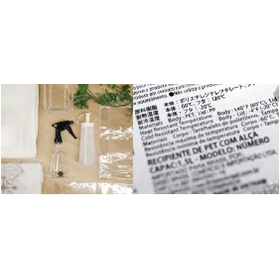
We would like to introduce the utilization of our "Resin Identification Handheld Sensor." It is effective for issues such as "the types of packaging materials handled vary by supplier, but since the materials cannot be identified, we incur disposal costs by incinerating them." Identifying the material takes just 2 seconds. By simply placing the sensor, you can identify the type of plastic, allowing for sorting by material and enabling recycling or valuable retrieval. Let's recycle the plastics that have previously been simply discarded! *For more details, please refer to the PDF document or feel free to contact us.
Added to bookmarks
Bookmarks listBookmark has been removed
Bookmarks listYou can't add any more bookmarks
By registering as a member, you can increase the number of bookmarks you can save and organize them with labels.
Free membership registration
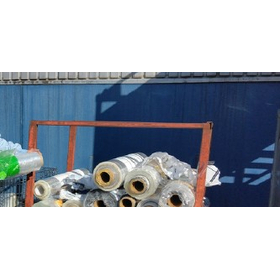
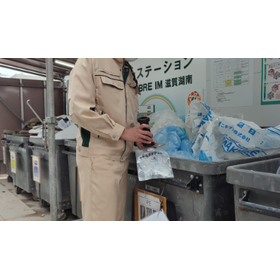
With the resin identification handheld sensor, it becomes possible to tackle the sorting of waste plastics at each construction site level! ■Challenges so far At construction sites, waste plastics have been disposed of collectively, and efforts toward recycling have not progressed. ■Effects of the resin identification handheld sensor Material identification takes only 2 seconds. By simply applying the sensor, materials can be identified, and by installing sorting collection boxes, efficient sorting has become possible. *For more details, please refer to the PDF document or feel free to contact us.
Added to bookmarks
Bookmarks listBookmark has been removed
Bookmarks listYou can't add any more bookmarks
By registering as a member, you can increase the number of bookmarks you can save and organize them with labels.
Free membership registration
We would like to introduce the utilization proposal for the "Resin Identification Handy Sensor" that we handle. It is effective for issues such as "the types of packaging materials and wrapping materials differ by supplier, but since the materials cannot be identified, we incur disposal costs by sending them for incineration." Identifying the material takes only 2 seconds. By simply pointing the sensor, you can identify the material, allowing for the installation of sorting collection boxes and material checks during collection. [Overview] ■ Issue: The types of packaging materials and wrapping materials differ by supplier, but since the materials cannot be identified, we incur disposal costs by sending them for incineration. ■ Solution: By simply pointing the sensor, you can identify the material, enabling the installation of sorting collection boxes and material checks during collection. *For more details, please refer to the PDF document or feel free to contact us.
Added to bookmarks
Bookmarks listBookmark has been removed
Bookmarks listYou can't add any more bookmarks
By registering as a member, you can increase the number of bookmarks you can save and organize them with labels.
Free membership registration
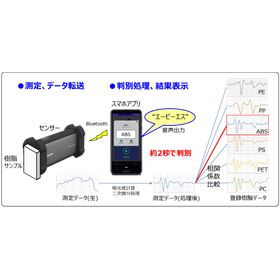
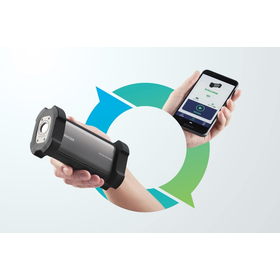
We would like to introduce the features of our "Resin Identification Handy Sensor." It is possible to add up to 100 types of resin as reference data, even those that were difficult to identify. The identification results are communicated through the smartphone screen and voice. This product helps improve identification accuracy and enhances inspection precision. 【Features】 ■ Standard registration of 13 types of resins, mainly general-purpose resins ■ High mobility ■ Simple operability ■ User-friendly application ■ User registration function for resins ■ Function to calculate the ratio of mixed resins *For more details, please refer to the PDF document or feel free to contact us.
Added to bookmarks
Bookmarks listBookmark has been removed
Bookmarks listYou can't add any more bookmarks
By registering as a member, you can increase the number of bookmarks you can save and organize them with labels.
Free membership registrationWe would like to introduce a case study utilizing the "Resin Discrimination Handy Sensor" for the identification of waste plastics from scrap materials and offcuts. In this case, waste materials generated in our own factory and offcuts produced during the manufacturing process are being disposed of collectively, leading to a lack of proper sorting. By sorting the waste materials and offcuts, they can be handed over to intermediate processing companies, reducing processing costs and allowing for valuable transactions. [Case Overview] ■ Target Companies: Plastic product manufacturers, package printing manufacturers, electronics manufacturers ■ Issue: Collective disposal of waste materials and offcuts, neglecting sorting ■ Effect: Sorting materials that should be discarded, resulting in cost savings of several million yen *For more details, please refer to the PDF document or feel free to contact us.
Added to bookmarks
Bookmarks listBookmark has been removed
Bookmarks listYou can't add any more bookmarks
By registering as a member, you can increase the number of bookmarks you can save and organize them with labels.
Free membership registration
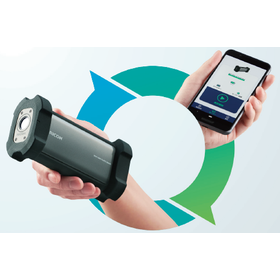
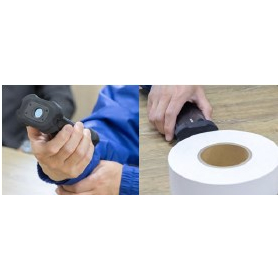
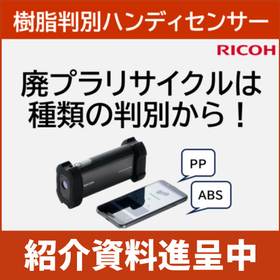
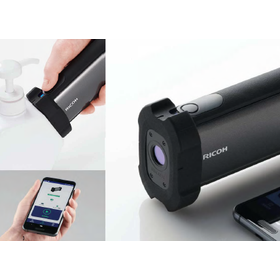
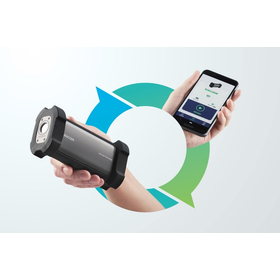
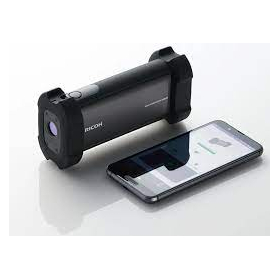
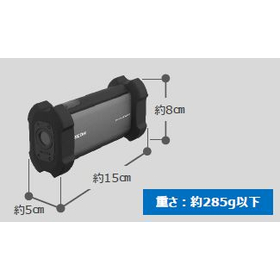
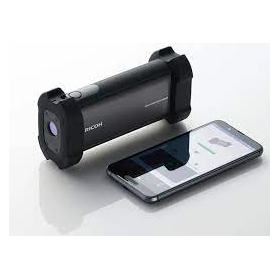
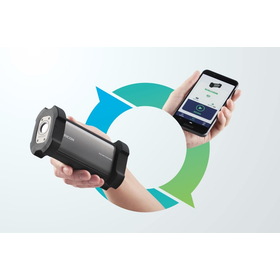
The "RICOH HANDY PLASTIC SENSOR B150" is a handheld resin identification sensor that allows for the speedy and easy differentiation of various types of plastics. It achieves a lightweight and compact size that can be handled with one hand. Since resin identification can be performed on-site, it contributes to an efficient workflow by eliminating the need to take samples back. Once the power is turned on, simply place the resin you want to identify against the measurement area and press the measurement button. We have pursued a simple operability so that many people can easily use it. 【Features】 ■ Compact and always portable ■ Simple operability that is easy for beginners and experts alike ■ Wireless connection with smartphones ■ Application that informs results via voice and screen ■ Selection of identification model data to improve resin identification efficiency *For more details, please refer to the PDF document or feel free to contact us.
Added to bookmarks
Bookmarks listBookmark has been removed
Bookmarks listYou can't add any more bookmarks
By registering as a member, you can increase the number of bookmarks you can save and organize them with labels.
Free membership registration