iPROS Urban Planning
  • Search for products by classification category

    • Building Materials
      Building Materials
      36758items
    • Facilities
      Facilities
      57958items
    • Lighting and Interior
      Lighting and Interior
      17523items
    • Common materials
      Common materials
      37227items
    • Civil Engineering Materials
      Civil Engineering Materials
      10135items
    • Construction, work and methods
      Construction, work and methods
      28885items
    • Surveys, Measurements, and Services
      Surveys, Measurements, and Services
      29935items
    • IT/Software
      IT/Software
      33432items
    • others
      others
      84602items
    • Store and facility supplies
      Store and facility supplies
      4604items
    • Office and commercial supplies
      Office and commercial supplies
      11728items
    • Hospital and welfare facility supplies
      Hospital and welfare facility supplies
      1053items
    • Logistics Equipment
      Logistics Equipment
      7323items
    • Energy and Resources
      Energy and Resources
      12103items
  • Search for companies by industry

    • Information and Communications
      7300
    • others
      7203
    • Building materials, supplies and fixtures manufacturers
      6605
    • Service Industry
      4727
    • Trading company/Wholesale
      3056
    • Other construction industries
      2438
    • Electrical equipment construction business
      687
    • Construction Consultant
      566
    • Interior Design
      519
    • Facility Design Office
      491
    • General contractors and subcontractors
      417
    • Architectural design office
      361
    • retail
      361
    • Warehousing and transport related industries
      327
    • Electricity, Gas and Water Industry
      287
    • Housing manufacturers and construction companies
      279
    • Interior construction business
      278
    • Building Management
      276
    • Medical and Welfare
      275
    • Educational and Research Institutions
      253
    • Renovation and home construction industry
      222
    • Water supply and drainage construction business
      204
    • Transportation
      169
    • Real Estate Developers
      163
    • Fisheries, Agriculture and Forestry
      131
    • Structural Design Office
      65
    • Finance, securities and insurance
      41
    • Restaurants and accommodations
      31
    • self-employed
      31
    • Mining
      26
    • Public interest/special/independent administrative agency
      20
    • Police, Fire Department, Self-Defense Forces
      17
    • Property Owner
      9
    • Store and building owners
      9
    • Government
      9
    • Individual
      9
  • Special Features
  • Ranking

    • Overall Products Ranking
    • Overall Company Ranking
Search for Products
  • Search for products by classification category

  • Building Materials
  • Facilities
  • Lighting and Interior
  • Common materials
  • Civil Engineering Materials
  • Construction, work and methods
  • Surveys, Measurements, and Services
  • IT/Software
  • others
  • Store and facility supplies
  • Office and commercial supplies
  • Hospital and welfare facility supplies
  • Logistics Equipment
  • Energy and Resources
Search for Companies
  • Search for companies by industry

  • Information and Communications
  • others
  • Building materials, supplies and fixtures manufacturers
  • Service Industry
  • Trading company/Wholesale
  • Other construction industries
  • Electrical equipment construction business
  • Construction Consultant
  • Interior Design
  • Facility Design Office
  • General contractors and subcontractors
  • Architectural design office
  • retail
  • Warehousing and transport related industries
  • Electricity, Gas and Water Industry
  • Housing manufacturers and construction companies
  • Interior construction business
  • Building Management
  • Medical and Welfare
  • Educational and Research Institutions
  • Renovation and home construction industry
  • Water supply and drainage construction business
  • Transportation
  • Real Estate Developers
  • Fisheries, Agriculture and Forestry
  • Structural Design Office
  • Finance, securities and insurance
  • Restaurants and accommodations
  • self-employed
  • Mining
  • Public interest/special/independent administrative agency
  • Police, Fire Department, Self-Defense Forces
  • Property Owner
  • Store and building owners
  • Government
  • Individual
Special Features
Ranking
  • Overall Products Ranking
  • Overall Company Ranking
  • privacy policy
  • terms of service
  • About Us
  • Careers
  • Advertising
  1. Home
  2. General contractors and subcontractors
  3. 松村組 本社
  4. Product/Service List
General contractors and subcontractors
  • Added to bookmarks

    Bookmarks list

    Bookmark has been removed

    Bookmarks list

    You can't add any more bookmarks

    By registering as a member, you can increase the number of bookmarks you can save and organize them with labels.

    Free membership registration

松村組 本社

EstablishmentJuly 15, 1919
capital50000Ten thousand
number of employees400
addressTokyo/Chiyoda-ku/3-2 Sanbancho, Sanbancho KS Building
phone03-5210-6167
  • Special site
  • Official site
last updated:Mar 27, 2026
松村組logo
  • Contact this company

    Contact Us Online
  • Company information
  • Products/Services(18)
  • catalog(3)
  • news(0)

松村組 List of Products and Services

  • category

1~18 item / All 18 items

Displayed results

Filter by category

SPACE21工法 SPACE21工法
class="retina-image"

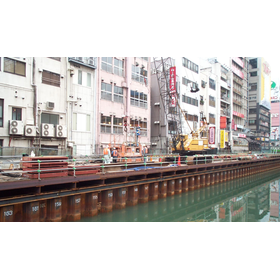
Construction of the Ebisu Bridge Replacement in the Center of Minami's Entertainment District using the "SPACE21 Method"

[Center of Osaka Minami] A narrow area where tourists come and go. Examples of 20 cases where bridge foundations were installed using a compact machine from a temporary pier over Dotonbori.

This is a construction case of the foundation piles for the replacement of "Ebisu Bridge," an iconic bridge in Chuo Ward, Osaka City. Located in the heart of one of Japan's busiest shopping districts, it is extremely difficult to transport heavy machinery and secure working space from land. Therefore, we introduced the "SPACE21 method" to address the strict constraints of conducting work from a limited temporary platform set up in Dotonbori. ■ Space-saving: The ultra-compact machine with maximum dimensions of 2.8×2.2×2.0m can operate safely even on a narrow temporary platform close to tourist foot traffic. ■ Cost reduction: The low center of gravity design eliminates the need for a leader for the pile driver, helping to reduce temporary costs associated with collapse risk measures in densely populated areas and on water scaffolding. ■ Improved construction efficiency: The self-propelled function allows for flexible orientation changes even on a narrow platform, smoothly supporting pile movement within limited working hours. ■ Wide adaptability: For heavy steel pipe piles with a diameter of φ900mm and lengths of 11.5 to 12.5m, we ensure reliable insertion through single piles or five-piece connections according to height restrictions. ■ Proven track record: Achieved reliable load-bearing capacity construction without accidents or disasters during the update work of a highly visible urban landmark. *For more details, please download the materials or feel free to contact us.

  • Pile and foundation work

Added to bookmarks

Bookmarks list

Bookmark has been removed

Bookmarks list

You can't add any more bookmarks

By registering as a member, you can increase the number of bookmarks you can save and organize them with labels.

Free membership registration

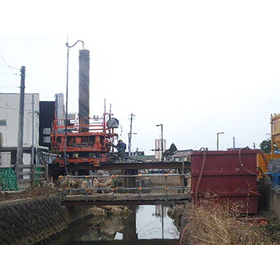
Construction of temporary platform piles for the Dotonbori River promenade using the "SPACE21 method."

"Waterfront development in downtown Osaka" Operating on a limited temporary platform within the river. An example of constructing over 140 pedestrian walkway foundations while considering the surrounding environment in a tourist area.

This is a case study of the foundation pile construction for the promenade (Tombori River Walk) in the Dotonbori River waterfront improvement project. The construction takes place in a symbolic tourist area of Osaka Minami, where the challenge was to safely carry out the work from a limited temporary platform installed within the river, while considering the surrounding environment and landscape. The "SPACE21 method" was introduced to address this challenge. ■ Space-saving: The lightweight and compact design, weighing 5.1 tons, allows for easy transportation to the temporary platform within the river, which has limited load-bearing capacity and space. ■ Cost reduction: Since large pile-driving machinery is not required, the costs for reinforcing extensive temporary scaffolding on the water are minimized. ■ Improved construction efficiency: Even on a narrow platform, a self-propelled traction unit enables rapid movement of a large number of piles, totaling 146. ■ Wide adaptability: The construction specifications include steel pipe piles with a diameter of 600mm and lengths of 11.0 to 14.0m, reliably accommodating site conditions with two-piece splicing. ■ Proven track record: In the well-known waterfront infrastructure development commissioned by Osaka City, high-quality foundation construction was completed without hindering the vibrancy of the city. *For more details, please download the materials or feel free to contact us.

  • Pile and foundation work

Added to bookmarks

Bookmarks list

Bookmark has been removed

Bookmarks list

You can't add any more bookmarks

By registering as a member, you can increase the number of bookmarks you can save and organize them with labels.

Free membership registration

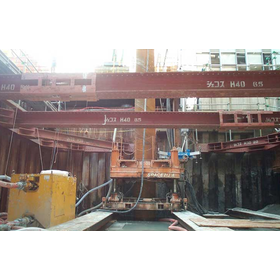
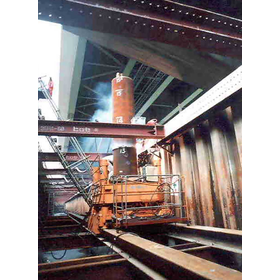
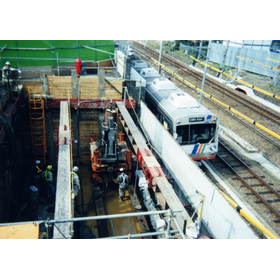
Piling construction on the closure beam under the elevated bridge using the "SPACE21 method."

"River improvement without temporary piers" constructed on receiving beams using sheet piles. A total of 58 cases completed with up to 9 splices poured in the space under the elevated bridge.

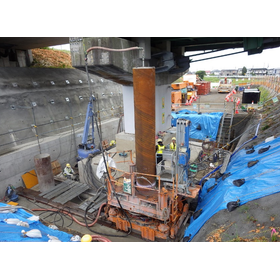
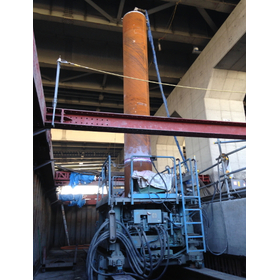
This is a case of foundation pile construction in the river and under the elevated bridge for the 33rd phase of the Chuo North River improvement project. Due to space restrictions caused by the elevated bridge above, and without the installation of a temporary bridge, the construction was carried out on a receiving girder (narrow work platform) set up using cutoff sheet piles and bridge piles, under extremely challenging conditions. The "SPACE21 method" was introduced. ■ Space-saving: Designed as a super compact unit with maximum dimensions of 2.8×2.2×2.0m, it operates stably even in the limited space on cutoff sheet piles without a temporary bridge. ■ Cost reduction: The complete elimination of the need for large-scale temporary bridge installation and removal significantly reduces the costs of temporary facilities in river construction. ■ Improved construction efficiency: The self-propelled function flexibly adapts to the narrow working environment under the elevated bridge, allowing for the planned progression of a large number of pile driving, totaling 58 piles. ■ Wide adaptability: Steel pipe piles with a diameter of 800mm and lengths of 20.0 to 21.5m were reliably constructed using short-length multiple splices, clearing height restrictions. ■ Proven track record: In the urban river improvement project commissioned by Osaka City, we overcame strict constraints both above and below to safely establish the foundation. *For more details, please download the materials or feel free to contact us.

  • Pile and foundation work

Added to bookmarks

Bookmarks list

Bookmark has been removed

Bookmarks list

You can't add any more bookmarks

By registering as a member, you can increase the number of bookmarks you can save and organize them with labels.

Free membership registration

Construction of narrow street piles on a simple pier using the 'SPACE21 Method'

[Installation of cranes on the opposite bank not allowed] A compact machine moves autonomously on a simple pier. Four cases of safely driving steel pipe piles at a site with scaffold restrictions.

This is a case study of foundation pile construction from a temporary bridge in the urban planning road construction of the Keikai Line. Due to environmental restrictions around the site, it was impossible to set up a large crane on the opposite bank, so a temporary bridge was established over the water surface, and construction had to be carried out from there. In response to the scaffold constraints, the "SPACE21 method" was introduced. ■ Space-saving: With a lightweight and compact design starting at 5.1 tons, safe transportation and placement are possible even on a temporary bridge with limited load capacity. ■ Cost reduction: Since large pile-driving machinery is not required, the scale of the bridge itself and temporary costs for reinforcement can be minimized, thereby controlling costs. ■ Improved construction efficiency: Even on a narrow temporary bridge, the self-propelling function allows the machine to move smoothly between piles, shortening the work process. ■ Wide adaptability: For steel pipe piles with a diameter of 600mm and a length of 29.5m, reliable insertion is achieved through a three-piece splicing method tailored to the site conditions. ■ Proven track record: In street improvement projects commissioned by Ishikawa Prefecture, high-quality construction was completed while overcoming the scaffold challenges where large machinery could not enter. *For more details, please download the materials or feel free to contact us.

  • Pile and foundation work

Added to bookmarks

Bookmarks list

Bookmark has been removed

Bookmarks list

You can't add any more bookmarks

By registering as a member, you can increase the number of bookmarks you can save and organize them with labels.

Free membership registration

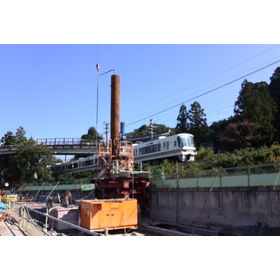
Construction of bridge piers using the "SPACE21 Method" near the JR Sales Line.

Clearance of space restrictions preventing the leader from standing in the proximity construction work of JR Tokai's operating line. A case where heavy piles of up to 33 meters were safely driven using a compact machine.

This is a case of foundation pile construction in an environment close to the operational line of JR Tokai during the construction of the Uehara Overpass. It is a site that requires extremely high safety management, with the absolute condition of ensuring safe railway operations. Due to the limited space, it was impossible to erect the leader of conventional pile drivers, so the "SPACE21 method" was introduced. ■ Space-saving: The ultra-compact machine, with maximum dimensions of 2.8×2.2×2.0m, can operate safely even in extremely tight workspaces beside the tracks. ■ Cost reduction: The system does not require a leader for the pile driver, minimizing protective temporary facilities for overhead wires and railway structures, thus controlling costs. ■ Improved construction efficiency: Even in a narrow construction area, the self-propelled function allows for rapid movement between piles, smoothly supporting the installation of 12 piles. ■ Wide adaptability: The construction method successfully accommodates heavy long piles with a steel pipe diameter of φ800mm and a length of 33.0m through a three-joint construction that meets height restrictions. ■ Proven track record: It meets the strict construction standards set by JR Tokai and builds a strong support structure while fully protecting the surrounding railway infrastructure. *For more details, please download the materials or feel free to contact us.

  • Pile and foundation work

Added to bookmarks

Bookmarks list

Bookmark has been removed

Bookmarks list

You can't add any more bookmarks

By registering as a member, you can increase the number of bookmarks you can save and organize them with labels.

Free membership registration

Construction of bridge foundations near the JR railway line using the "SPACE21 Method."

A challenging site close to the JR line: Breaking through the constraints that made it impossible for the leader of the pile driver to stand. A case where the impact on the tracks was minimized through a safety design using a lightweight, compact machine.

This is a case study of foundation pile construction for the JR overpass in the Kizu East Bypass project. The site is extremely close to the operational JR railway line, and due to strict safety standards and construction constraints that do not allow for the erection of a leader because of the risk of collapse and limitations in the overhead space, the "SPACE21 method" was introduced. ■ Space-saving: With a lightweight and compact design starting at 5.1 tons, it can be transported and installed in a limited space that does not affect railway operations. ■ Cost reduction: The low center of gravity and self-supporting structure without a large leader help to suppress the enormous temporary facility costs associated with collapse prevention measures. ■ Improved construction efficiency: Even in the narrow work zone beside the tracks, the self-propelled function allows for flexible movement, enabling quick relocation between 27 piles and shortening the construction period. ■ Wide adaptability: The steel pipe piles specified for this project, with a diameter of 800mm and a length of 18.5m, are reliably driven using two splices to meet the height restrictions on site. ■ Proven results: In the construction of important infrastructure close to railways commissioned by the Kinki Regional Development Bureau, high-quality foundation work prioritizing safety was successfully completed. *For more details, please download the materials or feel free to contact us.

  • Pile and foundation work

Added to bookmarks

Bookmarks list

Bookmark has been removed

Bookmarks list

You can't add any more bookmarks

By registering as a member, you can increase the number of bookmarks you can save and organize them with labels.

Free membership registration

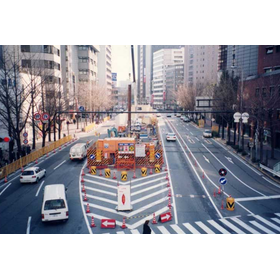
Construction of ramp foundations in the central median of urban areas using the "SPACE21 method."

Central median of downtown Osaka: A space where the leader of the pile driver cannot stand. An example of a compact, self-propelled machine that minimizes road restriction width during installation.

This is a case of foundation pile construction within the central median strip of a busy urban area for the new construction project of the Umeshinan Ramp in Kita Ward, Osaka City. The site is extremely narrow, situated between major roads with very high traffic volume, presenting a significant challenge where traditional pile drivers cannot be used due to overhead space restrictions and the narrowness of the scaffolding. Therefore, the "SPACE21 method" was introduced. - Space-saving: Due to the lightweight and compact specialized machine, it can enter and operate within the narrow site of the central median strip with minimal road restrictions on one side. - Cost reduction: The structure does not require a leader, minimizing protective measures costs for overhead wires and surrounding traffic conditions. - Improved construction efficiency: The self-propelling function of the traction unit allows the machine to smoothly move between piles in the narrow median strip. - Wide adaptability: Steel pipe piles with a diameter of 800mm and a length of 33.0m are reliably driven using a three-piece joint construction method that accommodates the site’s limited space. - Proven results: High-quality foundation construction was achieved without disrupting the surrounding traffic flow at this important urban infrastructure hub commissioned by Osaka City. *For more details, please download the materials or feel free to contact us.*

  • Pile and foundation work

Added to bookmarks

Bookmarks list

Bookmark has been removed

Bookmarks list

You can't add any more bookmarks

By registering as a member, you can increase the number of bookmarks you can save and organize them with labels.

Free membership registration

Nighttime road occupancy pile construction under the cover board "SPACE21 Method"

[Night Construction on National Route 16] A machine was left under the cover plate during the limited nighttime occupancy hours. This case features an ultra-compact design that minimized daytime traffic impact to zero.

This is a case of foundation pile construction in the road occupancy zone of the National Route 16 Machida Elevated Structure (Phase 21) project. The construction is conducted at night with road restrictions, and during the day, the machine must be stored and left in an extremely limited upper and surrounding space under the cover plate. Under these special conditions, the "SPACE21 method" was introduced. ■ Space-saving: Due to its ultra-compact design with maximum dimensions of 2.8×2.2×2.0m, the machine can be safely left under the cover plate during the day. ■ Cost reduction: Since there is no need for assembly or disassembly of large heavy machinery or relocation of extensive temporary facilities, construction costs associated with nighttime restrictions are significantly reduced. ■ Improved construction efficiency: Even within the limited working hours at night, the self-propelling function allows for quick movement between piles, smoothly progressing the construction of 50 foundation piles. ■ Wide adaptability: The construction specifications include steel pipe piles with a diameter of φ800mm and lengths of 11.0 to 14.5m, which can be reliably accommodated according to the site’s height restrictions. ■ Proven track record: In the important trunk road maintenance ordered by the Ministry of Land, Infrastructure, Transport and Tourism, the project was safely completed within the schedule without affecting general traffic during the day. *For more details, please download the materials or feel free to contact us.

  • Pile and foundation work

Added to bookmarks

Bookmarks list

Bookmark has been removed

Bookmarks list

You can't add any more bookmarks

By registering as a member, you can increase the number of bookmarks you can save and organize them with labels.

Free membership registration

Construction of foundation piles for the water gate at a site where vehicle access is prohibited - "SPACE21 Method"

【Construction of Isolation Area for Water Gate Substructure】Approached the site, where land transportation was difficult, using a crane barge. A compact machine was lowered and safely placed.

This is a case study of the foundation pile construction for the terrace connecting bridge (Tsukishima Water Gate). Similar to the Oshima River Water Gate, there are strict access restrictions that prevent heavy machinery and vehicles from approaching the construction site from land, requiring reliable construction from the waterway and limited scaffolding. Therefore, the "SPACE21 method" was introduced. - Space-saving: Due to the ultra-compact machine with maximum dimensions of 2.8×2.2×2.0m, pinpoint lowering and placement from a crane barge is possible. - Cost reduction: The structure does not require a leader, which is necessary for conventional pile drivers, allowing for simplified temporary facilities and cost control even in unstable scaffolding environments. - Improved construction efficiency: Even in narrow construction areas, the self-propelling function allows for flexible movement, smoothly supporting the work process within the limited construction period. - Wide adaptability: One machine can flexibly handle the installation of steel pipe piles with a diameter of 700mm and lengths of 20.0 to 24.5m (3 to 4 joints) as specified for this project. - Proven track record: High-quality foundation construction was completed while considering surrounding structures in the unique environment of a waterfront in the city center. *For more details, please download the materials or feel free to contact us.*

  • Pile and foundation work

Added to bookmarks

Bookmarks list

Bookmark has been removed

Bookmarks list

You can't add any more bookmarks

By registering as a member, you can increase the number of bookmarks you can save and organize them with labels.

Free membership registration

River-side pile construction of the terrace adjacent to the sluice gate using the 'SPACE21 method'

Inside the levee where vehicle access is prohibited, a super small aircraft was lowered from a crane barge from the river. This is an example of driving foundation piles in a limited space adjacent to the sluice gate.

This is a case of foundation pile construction within the levee of the riverbed for the Terrace Connecting Bridge (Oshima River Sluice) project. The construction site is in a completely isolated environment where vehicle access from land is impossible, and the delivery of equipment to the narrow space adjacent to the sluice gate posed a significant challenge. Therefore, the "SPACE21 Method" was introduced. ■ Space-saving: The lightweight and compact design, weighing 5.1 tons, allows for easy delivery from the crane barge on the river side to the inside of the levee. ■ Cost reduction: Since there is no need for large pile drivers or the construction of extensive temporary facilities such as access roads and piers, overall construction costs are significantly reduced. ■ Improved construction efficiency: Even in the narrow space within the levee, the self-propelled traction unit enables rapid movement between eight piles. ■ Wide adaptability: Steel pipe piles with a diameter of 700mm and lengths of 21.5 to 24.5m can be reliably driven using short-length multiple splicing construction with 3 to 4 segments. ■ Proven track record: In important river infrastructure projects commissioned by the Tokyo Metropolitan Water Control Office, construction was completed safely while overcoming environmental constraints. *For more details, please download the materials or feel free to contact us.

  • Pile and foundation work

Added to bookmarks

Bookmarks list

Bookmark has been removed

Bookmarks list

You can't add any more bookmarks

By registering as a member, you can increase the number of bookmarks you can save and organize them with labels.

Free membership registration

Pile construction under the restriction of optical cable air head 'SPACE21 Method'

Limitations of the Airhead and the Narrow Land of the Far East: Overcoming Difficult Construction Underneath the Optical Cable. A case study that solved challenges through crane lifting from the opposite shore and short-length multi-joint construction.

This is a case of foundation pile construction in the extremely narrow site directly beneath the infrastructure facilities during the second phase of the redevelopment of the Kōrigaoka housing complex. Due to strict overhead restrictions caused by optical cables running above, and the difficulty of placing heavy machinery in the very confined construction area, we had no choice but to install a crane on the opposite bank, under which we introduced the "SPACE21 method." ■ Space-saving: The ultra-compact machine, with maximum dimensions of 2.8×2.2×2.0m, allows for easy crane lifting and excavation bottom placement from the opposite bank. ■ Cost reduction: The structure does not require a leader, which is necessary for conventional large pile drivers, enabling safe construction directly beneath optical cables without overhead loss. ■ Improved construction efficiency: The self-propelled function allows for flexible movement even in narrow sites, smartly supporting work processes in limited spaces. ■ Wide adaptability: In response to steel pipe piles with a diameter of φ500mm and a length of 13.5m, we accommodate short-length multi-joint construction from single piles to eight joints according to site height restrictions. ■ Proven track record: In the housing infrastructure development commissioned by the Urban Infrastructure Development Corporation, we completed high-quality construction while protecting surrounding communication infrastructure. *For more details, please download the materials or feel free to contact us.

  • Pile and foundation work

Added to bookmarks

Bookmarks list

Bookmark has been removed

Bookmarks list

You can't add any more bookmarks

By registering as a member, you can increase the number of bookmarks you can save and organize them with labels.

Free membership registration

Narrow site pile construction method 'SPACE21' sandwiched between trunk roads.

[No entry for large heavy machinery] An extremely narrow area sandwiched between the metropolitan expressway and the bay area road. A case where a maximum length of 72.5m piles was completed using a compact machine with multiple splicing.

This is a case study of the construction of bridge pier foundation piles in an extremely narrow site surrounded by high-standard roads at the Maihama three-dimensional seaside lower section. Tightly squeezed between the Metropolitan Expressway Bayshore Line and the Tokyo Bayshore Road, it was impossible to bring in large pile-driving machinery due to severe spatial constraints. Therefore, we introduced the "SPACE21 method." - Space-saving: Due to the extremely compact dedicated machine weighing 5.1 tons, it can be easily transported to special narrow sites where large machinery cannot enter. - Cost reduction: The all-rotation middle excavation method, which does not affect surrounding critical infrastructure, helps to control costs without requiring large protective temporary facilities. - Improved construction efficiency: The self-propelled traction unit allows for rapid movement between 54 piles even within limited site space. - Wide adaptability: It reliably accommodates the construction of ultra-long and multi-jointed heavy piles with a steel pipe diameter of 800mm and lengths ranging from 57.0 to 72.5m (4 to 18 joints). - Proven track record: In the major trunk road development commissioned by the Kanto Regional Development Bureau, we successfully addressed the spatial challenges on-site and completed the construction safely. *For more details, please download the materials or feel free to contact us.

  • Pile and foundation work

Added to bookmarks

Bookmarks list

Bookmark has been removed

Bookmarks list

You can't add any more bookmarks

By registering as a member, you can increase the number of bookmarks you can save and organize them with labels.

Free membership registration

Construction of foundation piles for inland waterways within the river center using the "SPACE21 Method."

[Osaka Waterway Renovation Project] Overcame the constraint of one-sided closure in the center of the river. A case of safely driving 50 piles of two different diameters using compact machinery.

This is a case study of the construction of foundation piles for the first-class river Neyagawa waterway improvement project (Neyagawa waterway bridge and Shin-Hiraike bridge). In the river maintenance work, the river center was closed off, and due to the strict spatial constraints of alternating construction of foundation piles on one side at a time, the "SPACE21 method" was introduced. ■ Space-saving: The lightweight and compact design of the specialized equipment allows for easy transportation and installation within the limited closure space established in the river center. ■ Cost reduction: The leaderless specification operates efficiently even within the enclosed area, minimizing costs without the need for large temporary facilities. ■ Improved construction efficiency: The self-propelled function allows for quick movement between piles in the narrow closure area, smoothly supporting the construction of a total of 50 foundation piles. ■ Wide adaptability: One machine flexibly accommodates the construction of two different pile diameters: φ1000mm (7 joints) and φ600mm (6 joints). ■ Proven track record: In river improvement infrastructure projects commissioned by Osaka Prefecture, high-quality foundation construction has been achieved even in the special environmental conditions of waterfront sites. *For more details, please download the materials or feel free to contact us.

  • Pile and foundation work

Added to bookmarks

Bookmarks list

Bookmark has been removed

Bookmarks list

You can't add any more bookmarks

By registering as a member, you can increase the number of bookmarks you can save and organize them with labels.

Free membership registration

Seismic reinforcement construction of pile bent piers using the "SPACE21 method."

"Seismic reinforcement of bridges in Hyogo" - Active even in confined spaces within the deadline. 14 cases reliably addressed with ultra-compact machinery for two-tier beam construction at the footing base.

This is a case study of the foundation pile construction associated with the change from pile bent piers to RC piers in the seismic reinforcement work of the port bridge (Part 1). Two-tier beams were constructed within the deadline, and due to the very limited working space with the footing bottom surface as the construction base, the "SPACE21 method" was introduced. ■ Space-saving: The ultra-compact machine with maximum dimensions of 2.8×2.2×2.0m can be easily transported to the excavation bottom surface within the constrained area. ■ Cost reduction: The structure does not require large leaders, which helps to reduce temporary facility costs in narrow spaces where the upper space is restricted and two-tier beams intersect. ■ Improved construction efficiency: Equipped with a self-propelled moving unit, it can quickly progress the movement between 14 piles even in the limited space within the deadline. ■ Wide adaptability: It reliably accommodates the short-length multi-joint construction of the steel pipe piles specified for this project, with a diameter of φ700mm and a length of 17.5m (7 joints). ■ Proven track record: Successfully completed construction while overcoming strict spatial constraints in urban infrastructure development commissioned by local governments. *For more details, please download the materials or feel free to contact us.

  • Pile and foundation work

Added to bookmarks

Bookmarks list

Bookmark has been removed

Bookmarks list

You can't add any more bookmarks

By registering as a member, you can increase the number of bookmarks you can save and organize them with labels.

Free membership registration

Foundation pile construction for junction widening | SPACE21 method

"Road widening at Misato Junction" was carried out on a simple platform to reduce the impact on buried objects. More than 360 cases of safely driving long piles, up to 59.5 meters in length and multiple splices, were completed.

This is a case study of foundation pile construction associated with road widening at the ramp bridge construction of the Misato Junction on the Tokyo Gaikan Expressway. In an environment where reducing the impact on underground installations is required, and with the construction challenges posed by limited space on a temporary platform after excavation, the "SPACE21 method" was introduced. ■ Space-saving: Due to the lightweight and compact specialized machine, it operates safely even on temporary platforms where large heavy machinery cannot access. ■ Cost reduction: The all-rotation middle excavation method minimizes impact on the surrounding area, thereby reducing the costs of temporary protective measures. ■ Improved construction efficiency: The self-propelled moving unit enables quick and precise movements on the platform, supporting the process of mass pouring with up to 368 piles. ■ Wide adaptability: It reliably accommodates long piles with φ800mm and a maximum length of 59.5m (4 to 18 joints), and φ1000mm with a maximum length of 51.0m (4 to 16 joints). ■ Proven track record: Completed high-quality foundation construction with consideration for the surrounding environment at a key point in highway infrastructure. *For more details, please download the materials or feel free to contact us.

  • Pile and foundation work

Added to bookmarks

Bookmarks list

Bookmark has been removed

Bookmarks list

You can't add any more bookmarks

By registering as a member, you can increase the number of bookmarks you can save and organize them with labels.

Free membership registration

Seismic reinforcement pile construction under bridge girders | SPACE21 method

"Seismic reinforcement of bridges in Shizuoka" has overcome challenges related to restrictions in the upper space and the transportation of materials to the excavation bottom. The use of ultra-compact machinery for multi-joint construction has helped reduce temporary facility costs.

This is a case study of the construction of foundation piles for seismic reinforcement work on the Hanishigawa Bridge of National Route 1. In response to the challenging site conditions of a low headroom environment under the bridge girder and the narrow construction base for excavation down to the footing bottom while constructing reinforced earth walls, the "SPACE21 method" was introduced. ■ Space-saving: The compact machine, measuring a maximum of 2.8×2.2×2.0m, can be easily transported to the excavation bottom surrounded by reinforced earth walls. ■ Cost reduction: The leaderless design eliminates headroom loss, enabling the construction of 8 to 18 short, multiple connections under the girder. ■ Improved construction efficiency: Self-propelled movement allows for the rapid installation of 10 foundation piles even in limited spaces. ■ Wide adaptability: The method reliably accommodates heavy steel pipe piles with a diameter of 800mm and a length of 34.5m, as specified for this project. ■ Proven track record: In infrastructure development commissioned by the Chubu Regional Development Bureau, a safe and reliable bearing capacity was established. *For more details, please download the materials or feel free to contact us.

  • Earthquake-resistant construction method
  • Pile and foundation work

Added to bookmarks

Bookmarks list

Bookmark has been removed

Bookmarks list

You can't add any more bookmarks

By registering as a member, you can increase the number of bookmarks you can save and organize them with labels.

Free membership registration

Narrow and low-head pre-made pile excavation method "SPACE 21 Method"

Over 530 achievements nationwide: Simplifying temporary facilities with a leaderless ultra-compact design. Reducing construction costs in narrow low spaces through self-propelled movement and short-length splicing piles.

This is a hydraulic full-rotation prefabricated pile excavation method developed for efficient construction of prefabricated piles (steel pipe piles and concrete piles) under harsh conditions such as low spaces and narrow sites. The dedicated machine directly grips the pile body and performs rotary insertion, while low-pressure cement milk is ejected to ensure the construction of a solid foundation bulb. ■ Space-saving: Weighing 5.1 tons or more, the compact machine with a maximum size of 2.8×2.2×2.0m can be easily transported to the excavation bottom. ■ Cost reduction: Eliminates the need for a leader, improving head loss and simplifying temporary facilities such as piers. ■ Improved construction efficiency: Self-propelled movement by the traction unit speeds up pile-to-pile movement in narrow sites. ■ Wide adaptability: Compatible with various diameters of steel pipe and PHC piles, capable of standard installation lengths of up to 50m. ■ Proven track record: Holds extensive construction data with 535 sites nationwide and a total construction length of 259,142m. *For more details, please download the PDF or feel free to contact us.

  • Ground foundation construction method

Added to bookmarks

Bookmarks list

Bookmark has been removed

Bookmarks list

You can't add any more bookmarks

By registering as a member, you can increase the number of bookmarks you can save and organize them with labels.

Free membership registration

Hydraulic Precast Pile Boring Method "SPACE21 Method"

A foundation pile method that enables construction under harsh conditions with a lightweight and compact machine!

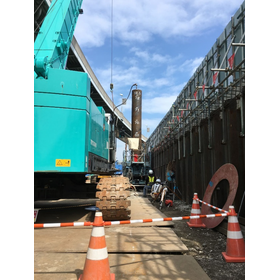
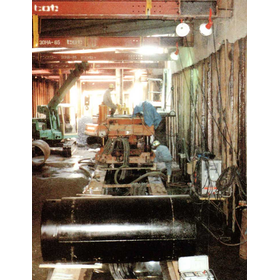
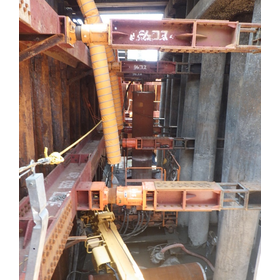
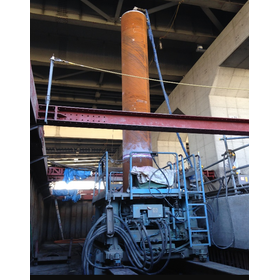
The "SPACE21 Method" is a hydraulic full-rotation prefabricated pile excavation method developed for efficiently installing prefabricated piles (steel pipe piles and concrete piles) under conditions such as low spaces and narrow locations. Since it does not require a leader for conventional pile drivers, it significantly improves headroom loss and is highly effective for short-length splicing pile installation in low spaces. As of December 2023, there have already been over 520 construction achievements, including those for public institutions. 【Features】 ■ Significantly improved workability in low spaces ■ Advantageous for construction in narrow yards ■ Easily movable and can be brought to underground excavation bottoms ■ Low vibration and low noise construction ■ Capable of various close-proximity construction, etc. *For more details, please download the PDF or feel free to contact us.

  • Ground foundation construction method

Added to bookmarks

Bookmarks list

Bookmark has been removed

Bookmarks list

You can't add any more bookmarks

By registering as a member, you can increase the number of bookmarks you can save and organize them with labels.

Free membership registration
Prev 1 Next
  • Contact this company

    Contact Us Online

Products

  • Search for Products

Company

  • Search for Companies

Special Features

  • Special Features

Ranking

  • Overall Products Ranking
  • Overall Company Ranking

support

  • site map
IPROS
  • privacy policy Regarding external transmission of information
  • terms of service
  • About Us
  • Careers
  • Advertising
IPROS Services
  • >IPROS GMS | Search site for the manufacturing industry
  • >IPROS | Search site for the B2B industry
COPYRIGHT © 2001-2026 IPROS CORPORATION ALL RIGHTS RESERVED.
Please note that the English text on this page is automatically translated and may contain inaccuracies.