Reinforcement method Product List and Ranking from 202 Manufacturers, Suppliers and Companies | IPROS

Last Updated: Aggregation Period:Jan 14, 2026~Feb 10, 2026
This ranking is based on the number of page views on our site.

Reinforcement method Manufacturer, Suppliers and Company Rankings

Last Updated: Aggregation Period:Jan 14, 2026~Feb 10, 2026
This ranking is based on the number of page views on our site.

  1. コンステック Osaka//General contractors and subcontractors
  2. 日鉄ケミカル&マテリアル コンポジット事業部 Tokyo//Building materials, supplies and fixtures manufacturers
  3. 横山基礎工事 Hyogo//General contractors and subcontractors
  4. 4 null/null
  5. 5 ヨシモトポール Tokyo//Building materials, supplies and fixtures manufacturers

Reinforcement method Product ranking

Last Updated: Aggregation Period:Jan 14, 2026~Feb 10, 2026
This ranking is based on the number of page views on our site.

  1. Reinforcement of existing beam after hole cutting: "Redouble Method" コンステック
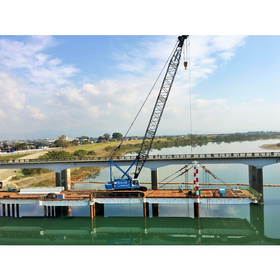
  2. Temporary bridge temporary pier cable-stayed construction method "LIBRA Method" 横山基礎工事
  3. Pole Repair and Reinforcement Method: YCK Method 'Carbon Fiber' ヨシモトポール
  4. 4 Hybrid Concrete Reinforcement Method "Solid Remain Alpha"
  5. 4 Shear Reinforcement Method "RMA Method" ケー・エフ・シー

Reinforcement method Product List

31~60 item / All 381 items

Displayed results

Stronger Method Adoption Example: Yamanashi Prefecture

Change the height from 2m to 3m! This method allows for approximately half the cost and a significant reduction in construction time.

We would like to introduce an example of the "Stronger Method," a rockfall protection fence reinforcement project that utilizes existing structures in Yamanashi Prefecture. There were instances of rockfalls exceeding the fence, and there was a desire to increase the height of the fence. Additionally, although a high-energy protection fence had already been designed, it was costly. There were also bent posts that the client wanted to reuse if possible, which led to the adoption of this method. The height was changed from 2m to 3m using a raising type to meet the desired fence height. Furthermore, this method allows for approximately half the cost and significant shortening of the construction period. Regarding the bent posts, part of the base of the posts was retained and raised to accommodate the situation. 【Adoption Example】 ■ Location: Yamanashi Prefecture ■ Type: Raising Type ■ Reasons for Adoption - There were rockfalls exceeding the fence, and there was a desire to increase the fence height. → Addressed with the raising type (H=2.0→3.0m) - A high-energy protection fence had already been designed, but it was costly. → Approximately half the cost and significant shortening of the construction period. - There were bent posts that the client wanted to reuse. → Raised by retaining part of the base of the posts. *For more details, please refer to the PDF materials or feel free to contact us.

  • image_10.jpg
  • image_11.jpg
  • Rockfall prevention agent
  • Reinforcement method

Added to bookmarks

Bookmarks list

Bookmark has been removed

Bookmarks list

You can't add any more bookmarks

By registering as a member, you can increase the number of bookmarks you can save and organize them with labels.

Free membership registration

Hyogo Prefecture Construction Case Study: Reinforcement Method for Existing Rockfall Protection Fences - Implementation of Fence Height Increase

Increase fence height using raised components! The materials are lightweight and installation is simple.

Here is a case study of the "Stronger Method" implemented in Hyogo Prefecture. As a result of the construction, the fence height increased from 2.0m to 3.0m. The construction length was L = 39.1m. This method allows for the existing rockfall protection fence to be utilized as is, enabling simple reinforcement and height increase without any special processing of the facility. [Case Study] ■ Height Increase Type (Fence Height: H = 2.0 → 3.0m, Construction Length: L = 39.1m) ■ Hyogo Prefecture (Construction: Fiscal Year 2018) *For more details, please refer to the PDF document or feel free to contact us.

  • Protective fence
  • Reinforcement method

Added to bookmarks

Bookmarks list

Bookmark has been removed

Bookmarks list

You can't add any more bookmarks

By registering as a member, you can increase the number of bookmarks you can save and organize them with labels.

Free membership registration

Hyogo Prefecture Construction Case Study: Reinforcement Method for Existing Rockfall Protection Fences, Usable Without Small Heavy Machinery.

Simple construction! This method allows for an increase in fence height using raised components.

Here is a case study of the "Stronger Method" conducted in Hyogo Prefecture. As a result of the construction, the fence height increased from 2.0m to 3.0m, with a construction length of L = 39.5m. This method restrains the twisting of the posts with upper and lower reinforcement brackets, allowing for buckling prevention at the base of the posts. Additionally, since no small machinery is used, there is no need to cut down surrounding trees. [Case Study] ■ Raised type (Fence height: H = 2.0 → 3.0m, Construction length: L = 39.5m) ■ Hyogo Prefecture (Construction: Fiscal Year 2018) *For more details, please refer to the PDF document or feel free to contact us.

  • Protective fence
  • Reinforcement method

Added to bookmarks

Bookmarks list

Bookmark has been removed

Bookmarks list

You can't add any more bookmarks

By registering as a member, you can increase the number of bookmarks you can save and organize them with labels.

Free membership registration

Hyogo Construction Case Study: Railway Proximity Work - Reinforcement and Elevation of Existing Protective Fences

A case of railway proximity work where reinforcement and elevation of the existing protective fence were carried out!

Here is a case study of the "Stronger Method" implemented in Hyogo Prefecture. As a result of the construction, the fence height increased from 1.55m to 3.0m, with a construction length of L = 13.0m. This method distributes the load, which was previously supported by a single span in conventional methods, across multiple spans by connecting the tops of the posts with steel rods. Additionally, in areas where there are concerns about insufficient fence height, height-raising materials can be used to increase the fence height. [Case Study] ■ Height-raising reinforcement type (Fence height: H = 1.55 → 3.0m, Construction length: L = 13.0m) ■ Hyogo Prefecture (Construction: FY 2015, Railway proximity work) *For more details, please download the PDF or feel free to contact us.

  • Protective fence
  • Reinforcement method

Added to bookmarks

Bookmarks list

Bookmark has been removed

Bookmarks list

You can't add any more bookmarks

By registering as a member, you can increase the number of bookmarks you can save and organize them with labels.

Free membership registration

Reinforcement of Existing Concrete Structures: Outplate Method

High bending reinforcement effect and high crack control effect! Suitable for the construction of RC and PC hollow slab bridges.

The Outplate method is a reinforcement technique that involves tensioning a prefabricated CFRP plate (Outplate) with anchoring bodies at both ends, fixing and bonding it to an existing concrete structure. Compared to conventional continuous fiber sheet bonding methods, tensioning the Outplate allows for the introduction of prestress into the concrete. This method achieves significant reinforcement effects with a minimal amount of reinforcement material. Since thin CFRP plates are used as tensioning materials, there is almost no change in the appearance or cross-section after reinforcement, making it particularly suitable for the construction of RC and PC hollow slab bridges. 【Features】 ■ High bending reinforcement effect ■ High crack control effect ■ Recovery of deflection ■ Improved durability ■ Minimal maintenance ■ Reinforcement above the supports of continuous girders is possible from the underside *For more details, please refer to the PDF document or feel free to contact us.

  • Renovation and repair methods
  • Reinforcement method

Added to bookmarks

Bookmarks list

Bookmark has been removed

Bookmarks list

You can't add any more bookmarks

By registering as a member, you can increase the number of bookmarks you can save and organize them with labels.

Free membership registration

Repair and reinforcement method for structures: "Strand Sheet Method"

Introducing a groundbreaking method that fundamentally solves the problems associated with traditional continuous fiber sheet bonding techniques!

The "Strand Sheet Method" is a repair and reinforcement technique that processes FRP strands, which are impregnated and cured with resin, into sheet form and adheres them to the surfaces of concrete and steel structures using a specialized adhesive. The specialized adhesive also serves as a primer and leveling material. Since resin impregnation and degassing work are not required, sheets can be applied immediately after surface preparation, resulting in reduced construction time and lower costs. Strand sheets are available in a high-elasticity type with a lineup up to 900g/m2, providing greater reinforcement effects with a single layer compared to the toe sheet method. 【Features】 ■ Short construction time and low cost ■ Significant reinforcement effect ■ Simple and high quality ■ Good construction environment ■ The specialized adhesive is grease-like, preventing resin splatter and other issues *For more details, please refer to the PDF materials or feel free to contact us.

  • Renovation and repair methods
  • Reinforcement method

Added to bookmarks

Bookmarks list

Bookmark has been removed

Bookmarks list

You can't add any more bookmarks

By registering as a member, you can increase the number of bookmarks you can save and organize them with labels.

Free membership registration

Strand Sheet JCM Embedded Method for Floor Slab Reinforcement

We will introduce a reinforcement method for the upper surface of floor slabs using continuous fiber FRP sheets and ultra-rapid hardening mortar!

The "Strand Sheet JCM Buried Method" is a groundbreaking technique that evolves the conventional bonding reinforcement method using continuous fiber sheets on the top surface of slabs. By combining a joint epoxy resin adhesive with a super-fast hardening fiber-reinforced polymer cement mortar and strand sheets, it enables an overwhelming reduction in construction time. Furthermore, since strength is achieved approximately 3 hours after construction, it also allows for a reduction in traffic regulation time. 【Features】 ■ Realizes rapid construction ■ Short curing time ■ Significant reinforcement effect ■ High durability *For more details, please refer to the PDF materials or feel free to contact us.

  • Renovation and repair methods
  • Reinforcement method

Added to bookmarks

Bookmarks list

Bookmark has been removed

Bookmarks list

You can't add any more bookmarks

By registering as a member, you can increase the number of bookmarks you can save and organize them with labels.

Free membership registration

Repair and reinforcement method for structures: "FORCA Tow Sheet Method"

Applicable for the repair of corrosion in steel components! We provide excellent workability, significant repair and reinforcement effects, and high quality.

The "Toshit Method" is a repair and reinforcement technique for steel and concrete structures using continuous fiber sheets. Reinforcement with only resin and carbon fibers prevents rust and is highly effective against salt damage. It offers a high reinforcement effect with high-strength, high-elasticity continuous fibers arranged in one direction. In addition, we also offer repair and reinforcement methods such as the "Strand Sheet Method," which involves attaching sheet-like FRP strands with a special adhesive, and "Toe Anchors." 【Features】 ■ Strong and lightweight continuous fibers ■ High waterproofing properties ■ Simple construction ■ No rust formation ■ Compliant with RC design methods ■ Applicable for repairing corroded steel members *For more details, please refer to the PDF document or feel free to contact us.

  • Renovation and repair methods
  • Reinforcement method

Added to bookmarks

Bookmarks list

Bookmark has been removed

Bookmarks list

You can't add any more bookmarks

By registering as a member, you can increase the number of bookmarks you can save and organize them with labels.

Free membership registration

Repair and reinforcement method for steel structures: "FORCA PL-CF Method"

It is very lightweight and can be easily carried by hand to the site! Carbon fiber does not corrode, making it effective for maintenance management.

The "FORCA PL-CF Method" is a technique for restoring the load-bearing capacity of steel members that have experienced rust progression and a reduction in thickness. By applying a low-elasticity, high-ductility putty material between the steel member and the carbon fiber sheet, the system is designed so that the carbon fiber sheet does not delaminate even when the steel member deforms. This method allows for the application of carbon fiber sheets and strand sheets even on members subjected to compressive and shear forces. 【Features】 ■ Lightweight materials ■ No large tools required for construction ■ Corrosion-resistant ■ Can be processed on-site ■ Does not damage the member *For more details, please refer to the PDF document or feel free to contact us.

  • Renovation and repair methods
  • Reinforcement method

Added to bookmarks

Bookmarks list

Bookmark has been removed

Bookmarks list

You can't add any more bookmarks

By registering as a member, you can increase the number of bookmarks you can save and organize them with labels.

Free membership registration

構造物の補修・補強工法『FORCA(フォルカ)トウプレート工法』

簡単施工で大きな補強効果!FRPプレートによるコンクリート構造物の補修・補強工法

『FORCA(フォルカ)トウプレート工法』は、一方向配列の炭素繊維を 熱硬化性樹脂に含浸させ、板状に成型硬化させたCFRPプレートを接着剤で コンクリート表面に貼り付ける補強工法です。 CFRPプレートは炭素繊維シートと比べて単位幅あたりの強度と剛性が 高いので、補修箇所の全面に貼り付ける必要もなく、間隔を空けての 施工も可能。 施工現場で含浸用の含浸・接着剤を使用しないため、上向き施工での 作業者の負担や養生も軽減できます。 【特長】 ■高強度・高剛性 ■1枚でも大きな補強効果 ■上向き作業での「ダレ」から解放 ※詳しくはPDF資料をご覧いただくか、お気軽にお問い合わせ下さい。

  • Renovation and repair methods
  • Reinforcement method

Added to bookmarks

Bookmarks list

Bookmark has been removed

Bookmarks list

You can't add any more bookmarks

By registering as a member, you can increase the number of bookmarks you can save and organize them with labels.

Free membership registration

Repair and reinforcement method for concrete structures: "FORCA Tow Sheet Method"

Introducing repair and reinforcement methods for concrete structures using carbon fiber sheets and aramid fiber sheets!

The "FORCA Tow Sheet Method" is a reinforcement technique that involves simply adhering a unidirectionally arranged continuous fiber sheet, called "Tow Sheet," to the surface of concrete using a room-temperature curing epoxy resin, making it highly effective in terms of workability. It demonstrates a high reinforcement effect without increasing weight, allowing for quick responses to concerns in bridge construction such as seismic reinforcement of bridge piers, accommodating live loads on deck slabs, and reinforcing or preventing spalling in tunnels, chimneys, and other concrete structures, as well as preventing crack progression. 【Features】 ■ Excellent workability in reinforcement methods ■ High reinforcement effect without increasing weight ■ Quick response to reinforcement, spalling prevention, and crack progression prevention in structures *For more details, please refer to the PDF document or feel free to contact us.

  • Renovation and repair methods
  • Reinforcement method

Added to bookmarks

Bookmarks list

Bookmark has been removed

Bookmarks list

You can't add any more bookmarks

By registering as a member, you can increase the number of bookmarks you can save and organize them with labels.

Free membership registration

Grout material 1-day grout

SGA (Second Generation Acrylic Adhesive)

It is a next-generation grout material that combines numerous advantages.

  • glue
  • grout
  • Reinforcement method

Added to bookmarks

Bookmarks list

Bookmark has been removed

Bookmarks list

You can't add any more bookmarks

By registering as a member, you can increase the number of bookmarks you can save and organize them with labels.

Free membership registration

Residential foundation improvement work HySPEED method

This is a method for improving the ground using only natural crushed stone that takes the environment into consideration.

In recent years, issues such as environmental pollution (carcinogenic substance hexavalent chromium), asset depreciation (decline in land valuation due to the mixing of cement compounds), and quality defects (residential ground accidents due to inadequate strength verification in design) have been pointed out. The high-speed construction method is an environmentally friendly ground improvement technique that addresses all of the above issues. It is also an excellent method for earthquake countermeasures, such as liquefaction.

  • Earthworks
  • Ground improvement
  • Pile and foundation work
  • Reinforcement method

Added to bookmarks

Bookmarks list

Bookmark has been removed

Bookmarks list

You can't add any more bookmarks

By registering as a member, you can increase the number of bookmarks you can save and organize them with labels.

Free membership registration

Seismic reinforcement of existing RC/SRC columns with "Seismic SDJ Panels."

Achieve reinforcement while using the building! Shortening the construction period is possible.

The construction method using the "Seismic SDJ Panel" is a seismic reinforcement technique that enables shear reinforcement and axial load capacity enhancement of existing RC and SRC columns. It employs small, lightweight steel panels made of highly corrosion-resistant galvanized steel, which are assembled by fitting together the pressed irregularities of the panels, resulting in a durable and work-efficient method that does not require welding. 【Features】 〇 Lightweight and small (The steel panels are compact and thin, allowing for manual handling.) 〇 No fire used (The steel panels are joined by bolted connections.) 〇 Low noise (No need for anchor installation or chipping work on existing columns.) 〇 Odorless (The steel panels use highly corrosion-resistant galvanized steel, eliminating the need for adhesives like epoxy resin.)

  • 駅構内.jpg
  • 高架橋下.jpg
  • 倉庫内.jpg
  • Reinforcement and repair materials
  • Reinforcement method

Added to bookmarks

Bookmarks list

Bookmark has been removed

Bookmarks list

You can't add any more bookmarks

By registering as a member, you can increase the number of bookmarks you can save and organize them with labels.

Free membership registration

Steel structure beam opening reinforcement method "Diar Ring"

Significantly improved workability! Introducing a construction method that ensures high product precision and easily secures construction accuracy.

The "DIA Ring" is a reinforcement method for openings targeting steel structure H-shaped cross-section beam members. Depending on the required load capacity, one DS type, one DL type, and two DS types can be used. When using one piece, the entire perimeter is welded on one side without inverting the beam, which greatly enhances workability. In construction, the welding sizes are standardized to 6mm for the DS type and 9mm for the DL type. Since all products of the DS type and DL types DL100 to DL200 are targeted products on both sides, they are easy to manage in terms of quality control. 【Features】 ■ Depending on the required load capacity, it is possible to choose between using one DS or DL type and using two DS types. ■ Significantly reduces the amount of welding required. ■ High product precision allows for easy assurance of construction accuracy. ■ Eliminates the need to "invert the beam" during installation, greatly improving workability. ■ Easy construction management. *For more details, please refer to the PDF materials or feel free to contact us.

  • Renovation and repair methods
  • Reinforcement and repair materials
  • Bridge Construction
  • Reinforcement method

Added to bookmarks

Bookmarks list

Bookmark has been removed

Bookmarks list

You can't add any more bookmarks

By registering as a member, you can increase the number of bookmarks you can save and organize them with labels.

Free membership registration

KTB・PCaPC External Frame Seismic Reinforcement Method

Excellent seismic performance! Redesigned / Seismic reinforcement using rapid construction PC jointing method.

The "KTB・PCaPC External Frame Seismic Reinforcement" is a seismic reinforcement method that enhances the seismic performance of existing buildings using the PC joint construction method, allowing for continued use even after a major earthquake. Columns and beams are manufactured from high-quality, high-strength PC materials in a factory, enabling rapid construction on-site. Additionally, it allows for the renovation of the building's facade without altering the current living environment in terms of natural light and ventilation, creating a new image. 【Features】 ■ Possesses elastic properties that allow it to return to its original state even after significant deformation from a massive earthquake. ■ Construction can be carried out while the building is in use. ■ Seismic reinforcement work can be completed safely and in a short period. ■ Ground anchors can prevent the building from toppling during an earthquake. ■ Technical evaluation report obtained from the Japan Architectural Disaster Prevention Association. For more details, please refer to the catalog or feel free to contact us.

  • Earthquake-resistant construction method
  • Renovation and repair methods
  • Reinforcement method

Added to bookmarks

Bookmarks list

Bookmark has been removed

Bookmarks list

You can't add any more bookmarks

By registering as a member, you can increase the number of bookmarks you can save and organize them with labels.

Free membership registration

Reinforced Soil Wall Method RRR-A Method

Reinforced earth bridge abutment method

The RRR method (Reinforced Railroad with Rigid Facing-Method) is a new soil retention (reinforced soil wall) technique developed as an alternative to traditional retaining wall methods, using the principles of reinforced soil engineering. Traditional retaining walls are structures that, from a mechanical perspective, aim to support external forces (earth pressure) exerted by the soil through the weight of the structure and the ground reaction of the foundation, opposing the soil and relying on force to counteract force. In contrast, the reinforced soil wall method promotes the stabilization of the soil itself by placing tensile reinforcement materials within the soil, embodying a philosophy of coexistence with the soil.

  • Reinforcement and repair materials
  • Reinforcement method

Added to bookmarks

Bookmarks list

Bookmark has been removed

Bookmarks list

You can't add any more bookmarks

By registering as a member, you can increase the number of bookmarks you can save and organize them with labels.

Free membership registration

Reinforced Soil Wall Method RRR-B Method

Embankment Reinforced Soil Wall Method

The RRR method (Reinforced Railroad with Rigid Facing-Method) is a new soil retention (reinforced earth wall) technique developed as an alternative to traditional retaining wall methods, utilizing the principles of reinforced soil engineering. Traditional retaining walls are structures that, from a mechanical perspective, aim to support external forces (earth pressure) exerted by the soil through the weight of the structure and the ground reaction of the foundation, opposing the soil and relying on force to counteract force. In contrast, the reinforced earth wall method promotes the stabilization of the soil itself by placing tensile reinforcement materials within the soil, representing a structural philosophy that seeks to coexist with the soil.

  • Reinforcement and repair materials
  • Reinforcement method

Added to bookmarks

Bookmarks list

Bookmark has been removed

Bookmarks list

You can't add any more bookmarks

By registering as a member, you can increase the number of bookmarks you can save and organize them with labels.

Free membership registration

Reinforced Soil Wall Method RRR-C Method

Cutting soil reinforced earth wall method

The RRR method (Reinforced Railroad with Rigid Facing-Method) is a new soil retention technique (reinforced soil wall) developed as an alternative to traditional retaining wall methods, utilizing the principles of reinforced soil engineering. Traditional retaining walls are structures that, from a mechanical perspective, aim to support external forces (earth pressure) exerted by the soil through the weight of the structure and the ground reaction of the foundation, opposing the soil and embodying a philosophy of countering force with force. In contrast, the reinforced soil wall method promotes the stabilization of the soil itself by placing tensile reinforcement materials within the soil, representing a structural philosophy that seeks to coexist with the soil.

  • Reinforcement and repair materials
  • Reinforcement method

Added to bookmarks

Bookmarks list

Bookmark has been removed

Bookmarks list

You can't add any more bookmarks

By registering as a member, you can increase the number of bookmarks you can save and organize them with labels.

Free membership registration

Reduce building deformation by approximately 1/2! Vibration control damper "αDamperExII"

【Cost Reduction for Earthquake Measures】No need for changes to the drawings, low cost, and easy installation! Ideal vibration control dampers for wooden houses for seismic resistance, vibration reduction, and base isolation <Distributors Wanted!>

Are earthquake measures and seismic measures sufficient? The current seismic standards in the building code are designed to withstand seismic intensity of 6 strong or higher, but it is also necessary to consider damage from aftershocks, as seen in the Kumamoto earthquake, where significant damage occurred. In this context, an important option is the addition of "vibration control" alongside seismic measures. The Tokiwa System's α Damper ExII reduces earthquake damage to buildings by about half, effectively mitigating the impact of repeated aftershocks. Additionally, it can be implemented without changes to the design, contributing to cost reduction for seismic measures. **Features** - Can be implemented without changes to the design - Suitable as an alternative to seismic and vibration control devices - Contributes to cost reduction - Improves construction efficiency *For more details, please download the catalog or feel free to contact us.*

  • Vibration isolation, vibration control, and earthquake resistance construction
  • Structural Materials
  • Wooden frame unit
  • Reinforcement method

Added to bookmarks

Bookmarks list

Bookmark has been removed

Bookmarks list

You can't add any more bookmarks

By registering as a member, you can increase the number of bookmarks you can save and organize them with labels.

Free membership registration

Mazda Metal Works Co., Ltd. General Catalog

We propose creating a comfortable space by considering the possibilities of displays.

This catalog is a comprehensive catalog from Mazda Metal Works Co., Ltd., which has been manufacturing and selling wire systems (picture rails, interior displays, architectural wire handrails, and wooden wire handrails) for many years. We offer a wide range of products that consider functionality and safety, such as wire handrails that do not obstruct the view and make the space feel larger. [Contents] ■ Wire handrails: Slim tensioners ■ Wire handrails for wood installation: Wood tensioners ■ Wire handrails: Tough tensioners, Rope tensioners ■ Picture rails: Display rails ■ Wire hanging fittings for interior decoration: Display parts ■ Hanging fittings for interior decoration: Bar sliders *For more details, please download the PDF or feel free to contact us.

  • handrail
  • Reinforcement method

Added to bookmarks

Bookmarks list

Bookmark has been removed

Bookmarks list

You can't add any more bookmarks

By registering as a member, you can increase the number of bookmarks you can save and organize them with labels.

Free membership registration

Seismic isolation and reinforcement methods

Efforts for urban regeneration! Introducing advanced seismic isolation and earthquake-resistant renewal technologies!

This is an introduction to the "Seismic Isolation and Reinforcement Method" conducted by Marufuji Sheet Pile Co., Ltd. "Seismic Isolation Method" refers to the separation of structures from the ground using seismic isolation devices, which insulates the structure from direct seismic waves and absorbs the shock of an earthquake. In addition to preventing the collapse of buildings, it also protects human lives and valuable properties from earthquake disasters. Our company also offers "Steel Brace Seismic Reinforcement Method" and "Steel Plate Wrapping Seismic Reinforcement Method." 【Features of Seismic Isolation Method】 ■ Supports a safe, secure, and comfortable lifestyle ■ Separates structures from the ground using seismic isolation devices ■ Insulates the structure from direct seismic waves and absorbs earthquake shocks ■ Protects human lives and valuable properties from earthquake disasters ■ Seismic isolation devices are broadly classified into isolators and dampers *For more details, please refer to the PDF materials or feel free to contact us.

  • Earthquake-resistant construction method
  • Vibration isolation, vibration control, and earthquake resistance construction
  • Reinforcement method

Added to bookmarks

Bookmarks list

Bookmark has been removed

Bookmarks list

You can't add any more bookmarks

By registering as a member, you can increase the number of bookmarks you can save and organize them with labels.

Free membership registration

External seismic reinforcement method "Smile Parallel Method"

External seismic reinforcement method using inclined PC steel materials.

■ No changes to the indoor layout are necessary due to reinforcement from the outside. ■ It allows for low noise, low vibration, and dust-free construction, resulting in minimal environmental impact and enabling continued use of the building during the construction period. ■ The diagonal PC steel materials arranged within the structural frame are slender, with a maximum diameter of 40mm, while possessing high durability and excellent recovery characteristics, without obstructing natural light or ventilation after reinforcement. ■ By having the majority of the reinforcement capacity supported by diagonal PC steel materials, the cross-section of the PCa components remains slender. ■ The main components are precast materials (factory products), which reduces on-site work and shortens the construction period. ■ Cost reduction is achieved through the miniaturization of components.

  • Earth retaining wall/foundation reinforcement
  • Earthquake-resistant construction method
  • Vibration isolation, vibration control, and earthquake resistance construction
  • Reinforcement method

Added to bookmarks

Bookmarks list

Bookmark has been removed

Bookmarks list

You can't add any more bookmarks

By registering as a member, you can increase the number of bookmarks you can save and organize them with labels.

Free membership registration

FRP concrete reinforcement material Sangrid

New materials for the repair and reinforcement of concrete structures.

"Sungrid" is a "FRP concrete reinforcement material" that integrates high-performance continuous fibers such as carbon fibers, aramid fibers, and glass fibers into a lattice structure while being impregnated with a resin that has excellent chemical resistance.

  • Reinforcement and repair materials
  • Reinforcement method

Added to bookmarks

Bookmarks list

Bookmark has been removed

Bookmarks list

You can't add any more bookmarks

By registering as a member, you can increase the number of bookmarks you can save and organize them with labels.

Free membership registration

Residential foundation reinforcement method "GRR Sheet Method" [Preventing differential settlement of houses!]

A housing foundation reinforcement method to prevent differential settlement of residential buildings! No contamination of the housing foundation or groundwater occurs!

The GRR sheet method is a technique that involves laying geotextiles within a crushed stone base of a specified thickness. This method provides reinforcement effects near the surface due to the crushed stone and deformation restraint effects from the sheet, resulting in enhanced bearing capacity. After construction, nothing remains deep underground, so there are no underground installations that arise after the demolition of buildings. 【Features】 - No contamination of residential foundations or groundwater occurs. - It can be implemented within the flow of foundation work, so no special procedures are necessary. - Good workability and the ability to work in rainy weather prevent delays in the workflow. - The work is free from vibration and noise, so it does not disturb the neighbors. - Construction is possible in areas where heavy machinery cannot access. - The improvement effects after construction can be confirmed using surface wave exploration methods. *For more details, please request materials or view the PDF data available for download.

  • Ground improvement
  • Residential foundations
  • Foundation construction
  • Reinforcement method

Added to bookmarks

Bookmarks list

Bookmark has been removed

Bookmarks list

You can't add any more bookmarks

By registering as a member, you can increase the number of bookmarks you can save and organize them with labels.

Free membership registration

Temporary bridge temporary pier cable-stayed construction method "LIBRA Method"

Eliminating the need for high-altitude work while significantly shortening the construction process and improving safety.

The "LIBRA Method" is a temporary bridge and cantilever construction method that simplifies the securing of pile alignment by using upper steel panels as guides for pile driving, eliminating the need for scaffolding until the upper structure is erected, and streamlining the complex reinforcement of bridge piers on sloped terrain. Since high-altitude work is not required, it ensures safety while reducing work time. It is often adopted as part of national resilience initiatives and has a wealth of experience in construction access roads and work platforms for the expansion of highways to four lanes, as well as disaster recovery projects. 【Features】 - Enables parallel work on upper and lower structures, reducing waiting time and shortening processes. - The connection points of the newly installed panels to the pile bridge piers serve as guides for steel pipe installation, eliminating the need for dangerous guide material installation work. This improves safety while also reducing changes to the natural terrain and minimizing deforestation, thereby lessening the impact on the natural environment. - Drilling and installation can proceed simultaneously, allowing for stable construction from soft ground to hard ground. - Adaptable to various site conditions such as steep slopes in mountainous areas, rivers, dams, ports, and urban civil engineering. *For more details, please refer to the materials. Feel free to contact us with any inquiries.*

  • s1.png
  • s2.png
  • s3.jpg
  • 国道305号.jpg
  • 雄ノ山高架橋(s).jpg
  • LIBRA?.JPG
  • LIBRA?(s).jpg
  • LIBRA800(2).jpg
  • Bridge Construction
  • Reinforcement method

Added to bookmarks

Bookmarks list

Bookmark has been removed

Bookmarks list

You can't add any more bookmarks

By registering as a member, you can increase the number of bookmarks you can save and organize them with labels.

Free membership registration

Residential foundation concrete surface repair material "Foundation Repair Mortar"

On-site mixing is possible with just water! A surface repair material for residential foundation concrete that can be used for a wide range of applications.

"Base Repair Mortar" is a surface repair material for residential foundation concrete that can be used for a wide range of applications, from filling holes such as pinholes and honeycombs that occur in residential foundations to repairing formwork step differences. It can be mixed on-site with just water. Due to the inclusion of powdered resin, it achieves high adhesion strength. Additionally, thanks to special aggregates, a coating thickness of 0 to 3 mm is possible. [Features] ■ Easy application ■ High adhesion ■ Good workability *For more details, please refer to the PDF document or feel free to contact us.

  • Reinforcement and repair materials
  • Concrete curing material
  • Foundation construction
  • Reinforcement method

Added to bookmarks

Bookmarks list

Bookmark has been removed

Bookmarks list

You can't add any more bookmarks

By registering as a member, you can increase the number of bookmarks you can save and organize them with labels.

Free membership registration

Collection of Reinforcement Examples for Bridge Reinforcement Method Using External Cable Method with SEEE Construction Method

[Free Giveaway] Numerous examples of bridge reinforcement methods using external cable systems are published!

This document is a case study from SE Co., Ltd., which handles a variety of products related to bridge structure projects. The "External Cable Reinforcement Method" involves placing tensioning materials outside the components of existing structures and introducing tension into the components through anchorage and deflection points, thereby improving the stress state of the components and restoring or enhancing their load-bearing capacity. In addition to external cable reinforcement of existing bridges using the SEEE method, examples of applications in buildings and temporary structures are also included. 【Examples Included (Partial)】 <External Cable Reinforcement> ■ B live load response; continuous cable tensioning ■ Salt damage deterioration; removal and reuse of reinforcement cables ■ Load capacity enhancement; deflection improvement; pedestrian bridges ■ Salt damage deterioration; cable tension monitoring; limited main girder reinforcement ■ Cable replacement; removal of cable anchorage body extrusion, etc. *For more details, please refer to the PDF document or feel free to contact us.

  • Bridge Materials
  • Bridge Construction
  • Reinforcement method

Added to bookmarks

Bookmarks list

Bookmark has been removed

Bookmarks list

You can't add any more bookmarks

By registering as a member, you can increase the number of bookmarks you can save and organize them with labels.

Free membership registration

Bridge reinforcement method using external cable system "F-TS type / F-PH type"

Technology for extending the lifespan of bridge structures! Measures against bridge aging and the increase in the size of passing vehicles!

The SEEE method for bridge reinforcement using external cables has been beneficial in extending the lifespan of many structures to compensate for insufficient load capacity due to increased traffic volume, larger vehicles, and deterioration of main girders. The "F-PH type" cable has high fatigue strength and is suitable for steel bridges with relatively large stress amplitudes. Produced in a prefabricated type under sufficient quality control in the factory, it eliminates the need for length measurement and anti-corrosion processing on-site, allowing for cost reduction. We also offer the standard cable "F-TS type," which has many proven results, including for concrete bridges. Our company handles many other products related to bridge structural projects. 【Features】 - No need for on-site length measurement or anti-corrosion processing, enabling cost reduction - Nut-type anchoring allows for an economical design without set quantities - Necessary prestress is reliably introduced even with short cables - Re-tensioning and replacement can be easily performed *For more details, please refer to the PDF materials or feel free to contact us.

  • Bridge Materials
  • Bridge Construction
  • Reinforcement method

Added to bookmarks

Bookmarks list

Bookmark has been removed

Bookmarks list

You can't add any more bookmarks

By registering as a member, you can increase the number of bookmarks you can save and organize them with labels.

Free membership registration

Lustaff 1100 Series / 1400 Series / #2110(K)

Addressing the extensive needs of civil engineering and construction sites. A lineup of metal repair materials with high adhesion and corrosion resistance.

At Kanae Co., Ltd., we offer products that provide "long-term effects," "diverse applications," and are "environmentally friendly"! The "Lastaff" series includes a variety of products tailored for different uses and purposes, suitable for a wide range of civil engineering and construction sites. Our lineup features highly versatile, environmentally conscious metal repair materials, special sheet anti-corrosion materials that can create a thick protective layer in a single application, and heavy-duty ceramic coatings that can be applied underwater. 【Features】 ◎ Metal Repair Material "Lastaff 1100 Series" ■ Protects various facilities such as power, gas, water supply and drainage, and construction from corrosion and wear for an extended period ■ Does not leach harmful substances (environmental hormones) ◎ Special Sheet Anti-Corrosion Material "Lastaff 1400 Series" ■ Outstanding weather resistance that has passed a 20-year accelerated weathering test ■ Capable of achieving a 720μm anti-corrosion layer in one process, excellent workability ◎ Heavy-Duty Ceramic Coating Material "Lastaff #2110(K)" ■ No corrosion observed in the salt spray test for 24,000 hours in accordance with JIS K 5600-7-1 ■ Can be applied underwater (may not be possible depending on construction conditions)

  • Reinforcement and repair materials
  • Reinforcement method

Added to bookmarks

Bookmarks list

Bookmark has been removed

Bookmarks list

You can't add any more bookmarks

By registering as a member, you can increase the number of bookmarks you can save and organize them with labels.

Free membership registration