
Foundation Method Product List and Ranking from 35 Manufacturers, Suppliers and Companies | IPROS

Last Updated: Aggregation Period:Jan 21, 2026~Feb 17, 2026
This ranking is based on the number of page views on our site.

Foundation Method Manufacturer, Suppliers and Company Rankings

Last Updated: Aggregation Period:Jan 21, 2026~Feb 17, 2026
This ranking is based on the number of page views on our site.

  1. エルニード協会 Kagawa//Other construction industries
  2. null/null
  3. シーズエンジニアリング Chiba//Building materials, supplies and fixtures manufacturers
  4. 4 E&Dテクノデザイン Aichi//Construction Consultant
  5. 5 リアス Tokyo//Construction Consultant

Foundation Method Product ranking

Last Updated: Aggregation Period:Jan 21, 2026~Feb 17, 2026
This ranking is based on the number of page views on our site.

  1. 地下水・軟弱地盤対応の基礎工法『スーパーラップルエルニード工法』 エルニード協会
  2. Super Rappuru Basic Construction Method (El Nido Method) Technical Documentation エルニード協会
  3. Simple Fabric Foundation Method "Spike Frame Method"
  4. 4 [NETIS Registration] Super Wrap L Elneed Method エルニード協会
  5. 5 Simple foundation construction method "Base Ground Foundation"

Foundation Method Product List

61~90 item / All 140 items

Displayed results

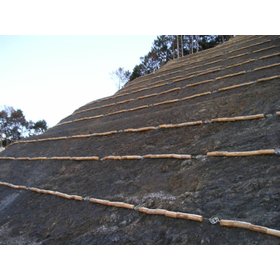
Wood muscle (sujikou)

Wood muscle (sujikou)

A greening foundation method aimed at contributing to the natural restoration (reforestation) of cut slopes and similar surfaces. It can be applied to steep slopes, improving the vegetation environment by arranging thinned timber in a linear fashion to create a stepped shape. 【Features】 ○ Promotes the use of thinned timber for forest conservation and forestry promotion. ○ The use of thinned timber allows for the creation of stepped slopes, enhancing the vegetation environment. (Stepping of slopes) ○ Over time, thinned timber will weather and return to the soil, minimizing the residual presence of foreign materials. ○ It can be shaped into frames or linear arrangements, allowing for flexible design modifications. ○ Using thinned timber ensures a natural appearance that blends seamlessly with the environment. ○ By restoring slopes naturally, maintenance costs can be significantly reduced in the future. ● For other functions and details, please contact us.

  • Other civil engineering works
  • Earthworks
  • Pile and foundation work
  • Foundation Method

Added to bookmarks

Bookmarks list

Bookmark has been removed

Bookmarks list

You can't add any more bookmarks

By registering as a member, you can increase the number of bookmarks you can save and organize them with labels.

Free membership registration

Foundation construction method without using concrete: "Screw Pile Foundation Method"

A renewable foundation to replace existing concrete foundations. Foundation construction method for small structures.

The "screw pile foundation method" is a new foundation method that is economical, simple, and environmentally friendly, aimed at small-scale structures. It does not require backfilling and does not generate excess soil. 【Features】 - Exhibits strong bearing capacity (compression and tension) - Economical, simple, and environmentally friendly - Allows for the construction of ground-mounted solar power plants in a short period - Versatile in application For more details, please download the catalog or contact us.

  • Subsidiary materials
  • Foundation Method

Added to bookmarks

Bookmarks list

Bookmark has been removed

Bookmarks list

You can't add any more bookmarks

By registering as a member, you can increase the number of bookmarks you can save and organize them with labels.

Free membership registration

Sample Catalog

Comprehensive Catalog of Sampling Devices Suitable for Quality Control

Easy collection of soil, liquids, frozen substances, semi-solids, powders, etc.

  • Sewerage facilities
  • Erosion control works
  • Environmental Survey
  • Foundation Method

Added to bookmarks

Bookmarks list

Bookmark has been removed

Bookmarks list

You can't add any more bookmarks

By registering as a member, you can increase the number of bookmarks you can save and organize them with labels.

Free membership registration

Mega Solar Foundation Construction Method "Screw Press Steel Pipe Insertion Method"

Low cost, short delivery time, low noise! A mega-solar foundation method that accommodates all ground conditions!

The "Screw Press Steel Pipe Insertion Method" is a foundation method for mega-solar installations that adapts to all types of land. By performing pre-drilling, it enables construction on sandy soils, clayey soils, and gravelly ground. Additionally, since thick steel pipes are erected vertically, braces are unnecessary, allowing for wider spacing between piles and achieving overall cost reduction for the framework. During removal, the steel pipes can be sold for more than the removal costs, providing an advantage in asset value compared to methods that incur removal and waste disposal costs, such as concrete gravity foundations or concrete piles. 【Features】 ■ Foundation method using winged steel pipe rotary insertion ■ Asset value exceeding removal costs ■ Adaptable to various ground conditions ■ Achieves cost reduction ■ High quality, high precision, low noise *For more details, please refer to the PDF materials or feel free to contact us.

  • Ground foundation construction method
  • Solar mounting brackets and fittings (solar fittings and protective sheets)
  • Foundation Method

Added to bookmarks

Bookmarks list

Bookmark has been removed

Bookmarks list

You can't add any more bookmarks

By registering as a member, you can increase the number of bookmarks you can save and organize them with labels.

Free membership registration

Ground reinforcement "RES-P Method"

Strengthening weak ground to protect the safety of your home. We reinforce the foundation ground of small buildings.

The "RES-P method" is a type of piled raft foundation construction method. It involves driving pipes (thin steel pipes) into weak ground to strengthen the ground through the combined action of the ground and the pipes, preventing settlement and reinforcing the foundation of residential buildings. It supports the load of the building by combining the bearing capacity of the ground with the bearing capacity of the driven pipes. In the case of single-family homes, the construction can be completed in one day, allowing for immediate commencement of foundation work afterward. 【Features】 ○ Reinforcement possible up to a depth of 14m ○ Flat ground reinforcement method ○ No curing period required ○ No residual soil generated ○ Can be constructed on narrow land For more details, please contact us or download the catalog.

  • Ground foundation construction method
  • Foundation Method

Added to bookmarks

Bookmarks list

Bookmark has been removed

Bookmarks list

You can't add any more bookmarks

By registering as a member, you can increase the number of bookmarks you can save and organize them with labels.

Free membership registration

Special Foundation Method for Weak Ground "TNF Method" Comprehensive Catalog

Published low-cost special foundation construction methods through shallow layer improvement. *Comprehensive catalog and comparison materials are currently available!

The "TNF Method Comprehensive Catalog" includes the low-cost special foundation method "TNF Method" through shallow improvement, as well as sandbag seismic reduction methods, liquefaction countermeasures, and various other methods. It also features construction procedures, examples, and reports on damaged properties from the Great East Japan Earthquake. *Exclusive for Ipros users: We are currently offering the comprehensive catalog and comparison materials for free! [Featured Products] ○ TNF Method ○ T-BAGS Seismic Reduction Method ○ TNF Hybrid Method ○ TNF+ Method ○ Improved Body WT Method, and others For more details, please contact us or download the catalog.

  • Ground foundation construction method
  • Foundation Method

Added to bookmarks

Bookmarks list

Bookmark has been removed

Bookmarks list

You can't add any more bookmarks

By registering as a member, you can increase the number of bookmarks you can save and organize them with labels.

Free membership registration

Special foundation method for weak ground "TNF Method"

Environmentally friendly grid-shaped foundation! Low-cost special foundation method using shallow layer improvement.

The "TNF Method" integrates ground improvement with foundations and slabs, allowing the building's load to be distributed over a surface. Additionally, it exerts a force that confines the unmodified area at the bottom of the primary improvement (in a grid-like pattern), preventing soil from escaping and stabilizing the support for the building (this is referred to as the TNF confinement effect). Traditionally, in cases of weak ground, pile methods supported by hard strata below have been mainstream; however, the TNF Method enables the realization of low-cost foundations that use the surface ground as the support layer. 【Features】 - Low-cost special foundation method through shallow layer improvement - The TNF Method typically does not have underground beams - Integrates the improved body with the foundation and slab, efficiently transmitting the building load to the ground - Patent number: No. 3608568 For more details, please contact us or download the catalog.

  • Ground foundation construction method
  • Foundation Method

Added to bookmarks

Bookmarks list

Bookmark has been removed

Bookmarks list

You can't add any more bookmarks

By registering as a member, you can increase the number of bookmarks you can save and organize them with labels.

Free membership registration

Special Foundation Method "TNF Method" - Comparison with Pile Methods -

Comparison of pile methods that use hard lower strata as the supporting layer and the TNF method that uses surface ground as the supporting layer.

This is a catalog comparing various aspects such as the characteristics and construction periods of the "pile method," which uses a hard lower stratum as the supporting layer, and the "TNF method," which uses the surface ground as the supporting layer. [Contents] ■ Applicable Ground ■ Characteristics of Pile Method / TNF Method ■ Construction Period Comparison (Examples) ■ Scrap Cost Comparison ■ Heavy Machinery Used For more details, please refer to the catalog or feel free to contact us.

  • Ground foundation construction method
  • Foundation construction
  • Foundation Method

Added to bookmarks

Bookmarks list

Bookmark has been removed

Bookmarks list

You can't add any more bookmarks

By registering as a member, you can increase the number of bookmarks you can save and organize them with labels.

Free membership registration

Trapezoidal Foundation Construction Method "TNF-D Method"

The trapezoidal foundation that disperses force reduces the risk of ground subsidence. It eliminates the need for underground beams, piles, and formwork, resulting in low cost and short construction time.

The "TNF method" allows for the creation of stable foundations at low cost and in a short period, even on soft ground, by integrating the ground improvement layer, foundation, and slab in a grid pattern. The "TNF-D method" enhances the foundation part by making it "trapezoidal," increasing the distribution of forces. This further reduces the risks of uplift and ground subsidence due to decreased stress transmission. Like conventional methods, it can be constructed without underground beams or piles, and formwork is also unnecessary. 【Features】 ■ Reduces foundation structure costs ■ Shortens construction period by reducing types of work ■ No need for foundation formwork, addressing labor shortages ■ Suppresses stress transmission and improves stability *For more details, please refer to the materials available for download in PDF format. Feel free to contact us with any inquiries.

  • Ground foundation construction method
  • Foundation Method

Added to bookmarks

Bookmarks list

Bookmark has been removed

Bookmarks list

You can't add any more bookmarks

By registering as a member, you can increase the number of bookmarks you can save and organize them with labels.

Free membership registration

Vibration Control WIB Method

Eliminate vibration issues and create a comfortable living environment! Here are some examples of our achievements in vibration control.

Various vibrations from road traffic, railways, factories, and construction work exist around us. These vibrations are often perceived as unpleasant and can negatively impact daily life. The "Vibration Countermeasure WIB Method" addresses these vibration issues and creates a comfortable living environment. Additionally, the installation location and shape can be selected according to each property. 【Summary of Achievements (Partial)】 ■ Vibration Source: Road traffic vibration ■ Installation Location: Directly beneath the vibration source ■ WIB Method Type: Plate-type WIB Method (Honeycomb cell type) ■ Issue: Vibrations from large vehicles passing on the road propagate to nearby residences, leading to vibration complaints ■ Response: Road improvement work was carried out, and a honeycomb cell-type plate WIB Method was installed directly beneath the road *For more details, please refer to the PDF document or feel free to contact us.

  • Ground foundation construction method
  • Ground improvement
  • Ground improvement materials
  • Foundation Method

Added to bookmarks

Bookmarks list

Bookmark has been removed

Bookmarks list

You can't add any more bookmarks

By registering as a member, you can increase the number of bookmarks you can save and organize them with labels.

Free membership registration

Liquefaction countermeasure WIB method

Reduction of seismic forces and prevention of liquefaction! Constraining the soil inside the cell to suppress ground deformation and reduce seismic motion.

The "Liquefaction Countermeasure WIB Method" protects buildings from damage caused by earthquakes and liquefaction. The basic structure consists of replacement soil that acts as a seismic isolation layer, ground improvement piles that function as a damping layer, and support ground improvement piles that support the building foundation. The ground improvement piles in the damping layer are constructed in a cellular form, creating a strong and stable composite ground (non-liquefaction layer). Additionally, by increasing resistance through the combination of pile foundations and the WIB method, it is possible to reduce the number of piles or lower the grade of the piles, thereby rationalizing the design and contributing to cost reduction. 【Features】 ■ Ground improvement piles in the damping layer are constructed in a cellular form ■ Creates a strong and stable composite ground (non-liquefaction layer) ■ During an earthquake, the cellular ground improvement piles restrain the soil inside the cells ■ Suppresses ground distortion and reduces seismic motion ■ Since liquefaction does not occur inside the cells, it blocks the propagation of liquefied mud water below, preventing surface liquefaction *For more details, please refer to the PDF materials or feel free to contact us.

  • Ground foundation construction method
  • Ground improvement
  • Ground improvement materials
  • Foundation Method

Added to bookmarks

Bookmarks list

Bookmark has been removed

Bookmarks list

You can't add any more bookmarks

By registering as a member, you can increase the number of bookmarks you can save and organize them with labels.

Free membership registration

[WIB Construction Method Case Study] Measures Against Machine Vibration in Manufacturing Plants

Improvement of the working environment! Introduction of a construction case where tire shred made of high-damping material was filled in the cell.

At Mitsui Sumitomo Construction in Ehime Prefecture, vibrations caused by machinery operation within the manufacturing plant were propagating to the adjacent office building (a four-story steel structure), resulting in significant vertical vibrations accompanied by a rumbling phenomenon on the 3rd and 4th floors, necessitating environmental improvements. As a countermeasure, a passage for transport vehicles was constructed between the manufacturing plant and the office building, and the 'WIB method' was implemented directly beneath it. Vibration measurements taken before and after the countermeasures showed a reduction of 10 dB on the 1st floor, while the rumbling phenomenon was eliminated on the 3rd and 4th floors, resulting in a reduction of 15 to 17 dB. Additionally, the vibration level, which had exceeded 70 dB before the countermeasures, dropped to below 60 dB afterward, improving the working environment. 【Case Summary】 ■ Location: Ehime Prefecture ■ Client: Mitsui Sumitomo Construction ■ Vibration Source: Factory vibrations ■ Target for Preservation: Adjacent office building ■ Countermeasure Method: Plate-type WIB (honeycomb cell type) ■ Installation Position: Vibration propagation route *For more details, please refer to the PDF document or feel free to contact us.

  • Ground foundation construction method
  • Ground improvement
  • Ground improvement materials
  • Foundation Method

Added to bookmarks

Bookmarks list

Bookmark has been removed

Bookmarks list

You can't add any more bookmarks

By registering as a member, you can increase the number of bookmarks you can save and organize them with labels.

Free membership registration

[WIB Construction Method Case Study] Vibration Control Measures for the Construction of a New Expressway (1)

Measures were implemented between the construction area and the residential area! It was confirmed that ground vibrations are approximately 6dB lower, reducing vibrations by half!

In Mie Prefecture, there were concerns that construction vibrations from the new highway would propagate to nearby residences. To address this, the 'WIB method' was implemented between the construction area and the homes. After the measures were taken, a running test with a backhoe was conducted, comparing vibrations at the untreated and treated locations. As a result, it was confirmed that the ground vibrations at the treated location were approximately 6dB lower than those at the untreated location, effectively reducing the vibrations by half. 【Case Overview】 ■ Location: Mie Prefecture ■ Client: Tenox Co., Ltd. ■ Vibration Source: Construction work vibrations ■ Protected Target: One nearby residence ■ Countermeasure: Wall-type WIB method (screen type) ■ Installation Position: Vibration propagation path *For more details, please refer to the PDF document or feel free to contact us.

  • Ground foundation construction method
  • Ground improvement
  • Ground improvement materials
  • Foundation Method

Added to bookmarks

Bookmarks list

Bookmark has been removed

Bookmarks list

You can't add any more bookmarks

By registering as a member, you can increase the number of bookmarks you can save and organize them with labels.

Free membership registration

[WIB Construction Method Case Study] Traffic Vibration Mitigation for Newly Constructed Roads

Confirmed a reduction of more than 10dB, reducing vibrations to less than one-third! Measures were implemented directly beneath the road!

In Yamanashi Prefecture, with the establishment of new embankment roads, it became necessary to preserve the environment of residential areas along the route after the road opened. Therefore, the "WIB method" was implemented directly beneath the road. A running test using a backhoe was conducted before and after the measures (before road construction). As a result, a reduction of more than 10 dB in both horizontal and vertical directions was confirmed near the public-private boundary, and vibrations were reduced to less than one-third. 【Case Summary】 ■ Construction Location: Yamanashi Prefecture ■ Vibration Source: Road traffic vibrations ■ Preservation Target: Several residential buildings along the road ■ Countermeasure Work: Plate-type WIB (honeycomb cell type) ■ Construction Position: Directly beneath the vibration source *For more details, please refer to the PDF document or feel free to contact us.

  • Ground foundation construction method
  • Ground improvement
  • Ground improvement materials
  • Foundation Method

Added to bookmarks

Bookmarks list

Bookmark has been removed

Bookmarks list

You can't add any more bookmarks

By registering as a member, you can increase the number of bookmarks you can save and organize them with labels.

Free membership registration

[WIB Construction Method Case Study] Road Traffic Vibration Countermeasures for Residential Areas Along National Highways

Vibration measurements were conducted before and after the measures were implemented! A reduction of 4 to 5 dB in the vertical direction was confirmed!

In Saitama City, Saitama Prefecture, traffic vibrations from the national highway were affecting the living environment along the route, leading to complaints from residents. As a countermeasure, tire shred made of high-damping material was filled within a grid. Renovation work was carried out on the side road that runs between the national highway and the residential area, and the 'WIB method' was implemented directly beneath the road. After conducting vibration measurements before and after the countermeasures, a reduction of 4 to 5 dB in vertical direction was confirmed near the boundary between public and private land. 【Case Summary】 ■ Construction Location: Saitama Prefecture ■ Client: Saitama City ■ Vibration Source: Road traffic vibrations ■ Preservation Target: Several residential buildings along the national highway ■ Countermeasure Work: Wall-type WIB method (grid type) ■ Construction Position: Vibration propagation path *For more details, please refer to the PDF document or feel free to contact us.

  • Ground foundation construction method
  • Ground improvement
  • Ground improvement materials
  • Foundation Method

Added to bookmarks

Bookmarks list

Bookmark has been removed

Bookmarks list

You can't add any more bookmarks

By registering as a member, you can increase the number of bookmarks you can save and organize them with labels.

Free membership registration

[WIB Construction Method Case Study] Vibration Mitigation Measures for the Construction of New Expressways (2)

Compared to areas without measures, the ground vibration in areas with measures is about 6dB to 7dB lower! Vibration reduced to less than half!

In Mie Prefecture, there were concerns that the construction vibrations from the new highway would propagate to nearby public facilities. Therefore, the 'WIB method' was implemented directly beneath the construction vehicle road. After the measures were taken, running tests and impact tests using a backhoe were conducted, and the vibrations at the untreated and treated locations were compared. As a result, it was confirmed that the ground vibrations at the treated locations were approximately 6dB to 7dB lower than those at the untreated locations, reducing the vibrations to less than half. 【Case Overview】 ■ Location: Mie Prefecture ■ Client: Tenox Co., Ltd. ■ Vibration Source: Construction work vibrations ■ Preservation Target: Nearby public facilities ■ Countermeasure Work: Plate-type WIB method (honeycomb cell type) ■ Construction Position: Directly beneath the vibration source *For more details, please refer to the PDF document or feel free to contact us.

  • Ground foundation construction method
  • Ground improvement
  • Ground improvement materials
  • Foundation Method

Added to bookmarks

Bookmarks list

Bookmark has been removed

Bookmarks list

You can't add any more bookmarks

By registering as a member, you can increase the number of bookmarks you can save and organize them with labels.

Free membership registration

[WIB Construction Method Case Study] Traffic Vibration Mitigation for Existing Roads

Conducted driving tests with a 10-ton truck before and after the measures! We were able to achieve vibration reduction effects!

In Shizuoka Prefecture, vibration countermeasures were required for sections where complaints about vibrations had been occurring during road renovation work. As a result, the 'WIB method' was implemented directly beneath the road. Before and after the countermeasures, a driving test was conducted using a 10-ton truck. Vibration responses were measured and compared at the boundary between public and private properties along the route, on the ground within the site, and on the second floor of buildings. It was found that vibrations around the dominant frequency of 6Hz were reduced, achieving an average reduction of 10dB in the horizontal direction and 20dB in the vertical direction. [Case Summary] ■ Construction Location: Shizuoka Prefecture ■ Client: Imamura-gumi Co., Ltd. ■ Vibration Source: Road traffic vibrations ■ Preservation Target: Several houses along the road ■ Countermeasure Method: Plate-type WIB (honeycomb cell type) ■ Construction Position: Directly beneath the vibration source *For more details, please refer to the PDF document or feel free to contact us.

  • Ground foundation construction method
  • Ground improvement
  • Ground improvement materials
  • Foundation Method

Added to bookmarks

Bookmarks list

Bookmark has been removed

Bookmarks list

You can't add any more bookmarks

By registering as a member, you can increase the number of bookmarks you can save and organize them with labels.

Free membership registration

[WIB Construction Method Case Study] Road Traffic Vibration Countermeasures for Model Houses (2)

Traffic vibrations transmitted from the ground have been reduced! An environment that falls below regulatory standards has been created after the measures were implemented!

In the model house along the main road in Chiba Prefecture, there were concerns about the impact of traffic vibrations on the living environment due to the proximity of a heavily trafficked main road after the model house was newly constructed. The 'WIB method' was implemented directly beneath the model house, achieving a vibration reduction level of 12dB (about 1/4 of the original vibration). This model house is planned along a heavily trafficked main road due to its appealing characteristics, but thanks to this construction, the traffic vibrations transmitted from the ground have been reduced, creating an expected quiet indoor environment suitable for the model house. [Case Overview] ■ Construction Location: Chiba Prefecture ■ Client: Tokyo Sekisui Heim Co., Ltd. ■ Vibration Source: Road traffic vibrations ■ Preservation Target: Model house along the main road ■ Countermeasure Work: Plate-type WIB (honeycomb cell type) ■ Construction Position: Directly beneath the receiving side *For more details, please refer to the PDF document or feel free to contact us.

  • Ground foundation construction method
  • Ground improvement
  • Ground improvement materials
  • Foundation Method

Added to bookmarks

Bookmarks list

Bookmark has been removed

Bookmarks list

You can't add any more bookmarks

By registering as a member, you can increase the number of bookmarks you can save and organize them with labels.

Free membership registration

[WIB Construction Method Case Study] Road Traffic Vibration Countermeasures for Model Houses (1)

Maintenance-free and semi-permanent! It creates a comfortable indoor environment without vibration transmission!

At the model house along the road in Tokyo, large vehicles pass by approximately every five minutes during the day, raising concerns about the impact of traffic vibrations on the living environment. The 'WIB method' was implemented directly beneath the model house, achieving a vibration reduction level of 10-12 dB (about 1/4 to 1/3 of the original vibration). This installation is maintenance-free and semi-permanent, ensuring that even after the model house becomes a regular residence, a comfortable indoor environment free from vibrations will be maintained. 【Case Summary】 ■ Location: Tokyo ■ Client: Mitsui Home Co., Ltd. ■ Vibration Source: Road traffic vibrations ■ Preservation Target: Model house along the road ■ Countermeasure: Plate-type WIB (honeycomb cell type) ■ Installation Position: Directly beneath the receiving side *For more details, please refer to the PDF document or feel free to contact us.

  • Ground foundation construction method
  • Ground improvement
  • Ground improvement materials
  • Foundation Method

Added to bookmarks

Bookmarks list

Bookmark has been removed

Bookmarks list

You can't add any more bookmarks

By registering as a member, you can increase the number of bookmarks you can save and organize them with labels.

Free membership registration

[WIB Construction Method Case Study] Railway Vibration Mitigation for Residential Buildings Along Subway Lines

Support beams were also installed! We were able to keep the vibration level below 50dB!

In Tokyo, residential buildings are located close to railways that run underground, raising concerns about the impact of railway vibrations on the living environment after the construction of new homes. To address this, the 'WIB method' was implemented directly beneath the residences. Since building support was necessary, support piles were also installed. Vibration measurements were conducted before and after the implementation of the countermeasures, resulting in a reduction of vibrations by 12 to 17 dB (from 1/7 to 1/4), successfully keeping the vibration levels below 50 dB. 【Case Summary】 ■ Location: Tokyo ■ Client: Project owner ■ Vibration source: Railway vibrations ■ Preservation target: Residential buildings along the railway (underground) ■ Countermeasure method: Plate-type WIB (honeycomb cell type) ■ Installation position: Directly beneath the receiving side *For more details, please refer to the PDF document or feel free to contact us.

  • Ground foundation construction method
  • Ground improvement
  • Ground improvement materials
  • Foundation Method

Added to bookmarks

Bookmarks list

Bookmark has been removed

Bookmarks list

You can't add any more bookmarks

By registering as a member, you can increase the number of bookmarks you can save and organize them with labels.

Free membership registration

[WIB Construction Method Case Study] Railway Vibration Countermeasures for Residential Areas Along Railways, January 2019, Saitama Prefecture

Measures were implemented directly beneath each residence from Building A to Building E! The vibration level has been reduced to below 60dB!

Some plots of a residential development in Saitama Prefecture face a railway, raising concerns about the impact on the living environment after the construction of the houses. Therefore, the 'WIB method' was implemented directly beneath each of the residential buildings from Building A to Building E. Vibration measurements were conducted before and after the countermeasures. As a result, the dominant vibration at 10Hz was reduced by 14dB (to 1/5 of the original vibration), successfully keeping the vibration level below 60dB. [Case Overview] ■ Construction Location: Saitama Prefecture ■ Client: Housing Manufacturer ■ Vibration Source: Railway Vibration ■ Preservation Target: Residential buildings along the railway (total of 5 buildings) ■ Countermeasure Work: Plate-type WIB method (honeycomb cell type) ■ Construction Position: Directly beneath the receiving side *For more details, please refer to the PDF document or feel free to contact us.

  • Ground foundation construction method
  • Ground improvement
  • Ground improvement materials
  • Foundation Method

Added to bookmarks

Bookmarks list

Bookmark has been removed

Bookmarks list

You can't add any more bookmarks

By registering as a member, you can increase the number of bookmarks you can save and organize them with labels.

Free membership registration

[WIB Construction Method Case Study] Railway Vibration Countermeasures for Residential Areas Along Railways, September 2018, Saitama Prefecture

Concerns about the impact on the living environment after residential construction! Introducing examples aimed at increasing vibration reduction effects!

Some of the residential development plots in Saitama Prefecture face a railway, raising concerns about the impact on the living environment after the construction of the houses. Therefore, the 'WIB method' was implemented directly beneath the houses. In buildings D and E, where the vibration level exceeded 70dB before the measures were taken, the countermeasures were extended on the railway side to enhance the vibration reduction effect. After conducting vibration measurements before and after the measures, the dominant vibration at 10Hz was reduced by 6dB to 14dB (to 1/5 to 1/2 of the original vibration), successfully keeping the vibration level below 60dB. 【Case Summary】 ■ Location: Saitama Prefecture ■ Client: Housing manufacturer ■ Vibration source: Railway vibration ■ Preservation target: Residential buildings along the railway (total of 5 buildings) ■ Countermeasure work: Plate-type WIB (honeycomb cell type) ■ Construction position: Directly beneath the receiving side (partly on the propagation path) *For more details, please refer to the PDF document or feel free to contact us.

  • Ground foundation construction method
  • Ground improvement
  • Ground improvement materials
  • Foundation Method

Added to bookmarks

Bookmarks list

Bookmark has been removed

Bookmarks list

You can't add any more bookmarks

By registering as a member, you can increase the number of bookmarks you can save and organize them with labels.

Free membership registration

[WIB Construction Method Case Study] Road Traffic Vibration Mitigation for Residential Areas Along Elevated Bridges

Reduced vibrations of 4Hz by about 5dB and vibrations of 12.5 to 20Hz by about 10dB! The vibrations have become such that they do not affect livability!

The planned construction site for housing in Kanagawa Prefecture was experiencing traffic vibrations transmitted from the elevated bridge and the road in front of the site. As a countermeasure, we implemented measures directly beneath the apartment building. The vibrations from the elevated bridge were predominantly at 4Hz, while those from the road in front of the site ranged from 12.5 to 20Hz. We designed the "WIB method" to address each of these vibrations. As a result, we reduced the 4Hz vibrations by approximately 5dB and the 12.5 to 20Hz vibrations by about 10dB, resulting in vibrations that did not affect livability. [Case Summary] ■ Construction Location: Kanagawa Prefecture ■ Client: Housing Manufacturer ■ Vibration Source: Road Traffic Vibration ■ Preservation Target: Apartment Building (New Construction, 3 Stories) ■ Countermeasure: Plate-type WIB Method (Honeycomb Cell Type) ■ Construction Position: Directly Beneath the Receiving Side *For more details, please refer to the PDF document or feel free to contact us.

  • Ground foundation construction method
  • Ground improvement
  • Ground improvement materials
  • Foundation Method

Added to bookmarks

Bookmarks list

Bookmark has been removed

Bookmarks list

You can't add any more bookmarks

By registering as a member, you can increase the number of bookmarks you can save and organize them with labels.

Free membership registration

[WIB Construction Method Case Study] Road Traffic Vibration Countermeasures for Residential Areas Along Roads

Confirmed a vibration reduction of 3-6dB on the first floor and 4-5dB on the second floor! Introducing a case where livability has improved!

In residential houses along the roads in Tokyo, vibrations from large vehicles were propagating, and vertical vibrations were affecting the living environment. Therefore, during the rebuilding of the houses, the 'WIB method' was implemented directly beneath the residences. Vibration measurements were conducted before and after the countermeasures within the buildings. As a result, a reduction of 3-6 dB on the first floor and 4-5 dB on the second floor was confirmed, improving livability. [Case Summary] ■ Location: Tokyo ■ Client: Sekisui Heim Corporation ■ Vibration Source: Road traffic vibrations ■ Preservation Target: Houses along the road ■ Countermeasure Method: Plate-type WIB (honeycomb cell type) ■ Installation Position: Directly beneath the receiving side *For more details, please refer to the PDF document or feel free to contact us.

  • Ground foundation construction method
  • Ground improvement
  • Ground improvement materials
  • Foundation Method

Added to bookmarks

Bookmarks list

Bookmark has been removed

Bookmarks list

You can't add any more bookmarks

By registering as a member, you can increase the number of bookmarks you can save and organize them with labels.

Free membership registration

[WIB Construction Method Case Study] Railway Vibration Countermeasures for Residential Areas Along Railways, January 2014, Saitama Prefecture

Railway vibrations reduced by half! A damping effect of approximately 4dB in the horizontal direction and about 6dB in the vertical direction has been confirmed!

In the vicinity of the planned construction site for a detached house (two-story lightweight steel frame) in Saitama Prefecture, trains frequently pass by, raising concerns about the impact of railway vibrations on the living environment. Therefore, the 'WIB method' was implemented directly beneath the house. Vibration measurements taken before and after the construction confirmed a reduction effect of approximately 4dB in the horizontal direction and about 6dB in the vertical direction, effectively halving the railway vibrations. 【Case Overview】 ■ Construction Location: Saitama Prefecture ■ Client: Sanyu Soil Engineering Co., Ltd. ■ Vibration Source: Railway vibrations ■ Preservation Target: Houses along the railway ■ Countermeasure Work: Plate-type WIB method (honeycomb cell type) ■ Construction Position: Directly beneath the receiving side *For more details, please refer to the PDF document or feel free to contact us.

  • Ground foundation construction method
  • Ground improvement
  • Ground improvement materials
  • Foundation Method

Added to bookmarks

Bookmarks list

Bookmark has been removed

Bookmarks list

You can't add any more bookmarks

By registering as a member, you can increase the number of bookmarks you can save and organize them with labels.

Free membership registration

Self-supporting retaining wall "YOSAKU Method"

Reduce excavation volume and earthworks to shorten construction time and cut costs!

The "YOSAKU Method" is a construction technique characterized by an integrated structure of concrete walls and pile foundations to support lateral earth pressure and vertical loads. It allows for low costs and minimizes the amount of soil excavation, resulting in a highly efficient retaining wall. It is particularly effective in sloped areas or places with elevation differences. Unlike conventional methods, it does not require a foundation base, making it possible to reduce soil-related issues during excavation (such as movement, processing, and softening) as well as their impact on the surrounding area and costs. 【Features】 ■ Reduces the amount of excavated soil and earthwork, significantly decreasing the workload ■ Shortens construction time and reduces costs ■ No foundation base required ■ Reduces soil-related issues during excavation (such as movement, processing, and softening) and their impact on surrounding costs *For more details, please refer to the PDF document or feel free to contact us.

  • Retaining wall
  • Foundation Method

Added to bookmarks

Bookmarks list

Bookmark has been removed

Bookmarks list

You can't add any more bookmarks

By registering as a member, you can increase the number of bookmarks you can save and organize them with labels.

Free membership registration

【Pin Foundation Construction Example】Difficult Locations for Other Foundation Methods

Simple foundation methods for NETIS registration! We will introduce examples of construction in locations where other foundation methods are difficult.

Places where other foundation methods are difficult We will introduce examples of the pin foundation method. Due to weak ground, there are sites where foundation work becomes extensive, sites where draining water from ponds or canals incurs significant costs, or sites where transporting materials is very labor-intensive. In such cases, the lightweight pin foundation method, which can be constructed manually, is optimal. Depending on the case, it is also possible to significantly reduce the cost of foundation work. 【Examples】 ■ National Okinawa Memorial Park Ocean Expo Park (Okinawa Prefecture) ■ Structure: Effective width 2.0m, column pitch 3.0m ■ Materials used - Railing: FRP - Floorboard: FRP - Structural materials: Steel, FRP ■ Foundation type: DP-75, DP-100 *For more details, please refer to the catalog or feel free to contact us.

  • Civil Engineering Method
  • Ground foundation construction method
  • others
  • Foundation Method

Added to bookmarks

Bookmarks list

Bookmark has been removed

Bookmarks list

You can't add any more bookmarks

By registering as a member, you can increase the number of bookmarks you can save and organize them with labels.

Free membership registration

In soft ground or places where heavy machinery cannot enter! NETIS registered simple foundation method.

A promenade and Yatsuhashi can be created in areas with loose ground! No heavy machinery needed, and it's gentle on the natural environment.

The "Pin Foundation" is a simple foundation construction method that provides support by driving pins at an angle through a fixed block. It is effective in foundations in areas where heavy machinery cannot easily access, such as in forests, as it does not require large excavation work on the ground surface. By increasing the embedment depth of the pins, it can also accommodate soft ground conditions such as marshy or sandy soils. 【Features】 ■ Suitable for foundations of small structures like boardwalks, Yatsuhashi bridges, and pavilions ■ No ground excavation required for heavy machinery access, making it environmentally friendly ■ Two types of construction methods available based on application ■ Registered with NETIS *You can view a catalog with numerous construction examples from the "Download" section.

  • Civil Engineering Method
  • Ground foundation construction method
  • others
  • Foundation Method

Added to bookmarks

Bookmarks list

Bookmark has been removed

Bookmarks list

You can't add any more bookmarks

By registering as a member, you can increase the number of bookmarks you can save and organize them with labels.

Free membership registration

Wooden gardening for private homes, tourist spots, golf courses, amusement parks, etc.

Proposed external spaces for your garden with preservative-treated wood! We offer design and construction tailored to various needs, such as 'decks' and 'wooden fences'.

At Sanmoku Kogyo, we propose external spaces for landscaping and gardens, providing design and construction tailored to various needs. We offer a wide range of products, including "decks" made from beautifully grained and expressive Ulin wood, which over time creates a relationship with traditional houses, and "wooden fences" featuring accentuated square timber treated with a transparent benigara finish. Our company provides "safe and secure" wooden products through high-precision processing techniques using multi-axis machining and skilled carpenters, along with over 80 years of accumulated anti-corrosion technology. 【Product Lineup】 ■ Decks ■ Wooden Fences ■ Sleepers *For more details, please refer to the PDF materials or feel free to contact us.

  • Exterior Materials
  • Foundation Method

Added to bookmarks

Bookmarks list

Bookmark has been removed

Bookmarks list

You can't add any more bookmarks

By registering as a member, you can increase the number of bookmarks you can save and organize them with labels.

Free membership registration

Liquefaction countermeasure method "New Pola Hole PROTECT Method"

Prevents lifting without damaging the manhole!

The "New Pola Hall PROTECT Method" is a liquefaction countermeasure technique that protects sewage and stormwater manholes with permeable manholes and backfills them with crushed stone. Our permeable concrete has a permeability coefficient of K=1.0 cm/sec or higher, allowing for the instantaneous collection of pore water pressure caused by liquefaction through the permeable manholes and its dispersion through crushed stone. 【Features】 ■ Effective for "rainwater infiltration" and "pressure infiltration" ■ Maintains permeability and breathability ■ Can be utilized as existing drainage ditches ■ Prevents uplift without damaging the manholes *For more details, please download the PDF or feel free to contact us.

  • Special Construction Method
  • Ground foundation construction method
  • Rainwater infiltration facilities
  • Foundation Method

Added to bookmarks

Bookmarks list

Bookmark has been removed

Bookmarks list

You can't add any more bookmarks

By registering as a member, you can increase the number of bookmarks you can save and organize them with labels.

Free membership registration