Collaborative Software Product List and Ranking from 20 Manufacturers, Suppliers and Companies | IPROS

Last Updated: Aggregation Period:Oct 28, 2026~Nov 24, 2026
This ranking is based on the number of page views on our site.

Collaborative Software Manufacturer, Suppliers and Company Rankings

Last Updated: Aggregation Period:Oct 28, 2026~Nov 24, 2026
This ranking is based on the number of page views on our site.

  1. アステリア アステリア株式会社 Tokyo//Information and Communications
  2. キングジム Tokyo//others
  3. null/null
  4. 4 シスラボ Tokyo//Information and Communications
  5. 5 エムコマース Kanagawa//Information and Communications

Collaborative Software Product ranking

Last Updated: Aggregation Period:Oct 28, 2026~Nov 24, 2026
This ranking is based on the number of page views on our site.

  1. Tepra Creator API <Feature Introduction> キングジム
  2. Data integration software "OPC Spider"
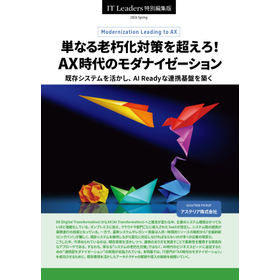
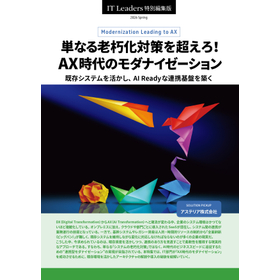
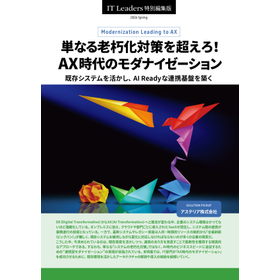
  3. Collaboration-based modernization materials for the real estate industry アステリア アステリア株式会社
  4. 4 Collaboration-Based Modernization Materials for Agriculture アステリア アステリア株式会社
  5. 4 [Case Study] Risk Improvement through Integration of Export Management System シスラボ

Collaborative Software Product List

31~38 item / All 38 items

Displayed results

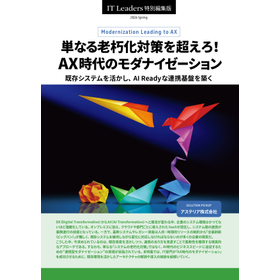
Collaboration-based modernization materials for the real estate industry

Utilizing existing systems for AI application in property assessment. Explaining methods to achieve operational efficiency through data integration.

In the real estate industry, the integration of a wide range of property data and market information is required to conduct quick and accurate property assessments. Particularly in environments where legacy systems and the latest SaaS coexist, data fragmentation can hinder the speed and accuracy of assessment operations. This document explains the method of "collaborative modernization," which builds an AI-ready foundation while leveraging existing IT assets, and supports the optimization of operations through data integration. 【Use Cases】 - Integration of internal databases necessary for assessments with external market data - Automation of assessment operations using no-code tools - Support for creating property assessment reports utilizing generative AI 【Benefits of Implementation】 - Reducing refresh costs by gradually leveraging existing systems - Decreasing the labor involved in assessment operations through data integration between systems - Improving assessment accuracy by establishing a data foundation with an eye toward AI utilization

  • Other Software
  • Collaborative Software

Added to bookmarks

Bookmarks list

Bookmark has been removed

Bookmarks list

You can't add any more bookmarks

By registering as a member, you can increase the number of bookmarks you can save and organize them with labels.

Free membership registration

MinoRobo×Business ByDesign

Automate ERP data integration while maintaining the existing environment! Achieve improved accuracy and efficiency in operations.

We introduce "RPA MinoRobo × SAP Business ByDesign," which achieves improved accuracy and efficiency while maintaining your current environment. Automate the integration of the global standard ERP "SAP Business ByDesign" with existing local data using RPA "MinoRobo." With flexible scalability, we enable "efficiency in business operations through simple and diverse business processes" and "the introduction of functionalities equivalent to large enterprises with manageable costs and short implementation times," thereby establishing a sustainable growth foundation for mid-sized and growing companies. 【Features】 ■ Automate data input to enhance speed and accuracy ■ No special transmission system required ■ Achieve cost-effective data integration using existing web environments ■ "MinoRobo" integrates even across different cloud environments, as well as with other company packages and individual systems *For more details, please refer to the PDF document or feel free to contact us.

  • Other Software
  • Collaborative Software

Added to bookmarks

Bookmarks list

Bookmark has been removed

Bookmarks list

You can't add any more bookmarks

By registering as a member, you can increase the number of bookmarks you can save and organize them with labels.

Free membership registration

[Case Study] Risk Improvement through Integration of Export Management System

Significantly streamline business flows with automatic linking of procurement costs and inter-system collaboration!

We would like to introduce a case study of a major general trading company that implemented risk improvement through the integration of an export management system and core system. Payments linked to orders were manually processed from order receipt to delivery, resulting in misalignment of accounting timing and delays in understanding profit and loss for each order. Additionally, there was a lack of integration between the dedicated system for legal review and the core system for contract/payment processing, allowing processing to continue even for cases without legal approval. We automated the detection of procurement costs and their linkage to products, and established a system where export applications and approvals are reflected in GRANDIT in real-time once completed in the system. We also created a mechanism that prevents payment processing for unapproved applications. 【Case Overview】 ■Industry: Major General Trading Company ■Challenges - Delays in understanding profit and loss by order due to payment accounting delays - Export contract risks due to lack of system integration ■Solutions - Automation of procurement cost detection and linkage to products - Prevention of payment risks through approval integration *For more details, please refer to the related links or feel free to contact us.

  • Customer Support
  • Collaborative Software

Added to bookmarks

Bookmarks list

Bookmark has been removed

Bookmarks list

You can't add any more bookmarks

By registering as a member, you can increase the number of bookmarks you can save and organize them with labels.

Free membership registration

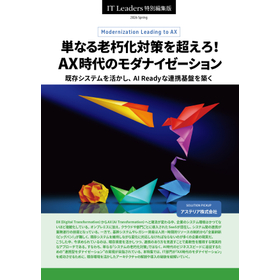
Collaboration-based modernization materials for the manufacturing industry

The approach to advancing "collaborative modernization" by leveraging existing manufacturing equipment data to build a predictive maintenance foundation using AI.

In the manufacturing industry, there is a demand for data-driven predictive maintenance to ensure stable operation of equipment and reduce downtime. In particular, how to integrate existing systems that have been in operation for many years with the latest AI technologies is key to building an efficient maintenance system. "Collaborative modernization," which builds an AI-ready foundation while leveraging existing IT assets without completely overhauling the system, is an effective approach to promoting digital transformation (DX) in manufacturing sites. 【Use Cases】 - Integration of existing equipment data within the factory and AI analysis platforms - Utilization of maintenance data from on-premises environments with AI in the cloud - Data integration between systems using APIs and iPaaS 【Benefits of Implementation】 - Building a phased AI utilization foundation that leverages existing systems - Utilizing concrete success stories in system renewal and migration - Improving the accuracy of predictive maintenance through the establishment of a data integration foundation

  • Other Software
  • Collaborative Software

Added to bookmarks

Bookmarks list

Bookmark has been removed

Bookmarks list

You can't add any more bookmarks

By registering as a member, you can increase the number of bookmarks you can save and organize them with labels.

Free membership registration

Collaboration-based modernization materials for medical institutions

Explaining the method for building a data integration infrastructure necessary for remote diagnosis while leveraging the existing healthcare system.

In the healthcare industry, with the spread of remote diagnosis, there is a demand for the safe and efficient integration of existing in-hospital systems with external networks. In particular, to accurately handle patient medical data and imaging information, it is essential to maintain legacy systems while developing a flexible data infrastructure that anticipates the use of AI. The "Collaborative Modernization" introduced in this document will help mitigate the risks associated with system renewal and gradually transition to an AI-ready environment. 【Usage Scenarios】 - Data integration between existing in-hospital systems and remote diagnosis platforms - Connection between on-premises environments and cloud-based AI diagnostic tools - Integration and utilization of fragmented medical data across departments 【Benefits of Implementation】 - Enables gradual system renewal leveraging existing IT assets - Improves data integration efficiency between systems through API and iPaaS utilization - Acquires key points for defining requirements and developing a data infrastructure with an eye toward AI utilization

  • Other Software
  • Collaborative Software

Added to bookmarks

Bookmarks list

Bookmark has been removed

Bookmarks list

You can't add any more bookmarks

By registering as a member, you can increase the number of bookmarks you can save and organize them with labels.

Free membership registration

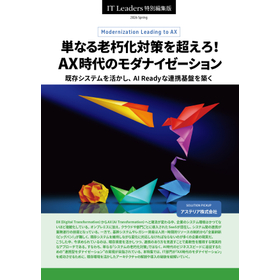
Modernization Materials for the Construction Industry in the AX Era

Leveraging existing systems for automated design. Explaining the methods for building a data integration platform aimed at utilizing AI.

In the construction industry's automated design, it is crucial to efficiently connect the vast amount of information accumulated within the company, such as design data and past construction achievements, to AI utilization. However, in an environment where existing on-premises systems and the latest SaaS coexist, data fragmentation often becomes a barrier to AI utilization. This document explains the method of "collaborative modernization," which builds an AI-ready infrastructure while leveraging existing IT assets. By optimizing data integration while minimizing the burden of system renewal, it supports improvements in the accuracy of automated design and operational efficiency. 【Usage Scenarios】 - Situations where you want to integrate existing design management systems with AI tools. - Situations where you want to utilize past drawing data managed on-premises for automated design. - Situations where you want to reduce the burden of data migration associated with system renewal. 【Benefits of Implementation】 - Building a phased AI utilization infrastructure that leverages existing systems. - Improving the efficiency of design operations through automated data integration. - Utilizing specific success stories in system renewal and migration.

  • Other Software
  • Collaborative Software

Added to bookmarks

Bookmarks list

Bookmark has been removed

Bookmarks list

You can't add any more bookmarks

By registering as a member, you can increase the number of bookmarks you can save and organize them with labels.

Free membership registration

Collaboration-Based Modernization Materials for the Tourism Industry

Smoothly realizing flow analysis of tourist destinations and AI utilization through data integration leveraging existing systems.

In the tourism industry, there is a demand to enhance customer experience through the analysis of visitor movement patterns. In particular, how to integrate existing reservation systems and facility management systems with new analytical tools and AI is key to accelerating data utilization. When systems are fragmented, it requires significant effort to integrate and analyze data, making it challenging to formulate rapid strategies. This document explains the method of "collaborative modernization," which builds an AI-ready foundation while leveraging existing IT assets, supporting the promotion of tourism digital transformation (DX). 【Usage Scenarios】 - Integration of visitor movement data at tourism facilities with existing customer data - Consideration of congestion alleviation and service improvement using movement analysis data - Establishment of a data integration foundation in an environment where on-premises and SaaS coexist 【Benefits of Implementation】 - Enables the gradual establishment of a data utilization foundation without overhauling existing systems - Improves data integration efficiency between systems through the use of APIs and iPaaS - Connects internal data with generative AI to support the efficiency of analytical tasks

  • Other Software
  • Collaborative Software

Added to bookmarks

Bookmarks list

Bookmark has been removed

Bookmarks list

You can't add any more bookmarks

By registering as a member, you can increase the number of bookmarks you can save and organize them with labels.

Free membership registration

Collaboration-based modernization materials for administration

Utilize existing systems to streamline application processes. Explain the methods for building a data integration platform aimed at leveraging AI.

In administrative agencies, there is a demand for both improving resident services and enhancing operational efficiency, with the automation of application processes being a particularly important issue. However, it is not easy to introduce new digital technologies while maintaining existing legacy systems. When data integration between systems is fragmented, it requires significant effort to input and verify application information, which hinders prompt responses. This document explains the method of "collaborative modernization" with an eye toward utilizing AI while leveraging existing IT assets, and supports the establishment of a foundation for promoting the automation of application processes. 【Usage Scenarios】 - Data integration between internal systems and external application sites - Digitization of application data from paper or PDF and automatic transcription - Aggregation and automation of processing application information across multiple departments 【Benefits of Implementation】 - Building an integration platform without overhauling existing systems, thereby controlling costs - Reducing manual data entry and preventing errors - Accelerating application processing through automated data integration

  • Other Software
  • Collaborative Software

Added to bookmarks

Bookmarks list

Bookmark has been removed

Bookmarks list

You can't add any more bookmarks

By registering as a member, you can increase the number of bookmarks you can save and organize them with labels.

Free membership registration