
peptide - List of Manufacturers, Suppliers, Companies and Products

peptide Product List

1~3 item / All 3 items

Displayed results

Tohoku Univ. Technology : Novel Peptide Inhibitors for Alzheimer’s disease : T21-307

Notch‑Sparing Modulation of γ‑Secretase by Three‑Finger Toxins

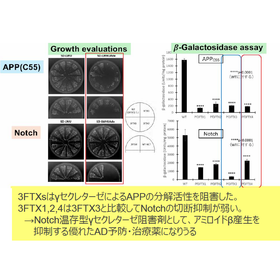
Amyloid-β (Aβ) accumulation is a key driver of Alzheimer’s disease (AD). While γ-secretase inhibitors (GSIs) have long been pursued as therapeutics, safety issues have prevented their clinical adoption. Using AlphaFold2–based in-silico screening, the inventors discovered that Three-Finger Toxins (3FTXs)—disulfide-rich peptides from snake venom—potently block γ-secretase–mediated APP processing. Strong inhibitory activity was confirmed in both yeast-based assays and a β-galactosidase reporter system. Brain-targeted AAV vectors for 3FTX expression are currently under development, with evaluation in AD model mice planned. Acting at sites distinct from traditional GSIs, 3FTXs offer a novel and promising approach for AD prevention and treatment.

Added to bookmarks

Bookmarks list

Bookmark has been removed

Bookmarks list

You can't add any more bookmarks

By registering as a member, you can increase the number of bookmarks you can save and organize them with labels.

Free membership registration

Tohoku University Technology: Method for Producing Antimicrobial Peptides: T24-051

Low-cost production method of the antimicrobial peptide Persulcatusin for the prevention and treatment of livestock diseases.

Antibiotics used in livestock disease control tend to be avoided not only due to concerns about the emergence of drug-resistant bacteria (multidrug-resistant bacteria) similar to their use in human disease treatment, but also due to concerns about food safety from residues in eggs, raw milk, and meat. On the other hand, there is a challenge in that there are few effective preventive and treatment methods that do not use antibiotics for diseases of livestock, such as mastitis in dairy cows, which result in significant economic losses. Associate Professor Ito and others from Tohoku University Graduate School of Agriculture have developed a method to efficiently produce the antimicrobial peptide Persulcatusin (IP), known primarily for its effects on Gram-positive bacteria, using plants. This method incorporates a strategy to suppress the negative effects of the peptide by producing it as a fusion protein in the host plant, allowing the peptide to be automatically released and activated during protein extraction.

Added to bookmarks

Bookmarks list

Bookmark has been removed

Bookmarks list

You can't add any more bookmarks

By registering as a member, you can increase the number of bookmarks you can save and organize them with labels.

Free membership registration