
List of Weather Survey products
- classification:Weather Survey
1~15 item / All 172 items
![[Disaster Measures] A must-see for ...](https://image.www.ipros.com/public/product/image/595/2000904728/IPROS15684834320275806124.JPG?w=280&h=280)

Since the construction-generated soil will be recycled on-site, the disposal costs for leftover soil and the costs for new purchases will be significantly reduced. 【Disaster Prevention】
- Special Construction Method
The Noto Reconstruction Office of the Ministry of Land, Infrastructure, Transport and Tourism has featured our 3D printer in the Nikkei newspaper.
The official X account of the Noto Reconstruction Office of the Ministry of Land, Infrastructure, Transport and Tourism and the Nihon Keizai Shimbun have published that our 3D printer has been adopted for the reconstruction of Noto. The official X account of the Noto Reconstruction Office introduces the use of our products in the restoration work of the Noto Expressway. Additionally, the Nihon Keizai Shimbun mentions that structures made with our products are being used for the restoration of roads damaged by the Noto Peninsula earthquake, and that the construction period can be shortened by about two weeks, so please take a look.


Contributing to the second stage of public infrastructure! Bringing public infrastructure development to the ground. A robust outdoor storage tank for hazardous materials capable of responding to the ...
- Water Treatment


Advanced solutions for sustainability information disclosure
- Weather Survey


Easily obtain real-time wave heights on-site! [NETIS registration number QSK-170002-VE]
- Harbor Construction
- Coastal construction
- Weather Survey
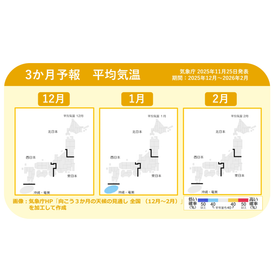
Three-Month Forecast Announcement: Winter-like cold has arrived, be cautious of the westward cold air.
The Japan Meteorological Agency announced a three-month forecast from December to February on Tuesday, November 25. During this period, the upper-level westerly winds will meander southward near Japan, but will generally flow in the same position as the average year. For more details, please visit our website.
![[ZEROSAI Implementation Case] Const...](https://image.www.ipros.com/public/product/image/3af/2000403652/IPROS65829576759966670008.jpeg?w=280&h=280)
Visualization of strong winds in construction work!
- Weather Survey
- Crane and others

Centralized management of weather forecast information for the site and upstream rivers in the cloud, with automatic notifications via electronic bulletin boards and business chat during emergencies.
- River construction
- Weather Survey

You can easily see the impact of the typhoon at the specified location!
- Analysis and prediction system
- Weather Survey

Super Typhoon Information Case Study: Major General Contractor
【Before Implementation】 I was obtaining typhoon information from free apps and news. <Challenges> Existing weather information mainly focused on notifications after typhoon formation, and some sites required up to a week for preparation work, making it difficult to respond in time after a typhoon formed. Clients were requesting typhoon countermeasures. We implemented our 【Super Typhoon Information】. 【After Implementation】 【Super Typhoon Information】 provides updates at the stage when a tropical depression forms... *For more details, please visit our website or feel free to contact us.

Cloud management of water level information combined with weather forecasts without the need for a power supply.
- River construction
- Weather Survey
- Measurement and analysis equipment leasing and rental

Three-color indicator light: Convenient usage techniques in conjunction with battery-operated water level gauge.
We would like to introduce convenient ways to utilize the newly released product, the "Three-Color Indicator Light," which was developed based on feedback from everyone. The "Three-Color Indicator Light" can be combined with a "Battery-Powered Water Level Gauge" to sound alarms based on segmented water level observations. Usage Examples: Monitor water level observations in three stages and take appropriate actions according to the level. Detect the risk of rapid water level rise during rainfall and take early preventive actions to ensure safety. - Set the baseline water level of 2m as Level 1: The green indicator light rotates, indicating standby. - Set the baseline water level of 4m as Level 2: The yellow indicator light rotates, indicating caution. - Set the baseline water level of 5m as Level 3: The red indicator light rotates, indicating evacuation. Additionally, the "Disaster Prevention Light" can display messages for workers and community members on a daily basis. Raising awareness of safety measures at the site is crucial through consistent practices such as daily KY (Kiken Yochi, or hazard prediction) and pointing out dangerous areas and points of caution. Let’s continuously display what to be cautious about during this season and strive to improve safety awareness across the entire site. Please feel free to utilize this for safety measures at the site, as well as for technical proposals and creative ideas. *For more details, please refer to the PDF document or feel free to contact us.

What kind of rain is referred to as "precipitation of 50 mm or more in one occurrence," used as a standard for work suspension, as supervised by the meteorologist of Sysmet Co., Ltd. for civil enginee...
- Weather Survey

[Three-Month Weather Forecast Announcement from the Meteorological Agency] The season for sweating has arrived! From May to July, there is a widespread tendency for high temperatures.
On Tuesday, April 22, the Japan Meteorological Agency announced the three-month forecast for May to July. In response, a dedicated meteorologist from Sysmet Co., Ltd. has summarized the contents of the three-month forecast in an easy-to-understand manner. This time, we will particularly focus on the average temperature and precipitation. We will continue to provide useful information related to the weather. *For more details, please visit our website or feel free to contact us.

Automatic notification of weather information at construction sites on Direct; instant alerts for sudden changes in weather conditions at the site.
- Groupware
- Weather Survey
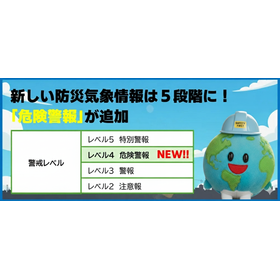
Meteorological Helpful Information "Danger Warning" Added - New Disaster Prevention Meteorological Information in Five Levels - Supervised by Sysmet Co., Ltd. Meteorologist
On November 11, 2025, a proposal to revise the "Disaster Prevention Meteorological Information" concerning floods, heavy rain, landslides, and storm surges was approved by the Cabinet. The implementation is scheduled for the rainy season in 2026. This article will explain what disaster prevention meteorological information is, the issues with the current system, and how the new disaster prevention meteorological information will change. Table of Contents 1. What is disaster prevention meteorological information? 2. Issues with the current disaster prevention meteorological information 3. How will the new disaster prevention meteorological information change? 1. What is disaster prevention meteorological information? Disaster prevention meteorological information refers to information related to disaster risks announced by the Japan Meteorological Agency. It is issued when the risk of disasters such as heavy rain, floods, strong winds, lightning, storm surges, and landslides increases, serving as a basis for decisions on evacuation and work suspension. Specifically, it includes alerts and warnings such as "Special Heavy Rain Warning," "Landslide Warning," and "Storm Surge Advisory," which are denoted by the suffixes "warning" or "advisory." It also encompasses various other information, such as "Meteorological Information on Significant Heavy Rain" that alerts to the risk of linearly organized precipitation bands, "Heat Stroke Warning Alerts" during summer, and "Typhoon Information." 2. Issues with the current disaster prevention meteorological information For details, please visit our website.

Automatic notification of weather information at construction sites on LINE WORKS, instantly informing about sudden changes in weather conditions at the site.
- Weather Survey
- Groupware
Meteorological Helpful Information "Danger Warning" Added - New Disaster Prevention Meteorological Information in Five Levels - Supervised by Sysmet Co., Ltd. Meteorologist
On November 11, 2025, a proposal to revise the "Disaster Prevention Meteorological Information" concerning floods, heavy rain, landslides, and storm surges was approved by the Cabinet. The implementation is scheduled for the rainy season in 2026. This article will explain what disaster prevention meteorological information is, the issues with the current system, and how the new disaster prevention meteorological information will change. Table of Contents 1. What is disaster prevention meteorological information? 2. Issues with the current disaster prevention meteorological information 3. How will the new disaster prevention meteorological information change? 1. What is disaster prevention meteorological information? Disaster prevention meteorological information refers to information related to disaster risks announced by the Japan Meteorological Agency. It is issued when the risk of disasters such as heavy rain, floods, strong winds, lightning, storm surges, and landslides increases, serving as a basis for decisions on evacuation and work suspension. Specifically, it includes alerts and warnings such as "Special Heavy Rain Warning," "Landslide Warning," and "Storm Surge Advisory," which are denoted by the suffixes "warning" or "advisory." It also encompasses various other information, such as "Meteorological Information on Significant Heavy Rain" that alerts to the risk of linearly organized precipitation bands, "Heat Stroke Warning Alerts" during summer, and "Typhoon Information." 2. Issues with the current disaster prevention meteorological information For details, please visit our website.
![[ZEROSAI Implementation Case] Cloud...](https://image.www.ipros.com/public/product/image/db6/2001482346/IPROS15698218034215889500.png?w=280&h=280)
Even in mountainous areas where communication is not available, we utilize Starlink to manage weather information in the cloud during civil engineering work.
- Weather Survey
- Erosion control works

[ZEROSAI Case Study] Civil Engineering Projects with Communication Issues Managed by Cloud-based Weather Information via Starlink
Introducing case studies of the implementation of the Natural Disaster Prevention System ZEROSAI (Registration Number QS-150021-VE) in civil engineering and construction work in the construction industry. It can be utilized not only for safety measures but also for creative ideas and technical proposals. [Before Implementation] Due to construction in mountainous areas, there was no signal, and weather information was being observed from a location far from the site. <Challenges> ● There was a discrepancy in weather information between the site and the observation point. ● Instructions to halt work for the site workers were delayed. We implemented our [Natural Disaster Prevention System ZEROSAI] and conducted communication using [Starlink]. *For more details, please visit our website or feel free to contact us.
![[ZEROSAI Implementation Case] ○○ Fi...](https://image.www.ipros.com/public/product/image/78e/2001514985/IPROS7176189440239303065.jpg?w=280&h=280)
Visualizing coastal gusts: Constantly illuminated three-color indicator lights for quick assessment of work feasibility.
- Anemometer
- Weather Survey
- Coastal construction

[ZEROSAI Implementation Case] Regional Development Bureau National Route No. 〇 Road Improvement Project
We will introduce examples of the implementation of the Natural Disaster Prevention System ZEROSAI (Registration Number QS-150021-VE) in civil engineering and construction work in the construction industry. It can be utilized not only for safety measures but also for creative ideas and technical proposals. [Before Implementation] Due to the proximity of the sea and the lack of obstructions, there were many sudden gusts of wind, making it difficult to determine whether it was safe to continue work. <Issues> - Checking weather apps for work decisions took time, and there was a time lag in informing the entire site. - Delays in deciding to halt work due to strong winds led to cases where work continued while risks were present. We introduced our Natural Disaster Prevention System ZEROSAI along with the optional three-color signal light. For more details, please visit our website or download the PDF.

Centralized management of weather forecasts and on-site water levels in the cloud! Automatic notifications via electronic display boards and business chat during emergencies.
- River construction
- Weather Survey
Three-color indicator light: Convenient usage techniques in conjunction with battery-operated water level gauge.
We would like to introduce convenient ways to utilize the newly released product, the "Three-Color Indicator Light," which was developed based on feedback from everyone. The "Three-Color Indicator Light" can be combined with a "Battery-Powered Water Level Gauge" to sound alarms based on segmented water level observations. Usage Examples: Monitor water level observations in three stages and take appropriate actions according to the level. Detect the risk of rapid water level rise during rainfall and take early preventive actions to ensure safety. - Set the baseline water level of 2m as Level 1: The green indicator light rotates, indicating standby. - Set the baseline water level of 4m as Level 2: The yellow indicator light rotates, indicating caution. - Set the baseline water level of 5m as Level 3: The red indicator light rotates, indicating evacuation. Additionally, the "Disaster Prevention Light" can display messages for workers and community members on a daily basis. Raising awareness of safety measures at the site is crucial through consistent practices such as daily KY (Kiken Yochi, or hazard prediction) and pointing out dangerous areas and points of caution. Let’s continuously display what to be cautious about during this season and strive to improve safety awareness across the entire site. Please feel free to utilize this for safety measures at the site, as well as for technical proposals and creative ideas. *For more details, please refer to the PDF document or feel free to contact us.

Managing weather observation data from construction sites in the cloud using a 4G connection! Greatly contributes to safety measures and disaster prevention!
- Anemometer
- Measurement and analysis equipment leasing and rental
- Weather Survey
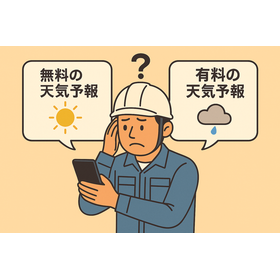
The meaning of utilizing paid weather forecasts.
Thank you for always watching us. Currently, there are many weather forecasting services and free apps available. The accuracy of predictions has also improved, and there are likely many people who find that free weather forecasts are sufficient for their daily lives. Sysmet Co., Ltd. provides various weather information services for a fee as a weather company. One of these is the "Natural Disaster Prevention System ZEROSAI," which is utilized for weather measures in civil engineering and construction projects. This time, we will introduce the differences between ZEROSAI and free weather forecasts, as well as the strengths of ZEROSAI. *For more details, please visit our website or feel free to contact us.
![[Digital Jellyfish Case Study] Tria...](https://image.www.ipros.com/public/product/image/6c4/2000958118/IPROS44170500257030087199.png?w=280&h=280)
Design change request to the client based on the data observed from the digital jellyfish.
- Harbor Construction
- Weather Survey

[Feature Introduction] Digital Jellyfish Observation Data Output Function
We would like to introduce the convenient features of the small wave height observation device, Digi-Jellyfish, NETIS registration number QSK-170002-VE. It can be utilized not only for safety measures but also for creative ideas and technical proposals. The Digi-Jellyfish is a compact, lightweight, and low-cost device that enables high-precision observations of wave heights. The observed data can be checked in real-time on the Compass PLUS website. The data collected by the Digi-Jellyfish is stored on a server, allowing for the output of past observation data in PDF and CSV formats. 【Operating Environment】 - The point most affected by waves and swells within the construction area - Trial construction with a risk assessment for severe weather *For more details, please visit our website or feel free to contact us.
![[ZEROSAI Implementation Case] Local...](https://image.www.ipros.com/public/product/image/18b/2001060574/IPROS61919862392434639277.png?w=280&h=280)
Utilizing rain forecasts for measures against guerrilla heavy rain and linear precipitation zones!
- Retaining wall
- Erosion control works
- Weather Survey

[Example of ZEROSAI Implementation] Regional Development Bureau - River Embankment Protection Work - Managing water levels in three stages to prepare for sudden rises in water levels!
We will introduce a case study of the natural disaster prevention system ZEROSAI (NETIS registration number QS-150021-VE). It can be utilized not only for safety measures but also for creative ideas and technical proposals. Challenges on-site: Key focus points for evaluation [Operational Environment] - Install an [N Sensor] near the site to view wind speed predictions and observation data on the cloud. Since there is no power supply at the site, a solar power generation system will be installed. - Install a [battery-operated water level gauge] in the nearby river to monitor water levels. [Purpose of Implementation] - There is a dam upstream, and when sudden torrential rain occurs, the water level rises rapidly, necessitating quick evacuation. - Due to frequent crane operations, project management must ensure that work is conducted on days when wind speed predictions do not exceed the work stoppage threshold of 10 m/s. - Information sharing regarding work stoppages or changes in the schedule must be done swiftly. ■ Proposal (Example) For details, please download the PDF.