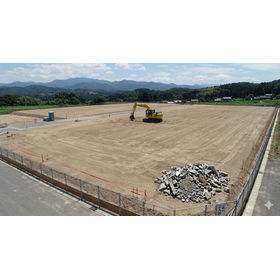
Designated Investigation Agency | Comprehensive Soil Investigation Procedure to Prevent Defects in Land Acquisition
Soil contamination survey

Soil investigation that blocks defect risks through phased sampling in stages 1 to 3, aiming for cost optimization in the developer's land acquisition practices.
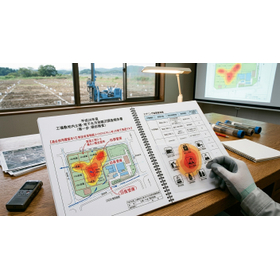
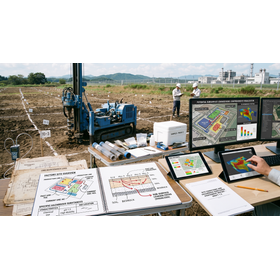
This document is a comprehensive investigation practical manual designed for developers and land acquisition personnel promoting real estate development, aimed at completely avoiding post-transfer defect disputes arising from soil contamination risks. Overlooking the presence of hazardous substances buried underground during the acquisition of new land poses a fatal risk that can significantly disrupt the project's financial performance. This manual provides a step-by-step explanation of the process from Phase 1, which involves scrutinizing past land use history, registration records, and aerial photographs, to Phase 2 and 3, which focus on collecting field data. By re-evaluating the traditional excessive investigations that cover the entire site and efficiently identifying and narrowing down only the areas at risk, we present know-how that dramatically reduces unnecessary fieldwork and analysis points, achieving overwhelming optimization of investigation costs. With reliable official analytical evidence from Geotech, an investigation agency designated by the Ministry of the Environment, we strongly support compliance adherence, complementing important disclosure documents, facilitating rapid administrative consultations, and ensuring smooth development permit acquisition.
Inquire About This Product
basic information
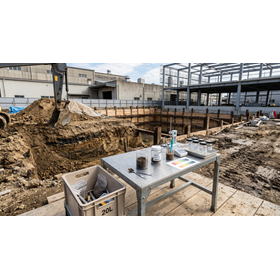
As a technical specification for comprehensive soil surveys aimed at developers, strict data measurement in accordance with real estate appraisal and the Real Estate Transaction Business Act will be applied. In Phase 1, the historical investigation will comprehensively trace decades of closed registration records, old maps, and aerial photographs held by the Geospatial Information Authority of Japan to diagnose the presence of hazardous substance facilities. In the physical investigations of Phases 2 and 3, the site will be divided into uniform sections of up to 30 meters, and stepwise sampling will be conducted from the surface to depth. The collected samples will be quantitatively analyzed with high precision based on public analysis (leaching and content standard tests as per the Ministry of the Environment notification) by a registered measurement certification organization, and summarized in a measurement certificate as legal evidence.
Price information
Price range
P3
Delivery Time
P4
Applications/Examples of results
This survey will be utilized for due diligence (asset eligibility assessment) prior to land sale contracts in new condominium development, acquisition of land for commercial facilities, and urban redevelopment projects. It is designed to objectively screen contamination risks led by the buyer, without overly relying on materials presented by the seller, and to facilitate price reductions and the conclusion of warranty agreements in sales negotiations. Additionally, it supports the construction of legal safety evidence in important matters explained during real estate transactions, provides environmental risk explanation materials for lending financial institutions, assists in the application process for development permits to local governments before construction begins, and serves public certification purposes to promote smooth discussions with administrative bodies.
catalog(2)
Download All Catalogs

Company information

-
![[Case Study] Successful "Monetization" of Waste Plastics through Sensor Utilization! Japan Special Ceramics Co., Ltd.](https://image.www.ipros.com/public/product/image/245/2001484916/IPROS11668876257031716160.jpg?w=280&h=280)