
IoT power strip that allows remote power ON/OFF and power monitoring.
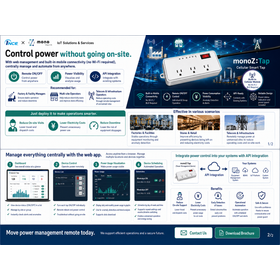
Power management without going to the site. Achieving operational efficiency and cost reduction through remote control, scheduled management, and visualization of power usage.
Product Description The IoT Power Management Tap is an IoT power management device with built-in LTE-M communication. It allows for remote ON/OFF control of power and monitoring of power consumption without the need for Wi-Fi. With a web management app, it enables centralized management of power status across multiple locations and devices. It supports schedule control, visualization of power usage, and anomaly detection, achieving reductions in on-site response, electricity costs, and downtime. It is not just a power strip, but an IoT solution that "manages, controls, and optimizes" power, making it applicable in a wide range of settings. An IoT power management device that enables remote monitoring and control of electrical equipment at a low cost.
Inquire About This Product
basic information
■ Features - Built-in LTE-M communication (no Wi-Fi required) - Remote power ON/OFF control - Visualization of power consumption (10-minute intervals) - Automatic operation through scheduled control - Abnormality detection and alert response - Centralized management via web management - System integration possible through API collaboration
Price information
■ Price Information ■ Volume Introduction Price (Estimate) Approximately 1,000 units: 30,000 yen per unit (including first-year communication fees) ■ Running Costs From the second year onwards: Communication fees approximately 12,000 yen per year ■ Reference Price 1 unit: 45,000 yen (including first-year communication fees) ■ Running Costs From the second year onwards: Communication fees approximately 24,000 yen per year ■ Initial Costs SIM initial cost: 4,000 yen *We will propose the optimal price based on the number of units introduced and their intended use.
Price range
P2
Delivery Time
P3
Applications/Examples of results
■ Applications 【Factory and Equipment Management】 Remote control of equipment, prevention of shutdowns, operational monitoring 【Stores and Retail】 Power management, reduction of electricity costs, centralized management of multiple locations 【Telecommunications and Infrastructure】 Remote operation of unmanned sites, reduction of on-site dispatches 【Vacant Houses and Facility Management】 Ventilation and power management, anomaly detection, reduction of patrols 【Monitoring】 Non-contact monitoring based on power usage patterns ■ Achievements * As a new product, there are considerations for implementation in companies and municipalities, as well as PoC (proof of concept) achievements. * We can flexibly accommodate customizations and API integrations according to application and implementation scale. * We will propose the optimal configuration based on implementation conditions. Start remote power management now. For inquiries about implementation or requests for detailed materials, please feel free to contact us. *Inquiries can also be made via email: info@reliabletechnology.co.jp
Detailed information
-
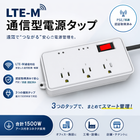
LTE-M remote power management reduces the need for on-site visits to service communication and network equipment
-
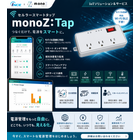
Built-in LTE-M (no Wi-Fi required); remotely power-cycle devices during failures
-
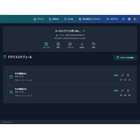
Centrally manage power status across multiple locations and devices via a web-based dashboard
-
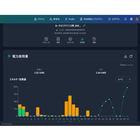
Monitor power consumption at 10-minute intervals; helps detect outages or anomalies early
-
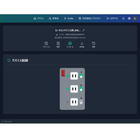
Independently control three power outlets; compatible with routers, NVRs, and IoT devices
Company information
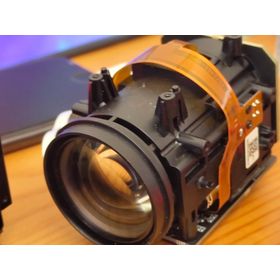
At Reliable Technology, we engage in manufacturing that utilizes our core technologies, such as cameras, wireless devices (Wi-Fi/Bluetooth), sensors, and LCDs. We provide a consistent OEM/ODM service that covers everything from development, design, and prototyping to mass production. Furthermore, unlike typical development vendors, we focus on user-centered product development. As a result, we can create truly useful products by repeatedly discovering on-site issues and conducting user tests from the planning stage of the product.


![[BCP and Flood Prevention] Free Access Rack for Standalone Panels](https://image.www.ipros.com/public/product/image/c69/2000740569/IPROS58369941790004887387.png?w=280&h=280)
