[Procedure Explanation] Repair Method for Steam Piping Using Heat-Resistant Repair Putty
KAN paste

Repair Procedure Overview
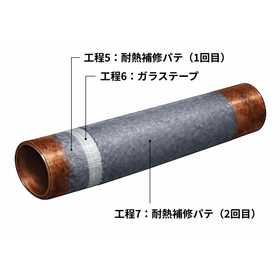
Here are the steps for repairing a hole in steam piping with heat-resistant repair putty (photos are at the bottom of the page). 【Repair Process】 1: Surface Preparation Remove rust and old paint using scraping, and degrease with acetone or similar to eliminate oil, moisture, and dirt. 2: Filling the Hole Pre-fill the hole and prepare the surface. 2.5: Preparation of Glass Tape (if necessary) Used when the leakage pressure is high or when increased strength is desired. Cut to the required length in advance. 3: Application of Heat-Resistant Primer Apply around the repair area to reduce adhesive strength loss at high temperatures. 4: Preparation of Heat-Resistant Repair Putty (for two-component types) Mix in the specified ratio until the color and consistency are uniform. 5: Application of Heat-Resistant Repair Putty (First Application) For the first application, apply thinly and work it into the surface to enhance adhesion. 6: Use of Glass Tape Saturate the tape with heat-resistant repair putty and wrap it tightly with strong tension. 7: Application of Heat-Resistant Repair Putty (Second Application) For the second application, build up to approximately 5-6mm thick. 8: Shaping After gelation, lightly smooth the surface with a gloved finger dipped in a small amount of solvent. *For more details, please refer to the illustrations at the bottom of the page.
Inquire About This Product
basic information
【KAN Putty Siliepo Ceramic】 ■Mixing ratio: Base agent: Hardener = 1:1 (weight ratio, volume ratio) ■Usage temperature range: 80~320℃ ■Working time: 3–5 minutes, Curing time: 4 hours ■Accessories: Heat-resistant primer, Glass tape 【KAN Putty Galapagos】 ■Just cut, knead, and apply the necessary amount ■Heat resistance temperature: 120℃ ■Working time: 3–5 minutes, Curing time: 1 hour For more details, please refer to the PDF document or feel free to contact us.
Price range
Delivery Time
Applications/Examples of results
【KAN Putty Siliepo Ceramic】 ■ Leak sealing for steam piping and equipment subjected to heat ■ Repair of valves, tanks, etc., that are subjected to heat during operation ■ Repair of equipment subjected to heat in wear environments (depending on wear conditions) ■ Crack repairs in heat exchangers, industrial air heater equipment, and corroded areas *Usage Precautions Please note that it is not suitable for repairs where the cured putty will be submerged (directly exposed) in strongly alkaline chemicals, hot water, or steam. (Repairs of cracks from the outside of tanks and piping are not an issue.) 【KAN Putty Galapagos】 ■ Build-up work, hole filling, and sculpting work on metals, concrete, tiles, gypsum boards, stone materials, and wood. For more details, please refer to the PDF document or feel free to contact us.
Detailed information
-
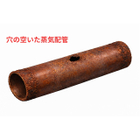
■Engineering Image Diagram_01 Piping with holes that is subject to repair
-
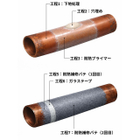
■Process Image Diagram_02 Overview of the flow from Process 1 to 8 *Materials used in this article: Filling = KAN Putty 'Galapagos' / Heat-resistant repair = KAN Putty 'Siliepo Ceramic' *Please select materials that are suitable for the actual operating temperature.
-
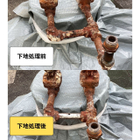
■Process 1: Surface Preparation Remove rust and old paint by scraping, and degrease with acetone or similar solvents to eliminate oil, moisture, and dirt.
-
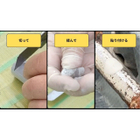
■Process 2: Filling Holes Seal the holes in advance and prepare the base. ■Process 2.5: When Using Glass Tape Use it in cases of high leakage pressure or when you want to increase strength. Cutting it to the required length in advance will make the subsequent work proceed smoothly.
-
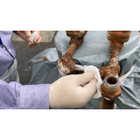
■Process 3: Application of Heat-Resistant Primer Apply around the repair area to reduce adhesive strength degradation at high temperatures.
-
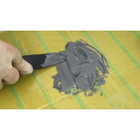
■Project 4: Preparation of Heat-Resistant Repair Putty Mix in the specified ratio until the color and consistency are uniform.
-
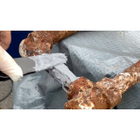
■Process 5: Application of heat-resistant repair putty (first application) In the first application, apply it thinly and rub it in to enhance adhesion by blending it into the uneven surfaces.
-
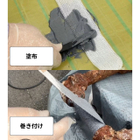
■Process 6: Application of heat-resistant repair putty (first application) Soak the heat-resistant repair putty and wrap it tightly with strong tension.
-
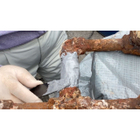
■Process 7: Application of heat-resistant repair putty (2nd time) In the second application, it will be approximately 5-6mm thick. ■Process 8: Shaping After gelation, lightly smooth the surface with the fingers of a gloved hand that has a small amount of solvent applied.
catalog(3)
Download All Catalogs


Company information

The roots of Kansai Paste Chemical date back to 1907 with the production of gofun (shell powder). We have challenged ourselves to create products that meet the needs of the times, and now we manufacture and process a wide range of products beyond just paste. In particular, we possess many manufacturing facilities for medium to high viscosity products and are also equipped to handle small-scale packaging.
![[No Welding Required] Meat Filling Repair Putty 'Aiku Putty'](https://image.www.ipros.com/public/product/image/19c/2000706428/IPROS42243579834349762755.png?w=280&h=280)