
Drug repositioning of Lubiprostone Exploratory P2 is over!
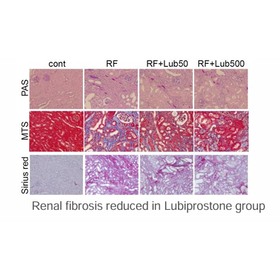
Toxin adsorbents such as SGLT2 inhibitors and cremedin have been used as pharmacotherapy for kidney disease. Lubiprostone, which is also used as a constipation drug, was shown to be effective as a treatment for chronic kidney disease (CKD). Lubiprostone was also found to suppress the decline in renal function. In an investigator-initiated clinical trial, the inventors conducted an exploratory study to investigate the efficacy and safety of 8 μg/day and 16 μg/day of lubiprostone in reducing renal function in patients with chronic kidney disease, using a placebo control. (The results can be disclosed under individual contracts.)
Inquire About This Product
basic information
For details, please contact us or refer to the PDF.
Price range
Delivery Time
Applications/Examples of results
For details, please contact us or refer to the PDF.
catalog(1)
Download All Catalogs
Company information

The revenue generated from technology transfer is reinvested into universities and researchers as new research funding, which is used to create further research outcomes. To ensure the smooth operation of this cycle, known as the "Intellectual Creation Cycle," we will actively promote technology transfer. The types of seeds we handle include patents, know-how, databases, and programs. We have established a collaborative framework by concluding basic technology transfer agreements with the following universities (as of June 1, 2025): - Tohoku University - Hirosaki University - Iwate University - Akita University - Fukushima University - Yamagata University - Tohoku Gakuin University - Iwate Medical University - Fukushima Medical University - Aizu University - Miyagi University - Hokkaido University - Muroran Institute of Technology - Showa Medical University