

Air conditioner that does not require electricity.
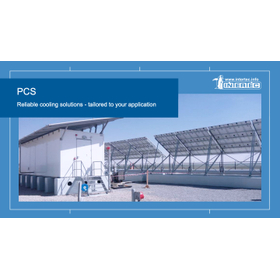
The environment in extremely hot regions significantly increases project costs, and we must overcome this harsh environment. Dual cooling is the most critical issue that needs to be addressed. This is even more serious in remote areas where power is insufficient. Intertech Hess leads this field with specialized technology for such harsh environments. Compared to conventional cooling using existing air conditioning, we offer innovative PCS (Passive Cooling System) technology that can be achieved with only the minimal power obtained from a solar power system without any electricity. This does not apply fan cooling, which can cause problems due to dust and sand in storm-prone areas. This technology enables many of today's innovative projects, ranging from desert regions like the Middle East and dry climates to marine facilities in equatorial areas. Furthermore, such environments pose other protection issues, such as high levels of ultraviolet rays, wear from dust, and high humidity. Our composite material - GRP structure can easily address these issues. PCS: https://www.intertec.info/en/products/cooling/cooling-solutions-for-cabinets-and-shelters.php japan@intertec.info
Inquire About This Product
basic information
Traditionally, passive cooling technologies have been limited to arid regions. Our technology is expanding its potential worldwide. Generally, water is used as a medium to store and release the temperature difference between day and night, thereby reducing shelter temperatures. We can provide a "Hybrid Passive" cooling system using solar-powered micro-pumps or cooling water technology, which enhances cooling performance and extends application potential to equatorial regions. In deserts, nighttime temperatures can drop to 29 degrees, while daytime temperatures can soar to 58 degrees, making it widely utilized in areas with significant temperature fluctuations between day and night. This system utilizes the cool nighttime temperatures to cool an internal water tank, maintaining the internal temperature below 40 degrees during the day. It is a system that can adjust the internal air by circulating the water inside the tank without using electricity. During the day, if the outside temperature is hotter than the inside, the system cools the interior with the cold water from the tank without external circulation, and external circulation begins when the water is cooled by the cool outside air at night. PCS Model: https://www.youtube.com/watch?v=EIxIZAC51Lc
Price information
Prices may vary depending on the purpose, installation location, and temperature conditions, so please contact us for more information. For inquiries in Japanese, please contact: japan@intertec.info
Delivery Time
※The delivery date varies depending on the product, so please contact us.
Applications/Examples of results
These are products designed for hot regions such as deserts. We supply our products to major companies in the oil, gas, chemical, and petrochemical industries.
Detailed information
-
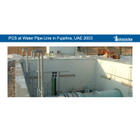
In 2003, INTERTEC's GRP shelters equipped with a Passive Cooling System (PCS) were installed at a water pipeline facility in Fujaihra, UAE. In the extreme heat and desert conditions of the Middle East, the shelters maintain instrumentation and control equipment within a safe temperature range without relying on power-consuming active air conditioning, instead combining highly insulated GRP construction with a thermal storage water tank. This project demonstrates the suitability of passive cooling for infrastructure applications where low maintenance costs and long-term reliability are essential.
-
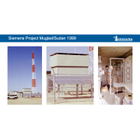
In 1999, INTERTEC GRP shelters were supplied as part of a Siemens project in Muglad, Sudan, an oil-producing region with harsh desert conditions including extreme heat, sandstorms, and intense UV radiation. The shelters house electronic and control systems adjacent to communication towers. The high thermal insulation of the GRP sandwich construction, combined with passive cooling, keeps internal equipment within safe operating temperatures — an energy-efficient, air-conditioner-free design that ensures long-term, reliable operation at remote sites.
-
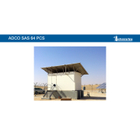
64 passive cooling shelters (PCS) were delivered to ADCO (Abu Dhabi Company for Onshore Petroleum Operations) in the UAE. In Middle Eastern desert environments where solar irradiance is intense and ambient temperatures can exceed 60°C, the combination of INTERTEC's highly insulated GRP sandwich construction and thermal storage tanks achieves stable internal temperatures without any power consumption. Compatible with off-grid solar power operation, this project is a well-known reference for the application of passive cooling shelters at remote wellpad and instrumentation station sites.
-
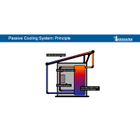
The Passive Cooling System (PCS) consists of four elements: an internal heat exchanger, an external heat exchanger, a thermally stratified water storage tank (heat buffer), and a highly insulated GRP enclosure. Heat dissipated by equipment inside the shelter is absorbed by the internal heat exchanger and transferred into the cool water in the tank. The tank is recharged by the cooler night-time air via the external circuit, enabling stable internal temperatures to be maintained throughout the day without any electrical energy input. With no pumps or compressors, the system requires virtually no maintenance and delivers extremely high reliability.
-
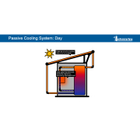
During the day when outdoor temperatures are high, the external circuit (external heat exchanger) is inactive. Instead, cold water stored in the tank circulates through the internal heat exchanger, absorbing heat dissipated by the installed equipment and suppressing temperature rise inside the enclosure. Heat is released to the ambient environment only at night, so during the day the thermal storage tank functions as a "cold buffer." Operating with zero electrical power consumption, the system is ideally suited to remote locations and hazardous areas where power availability is limited.
-
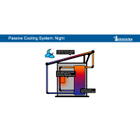
At night, when outdoor temperatures fall, the external circuit is activated. The external heat exchanger transfers the night-time cold to the water in the storage tank, cooling it back down to replenish the cold reserve for the following day's high temperatures. By repeating this cycle, INTERTEC's passive cooling system performs particularly effectively in environments with large diurnal temperature swings, such as desert regions. Using only the natural day-night temperature difference and no electrical power, the system achieves a very low lifecycle cost and exceptional reliability.
-
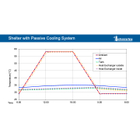
This graph presents measured temperature data from a passive cooling shelter in operation. Even when the ambient temperature (Ambient) reaches 58°C during the day, the internal air temperature (Air) is held to approximately 34–35°C, and the tank temperature (Tank) remains stable at around 32°C — with zero electrical energy consumption. This performance makes the passive cooling shelter an optimal solution for protecting instrumentation and control systems in high-temperature regions such as the Middle East, Africa, and Central Asia.
-
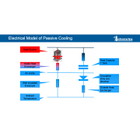
This model represents the six elements of the passive cooling system as an electrical circuit: the heat source (installed equipment), internal heat exchanger, well-insulated enclosure, thermal storage tank (heat capacity), external heat exchanger, and ambient temperature. The circulation loop operates in one direction only (discharging heat to the environment at night), with the tank acting as a "capacitor." INTERTEC uses this model with its proprietary simulation tool (INTERTEC-SIMULA) to design and optimise systems, enabling custom engineering solutions based on each customer's installation environment, equipment heat dissipation, and required cooling capacity.
-
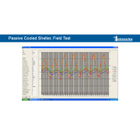
INTERTEC uses its proprietary simulation tool, INTERTEC-SIMULA, for the design and validation of passive cooling systems. By inputting parameters such as the ambient temperature profile, equipment heat dissipation, tank volume, heat exchanger performance, and insulation values, the tool accurately predicts internal temperature behaviour over multiple days. Field test data has confirmed a high degree of agreement with simulation results, enabling reliable, site-specific passive cooling system designs tailored precisely to each customer's installation environment.
catalog(3)
Download All Catalogs


Company information
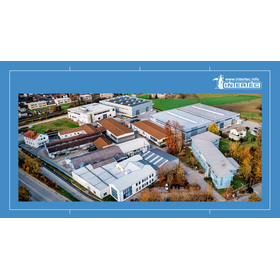
Protecting internal equipment from environments such as cold, heat, corrosion, and chemical areas. Founded in Germany in 1965, our company has a history of 50 years and has achieved an annual growth of 15%. The reason for this growth lies in our unique GRP material. As experts in GRP material, we manufacture enclosures, cabinets, and shelters, while simultaneously providing heating and cooling systems installed inside. We are a German manufacturer that offers diverse solutions to protect delicate field equipment in chemical plants, petrochemical plants, and other industries worldwide. We protect internal measurement, control, and analysis equipment from environments such as freezing, excessive heat, corrosion, and condensation. All of our products are made from GRP (glass-reinforced polyester) material, which has a very low thermal conductivity, allowing us to maximize the efficiency of cooling and heating systems. 【ISO Certification】 ISO 9001 ISO 14001


![[Case Study] Spray Cooling System](https://image.www.ipros.com/public/product/image/594/2001182582/IPROS53468880729178143147.png?w=280&h=280)
![Air conditioning cooling system "Ene Suke-kun" [Reuse of "drain water"!]](https://image.www.ipros.com/public/product/image/0e3/2000317131/IPROS2121907552533983949.jpg?w=280&h=280)

![[BCP and Flood Prevention] Free Access Rack for Standalone Panels](https://image.www.ipros.com/public/product/image/c69/2000740569/IPROS58369941790004887387.png?w=280&h=280)
![Power-free surveillance camera [Easy, clean, Japanese quality] using i-PRO products.](https://image.www.ipros.com/public/product/image/ca8/2001485567/IPROS16458605253350223962.jpg?w=280&h=280)

![[New Release] Compact power supply "TELUMA" battery with AC outlet](https://image.www.ipros.com/public/default/object/noimage_l.gif?w=280&h=280)