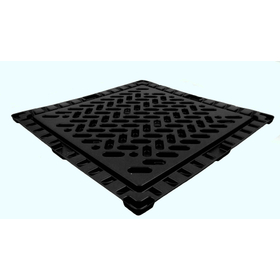
The pass border solves the problem of pushing cargo with sheet pallet work using a roller fork! Insertion of the fork tip is easy.
The Pass Border was developed to overcome issues related to roller fork operations. It is suitable for box-type cargo. Since the tip of the roller fork does not have a roller conveyor mechanism, it is necessary to insert the fork while pushing up the cargo at the tip. While this does not pose problems for bagged cargo handled with sheet pallets, there are cases where the fork cannot be inserted for box-type cargo, resulting in pushing the cargo instead. Therefore, the Pass Border features a gap (patented) at the edge of the thin pallet to accommodate the tip of the roller fork. This gap ensures that the bottom surface of the pallet maintains contact with the roller conveyor mechanism, allowing for smooth pulling of the cargo onto the fork by the conveyor mechanism. [For Returnable Use] - Plastic products are available. A size of 110 cm x 110 cm can be provided. [For One-Way Use] - Paper products are available. Sizes can be adjusted according to customer requests. They can also be provided overseas.
Inquire About This Product
basic information
◆Plastic Products - Size: 110 cm x 110 cm x 3 cm - Working Load: 600 kg to 800 kg - Static Load: 2,000 kg maximum ◆Paper Products - Size: Prepared within 130 cm x 130 cm - Working Load: Less than 500 kg - Static Load: 1,000 kg maximum
Price information
◆Plastic products - Approximately 6,000 yen per piece (excluding shipping and consumption tax); varies depending on lot size and destination. ◆Paper products - Approximately 1,500 to 1,800 yen per piece (excluding shipping and consumption tax); varies depending on lot size and destination.
Price range
P1
Delivery Time
Applications/Examples of results
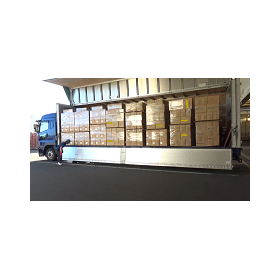
- Domestic product transportation between bases using plastic pass borders Due to the product characteristics, it was difficult to handle cargo with sheet pallets, so we considered product transportation between bases using pass borders. Since we were able to secure a cargo loading capacity equivalent to that during manual handling, this method was adopted. The return of pallets was entrusted to the trucks after unloading, resulting in virtually zero costs. Normally, pallets would not be accepted, but since the thinness of the pass borders allowed them to fit into the empty space of the truck bed, we received cooperation.
Detailed information
-
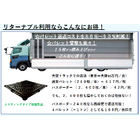
Comparison of loading quantities for large trucks - Standard pallets = 240 pieces - Nesting type plastic products = 2,400 pieces It's a waste to leave 2,400 pieces idle until they are returned! With Passborder, you can return in units of 240 pieces (approximately 5㎥ with standard pallet loading) via regular freight, keeping costs to about one-third of that of standard pallets.
Company information
Our company was established by engineers who have been involved in the introduction support of sheet pallets since the 1980s, when they were brought to Japan. The development of sheet pallets aimed to prevent the outflow of pallets and maintain loading efficiency. The Korean War reaffirmed that logistics is the most critical factor in determining victory or defeat. In the logistics 2024 problem, efforts are being made to increase the pallet transportation rate while reducing the variety rate through effective use of joint deliveries and return trips. However, there are many cases where maintaining or recovering loading efficiency is a challenge. By using thin and inexpensive sheet pallets, loading efficiency is maintained. The shipping side can prevent the outflow of their own pallets by stacking cargo on sheet pallets that are high-stacked, while the receiving side can complete the receiving process simply by picking up the cargo on their own pallets, freeing them from managing other companies' pallets. We believe that the low-cost material of sheet pallets can help solve various challenges. <Adoption Case> A shipment was required using pallets specified by the receiving side, but since the specified pallets could not be brought into the management area, the cargo was transferred onto the specified pallets using sheet pallets at the exit of the management area for shipment.