1~15 item / All 15 items
Displayed results
Filter by category

Added to bookmarks
Bookmarks listBookmark has been removed
Bookmarks listYou can't add any more bookmarks
By registering as a member, you can increase the number of bookmarks you can save and organize them with labels.
Free membership registrationContact this company
Contact Us Online1~15 item / All 15 items
Filter by category

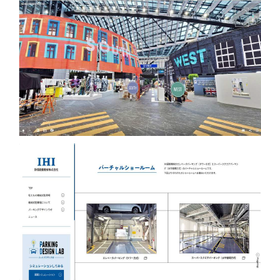
To accelerate the development of tourism and event attraction, we will introduce examples utilizing "4DKanKan." With the increase in inbound tourism, the demand for event attraction to revitalize local areas has grown. However, exhibitions and events require a long preparation period, and there are challenges related to time and cost for both domestic and international expansion. By introducing online exhibitions, it has become possible to attract customers who could not attend exhibitions domestically or internationally. Scanned photographic data can be published on websites and social media, accommodating participation from overseas. 【Case Overview】 ■ Background - Exhibitions and events are held at major venues nationwide. - The demand for event attraction to revitalize local areas has increased due to the rise in inbound tourism. ■ Challenges - Disposal of produced materials. - Opportunity loss at real events. - Lead time for expansion. ■ Solutions - Introduction of online exhibitions. - Utilization of archived data. - Acceleration of domestic and international expansion. *For more details, please download the PDF or feel free to contact us.
Added to bookmarks
Bookmarks listBookmark has been removed
Bookmarks listYou can't add any more bookmarks
By registering as a member, you can increase the number of bookmarks you can save and organize them with labels.
Free membership registration
We will introduce a case study utilizing "4DKanKan" as a virtual exhibition in the event field. There were challenges such as the fact that materials created for exhibition events are discarded at the end of the event period, and that real events operate within a limited timeframe, posing significant risks if projections are incorrect. By introducing online exhibitions, it became possible to engage customers who could not attend in person. The materials can be archived as digital data and reused for secondary purposes, such as being made available exclusively to fans. [Case Overview] ■ Background: Exhibitions held at major venues nationwide ■ Challenges - Disposal of materials - Opportunity loss at real events - Insufficient reach to fans ■ Solutions - Introduction of online exhibitions - Development of content for overseas audiences - Utilization of exhibition archives *For more details, please download the PDF or feel free to contact us.
Added to bookmarks
Bookmarks listBookmark has been removed
Bookmarks listYou can't add any more bookmarks
By registering as a member, you can increase the number of bookmarks you can save and organize them with labels.
Free membership registration
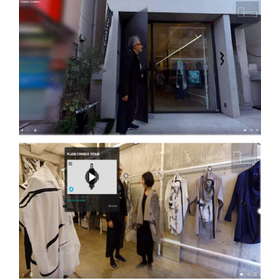
We will introduce a case study utilizing "4DKanKan" as a virtual shop in retail stores. There were challenges in conveying the brand's image, concept, and product features that could only be communicated to visitors, as well as the issue that the appeal of distinctive products could not be effectively conveyed through images and text in e-commerce. With 4DKanKan, we can communicate the store's atmosphere, product displays, and features in a way that we desire, effectively promoting the brand image and concept. By embedding model images and wearing methods, we are enhancing purchase motivation. 【Case Overview】 ■ Background: We want to create an environment to share the brand's image and concept and convey product features. ■ Challenges - Brand/product recognition - Appeal not conveyed in e-commerce ■ Solutions - Accessible at any time - Increased purchase motivation - Sharing atmosphere and worldview *For more details, please download the PDF or feel free to contact us.
Added to bookmarks
Bookmarks listBookmark has been removed
Bookmarks listYou can't add any more bookmarks
By registering as a member, you can increase the number of bookmarks you can save and organize them with labels.
Free membership registration
We will introduce a case study utilizing "4DKanKan" as 3D educational content for on-site workers and new employees in training. Although various manuals exist, there are often situations where judgment is required on-site, leading to a lack of readership and challenges in applying the training content in the field. By using the shooting data from 4DKanKan, we can create engaging training sessions, enabling online training based on real-world scenarios and effective measurement of training outcomes. It can also be utilized for manager training and other purposes. 【Case Overview】 ■ Background: Training content is often not applicable on-site. ■ Challenges: - Manuals are not read. - Training effectiveness is low. ■ Solutions: - Improvement of training effectiveness. - Training that does not induce sleepiness. *For more details, please download the PDF or feel free to contact us.
Added to bookmarks
Bookmarks listBookmark has been removed
Bookmarks listYou can't add any more bookmarks
By registering as a member, you can increase the number of bookmarks you can save and organize them with labels.
Free membership registration
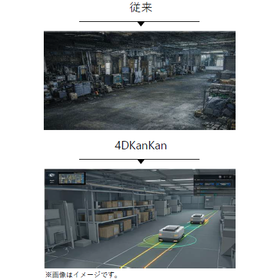
We will introduce a case study utilizing "4DKanKan Meta" for creating a simulation field aimed at the introduction of robots in the logistics and manufacturing sectors. There was a challenge where 2D drawings and outdated BIM did not accurately reflect actual obstacles, elevation differences/inclines, and equipment protrusions, leading to a disconnect between simulation and the actual site. By creating a field that reproduces the current situation based on point clouds obtained from 4DKanKan Meta, it has become possible to conduct simulations that closely resemble the actual site. Re-photographing after equipment updates is also easy, as it can be done by only re-photographing the updated areas. 【Case Overview】 ■ Background: With the increase in the introduction of automated transport robots and inspection robots, pre-route verification and safety checks have become essential. ■ Challenges - Insufficient prerequisite data for robot route consideration - Distrust in simulation results ■ Solutions - Constructing a 3D point cloud field that faithfully reproduces the real space - Ensuring ease of updates - Flexible responses such as self-photographing and only requesting OBJ creation *For more details, please download the PDF or feel free to contact us.
Added to bookmarks
Bookmarks listBookmark has been removed
Bookmarks listYou can't add any more bookmarks
By registering as a member, you can increase the number of bookmarks you can save and organize them with labels.
Free membership registration
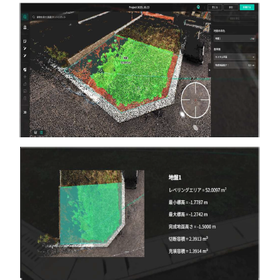
We will introduce a case study utilizing "4DKanKan" for simple earth volume calculations at construction and civil engineering sites. In surveys using total stations, it is often difficult to accurately measure the undulations of the terrain, leading to discrepancies between calculated results and actual earth volumes, which can impact construction timelines and costs. By using point cloud data from 4DKanKan to capture the surface undulations in detail, we can minimize discrepancies with actual earth volumes. The automatic output of simple reports reduces effort and work time. 【Case Overview】 ■ Background - The amount of earth to be moved during excavation and embankment at construction sites is calculated, determining the cost and schedule of the project. ■ Issue: Occurrence of errors ■ Solutions - Precise measurement using point cloud data - Automatic report generation - Simultaneous understanding of on-site conditions through panoramic photos - Reduction of shooting time *For more details, please download the PDF or feel free to contact us.
Added to bookmarks
Bookmarks listBookmark has been removed
Bookmarks listYou can't add any more bookmarks
By registering as a member, you can increase the number of bookmarks you can save and organize them with labels.
Free membership registration
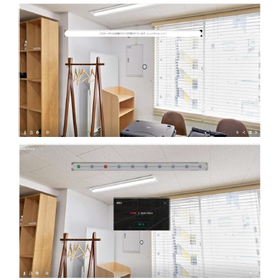
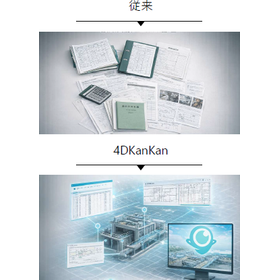
We will introduce a case study utilizing "4DKanKan Meta" for the digitization of equipment management ledgers in infrastructure-related facilities. The ledger is the foundation of maintenance management, but formats such as paper, Excel, and PDF are inconsistent, and updates are lagging behind. Due to a shortage of personnel and an increase in staff changes, the importance of a "user-friendly ledger" has been growing. By linking equipment locations to the 3D space of 4DKanKan Meta, we can manage the ledger, drawings, photos, and history all in one place. Users can jump from a list of hotspots to the target equipment, allowing easy access to the locations and information of various equipment. 【Case Overview】 ■ Background: Public facilities and infrastructure are intended for long-term operation, requiring continuous inspections, repairs, and updates. ■ Challenges: - Ledger information is dispersed and not updated. - Low searchability, making it difficult to find necessary information quickly. - Accumulation of discrepancies between the current situation and the ledger. ■ Solutions: - Centralized management of equipment and facility information in 3D. - Ensured ease of updates. - Simple equipment search. *For more details, please download the PDF or feel free to contact us.
Added to bookmarks
Bookmarks listBookmark has been removed
Bookmarks listYou can't add any more bookmarks
By registering as a member, you can increase the number of bookmarks you can save and organize them with labels.
Free membership registration
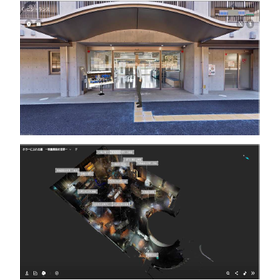
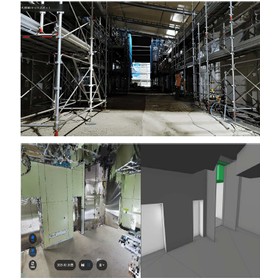
We would like to introduce a case study utilizing "4DKanKan" as a "digital completion drawing" for the maintenance and management of public facilities and infrastructure. Currently, completion records mainly consist of completion photographs and paper drawings/PDFs, which make it difficult to understand equipment layout, connections, and dimensions, leading to the need for re-investigation during renovations. With 4DKanKan, the completion state is recorded in 16K×3D, allowing stakeholders to discuss while viewing the same data through URL sharing. Equipment locations can be identified in 3D, and management can be linked to ledgers, drawings, and histories. 【Case Overview】 ■ Background: Continuous inspections, renovations, and updates are required for the maintenance management of public facilities and infrastructure. ■ Issues - Lack of information in completion records - Discrepancies between drawings/ledgers and current conditions ■ Solutions - High-definition 3D preservation of the completion state - Accelerated consensus building - Centralized linking of ledgers and drawings *For more details, please download the PDF or feel free to contact us.
Added to bookmarks
Bookmarks listBookmark has been removed
Bookmarks listYou can't add any more bookmarks
By registering as a member, you can increase the number of bookmarks you can save and organize them with labels.
Free membership registration
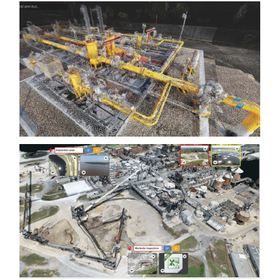
In the equipment inspection and design work of chemical plants, we will introduce examples of efficiency improvement using "4DKanKan." Due to the aging of equipment and frequent changes in the layout of factories, warehouses, and piping, there were no existing drawings, and visual inspections and manual checks were necessary for new installations, which required a lot of time for design considerations. By introducing 4DKanKan, we were able to confirm the on-site conditions within the office and reduce unnecessary work by incorporating this into our considerations. The data within the plant is managed using an offline version, which also meets security requirements. [Case Overview] ■ Background: Regular equipment inspections and the formulation of maintenance and renewal plans for plant equipment ■ Challenges - Decreased efficiency due to reliance on visual inspections and manual work - Difficulty in introducing drones ■ Solutions - Improved efficiency - Compliance with security requirements - Low-risk filming methods *For more details, please download the PDF or feel free to contact us.
Added to bookmarks
Bookmarks listBookmark has been removed
Bookmarks listYou can't add any more bookmarks
By registering as a member, you can increase the number of bookmarks you can save and organize them with labels.
Free membership registration
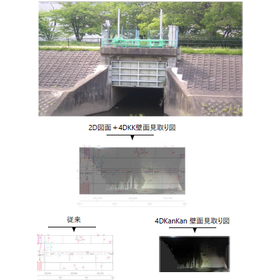
We would like to introduce a case where "4DKanKan" 16K shooting data was utilized for repair and renewal work at a river water gate. In repair work, it is necessary to confirm the deterioration status, organize the repair scope, and create a rough estimate within a short period. However, information gathering mainly relied on on-site photos and 2D drawings, which had limitations in detailed understanding and sharing. With 16K high-resolution shooting, it became possible to confirm details down to the joints of materials and areas of deterioration, making it easy to share URLs for cross-departmental and cross-company verification. This has created an environment where repair policies can be discussed without returning to the site. [Case Overview] ■ Background: Continuous repair and renewal work occurring at river water gates ■ Challenges - Lack of on-site information - Need for re-investigation - Difficulty in sharing and handover ■ Solutions - Provision of high-definition on-site data - Remote re-confirmation and consensus building - Simple data sharing *For more details, please download the PDF or feel free to contact us.
Added to bookmarks
Bookmarks listBookmark has been removed
Bookmarks listYou can't add any more bookmarks
By registering as a member, you can increase the number of bookmarks you can save and organize them with labels.
Free membership registration
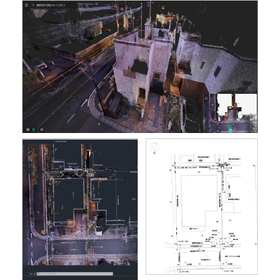
Amid the ongoing decrease in surveying companies and stagnation of new entrants, we would like to introduce a case of labor-saving in the creation of current surveying maps using "4DKanKan." The construction industry as a whole is aging, and due to price competition and oligopoly, the number of surveying companies continues to decline. There are challenges such as the high risk of drafting errors and the need for know-how and skills for on-site operations. 4DKanKan eliminates the need for operational skills, allowing on-site measurements that were previously conducted by two people to be performed by one person. The captured data can be utilized for purposes other than surveying map creation, such as in residential perspectives. [Case Overview] ■ Background: The number of surveying companies has been decreasing year by year, with a continued decline in new entrants and business withdrawals. ■ Challenges: - Aging workforce - Decrease in surveying prices - Decline in new entrants ■ Solutions: - On-site measurements by one person - Utilization of captured data - Efficiency improvement in drafting work through division of labor *For more details, please download the PDF or feel free to contact us.
Added to bookmarks
Bookmarks listBookmark has been removed
Bookmarks listYou can't add any more bookmarks
By registering as a member, you can increase the number of bookmarks you can save and organize them with labels.
Free membership registration
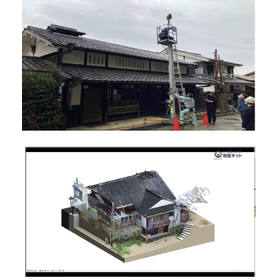
In a district where multiple historical and traditional buildings remain, we will introduce a case utilizing "4DKanKan." There were challenges such as the absence of blueprints, which made restoration and conservation planning time-consuming, and the point cloud data from other surveying equipment being too large in size, making data transfer and processing on PCs difficult. With the introduction of 4DKanKan, it became easy to switch between point cloud data and panoramic photos, significantly improving the efficiency of the workers. The on-site work was completed in about three hours, and sharing via URL was also achieved. [Case Overview] ■ Background: Preservation activities for streetscapes in a district with multiple historical and traditional buildings ■ Challenges - Lack of blueprints for historical buildings - Difficulty in creating BIM data - Excessive data size ■ Solutions - Streamlining data collection and sharing - Improving work processes - Lightweight point cloud data *For more details, please download the PDF or feel free to contact us.
Added to bookmarks
Bookmarks listBookmark has been removed
Bookmarks listYou can't add any more bookmarks
By registering as a member, you can increase the number of bookmarks you can save and organize them with labels.
Free membership registration
This product is a high-performance 3D space scanner designed to fully recreate real stores, facilities, and exhibition venues in a digital space. It is suitable for use in the entertainment sector, such as virtual shops and event archives. ■ Overwhelmingly lightweight data and ease of use While based on high-resolution 16K panoramic photos, the data size has been reduced to about one-fifth of that of conventional methods. It can be smoothly viewed and shared using only a web browser, without the need for a special high-spec PC or dedicated software. This minimizes loading wait times and provides a comfortable viewing experience for many users. ■ Clear rights management allows for flexible use The rights to the data captured and generated will be transferred to the customer. There are no complex restrictions such as the inability to use the data after the contract ends or additional licensing fees. Free secondary use tailored to your needs is possible, including embedding on your own site, publishing on social media, and listing on metaverse platforms. *For more details, please refer to the catalog download. You can try it out with a monthly rental.
Added to bookmarks
Bookmarks listBookmark has been removed
Bookmarks listYou can't add any more bookmarks
By registering as a member, you can increase the number of bookmarks you can save and organize them with labels.
Free membership registration
4DKanKan is a 3D space scanner that can simultaneously capture high-precision point cloud data and 16K high-resolution panoramic photos. It is suitable for those considering digital transformation (DX) at construction sites and for creating drawings and models from point clouds. ■ Easy-to-use lightweight data Point cloud data, which tends to be large, is reduced to about one-fifth its size while maintaining accuracy. This facilitates smooth data transfer and sharing. ■ Anyone can easily capture professional-quality images Using a dedicated app, anyone can intuitively operate it from a tablet or smartphone. AI automatically performs the compositing between shooting points, eliminating the need for complex manual compositing work. This significantly reduces on-site time. *For more details, please refer to the catalog download. You can try it out with a monthly rental.
Added to bookmarks
Bookmarks listBookmark has been removed
Bookmarks listYou can't add any more bookmarks
By registering as a member, you can increase the number of bookmarks you can save and organize them with labels.
Free membership registration
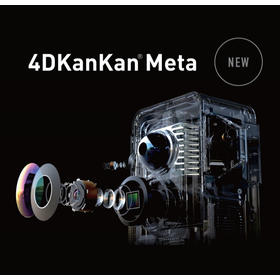
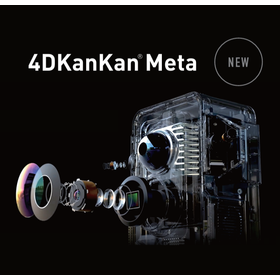
4DKanKan Meta is a platform based on the concept of "3D virtual space × time = 4D experience," allowing anyone to easily create virtual spaces using a camera, app, and cloud. The ultra-high-precision scanning of 905nm LiDAR can collect a modeling range of up to 70m with a single point scan, generating high-resolution point cloud data with 16K HD images widely used in construction, government, healthcare, education, museums, and the BIM industry. With the SLAM function, 3D space design and creation can be done using only the captured materials, eliminating the need for large-scale equipment. The camera itself has been made lightweight at 2.9kg, making it easy to carry while still enabling high-quality shooting, thus expanding its applications across various uses.
Added to bookmarks
Bookmarks listBookmark has been removed
Bookmarks listYou can't add any more bookmarks
By registering as a member, you can increase the number of bookmarks you can save and organize them with labels.
Free membership registration