1~45 item / All 57 items
Displayed results
Filter by category

Added to bookmarks
Bookmarks listBookmark has been removed
Bookmarks listYou can't add any more bookmarks
By registering as a member, you can increase the number of bookmarks you can save and organize them with labels.
Free membership registration
Contact this company
Contact Us OnlineBefore making an inquiry
Download PDF1~45 item / All 57 items
Filter by category
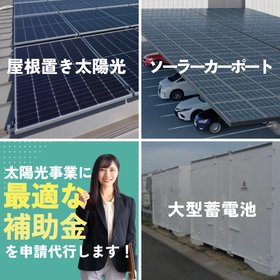
Our company has constructed a total of 83 solar power plants with a cumulative total construction cost of 908.4 billion yen. We take pride in our track record of transactions with companies such as Sharp, Panasonic, Daiwa House, and Mitsubishi HC Capital. Even in high-precision factories and logistics centers, we have achieved up to a 28% reduction in electricity costs and simultaneous CO₂ reduction without stopping operations. 【Industry Challenges】 The rise in electricity prices shows no signs of stopping. The cost recovery for energy-saving equipment installation is unpredictable. There are concerns about power outages and the risk of electricity shortages. 【On-the-Ground Pain Points】 While waiting for "next-generation technology," electricity prices continue to rise. The electricity price in 2025 is about 1.6 times that of ten years ago. Energy-saving equipment alone cannot compensate, and the risk of power outages remains. The gap between companies that wait for "perovskite someday" and those that "build a self-sufficient system with current technology" will directly impact profits in a few years.
Added to bookmarks
Bookmarks listBookmark has been removed
Bookmarks listYou can't add any more bookmarks
By registering as a member, you can increase the number of bookmarks you can save and organize them with labels.
Free membership registration
Total construction cost of 908.4 billion yen, developing and constructing 83 power plants nationwide. Collaborating with major companies such as Sharp, Panasonic, Daiwa House, and JA Mitsui Leasing. Achieving up to 28% reduction in electricity costs, while simultaneously reducing CO₂ emissions and ensuring stable supply. A next-generation "domestic self-generation model" compatible with perovskite solar cells.
Added to bookmarks
Bookmarks listBookmark has been removed
Bookmarks listYou can't add any more bookmarks
By registering as a member, you can increase the number of bookmarks you can save and organize them with labels.
Free membership registration
Cumulative total construction cost of 908.4 billion yen, developing and constructing 83 power plants nationwide. Collaborating with major companies such as Sharp, Panasonic, Daiwa House, and JA Mitsui Leasing. Achieving up to 28% reduction in electricity costs while simultaneously reducing CO₂ emissions and ensuring stable supply. A next-generation "domestic self-generation model" compatible with perovskite solar cells. 【Industry Issues】 Dependence on foreign-made panels leads to instability in supply and prices. Environmental, landscape, and waste risks associated with the large-scale introduction of renewable energy. From the perspective of energy security, the decline in self-sufficiency rates is becoming serious. 【Current Situation on the Ground】 In factories and logistics warehouses, electricity procurement costs have risen by about 40% over the past five years. The risk of business interruptions during power outages and disasters is also increasing. If we continue to rely on cheap imported renewable energy, the power safety of companies cannot be ensured. Now is the time to establish a system for "producing electricity in-house."
Added to bookmarks
Bookmarks listBookmark has been removed
Bookmarks listYou can't add any more bookmarks
By registering as a member, you can increase the number of bookmarks you can save and organize them with labels.
Free membership registration
Total construction cost of 908.4 billion yen, building 83 solar power plants nationwide. Numerous major clients including Sharp, Panasonic, Daiwa House, Nomura Securities, and JA Mitsui Leasing. Achieved up to 28% reduction in electricity costs without stopping high-precision manufacturing and logistics equipment. Simultaneously realized CO₂ reduction. 【Industry Challenges】 Supply risks and price fluctuations due to dependence on overseas panels. Burden of updating aging equipment and the emergence of waste panel issues. Rising electricity prices hinder business continuity planning (BCP). 【On-Site Pain Points】 The structure of "renewable energy = reliance on overseas" threatens the stability of corporate electricity supply. Electricity prices have risen by about 38% over the past five years, and without reducing import dependence, the risks of power outages and price surges cannot be avoided. If the development of domestic technology lags, a future where the renewable energy market is dominated by overseas players awaits.
Added to bookmarks
Bookmarks listBookmark has been removed
Bookmarks listYou can't add any more bookmarks
By registering as a member, you can increase the number of bookmarks you can save and organize them with labels.
Free membership registration
Total construction cost of 908.4 billion yen, building 83 solar power plants nationwide. Many major clients including Sharp, Panasonic, Daiwa House, Nomura Securities, and JA Mitsui Leasing. Achieved up to a 28% reduction in electricity costs without stopping high-precision manufacturing and logistics equipment. Simultaneously realized CO₂ reduction. 【Industry Challenges】 Excessive dependence on foreign-made panels is increasing waste and environmental risks. Instability in renewable energy costs due to exchange rate fluctuations and procurement delays. Rising energy security risks due to import dependence. The structure of "renewable energy = reliance on overseas" threatens the stability of corporate power supply. Electricity prices have risen by about 38% over the past five years, and without reducing import dependence, the risks of power outages and price surges cannot be avoided. If the development of domestic technology is delayed, a future where the renewable energy market itself is dominated by overseas players awaits.
Added to bookmarks
Bookmarks listBookmark has been removed
Bookmarks listYou can't add any more bookmarks
By registering as a member, you can increase the number of bookmarks you can save and organize them with labels.
Free membership registration
【Our Construction Numbers and Client List】 A total construction cost of 908.4 billion yen, with 83 solar power plants built over 12 years. Numerous transaction records with companies such as Sharp, Panasonic, Daiwa House, Nomura Securities, Mitsubishi HC Capital, JA Mitsui Leasing, DMM.com, Canadian Solar, Trina Solar, and many others. Achieved a maximum 28% reduction in electricity costs and simultaneous CO₂ reduction without stopping high-precision manufacturing and logistics equipment! 【Industry Challenges】 Increasing operational restrictions and delivery delays due to the aging of drivers and labor shortages. Rising electricity consumption at warehouses and refrigerated facilities is expanding electricity costs and CO₂ emissions. Logistics functions halt during disasters and power outages, revealing BCP risks. 【On-Site Pain Points】 Electricity costs are rising while the number of drivers is decreasing. Refrigeration, air conditioning, and lighting at logistics centers cannot be stopped, requiring constant operation. At the same time, fuel, labor, and insurance costs are also rising, and profit margins have halved compared to 10 years ago. If this continues, we may fall into a vicious cycle where "even if we run, there are no profits left."
Added to bookmarks
Bookmarks listBookmark has been removed
Bookmarks listYou can't add any more bookmarks
By registering as a member, you can increase the number of bookmarks you can save and organize them with labels.
Free membership registration
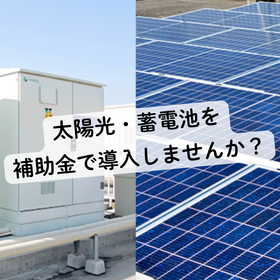
[Our Construction Numbers and Client List] Cumulative total construction cost of 908.4 billion yen, with 83 solar power plants built over 12 years. Numerous transaction records with Sharp, Panasonic, Daiwa House, Nomura Securities, Mitsubishi HC Capital, JA Mitsui Leasing, DMM.com, KKR, Macquarie Capital, Canadian Solar, Trina Solar, J Holdings, RE100 Power, Excelsior Japan, WindSmile, B&M Asset Management, AD Works, Sparks Asset Management, Etrion, and many others. Reducing costs and CO₂ simultaneously without stopping high-precision manufacturing equipment! Achieving "Power Cost Reduction × Decarbonization Management" with zero initial investment. In addition to the design and construction of power generation systems, we provide matching support with multiple financing sources such as financial institutions, leasing, and PPA operators. For companies that want to implement but find funding to be a bottleneck, we can propose optimal financing schemes. We also provide one-stop support for implementation assistance that combines subsidies and tax incentives.
Added to bookmarks
Bookmarks listBookmark has been removed
Bookmarks listYou can't add any more bookmarks
By registering as a member, you can increase the number of bookmarks you can save and organize them with labels.
Free membership registration
[Our Construction Numbers and Client List] Cumulative total construction cost of 908.4 billion yen, with 83 solar power plants built over 12 years. Numerous transaction records with Sharp, Panasonic, Daiwa House, Nomura Securities, Mitsubishi HC Capital, JA Mitsui Leasing, DMM.com, KKR, Macquarie Capital, Canadian Solar, Trina Solar, J Holdings, RE100 Power, Excelsior Japan, WindSmile, B&M Asset Management, AD Works, Sparks Asset Management, Etrion, and many others. Simultaneously reduce costs and CO₂ without stopping high-precision manufacturing equipment! By updating existing rooftop solar power generation systems to "latest panels and power conditioners," we achieve improved power generation, system stability, and reduced maintenance burden. This is particularly optimal for corporate self-consumption repowering after the FIT period ends.
Added to bookmarks
Bookmarks listBookmark has been removed
Bookmarks listYou can't add any more bookmarks
By registering as a member, you can increase the number of bookmarks you can save and organize them with labels.
Free membership registration
[Our Construction Numbers and Client List] Total accumulated construction cost of 908.4 billion yen, with 83 solar power plants built over 12 years. Numerous transaction records with Sharp, Panasonic, Daiwa House, Nomura Securities, Mitsubishi HC Capital, JA Mitsui Leasing, DMM.com, KKR, Macquarie Capital, Canadian Solar, Trina Solar, J Holdings, RE100 Power, Excelsior Japan, WindSmile, B&M Asset Management, AD Works, Sparks Asset Management, Etrion, and many others. Reducing costs and CO₂ simultaneously without stopping high-precision manufacturing equipment! Product Introduction Supplement (for the Tohoku Area) "Tohoku has less sunlight and snowfall, making solar power disadvantageous" — we solve that concern with our design. During the snowfall period, we minimize power generation stoppage with elevated structures that can handle snow loads and a one-slope, high-inclination design that eliminates the need for snow removal. From spring to autumn, we maximize annual power generation with high-efficiency modules (compatible with bifacial generation) and high-precision layouts. Furthermore, we optimize self-consumption during nighttime and peak hours with battery integration and EMS. We provide a one-stop solution for cold climate specifications, including PCS, wiring, and snow protection fences.
Added to bookmarks
Bookmarks listBookmark has been removed
Bookmarks listYou can't add any more bookmarks
By registering as a member, you can increase the number of bookmarks you can save and organize them with labels.
Free membership registration
[Our Construction Projects and Client List] Total accumulated construction cost of 908.4 billion yen, with 83 solar power plants built over 12 years. Numerous transaction records with companies such as Sharp, Panasonic, Daiwa House, Nomura Securities, Mitsubishi HC Capital, JA Mitsui Leasing, DMM.com, KKR, Macquarie Capital, Canadian Solar, Trina Solar, J Holdings, RE100 Power, Exerio Japan, WindSmile, B&M Asset Management, AD Works, Sparks Asset Management, Etrion, and many others. Simultaneously reduce costs and CO₂ without stopping high-precision manufacturing equipment! *For more details, please refer to the related links or feel free to contact us.*
Added to bookmarks
Bookmarks listBookmark has been removed
Bookmarks listYou can't add any more bookmarks
By registering as a member, you can increase the number of bookmarks you can save and organize them with labels.
Free membership registration
[Our Construction Numbers and Client List] Total construction cost of 908.4 billion yen, with 83 solar power plants built over 12 years. Clients include Sharp, Panasonic, Daiwa House, Nomura Securities, Mitsubishi HC Capital, JA Mitsui Leasing, DMM.com, KKR, Macquarie Capital, Canadian Solar, Trina Solar, J Holdings, RE100 Power, Excelsior Japan, WindSmile, B&M Asset Management, AD Works, Sparks Asset Management, Etrion, and many others. Amidst a record-breaking heatwave, warehouses and logistics centers handling frozen foods are in distress. The operation of refrigeration units and automated warehouses requires a large amount of electricity, and electricity rates have increased by more than 30-50% compared to the previous year. Furthermore, since this autumn, some businesses preparing for contract renewals have reported receiving **"requests for a 100% price increase."** According to a survey by industry organizations, there are already cases where the proportion of electricity costs in storage fees exceeds 20%, leading to a situation where price pass-through and negotiations with shippers are unavoidable. Due to the nature of frozen logistics, which prioritizes quality preservation, there are limits to energy-saving efforts, and the "electricity cost risk" is becoming the biggest challenge for management.
Added to bookmarks
Bookmarks listBookmark has been removed
Bookmarks listYou can't add any more bookmarks
By registering as a member, you can increase the number of bookmarks you can save and organize them with labels.
Free membership registration
**[Our Construction Numbers and Client List]** Total accumulated construction cost of 908.4 billion yen, with 83 solar power plants built over 12 years. Clients include Sharp, Panasonic, Daiwa House, Nomura Securities, Mitsubishi HC Capital, JA Mitsui Leasing, DMM.com, KKR, Macquarie Capital, Canadian Solar, Trina Solar, J Holdings, RE100 Power, Excelsior Japan, WindSmile, B&M Asset Management, AD Works, Sparks Asset Management, Etrion, and many others. Reducing costs and CO₂ simultaneously without stopping high-precision manufacturing equipment! *For more details, please refer to the related links or feel free to contact us.* **■ What is the trending Perovskite Solar Cell?** The recently spotlighted **"Perovskite Solar Cell"** is a next-generation technology with the following features: - Ultra-lightweight and thin, compatible with glass, film, and fabric - Capable of generating power even in low light, and can be applied to building walls and curved surfaces - Manufacturing costs can also be reduced, making large-scale deployment expected in the future However…
Added to bookmarks
Bookmarks listBookmark has been removed
Bookmarks listYou can't add any more bookmarks
By registering as a member, you can increase the number of bookmarks you can save and organize them with labels.
Free membership registration
【List of Our Construction Projects and Clients】 Total accumulated construction cost of 908.4 billion yen, with 83 solar power plants built over 12 years. Numerous business achievements with clients including Sharp, Panasonic, Daiwa House, Nomura Securities, Mitsubishi HC Capital, JA Mitsui Leasing, DMM.com, KKR, Macquarie Capital, Canadian Solar, Trina Solar, J Holdings, RE100 Power, Excelsior Japan, WindSmile, B&M Asset Management, AD Works, Sparks Asset Management, Etrion, and many others. Simultaneously reduce costs and CO₂ without stopping high-precision manufacturing equipment! *For more details, please refer to the related links or feel free to contact us.
Added to bookmarks
Bookmarks listBookmark has been removed
Bookmarks listYou can't add any more bookmarks
By registering as a member, you can increase the number of bookmarks you can save and organize them with labels.
Free membership registration
【List of Our Construction Projects and Clients】 Total cumulative construction cost of 908.4 billion yen, with 83 solar power plants built over 12 years. Clients include Sharp, Panasonic, Daiwa House, Nomura Securities, Mitsubishi HC Capital, JA Mitsui Leasing, DMM.com, KKR, Macquarie Capital, Canadian Solar, Trina Solar, J Holdings, RE100 Power, Excelsior Japan, WindSmile, B&M Asset Management, AD Works, Sparks Asset Management, Etrion, and many others. Reduce costs and CO₂ emissions simultaneously without stopping high-precision manufacturing equipment! *For more details, please refer to the related links or feel free to contact us. ■ Benefits of Implementation Powering equipment used during the day, such as air conditioning, deodorization, sterilization, hot water supply, and lighting, with solar energy. Effective for securing power during disasters (BCP) when linked with emergency power sources. Achieved up to 40% reduction in electricity costs annually. Can be implemented with zero initial costs by utilizing subsidies and tax incentives.
Added to bookmarks
Bookmarks listBookmark has been removed
Bookmarks listYou can't add any more bookmarks
By registering as a member, you can increase the number of bookmarks you can save and organize them with labels.
Free membership registration
[Our Construction Projects and Client List] Total accumulated construction cost of 908.4 billion yen, with 83 solar power plants built over 12 years. Numerous transaction records with companies such as Sharp, Panasonic, Daiwa House, Nomura Securities, Mitsubishi HC Capital, JA Mitsui Leasing, DMM.com, KKR, Macquarie Capital, Canadian Solar, Trina Solar, J Holdings, RE100 Power, Excelsior Japan, WindSmile, B&M Asset Management, AD Works, Sparks Asset Management, Etrion, and many others. *For more details, please refer to the related links or feel free to contact us.*
Added to bookmarks
Bookmarks listBookmark has been removed
Bookmarks listYou can't add any more bookmarks
By registering as a member, you can increase the number of bookmarks you can save and organize them with labels.
Free membership registration
【Our Construction Numbers and Client List】 A total construction cost of 908.4 billion yen, with 83 solar power plants built over 12 years. Clients include Sharp, Panasonic, Daiwa House, Nomura Securities, Mitsubishi HC Capital, JA Mitsui Leasing, DMM.com, KKR, Macquarie Capital, Canadian Solar, Trina Solar, J Holdings, RE100 Power, Excelsior Japan, WindSmile, B&M Asset Management, AD Works, Sparks Asset Management, Etrion, and many others. *For more details, please refer to the related links or feel free to contact us. New Revenue from Roof Leasing Model By simply leasing idle assets (roofs), we can earn rental income of approximately 100 to 200 yen per square meter annually. For example, with an 8,000 square meter roof, this translates to stable annual revenue of about 800,000 to 1.6 million yen. *This may vary depending on regional conditions and contract methods.
Added to bookmarks
Bookmarks listBookmark has been removed
Bookmarks listYou can't add any more bookmarks
By registering as a member, you can increase the number of bookmarks you can save and organize them with labels.
Free membership registration
[List of Partner Companies] Sharp, Panasonic, Daiwa House, Nomura Securities, Mitsubishi HC Capital, JA Mitsui Leasing, DMM.com, KKR, Macquarie Capital, Canadian Solar, Trina Solar, J Holdings, RE100 Power, Excelsior Japan, WindSmile, B&M Asset Management, AD Works, Sparks Asset Management, Etrion, etc., have numerous transaction records with leading companies in the industry. If you would like to request a simulation, please apply through the inquiry link. You can also download examples of proposal documents with simulations.
Added to bookmarks
Bookmarks listBookmark has been removed
Bookmarks listYou can't add any more bookmarks
By registering as a member, you can increase the number of bookmarks you can save and organize them with labels.
Free membership registration
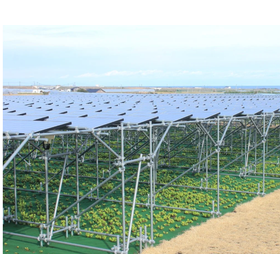
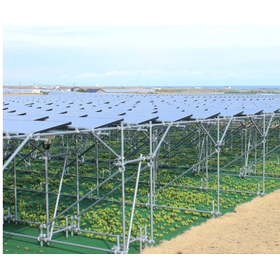
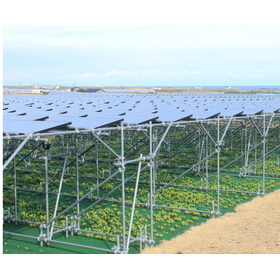
Reducing CO₂ emissions by over 10,000 tons annually while balancing regional agriculture and carbon neutrality. We support the reduction of electricity costs for agricultural management, food factories, and agricultural corporations through "agricultural solar power" installed on abandoned farmland and agricultural land, as well as the utilization of regional circular renewable energy. [Background: Why is agricultural solar power gaining attention now?] - Kubota has introduced solar power facilities on agricultural land, primarily in Tochigi and Ibaraki. - The operational area has expanded from 20 hectares to 80 hectares, resulting in an annual CO₂ reduction of over 10,000 tons. - The generated electricity is supplied to our Tsukuba factory, Keiyo factory, and Sakai manufacturing plant. - We have also succeeded in improving the quality and yield of crops. → A "regional circular model" that allows for effective use of agricultural land and securing self-generated power simultaneously.
Added to bookmarks
Bookmarks listBookmark has been removed
Bookmarks listYou can't add any more bookmarks
By registering as a member, you can increase the number of bookmarks you can save and organize them with labels.
Free membership registration
As a result, approximately 3,800 tons of CO₂ reduction per year and a renewable energy ratio exceeding 10%. We support all aspects of reducing electricity costs, decarbonization, and utilizing subsidies through **"rooftop self-consumption solar power generation"** that can be implemented by small and medium-sized enterprises.
Added to bookmarks
Bookmarks listBookmark has been removed
Bookmarks listYou can't add any more bookmarks
By registering as a member, you can increase the number of bookmarks you can save and organize them with labels.
Free membership registration
Efforts by companies to simultaneously reduce electricity costs and CO₂ emissions are accelerating nationwide. We provide a system for "self-consumption solar power generation" installed on our own roofs, which can be implemented with zero initial costs (on-site PPA).
Added to bookmarks
Bookmarks listBookmark has been removed
Bookmarks listYou can't add any more bookmarks
By registering as a member, you can increase the number of bookmarks you can save and organize them with labels.
Free membership registration
**Challenges in Construction Sites and Public Works and Solutions from Solar Power** - **Challenges Faced by the Construction Industry** The increase in electricity usage at construction sites (heavy machinery, temporary offices, lighting, etc.) Rising construction costs due to soaring electricity and fuel prices Requests from the Ministry of Land, Infrastructure, Transport and Tourism for decarbonization and energy conservation Expectations for additional points in construction performance evaluations through the use of new technologies (NETIS registered technologies) - **Solutions Provided by Solar Power Generation** Self-sufficient power supply at sites through rooftop solar installations, leading to immediate reductions in electricity costs Visualization of efforts towards SDGs and decarbonization through CO₂ emissions reduction Further reduction of environmental impact through the combination with NETIS technologies
Added to bookmarks
Bookmarks listBookmark has been removed
Bookmarks listYou can't add any more bookmarks
By registering as a member, you can increase the number of bookmarks you can save and organize them with labels.
Free membership registration
**Challenges of Factories and Facilities and Solutions for Solar Power and Lightning Damage Prevention** - Challenges Faced by Factories and Facilities Rising electricity costs year by year are putting pressure on management. Risk of failure of control equipment and production lines due to lightning surges. The necessity of lightning damage prevention as part of BCP (Business Continuity Planning) measures. - Solutions Provided by Solar Power and Lightning Damage Prevention Using solar power to self-consume electricity during the day and reduce electricity costs. Preventing lightning surge damage with the installation of lightning rods and SPDs (Surge Protectors). Protecting stable operation of equipment and minimizing the risk of power outages.
Added to bookmarks
Bookmarks listBookmark has been removed
Bookmarks listYou can't add any more bookmarks
By registering as a member, you can increase the number of bookmarks you can save and organize them with labels.
Free membership registration
**Challenges and Solutions** - Challenges faced by many companies Rising electricity costs are putting pressure on management Back-office operations are not keeping up with efficiency Investment towards a decarbonized society is required - A simple solution provided by solar power Just install on the roof to consume electricity during the day Directly reduce monthly electricity bills No human resources needed, contributing to CO₂ reduction
Added to bookmarks
Bookmarks listBookmark has been removed
Bookmarks listYou can't add any more bookmarks
By registering as a member, you can increase the number of bookmarks you can save and organize them with labels.
Free membership registration
**Challenges on Site and Solutions from Solar Power** - Challenges in the Construction Industry Chronic labor shortages make site management difficult Rising fuel and electricity costs pressure profits Stronger demands for decarbonization and energy conservation - Solutions Provided by Solar Power Generation Reduction of dependence on external power sources through self-sufficiency in electricity on site Self-consumption of daytime electricity, reducing fuel usage Excellent compatibility with environmentally friendly construction methods, enhancing corporate value
Added to bookmarks
Bookmarks listBookmark has been removed
Bookmarks listYou can't add any more bookmarks
By registering as a member, you can increase the number of bookmarks you can save and organize them with labels.
Free membership registration
**What is On-Site PPA?** An On-Site PPA (Power Purchase Agreement) is a system where a third party owns and operates solar power generation equipment installed on a company's roof or premises, and the company purchases the electricity generated there through a long-term contract. ✅ Can be implemented with zero equipment costs ✅ Achieves both electricity cost reduction and CO₂ reduction simultaneously ✅ No maintenance or operational burden
Added to bookmarks
Bookmarks listBookmark has been removed
Bookmarks listYou can't add any more bookmarks
By registering as a member, you can increase the number of bookmarks you can save and organize them with labels.
Free membership registration
Why is visualizing CO₂ reduction important? Three challenges of decarbonization management: 1. It is unclear how much CO₂ will be reduced by specific measures. 2. There is a need for evidence to appeal to business partners and shareholders about environmental contributions. 3. While there is a demand for ESG investment and SDGs compliance, it is unclear where to start.
Added to bookmarks
Bookmarks listBookmark has been removed
Bookmarks listYou can't add any more bookmarks
By registering as a member, you can increase the number of bookmarks you can save and organize them with labels.
Free membership registration
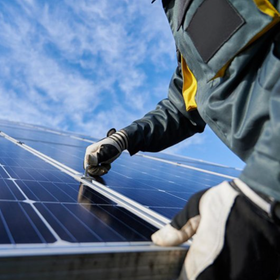
"Why Solar Power Dominates" ✅ Reason 1: The effects are "visible" Self-consumption of daytime electricity with rooftop solar → Immediate reduction in electricity costs Directly deducted from factory electricity costs, allowing for monthly verification of effects ✅ Reason 2: Zero additional costs and operational burden Almost maintenance-free after installation No need for PDCA or human resources like process improvements ✅ Reason 3: Zero initial cost introduction with subsidies and PPA Utilizing subsidies for up to 2/3 support
Added to bookmarks
Bookmarks listBookmark has been removed
Bookmarks listYou can't add any more bookmarks
By registering as a member, you can increase the number of bookmarks you can save and organize them with labels.
Free membership registration
The most straightforward and reliable GX (Green Transformation) measure is industrial self-consumption solar power generation. 【Why start with solar power generation?】 - Challenges of decarbonization management Pressure from clients and shareholders demanding reduced environmental impact Rising electricity costs are squeezing profits There are too many decarbonization measures, making it unclear "where to start" We propose solutions to the above challenges!
Added to bookmarks
Bookmarks listBookmark has been removed
Bookmarks listYou can't add any more bookmarks
By registering as a member, you can increase the number of bookmarks you can save and organize them with labels.
Free membership registration
【Reasons Why Solar Power Dominates】 ✅ Reason 1: Electricity Costs are "Always Consumed" = Reduction is Certain By consuming electricity generated by solar power during the day, it is directly deducted from your monthly electricity bill, allowing for immediate cost savings. ✅ Reason 2: Sustainable Cost Reduction Solar power is free and infinite energy. There is no need for system updates, and the reduction effects continue for over 20 years. ✅ Reason 3: Minimal Additional Costs and Operational Burden Once installed, it is almost maintenance-free. There are no ongoing personnel resources or update costs required, unlike the introduction of DX (digital transformation).
Added to bookmarks
Bookmarks listBookmark has been removed
Bookmarks listYou can't add any more bookmarks
By registering as a member, you can increase the number of bookmarks you can save and organize them with labels.
Free membership registration
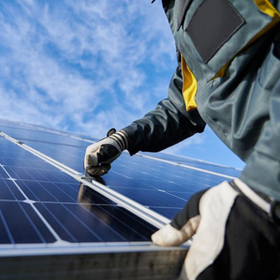
**[Problem Statement and Solution]** ■ Do you have any of these concerns? The electricity costs for clean rooms and air conditioning systems are enormous. Rising fuel adjustment costs and renewable energy surcharges are putting pressure on management. The entire pharmaceutical industry is being asked to comply with ESG and SDGs. ■ Comparison Before and After Implementation Before Implementation: Formulation, inspection, and packaging processes → High electricity costs After Implementation: Same processes + rooftop solar power for self-consumption during the day → Approximately 28% reduction in electricity costs and increased brand value through CO₂ reduction.
Added to bookmarks
Bookmarks listBookmark has been removed
Bookmarks listYou can't add any more bookmarks
By registering as a member, you can increase the number of bookmarks you can save and organize them with labels.
Free membership registration
Transform soaring electricity costs into fixed expenses to strengthen factory management. Utilize subsidies and adopt a PPA model with zero initial costs. ■ Do you have these concerns? Electricity costs for forging presses, heat treatment furnaces, and NC lathes are increasing year by year. Rising fuel adjustment costs and renewable energy surcharges are squeezing profits. ESG and SDGs compliance is being demanded by major business partners. ■ Comparison before and after implementation Before implementation: Forging, heat treatment, and assembly lines → High electricity costs After implementation: Same processes + self-consumption of daytime electricity from rooftop solar → Approximately 28% reduction in electricity costs, improved supply chain evaluation through CO₂ reduction.
Added to bookmarks
Bookmarks listBookmark has been removed
Bookmarks listYou can't add any more bookmarks
By registering as a member, you can increase the number of bookmarks you can save and organize them with labels.
Free membership registration
Electricity costs for mixing, heating, and drying processes reduced by up to 28%! Mitigate business risks by utilizing subsidies and adopting a zero initial cost model to counter rising electricity costs. ■ Do you have these concerns? Electricity costs for mixing, heating, drying, and exhaust equipment are straining your business. Rising fuel adjustment costs and renewable energy surcharges are directly impacting profit margins. You want to urgently respond to ESG and GX (Green Transformation) initiatives. ■ Comparison before and after implementation Before: Raw material mixing, drying, and filling → High electricity costs After implementation: Same processes + rooftop solar for daytime power self-consumption → Approximately 28% reduction in electricity costs, contributing to environmental sustainability through CO₂ reduction.
Added to bookmarks
Bookmarks listBookmark has been removed
Bookmarks listYou can't add any more bookmarks
By registering as a member, you can increase the number of bookmarks you can save and organize them with labels.
Free membership registration
Comparison before and after implementation Before implementation: Electric furnace, continuous casting, finishing process → High electricity costs After implementation: Same processes + rooftop solar for daytime power self-consumption → Approximately 28% reduction in electricity costs, increased corporate value due to CO₂ reduction
Added to bookmarks
Bookmarks listBookmark has been removed
Bookmarks listYou can't add any more bookmarks
By registering as a member, you can increase the number of bookmarks you can save and organize them with labels.
Free membership registration
■ Do you have any of these concerns? The electricity costs for welding, cutting, and press machines are skyrocketing. Dust collectors and air conditioning systems are always running, leading to high peak power consumption. Clients are demanding compliance with ESG and SDGs. ■ Comparison before and after implementation Before implementation: Welding, press processing, painting → High electricity costs After implementation: Same processes + self-consumption of daytime electricity from rooftop solar → Approximately 28% reduction in electricity costs, increased corporate value through CO₂ reduction.
Added to bookmarks
Bookmarks listBookmark has been removed
Bookmarks listYou can't add any more bookmarks
By registering as a member, you can increase the number of bookmarks you can save and organize them with labels.
Free membership registration
■ Do you have any of these concerns? The electricity costs for machining centers and NC lathes are soaring. They operate 24 hours a day, leading to high peak power consumption. Clients are demanding compliance with ESG/SDGs. ■ Comparison before and after implementation Before: Cutting, grinding, and heat treatment → High electricity costs. After implementation: Same processes + self-consumption of daytime power from rooftop solar. → Approximately 28% reduction in electricity costs and increased corporate value through CO₂ reduction.
Added to bookmarks
Bookmarks listBookmark has been removed
Bookmarks listYou can't add any more bookmarks
By registering as a member, you can increase the number of bookmarks you can save and organize them with labels.
Free membership registration
■ Do you have these concerns? The electricity costs for large electric furnaces, presses, and compressors are enormous. Rising fuel adjustment costs and renewable energy surcharges are squeezing profits. I want to appeal to business partners about our environmental contributions in line with ESG and SDGs. ■ Comparison before and after implementation Conventional: Molding, welding, painting → High electricity costs After implementation: Same processes + rooftop solar power for daytime self-consumption → Approximately 28% reduction in electricity costs and increased corporate value through CO₂ reduction.
Added to bookmarks
Bookmarks listBookmark has been removed
Bookmarks listYou can't add any more bookmarks
By registering as a member, you can increase the number of bookmarks you can save and organize them with labels.
Free membership registration
■ Do you have any of these concerns? The electricity costs for clean room air conditioning and precision manufacturing lines are enormous. Management is being pressured by the rapid rise in fuel adjustment costs and renewable energy surcharges. ESG investments and compliance with SDGs are being demanded by business partners. ■ Comparison before and after implementation Conventional: Clean room and inspection processes → High electricity costs After implementation: Same processes + rooftop solar power for daytime self-consumption → Approximately 28% reduction in electricity costs, increased corporate value through CO₂ reduction.
Added to bookmarks
Bookmarks listBookmark has been removed
Bookmarks listYou can't add any more bookmarks
By registering as a member, you can increase the number of bookmarks you can save and organize them with labels.
Free membership registration
Conventional: Extraction, concentration, filling → High electricity costs After implementation: Same process + self-consumption of daytime electricity from rooftop solar Approximately 28% reduction in electricity costs, improved environmental value through CO₂ reduction
Added to bookmarks
Bookmarks listBookmark has been removed
Bookmarks listYou can't add any more bookmarks
By registering as a member, you can increase the number of bookmarks you can save and organize them with labels.
Free membership registration
By covering daytime electricity with solar power, electricity costs can be reduced by up to 28%. Peak cutting of demand power also allows for a review of basic fees. It contributes to decarbonization efforts and enhances ESG appeal during exports.
Added to bookmarks
Bookmarks listBookmark has been removed
Bookmarks listYou can't add any more bookmarks
By registering as a member, you can increase the number of bookmarks you can save and organize them with labels.
Free membership registration
【Benefits of Introduction】 Generate electricity during the day with solar power for immediate cost reduction. Electricity costs reduced by up to 28%, improving profitability. Appeal for decarbonization through CO₂ emission reduction.
Added to bookmarks
Bookmarks listBookmark has been removed
Bookmarks listYou can't add any more bookmarks
By registering as a member, you can increase the number of bookmarks you can save and organize them with labels.
Free membership registration
Effectively utilizing factory roofs to reduce electricity costs by up to 28% through self-generated power. Clearer business outlook with reduced electricity expenses. As a renewable energy source, it also serves as a promotional tool for environmental measures.
Added to bookmarks
Bookmarks listBookmark has been removed
Bookmarks listYou can't add any more bookmarks
By registering as a member, you can increase the number of bookmarks you can save and organize them with labels.
Free membership registration
■ Do you have any of these concerns? The electricity costs for refrigeration and freezing equipment are rising year after year. The power consumption is enormous due to nighttime operations and temperature management. I want to reduce expenses, but I absolutely cannot compromise on quality. ■ Comparison of processes before and after implementation Conventional: Processing and freezing → Constant operation leads to increased electricity costs. After implementation: Same as above + self-supply of daytime power from rooftop solar. → Approximately 28% reduction in electricity costs, and the ratio of renewable energy is also visualized.
Added to bookmarks
Bookmarks listBookmark has been removed
Bookmarks listYou can't add any more bookmarks
By registering as a member, you can increase the number of bookmarks you can save and organize them with labels.
Free membership registration
■The increase in electricity costs poses a risk of "profit pressure." In semiconductor factories that operate 24 hours a day, such as clean rooms, inspection equipment, and air conditioning systems, fluctuations in electricity prices directly impact profits. ■After the introduction of solar power, "costs become fixed," leading to stable budget management. Before: fluctuating electricity unit price + renewable energy surcharge + fuel adjustment costs After introduction: procuring electricity through self-consumption, with a maximum cost reduction of 28%. Moreover, with the PPA model, there are zero initial costs.
Added to bookmarks
Bookmarks listBookmark has been removed
Bookmarks listYou can't add any more bookmarks
By registering as a member, you can increase the number of bookmarks you can save and organize them with labels.
Free membership registration
■After installation Power generation on the roof → Self-consumption of electricity → 28% reduction in electricity costs Zero initial investment through PPA utilization Reduction of CO₂ emissions → Effective for CSR and SDGs compliance *For more details, please download the catalog or feel free to contact us.
Added to bookmarks
Bookmarks listBookmark has been removed
Bookmarks listYou can't add any more bookmarks
By registering as a member, you can increase the number of bookmarks you can save and organize them with labels.
Free membership registration
The optimal "Renewable Energy x Cost Reduction" solution for clean manufacturing sites Dramatically cut electricity costs for manufacturing equipment Also contributes to CO₂ reduction and SDGs compliance Initial costs can be zero with subsidies and PPA implementation *For more details, please download the catalog or feel free to contact us.
Added to bookmarks
Bookmarks listBookmark has been removed
Bookmarks listYou can't add any more bookmarks
By registering as a member, you can increase the number of bookmarks you can save and organize them with labels.
Free membership registration