1~15 item / All 15 items
Displayed results

Added to bookmarks
Bookmarks listBookmark has been removed
Bookmarks listYou can't add any more bookmarks
By registering as a member, you can increase the number of bookmarks you can save and organize them with labels.
Free membership registration
Contact this company
Contact Us Online1~15 item / All 15 items
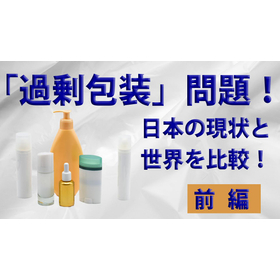
In daily life, one of the issues that increases the burden on the environment is the packaging that excessively makes products look appealing and encourages people to pick them up, as well as packaging that overly emphasizes freshness (so-called excessive packaging), which we have started to see in retail stores. Don't you notice that every time you pick up a product, unnecessary materials and resources are being used in that packaging? This article focuses on "excessive packaging," considers it through the product life cycle, and explores the current situation in Japan and global trends. [What is the significance of "Life Cycle Assessment (LCA)" in addressing the issue of "excessive packaging"?] "Life Cycle Assessment (LCA)" is a method for evaluating the environmental impact of products and services throughout their entire life cycle. It allows for a quantitative understanding of the amount of resources and energy used, as well as the amount of emissions generated throughout the life of a product. You can read more at the URL below or contact us for inquiries. *Detailed content of the column can be viewed through the related links. For more information, please feel free to contact us.
Added to bookmarks
Bookmarks listBookmark has been removed
Bookmarks listYou can't add any more bookmarks
By registering as a member, you can increase the number of bookmarks you can save and organize them with labels.
Free membership registration
In Europe, the world's first law to prohibit the import of products related to deforestation, the "Deforestation Prevention Law," was implemented in 2024. On the other hand, in response to the global surge in energy prices, the number of households in Europe burning wood for heating has rapidly increased. This article explains the contents of the European Deforestation Prevention Law and the latest developments regarding wood and the environment. 【What is the world's first "Deforestation Prevention Law"?】 What kind of law is the world's first attempt, the "Deforestation Prevention Law," enacted in Europe? First, let’s introduce its features. - Requirement for proof of "not being involved in deforestation" The European Deforestation Prevention Law, approved by the European Parliament, has decided to prohibit the import of agricultural products and goods related to deforestation into the EU. For more details, please read the continuation at the URL below or contact us. *You can view the detailed content of the column through the related links. For more information, please feel free to contact us.
Added to bookmarks
Bookmarks listBookmark has been removed
Bookmarks listYou can't add any more bookmarks
By registering as a member, you can increase the number of bookmarks you can save and organize them with labels.
Free membership registrationAre you aware of the "Forest Environment Tax" that will be introduced in 2024? The "Forest Environment Tax" is a tax that individuals with a residence in Japan are obligated to pay 1,000 yen annually along with their resident tax. Since there are approximately 62 million taxpayers in Japan, the "Forest Environment Tax" is expected to raise about 62 billion yen each year. The taxes we pay will be distributed from the national government to municipalities and prefectures as "Forest Environment Allocation Tax" and will be used for forest management. What led to the establishment of the "Forest Environment Tax" and the "Forest Environment Allocation Tax"? You can read more at the URL below or contact us for inquiries.
Added to bookmarks
Bookmarks listBookmark has been removed
Bookmarks listYou can't add any more bookmarks
By registering as a member, you can increase the number of bookmarks you can save and organize them with labels.
Free membership registration
Currently, the areas troubled by bamboo groves spreading into forests and satoyama (traditional rural woodlands) are expanding. It has become a significant issue, as trees in forests invaded by bamboo are dying. However, why is the maintenance of bamboo groves not progressing well? Behind this lies a lack of knowledge about the characteristics of bamboo and appropriate eradication methods. This lack of information hinders maintenance efforts, exacerbating the bamboo grove problem. Now, let’s explain the current situation and issues regarding bamboo groves. **[Increase of Bamboo Groves in Japan and Its Impact on Forest Environments]** The area of bamboo groves in Japan has been increasing year by year, reaching approximately 160,000 hectares in 2012. They are widely distributed, particularly in western Japan, including Kyushu and the Chugoku region, and bamboo groves account for about 0.6% of Japan's total forest area. While there are well-maintained bamboo groves, many of the unmaintained ones show low productivity as bamboo material. Not all bamboo groves need to be urgently maintained, and the approach to assessing them varies depending on the original land use. For more information, please read the continuation at the URL below or contact us.
Added to bookmarks
Bookmarks listBookmark has been removed
Bookmarks listYou can't add any more bookmarks
By registering as a member, you can increase the number of bookmarks you can save and organize them with labels.
Free membership registration
**What is Biomass?** Biomass is a term that combines "biological resources (BIO)" and "mass (MASS)," referring to organic resources generated from "renewable biological materials" without using fossil fuels. **What Can Be Generated from Biomass?** Biomass can be categorized into several types, but it can be broadly classified into three main categories: ■ Waste Biomass This type of biomass is generated from items that are generally discarded, primarily including the following types: Manure and urine from livestock (cattle, pigs, chickens, etc.), food waste (processed foods, waste oil), waste paper, pulp (factory wastewater), sewage, sludge, human waste, construction waste wood, and sawmill waste wood. ■ Unused Biomass This biomass is generated from materials that arise during agricultural or lumber processing and are planned to be discarded without use. Examples include wheat straw, rice husks, rice straw, and forestry offcuts. ■ Resource Crops These are crops cultivated specifically for the purpose of being used as "biomass resources"… For more details, please read the continuation at the URL below or contact us. If you are considering effective utilization of biomass, please consult with ELEMUS.
Added to bookmarks
Bookmarks listBookmark has been removed
Bookmarks listYou can't add any more bookmarks
By registering as a member, you can increase the number of bookmarks you can save and organize them with labels.
Free membership registration
**SDG 13: "Take Urgent Action to Combat Climate Change and Its Impacts"** In SDG 13, "Take Urgent Action to Combat Climate Change and Its Impacts," countries are called upon to implement measures to mitigate natural disasters resulting from climate change caused by global warming, as previously mentioned. **Japan's Initiatives for SDGs** As part of the global initiative aiming for a sustainable society, the SDGs propose the 13th goal, "Take Urgent Action to Combat Climate Change and Its Impacts." In Japan, a "Global Warming Countermeasure Plan" has been formulated to systematically advance measures against global warming, and efforts are being made towards the SDGs. The overall goals of the "Global Warming Countermeasure Plan" are as follows: - Reduce greenhouse gas emissions by 46% by 2030 (compared to 2013 levels) - Further reduce emissions by 50% thereafter - Achieve net-zero greenhouse gas emissions by 2050 Thus, the ultimate goal of realizing "carbon neutrality by 2050" is set forth. **Sector-specific Goals and Initiatives** Based on the overall goals, we will introduce the goals and initiatives of each sector. Currently, approximately 30% of greenhouse gas emissions in Japan come from... For more information, please read the continuation at the URL below or contact us.
Added to bookmarks
Bookmarks listBookmark has been removed
Bookmarks listYou can't add any more bookmarks
By registering as a member, you can increase the number of bookmarks you can save and organize them with labels.
Free membership registration
**Utilization of Thinning Wood and Its Relevance to SDGs** Recently, "thinning," which is essential for the maintenance and management of Japan's rich forest resources, has been gaining attention. But why is thinning necessary in the first place? Its benefits are as follows: - Moderately thinning densely packed trees allows sunlight to reach the forest evenly, maintaining the ecosystem. - With more sunlight reaching the trees during their growth stages, a healthy forest environment and cycle are created. - Thinning trees helps prevent landslides, thereby protecting the water quality of the sea flowing from forests and rivers. - These environmental efforts through thinning contribute to achieving the following SDGs goals. **Challenges and Measures Regarding Thinning** Thinning is an indispensable task for the maintenance and management of forests. However, due to the aging of forestry workers and a lack of manpower and funding, the thinning of artificial forests is not being carried out appropriately. If forests are left unattended without thinning, the aging of trees will progress, leading to further decline in the forestry industry. Therefore, a specific measure is to "expand the use of domestic timber and thinning wood." By increasing the utilization of forest resources, we can enhance the domestic sustainability of timber... For more details, please read the continuation at the URL below or contact us.
Added to bookmarks
Bookmarks listBookmark has been removed
Bookmarks listYou can't add any more bookmarks
By registering as a member, you can increase the number of bookmarks you can save and organize them with labels.
Free membership registration
Japan is a forest kingdom, with about two-thirds of its land (approximately 25 million hectares) covered by forests, which is one of the highest ratios in the world. In fact, Japan's forest area has not changed for over 50 years. I will explain the current state of Japan's forests, which is the reason for this. However, the volume of forests, known as forest accumulation, has been increasing year by year, primarily in artificial forests. While the area has not increased, the volume has been growing annually. Forests consist of "natural forests," which grow through natural processes, and "artificial forests," which are planted by humans. While the global rate of artificial forests is 7%, Japan's rate is very high at 40%. The area of Japan's artificial forests is approximately 10 million hectares, which is about 1.2 times the size of Hokkaido. The high rate of artificial forests in Japan is due to the rapid increase in demand for timber after World War II and during the period of rapid economic growth, which led to the creation of many artificial forests. Now, those artificial forests planted during that time have entered their mature phase, with more than half being over 50 years old. As a result, while the forest area has not changed, the trees in the forests are growing... For more details, please read the continuation at the URL below or contact us.
Added to bookmarks
Bookmarks listBookmark has been removed
Bookmarks listYou can't add any more bookmarks
By registering as a member, you can increase the number of bookmarks you can save and organize them with labels.
Free membership registration
To prevent bear encounters, there are calls in various regions to "carry bear bells!" but how effective are they really? The term "urban bear," which was nominated as a new word and buzzword of 2023, has gained attention due to the increasing occurrences of bears appearing in urban areas. In the bear world, there is a hierarchy, and even if a bear finds food, weaker bears will yield their food to stronger bears. Weaker bears are said to be "urban bears" because they go into towns in search of food. Originally, bears were animals that lived hidden from human sight. However, just as human life has evolved, bears have also adapted and become accustomed to the sounds and lights produced by humans. **One of the reasons for bear sightings is the poor acorn harvest!** In prefectures where bears are sighted, administrative agencies issue warnings about bear encounters when there is a poor acorn harvest in the mountains. However, the cause is not solely the poor acorn harvest. Bears are influenced by seasonal changes... For more details, please read the continuation at the URL below or contact us.
Added to bookmarks
Bookmarks listBookmark has been removed
Bookmarks listYou can't add any more bookmarks
By registering as a member, you can increase the number of bookmarks you can save and organize them with labels.
Free membership registration
What is high-quality wood powder? Traditionally, wood powder has been treated as a "by-product" generated during the manufacturing processes of construction materials and furniture, or when dismantling wood. When attempting to use wood powder generated from such processes as a material, there were disadvantages such as the presence of impurities and difficulty in adjusting particle size. However, recently, there has been an increase in companies that process locally sourced wood and sell it as "high-quality wood powder material." What characteristics define high-quality wood powder? Quality Standards for Wood Powder The quality standards when using wood powder as a material are as follows: Country of Origin (Purity) What percentage of the wood powder is from the country of origin (e.g., domestic products, 100% domestic timber) Raw Materials Is the wood powder produced from local sources, using offcuts or components from lumber? Impurities Are there any contaminants such as adhesives, asbestos, metal powders, or preservatives? Functionality Is the safety of using wood powder as a material superior? High-quality wood powder is... For more details, please read the continuation at the URL below or contact us. If you are considering the effective use of logs or wood pieces available in your area, please consult ELEMUS.
Added to bookmarks
Bookmarks listBookmark has been removed
Bookmarks listYou can't add any more bookmarks
By registering as a member, you can increase the number of bookmarks you can save and organize them with labels.
Free membership registration
What kind of material is biomass plastic? First, let me explain its positioning and characteristics. **Types of Bioplastics** In fact, biomass plastic is classified as one of the many types of bioplastics, which are different from marine plastics. Bioplastics can be broadly divided into two categories: "biomass plastics" and "biodegradable plastics." Biomass refers to "renewable resources," indicating resources that can be sustainably regenerated. Biomass plastic is a new type of plastic material that does not require petroleum, which is the source of traditional marine plastics, and is primarily produced from plants and other organic materials. Since the raw materials are plant-based, the renewable aspect is a significant feature. However, it is important to note that there are types that are biodegradable and those that are not. **Differences Between Biomass Plastics and Biodegradable Plastics** Biomass Plastics: Derived from biological sources... For more information, please read the continuation at the URL below or contact us. If you are considering effective utilization of wood for a decarbonized society, please consult ELEMUS.
Added to bookmarks
Bookmarks listBookmark has been removed
Bookmarks listYou can't add any more bookmarks
By registering as a member, you can increase the number of bookmarks you can save and organize them with labels.
Free membership registration
The SDGs were formulated with the aim of achieving a sustainable society, and currently, countries around the world are working on various issues such as the environment and poverty, aiming for solutions by 2030. **[Efforts to Address Environmental Issues Using Wood Powder]** One application of biomass fuel and materials utilizing thinned wood is the attempt to reuse wood that has been processed into wood powder. For example, biomass plastic that combines wood powder and resin (plastic) is expected to help suppress the rise of carbon dioxide, thus offering potential for carbon neutrality, making it a promising solution for environmental issues. *Carbon neutrality refers to efforts to balance the total emissions and absorption of greenhouse gases on Earth to zero.* **[Challenges of Wood Powder Biomass Plastic]** There are several challenges associated with biomass plastic made from wood powder. High market prices While there are many advantages compared to conventional plastics, wood powder biomass plastic tends to have a high market price... For more information, please read the continuation at the URL below or contact us. If you are considering wood powder processing as a recycling option for thinned wood, please reach out to ELEMUS.
Added to bookmarks
Bookmarks listBookmark has been removed
Bookmarks listYou can't add any more bookmarks
By registering as a member, you can increase the number of bookmarks you can save and organize them with labels.
Free membership registration
Are you aware that there is growing attention on new materials that can improve environmental issues? Recently, a completely new type of plastic material has been developed by merging wood-based materials with plastic, which compensates for the shortcomings of each. 【What is the compatibility of wood powder and plastic?】 When wood powder is combined with plastic, the compatibility of the two materials can be considered favorable. One of the advantages is that it can utilize materials that would otherwise be discarded, thus harmonizing with the environment. The composite material made by merging wood powder and plastic is called Wood Plastic Composite (WPC). WPC is mainly used in automotive interiors, construction materials, and home appliances, and it can be recycled by crushing and melting it back into pellets at the time of disposal. 【Benefits of WPC】 The advantages of biomass plastic using wood powder, which is different from conventional marine plastics, are as follows: ■ It is more resistant to dirt compared to wood, has a smooth surface, and shows less deterioration from mold and corrosion... For more information, please read the continuation at the URL below or contact us. If you are considering the production of wood powder bioplastics, please consult with ELEMUS.
Added to bookmarks
Bookmarks listBookmark has been removed
Bookmarks listYou can't add any more bookmarks
By registering as a member, you can increase the number of bookmarks you can save and organize them with labels.
Free membership registration
URCYL/Arcil" is a biomass molding material made from finely crushed wood powder of cedar and cypress, and tree sap harvested from lacquer trees. It possesses physical strength comparable to that of ABS resin, along with antibacterial and antiviral properties, making it a highly heat-resistant material suitable for various applications. The amount of carbon dioxide generated during the production of this product is about one-fifth that of plastic, contributing to the reduction of greenhouse gases. [Features] - New material from plant resources - Sustainable raw materials - Antibacterial and antiviral properties *For more details, please download the PDF or contact us mentioning "Ipros.
Added to bookmarks
Bookmarks listBookmark has been removed
Bookmarks listYou can't add any more bookmarks
By registering as a member, you can increase the number of bookmarks you can save and organize them with labels.
Free membership registration
"URCYL/Arshil" is a biomass molding material made from finely powdered wood of cedar and cypress, and tree sap harvested from lacquer trees. It possesses physical strength comparable to that of ABS resin, and is a highly heat-resistant material with antibacterial and antiviral properties, making it suitable for various applications. The amount of carbon dioxide generated in the production of this product is about 1/5 that of plastic, contributing to the reduction of greenhouse gases. [Features] ■ New material from plant resources ■ Sustainable raw materials ■ Antibacterial and antiviral properties *For more details, please refer to the PDF document or feel free to contact us.
Added to bookmarks
Bookmarks listBookmark has been removed
Bookmarks listYou can't add any more bookmarks
By registering as a member, you can increase the number of bookmarks you can save and organize them with labels.
Free membership registration