- Publication year : 2026
1~11 item / All 11 items
Displayed results
Added to bookmarks
Bookmarks listBookmark has been removed
Bookmarks listYou can't add any more bookmarks
By registering as a member, you can increase the number of bookmarks you can save and organize them with labels.
Free membership registration
Contact this company
Contact Us OnlineBefore making an inquiry
Download PDF1~11 item / All 11 items

To safely install a lighting pole, it is essential to perform strength calculations to prevent collapse or damage from external forces such as wind. First, based on local weather data, we assume the wind strength and set the required strength. 1. Wind pressure calculation - Calculate the pressure based on wind speed and direction, as well as the shape and height of the pole. 2. Material and cross-section evaluation - Confirm the tensile, compressive, and bending strength of the materials and shapes used, and verify whether they can withstand the specified load. The design applies the standard JIL1003 for lighting poles to ensure safety and performance. Accurate calculations and appropriate pole selection are key to preventing accidents and extending lifespan. For more detailed explanations, visit the Kando Industry website! You can find the continuation through the related links.
Added to bookmarks
Bookmarks listBookmark has been removed
Bookmarks listYou can't add any more bookmarks
By registering as a member, you can increase the number of bookmarks you can save and organize them with labels.
Free membership registration
When choosing outdoor lighting poles, first pay attention to the "material" and "processing technology." Stainless steel or aluminum, which are resistant to rust and lightweight, can be used for a long time and are easy to install. Additionally, laser cutting allows for intricate designs, and advancements in welding technology have significantly increased the strength of the poles themselves. As a result, quality improves and maintenance efforts are reduced. By understanding the characteristics of the materials and processing methods, and selecting a pole that fits the installation location, you can ensure safety and cost-effectiveness. By the way, Kanda Kogyo offers lighting poles that meet diverse needs by combining high-quality materials with cutting-edge processing.
Added to bookmarks
Bookmarks listBookmark has been removed
Bookmarks listYou can't add any more bookmarks
By registering as a member, you can increase the number of bookmarks you can save and organize them with labels.
Free membership registration
Metal components such as outdoor lighting and road signs must possess the quality to function safely over a long period in harsh environments like rain, wind, and ultraviolet rays. The foundation of high quality consists of three key elements: 1. Precision design, advanced processing technology, and appropriate material selection 2. Strict process management and skilled workers 3. A quality control system equipped with inspection systems, measurement technology, and traceability. In cutting, dimensional accuracy and smooth cutting surfaces are particularly important; in bending, angle accuracy and uniformity of shape are crucial; and in welding, joint strength and beautiful beads are essential. By organically linking these aspects, metal products that combine durability and reliability are created. For more detailed explanations, visit the Kando Industrial website! You can find the continuation through the related links.
Added to bookmarks
Bookmarks listBookmark has been removed
Bookmarks listYou can't add any more bookmarks
By registering as a member, you can increase the number of bookmarks you can save and organize them with labels.
Free membership registration
Lighting poles are utilized not only for their basic functions such as street lighting, park lighting, and parking lot illumination, but also as mounting bases for security cameras, advertising and information boards, sensor devices like noise meters and traffic counters, as well as supports for event flags and decorations, making them multipurpose. A significant advantage is that reusing existing poles eliminates the need for additional installation space, allowing for cost reduction in equipment introduction while simultaneously preserving the landscape. Furthermore, in recent years, the integration of smart poles that incorporate Wi-Fi antennas, charging stations, and facial recognition systems has progressed, contributing to the efficiency of urban spaces and enhancing safety and comfort. For more detailed explanations, visit the Kando Industrial website! You can find the continuation through the related links.
Added to bookmarks
Bookmarks listBookmark has been removed
Bookmarks listYou can't add any more bookmarks
By registering as a member, you can increase the number of bookmarks you can save and organize them with labels.
Free membership registration
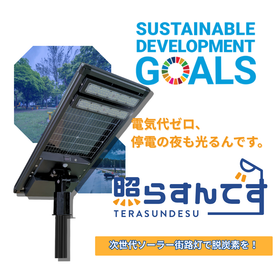
Are you struggling with power outage measures during disasters or reducing electricity costs? Kando Industry's first in-house product, "Terasun desu," is an independent power supply streetlight that generates electricity from solar power and lights up even at night or during power outages. It is equipped with a storage function that allows it to illuminate for about five days on a full charge, contributing to safety during evacuations. Additionally, with a high brightness of 9600 lumens and a motion sensor, it achieves both security and energy savings. The electricity cost is zero, and since no wiring work is required, it can be smoothly introduced even in locations where securing power is difficult. It is suitable for a wide range of applications, including parks, parking lots, factories, and evacuation shelters. This is a new lighting solution that simultaneously addresses disaster preparedness, security, and energy conservation. Please feel free to contact us for inquiries about installation feasibility or estimated costs.
Added to bookmarks
Bookmarks listBookmark has been removed
Bookmarks listYou can't add any more bookmarks
By registering as a member, you can increase the number of bookmarks you can save and organize them with labels.
Free membership registration
The lifespan of lighting poles is influenced by the installation environment and materials used, with a general guideline of 15 to 30 years. When rust or corrosion reduces structural strength, it is determined to be time for replacement. In addition to regular inspections, the following three technologies are effective for extending lifespan: 1. Applying zinc coating to iron poles to enhance corrosion resistance against salt damage and acid rain. 2. Adding a polyester coating over the zinc layer for further protection against UV rays and rainwater. 3. Regularly applying anti-rust paint to suppress external damage. By combining these methods, durability is improved, and maintenance costs can be reduced. Kandai Industry utilizes these processing technologies to provide long-lasting and highly reliable lighting poles. For more detailed explanations, visit Kandai Industry's website! You can find more in the related links.
Added to bookmarks
Bookmarks listBookmark has been removed
Bookmarks listYou can't add any more bookmarks
By registering as a member, you can increase the number of bookmarks you can save and organize them with labels.
Free membership registration
Lighting poles are mainly made of steel or aluminum, and their lifespan varies depending on the usage environment, materials, and maintenance conditions. Steel is prone to rust, and as the paint deteriorates, its corrosion resistance decreases, shortening its lifespan. On the other hand, aluminum is lightweight and has excellent corrosion resistance, but it also has limitations in terms of strength. The installation environment also affects lifespan. In high-corrosion-risk environments such as coastal areas or industrial zones, deterioration occurs more quickly, and designs must withstand natural conditions like wind pressure and earthquakes. Additionally, ground subsidence of the foundation can compromise the verticality and stability of the pole, leading to deterioration. Regular inspections and maintenance help in the early detection of rust, paint peeling, and loosening. Delayed action can significantly compromise safety. If deterioration progresses and issues arise with functionality or safety, replacement becomes necessary. In such cases, it is important to select appropriate poles considering material selection, installation environment, and maintenance plans to maintain reliable lighting equipment over the long term.
Added to bookmarks
Bookmarks listBookmark has been removed
Bookmarks listYou can't add any more bookmarks
By registering as a member, you can increase the number of bookmarks you can save and organize them with labels.
Free membership registration
Outdoor lighting poles require a paint that combines aesthetics and durability. There are four important points to consider: 1. **Proper Paint Selection** Polyurethane and epoxy paints, which are excellent in weather resistance and corrosion resistance, are recommended to maintain aesthetics over the long term in outdoor environments. 2. **Importance of Surface Treatment** It is essential to thoroughly remove rust, old paint, and dirt. By preparing the substrate meticulously through sandblasting or chemical treatment, the adhesion and lifespan of the paint are improved. 3. **Management of Construction Environment** Weather conditions such as temperature, humidity, and wind speed affect the drying and curing of the paint. Proper management of these factors and conducting the work in a well-ventilated area can prevent unevenness and deterioration of quality. 4. **Regular Maintenance** Regularly inspect the condition of the paint film, and promptly repair any cracks, peeling, or rust found. This allows for the extension of the pole's lifespan and the maintenance of its appearance. **Summary:** The painting of lighting poles is a systematic process involving "paint selection" → "substrate preparation" → "proper application" → "regular repairs," which balances beauty and durability, preserving the landscape value of public roads and facilities for a long time. For more detailed explanations, visit the website of Kando Industry! You can find more in the related links.
Added to bookmarks
Bookmarks listBookmark has been removed
Bookmarks listYou can't add any more bookmarks
By registering as a member, you can increase the number of bookmarks you can save and organize them with labels.
Free membership registration
Metal cutting is not only about separating materials but is also a crucial process that affects product quality and cost. This article introduces the main methods. 1. Laser cutting: Non-contact, high precision, capable of handling complex shapes and thin to medium-thick plates, achieving smooth cross-sections. 2. Plasma cutting: Can process thick plates at high speeds and is cost-effective, though the cross-section is somewhat rough. 3. Mechanical cutting: Strong in cutting large and extremely thick materials or mass cutting using band saws and shearing. 4. Water jet cutting: Zero thermal impact, suitable for hard materials and precision parts. It emphasizes that the skills of experienced craftsmen who can discern metal properties, fine-tune conditions, and minimize distortion are essential. High-quality cutting directly leads to reduced assembly labor, automation of subsequent processes, reduced defects, and improved reliability, making the selection of a trustworthy contractor key. Kanda Industrial concludes by proposing the optimal cutting methods based on their extensive experience and technology. For more detailed explanations, visit Kanda Industrial's website! You can find the continuation through the related links.
Added to bookmarks
Bookmarks listBookmark has been removed
Bookmarks listYou can't add any more bookmarks
By registering as a member, you can increase the number of bookmarks you can save and organize them with labels.
Free membership registration
The benefits of converting outdoor lighting to LED include a significant reduction in power consumption compared to traditional lighting. This contributes to reducing environmental impact and lowering electricity costs, and furthermore, the Ministry of Land, Infrastructure, Transport and Tourism and local governments support the transition to LED through subsidy and grant programs. When switching to LED, it is important to focus not only on the lighting fixtures themselves but also on the supporting lighting poles. If the existing poles are sufficiently durable, it is possible to replace them with LED fixtures at a low cost using conversion adapters. On the other hand, if the poles are aging, it is necessary to update them entirely while considering the landscape and harmony with the surroundings. Factors such as height, tilt, design, weather resistance, and maintenance are crucial in the design phase for new installations. It is recommended that the contractor evaluates the condition of the existing poles while utilizing support programs from the national and local governments to consider the optimal response method. A comprehensive assessment of the quality of light, costs, and maintenance management resulting from the LED conversion will be the key to success. For more detailed explanations, please visit the website of Kando Industry! You can find the continuation through the related links.
Added to bookmarks
Bookmarks listBookmark has been removed
Bookmarks listYou can't add any more bookmarks
By registering as a member, you can increase the number of bookmarks you can save and organize them with labels.
Free membership registration
Did you know that there are various types of lighting poles tailored to their use and installation location? Here, we will explain mainly three types: "high ceiling floodlights," "streetlights and road lights," and "architectural exterior lighting." High ceiling floodlights: Used in indoor spaces such as sports facilities and warehouses where high ceilings are necessary, they require durability and strong illumination to reach far distances. Streetlights and road lights: Installed on sidewalks and roads to enhance safety. Streetlights are designed for uniform diffusion, while road lights are designed to make lanes and intersections easily recognizable. Architectural exterior lighting: Used for beautifying the appearance of facilities and buildings while also serving as nighttime security, often featuring highly designed types such as tapered poles. It is important to equip lighting poles with the optimal materials, shapes, and weather resistance according to their use and installation location. Kanda Industrial provides lighting poles suited for these purposes. For more detailed explanations, please visit Kanda Industrial's website through the related link.
Added to bookmarks
Bookmarks listBookmark has been removed
Bookmarks listYou can't add any more bookmarks
By registering as a member, you can increase the number of bookmarks you can save and organize them with labels.
Free membership registration