1~21 item / All 21 items
Displayed results
Filter by category
Added to bookmarks
Bookmarks listBookmark has been removed
Bookmarks listYou can't add any more bookmarks
By registering as a member, you can increase the number of bookmarks you can save and organize them with labels.
Free membership registration
Contact this company
Contact Us Online1~21 item / All 21 items
Filter by category

Our flame retardants and flame-retardant water-based paints do not alter the original texture and feel to the extent that you can tell they have been applied. Additionally, large-format processing and mass production are possible using painting spray robots. Please feel free to contact us if you have any requests. 【Features】 ■ Maintains texture ■ Compatible with a wide range of materials ■ No odor after processing *For more details, please download the PDF or contact us.
Added to bookmarks
Bookmarks listBookmark has been removed
Bookmarks listYou can't add any more bookmarks
By registering as a member, you can increase the number of bookmarks you can save and organize them with labels.
Free membership registration
"KS Fireproof" is a water-based agent specifically designed for wood and plywood that does not contain harmful substances to humans. It does not discolor even old wood and has a rust-resistant effect on metals. It is effective against termites and does not produce any odor after processing while maintaining the texture. Application to structures is done entirely by spray application, and immediately after application, it may feel as if it has been wet by rain, but once dry, it returns to a state that is completely unchanged in color and texture from before application. [Features] - Water-based and does not contain harmful substances to humans - Does not discolor even old wood and is rust-resistant on metals - Effective against termites - Maintains texture and has no odor after processing - Application to structures is done by spray application *For more details, please download the PDF or feel free to contact us.
Added to bookmarks
Bookmarks listBookmark has been removed
Bookmarks listYou can't add any more bookmarks
By registering as a member, you can increase the number of bookmarks you can save and organize them with labels.
Free membership registration
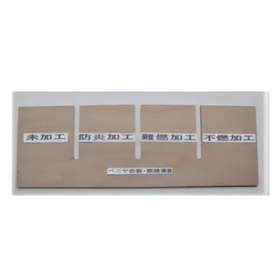
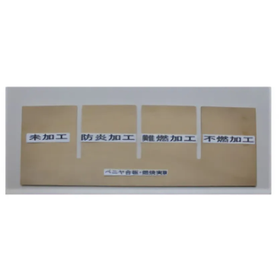
We would like to introduce a case study of combustion experiments conducted on "plywood." Combustion comparisons were carried out under the same materials and conditions. The chemicals used were the flame retardant "KS Fire Guard" and the non-combustible water-based paint "KS Retardant." As a result of the experiments, the non-combustible water-based paint section produced almost no smoke and did not burn. Currently, we are challenging the non-combustibility (according to building standards) of plywood with a thickness of 4mm. 【Case Overview】 ■ Combustion test specimens: All processed by a spraying robot ■ Burner used for combustion experiments: Approximately 1,300°C of firepower ■ Chemicals used: - Flame retardant "KS Fire Guard" (registered with the Japan Flame Retardant Association) - Non-combustible water-based paint "KS Retardant" *For more details, please refer to the related links or feel free to contact us.
Added to bookmarks
Bookmarks listBookmark has been removed
Bookmarks listYou can't add any more bookmarks
By registering as a member, you can increase the number of bookmarks you can save and organize them with labels.
Free membership registration
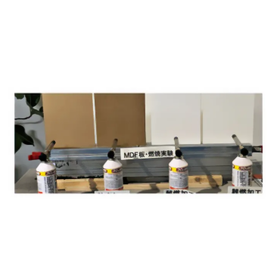
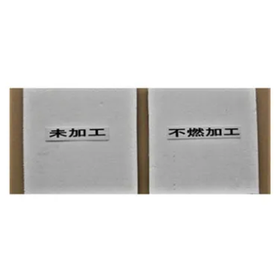
We would like to introduce a case study of combustion experiments conducted on "MDF boards." Flame retardant agent "KS Fire Guard" and non-combustible water-based paint "KS Retardant" were used. The flame retardant treatment of the MDF board causes slight discoloration due to the penetration of the agent. As a result of the experiment, the good penetration of the flame retardant agent demonstrated excellent flame retardant performance. The areas treated with flame retardant only carbonized where heat was transmitted. [Case Overview] ■ Combustion test specimens: All processed by a spraying robot ■ Burner used for combustion experiments: Approximately 1,300°C of firepower ■ Chemicals used: - Flame retardant agent "KS Fire Guard" (registered with the Japan Flame Retardant Association) - Non-combustible water-based paint "KS Retardant" *For more details, please refer to the related links or feel free to contact us.
Added to bookmarks
Bookmarks listBookmark has been removed
Bookmarks listYou can't add any more bookmarks
By registering as a member, you can increase the number of bookmarks you can save and organize them with labels.
Free membership registration
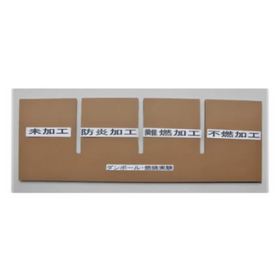
We would like to introduce a case study of combustion experiments conducted with "cardboard." Comparative combustion tests with the same material are important. The experiments were carried out using the flame retardant "KS Fire Guard" and the non-combustible water-based paint "KS Retardant." The danger of cardboard is that once it ignites, it will not extinguish until it burns out completely. 【Case Overview】 ■ Specimens for combustion experiments: All processed by a spraying robot ■ Burner used for combustion experiments: Approximately 1,300°C of firepower ■ Chemicals used: - Flame retardant "KS Fire Guard" (registered with the Japan Flame Retardant Association) - Non-combustible water-based paint "KS Retardant" *For more details, please refer to the related links or feel free to contact us.
Added to bookmarks
Bookmarks listBookmark has been removed
Bookmarks listYou can't add any more bookmarks
By registering as a member, you can increase the number of bookmarks you can save and organize them with labels.
Free membership registration
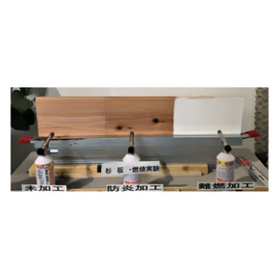
We would like to introduce a case study of combustion experiments conducted on "cedar boards." We used the flame retardant agent "KS Fire Guard" and the non-combustible water-based paint "KS Retardant." The flame retardant treatment does not significantly change the texture and maintains the pleasant cedar aroma. As a result of the experiments, while natural materials are inherently less flammable, the difference between flame retardant and fire-resistant treatments is clear. [Case Overview] - Combustion test specimens: All processed using a spraying robot - Burner used for combustion experiments: Approximately 1,300°C of heat - Chemicals used: - Flame retardant agent "KS Fire Guard" (registered with the Japan Flame Retardant Association) - Non-combustible water-based paint "KS Retardant" *For more details, please refer to the related links or feel free to contact us.
Added to bookmarks
Bookmarks listBookmark has been removed
Bookmarks listYou can't add any more bookmarks
By registering as a member, you can increase the number of bookmarks you can save and organize them with labels.
Free membership registration
Here is an example of a combustion experiment conducted with "thin plywood." The chemicals used include the flame retardant "KS Fire Guard" and the non-combustible water-based paint "KS Retardant." While the applications of thin plywood are virtually limitless, it is still very flammable, even though it is a natural material. 【Overview of the Case】 ■ Combustion test specimens: All processed by a spraying robot ■ Burner used for combustion experiments: Approximately 1,300°C of firepower ■ Chemicals used: - Flame retardant "KS Fire Guard" (registered with the Japan Flame Retardant Association) - Non-combustible water-based paint "KS Retardant" *For more details, please refer to the related links or feel free to contact us.
Added to bookmarks
Bookmarks listBookmark has been removed
Bookmarks listYou can't add any more bookmarks
By registering as a member, you can increase the number of bookmarks you can save and organize them with labels.
Free membership registration
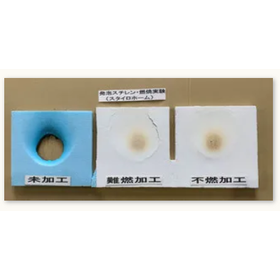
We would like to introduce a case study of a combustion experiment conducted using "expanded polystyrene." All combustion test specimens were processed using a spraying robot. The burner used for the combustion experiment has a flame temperature of approximately 1,300°C. The chemicals used include the flame retardant "KS Fire Guard" and the non-combustible water-based paint "KS Retardant." 【Case Overview】 ■ Combustion test specimens: All processed using a spraying robot ■ Burner used for combustion experiment: Flame temperature of approximately 1,300°C ■ Chemicals used: - Flame retardant "KS Fire Guard" (registered with the Japan Flame Retardant Association) - Non-combustible water-based paint "KS Retardant" *For more details, please refer to the related links or feel free to contact us.
Added to bookmarks
Bookmarks listBookmark has been removed
Bookmarks listYou can't add any more bookmarks
By registering as a member, you can increase the number of bookmarks you can save and organize them with labels.
Free membership registration
We would like to introduce a case study of combustion experiments conducted on "expanded polystyrene." The chemicals used were the flame retardant "KS Fire Guard" and the non-combustible water-based paint "KS Retardant." It is important that no smoke is produced and that it does not dissolve. Our company aims to achieve flame retardant, quasi-non-combustible, and non-combustible effects simply by applying our products to any material. 【Case Overview】 ■ Combustion experiment specimens: All processed by spray robots ■ Burner used for combustion experiments: Approximately 1,300°C of firepower ■ Chemicals used: - Flame retardant "KS Fire Guard" (registered with the Japan Flame Retardant Association) - Non-combustible water-based paint "KS Retardant" *For more details, please refer to the related links or feel free to contact us.
Added to bookmarks
Bookmarks listBookmark has been removed
Bookmarks listYou can't add any more bookmarks
By registering as a member, you can increase the number of bookmarks you can save and organize them with labels.
Free membership registration
In the construction industry, ensuring safety on-site is the top priority, and reducing fire risks is essential. Particularly in situations where flammable materials such as construction materials, temporary structures, and interior materials are widely used, measures to minimize damage in the event of a fire are crucial. Our flame retardants and water-based flame retardant paints contribute to enhancing safety by providing flame retardant effects without compromising the original texture and feel. 【Usage Scenarios】 - Flame retardant treatment for construction materials - Flame retardant treatment for temporary tents and sheets - Flame retardant treatment for interior materials (wallpapers, curtains, etc.) - Safety measures during event venue setup 【Benefits of Implementation】 - Improved safety through reduced fire risks - Mitigation of damage in the event of a fire - Support for compliance with relevant laws and standards - Increased reliability on-site
Added to bookmarks
Bookmarks listBookmark has been removed
Bookmarks listYou can't add any more bookmarks
By registering as a member, you can increase the number of bookmarks you can save and organize them with labels.
Free membership registration
In the automotive industry, fire resistance of interior materials and components is required to enhance vehicle safety. It is particularly important to suppress the spread of fire during an incident and to mitigate damage to occupants and the surrounding area. Insufficient fire resistance can increase the risk during a fire. Our flame retardant product, the "KS Series," provides high flame-retardant effectiveness without altering the original texture or feel. 【Application Scenarios】 - Flame-retardant processing of automotive interior materials (seats, ceiling materials, carpets, etc.) - Improvement of fire resistance for components around the engine compartment - Safety measures for display vehicles and custom vehicles 【Benefits of Implementation】 - Enhanced safety through suppression of fire spread during an incident - Protection of occupants and reduction of damage - Increased added value of products
Added to bookmarks
Bookmarks listBookmark has been removed
Bookmarks listYou can't add any more bookmarks
By registering as a member, you can increase the number of bookmarks you can save and organize them with labels.
Free membership registration
In the aerospace field, there is a demand for flame retardant performance that meets high safety standards while simultaneously reducing the weight of the aircraft. In particular, the safety of the materials and components used is extremely important in preventing emergencies. Our flame retardants and water-based flame retardant coatings achieve effective flame retardant processing without compromising the texture and quality of the materials. This allows for the pursuit of weight reduction while ensuring the necessary safety. 【Application Scenarios】 - Application to aircraft interior materials - Application to materials for space equipment - Flame retardant treatment of lightweight structural materials 【Benefits of Implementation】 - Improved safety of aircraft and equipment - Compatibility with lightweight design - Maintenance of the inherent performance of materials
Added to bookmarks
Bookmarks listBookmark has been removed
Bookmarks listYou can't add any more bookmarks
By registering as a member, you can increase the number of bookmarks you can save and organize them with labels.
Free membership registration
In the field of electronic devices, it is essential to achieve both insulation and flame retardancy to ensure product safety and reliability. Particularly in areas that can become heat sources, such as internal wiring and around circuit boards, it is important to reduce the risk of fire and prevent the spread of flames in case of an emergency. Additionally, as electronic devices become smaller and more densely packed, it is necessary to minimize the impact of processing on the texture and performance of materials. Our flame retardants and water-based flame retardant coatings can provide flame retardant treatment without altering the original texture and feel. 【Application Scenarios】 - Improving insulation and flame retardancy of electronic components - Flame retardant treatment of wiring materials and cable coatings - Flame retardant processing of combustible materials inside enclosures 【Benefits of Implementation】 - Supports compliance with product safety standards - Reduces fire risk - Enhances product reliability
Added to bookmarks
Bookmarks listBookmark has been removed
Bookmarks listYou can't add any more bookmarks
By registering as a member, you can increase the number of bookmarks you can save and organize them with labels.
Free membership registration
In the furniture industry, there is a demand for both product safety and aesthetic appeal. Particularly for furniture used in homes and public spaces, it is important to delay the spread of fire during an incident and ensure safe evacuation routes. However, there are often concerns that flame-retardant treatments may alter the texture and feel of the furniture. Our flame retardants and water-based flame-retardant coatings can provide flame protection while maintaining the original texture and feel of the materials. 【Usage Scenarios】 - Interior fabrics such as sofas, curtains, and cushions - Wooden furniture and plywood products - Fixtures used in exhibitions and events 【Benefits of Implementation】 - Reduced risk of fire spread - Improved safety - Maintenance of product aesthetics
Added to bookmarks
Bookmarks listBookmark has been removed
Bookmarks listYou can't add any more bookmarks
By registering as a member, you can increase the number of bookmarks you can save and organize them with labels.
Free membership registration
In textile products, the addition of flame retardancy is required to enhance safety. This is especially important for products used in public spaces or those that may be used near open flames, as measures to minimize damage during a fire are crucial. Insufficient flame retardancy can lead to the spread of fire, posing risks to life and property. Our flame retardant agent, the "KS Series," achieves effective flame retardant processing without compromising the original texture of the fabric. 【Application Scenarios】 - Interior products such as curtains, carpets, and sofas - Clothing items such as uniforms and workwear - Industrial materials like tents and sheets 【Benefits of Implementation】 - Suppresses the spread of fire during an outbreak, enhancing safety - Increases the added value of products - Uses certified agents from the Japan Flame Retardant Association
Added to bookmarks
Bookmarks listBookmark has been removed
Bookmarks listYou can't add any more bookmarks
By registering as a member, you can increase the number of bookmarks you can save and organize them with labels.
Free membership registration
In the paint industry, it is essential to ensure high safety without compromising the aesthetics and functionality of products. This is particularly important for paints used outdoors or those that need to maintain high performance over long periods, where achieving both durability and flame resistance is crucial. Inadequate flame treatment can alter the texture and color of the paint or accelerate aging. Our flame retardant 'KS Series' can provide flame treatment while maintaining the original texture and feel, and it is compatible with a wide range of materials, enhancing safety without compromising the performance of the paint. 【Application Scenarios】 - Improving the durability of outdoor paints - Enhancing the safety of interior paints - Adding flame resistance to specialty paints 【Benefits of Implementation】 - Compliance with product safety standards - Flame treatment that does not compromise aesthetics or functionality - Applicability to a wide range of paints
Added to bookmarks
Bookmarks listBookmark has been removed
Bookmarks listYou can't add any more bookmarks
By registering as a member, you can increase the number of bookmarks you can save and organize them with labels.
Free membership registration
In packaging materials, in addition to the function of protecting the contents, safety during transportation and storage is required. Especially when using flammable materials, it is important to reduce the risk of fire. However, there are not a few cases where there are concerns that flame-retardant processing may change the texture and feel of the material. Our flame retardant agent "KS Series" can be applied while maintaining the original texture and feel. 【Usage Scenarios】 - Product packaging materials - Cushioning materials - Display materials 【Benefits of Implementation】 - Reduction of fire risk - Improvement of product safety - Maintenance of material texture
Added to bookmarks
Bookmarks listBookmark has been removed
Bookmarks listYou can't add any more bookmarks
By registering as a member, you can increase the number of bookmarks you can save and organize them with labels.
Free membership registration
In the adhesive industry and related applications, it is essential to suppress the flammability of materials to ensure product safety and reliability. This is particularly important for adhesives used in environments where open flames are handled or in places that require high safety standards, as reducing the risk of fire is crucial for adhesives and products processed with adhesives. Inadequate flame retardant measures can lead to an expansion of damage in the event of a fire. Our flame retardant product, the "KS Series," provides flame retardant processing to adhesive materials and processed products without altering their texture, contributing to enhanced reliability. 【Usage Scenarios】 - Improving the flame retardancy of the adhesive itself - Flame retardant measures for products processed with adhesives - Application to building materials and interior materials that require safety standards - Use of adhesives in areas where open flames are present 【Benefits of Implementation】 - Improved product safety - Reduced fire risk - Increased reliability from customers - Compliance with safety standards
Added to bookmarks
Bookmarks listBookmark has been removed
Bookmarks listYou can't add any more bookmarks
By registering as a member, you can increase the number of bookmarks you can save and organize them with labels.
Free membership registration
In the medical device industry, high hygiene standards are required to ensure patient safety and prevent infections. In particular, depending on the materials and structures of the devices, measures against fire risks are also important. If flame retardant treatment is not applied, there are risks such as the expansion of damage during a fire and interruptions in medical services due to equipment damage. Our flame retardant product, the 'KS Series,' can be applied without changing the texture, contributing to the safety of medical devices. 【Usage Scenarios】 - Flame retardant treatment for the materials of medical devices - Flame retardant treatment for supplies used in medical settings 【Benefits of Implementation】 - Reduction of fire risks - Ensuring the safety of patients and medical personnel - Maintaining continuity of medical services by reducing the risk of equipment damage
Added to bookmarks
Bookmarks listBookmark has been removed
Bookmarks listYou can't add any more bookmarks
By registering as a member, you can increase the number of bookmarks you can save and organize them with labels.
Free membership registration
In educational institutions, measures against fire risks are emphasized to protect the safety of children. In particular, curtains, carpets, and decorations used in classrooms, gymnasiums, and event venues require consideration to prevent the spread of fire in the event of an outbreak. Our flame retardants and flame-retardant water-based paints can be applied without compromising the original texture and feel. This contributes to enhancing safety in educational settings and creating an environment that can be used with peace of mind. 【Usage Scenarios】 - Curtains and carpets in classrooms - Decorations and mats in gymnasiums - Exhibits and decorations in event venues - Teaching materials and playground equipment 【Benefits of Implementation】 - Reduced risk of fire spread in the event of a fire outbreak - Ensured safety for children - Maintenance of a safe and secure environment in educational facilities
Added to bookmarks
Bookmarks listBookmark has been removed
Bookmarks listYou can't add any more bookmarks
By registering as a member, you can increase the number of bookmarks you can save and organize them with labels.
Free membership registration
In sports equipment, a balance between safety and functionality is required. In particular, ensuring safety during competition and reducing fire risks during storage are important challenges. Applying flame-retardant treatment without compromising the original texture of the material is essential for enhancing safety while maintaining the product's value. Our flame retardant agent, the "KS Series," achieves flame-retardant treatment without altering the original feel and texture, supporting the performance of sports equipment. 【Usage Scenarios】 - Treatment for competitive uniforms and apparel - Treatment for sports bags and cases - Treatment for equipment in sports facilities 【Benefits of Implementation】 - Improved product safety - Reduced fire risks - Maintenance of product value through preservation of material texture
Added to bookmarks
Bookmarks listBookmark has been removed
Bookmarks listYou can't add any more bookmarks
By registering as a member, you can increase the number of bookmarks you can save and organize them with labels.
Free membership registration