iPROS Urban Planning
  • Search for products by classification category

    • Building Materials
      Building Materials
      36745items
    • Facilities
      Facilities
      57977items
    • Lighting and Interior
      Lighting and Interior
      17553items
    • Common materials
      Common materials
      37226items
    • Civil Engineering Materials
      Civil Engineering Materials
      10181items
    • Construction, work and methods
      Construction, work and methods
      29037items
    • Surveys, Measurements, and Services
      Surveys, Measurements, and Services
      29998items
    • IT/Software
      IT/Software
      33442items
    • others
      others
      84639items
    • Store and facility supplies
      Store and facility supplies
      4603items
    • Office and commercial supplies
      Office and commercial supplies
      11728items
    • Hospital and welfare facility supplies
      Hospital and welfare facility supplies
      1054items
    • Logistics Equipment
      Logistics Equipment
      7324items
    • Energy and Resources
      Energy and Resources
      12088items
  • Search for companies by industry

    • Information and Communications
      7300
    • others
      7205
    • Building materials, supplies and fixtures manufacturers
      6614
    • Service Industry
      4734
    • Trading company/Wholesale
      3060
    • Other construction industries
      2436
    • Electrical equipment construction business
      695
    • Construction Consultant
      580
    • Interior Design
      519
    • Facility Design Office
      490
    • General contractors and subcontractors
      440
    • Architectural design office
      361
    • retail
      361
    • Warehousing and transport related industries
      328
    • Housing manufacturers and construction companies
      298
    • Electricity, Gas and Water Industry
      286
    • Building Management
      279
    • Interior construction business
      278
    • Medical and Welfare
      275
    • Educational and Research Institutions
      253
    • Renovation and home construction industry
      222
    • Water supply and drainage construction business
      204
    • Transportation
      170
    • Real Estate Developers
      163
    • Fisheries, Agriculture and Forestry
      131
    • Structural Design Office
      65
    • Finance, securities and insurance
      41
    • Restaurants and accommodations
      31
    • self-employed
      31
    • Mining
      26
    • Public interest/special/independent administrative agency
      20
    • Police, Fire Department, Self-Defense Forces
      17
    • Property Owner
      9
    • Store and building owners
      9
    • Government
      9
    • Individual
      9
  • Special Features
  • Ranking

    • Overall Products Ranking
    • Overall Company Ranking
Search for Products
  • Search for products by classification category

  • Building Materials
  • Facilities
  • Lighting and Interior
  • Common materials
  • Civil Engineering Materials
  • Construction, work and methods
  • Surveys, Measurements, and Services
  • IT/Software
  • others
  • Store and facility supplies
  • Office and commercial supplies
  • Hospital and welfare facility supplies
  • Logistics Equipment
  • Energy and Resources
Search for Companies
  • Search for companies by industry

  • Information and Communications
  • others
  • Building materials, supplies and fixtures manufacturers
  • Service Industry
  • Trading company/Wholesale
  • Other construction industries
  • Electrical equipment construction business
  • Construction Consultant
  • Interior Design
  • Facility Design Office
  • General contractors and subcontractors
  • Architectural design office
  • retail
  • Warehousing and transport related industries
  • Housing manufacturers and construction companies
  • Electricity, Gas and Water Industry
  • Building Management
  • Interior construction business
  • Medical and Welfare
  • Educational and Research Institutions
  • Renovation and home construction industry
  • Water supply and drainage construction business
  • Transportation
  • Real Estate Developers
  • Fisheries, Agriculture and Forestry
  • Structural Design Office
  • Finance, securities and insurance
  • Restaurants and accommodations
  • self-employed
  • Mining
  • Public interest/special/independent administrative agency
  • Police, Fire Department, Self-Defense Forces
  • Property Owner
  • Store and building owners
  • Government
  • Individual
Special Features
Ranking
  • Overall Products Ranking
  • Overall Company Ranking
  • privacy policy
  • terms of service
  • About Us
  • Careers
  • Advertising
  1. Home
  2. others
  3. アイティーエス
  4. Product/Service List
others
  • Added to bookmarks

    Bookmarks list

    Bookmark has been removed

    Bookmarks list

    You can't add any more bookmarks

    By registering as a member, you can increase the number of bookmarks you can save and organize them with labels.

    Free membership registration

アイティーエス

capital2000Ten thousand
number of employees32
addressTokyo/Bunkyo-ku/16th Floor, Korakumori Building, 1-4-14 Koraku
phone03-5844-6683
  • Special site
  • Official site
last updated:Jun 22, 2026
アイティーエスlogo
  • Contact this company

    Contact Us Online
  • Company information
  • Products/Services(16)
  • catalog(8)
  • news(1)

アイティーエス List of Products and Services

  • category

1~16 item / All 16 items

Displayed results

Filter by category

セミナー セミナー
データコンサルテーション データコンサルテーション
class="retina-image"

Common challenges in organizations with increasing personalization: Operational improvements dependent on individuals.

The situation where only Mr. A understands this task carries a significant risk!

The increase in "tasks that only the person in charge understands" is often caused by a common failure pattern: operational improvements that depend on individuals. The challenge arises when skilled individuals are relied upon too heavily, resulting in no lasting systems. When dependence on individual skills and experiences continues, it becomes "the norm" and is no longer recognized as a problem. It is important to not only improve individual tasks but also to re-evaluate business processes, data, and systems as a whole, designing a structure where "anyone can execute tasks with the same quality." 【Do you face any of these challenges?】 ■ Business operations come to a halt when a specific person is absent ■ Business procedures are not documented ■ Handover takes a long time or is not possible ■ Methods differ from one person in charge to another ■ There is an atmosphere that makes it difficult for others to get involved in the tasks ■ Business improvements are stagnant, and the status quo continues *For more details, please download the PDF or feel free to contact us.

  • others

Added to bookmarks

Bookmarks list

Bookmark has been removed

Bookmarks list

You can't add any more bookmarks

By registering as a member, you can increase the number of bookmarks you can save and organize them with labels.

Free membership registration

Common issues in organizations with increasing personalization: superficial standardization.

Personalization may seem efficient in the short term, but in the long term, it hinders the organization's flexibility and growth!

One common failure pattern in "tasks only understood by the person in charge" is superficial standardization. While there may be documents, they often diverge from reality, resulting in a situation where they are ultimately not used on-site. This is rooted in a lack of a culture of standardizing operations. A shift from "relying on people" to "entrusting to systems" is necessary. It is key to not only develop manuals but also to translate them into forms that are actually used in the field. 【Do you face any of these challenges?】 ■ Operations come to a halt when a specific person is absent ■ Work procedures are not documented ■ Handover takes a long time or is not possible ■ Methods differ from person to person ■ There is an atmosphere that makes it difficult for others to get involved in the tasks ■ Business improvements are not progressing, and the status quo continues *For more details, please download the PDF or feel free to contact us.

  • others

Added to bookmarks

Bookmarks list

Bookmark has been removed

Bookmarks list

You can't add any more bookmarks

By registering as a member, you can increase the number of bookmarks you can save and organize them with labels.

Free membership registration

Common issue in organizations with increasing personalization: Delaying the creation of manuals.

That "leaving it all to someone else" turns into a risk! When business operations depend on a specific person, problems gradually become apparent.

One common failure pattern in "tasks only understood by the person in charge" is the procrastination of manual creation. Even if the importance is understood, it is not initiated, and the personalization of the task progresses further. Since the procedures exist only in the mind of the person in charge, issues such as difficulties in handover gradually become apparent. Let's start by identifying the tasks that have become personalized and clarifying "why this person is the only one who can do it." 【Do you have any of the following issues?】 ■ Business stops when a specific person is absent ■ Business procedures are not documented ■ Handover takes time or is impossible ■ Each person has a different way of doing things ■ There is an atmosphere that makes it difficult for others to get involved in the tasks ■ Business improvement is not progressing, and the status quo continues *For more details, please download the PDF or feel free to contact us.

  • others

Added to bookmarks

Bookmarks list

Bookmark has been removed

Bookmarks list

You can't add any more bookmarks

By registering as a member, you can increase the number of bookmarks you can save and organize them with labels.

Free membership registration

【Dangerous Signs Heard from the Scene】 Absence of Documentation and Obsolescence

Are you not letting anxiety accompany you with every specification change, slowing down the pace of improvement?

One of the common failure patterns in business systems is the absence and obsolescence of documentation. There is a disconnect between the actual situation and the specifications, leading to a state where it cannot be accurately understood. As a result, a "system that cannot be changed" is created, making improvement itself a risk. It is essential to review and rebuild the information infrastructure itself, rather than making ad-hoc improvements. A shift to a design that assumes changes is required. 【Do you face any of these issues?】 ■ Bugs and troubles occur every time there is a specification change ■ The number of people who understand the system's structure is limited ■ It is difficult to predict the impact range, leading to delays in change decisions ■ Even small improvements require significant effort ■ There is a dependency on external vendors for every modification ■ There are business systems that are said to "break when touched" *For more details, please download the PDF or feel free to contact us.

  • others

Added to bookmarks

Bookmarks list

Bookmark has been removed

Bookmarks list

You can't add any more bookmarks

By registering as a member, you can increase the number of bookmarks you can save and organize them with labels.

Free membership registration

Dangerous Signs Heard from the Field: Personalized Maintenance

The true nature of that anxiety is "a lack of flexibility"! An unchangeable system rigidifies operations.

One common failure pattern in business systems is maintenance that has become overly dependent on specific individuals. Only certain personnel can understand it, leading to a black box situation. This is one of the structural factors that accumulates "difficulty in making changes." By establishing a structure where business, data, and systems are integrated, we can finally realize a "system that is resilient to changes." 【Do you face any of these challenges?】 ■ Bugs and issues arise with every specification change ■ The number of people who understand the system's structure is limited ■ It is difficult to predict the scope of impact, making change decisions time-consuming ■ Even small improvements require significant effort ■ There is a dependency on external vendors for every modification ■ There are business systems that are said to "break when touched" *For more details, please download the PDF or feel free to contact us.

  • others

Added to bookmarks

Bookmarks list

Bookmark has been removed

Bookmarks list

You can't add any more bookmarks

By registering as a member, you can increase the number of bookmarks you can save and organize them with labels.

Free membership registration

Warning Signs Heard from the Site: Accumulation of Individual Renovations

If you feel scared of changes in specifications, it's a dangerous sign! Move towards a system that is resilient to changes.

One common failure pattern in business systems is the accumulation of individual modifications. As a result of prioritizing certain responses, the overall consistency breaks down and becomes complicated. The cause lies not in "technology," but in the "accumulation of design and operation." First, it is essential to clarify "why it is difficult to make changes" and gradually transition to a system that is resilient to change, which will be the first step toward sustainable business improvement. 【Do you have any of the following issues?】 ■ Bugs and troubles occur every time there is a specification change ■ There are only a limited number of people who understand the system's structure ■ It is difficult to predict the scope of impact, leading to delays in change decisions ■ Even small improvements require significant effort ■ There is a dependency on external vendors for every modification ■ There are business systems that are said to "break when touched" *For more details, please download the PDF or feel free to contact us.

  • others

Added to bookmarks

Bookmarks list

Bookmark has been removed

Bookmarks list

You can't add any more bookmarks

By registering as a member, you can increase the number of bookmarks you can save and organize them with labels.

Free membership registration

Introduction of tools for local optimization in a company where Excel continues to increase.

"I don't know which one is the latest version!" Isn't there an increase in such Excels within the company?

A common failure pattern when introducing tools is that while individual tasks may improve, the overall process becomes more complicated. The cause is not an "Excel problem," but rather an "operational problem." Decisions to create things in Excel because it is convenient accumulate, leading to a structure where Excel proliferates continuously. Improvements to individual tools or partial system implementations are insufficient. By redesigning business processes, data, and systems as a whole, we can finally achieve a structure that is "resilient to change" and "not dependent on specific individuals." 【Do you have any of these issues?】 ■ Multiple similar files exist, and the latest version is unclear ■ Only specific personnel can perform update tasks ■ Data aggregation and transcription take a lot of time ■ Input errors and formula breakdowns occur frequently ■ Storage locations and naming conventions are inconsistent ■ Business operations come to a halt when the responsible person is absent *For more details, please download the PDF or feel free to contact us.

  • others

Added to bookmarks

Bookmarks list

Bookmark has been removed

Bookmarks list

You can't add any more bookmarks

By registering as a member, you can increase the number of bookmarks you can save and organize them with labels.

Free membership registration

"A company where Excel continues to increase" neglects the personalization.

Before that 'somehow managing' stops the business! The risks lurking behind convenience.

One common failure pattern in companies where Excel continues to proliferate is neglecting to address individualization. This leads to a structure that only the creator understands, making handovers and improvements difficult. Issues such as individualization and black-boxing have become chronic in many companies. It is important not just to continue using Excel, but to review the entire business process and transition to an appropriate system. 【Do you face any of these challenges?】 ■ There are multiple similar files, and it is unclear which is the latest version ■ Only specific personnel can perform update tasks ■ It takes a long time to aggregate and transcribe data ■ Input errors and formula breakdowns occur frequently ■ Storage locations and naming conventions are inconsistent ■ Business operations come to a halt when the responsible person is absent *For more details, please download the PDF or feel free to contact us.

  • others

Added to bookmarks

Bookmarks list

Bookmark has been removed

Bookmarks list

You can't add any more bookmarks

By registering as a member, you can increase the number of bookmarks you can save and organize them with labels.

Free membership registration

"A company where Excel continues to grow" continues to expand without being standardized.

Are you unknowingly carrying inefficiencies in exchange for "convenience"?

One common failure pattern in companies where Excel continues to grow is the ongoing expansion without establishing rules. By continuously adding to files, they become numerous and uncontrollable. While Excel is convenient and easy to use, continuing to use it without management rules can easily become a bottleneck in operations. The first step is to organize the current situation and visualize "where the waste and risks are." 【Do you have any of the following issues?】 ■ Multiple similar files exist, and the latest version is unclear ■ Only specific personnel can perform update tasks ■ Data aggregation and transcription take a long time ■ Input errors and formula breakdowns occur frequently ■ Storage locations and naming rules are inconsistent ■ Operations come to a halt when the responsible person is absent *For more details, please download the PDF or feel free to contact us.

  • others

Added to bookmarks

Bookmarks list

Bookmark has been removed

Bookmarks list

You can't add any more bookmarks

By registering as a member, you can increase the number of bookmarks you can save and organize them with labels.

Free membership registration

[Information] Towards the Resolution of the Black Box

No one understands the entire system! An explanation of the risks and limitations brought about by black-boxing.

This document explains the risks brought about by the black-box nature of systems and their solutions. It introduces challenges such as the inability to predict the impact range with each modification, as well as methods for visualizing business through data modeling to eliminate dependency on individuals. It also includes information about the "Introduction to Data Model Creation Seminar," which leads to a transition to business operations that do not rely on individuals, so please take a moment to read it. [Contents] ■ No one fully understands the entire system ■ Black boxes can be resolved from the design stage ■ Information on the Introduction to Data Model Creation Seminar to eliminate black boxes *For more details, please download the PDF or feel free to contact us.

  • Data Centres
  • Other Software

Added to bookmarks

Bookmarks list

Bookmark has been removed

Bookmarks list

You can't add any more bookmarks

By registering as a member, you can increase the number of bookmarks you can save and organize them with labels.

Free membership registration

[Information] "We won't create a system that can't be used!"

The reason why a "non-functional system" is created despite successful requirements definition!

This document explains the structural issues that cause discrepancies between the field and the system. It includes failure patterns such as creating a system according to requirements that does not fit the field, as well as the visualization of business through data modeling. We also provide information about the "Data Model Creation Introductory Seminar," which aims to eliminate dependency on individuals and enhance flexibility for modifications, so please take a moment to read it. 【Contents】 ■ Why does a "useless system" emerge even when requirements definition is successful? ■ The nature of the structural issues causing discrepancies between the field and the system ■ The key is to accurately identify requirements and reflect them in the system ■ Information about the Data Model Creation Introductory Seminar that leads to successful requirements definition *For more details, please download the PDF or feel free to contact us.

  • Data Centres
  • Other Software

Added to bookmarks

Bookmarks list

Bookmark has been removed

Bookmarks list

You can't add any more bookmarks

By registering as a member, you can increase the number of bookmarks you can save and organize them with labels.

Free membership registration

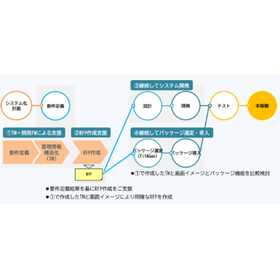
[ERP Implementation Support Case] Food Company Data Modeling Utilization

Utilizing data modeling! A case where the quality and success rate of the project were improved through appropriate ERP selection and implementation support.

We would like to introduce a case where we consistently supported a food company's core system renewal, utilizing a data model from ERP implementation to data migration. The company required business management that took into account the complex commercial flows unique to the food industry. Since various campaign prices and special pricing significantly impact profits, there was a need for a system that could accurately grasp profit and loss by customer and item, and quickly reflect this in estimates and sales strategies. To address this, we created a data model of the current business operations, visualizing and analyzing the business characteristics and challenges. By designing the improved state as a data model and reflecting it in the RFP, we clarified the requirements and enabled the selection of an appropriate ERP package. Additionally, we improved migration quality and efficiency through data mapping. 【Results and Effects】 - Improved accuracy of vendor proposals and estimate amounts through enhanced RFP precision - Reduced add-on and customization costs with To-Be model and low-code approach - Reduced labor and costs for data migration by utilizing the As-Is model - Enhanced overall project quality and success probability through the visualization of business requirements *For more details, please download the PDF or feel free to contact us.

  • Database

Added to bookmarks

Bookmarks list

Bookmark has been removed

Bookmarks list

You can't add any more bookmarks

By registering as a member, you can increase the number of bookmarks you can save and organize them with labels.

Free membership registration

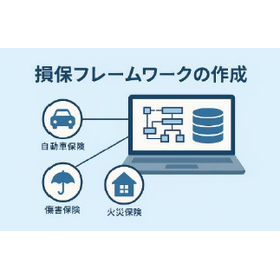
[System Reconstruction Case] Insurance Framework

Breaking away from "1 insurance product, 1 system"! A case study that achieved reduced development and maintenance costs and shortened lead times.

We would like to introduce a case where we rebuilt the insurance contract management system for a property and casualty insurance company and established a framework that allows for the integrated management of multiple products. The company required support for a wide variety of forms and a vast number of management items, as well as the ability to address complex and advanced business requirements. Since individual systems were built for each insurance product, modifications to multiple systems occurred every time there were regulatory or legal changes, resulting in significant development and maintenance costs. To address this, we defined insurance products as a common model and systematized business rules and administrative constraints within a data model. We designed a database that could manage multiple insurance products within a single system and significantly improved development productivity and maintainability by linking model information to low-code tools. [Results and Effects] - Significantly reduced lead time for market introduction of new products - Reduced system maintenance and operational costs - Achieved rapid and efficient responses to regulatory and legal changes - Facilitated easy addition of products and expansion of functions through a common platform *For more details, please download the PDF or feel free to contact us.

  • Workflow System

Added to bookmarks

Bookmarks list

Bookmark has been removed

Bookmarks list

You can't add any more bookmarks

By registering as a member, you can increase the number of bookmarks you can save and organize them with labels.

Free membership registration

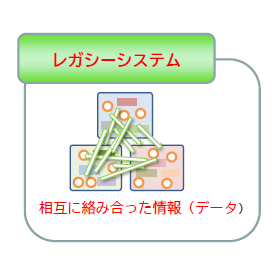
Modernization of legacy systems

Utilizing data models for problem-solving and responding to new requirements!

At ITS, by adopting a unique data modeling approach, we solve the challenges inherent in legacy systems while inheriting their benefits and achieving a reconstruction that incorporates new business requirements. Methods for reconstructing legacy systems include rehosting (refreshing only the infrastructure), rewriting (replacing development languages and tools), straight conversion (recompiling in a new language), and rebuilding (reconstructing from scratch). However, we believe these methods are insufficient as means to address the challenges inherent in legacy systems. **Benefits of Model Creation** - Untangles complex information and provides a stable data structure - Inherits strengths from the current system while adapting to new business requirements - Eliminates individual dependency through standardized model creation techniques - The logical model serves as a consistent common blueprint from system construction to maintenance *For more details, please download the PDF or feel free to contact us.*

  • Database
  • ERP (core system)
  • CRM (Customer Relationship Management System)

Added to bookmarks

Bookmarks list

Bookmark has been removed

Bookmarks list

You can't add any more bookmarks

By registering as a member, you can increase the number of bookmarks you can save and organize them with labels.

Free membership registration

Business analysis service using data model (TM)

It can accurately express business rules that are difficult to represent in business flows!

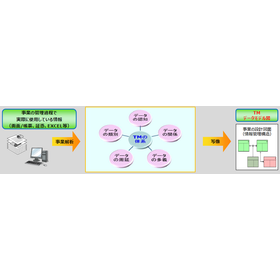
The "Business Analysis Service using Data Model (TM)" ensures comprehensive coverage of the content to be confirmed with users in order to express the relationship between the information managed in the target business and each information repository, thereby reducing rework. Additionally, it leads to centralized management of the same information without multiple management in different locations, enabling efficient utilization of large data within the system. As a result, it contributes to providing users with a high-quality information system. 【Effects】 ■ Accurately express business rules that are difficult to represent in business flows ■ Ensure comprehensive coverage of the content to be confirmed with users to express the relationship between the information managed in the target business and each information repository, reducing rework ■ Centralized management of the same information without managing it in multiple locations ■ Conduct thorough analysis of the As-Is functions without omissions and efficient consideration of the To-Be functions *For more details, please download the PDF or feel free to contact us.

  • Database

Added to bookmarks

Bookmarks list

Bookmark has been removed

Bookmarks list

You can't add any more bookmarks

By registering as a member, you can increase the number of bookmarks you can save and organize them with labels.

Free membership registration

Data Consultation Service

By utilizing data modeling techniques to build an "information management infrastructure," we contribute to promoting DX by enabling effective data utilization!

We would like to introduce our "Data Consultation Service." A key point in promoting DX (Digital Transformation) is the establishment of an "information management infrastructure" that enables the utilization of data within the company. At ITS, we use the TM method to conduct data-driven business analysis and visualization, as well as to build the information management infrastructure. This reduces the risk of quality being dependent on individuals while ensuring the consistency of logical data resource management and physical database management within the company, enabling effective data utilization. In supporting our clients' DX initiatives, we contribute to the establishment of the "information management infrastructure" from both logical and physical perspectives. [Features] ■ TM method that enables business analysis, visualization, and the establishment of information management infrastructure - By using the TM method, which has clear rules and procedures as a methodology, we visualize the actual state of the business by mapping it to the TM data model diagram, while expanding the ToBe model to build a stable information management infrastructure that is optimized as a whole. *For more details, please refer to the PDF document or feel free to contact us.

  • others

Added to bookmarks

Bookmarks list

Bookmark has been removed

Bookmarks list

You can't add any more bookmarks

By registering as a member, you can increase the number of bookmarks you can save and organize them with labels.

Free membership registration
Prev 1 Next
  • Contact this company

    Contact Us Online

Products

  • Search for Products

Company

  • Search for Companies

Special Features

  • Special Features

Ranking

  • Overall Products Ranking
  • Overall Company Ranking

support

  • site map
IPROS
  • privacy policy Regarding external transmission of information
  • terms of service
  • About Us
  • Careers
  • Advertising
IPROS Services
  • >IPROS GMS | Search site for the manufacturing industry
  • >IPROS | Search site for the B2B industry
COPYRIGHT © 2001-2026 IPROS CORPORATION ALL RIGHTS RESERVED.
Please note that the English text on this page is automatically translated and may contain inaccuracies.