181~225 item / All 264 items
Displayed results
Filter by category

Added to bookmarks
Bookmarks listBookmark has been removed
Bookmarks listYou can't add any more bookmarks
By registering as a member, you can increase the number of bookmarks you can save and organize them with labels.
Free membership registration
Contact this company
Contact Us OnlineBefore making an inquiry
Download PDF181~225 item / All 264 items
Filter by category
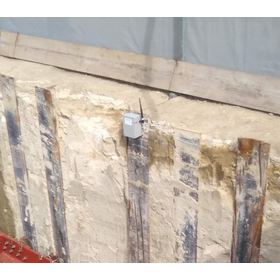
In the construction industry, the safety of excavation work is extremely important. It is essential to accurately understand ground fluctuations and structural displacements to prevent accidents before they occur. Traditional measurement methods involve labor-intensive manual measurements and recordings, which carry the risk of human error and oversight. Sonas' wireless tilt monitoring system addresses these challenges. 【Usage Scenarios】 - Excavation work sites - Temporary structures - Tunnel construction 【Benefits of Implementation】 - Reduction in labor costs - Improvement in measurement accuracy - Rapid response in case of anomalies
Added to bookmarks
Bookmarks listBookmark has been removed
Bookmarks listYou can't add any more bookmarks
By registering as a member, you can increase the number of bookmarks you can save and organize them with labels.
Free membership registration
Introducing Sonas' "Wireless Tilt Monitoring System" (NETIS Registration Number: KT-230117-A). - Automates management such as manual measurements using piano wires or plumb bobs. - Enables significant cost reduction for optical wave measurements. - Provides immediate alerts in case of anomalies such as exceeding management values. - Allows remote monitoring of measurement values via a computer using the cloud, as well as various setting changes including initial position settings. - Comes with a simple conversion tool for angle (°) ⇔ displacement (mm). ■ Features - The tilt meter operates on batteries for approximately one year. - Measurement resolution of 0.001°. ■ What's impressive - Just install and turn on the switch, and it automatically starts measuring, recording, and monitoring. - Wireless operation eliminates the need for complicated wiring work. ■ How it can be useful - Reduces the effort of manual measurement, recording, and monitoring. This system is available for sale, rental, and W rental. *For more details, please refer to the PDF document or feel free to contact us.
Added to bookmarks
Bookmarks listBookmark has been removed
Bookmarks listYou can't add any more bookmarks
By registering as a member, you can increase the number of bookmarks you can save and organize them with labels.
Free membership registration
In the demolition industry, the safe dismantling of buildings is essential for ensuring the safety of workers and minimizing the impact on the surrounding area. Particularly with aging buildings or those with special structures, there is always a risk of unexpected collapse during demolition. Wireless inclinometers are crucial for monitoring the tilt of buildings in real-time and for early detection of hazards. This booklet provides a detailed explanation of the differences in wireless communication for wireless inclinometers, along with their respective advantages and disadvantages. By understanding the differences in wireless methods, you can select the most suitable inclinometer for the conditions at the demolition site, thereby enhancing safety. 【Usage Scenarios】 - Monitoring the tilt of buildings during demolition - Monitoring ground subsidence - Checking the impact on surrounding structures 【Benefits of Implementation】 - Early detection of building collapse risks - Ensuring the safety of workers - Improving the efficiency of demolition work - Safety measures for the surrounding area
Added to bookmarks
Bookmarks listBookmark has been removed
Bookmarks listYou can't add any more bookmarks
By registering as a member, you can increase the number of bookmarks you can save and organize them with labels.
Free membership registration
In the plant industry, the precise installation of piping is essential for the safety and efficient operation of equipment. Even slight tilts or misalignments in piping can cause fluid leaks and pressure losses, potentially degrading the overall performance of the plant. Wireless inclinometers monitor the tilt of piping in real-time, assisting in accurate installation. This brochure explains the differences in wireless methods used for wireless inclinometers, along with their respective advantages and disadvantages, contributing to solving the challenges of piping precision management in plants. 【Usage Scenarios】 - Installation and maintenance of plant piping - Monitoring of piping tilt and displacement - Monitoring of ground subsidence and structural deformation 【Benefits of Implementation】 - Improved safety through accurate piping installation - Reduced risk of fluid leaks and pressure losses - Efficient operation of the plant - Cost reduction
Added to bookmarks
Bookmarks listBookmark has been removed
Bookmarks listYou can't add any more bookmarks
By registering as a member, you can increase the number of bookmarks you can save and organize them with labels.
Free membership registration
In the wind power generation industry, accurately understanding the tilt of the foundation is crucial for the stable operation of wind turbines. Tilts caused by strong winds or ground changes can lead to decreased performance or accidents. Wireless inclinometers are essential for safe operation as they allow for remote monitoring of the foundation's tilt. This booklet explains the differences in wireless methods used in wireless inclinometers, along with their respective advantages and disadvantages. 【Usage Scenarios】 - Monitoring foundation tilt at wind power plants - Monitoring ground movement - Confirming tilt after wind turbine installation 【Benefits of Implementation】 - Improved safety through remote tilt monitoring - Reduced accident risk through early detection of anomalies - Lower maintenance costs
Added to bookmarks
Bookmarks listBookmark has been removed
Bookmarks listYou can't add any more bookmarks
By registering as a member, you can increase the number of bookmarks you can save and organize them with labels.
Free membership registration
In the solar power generation industry, the precise installation of mounting structures is a crucial factor that affects power generation efficiency. Particularly in the installation on sloped land or vast sites, it is essential to accurately measure the tilt of the mounting structures and adjust them to the appropriate angle. Inaccurate installation can lead to a decrease in power generation efficiency and, in the worst case, the collapse of the mounting structures. This booklet explains the use of wireless inclinometers in the installation of solar power generation mounting structures, detailing the advantages and disadvantages based on different wireless methods. 【Usage Scenarios】 - Installation of solar power generation mounting structures - Installation on sloped land - Installation on vast sites 【Benefits of Implementation】 - Improved accuracy of mounting structure installation - Maximization of power generation efficiency - Enhanced maintenance after installation
Added to bookmarks
Bookmarks listBookmark has been removed
Bookmarks listYou can't add any more bookmarks
By registering as a member, you can increase the number of bookmarks you can save and organize them with labels.
Free membership registration
In the measurement industry, high-precision measurements are required, and obtaining accurate tilt data is particularly important in construction sites and ground monitoring. Wireless inclinometers are utilized in these settings, but their performance can vary significantly depending on the type of wireless technology used. Choosing an inappropriate wireless method can lead to decreased data accuracy and unstable communication. This booklet provides a detailed explanation of the differences in wireless communication seen in wireless inclinometers, along with the advantages and disadvantages of each. 【Application Scenarios】 - Ground movement monitoring at construction sites - Tilt monitoring of bridges - Measurement of structural tilt in civil engineering projects 【Benefits of Implementation】 - Acquisition of high-precision measurement data - Optimal system construction based on differences in wireless methods - Flexible responses tailored to site conditions
Added to bookmarks
Bookmarks listBookmark has been removed
Bookmarks listYou can't add any more bookmarks
By registering as a member, you can increase the number of bookmarks you can save and organize them with labels.
Free membership registration
In the mining industry, it is important to monitor the stability of slopes to prevent accidents caused by rockfalls and landslides. Particularly in mines that are susceptible to the effects of rainfall and earthquakes, it is essential to accurately detect even slight movements of the slopes and to identify abnormalities early. Wireless inclinometers are indispensable for safety management in mines as they allow for remote monitoring of slope inclinations and fluctuations. This booklet will provide a detailed explanation of the differences in wireless communication seen in wireless inclinometers, along with the advantages and disadvantages of each. 【Usage Scenarios】 - Monitoring of mine slopes - Monitoring of ground movements - Early detection of rockfall and landslide risks 【Benefits of Implementation】 - Early detection of slope abnormalities to prevent accidents - Improved work efficiency through remote monitoring - Reduction in labor costs
Added to bookmarks
Bookmarks listBookmark has been removed
Bookmarks listYou can't add any more bookmarks
By registering as a member, you can increase the number of bookmarks you can save and organize them with labels.
Free membership registration
In the railway industry, accurate slope measurement of tracks is essential for track maintenance. Even a slight tilt of the tracks can hinder the safe operation of trains and increase the risk of derailment accidents. Wireless inclinometers are crucial for real-time monitoring of track inclinations and for early detection of abnormalities. This booklet provides a detailed explanation of the differences in wireless communication as seen in wireless inclinometers, along with their respective advantages and disadvantages. 【Usage Scenarios】 - Measurement of track slope - Monitoring of bridge inclinations - Monitoring of tunnel displacements 【Effects of Implementation】 - Improved safety of tracks - Increased efficiency of maintenance work - Reduced risk of accidents
Added to bookmarks
Bookmarks listBookmark has been removed
Bookmarks listYou can't add any more bookmarks
By registering as a member, you can increase the number of bookmarks you can save and organize them with labels.
Free membership registration
In monitoring the structural integrity of dams, obtaining accurate tilt data is essential. To detect displacements and anomalies in a timely manner and ensure safety, selecting a highly reliable inclinometer is crucial. Wireless inclinometers are less affected by installation site constraints and are suitable for extensive monitoring; however, the differences in wireless communication methods can significantly impact data acquisition accuracy and communication stability. This booklet provides a detailed explanation of the differences in wireless communication and the respective advantages and disadvantages to help choose the most suitable wireless inclinometer for monitoring the structural integrity of dams. 【Usage Scenarios】 - Monitoring the tilt of dam embankments - Monitoring ground movement in surrounding slopes - Investigating the impact on structures around the dam 【Benefits of Implementation】 - Strengthening dam safety management - Preventing accidents through early detection of anomalies - Establishing an efficient monitoring system
Added to bookmarks
Bookmarks listBookmark has been removed
Bookmarks listYou can't add any more bookmarks
By registering as a member, you can increase the number of bookmarks you can save and organize them with labels.
Free membership registration
In tunnel construction, it is essential to accurately grasp ground movements to ensure the stability of excavations and subsequent structures. Even slight fluctuations in the ground can lead to construction delays or accidents, necessitating high-precision measurements. Wireless inclinometers enable real-time data collection for monitoring ground stability in tunnels, supporting rapid responses. This booklet provides a detailed explanation of the differences in wireless methods used in wireless inclinometers, along with their respective advantages and disadvantages. 【Application Scenarios】 - Monitoring ground displacement during tunnel excavation work - Monitoring cracks and deformations in tunnel lining concrete - Early detection of ground subsidence and uplift 【Benefits of Implementation】 - Early detection of risks associated with ground movement to prevent accidents - Rapid decision-making through real-time visualization of measurement data - Contribution to improved safety in construction and shortened project timelines
Added to bookmarks
Bookmarks listBookmark has been removed
Bookmarks listYou can't add any more bookmarks
By registering as a member, you can increase the number of bookmarks you can save and organize them with labels.
Free membership registration
In bridge displacement monitoring, accurate data acquisition is essential for ensuring the safety of structures. Wireless inclinometers are widely used for this monitoring, but their performance and reliability can vary significantly depending on the wireless method employed. This booklet explains the differences in wireless methods for wireless inclinometers, along with their respective advantages and disadvantages, to assist in making the optimal choice. 【Application Scenarios】 - Monitoring bridge behavior - Monitoring ground movement - Evaluating the safety of structures 【Benefits of Implementation】 - Early detection of anomalies in bridges - Reduction of maintenance costs - Extension of the lifespan of structures
Added to bookmarks
Bookmarks listBookmark has been removed
Bookmarks listYou can't add any more bookmarks
By registering as a member, you can increase the number of bookmarks you can save and organize them with labels.
Free membership registration
In the construction industry, it is important to accurately grasp the tilt of structures and ground fluctuations for safety management. Wireless inclinometers collect this information in real-time, enabling rapid responses. However, differences in wireless methods result in variations in communication range, accuracy, and power consumption, necessitating suitable choices based on site conditions. This booklet provides a detailed explanation of the differences in wireless communication for wireless inclinometers, along with the advantages and disadvantages of each. 【Usage Scenarios】 - Monitoring the tilt of structures at construction sites - Ground monitoring - Monitoring the condition of bridges 【Benefits of Implementation】 - Rapid anomaly detection through real-time data collection - Strengthened safety management - Cost reduction
Added to bookmarks
Bookmarks listBookmark has been removed
Bookmarks listYou can't add any more bookmarks
By registering as a member, you can increase the number of bookmarks you can save and organize them with labels.
Free membership registration
Wireless inclinometers are utilized in a wide range of fields such as civil engineering, construction sites, ground monitoring, and bridge condition monitoring, but their characteristics and performance can vary significantly depending on the type of wireless technology used. This booklet provides a detailed explanation of the differences in wireless communication seen in wireless inclinometers, along with the advantages and disadvantages of each. ■ Single-hop type and multi-hop type ■ Self-organizing network type or base station type ■ Characteristics resulting from differences in wireless methods in wireless inclinometers, etc. *For more details, please contact us or download the PDF to view.
Added to bookmarks
Bookmarks listBookmark has been removed
Bookmarks listYou can't add any more bookmarks
By registering as a member, you can increase the number of bookmarks you can save and organize them with labels.
Free membership registration
The Sonas vibration measurement system has been a long-standing supporter as a wireless vibration meter for structural monitoring. It is ideal for earthquake observation in buildings and apartments, as well as for acceleration measurement in structures like bridges. The historical models have a wealth of measurement records in large-scale structures such as skyscrapers and long bridges. 【Features】 - Achieves synchronization between sensors in microsecond units - Compact design the size of a palm - No need for power supply or wiring work, allowing for easy installation - Easy to transport sensors, enabling smooth movement - Battery-operated - Supports remote monitoring and data collection using the cloud - Capable of recording data on an internal memory card
Added to bookmarks
Bookmarks listBookmark has been removed
Bookmarks listYou can't add any more bookmarks
By registering as a member, you can increase the number of bookmarks you can save and organize them with labels.
Free membership registration
In school health management, it is important to appropriately understand the risks of heat stroke in order to protect the safety of students. Particularly, measures are essential in places where the heat index is high, such as during outdoor activities, physical education classes, and classrooms in the summer. Heat stroke can lead to decreased concentration and health issues, potentially negatively impacting learning activities. Our wireless multi-point heat index measurement system allows for real-time measurement of the heat index in various locations within the school, visualizing the risk of heat stroke and enabling appropriate countermeasures. 【Usage Scenarios】 - Heat stroke risk management in various locations such as playgrounds, gymnasiums, and classrooms - Heat stroke prevention during club activities - Awareness raising regarding heat stroke 【Benefits of Implementation】 - Early detection of heat stroke risks and the ability to respond quickly - Protecting the health of students and supporting a safe school life - Increased awareness of heat stroke prevention measures
Added to bookmarks
Bookmarks listBookmark has been removed
Bookmarks listYou can't add any more bookmarks
By registering as a member, you can increase the number of bookmarks you can save and organize them with labels.
Free membership registration
In the field of agriculture, working in environments with a high risk of heatstroke is essential. Especially during summer harvesting, working in high-temperature and high-humidity conditions not only threatens the health of workers but can also lead to decreased work efficiency and reduced harvest yields. Proper heat countermeasures and monitoring of the work environment are crucial for ensuring worker safety and stabilizing harvest yields. Our heat index wireless multi-point measurement system has been developed to address these challenges. 【Usage Scenarios】 - Inside greenhouses - Outdoor agricultural work - Inside warehouses 【Benefits of Implementation】 - Reduction of heatstroke risk - Improvement of work efficiency - Stabilization of harvest yields
Added to bookmarks
Bookmarks listBookmark has been removed
Bookmarks listYou can't add any more bookmarks
By registering as a member, you can increase the number of bookmarks you can save and organize them with labels.
Free membership registration
In the logistics industry, managing working hours is crucial, and ensuring employee safety is essential. In particular, working in environments such as warehouses and distribution centers, which can easily become high-temperature areas, increases the risk of heatstroke. Heatstroke can lead to loss of working hours and, in the worst case, result in workplace accidents. Our wireless multi-point measurement system for heat index addresses these challenges. 【Usage Scenarios】 - Inside warehouses - Distribution centers - Outdoor work 【Benefits of Implementation】 - Reduction of heatstroke risk - Increased efficiency of working hours - Ensuring employee safety
Added to bookmarks
Bookmarks listBookmark has been removed
Bookmarks listYou can't add any more bookmarks
By registering as a member, you can increase the number of bookmarks you can save and organize them with labels.
Free membership registration
In quality control within the manufacturing industry, proper management of the work environment is essential for maintaining product quality. In particular, working in high-temperature environments not only increases health risks for workers but can also lead to decreased concentration, which may result in a decline in quality. Our heat index wireless multi-point measurement system supports quality management by monitoring the heat index in manufacturing sites in real-time and reducing the risk of heat-related illnesses. [Usage Scenarios] - Temperature and humidity management in manufacturing sites - Visualization of the work environment in quality control [Benefits of Implementation] - Reduction of heat-related illness risks - Health management for workers - Stabilization of product quality
Added to bookmarks
Bookmarks listBookmark has been removed
Bookmarks listYou can't add any more bookmarks
By registering as a member, you can increase the number of bookmarks you can save and organize them with labels.
Free membership registration
In the construction industry, there are many tasks performed in high-temperature and high-humidity environments, such as outdoors, underground, and in tunnels, where the risk of heatstroke is always present. Ensuring the safety of workers and maintaining work efficiency are important challenges. Our wireless multi-point heat index measurement system addresses these issues. 【Usage Scenarios】 - Heatstroke countermeasures at construction sites - Safety management underground and in tunnels 【Benefits of Implementation】 - Early detection and countermeasures for heatstroke risk - Ensuring worker safety - Improvement of work efficiency
Added to bookmarks
Bookmarks listBookmark has been removed
Bookmarks listYou can't add any more bookmarks
By registering as a member, you can increase the number of bookmarks you can save and organize them with labels.
Free membership registration
This product is a wireless multi-point measurement system for heat index, combining a battery-operated compact sensor with our proprietary mesh wireless technology "UNISONet." It is expected to be utilized in construction sites, underground tunnels, warehouses, and factories. ■ Main Features - Compact sensor that is easy to carry - Monitoring range of up to 20 km, capable of monitoring over 100 sensors - Email alerts to administrators in case of danger ■ Outstanding Points - Wireless, making installation easy without wiring or power supply - Easy to start using by simply turning on the switch - Remote real-time monitoring and configuration changes possible via the cloud ■ Use Cases - Heatstroke prevention - Safety management This system is available for sale, rental, and W rental. *For more details, please refer to the PDF document or feel free to contact us.


Added to bookmarks
Bookmarks listBookmark has been removed
Bookmarks listYou can't add any more bookmarks
By registering as a member, you can increase the number of bookmarks you can save and organize them with labels.
Free membership registration
In the field of disaster prevention, it is important to accurately understand the condition of structures to prevent damage from natural disasters such as earthquakes and heavy rains. Especially for critical infrastructure like bridges, even slight displacements or deformations can lead to large-scale accidents. Our wireless accelerometer measurement system monitors structures with precision comparable to wired systems, reducing the risk of disaster occurrence. 【Usage Scenarios】 - Measurement of displacements and deformations of structures such as bridges, dams, and tunnels - Monitoring of structural vibrations and behaviors during earthquakes - Assessment of the impact on structures due to ground subsidence and liquefaction 【Benefits of Implementation】 - Early detection of structural anomalies, enabling rapid response - Minimizing damage during disaster occurrences - Reducing maintenance costs for structures
Added to bookmarks
Bookmarks listBookmark has been removed
Bookmarks listYou can't add any more bookmarks
By registering as a member, you can increase the number of bookmarks you can save and organize them with labels.
Free membership registration
In urban development, ground subsidence can have serious impacts on the safety of structures and urban functions. Accurate understanding of ground subsidence is essential for preventive measures and rapid responses. However, traditional measurement methods have faced challenges such as complexity in installation and high costs. Our wireless accelerometer measurement system addresses these issues. 【Usage Scenarios】 - Monitoring ground subsidence of buildings, apartments, and public facilities - Measuring displacement of underground structures (tunnels, subways, etc.) - Monitoring ground movement at civil engineering construction sites 【Benefits of Implementation】 - High-precision time synchronization in microsecond units allows for accurate understanding of ground movement - Wireless design eliminates the need for wiring, making installation easy - Low cost enables extensive monitoring capabilities - Long-term battery operation reduces maintenance frequency
Added to bookmarks
Bookmarks listBookmark has been removed
Bookmarks listYou can't add any more bookmarks
By registering as a member, you can increase the number of bookmarks you can save and organize them with labels.
Free membership registration
In research institutions, vibration data of structures is essential for performance and safety evaluations. Particularly for infrastructure structures such as bridges, accurately measuring minute displacements and deflections is crucial for early detection of aging deterioration and anomalies. Traditional wired measurement systems have challenges for extensive measurements and long-term monitoring due to the labor and costs involved in installation. Our wireless accelerometer measurement system addresses these issues. 【Application Scenarios】 * Vibration measurement of structures such as bridges, dams, and tunnels * Ground vibration and earthquake observation * Acquisition of vibration data in various experiments 【Benefits of Implementation】 * Improved research quality through high-precision data collection * Enhanced research efficiency due to ease of installation * Assessment of structural health through long-term monitoring
Added to bookmarks
Bookmarks listBookmark has been removed
Bookmarks listYou can't add any more bookmarks
By registering as a member, you can increase the number of bookmarks you can save and organize them with labels.
Free membership registration
In structural monitoring for mining, ensuring the safety of equipment and efficient operation is essential. In particular, structures such as tunnels and plants are prone to displacement and deflection due to earthquakes, ground movement, and equipment aging, making early detection of these anomalies crucial. Wired systems incur costs and labor for wiring work, and site constraints pose challenges. Our wireless accelerometer measurement system addresses these issues. 【Usage Scenarios】 - Measurement of displacement and deflection of structures such as tunnels and plants - Detection of anomalies in structures due to earthquakes and ground movement - Diagnosis of equipment aging 【Benefits of Implementation】 - Wireless design eliminates the need for wiring, making installation easy - Battery-powered, so there are no concerns about power supply, allowing for widespread installation - High-precision measurements enable early detection of structural anomalies - Contributes to cost reduction and efficient operation
Added to bookmarks
Bookmarks listBookmark has been removed
Bookmarks listYou can't add any more bookmarks
By registering as a member, you can increase the number of bookmarks you can save and organize them with labels.
Free membership registration
In the wind power generation industry, ensuring the long-term stable operation and safety of equipment is crucial. Accurately monitoring the vibrations of blades and towers leads to early detection of abnormalities and reduced risk of failures. However, traditional wired measurement systems have posed challenges due to their complexity and high costs. Our wireless accelerometer measurement system addresses these issues. 【Application Scenarios】 - Vibration measurement of wind power generation equipment's blades and towers - Reduction of maintenance costs through early detection of abnormal vibrations - Remote monitoring 【Benefits of Implementation】 - Contributes to the safe operation of equipment - Reduces maintenance costs - Enables the formulation of efficient operational plans based on data
Added to bookmarks
Bookmarks listBookmark has been removed
Bookmarks listYou can't add any more bookmarks
By registering as a member, you can increase the number of bookmarks you can save and organize them with labels.
Free membership registration
In the railway industry, accurately understanding track displacement is essential for maintaining safe operations. In particular, track distortion and subsidence can lead to serious accidents such as derailments. Traditional measurement methods tend to be labor-intensive in terms of wiring and power supply, and they also tend to be costly. Our wireless accelerometer measurement system is easy to install wirelessly and supports safe operations by accurately measuring track displacement. 【Application Scenarios】 - Measurement of track displacement - Measurement of bridge vibrations - Measurement of tunnel displacement 【Benefits of Implementation】 - Reduction in installation costs due to wireless technology - Improved safety through high-precision measurements - Enhanced maintenance efficiency through long-term monitoring
Added to bookmarks
Bookmarks listBookmark has been removed
Bookmarks listYou can't add any more bookmarks
By registering as a member, you can increase the number of bookmarks you can save and organize them with labels.
Free membership registration
In the infrastructure industry, accurate measurement of displacements and deflections of structures such as bridges is required to ensure safety. Particularly in aging structures, it is crucial to detect even slight displacements or abnormalities early. Traditional wired measurement systems have challenges for extensive monitoring due to the labor and costs involved in installation. Our wireless accelerometer measurement system addresses these issues. 【Use Cases】 - Displacement and deflection measurement of steel bridges - Monitoring of infrastructure structures - NETIS registered product 【Benefits of Implementation】 - Measurement accuracy comparable to wired systems - Over 50% reduction in installation costs - Time synchronization between sensors in microsecond units - No concerns about data loss
Added to bookmarks
Bookmarks listBookmark has been removed
Bookmarks listYou can't add any more bookmarks
By registering as a member, you can increase the number of bookmarks you can save and organize them with labels.
Free membership registration
The unique IoT wireless technology enables measurements with high time synchronization accuracy over a wide range. Installation is surprisingly easy! **"sonas x Series"** is a wireless vibration measurement system that monitors structures with precision comparable to wired systems. (NETIS Registration Number: KT-230117-A) No power supply or wiring work is required, and devices can be easily installed in a palm-sized format. Compared to wired systems, overall costs can be reduced by more than 50%. Additionally, the battery is designed for a long lifespan of over one year, and energy-saving performance is excellent. Measurement data is stored on an internal SD card, eliminating concerns about data loss. 【Main Features】 - Microsecond-level time synchronization between sensors - Easy and quick installation - High maintainability - Compact and low-cost design - Installation of subunits completed in 2 steps *For more details, please refer to the PDF document or contact us.*
Added to bookmarks
Bookmarks listBookmark has been removed
Bookmarks listYou can't add any more bookmarks
By registering as a member, you can increase the number of bookmarks you can save and organize them with labels.
Free membership registration
Utilizing our unique IoT wireless technology, we achieve high-precision wireless measurements over a wide area with accurate time synchronization. The installation process is surprisingly simple! **"sonas x Series"** is the world's first vibration measurement system that enables structural monitoring through high-precision time synchronization using wireless technology. It achieves the same level of accuracy as wired systems while reducing installation costs. (NETIS Registration Number: KT-230117-A) No wiring or power supply preparation is required, allowing for easy installation of compact devices. As a result, it is possible to reduce overall costs by more than half compared to wired methods. Additionally, it is equipped with a long-lasting battery that lasts over a year and features an energy-efficient design. Measurement data is securely stored on the built-in SD card, eliminating the risk of data loss. 【Main Features】 - Time synchronization between sensors can be achieved in microseconds. - Easy and quick installation process. - Excellent maintenance-friendly design. - Compact and low-cost, making it easy to implement. - Installation of the subunit is completed in just two steps. *For more detailed information, please check the PDF document or contact us through the inquiry form.*
Added to bookmarks
Bookmarks listBookmark has been removed
Bookmarks listYou can't add any more bookmarks
By registering as a member, you can increase the number of bookmarks you can save and organize them with labels.
Free membership registration
Sonas' "Wireless Tilt Monitoring System" (NETIS Registration Number: KT-230117-A) is designed to accommodate tilt and dynamic observation in various sites, making it suitable for a wide range of applications including bridges, excavation, earth retention work, shaft construction, embankment work, and natural slopes or embankment construction. ■ Main Features - Battery-powered design capable of long-term operation for approximately one year - Achieves extensive measurements up to 20 km - Can connect over 100 sensors, allowing for flexible operation ■ Suitable Application Examples - Dynamic monitoring at construction sites - Deformation measurement of earth retention and sheet piles - Tilt monitoring of bridges and vents ■ Highly Convenient Functions - No power supply equipment required, making installation easy - Measurement, recording, and monitoring automatically start with just a power-on after installation - Wireless communication capability eliminates the need for wiring work - Remote operation allows for real-time monitoring and setting changes ■ Expected Benefits - Cost reduction due to the elimination of power supply construction - Reduced burden of installation and work - Streamlined measurement operations supporting efficient management This system is available for sale, rental, and W rental. *For more details, please refer to the PDF document or feel free to contact us. #2
Added to bookmarks
Bookmarks listBookmark has been removed
Bookmarks listYou can't add any more bookmarks
By registering as a member, you can increase the number of bookmarks you can save and organize them with labels.
Free membership registration
The **"sonas x series"** is a wireless acceleration measurement system that utilizes unique IoT wireless technology, enabling wide-ranging and high-precision time synchronization. (NETIS registration number: KT-230117-A) Being wireless significantly reduces installation costs. You can start using it simply by placing the palm-sized device in the designated location. Compared to wired systems, installation and operational costs can be reduced by over 50%, offering excellent cost performance. Additionally, the battery is designed for a long lifespan of over one year, maintaining a high level of energy efficiency. Measurement data is automatically saved to the built-in SD card, reducing the risk of data loss in case of emergencies. 【Product Features】 - Time synchronization between sensors with high precision in microseconds - Easy and speedy installation process - High maintainability - Compact and low-cost design - Installation of subunits completed in just two steps - Remote monitoring via the cloud For more detailed information, please feel free to download the PDF materials or contact us. #1
Added to bookmarks
Bookmarks listBookmark has been removed
Bookmarks listYou can't add any more bookmarks
By registering as a member, you can increase the number of bookmarks you can save and organize them with labels.
Free membership registration
We would like to introduce a case study of our "Wireless Sensor System," which enables centralized management of a wide range of equipment to improve the efficiency of inspection operations for Company A in the manufacturing industry. At this company, the inspection operations for production equipment involve a large number of devices over a wide area, requiring significant manpower and time. To allocate more time to the core production activities, it became a challenge to conduct inspection operations more efficiently. As a result of the implementation, it was possible to confirm the collection of all sensor data installed on the inspection equipment across a wide area through a single wireless network. [Case Overview] ■ Challenge - Improving the efficiency of wide-ranging equipment inspections ■ Implementation Effect - Confirmed wide-area monitoring through a demonstration experiment *For more details, please download the PDF or feel free to contact us.
Added to bookmarks
Bookmarks listBookmark has been removed
Bookmarks listYou can't add any more bookmarks
By registering as a member, you can increase the number of bookmarks you can save and organize them with labels.
Free membership registration
We would like to introduce a case study of our "Tilt Monitoring System," which requires no power supply and can be easily installed wirelessly, implemented for the Metropolitan Expressway Company. Previously, conventional tilt meters were used for monitoring the tilt of bridge piers, and the installation of equipment and preparation of power on-site were burdensome. As a result of the implementation, initial settings and management value settings can also be performed remotely, allowing for smooth system configuration work. 【Case Overview】 ■Challenges - The installation of equipment and preparation of power on-site were burdensome. ■Benefits of Implementation - Achieved remote monitoring of bridge piers at a low cost with easy installation. *For more details, please download the PDF or feel free to contact us.
Added to bookmarks
Bookmarks listBookmark has been removed
Bookmarks listYou can't add any more bookmarks
By registering as a member, you can increase the number of bookmarks you can save and organize them with labels.
Free membership registration
We would like to introduce a case where our "Wireless Tilt Monitoring System" was implemented at Kumagai Gumi Co., Ltd. for measuring the displacement of parent piles used in retaining wall construction at a construction site. Before the implementation, the measurement method was done manually, which was very labor-intensive and had the potential for human error. After the implementation, we were able to significantly reduce the labor involved in measuring the retaining wall, and in the event of anomalies exceeding management values, timely detection via email was possible, leading to labor-saving on-site and more efficient safety measures. 【Case Overview】 ■Challenges - Measurement tasks on-site were burdensome - Concerns about measurement errors ■Implementation Effects - Achieved labor-saving and efficiency in measuring the displacement of retaining walls *For more details, please download the PDF or feel free to contact us.
Added to bookmarks
Bookmarks listBookmark has been removed
Bookmarks listYou can't add any more bookmarks
By registering as a member, you can increase the number of bookmarks you can save and organize them with labels.
Free membership registration
We would like to introduce a case where a "tilt monitoring system" was implemented at the construction site of a large-scale elevated bridge by Yokogawa Bridge Corporation. Until now, we have been using tilt meters that require wiring for power supply and other connections for safety management of the bent, which has resulted in a burden of human and financial costs during the introduction of tilt meters due to the need for prior power preparation and wiring work during equipment installation. After the implementation, installation work and additional pairing were carried out by individuals without special knowledge of wireless technology, achieving easy and low-cost safety management and remote monitoring of the bent. 【Case Overview】 ■Challenges - Wiring for power supply and other connections was required for each tilt meter, resulting in a burden of preparation and installation costs. ■Benefits of Implementation - Achieved low-cost safety management and remote monitoring of the bent with easy installation. *For more details, please download the PDF or feel free to contact us.
Added to bookmarks
Bookmarks listBookmark has been removed
Bookmarks listYou can't add any more bookmarks
By registering as a member, you can increase the number of bookmarks you can save and organize them with labels.
Free membership registration
We would like to introduce a case where a "Wireless Vibration Measurement System" was implemented at Akihou Mining Co., Ltd. to remotely monitor the vibrations generated by blasting during mining operations. Previously, we measured the integrity of underground equipment using a portable vibration meter, but it required installation and retrieval before and after blasting, necessitating a total of 6 km of travel underground for each blast. After the implementation, even those without special knowledge of wireless technology were able to easily achieve remote monitoring, significantly reducing the workload of blasting vibration measurement. 【Case Overview】 ■ Challenges - The measurement tasks involving travel to and from underground equipment before and after blasting were burdensome. ■ Implementation Effects - Achieved remote monitoring of underground tunnels with easy installation and low cost through wireless technology. - Significantly reduced manual measurement tasks. *For more details, please download the PDF or feel free to contact us.
Added to bookmarks
Bookmarks listBookmark has been removed
Bookmarks listYou can't add any more bookmarks
By registering as a member, you can increase the number of bookmarks you can save and organize them with labels.
Free membership registration
We would like to introduce a case where a "wireless tilt monitoring system" was implemented at Ichiken Co., Ltd. for the dynamic observation and safety management of riverbanks. Previously, it was difficult to detect abnormalities immediately, and using a total station resulted in significant costs and management burdens, making it challenging to select the appropriate equipment. After the implementation, we were able to significantly reduce the labor involved in measurements and the cost of equipment, thereby improving productivity on-site. [Case Overview] ■Challenges - Measurement work and equipment costs were burdensome on-site. ■Implementation Effects - Achieved significant reductions in measurement labor and equipment costs through the use of IoT technology. *For more details, please download the PDF or feel free to contact us.
Added to bookmarks
Bookmarks listBookmark has been removed
Bookmarks listYou can't add any more bookmarks
By registering as a member, you can increase the number of bookmarks you can save and organize them with labels.
Free membership registration
We would like to introduce a case where a major local general contractor implemented a "wireless slope monitoring system" for measuring displacement and safety monitoring of slopes during construction work. The company selected the necessary equipment for slope monitoring but felt burdened by the costs associated with preparing power sources for the equipment. After the implementation, the parent unit, which requires power, was installed in the site office, allowing for stable communication. [Case Overview] ■Challenges - The cost of introducing equipment to the site is a burden. ■Benefits of Implementation - Achieved remote monitoring of natural slopes at a low cost. *For more details, please download the PDF or feel free to contact us.
Added to bookmarks
Bookmarks listBookmark has been removed
Bookmarks listYou can't add any more bookmarks
By registering as a member, you can increase the number of bookmarks you can save and organize them with labels.
Free membership registration
We would like to introduce a case where Tokai Railway Company implemented an "Inclination Monitoring System" for the safety monitoring of bridge piers located in the lake. Previously, conventional inclinometers were used for measuring the displacement of the bridge piers, and due to the difficulty of installation, such as wiring work for the equipment in the lake, the construction and maintenance costs became a burden. The inclinometer, which is a portable device, is battery-operated and wireless, allowing for very easy installation without the need for power supply work or wiring at the site. 【Case Overview】 ■ Issues - The installation of equipment and preparation of power supply at the site were burdensome. ■ Benefits of Implementation - Remote monitoring of bridge piers was achieved at a low cost with easy installation. *For more details, please download the PDF or feel free to contact us.
Added to bookmarks
Bookmarks listBookmark has been removed
Bookmarks listYou can't add any more bookmarks
By registering as a member, you can increase the number of bookmarks you can save and organize them with labels.
Free membership registration
We would like to introduce a case where Seikawa Construction Co., Ltd. implemented a "Wireless Slope Monitoring System" for dynamic observation and safety management of the embankment alongside railway tracks. The company had selected the necessary equipment for continuous monitoring but felt burdened by the installation costs, such as power supply preparations. The slope gauge, which is a sub-device, is battery-operated and wireless, allowing for easy installation without the need for power construction or wiring work on-site. This enabled 24-hour automatic remote management to be achieved easily and at a low cost. 【Case Overview】 ■ Challenges - The cost of introducing equipment to the site is a burden. ■ Benefits of Implementation - Achieved remote monitoring of the embankment alongside railway tracks at a low cost. - Easily established a robust wireless network. *For more details, please download the PDF or feel free to contact us.
Added to bookmarks
Bookmarks listBookmark has been removed
Bookmarks listYou can't add any more bookmarks
By registering as a member, you can increase the number of bookmarks you can save and organize them with labels.
Free membership registration
We would like to introduce a case where the "Inclination Monitoring System" was implemented at Okumura Corporation for measuring the displacement of parent piles used in retaining wall construction. Previously, workers manually conducted measurements regularly, which made it impossible to perform continuous measurement, recording, and monitoring, and the measurement process itself was cumbersome. After the implementation, we were able to significantly reduce the labor involved in measurements and the cost of equipment, thereby improving productivity on site. 【Case Overview】 ■Challenges - Measurement work and equipment costs on site were burdensome - Digital transformation on site was also a challenge ■Implementation Effects - Achieved significant reductions in labor and equipment costs through the use of IoT technology *For more details, please download the PDF or feel free to contact us.
Added to bookmarks
Bookmarks listBookmark has been removed
Bookmarks listYou can't add any more bookmarks
By registering as a member, you can increase the number of bookmarks you can save and organize them with labels.
Free membership registration
We would like to introduce a case where a "tilt monitoring system" was implemented for the safety monitoring of temporary supports called vents used during bridge construction for a bridge manufacturer. We were looking for battery-operated inclinometers and planned to use more than 10 inclinometers, so it was necessary to have a system that could communicate with many inclinometers using a single master unit. The master unit can accommodate over 200 slave units, and thanks to the relay function of the numerous inclinometers used this time, we were able to measure a construction site that spans over 200 meters extensively, with only one master unit being sufficient. 【Case Overview】 ■ Challenges - Rapid response to strengthen safety management ■ Implementation Effects - Quick realization of enhanced safety management with easy installation of equipment - Cost minimized *For more details, please download the PDF or feel free to contact us.
Added to bookmarks
Bookmarks listBookmark has been removed
Bookmarks listYou can't add any more bookmarks
By registering as a member, you can increase the number of bookmarks you can save and organize them with labels.
Free membership registration
We would like to introduce a case where a "Wireless Tilt Monitoring System" was implemented for the safety management of workers operating within the water discharge channel, in collaboration with UDIK Co., Ltd. We faced challenges with other companies' tilt meters, which could not be monitored remotely, and there were concerns about the introduction costs, such as preparing a power supply to operate the tilt meters. By keeping the introduction costs low, we were able to quickly set up the equipment and establish a system to protect the safety of workers operating within the water discharge channel. 【Case Overview】 ■ Challenges - The introduction costs of equipment at the site were burdensome. ■ Benefits of Implementation - Achieved safety management of the water discharge channel and remote monitoring of the stop boards with easy installation and low costs through wireless technology. *For more details, please download the PDF or feel free to contact us.
Added to bookmarks
Bookmarks listBookmark has been removed
Bookmarks listYou can't add any more bookmarks
By registering as a member, you can increase the number of bookmarks you can save and organize them with labels.
Free membership registration
We would like to introduce a case where a "wireless vibration measurement system" was implemented to monitor ground vibrations occurring during pile driving at the bay construction site for Toa Construction Co., Ltd. Due to the vastness of the construction site, using a wired vibration meter often required over 100 meters of wiring in some areas, making the installation and removal of equipment quite challenging. After the introduction of the system, the equipment operates wirelessly on battery power, eliminating the need for cumbersome wiring, which allowed for easy and constant remote monitoring of ground vibrations during pile driving. 【Case Overview】 ■ Issues - The burden of wiring work and preparing power sources on-site ■ Benefits of Implementation - Easy realization of constant remote vibration monitoring - Reduction in the labor and costs associated with equipment installation, removal, and power preparation *For more details, please download the PDF or feel free to contact us.
Added to bookmarks
Bookmarks listBookmark has been removed
Bookmarks listYou can't add any more bookmarks
By registering as a member, you can increase the number of bookmarks you can save and organize them with labels.
Free membership registration