91~135 item / All 194 items
Displayed results
Filter by category

Added to bookmarks
Bookmarks listBookmark has been removed
Bookmarks listYou can't add any more bookmarks
By registering as a member, you can increase the number of bookmarks you can save and organize them with labels.
Free membership registration
Contact this company
Contact Us OnlineBefore making an inquiry
Download PDF91~135 item / All 194 items
Filter by category
This is a wireless vibration measurement system capable of micro-motion measurement comparable to servo-type accelerometers and wired types. The sensor unit is palm-sized. No power supply is needed at the measurement location. No wiring work is required, making installation easy. Moving the sensor unit is also simple. It can operate for over a year on battery power. Monitoring and remote surveillance can be done via a computer. Data can also be recorded on the built-in SD card. 【Features】 ■ Compact device at a low cost ■ Time synchronization between sensors in microsecond units ■ Installation of sub-units is completed in just two steps *For more details, please refer to the PDF document or feel free to contact us.
Added to bookmarks
Bookmarks listBookmark has been removed
Bookmarks listYou can't add any more bookmarks
By registering as a member, you can increase the number of bookmarks you can save and organize them with labels.
Free membership registration
■It has the following features! - No wiring required for buildings over 40 stories, allowing multi-point measurement of the entire structure - Wireless measurement possible even underground - Can operate on battery for over a year - Despite being wireless, the time synchronization accuracy between sensors is below milliseconds ■It can be useful in the following ways - Reduces equipment installation costs - No need for power or network construction - Total costs are less than half compared to wired systems For communication and time synchronization, we use our proprietary LPWA, UNISONet, which enables wireless acquisition of three-axis acceleration data.
Added to bookmarks
Bookmarks listBookmark has been removed
Bookmarks listYou can't add any more bookmarks
By registering as a member, you can increase the number of bookmarks you can save and organize them with labels.
Free membership registration
■Here are the advantages - Wireless connection eliminates the need for complicated wiring work - Simply install and turn on the power to automatically start measuring, recording, and monitoring - Remote monitoring and setting changes are possible ■It is useful in the following situations - Reduces wiring costs - Alleviates the workload of manual measuring, recording, and monitoring - No electrical work required, reducing installation costs - Decreases the frequency of inspection tasks and promotes efficiency ■It is suitable for the following applications Promotes labor-saving in measurement tasks Achieves real-time monitoring from a distance Improves efficiency of automatic data measurement, recording, and monitoring This system is available for sale or rental. *For more details, please refer to the PDF document or feel free to contact us.
Added to bookmarks
Bookmarks listBookmark has been removed
Bookmarks listYou can't add any more bookmarks
By registering as a member, you can increase the number of bookmarks you can save and organize them with labels.
Free membership registration
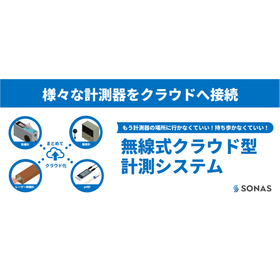
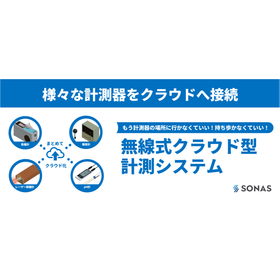
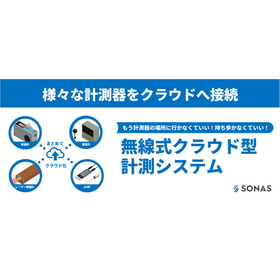
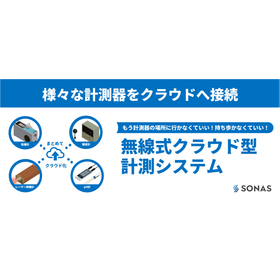
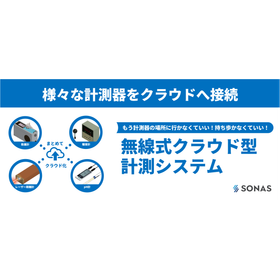
This system automatically uploads measurement data to the cloud by connecting measuring instruments with analog outputs such as 4-20mA or 0-10V through UNISONet. The data is continuously recorded in the cloud, and it is possible to issue alarms immediately when abnormalities occur. ■ Examples of measuring instruments that can be connected to the cloud - Laser distance meters - Dust concentration meters - Oxygen detectors - pH meters - Flow meters - Liquid level meters, etc. ■ Convenient in the following usage scenarios - Automatically acquire data without going to the measuring instrument - No need for manual recording - No need to bring equipment to the site for measurement - Early detection of abnormalities to reduce damage ■ Examples of usage scenarios - Reducing the workload of patrol inspections - Receiving alarms immediately in case of abnormalities - Automatically performing measurement, recording, and monitoring ■ Features of the system - Automation of continuous measurement and recording - Real-time data monitoring from a distance - Data can be downloaded from the cloud - Bulk management of multiple measuring instruments This system is available for sale, rental, and double rental. *For more details, please refer to the PDF document or feel free to contact us. #2
Added to bookmarks
Bookmarks listBookmark has been removed
Bookmarks listYou can't add any more bookmarks
By registering as a member, you can increase the number of bookmarks you can save and organize them with labels.
Free membership registration
Introducing our "Wireless Leak Monitoring System." ■Features No construction required, automatically detects leaks remotely Capable of monitoring areas up to 20 km, suitable for underground spaces, tunnels, and high-rise buildings Can connect up to 100 sensors, making it easy to identify leak locations ■Monitoring Capabilities Rainwater intrusion Detection of water leaks Condensation detection Groundwater level fluctuations Understanding flooding conditions ■System Characteristics No power installation required, allowing for easy setup on-site Automatic remote monitoring starts with just the flip of a switch Reduces wiring hassle with wireless communication ■Advantages Cost reduction for power installation Lower installation costs Expected improvement in work efficiency by reducing inspection burdens ■Usage Examples Automatic leak monitoring Remote site management Reduced inspection burden and early leak detection This system is available for sale or rental. *For more details, please refer to the PDF materials or feel free to contact us. #2
Added to bookmarks
Bookmarks listBookmark has been removed
Bookmarks listYou can't add any more bookmarks
By registering as a member, you can increase the number of bookmarks you can save and organize them with labels.
Free membership registration
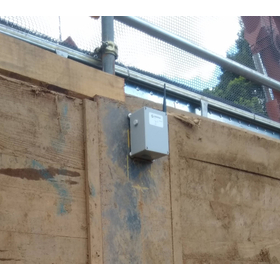
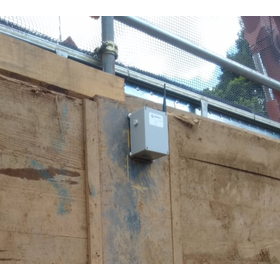
We would like to introduce our "Wireless Tilt Monitoring System" (NETIS Registration Number: KT-230117-A). This system demonstrates its performance in various construction sites, including bridge construction, excavation work, earth retention work, shaft and thrust construction, as well as embankment and cutting sites. ■ Product Features - Battery-operated with approximately one year of long-duration operation - Measurement values can be viewed and managed remotely - A simple tool to convert tilt (°) to displacement (mm) is provided free of charge ■ Main Use Cases - Displacement measurement for earth retention - Dynamic observation at civil engineering sites - Tilt monitoring of bridge girders and temporary supports (bents) ■ Reasons for Selection - No need for power supply work at the site - Automatic measurement, recording, and monitoring start simply by turning on the switch after installation - Wireless design eliminates the need for complex wiring work - Remote real-time monitoring, initial setup, and management value settings are possible ■ Expected Benefits - Labor-saving in measurement and monitoring tasks - Reduction in equipment costs previously incurred This system is available for use through sales, rental, or a combination of both sales and rental plans. *For more details, please refer to the PDF document or feel free to contact us. #1
Added to bookmarks
Bookmarks listBookmark has been removed
Bookmarks listYou can't add any more bookmarks
By registering as a member, you can increase the number of bookmarks you can save and organize them with labels.
Free membership registration
Our "Wireless Tilt Monitoring System" (NETIS Registration Number: KT-230117-A) is a high-performance monitoring tool that can be used at various construction sites. This product is utilized in a wide range of scenarios, including bridge construction, excavation, earth retention work, shaft and thrust construction, as well as fill and cut sites. ■ Features - Operates on batteries, allowing for long-term use of approximately one year - Measurement performance covering a wide range (up to 20 km) - Capable of simultaneously connecting over 100 sensors ■ Main Use Cases - Tilt management of bridge girders and temporary supports (bents) - Supports dynamic observation - Displacement monitoring of sheet piles and earth retention ■ Product Advantages - No need for power supply equipment on-site, making it easy to install - Automatically starts measurement, recording, and monitoring with just the flip of a switch - Remote operation allows for real-time settings and monitoring ■ Expected Benefits - Reduces costs associated with power supply construction - Cuts down on labor time and costs for equipment installation - Significantly streamlines manual measurement and monitoring tasks This system is available for sale, rental, and W rental. *For more detailed information, please refer to the PDF document or feel free to contact us. #2
Added to bookmarks
Bookmarks listBookmark has been removed
Bookmarks listYou can't add any more bookmarks
By registering as a member, you can increase the number of bookmarks you can save and organize them with labels.
Free membership registration
A battery-operated cloud camera suitable for progress management at construction sites and monitoring the condition of infrastructure facilities. This camera operates for an extended period on batteries, allowing for continuous use for over a year. It features three shooting modes: "Scheduled Shooting," "Trigger Shooting," and "On-Demand Shooting," tailored to various applications. ■ Perfect for these types of sites due to its battery operation! - Civil engineering construction sites - Infrastructure facilities such as rivers, bridges, elevated bridges, and slopes ■ Usage Scenarios - Recording progress at construction sites - Monitoring the condition of rivers, elevated bridges, and slopes - Improving inspection efficiency and reducing labor - Theft prevention measures at the site ■ Automatic shooting enabled by sensor integration! - Water Level Sensor: Monitors rising water levels in rivers - Vibration Sensor: Prevents theft from suspicious movements - Tilt Sensor: Monitors the tilt of slopes and temporary structures ■ Convenient Features! - Remote Access: Allows image viewing and shooting operation via the cloud - Easy Installation: Wireless design enables immediate use with just a switch - On-Demand Shooting: Manual shooting available at necessary times This cloud camera is also available for rental and double rental options. For more details, please check the PDF document or feel free to contact us.
Added to bookmarks
Bookmarks listBookmark has been removed
Bookmarks listYou can't add any more bookmarks
By registering as a member, you can increase the number of bookmarks you can save and organize them with labels.
Free membership registration
Remote monitoring is achieved even in places where mobile phone signals do not reach, such as underground or in tunnels, through our unique multi-hop wireless UNISONet. There is no need for power supply preparation or wiring work at the measurement points. With simple installation work, the total cost is less than half compared to wired systems. We provide this system along with a cloud-based management solution that can be accessed remotely. *For more details, please refer to the PDF document or feel free to contact us.
Added to bookmarks
Bookmarks listBookmark has been removed
Bookmarks listYou can't add any more bookmarks
By registering as a member, you can increase the number of bookmarks you can save and organize them with labels.
Free membership registration
A wireless network that operates with low power consumption enables multi-point synchronized measurements throughout large structures such as high-rise buildings, as well as remote monitoring in underground areas and tunnels. Wiring work and power preparation at measurement locations are unnecessary. Thanks to smartly designed devices and simple installation procedures, total costs can be reduced to less than half compared to wired systems. We provide a remotely operable management system via the cloud, achieving efficient operation. Our wireless network, responsible for communication and time synchronization, utilizes our proprietary LPWA technology "UNISONet." *For more details, please refer to the PDF document or feel free to contact us.*
Added to bookmarks
Bookmarks listBookmark has been removed
Bookmarks listYou can't add any more bookmarks
By registering as a member, you can increase the number of bookmarks you can save and organize them with labels.
Free membership registration
Introduction to the Cloud-Compatible Wireless Noise Measurement System (NETIS Registration Number: KT-230117-A) This system, equipped with the unique mesh wireless technology "UNISONet," has the following features: ■ Main Features - Compact and wireless design allows for easy measurement at multiple locations - The sensor is battery-operated and can be used for up to 6 months - Real-time remote monitoring of sound levels (immediate notification if management values are exceeded) ■ Outstanding Points - Easy to change the installation position of the sensors - Data can be directly downloaded from the cloud, eliminating the need for on-site data collection - Capable of measuring over a wide area of up to 20 km, with the ability to connect over 100 sensors ■ Benefits of Implementation - Cost reduction through easy installation and no need for power construction - Improved efficiency in measurement, recording, and monitoring tasks - Support for labor-saving through automation of measurement tasks ■ This system is available for rental and double rental. For detailed information or inquiries about implementation, please refer to the PDF materials or feel free to contact us. #1
Added to bookmarks
Bookmarks listBookmark has been removed
Bookmarks listYou can't add any more bookmarks
By registering as a member, you can increase the number of bookmarks you can save and organize them with labels.
Free membership registration
Introduction to the Cloud-Based Wireless Sound Pressure Measurement System This system utilizes our uniquely developed mesh wireless technology "UNISONet" to achieve low-cost sound pressure measurement. (NETIS Registration Number: KT-230117-A) ■ Main Features of the System - Compact and cable-free design allows for easy measurement at multiple locations - Battery-operated sensors can be used for up to 6 months - Immediate remote confirmation of sound sources (real-time monitoring and alert functions included) ■ Convenient Functions - Wireless design allows for easy repositioning of sensors as needed - No need for data collection on-site; data can be downloaded directly from the cloud - Capable of measuring over a wide area (up to 20 km), with the ability to connect more than 100 sensors ■ Benefits of Implementation - Easy installation and no need for power construction reduce implementation costs - Reduces the workload of measurement, recording, and monitoring tasks - Significant improvement in work efficiency through automation of measurement operations Rental and double rental options are also available. For more detailed information or inquiries about implementation, please refer to the PDF materials or contact us directly. #2
Added to bookmarks
Bookmarks listBookmark has been removed
Bookmarks listYou can't add any more bookmarks
By registering as a member, you can increase the number of bookmarks you can save and organize them with labels.
Free membership registration
New Proposal for a Wireless Noise Measurement System We introduce a wireless sound pressure measurement system that combines cloud technology with our proprietary mesh wireless network "UNISONet." (NETIS Registration Number: KT-230117-A) ■ Appeal of This System - Compact and wireless, enabling easy measurement at multiple locations - Sensors are battery-operated, capable of functioning for up to 6 months - Real-time remote monitoring of noisy areas, with immediate notifications when thresholds are exceeded ■ Excellent Usability - Easy movement and repositioning of sensors according to construction conditions - Direct data retrieval from the cloud, eliminating the need for on-site data collection - Covers a wide area of up to 20 km and can connect over 100 sensors ■ Benefits of Implementation - Cost reduction due to simple installation without the need for power construction - Streamlining of measurement, recording, and monitoring processes, achieving labor savings - Significant reduction in time and effort through automation of operations This system is available for rental and W rental options. For more detailed information, please check the PDF materials or feel free to contact us. #3
Added to bookmarks
Bookmarks listBookmark has been removed
Bookmarks listYou can't add any more bookmarks
By registering as a member, you can increase the number of bookmarks you can save and organize them with labels.
Free membership registration
Our "Wireless Tilt Monitoring System" (NETIS Registration Number: KT-230117-A) is a product that can be utilized in various sites. It demonstrates its performance in applications such as bridges, excavation, earth retention, shafts and thrusting, and embankment and cutting work. ■Features - Long-term operation possible with approximately one year of battery life - Measurement performance covering a wide range of up to 20 km - High expandability with the connection of over 100 sensors ■Applications - Displacement measurement of earth retention and sheet piles - Tilt observation of bridge girders and vents - General support for dynamic observation ■Advantages - No power installation required, making setup easy - Automatic measurement and recording start with just the flip of a switch - Elimination of complex wiring work through wireless communication - Remote operation allows for real-time monitoring and setting changes ■Expected Benefits - Reduction in power installation and setup costs - Labor-saving for measurement operations and safety management *This product is available for sale, rental, and W-rental formats. *For more details, please refer to the PDF materials or contact us. #1
Added to bookmarks
Bookmarks listBookmark has been removed
Bookmarks listYou can't add any more bookmarks
By registering as a member, you can increase the number of bookmarks you can save and organize them with labels.
Free membership registration
Our "Wireless Tilt Monitoring System" (NETIS Registration Number: KT-230117-A) is a product that can be utilized in various sites such as bridge construction, excavation, earth retention, shaft and thrust construction, embankment, and cutting work. ■ Features - Long-term use with approximately one year of battery operation - Measures a wide area of up to 20 km - High expandability with the capability to connect over 100 sensors ■ Application Examples - Displacement management of earth retention and sheet piles - Tilt monitoring of bridge girders and vents - General dynamic observation ■ Advantages - No need for power installation, making on-site setup easy - Automatically starts measuring, recording, and monitoring with just the flip of a switch - Wireless capability eliminates the hassle of wiring work - Remote operation allows for real-time monitoring and setting changes ■ Expected Effects - Reduction in power installation and setup costs - Labor-saving for measurement tasks and safety management This product is available for sale, rental, and W rental. Please check the PDF materials or contact us for more details.
Added to bookmarks
Bookmarks listBookmark has been removed
Bookmarks listYou can't add any more bookmarks
By registering as a member, you can increase the number of bookmarks you can save and organize them with labels.
Free membership registration
This product is a wireless multi-point temperature and humidity measurement system that combines T&D Corporation's reliable "Ondotori" with its unique mesh wireless technology "UNISONet." It is expected to be utilized in a wide range of environments, including concrete curing and painting work at construction sites, food factories, logistics warehouses, and data centers. Temperature and humidity sensors other than "Ondotori" are also available. ■ Main Features - Wide Range: Measurement range of up to 20 km - High Expandability: Capable of connecting over 100 sensors ■ Excellent Points - Stable communication over long distances with easy connection setup - No wiring required for wireless installation, easy to set up without power supply - Automatic measurement, recording, and monitoring starts with just a switch - Remote operation allows for real-time monitoring and setting changes ■ Benefits of Use - Cost reduction for wiring and power supply work - Increased efficiency in manual recording and monitoring tasks - Reduced effort in inspection work ■ Utilization Scenes - Streamlining and reducing manpower in measurement tasks - Real-time data monitoring from a distance - Achieving automatic measurement, recording, and monitoring This system is available for sale or rental. *For more details, please refer to the PDF document or feel free to contact us. #1
Added to bookmarks
Bookmarks listBookmark has been removed
Bookmarks listYou can't add any more bookmarks
By registering as a member, you can increase the number of bookmarks you can save and organize them with labels.
Free membership registration
Sonas Wireless Vibration Measurement System 'sonas x Series' - The sensor unit is battery-operated and wireless, eliminating the need for power supply or wiring work. Compared to wired systems, the installation cost can be significantly reduced. - Multi-point measurements can be easily achieved. - Despite being wireless, the time synchronization accuracy between sensors is in the microsecond range. - Long battery life of over one year and energy-efficient. - No measurement loss with the built-in memory card. - Remote monitoring and data collection via the cloud are possible. *For more details, please refer to the PDF document or feel free to contact us.
Added to bookmarks
Bookmarks listBookmark has been removed
Bookmarks listYou can't add any more bookmarks
By registering as a member, you can increase the number of bookmarks you can save and organize them with labels.
Free membership registration
Features of the Sonas Wireless Vibration Measurement System 'sonas x Series' - The sensor unit is battery-powered and wireless, eliminating the need for power preparation and wiring work, significantly reducing installation costs compared to traditional wired systems. - Multi-point measurement can be easily achieved. - Time synchronization accuracy between sensors reaches the microsecond level. - Designed for long life, achieving over one year of battery operation while pursuing energy efficiency. - Equipped with an internal memory card to prevent data loss. - Utilizes cloud services for remote monitoring and data collection. *For more detailed information, please refer to the PDF document or contact us. #1

Added to bookmarks
Bookmarks listBookmark has been removed
Bookmarks listYou can't add any more bookmarks
By registering as a member, you can increase the number of bookmarks you can save and organize them with labels.
Free membership registration
Features of the Sonas Wireless Vibration Measurement System 'sonas x Series' ● Wireless & Battery-Powered Units: Easy installation and relocation without the need for wiring or power preparation. Significantly reduces implementation costs compared to traditional wired systems. ● Easy Multi-Point Measurement: Allows for simple measurements at multiple locations. ● High-Precision Time Synchronization: Time synchronization between sensors is achieved at the microsecond level. ● Long-Life Battery Design: Capable of continuous operation for over a year due to high energy-saving performance. *For the standard model. ● Data Storage Function: Equipped with an internal memory card to prevent loss of measurement data. ● Cloud Compatibility: Enables real-time monitoring and data collection from remote locations. *For detailed information, please refer to the PDF document or contact us directly.
Added to bookmarks
Bookmarks listBookmark has been removed
Bookmarks listYou can't add any more bookmarks
By registering as a member, you can increase the number of bookmarks you can save and organize them with labels.
Free membership registration
This battery-operated cloud camera is equipped with a long-lasting battery that can operate for over a year and features three shooting modes: scheduled shooting, trigger shooting, and on-demand shooting. ■ Battery-powered, no power supply needed! Recommended for the following sites: - Civil engineering construction sites - Infrastructure such as rivers, elevated bridges, and slopes ■ Versatile applications based on needs: - Progress management at construction sites - Condition checks of rivers and structures - Efficiency improvement of inspections by personnel - Theft prevention monitoring ■ Automatic shooting linked to sensors: - Water level sensor: Monitoring river flooding - Vibration sensor: Theft prevention measures - Tilt sensor: Monitoring slopes and temporary structures - Email notifications: Compatible with other systems ■ Key points for selection: - Easy installation with no power supply work required - Shooting and image verification possible via the cloud without visiting the site - Wireless setup for hassle-free operation, just turn on the switch - On-demand functionality for shooting at any desired timing This product is available for rental and W-rental services. *Please feel free to contact us for detailed information or to request materials. #2
Added to bookmarks
Bookmarks listBookmark has been removed
Bookmarks listYou can't add any more bookmarks
By registering as a member, you can increase the number of bookmarks you can save and organize them with labels.
Free membership registration
This battery-operated cloud camera can operate for over a year on its internal battery and supports three modes: "Scheduled Shooting," "Trigger Shooting," and "On-Demand Shooting." ■ Suitable for the following sites due to its battery operation: - Civil engineering construction sites - Infrastructure areas such as rivers, elevated bridges, and slopes ■ Versatile applications: - Managing progress at construction sites - Monitoring the condition of infrastructure facilities like rivers and elevated bridges - Streamlining inspection work on-site - Utilization for crime prevention measures ■ Automatic shooting in coordination with sensors is also possible: - Water level sensor: For monitoring during flooding - Vibration sensor: For theft prevention measures - Tilt sensor: For monitoring slopes and temporary structures - Email notifications: Can be linked with other systems ■ Benefits of implementation: - Easy installation without the need for power supply - Ability to check images via the cloud without going on-site - Wireless installation requires no hassle; just turn it on to use - Can shoot on-demand at any desired timing - Supports rental and W-rental services. *For more detailed information, please check the materials or feel free to contact us.
Added to bookmarks
Bookmarks listBookmark has been removed
Bookmarks listYou can't add any more bookmarks
By registering as a member, you can increase the number of bookmarks you can save and organize them with labels.
Free membership registration
In the field of disaster prevention, it is important to detect ground movement and structural abnormalities early and respond quickly. In particular, landslides and damage to infrastructure pose significant risks to human life. Traditional visual inspections and manual measurements not only require time and effort but also risk delays in discovering abnormalities. Sonas' wireless inclinometer enhances risk management in disaster prevention through automatic measurement of ground displacement and immediate alerts in case of anomalies. 【Usage Scenarios】 - Monitoring ground movement in areas with a high risk of landslides - Monitoring structural displacement at construction sites - Detecting abnormalities in infrastructure 【Benefits of Implementation】 - Early detection of anomalies through 24/7 real-time monitoring - Reduction in labor costs and improvement in measurement accuracy - Minimization of damage through rapid information transmission
Added to bookmarks
Bookmarks listBookmark has been removed
Bookmarks listYou can't add any more bookmarks
By registering as a member, you can increase the number of bookmarks you can save and organize them with labels.
Free membership registration
In tunnel construction and maintenance, the stability of structures is extremely important. Ground fluctuations and structural distortions directly affect the safety of tunnels and increase the risk of accidents. Accurate displacement measurement and early abnormal detection are required. Sonas' wireless tilt monitoring system addresses these challenges. 【Use Cases】 - Monitoring ground displacement during tunnel excavation work - Monitoring cracks and deformations in existing tunnels - Monitoring ground subsidence and uplift 【Benefits of Implementation】 - Reduces the labor involved in manual measurements and lowers measurement costs - Reduces accident risk through early detection of abnormalities - Enables remote monitoring via the cloud, allowing for situation assessment without needing to visit the site.
Added to bookmarks
Bookmarks listBookmark has been removed
Bookmarks listYou can't add any more bookmarks
By registering as a member, you can increase the number of bookmarks you can save and organize them with labels.
Free membership registration
In road foundation monitoring, accurately grasping slight ground fluctuations is essential for ensuring road safety. Ground subsidence and landslides can lead to road closures and accidents. Sonas' wireless tilt monitoring system addresses these challenges by enabling automatic measurements at a low cost. 【Usage Scenarios】 - Monitoring displacement of road slopes and embankments - Monitoring surrounding ground of tunnels and underground structures - Monitoring areas with a high risk of ground movement 【Benefits of Implementation】 - Reduces the labor involved in manual measurements and improves operational efficiency - Enables early detection of anomalies for prompt response - Remote monitoring of measurement data allows for understanding of extensive ground conditions
Added to bookmarks
Bookmarks listBookmark has been removed
Bookmarks listYou can't add any more bookmarks
By registering as a member, you can increase the number of bookmarks you can save and organize them with labels.
Free membership registration
In the civil engineering industry, measuring displacement in retaining walls poses challenges such as labor costs, time required for measurements, and maintaining measurement accuracy. In particular, there is a demand for a balance between thorough safety management and cost reduction. Sonas' wireless tilt monitoring system addresses these challenges. 【Usage Scenarios】 - Retaining wall construction sites - Tunnel construction sites - Retaining wall construction sites 【Benefits of Implementation】 - Reduces the labor involved in measurement, recording, and monitoring - Significant cost reduction compared to optical wave surveying - Immediate alerts during anomalies for prompt response
Added to bookmarks
Bookmarks listBookmark has been removed
Bookmarks listYou can't add any more bookmarks
By registering as a member, you can increase the number of bookmarks you can save and organize them with labels.
Free membership registration
In the construction industry, the safety of excavation work is extremely important. It is essential to accurately understand ground fluctuations and structural displacements to prevent accidents before they occur. Traditional measurement methods involve labor-intensive manual measurements and recordings, which carry the risk of human error and oversight. Sonas' wireless tilt monitoring system addresses these challenges. 【Usage Scenarios】 - Excavation work sites - Temporary structures - Tunnel construction 【Benefits of Implementation】 - Reduction in labor costs - Improvement in measurement accuracy - Rapid response in case of anomalies
Added to bookmarks
Bookmarks listBookmark has been removed
Bookmarks listYou can't add any more bookmarks
By registering as a member, you can increase the number of bookmarks you can save and organize them with labels.
Free membership registration
Introducing Sonas' "Wireless Tilt Monitoring System" (NETIS Registration Number: KT-230117-A). - Automates management such as manual measurements using piano wires or plumb bobs. - Enables significant cost reduction for optical wave measurements. - Provides immediate alerts in case of anomalies such as exceeding management values. - Allows remote monitoring of measurement values via a computer using the cloud, as well as various setting changes including initial position settings. - Comes with a simple conversion tool for angle (°) ⇔ displacement (mm). ■ Features - The tilt meter operates on batteries for approximately one year. - Measurement resolution of 0.001°. ■ What's impressive - Just install and turn on the switch, and it automatically starts measuring, recording, and monitoring. - Wireless operation eliminates the need for complicated wiring work. ■ How it can be useful - Reduces the effort of manual measurement, recording, and monitoring. This system is available for sale, rental, and W rental. *For more details, please refer to the PDF document or feel free to contact us.
Added to bookmarks
Bookmarks listBookmark has been removed
Bookmarks listYou can't add any more bookmarks
By registering as a member, you can increase the number of bookmarks you can save and organize them with labels.
Free membership registration
In the demolition industry, the safe dismantling of buildings is essential for ensuring the safety of workers and minimizing the impact on the surrounding area. Particularly with aging buildings or those with special structures, there is always a risk of unexpected collapse during demolition. Wireless inclinometers are crucial for monitoring the tilt of buildings in real-time and for early detection of hazards. This booklet provides a detailed explanation of the differences in wireless communication for wireless inclinometers, along with their respective advantages and disadvantages. By understanding the differences in wireless methods, you can select the most suitable inclinometer for the conditions at the demolition site, thereby enhancing safety. 【Usage Scenarios】 - Monitoring the tilt of buildings during demolition - Monitoring ground subsidence - Checking the impact on surrounding structures 【Benefits of Implementation】 - Early detection of building collapse risks - Ensuring the safety of workers - Improving the efficiency of demolition work - Safety measures for the surrounding area
Added to bookmarks
Bookmarks listBookmark has been removed
Bookmarks listYou can't add any more bookmarks
By registering as a member, you can increase the number of bookmarks you can save and organize them with labels.
Free membership registration
In the plant industry, the precise installation of piping is essential for the safety and efficient operation of equipment. Even slight tilts or misalignments in piping can cause fluid leaks and pressure losses, potentially degrading the overall performance of the plant. Wireless inclinometers monitor the tilt of piping in real-time, assisting in accurate installation. This brochure explains the differences in wireless methods used for wireless inclinometers, along with their respective advantages and disadvantages, contributing to solving the challenges of piping precision management in plants. 【Usage Scenarios】 - Installation and maintenance of plant piping - Monitoring of piping tilt and displacement - Monitoring of ground subsidence and structural deformation 【Benefits of Implementation】 - Improved safety through accurate piping installation - Reduced risk of fluid leaks and pressure losses - Efficient operation of the plant - Cost reduction
Added to bookmarks
Bookmarks listBookmark has been removed
Bookmarks listYou can't add any more bookmarks
By registering as a member, you can increase the number of bookmarks you can save and organize them with labels.
Free membership registration
In the wind power generation industry, accurately understanding the tilt of the foundation is crucial for the stable operation of wind turbines. Tilts caused by strong winds or ground changes can lead to decreased performance or accidents. Wireless inclinometers are essential for safe operation as they allow for remote monitoring of the foundation's tilt. This booklet explains the differences in wireless methods used in wireless inclinometers, along with their respective advantages and disadvantages. 【Usage Scenarios】 - Monitoring foundation tilt at wind power plants - Monitoring ground movement - Confirming tilt after wind turbine installation 【Benefits of Implementation】 - Improved safety through remote tilt monitoring - Reduced accident risk through early detection of anomalies - Lower maintenance costs
Added to bookmarks
Bookmarks listBookmark has been removed
Bookmarks listYou can't add any more bookmarks
By registering as a member, you can increase the number of bookmarks you can save and organize them with labels.
Free membership registration
In the solar power generation industry, the precise installation of mounting structures is a crucial factor that affects power generation efficiency. Particularly in the installation on sloped land or vast sites, it is essential to accurately measure the tilt of the mounting structures and adjust them to the appropriate angle. Inaccurate installation can lead to a decrease in power generation efficiency and, in the worst case, the collapse of the mounting structures. This booklet explains the use of wireless inclinometers in the installation of solar power generation mounting structures, detailing the advantages and disadvantages based on different wireless methods. 【Usage Scenarios】 - Installation of solar power generation mounting structures - Installation on sloped land - Installation on vast sites 【Benefits of Implementation】 - Improved accuracy of mounting structure installation - Maximization of power generation efficiency - Enhanced maintenance after installation
Added to bookmarks
Bookmarks listBookmark has been removed
Bookmarks listYou can't add any more bookmarks
By registering as a member, you can increase the number of bookmarks you can save and organize them with labels.
Free membership registration
In the measurement industry, high-precision measurements are required, and obtaining accurate tilt data is particularly important in construction sites and ground monitoring. Wireless inclinometers are utilized in these settings, but their performance can vary significantly depending on the type of wireless technology used. Choosing an inappropriate wireless method can lead to decreased data accuracy and unstable communication. This booklet provides a detailed explanation of the differences in wireless communication seen in wireless inclinometers, along with the advantages and disadvantages of each. 【Application Scenarios】 - Ground movement monitoring at construction sites - Tilt monitoring of bridges - Measurement of structural tilt in civil engineering projects 【Benefits of Implementation】 - Acquisition of high-precision measurement data - Optimal system construction based on differences in wireless methods - Flexible responses tailored to site conditions
Added to bookmarks
Bookmarks listBookmark has been removed
Bookmarks listYou can't add any more bookmarks
By registering as a member, you can increase the number of bookmarks you can save and organize them with labels.
Free membership registration
In the mining industry, it is important to monitor the stability of slopes to prevent accidents caused by rockfalls and landslides. Particularly in mines that are susceptible to the effects of rainfall and earthquakes, it is essential to accurately detect even slight movements of the slopes and to identify abnormalities early. Wireless inclinometers are indispensable for safety management in mines as they allow for remote monitoring of slope inclinations and fluctuations. This booklet will provide a detailed explanation of the differences in wireless communication seen in wireless inclinometers, along with the advantages and disadvantages of each. 【Usage Scenarios】 - Monitoring of mine slopes - Monitoring of ground movements - Early detection of rockfall and landslide risks 【Benefits of Implementation】 - Early detection of slope abnormalities to prevent accidents - Improved work efficiency through remote monitoring - Reduction in labor costs
Added to bookmarks
Bookmarks listBookmark has been removed
Bookmarks listYou can't add any more bookmarks
By registering as a member, you can increase the number of bookmarks you can save and organize them with labels.
Free membership registration
In the railway industry, accurate slope measurement of tracks is essential for track maintenance. Even a slight tilt of the tracks can hinder the safe operation of trains and increase the risk of derailment accidents. Wireless inclinometers are crucial for real-time monitoring of track inclinations and for early detection of abnormalities. This booklet provides a detailed explanation of the differences in wireless communication as seen in wireless inclinometers, along with their respective advantages and disadvantages. 【Usage Scenarios】 - Measurement of track slope - Monitoring of bridge inclinations - Monitoring of tunnel displacements 【Effects of Implementation】 - Improved safety of tracks - Increased efficiency of maintenance work - Reduced risk of accidents
Added to bookmarks
Bookmarks listBookmark has been removed
Bookmarks listYou can't add any more bookmarks
By registering as a member, you can increase the number of bookmarks you can save and organize them with labels.
Free membership registration
In monitoring the structural integrity of dams, obtaining accurate tilt data is essential. To detect displacements and anomalies in a timely manner and ensure safety, selecting a highly reliable inclinometer is crucial. Wireless inclinometers are less affected by installation site constraints and are suitable for extensive monitoring; however, the differences in wireless communication methods can significantly impact data acquisition accuracy and communication stability. This booklet provides a detailed explanation of the differences in wireless communication and the respective advantages and disadvantages to help choose the most suitable wireless inclinometer for monitoring the structural integrity of dams. 【Usage Scenarios】 - Monitoring the tilt of dam embankments - Monitoring ground movement in surrounding slopes - Investigating the impact on structures around the dam 【Benefits of Implementation】 - Strengthening dam safety management - Preventing accidents through early detection of anomalies - Establishing an efficient monitoring system
Added to bookmarks
Bookmarks listBookmark has been removed
Bookmarks listYou can't add any more bookmarks
By registering as a member, you can increase the number of bookmarks you can save and organize them with labels.
Free membership registration
In tunnel construction, it is essential to accurately grasp ground movements to ensure the stability of excavations and subsequent structures. Even slight fluctuations in the ground can lead to construction delays or accidents, necessitating high-precision measurements. Wireless inclinometers enable real-time data collection for monitoring ground stability in tunnels, supporting rapid responses. This booklet provides a detailed explanation of the differences in wireless methods used in wireless inclinometers, along with their respective advantages and disadvantages. 【Application Scenarios】 - Monitoring ground displacement during tunnel excavation work - Monitoring cracks and deformations in tunnel lining concrete - Early detection of ground subsidence and uplift 【Benefits of Implementation】 - Early detection of risks associated with ground movement to prevent accidents - Rapid decision-making through real-time visualization of measurement data - Contribution to improved safety in construction and shortened project timelines
Added to bookmarks
Bookmarks listBookmark has been removed
Bookmarks listYou can't add any more bookmarks
By registering as a member, you can increase the number of bookmarks you can save and organize them with labels.
Free membership registration
In bridge displacement monitoring, accurate data acquisition is essential for ensuring the safety of structures. Wireless inclinometers are widely used for this monitoring, but their performance and reliability can vary significantly depending on the wireless method employed. This booklet explains the differences in wireless methods for wireless inclinometers, along with their respective advantages and disadvantages, to assist in making the optimal choice. 【Application Scenarios】 - Monitoring bridge behavior - Monitoring ground movement - Evaluating the safety of structures 【Benefits of Implementation】 - Early detection of anomalies in bridges - Reduction of maintenance costs - Extension of the lifespan of structures
Added to bookmarks
Bookmarks listBookmark has been removed
Bookmarks listYou can't add any more bookmarks
By registering as a member, you can increase the number of bookmarks you can save and organize them with labels.
Free membership registration
In the construction industry, it is important to accurately grasp the tilt of structures and ground fluctuations for safety management. Wireless inclinometers collect this information in real-time, enabling rapid responses. However, differences in wireless methods result in variations in communication range, accuracy, and power consumption, necessitating suitable choices based on site conditions. This booklet provides a detailed explanation of the differences in wireless communication for wireless inclinometers, along with the advantages and disadvantages of each. 【Usage Scenarios】 - Monitoring the tilt of structures at construction sites - Ground monitoring - Monitoring the condition of bridges 【Benefits of Implementation】 - Rapid anomaly detection through real-time data collection - Strengthened safety management - Cost reduction
Added to bookmarks
Bookmarks listBookmark has been removed
Bookmarks listYou can't add any more bookmarks
By registering as a member, you can increase the number of bookmarks you can save and organize them with labels.
Free membership registration
Wireless inclinometers are utilized in a wide range of fields such as civil engineering, construction sites, ground monitoring, and bridge condition monitoring, but their characteristics and performance can vary significantly depending on the type of wireless technology used. This booklet provides a detailed explanation of the differences in wireless communication seen in wireless inclinometers, along with the advantages and disadvantages of each. ■ Single-hop type and multi-hop type ■ Self-organizing network type or base station type ■ Characteristics resulting from differences in wireless methods in wireless inclinometers, etc. *For more details, please contact us or download the PDF to view.
Added to bookmarks
Bookmarks listBookmark has been removed
Bookmarks listYou can't add any more bookmarks
By registering as a member, you can increase the number of bookmarks you can save and organize them with labels.
Free membership registration
The Sonas vibration measurement system has been a long-standing supporter as a wireless vibration meter for structural monitoring. It is ideal for earthquake observation in buildings and apartments, as well as for acceleration measurement in structures like bridges. The historical models have a wealth of measurement records in large-scale structures such as skyscrapers and long bridges. 【Features】 - Achieves synchronization between sensors in microsecond units - Compact design the size of a palm - No need for power supply or wiring work, allowing for easy installation - Easy to transport sensors, enabling smooth movement - Battery-operated - Supports remote monitoring and data collection using the cloud - Capable of recording data on an internal memory card
Added to bookmarks
Bookmarks listBookmark has been removed
Bookmarks listYou can't add any more bookmarks
By registering as a member, you can increase the number of bookmarks you can save and organize them with labels.
Free membership registration
This product is a wireless multi-point measurement system for heat index, combining a battery-operated compact sensor with our proprietary mesh wireless technology "UNISONet." It is expected to be utilized in construction sites, underground tunnels, warehouses, and factories. ■ Main Features - Compact sensor that is easy to carry - Monitoring range of up to 20 km, capable of monitoring over 100 sensors - Email alerts to administrators in case of danger ■ Outstanding Points - Wireless, making installation easy without wiring or power supply - Easy to start using by simply turning on the switch - Remote real-time monitoring and configuration changes possible via the cloud ■ Use Cases - Heatstroke prevention - Safety management This system is available for sale, rental, and W rental. *For more details, please refer to the PDF document or feel free to contact us.
Added to bookmarks
Bookmarks listBookmark has been removed
Bookmarks listYou can't add any more bookmarks
By registering as a member, you can increase the number of bookmarks you can save and organize them with labels.
Free membership registration
In the field of disaster prevention, it is important to accurately understand the condition of structures to prevent damage from natural disasters such as earthquakes and heavy rains. Especially for critical infrastructure like bridges, even slight displacements or deformations can lead to large-scale accidents. Our wireless accelerometer measurement system monitors structures with precision comparable to wired systems, reducing the risk of disaster occurrence. 【Usage Scenarios】 - Measurement of displacements and deformations of structures such as bridges, dams, and tunnels - Monitoring of structural vibrations and behaviors during earthquakes - Assessment of the impact on structures due to ground subsidence and liquefaction 【Benefits of Implementation】 - Early detection of structural anomalies, enabling rapid response - Minimizing damage during disaster occurrences - Reducing maintenance costs for structures
Added to bookmarks
Bookmarks listBookmark has been removed
Bookmarks listYou can't add any more bookmarks
By registering as a member, you can increase the number of bookmarks you can save and organize them with labels.
Free membership registration
In urban development, ground subsidence can have serious impacts on the safety of structures and urban functions. Accurate understanding of ground subsidence is essential for preventive measures and rapid responses. However, traditional measurement methods have faced challenges such as complexity in installation and high costs. Our wireless accelerometer measurement system addresses these issues. 【Usage Scenarios】 - Monitoring ground subsidence of buildings, apartments, and public facilities - Measuring displacement of underground structures (tunnels, subways, etc.) - Monitoring ground movement at civil engineering construction sites 【Benefits of Implementation】 - High-precision time synchronization in microsecond units allows for accurate understanding of ground movement - Wireless design eliminates the need for wiring, making installation easy - Low cost enables extensive monitoring capabilities - Long-term battery operation reduces maintenance frequency
Added to bookmarks
Bookmarks listBookmark has been removed
Bookmarks listYou can't add any more bookmarks
By registering as a member, you can increase the number of bookmarks you can save and organize them with labels.
Free membership registration
In research institutions, vibration data of structures is essential for performance and safety evaluations. Particularly for infrastructure structures such as bridges, accurately measuring minute displacements and deflections is crucial for early detection of aging deterioration and anomalies. Traditional wired measurement systems have challenges for extensive measurements and long-term monitoring due to the labor and costs involved in installation. Our wireless accelerometer measurement system addresses these issues. 【Application Scenarios】 * Vibration measurement of structures such as bridges, dams, and tunnels * Ground vibration and earthquake observation * Acquisition of vibration data in various experiments 【Benefits of Implementation】 * Improved research quality through high-precision data collection * Enhanced research efficiency due to ease of installation * Assessment of structural health through long-term monitoring
Added to bookmarks
Bookmarks listBookmark has been removed
Bookmarks listYou can't add any more bookmarks
By registering as a member, you can increase the number of bookmarks you can save and organize them with labels.
Free membership registration
In structural monitoring for mining, ensuring the safety of equipment and efficient operation is essential. In particular, structures such as tunnels and plants are prone to displacement and deflection due to earthquakes, ground movement, and equipment aging, making early detection of these anomalies crucial. Wired systems incur costs and labor for wiring work, and site constraints pose challenges. Our wireless accelerometer measurement system addresses these issues. 【Usage Scenarios】 - Measurement of displacement and deflection of structures such as tunnels and plants - Detection of anomalies in structures due to earthquakes and ground movement - Diagnosis of equipment aging 【Benefits of Implementation】 - Wireless design eliminates the need for wiring, making installation easy - Battery-powered, so there are no concerns about power supply, allowing for widespread installation - High-precision measurements enable early detection of structural anomalies - Contributes to cost reduction and efficient operation
Added to bookmarks
Bookmarks listBookmark has been removed
Bookmarks listYou can't add any more bookmarks
By registering as a member, you can increase the number of bookmarks you can save and organize them with labels.
Free membership registration