iPROS Urban Planning
  • Search for products by classification category

    • Building Materials
      Building Materials
      36692items
    • Facilities
      Facilities
      57750items
    • Lighting and Interior
      Lighting and Interior
      17590items
    • Common materials
      Common materials
      37230items
    • Civil Engineering Materials
      Civil Engineering Materials
      10209items
    • Construction, work and methods
      Construction, work and methods
      29191items
    • Surveys, Measurements, and Services
      Surveys, Measurements, and Services
      29722items
    • IT/Software
      IT/Software
      33569items
    • others
      others
      89334items
    • Store and facility supplies
      Store and facility supplies
      4600items
    • Office and commercial supplies
      Office and commercial supplies
      11746items
    • Hospital and welfare facility supplies
      Hospital and welfare facility supplies
      1057items
    • Logistics Equipment
      Logistics Equipment
      7344items
    • Energy and Resources
      Energy and Resources
      11970items
  • Search for companies by industry

    • Information and Communications
      7295
    • others
      7212
    • Building materials, supplies and fixtures manufacturers
      6635
    • Service Industry
      4757
    • Trading company/Wholesale
      3074
    • Other construction industries
      2445
    • Electrical equipment construction business
      721
    • Construction Consultant
      607
    • Interior Design
      520
    • General contractors and subcontractors
      492
    • Facility Design Office
      490
    • Architectural design office
      363
    • retail
      362
    • Housing manufacturers and construction companies
      352
    • Warehousing and transport related industries
      330
    • Building Management
      294
    • Electricity, Gas and Water Industry
      285
    • Interior construction business
      278
    • Medical and Welfare
      276
    • Educational and Research Institutions
      253
    • Renovation and home construction industry
      222
    • Water supply and drainage construction business
      205
    • Transportation
      174
    • Real Estate Developers
      166
    • Fisheries, Agriculture and Forestry
      132
    • Structural Design Office
      65
    • Finance, securities and insurance
      41
    • Restaurants and accommodations
      32
    • self-employed
      31
    • Mining
      26
    • Public interest/special/independent administrative agency
      20
    • Police, Fire Department, Self-Defense Forces
      17
    • Property Owner
      9
    • Store and building owners
      9
    • Government
      9
    • Individual
      9
  • Special Features
  • Ranking

    • Overall Products Ranking
    • Overall Company Ranking
Search for Products
  • Search for products by classification category

  • Building Materials
  • Facilities
  • Lighting and Interior
  • Common materials
  • Civil Engineering Materials
  • Construction, work and methods
  • Surveys, Measurements, and Services
  • IT/Software
  • others
  • Store and facility supplies
  • Office and commercial supplies
  • Hospital and welfare facility supplies
  • Logistics Equipment
  • Energy and Resources
Search for Companies
  • Search for companies by industry

  • Information and Communications
  • others
  • Building materials, supplies and fixtures manufacturers
  • Service Industry
  • Trading company/Wholesale
  • Other construction industries
  • Electrical equipment construction business
  • Construction Consultant
  • Interior Design
  • General contractors and subcontractors
  • Facility Design Office
  • Architectural design office
  • retail
  • Housing manufacturers and construction companies
  • Warehousing and transport related industries
  • Building Management
  • Electricity, Gas and Water Industry
  • Interior construction business
  • Medical and Welfare
  • Educational and Research Institutions
  • Renovation and home construction industry
  • Water supply and drainage construction business
  • Transportation
  • Real Estate Developers
  • Fisheries, Agriculture and Forestry
  • Structural Design Office
  • Finance, securities and insurance
  • Restaurants and accommodations
  • self-employed
  • Mining
  • Public interest/special/independent administrative agency
  • Police, Fire Department, Self-Defense Forces
  • Property Owner
  • Store and building owners
  • Government
  • Individual
Special Features
Ranking
  • Overall Products Ranking
  • Overall Company Ranking
  • privacy policy
  • terms of service
  • About Us
  • Careers
  • Advertising
  1. Home
  2. others
  3. ダイセキMCR
  4. Product/Service List
others
  • Added to bookmarks

    Bookmarks list

    Bookmark has been removed

    Bookmarks list

    You can't add any more bookmarks

    By registering as a member, you can increase the number of bookmarks you can save and organize them with labels.

    Free membership registration

ダイセキMCR

EstablishmentJune 5, 1973
capital3000Ten thousand
number of employees90
addressTochigi/Utsunomiya-shi/Hirabuchi Industrial Park 38-25
phone028-664-2228
  • Special site
  • Official site
last updated:Aug 10, 2026
ダイセキMCRlogo
  • Contact this company

    Contact Us Online
  • Before making an inquiry

    Download PDF
  • Company information
  • Products/Services(90)
  • catalog(7)
  • news(7)

ダイセキMCR List of Products and Services

  • category

46~58 item / All 58 items

Displayed results

Filter by category

Waste battery processing and refining Waste battery processing and refining
Waste treatment of discarded batteries as industrial waste. Waste treatment of discarded batteries as industrial waste.
Trading of non-ferrous metal raw materials and precious metals. Trading of non-ferrous metal raw materials and precious metals.
業種別│廃バッテリー回収・買取・リサイクルについて 業種別│廃バッテリー回収・買取・リサイクルについて
Waste

Waste treatment of discarded batteries as industrial waste.

Recycling of battery regenerated plastic materials has become possible through plastic cleaning and crushing equipment. This is an intermediate processing facility with the latest equipment that reduces environmental impact from the perspective of the SDGs. To meet the processing needs of industrial waste lead batteries such as UPS (uninterruptible power supplies), we will promote the formation of a circular society with safe and clean recycling facilities.
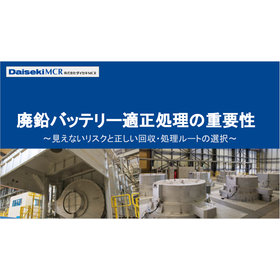
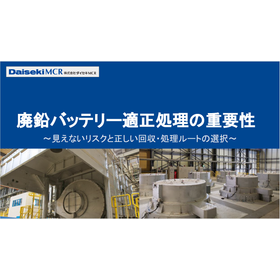
Proper disposal of waste lead batteries for corporate use in communication infrastructure.

Proper disposal of waste lead batteries contributing to BCP measures.

In the telecommunications infrastructure industry, stable operation of equipment and risk management are required from the perspective of business continuity planning (BCP). In particular, the management of lead-acid batteries used for emergency power sources is crucial for balancing environmental regulation compliance and business continuity. Improper handling can lead not only to environmental pollution but also to a decline in corporate reliability and legal risks. Our company provides a white paper that explains the importance of selecting appropriate collection and processing routes for lead-acid batteries and avoiding risks. 【Usage Scenarios】 - Management of emergency power supply equipment at communication base stations - Review of waste disposal plans in BCP formulation - Strengthening environmental compliance 【Benefits of Implementation】 - Reduction of environmental and corporate risks - Strengthening compliance adherence - Realization of stable resource circulation

Added to bookmarks

Bookmarks list

Bookmark has been removed

Bookmarks list

You can't add any more bookmarks

By registering as a member, you can increase the number of bookmarks you can save and organize them with labels.

Free membership registration

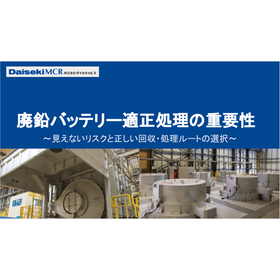
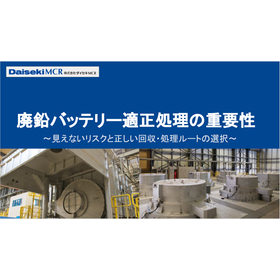
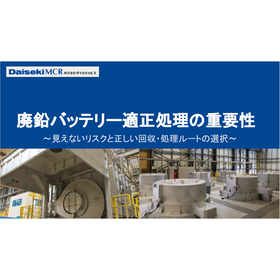
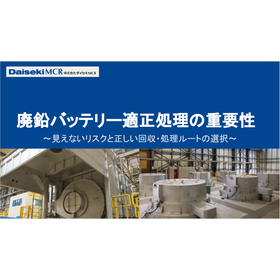
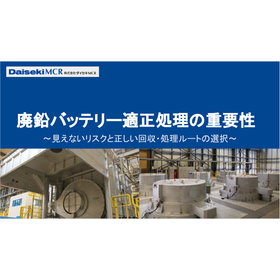
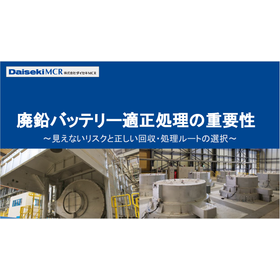
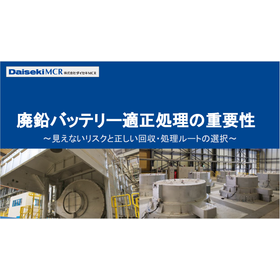
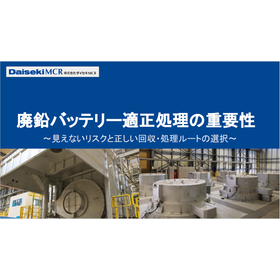
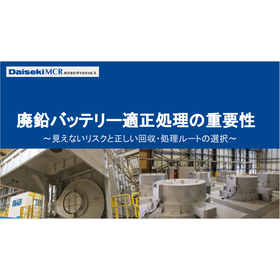
The Importance of Proper Disposal of Waste Lead Batteries for the Electric Power and Energy Industry

What is proper processing that avoids inappropriate processing risks and supports stable supply?

In the power and energy industry, proper disposal of used lead batteries is essential for business continuity and stable supply. Improper handling poses risks of environmental pollution and loss of corporate trust. This document explains the risks of improper disposal, environmental risks, and corporate risks associated with waste lead batteries, emphasizing the importance of risk avoidance. It also introduces the comprehensive system and processing steps of Daiseki MCR from collection to resource recovery, supporting compliance and the realization of stable resource recycling. 【Usage Scenarios】 - Disposal and recycling of used lead batteries - Compliance with environmental regulations - Risk management in the supply chain 【Benefits of Implementation】 - Reduction of environmental risks - Maintenance and enhancement of corporate image - Realization of stable resource circulation

Added to bookmarks

Bookmarks list

Bookmark has been removed

Bookmarks list

You can't add any more bookmarks

By registering as a member, you can increase the number of bookmarks you can save and organize them with labels.

Free membership registration

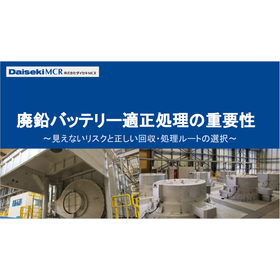
Explanation of the Importance of Proper Disposal of Waste Lead Batteries for Broadcasting Media

Explaining the proper disposal of waste lead batteries, which are essential for maintaining information transmission.

In the broadcasting and media industry, lead-acid batteries are used in power supply equipment that is essential for maintaining information transmission. When these batteries are no longer usable, improper disposal, which poses environmental and corporate risks, is a significant concern. Improper disposal can lead to environmental pollution and violations of regulations, potentially affecting a company's reliability. This document is a white paper summarizing the importance of risk avoidance in the proper disposal of lead-acid batteries and the selection of legitimate channels. It includes explanations from three perspectives: the risks of improper disposal, environmental risks, and corporate risks associated with lead-acid batteries, as well as an overview of the consistent system and processing steps from collection to resource recovery by "Daiseki MCR." It also introduces compliance measures and stable resource recovery, so please make use of it. 【Usage Scenarios】 - Disposal of used lead-acid batteries from broadcasting equipment, communication devices, etc. - Compliance with environmental regulations and reduction of corporate risks - Achieving stable resource circulation 【Effects of Implementation】 - Avoidance of legal risks through compliance - Improvement of corporate image by reducing environmental impact - Safe and secure resource circulation through proper route selection

Added to bookmarks

Bookmarks list

Bookmark has been removed

Bookmarks list

You can't add any more bookmarks

By registering as a member, you can increase the number of bookmarks you can save and organize them with labels.

Free membership registration

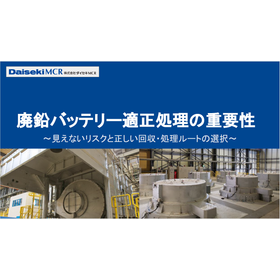
The Importance of Proper Disposal of Waste Lead Batteries for the Manufacturing Industry

Proper disposal of waste lead batteries contributing to CSR enhancement.

In the manufacturing industry, the proper disposal of waste lead batteries generated from business activities is emphasized from the perspective of CSR (Corporate Social Responsibility). Improper disposal not only increases the risk of environmental pollution but can also affect a company's reputation and compliance. Therefore, it is essential to select reliable collection and disposal routes and to implement proper disposal practices to prevent risks in advance. This document explains the risks of improper disposal, environmental risks, and corporate risks associated with waste lead batteries, highlighting the importance of risk avoidance. It also includes an overview of the integrated system and processing steps from collection to resource recovery by Daiseki MCR, as well as information on compliance measures and stable resource recovery. 【Usage Scenarios】 - Reducing environmental impact in business activities - Strengthening compliance - Enhancing corporate image - Achieving stable resource circulation 【Benefits of Implementation】 - Reduction of environmental risks - Improvement of legal and social reliability - Contribution to sustainable business operations - Effective utilization of resources

Added to bookmarks

Bookmarks list

Bookmark has been removed

Bookmarks list

You can't add any more bookmarks

By registering as a member, you can increase the number of bookmarks you can save and organize them with labels.

Free membership registration

Explanation of the Importance of Proper Disposal of Waste Lead Batteries for Corporations in the Medical and Welfare Sector

For business continuity. Proper disposal of waste lead batteries and risk avoidance.

In the healthcare and welfare industry, stable infrastructure operations and consideration for the environment are required to maintain business continuity. In particular, improper handling of waste lead batteries used for backup power can lead to environmental pollution and corporate risks. To prevent these risks in advance and continue business while complying with regulations, it is important to select a reliable proper disposal route. This document is a white paper summarizing the importance of risk avoidance in the proper disposal of waste lead batteries and the selection of legitimate routes. It includes explanations from three perspectives: the risks of improper disposal, environmental risks, and corporate risks associated with waste lead batteries, as well as an overview of the consistent system and processing steps from collection to resource recovery by "Daiseki MCR." [Usage Scenarios] - Management of lead batteries as backup power for medical devices - Proper disposal of lead batteries in emergency power supply equipment at welfare facilities - Balancing compliance with regulations and reducing environmental impact [Benefits of Implementation] - Reduction of risks in business continuity planning (BCP) - Reliable compliance with environmental regulations - Fulfillment of corporate social responsibility (CSR)

Added to bookmarks

Bookmarks list

Bookmark has been removed

Bookmarks list

You can't add any more bookmarks

By registering as a member, you can increase the number of bookmarks you can save and organize them with labels.

Free membership registration

Explanation of the Importance of Proper Disposal of Waste Lead Batteries for Data Centers

Proper disposal of lead-acid batteries, essential for ensuring the reliability of data centers.

In data centers, proper management of waste lead batteries used in UPS (uninterruptible power supply) systems is required to ensure stable operation and reliability. Improper handling can lead to environmental pollution and corporate risks. This document is a white paper summarizing the importance of risk avoidance in the proper disposal of waste lead batteries and the selection of legitimate channels. 【Usage Scenarios】 - UPS power management in data centers - Disposal and recycling of waste lead batteries - Compliance adherence 【Benefits of Implementation】 - Reduction of environmental risks - Avoidance of corporate risks - Achievement of stable resource recovery

Added to bookmarks

Bookmarks list

Bookmark has been removed

Bookmarks list

You can't add any more bookmarks

By registering as a member, you can increase the number of bookmarks you can save and organize them with labels.

Free membership registration

The Importance of Proper Disposal of Waste Lead Batteries for Corporate Security and Disaster Prevention

Proper handling of waste lead batteries, essential for emergency response.

In the security and disaster prevention industry, especially in emergency response, the reliable operation of lead batteries used for emergency power sources and their subsequent proper disposal are crucial. Improper disposal carries risks of environmental pollution and a decline in corporate reliability. This document is a white paper summarizing the importance of risk avoidance in the proper disposal of waste lead batteries and the selection of legitimate disposal routes. It includes explanations from three perspectives: the risks of improper disposal, environmental risks, and corporate risks associated with waste lead batteries, as well as an overview of the consistent system and processing steps from collection to resource recovery by "Daiseki MCR." 【Usage Scenarios】 - When replacing lead batteries in emergency power supply equipment - Management of disaster response batteries - Selection of disposal routes to ensure compliance 【Benefits of Implementation】 - Reduction of environmental risks - Avoidance of corporate risks - Contribution to stable resource circulation

Added to bookmarks

Bookmarks list

Bookmark has been removed

Bookmarks list

You can't add any more bookmarks

By registering as a member, you can increase the number of bookmarks you can save and organize them with labels.

Free membership registration

The Importance of Proper Disposal of Waste Lead Batteries for Agricultural Machinery

Avoid inappropriate processing risks and promote resource circulation.

In the agricultural machinery industry, the proper disposal of used lead batteries is considered important from both environmental conservation and corporate risk management perspectives. Improper disposal can increase the risk of soil contamination and violations of regulations. Additionally, the effective utilization of lead resources contributes to sustainable resource circulation. This document is a white paper summarizing the importance of risk avoidance in the proper disposal of waste lead batteries and the selection of legitimate channels. 【Usage Scenarios】 - Disposal of used lead batteries - Compliance with environmental regulations - Promotion of resource recycling 【Benefits of Implementation】 - Reduction of environmental risks - Strengthening of corporate compliance - Effective utilization of lead resources

Added to bookmarks

Bookmarks list

Bookmark has been removed

Bookmarks list

You can't add any more bookmarks

By registering as a member, you can increase the number of bookmarks you can save and organize them with labels.

Free membership registration

Explanation of the Importance of Proper Disposal of Waste Lead Batteries for Construction Machinery

Proper disposal of waste lead batteries for regulatory compliance and corporate risk mitigation.

In the construction machinery industry, proper handling of used lead batteries is required from the perspective of compliance with legal regulations. Improper handling carries the risk of environmental pollution and loss of corporate trust. Therefore, it is important to comply with laws and select reliable processing routes that reduce environmental impact. This document explains the risks associated with waste lead batteries and the key points for proper handling to avoid them, and introduces a consistent proper processing flow from collection to resource recovery by Daiseki MCR. 【Usage Scenarios】 * Selection of processing routes for legal compliance * Reduction of environmental risks * Avoidance of corporate risks 【Benefits of Implementation】 * Strengthening of compliance through legal adherence * Reduction of environmental impact * Fulfillment of corporate social responsibility (CSR)

Added to bookmarks

Bookmarks list

Bookmark has been removed

Bookmarks list

You can't add any more bookmarks

By registering as a member, you can increase the number of bookmarks you can save and organize them with labels.

Free membership registration

Importance of Proper Disposal of Waste Lead Batteries for Corporations in the Amusement Park and Leisure Industry

Proper disposal of waste lead batteries to strengthen safety management.

In amusement parks and leisure facilities, ensuring customer safety is the top priority, and maintaining the equipment and vehicles within the facility is crucial. In particular, improper handling of lead batteries used for emergency power sources can lead to environmental pollution as well as risks that affect the company's reliability. From a safety management perspective, selecting appropriate collection and processing routes for waste lead batteries is essential. This document explains the risks associated with improper processing of waste lead batteries, environmental risks, and corporate risks, emphasizing the importance of risk avoidance. It also outlines the comprehensive system and processing procedures from collection to resource recovery by "Daiseki MCR," and introduces compliance measures and stable resource recovery, so please make use of it. 【Usage Scenarios】 - When replacing batteries in vehicles within the facility (attraction vehicles, internal transport vehicles, etc.) - When replacing batteries in emergency power supply equipment - Compliance with regulations in waste disposal 【Benefits of Implementation】 - Reduction of environmental pollution risks - Maintenance and enhancement of corporate image - Avoidance of penalty risks through legal compliance - Contribution to a circular economy through effective resource utilization

Added to bookmarks

Bookmarks list

Bookmark has been removed

Bookmarks list

You can't add any more bookmarks

By registering as a member, you can increase the number of bookmarks you can save and organize them with labels.

Free membership registration

Importance of Proper Disposal of Waste Lead Batteries for Corporations in the Amusement Park and Leisure Industry

Proper disposal of waste lead batteries to strengthen safety management.

In amusement parks and leisure facilities, ensuring customer safety is the top priority, and the maintenance and management of equipment and vehicles within the facility are crucial. In particular, improper handling of lead batteries used for emergency power sources can lead to environmental pollution as well as risks that affect the company's reliability. From a safety management perspective, selecting appropriate collection and processing routes for waste lead batteries is essential. This document explains the risks associated with improper handling of waste lead batteries, environmental risks, and corporate risks, emphasizing the importance of risk avoidance. It also outlines the comprehensive system and processing steps from collection to resource recovery by "Daiseki MCR," and introduces compliance measures and stable resource recovery, so please make use of it. 【Usage Scenarios】 - When replacing batteries in vehicles within the facility (attraction vehicles, on-site transport vehicles, etc.) - When replacing batteries in emergency power supply equipment - Compliance with regulations in waste disposal 【Benefits of Implementation】 - Reduction of environmental pollution risks - Maintenance and enhancement of corporate image - Avoidance of penalties through legal compliance - Contribution to a circular society through effective resource utilization

Added to bookmarks

Bookmarks list

Bookmark has been removed

Bookmarks list

You can't add any more bookmarks

By registering as a member, you can increase the number of bookmarks you can save and organize them with labels.

Free membership registration

Importance of Proper Disposal of Waste Lead Batteries for Corporations in the Amusement and Leisure Industry

Proper disposal of waste lead batteries to strengthen safety management.

In amusement parks and leisure facilities, ensuring customer safety is the top priority, and the maintenance and management of equipment and vehicles within the facility are crucial. In particular, improper handling of lead batteries used for emergency power sources can lead to environmental pollution and pose risks to the company's reliability. From a safety management perspective, selecting appropriate collection and processing routes for waste lead batteries is essential. This document explains the risks associated with improper handling of waste lead batteries, environmental risks, and corporate risks, emphasizing the importance of risk avoidance. It also outlines the consistent system and processing steps from collection to resource recovery by "Daiseki MCR," and introduces compliance measures and stable resource recovery, so please make use of it. 【Usage Scenarios】 - When replacing batteries in vehicles within the facility (attraction vehicles, internal transport vehicles, etc.) - When replacing batteries in emergency power supply equipment - Compliance with regulations in waste disposal 【Benefits of Implementation】 - Reduction of environmental pollution risks - Maintenance and enhancement of corporate image - Avoidance of penalties through legal compliance - Contribution to a circular economy through effective resource utilization

Added to bookmarks

Bookmarks list

Bookmark has been removed

Bookmarks list

You can't add any more bookmarks

By registering as a member, you can increase the number of bookmarks you can save and organize them with labels.

Free membership registration

Importance of Proper Disposal of Waste Lead Batteries for Corporations in the Amusement Park and Leisure Industry

Proper disposal of waste lead batteries to strengthen safety management.

In amusement parks and leisure facilities, ensuring customer safety is the top priority, and the maintenance and management of equipment and vehicles within the facility are crucial. In particular, improper handling of lead batteries used for emergency power supplies can lead to environmental pollution as well as risks that affect the company's reliability. From a safety management perspective, selecting appropriate collection and processing routes for waste lead batteries is essential. This document explains the risks associated with improper handling of waste lead batteries, environmental risks, and corporate risks, emphasizing the importance of risk avoidance. It also outlines the comprehensive system and processing steps from collection to resource recovery by "Daiseki MCR," and introduces compliance measures and stable resource recovery, so please make use of it. 【Usage Scenarios】 - When replacing batteries in vehicles within the facility (attraction vehicles, on-site transport vehicles, etc.) - When replacing batteries in emergency power supply equipment - Compliance with regulations in waste disposal 【Benefits of Implementation】 - Reduction of environmental pollution risks - Maintenance and enhancement of corporate image - Avoidance of penalties through legal compliance - Contribution to a circular society through effective resource utilization

Added to bookmarks

Bookmarks list

Bookmark has been removed

Bookmarks list

You can't add any more bookmarks

By registering as a member, you can increase the number of bookmarks you can save and organize them with labels.

Free membership registration
Prev 12 Next
  • 目的・課題から技術・サービスを探せるリスク対策&危機管理専門サイト
    • Contact this company

      Contact Us Online
    • Before making an inquiry

      Download PDF

    Products

    • Search for Products

    Company

    • Search for Companies

    Special Features

    • Special Features

    Ranking

    • Overall Products Ranking
    • Overall Company Ranking

    support

    • site map
    IPROS
    • privacy policy Regarding external transmission of information
    • terms of service
    • About Us
    • Careers
    • Advertising
    IPROS Services
    • >IPROS GMS | Search site for the manufacturing industry
    • >IPROS | Search site for the B2B industry
    COPYRIGHT © 2001-2026 IPROS CORPORATION ALL RIGHTS RESERVED.
    Please note that the English text on this page is automatically translated and may contain inaccuracies.