iPROS Urban Planning
  • Search for products by classification category

    • Building Materials
      Building Materials
      35642items
    • Facilities
      Facilities
      56153items
    • Lighting and Interior
      Lighting and Interior
      17377items
    • Common materials
      Common materials
      36705items
    • Civil Engineering Materials
      Civil Engineering Materials
      9592items
    • Construction, work and methods
      Construction, work and methods
      27512items
    • Surveys, Measurements, and Services
      Surveys, Measurements, and Services
      29165items
    • IT/Software
      IT/Software
      34381items
    • others
      others
      76782items
    • Store and facility supplies
      Store and facility supplies
      4410items
    • Office and commercial supplies
      Office and commercial supplies
      11564items
    • Hospital and welfare facility supplies
      Hospital and welfare facility supplies
      972items
    • Logistics Equipment
      Logistics Equipment
      6809items
    • Energy and Resources
      Energy and Resources
      11672items
  • Search for companies by industry

    • Information and Communications
      7228
    • others
      7098
    • Building materials, supplies and fixtures manufacturers
      6638
    • Service Industry
      4651
    • Trading company/Wholesale
      2997
    • Other construction industries
      2447
    • Electrical equipment construction business
      639
    • Interior Design
      526
    • Facility Design Office
      490
    • Construction Consultant
      465
    • Architectural design office
      358
    • retail
      346
    • Warehousing and transport related industries
      322
    • Electricity, Gas and Water Industry
      290
    • General contractors and subcontractors
      282
    • Interior construction business
      276
    • Medical and Welfare
      274
    • Educational and Research Institutions
      258
    • Building Management
      250
    • Renovation and home construction industry
      222
    • Water supply and drainage construction business
      201
    • Housing manufacturers and construction companies
      186
    • Transportation
      160
    • Real Estate Developers
      155
    • Fisheries, Agriculture and Forestry
      126
    • Structural Design Office
      65
    • Finance, securities and insurance
      38
    • Restaurants and accommodations
      30
    • self-employed
      29
    • Mining
      26
    • Public interest/special/independent administrative agency
      18
    • Police, Fire Department, Self-Defense Forces
      18
    • Store and building owners
      9
    • Property Owner
      8
    • Government
      8
    • Individual
      8
  • Special Features
  • Ranking

    • Overall Products Ranking
    • Overall Company Ranking
Search for Products
  • Search for products by classification category

  • Building Materials
  • Facilities
  • Lighting and Interior
  • Common materials
  • Civil Engineering Materials
  • Construction, work and methods
  • Surveys, Measurements, and Services
  • IT/Software
  • others
  • Store and facility supplies
  • Office and commercial supplies
  • Hospital and welfare facility supplies
  • Logistics Equipment
  • Energy and Resources
Search for Companies
  • Search for companies by industry

  • Information and Communications
  • others
  • Building materials, supplies and fixtures manufacturers
  • Service Industry
  • Trading company/Wholesale
  • Other construction industries
  • Electrical equipment construction business
  • Interior Design
  • Facility Design Office
  • Construction Consultant
  • Architectural design office
  • retail
  • Warehousing and transport related industries
  • Electricity, Gas and Water Industry
  • General contractors and subcontractors
  • Interior construction business
  • Medical and Welfare
  • Educational and Research Institutions
  • Building Management
  • Renovation and home construction industry
  • Water supply and drainage construction business
  • Housing manufacturers and construction companies
  • Transportation
  • Real Estate Developers
  • Fisheries, Agriculture and Forestry
  • Structural Design Office
  • Finance, securities and insurance
  • Restaurants and accommodations
  • self-employed
  • Mining
  • Public interest/special/independent administrative agency
  • Police, Fire Department, Self-Defense Forces
  • Store and building owners
  • Property Owner
  • Government
  • Individual
Special Features
Ranking
  • Overall Products Ranking
  • Overall Company Ranking
  • privacy policy
  • terms of service
  • About Us
  • Careers
  • Advertising
  1. Home
  2. Building materials, supplies and fixtures manufacturers
  3. 日本海洋サービス 大阪支店
  4. Product/Service List
Building materials, supplies and fixtures manufacturers
  • Added to bookmarks

    Bookmarks list

    Bookmark has been removed

    Bookmarks list

    You can't add any more bookmarks

    By registering as a member, you can increase the number of bookmarks you can save and organize them with labels.

    Free membership registration

日本海洋サービス 大阪支店

Establishment1972
addressOsaka/Sakai-shi, Sakai-ku/5-189-1 Kaizancho
phone072-229-5232
  • Special site
  • Official site
last updated:Sep 11, 2025
日本海洋サービスlogo
  • Contact this company

    Contact Us Online
  • Company information
  • Products/Services(24)
  • catalog(10)
  • news(2)

日本海洋サービス List of Products and Services

  • category

1~24 item / All 24 items

Displayed results

Filter by category

Fully wet-type underwater wire sawing method Fully wet-type underwater wire sawing method
Temporary deadline LPF method Temporary deadline LPF method
class="retina-image"

Temporary closure method for bridge pier reinforcement using liner plates.

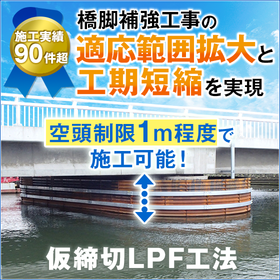
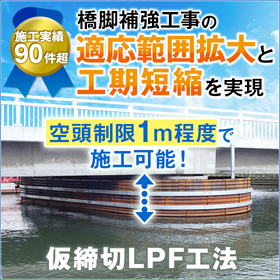
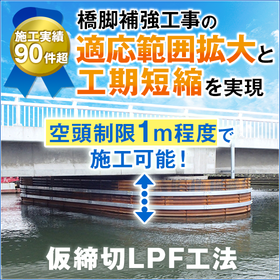
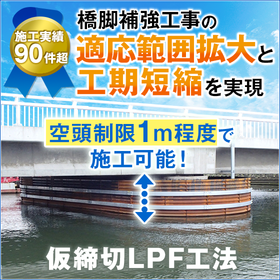
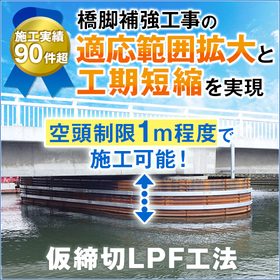
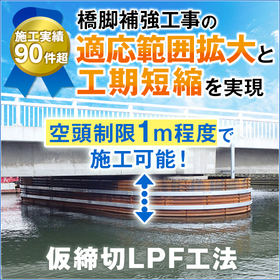
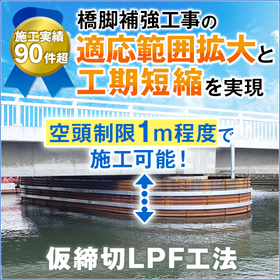
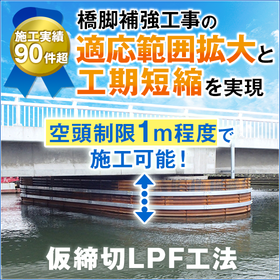
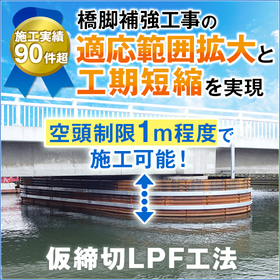
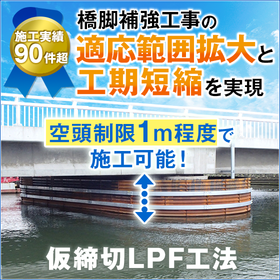
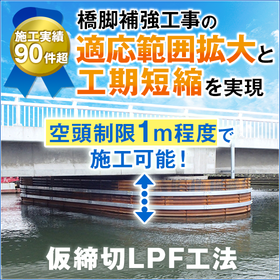
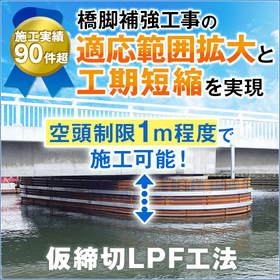
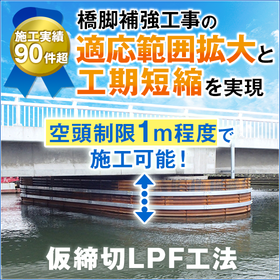
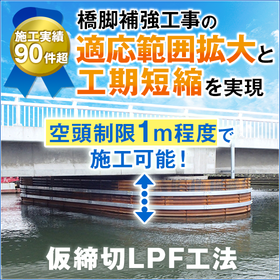
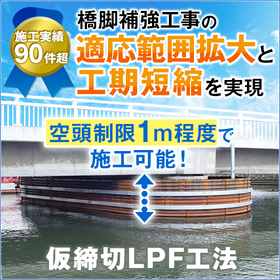
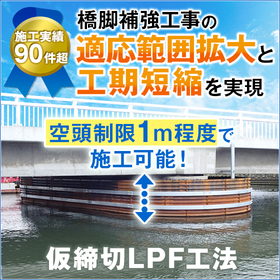
Over 90 construction achievements and more than 110 target bridge piers. A liner plate temporary closure method that accommodates low headroom and narrow conditions, contributing to shortened construction periods.

The temporary cutoff LPF method is a temporary cutoff construction technique that uses liner plates to build a temporary cutoff structure, aimed at bridge pier reinforcement and repair work. It has over 90 construction records nationwide in underwater environments such as rivers, seas, and dams, and has been applied to more than 110 bridge piers. This method adopts a technique where a tubular liner plate structure is assembled above water and then installed underwater. It allows for the selection of shapes according to site conditions while minimizing excessive custom component manufacturing for each bridge pier, contributing to shortened processes, rationalized construction planning, and securing holidays. 【Features】 ■ Composed of liner plates, H-beams (reinforcement rings), and supports ■ Above-water assembly and underwater installation method ■ Construction possible with low headroom (approximately 1.0m) ■ Manual construction compatible, can be executed under heavy machinery restrictions ■ Vibration-free construction reduces impact on the surrounding environment *Method comparison materials and construction case studies can be viewed in PDF format.

  • Renovation and repair methods

Added to bookmarks

Bookmarks list

Bookmark has been removed

Bookmarks list

You can't add any more bookmarks

By registering as a member, you can increase the number of bookmarks you can save and organize them with labels.

Free membership registration

Temporary closure LPF method that can be constructed even under heavy machinery restrictions.

A temporary closure method that is easy to implement even for bridge pier reinforcement work where heavy machinery cannot be used, accommodating manual construction.

In bridge pier reinforcement work, the use of heavy machinery may be restricted due to site conditions and surrounding environments. The temporary cutoff LPF method accommodates manual construction, allowing assembly and installation even in low headroom and narrow spaces. It is utilized as a practical temporary cutoff method even at sites with construction constraints. *Please refer to the materials that include examples of manual construction. 【Features】 ■ Temporary cutoff structure using liner plates ■ Above-water assembly and underwater installation method ■ Suitable for low headroom and narrow areas ■ Construction that minimizes vibrations is possible

  • Renovation and repair methods

Added to bookmarks

Bookmarks list

Bookmark has been removed

Bookmarks list

You can't add any more bookmarks

By registering as a member, you can increase the number of bookmarks you can save and organize them with labels.

Free membership registration

Temporary closure LPF method suitable for short-term construction.

A bridge pier temporary closure method that makes it easy to organize work processes and can be easily implemented even during nighttime or within a limited construction period.

In nighttime construction or bridge pier reinforcement work with limited construction periods, the ease of assembling the process is important. The temporary cutoff LPF method features a simple component structure and allows for shape selection according to site conditions, making it easy to organize the construction steps. It is being considered as an option for sites looking to shorten the construction process. *You can check the process comparison materials in PDF format. 【Features】 ■ Temporary cutoff structure using liner plates ■ Above-water assembly and underwater installation method ■ Suitable for low headroom and narrow areas ■ Construction that minimizes vibrations is possible

  • Renovation and repair methods

Added to bookmarks

Bookmarks list

Bookmark has been removed

Bookmarks list

You can't add any more bookmarks

By registering as a member, you can increase the number of bookmarks you can save and organize them with labels.

Free membership registration

Low-altitude site response temporary deadline LPF method

Construction is possible with a temporary cutoff of about 1.0m for the bridge pier reinforcement work, which has many constraints.

In bridge pier reinforcement work where the workspace is limited, the selection of the temporary cutoff method influences the feasibility of construction. The temporary cutoff LPF method can accommodate manual construction and can be assembled and installed even under low headroom and narrow conditions. It is easy to introduce even in sites where heavy machinery usage is difficult, expanding the options for construction planning. *Construction achievements in low headroom sites are documented. 【Features】 ■Temporary cutoff structure using liner plates ■Above-water assembly and underwater installation method ■Compatible with low headroom and narrow areas ■Construction that suppresses vibrations is possible

  • Renovation and repair methods

Added to bookmarks

Bookmarks list

Bookmark has been removed

Bookmarks list

You can't add any more bookmarks

By registering as a member, you can increase the number of bookmarks you can save and organize them with labels.

Free membership registration

Temporary closure LPF method supporting seismic reinforcement of bridges

Corresponds to reinforcement and renewal work for existing bridges. A temporary closure method that is easy to consider even in seismic reinforcement projects with many constraints.

In the seismic reinforcement and longevity enhancement project for existing bridges, a construction plan that utilizes existing structures is required. The temporary closure LPF method can be implemented even in narrow conditions and low headroom environments, making it a chosen temporary closure method for seismic reinforcement work. By minimizing custom components, it also contributes to the overall project schedule management. *Examples of its application in seismic reinforcement work are included. 【Features】 ■ Temporary closure structure using liner plates ■ Above-water assembly and underwater installation method ■ Suitable for low headroom and narrow areas ■ Construction that minimizes vibrations is possible

  • Renovation and repair methods

Added to bookmarks

Bookmarks list

Bookmark has been removed

Bookmarks list

You can't add any more bookmarks

By registering as a member, you can increase the number of bookmarks you can save and organize them with labels.

Free membership registration

Temporary closure LPF method supporting offshore pier construction

Corresponds to the reinforcement of bridge piers in marine and port areas. A temporary closure method with vibration-free construction to minimize the impact on surrounding facilities.

In reinforcement work for harbor areas and offshore bridge piers, consideration for surrounding facilities and navigation environments is essential. The temporary cutoff LPF method adopts a structure that allows for vibration-free construction, achieving temporary cutoff work that takes into account the marine environment. It also accommodates manual construction, making it an easy-to-implement method even in harbor areas with limited working space. *Please check the construction examples of harbor and offshore work. 【Features】 ■ Temporary cutoff structure using liner plates ■ Above-water assembly and underwater installation method ■ Suitable for low headroom and narrow areas ■ Construction that minimizes vibrations is possible

  • Renovation and repair methods

Added to bookmarks

Bookmarks list

Bookmark has been removed

Bookmarks list

You can't add any more bookmarks

By registering as a member, you can increase the number of bookmarks you can save and organize them with labels.

Free membership registration

Temporary closure LPF method suitable for reinforcing river bridge piers.

Construction that takes into account the water discharge period and water level fluctuations is possible. A temporary closure method that allows for the reinforcement of bridge piers while considering the river environment.

The temporary cutoff LPF method is a construction technique that allows for work on the reinforcement and repair of bridge piers in rivers, taking into account water level fluctuations and work constraints. After assembling the tubular structure above the water surface, it is installed underwater, enabling construction to proceed while minimizing impact on the river environment. It can accommodate low headroom conditions and narrow river cross-sections, and is used in maintenance and management work for river bridges. *Case studies of construction in river projects are available. 【Features】 ■ Temporary cutoff structure using liner plates ■ Above-water assembly and underwater installation method ■ Accommodates low headroom and narrow areas ■ Construction that minimizes vibrations is possible

  • Renovation and repair methods

Added to bookmarks

Bookmarks list

Bookmark has been removed

Bookmarks list

You can't add any more bookmarks

By registering as a member, you can increase the number of bookmarks you can save and organize them with labels.

Free membership registration

LPF method for temporary deadlines contributing to schedule management.

Optimize the process through material rationalization. A temporary formwork method for bridge piers that achieves both shortened construction time and reduced workload.

The temporary closure LPF method is a construction technique aimed at shortening construction periods and improving work efficiency through the rationalization of component composition. By reducing custom manufacturing for each pier, it contributes to the leveling of preparation time and on-site work. As a result, it also leads to easier process management and a reduction in the burden on workers. *Please view the comparison materials and process image materials in PDF format. [Features] ■ Temporary closure structure using liner plates ■ Above-water assembly and underwater installation method ■ Compatible with low headroom and narrow areas ■ Construction that minimizes vibrations is possible

  • Renovation and repair methods

Added to bookmarks

Bookmarks list

Bookmark has been removed

Bookmarks list

You can't add any more bookmarks

By registering as a member, you can increase the number of bookmarks you can save and organize them with labels.

Free membership registration

Flexible response to design conditions: Temporary closure LPF method

It is possible to select shapes based on site conditions. A temporary closure method for bridge piers that is easy to consider from the design stage.

The temporary cutoff LPF method is a temporary cutoff construction method that can accommodate various design conditions such as pier shape, water area conditions, and headroom restrictions. Based on standardized components, it allows for shape selection tailored to the site, contributing to a reduction in the design phase workload. It is adopted as a practical temporary cutoff method in bridge reinforcement and seismic reinforcement design. *We have prepared materials that can be utilized during the design review phase. 【Features】 ■ Temporary cutoff structure using liner plates ■ Above-water assembly and underwater installation method ■ Compatible with low headroom and narrow areas ■ Construction that minimizes vibrations is possible

  • Renovation and repair methods

Added to bookmarks

Bookmarks list

Bookmark has been removed

Bookmarks list

You can't add any more bookmarks

By registering as a member, you can increase the number of bookmarks you can save and organize them with labels.

Free membership registration

Temporary closure LPF method suitable for bridge pier reinforcement work

Considering the actual conditions of repair and reinforcement work. A temporary closure method that achieves stable construction even under narrow and low headroom conditions.

In bridge repair and reinforcement work, what is important is the reliable temporary closure construction in a limited working space. The temporary closure LPF method adopts a structure that can be assembled and installed even in narrow areas and low headroom conditions. Due to vibration-free construction, it is possible to ensure both safety and workability while minimizing the impact on existing structures. *Please refer to the case study collection that includes examples of its use in reinforcement work. 【Features】 ■ Temporary closure structure using liner plates ■ Above-water assembly and underwater installation method ■ Compatible with low headroom and narrow areas ■ Vibration-reduced construction is possible

  • Renovation and repair methods

Added to bookmarks

Bookmarks list

Bookmark has been removed

Bookmarks list

You can't add any more bookmarks

By registering as a member, you can increase the number of bookmarks you can save and organize them with labels.

Free membership registration

LPF method for temporary cofferdams for bridge piers to improve construction efficiency.

Balancing construction shortening and workability. A bridge pier temporary closure solution that is easy to implement even under heavy machinery restrictions and low headroom conditions.

The temporary cutoff LPF method is a construction method designed with a focus on workability, taking into account the constraints of the construction site. Since it allows for shape selection based on site conditions, it helps to minimize excessive design changes and component fabrication for each pier. It is also compatible with manual construction, enabling flexible construction plans even in environments where heavy machinery cannot be used. *You can check the method comparison materials and construction flow materials in PDF format. [Features] ■ Temporary cutoff structure using liner plates ■ Above-water assembly and underwater installation method ■ Low headroom and narrow area compatibility ■ Construction that minimizes vibrations is possible

  • Renovation and repair methods

Added to bookmarks

Bookmarks list

Bookmark has been removed

Bookmarks list

You can't add any more bookmarks

By registering as a member, you can increase the number of bookmarks you can save and organize them with labels.

Free membership registration

Temporary Closure LPF Method Supporting the Maintenance and Management of Public Bridges

Widely adopted nationwide. A temporary closure method that accommodates low headroom and narrow conditions, allowing for the planned reinforcement of public bridges.

The temporary cutoff LPF method is a temporary cutoff construction technique designed for reinforcing underwater bridge piers in rivers, seas, and dams. It is adopted in public bridge maintenance and longevity projects due to its adaptability to various site conditions. By minimizing the use of custom components, it shortens the construction process and contributes to clarifying the construction period and promoting planned project advancement. *We have prepared materials summarizing case studies of construction in public works. 【Features】 ■ Temporary cutoff structure using liner plates ■ Assembly above water surface and installation underwater ■ Suitable for low headroom and narrow areas ■ Construction that minimizes vibrations is possible

  • Renovation and repair methods

Added to bookmarks

Bookmarks list

Bookmark has been removed

Bookmarks list

You can't add any more bookmarks

By registering as a member, you can increase the number of bookmarks you can save and organize them with labels.

Free membership registration

A temporary closure LPF method capable of adapting to various site conditions.

Wide-ranging support for rivers, seas, and dams. Temporary closure methods suitable for bridge pier reinforcement that are easy to adopt even under low headroom and narrow conditions.

The "Temporary Closure LPF Method" is a temporary closure method that has been adopted in various underwater environments such as rivers, seas, and dams. Since it allows for the selection of the optimal shape according to site conditions, it enables flexible construction plans even in sites with spatial constraints that are difficult to address with conventional methods. It is also compatible with manual construction, making it easy to implement even in bridge pier reinforcement work where headroom restrictions are strict. *For details, please refer to the construction case collection and method comparison materials. 【Features】 ■ Temporary closure structure using liner plates ■ Above-water assembly and underwater installation method ■ Suitable for low headroom and narrow areas ■ Construction that suppresses vibrations is possible

  • Renovation and repair methods

Added to bookmarks

Bookmarks list

Bookmark has been removed

Bookmarks list

You can't add any more bookmarks

By registering as a member, you can increase the number of bookmarks you can save and organize them with labels.

Free membership registration

Low-headroom temporary closure LPF method contributing to shortening construction period.

A rational design that reduces the process by controlling custom components. A temporary closure method for bridge piers that can flexibly respond even under strict headroom conditions.

The temporary closure LPF method is a construction method focused on efficiency in the temporary closure work for underwater pier reinforcement projects. It allows for shape selection tailored to site conditions, reducing excessive custom manufacturing for each pier, thereby achieving shortened construction periods and reduced work burdens. Since manual construction is possible even in environments where heavy machinery cannot be used, it can be applied in sites with a headroom restriction of about 1.0m. *Method comparison materials and construction case studies can be viewed in PDF format. 【Features】 ■ Structure assembled in a tubular shape installed underwater ■ Usable in low headroom and narrow spaces ■ Vibration-free construction considerate of the surrounding environment ■ Contributes to securing holidays through process shortening

  • Renovation and repair methods

Added to bookmarks

Bookmarks list

Bookmark has been removed

Bookmarks list

You can't add any more bookmarks

By registering as a member, you can increase the number of bookmarks you can save and organize them with labels.

Free membership registration

LPF method for temporary closure supporting pier reinforcement with abundant achievements.

Over 90 construction achievements and more than 110 target bridge piers. Supporting bridge pier reinforcement work nationwide safely and efficiently with proven know-how.

The "Temporary Closure LPF Method" is a well-established technique for constructing temporary closures using liner plates in underwater structures such as rivers, seas, and dams. By minimizing custom components for each pier and allowing for shape selection based on site conditions, it contributes to shortening the construction process and ensuring stable construction quality. It is also compatible with manual construction, having numerous successful projects even in sites with strict headroom restrictions (approximately 1.0m). *Please take a look at the collection of case studies summarizing our construction achievements. 【Features】 ■ Composition of liner plates + H-beam reinforcement rings + support structures ■ Assembled above water and then installed underwater ■ Compatible with narrow and vibration-free construction ■ Usable even under low headroom conditions

  • Renovation and repair methods

Added to bookmarks

Bookmarks list

Bookmark has been removed

Bookmarks list

You can't add any more bookmarks

By registering as a member, you can increase the number of bookmarks you can save and organize them with labels.

Free membership registration

Support for bridge pier reinforcement nationwide: "Temporary Closure LPF Method"

Over 90 construction achievements! We support bridge pier reinforcement nationwide with "shortened construction periods and expanded application scope"!

The "Temporary Closure LPF Method" is a construction method for building temporary closures of underwater structures such as rivers, seas, and dams using liner plates. The Temporary Closure LPF Method contributes to shortening construction periods and ensuring holidays through the following means: - Reducing the production of custom components for each pier - Selecting suitable shapes based on site conditions It can be implemented using manual labor alone and is feasible in environments with a headroom restriction of approximately 1.0 meters or less. *Please refer to the case study collection that includes examples of the construction achievements of the "Temporary Closure LPF Method." 【Features】 ■ Composed of liner plates, H-beams (reinforcement rings), and supports ■ Assembled in a cylindrical shape above water and installed underwater ■ Construction is possible with a headroom restriction of approximately 1.0 meters! *Record: 1.2m ■ Vibration-free construction is possible in narrow spaces! *For method comparison materials and construction case studies, please download the PDF to view.

  • Renovation and repair methods

Added to bookmarks

Bookmarks list

Bookmark has been removed

Bookmarks list

You can't add any more bookmarks

By registering as a member, you can increase the number of bookmarks you can save and organize them with labels.

Free membership registration

Completely Wet Type Underwater Wire Sawing Method *Construction Book Available

Introducing a method for cutting and removing concrete structures in water with space-saving techniques!

The "Fully Wet Type Underwater Wire Sawing Method" is a technique that allows for the cutting and removal of underwater concrete structures in a space-saving manner. Only diving operations are conducted for installation and removal, and the machinery operates unmanned, significantly reducing the risk of personal injury. Additionally, since it is directly installed on the underwater structure, there is no impact from vibrations or waves, and it can be executed with a diamond wire of the minimum necessary length. The use of biodegradable oil for operational purposes minimizes pollution to human health and water quality. *This handbook includes the construction methods, workflow, and equipment used for the "Underwater Wire Sawing Method." [Contents] - Features - Construction Overview Diagram - Wire Detail Diagram - Cutting Overview Diagram, etc. For more details, please refer to the catalog or feel free to contact us.

  • Civil Engineering Method
  • River construction
  • Coastal construction

Added to bookmarks

Bookmarks list

Bookmark has been removed

Bookmarks list

You can't add any more bookmarks

By registering as a member, you can increase the number of bookmarks you can save and organize them with labels.

Free membership registration

Support for seismic reinforcement and pier construction! "Temporary Closure LPF Method" *Case study collection available.

Construction is possible even below a height of 1.5m! Achieving excellent water stopping performance with simplicity and speed!

The "Temporary Closure LPF Method" is a construction method that builds temporary closures for underwater structures such as rivers, seas, and dams using liner plates. It addresses the issues of conventional closure methods and supports bridge pier reinforcement with "simplicity, speed, and excellent water-stopping ability." It can be implemented using only manual labor. This groundbreaking NETIS registered method can be used in environments with a headroom restriction of 1.5 meters or less! Please feel free to contact us for more information! *Currently, we are offering a collection of case studies featuring the construction results of the "Temporary Closure LPF Method" for free exclusively to Ipros users! 【Features】 ■ Composed of liner plates (waterproof specifications), water-stopping rubber gaskets, H-steel (reinforcement rings), and cutting beams ■ Can be implemented using only manual labor! ■ Construction is possible with a headroom restriction of about 1.5 meters! ■ Vibration-free, allowing construction close to existing structures (gas, electricity, water pipes, etc.)! ■ NETIS registered: CB-110010-VE (patent) *For more details, please refer to the catalog. Feel free to contact us with any inquiries.

  • Renovation and repair methods
  • River construction
  • Earthquake-resistant construction method

Added to bookmarks

Bookmarks list

Bookmark has been removed

Bookmarks list

You can't add any more bookmarks

By registering as a member, you can increase the number of bookmarks you can save and organize them with labels.

Free membership registration

Structure removal complete wet type underwater wire sawing method

It is a method for cutting and dismantling concrete and other structures underwater for removal.

The completely wet-type underwater wire saw method is a technique for cutting and removing structures such as concrete underwater during demolition. It allows for space-saving operations at great depths and is not affected by working depth (working depth from 0m to 45m). Since the wire saw machine is entirely installed underwater, there are no human-related accidents, and because the cutting machine itself is underwater, operations can continue even if the work vessel is swaying. It can be constructed with a minimal length of diamond wire for cutting, and due to the compact size of the machine, CO2 emissions are significantly reduced. 【Features】 - Equipment can be loaded onto a small vessel for preliminary cutting. - Monitoring is done via surveillance cameras, allowing for immediate response to any issues. - Biodegradable oil (ISO 6743 Class L) is used for operational fluids. - NETIS registration number KKK-090001-A (registration period has ended). For more details, please contact us or download the catalog.

  • Civil Engineering Method
  • River construction
  • Coastal construction

Added to bookmarks

Bookmarks list

Bookmark has been removed

Bookmarks list

You can't add any more bookmarks

By registering as a member, you can increase the number of bookmarks you can save and organize them with labels.

Free membership registration

Excavation and removal method using MJP.

Minimal environmental impact! A construction method that does not generate wastewater and allows for long-distance transportation.

The excavation and removal method using MJP generates no contaminated water, resulting in minimal environmental impact. It can achieve approximately 90% suction of the main diameter, allowing for long-distance transport of excavated soil and other materials (with a maximum transport record of 450 meters). Additionally, since the driving water can be reused, it can increase the mud content in the sedimentation area. 【Features】 ■ No contaminated water is generated, resulting in minimal environmental impact ■ Approximately 90% suction of the main diameter is possible ■ Long-distance transport of excavated soil and other materials is possible ■ Driving water can be reused ■ It is possible to increase the mud content in the sedimentation area For more details, please refer to the catalog or feel free to contact us.

  • Coastal construction
  • Drilling Machine
  • River construction

Added to bookmarks

Bookmarks list

Bookmark has been removed

Bookmarks list

You can't add any more bookmarks

By registering as a member, you can increase the number of bookmarks you can save and organize them with labels.

Free membership registration

Water excavation and low-space excavation "Stirring-type casing pump excavation method"

Suppressing turbidity in excavation areas and long-distance transportation! An underwater excavation method that reduces the occurrence of turbid water, making it possible to work in traditionally inaccessible low-space areas!

The "Stirring Type Casing Pump Excavation Method" is an underwater excavation method that performs excavation, piping, and transportation within the casing, suppressing the generation of muddy water during excavation and transportation. By changing the equipment, excavation can be performed in narrow spaces. Additionally, excavation is possible in locations where large machinery cannot be used. 【Features】 ■ Underwater excavation method ■ Excavation, piping, and transportation within the casing ■ Suppression of muddy water generation during excavation and transportation ■ Excavation possible in narrow spaces with equipment modification ■ Excavation possible in locations where large machinery cannot be used For more details, please refer to the catalog or feel free to contact us.

  • Coastal construction
  • Civil Engineering Method
  • Earthquake-resistant construction method

Added to bookmarks

Bookmarks list

Bookmark has been removed

Bookmarks list

You can't add any more bookmarks

By registering as a member, you can increase the number of bookmarks you can save and organize them with labels.

Free membership registration

Special Technology/Construction "Underwater Stud Welding System"

High-efficiency work and shortened construction time! A space-saving underwater stud welding system.

The "Underwater Stud Welding System" is a system that can manage the welding condition for each bolt and allows for space-saving operations. At Nihon Ocean Services Co., Ltd., we have been researching and exploring methods for efficiently and safely dismantling structures in underwater environments that were previously impossible. This system enables groundbreaking high-efficiency work and safe construction, shortening construction periods and reducing CO2 emissions by up to 1/11. 【Features】 ■ Capable of installing headed studs, deformed rebar studs, and threaded studs ■ Real-time monitoring of current waveforms allows for quality control of each individual stud ■ Equipment can be arranged in a space-saving manner ■ The compact size of the machinery significantly reduces CO2 emissions For more details, please refer to the catalog or feel free to contact us.

  • Coastal construction
  • Civil Engineering Method
  • Renovation and repair methods

Added to bookmarks

Bookmarks list

Bookmark has been removed

Bookmarks list

You can't add any more bookmarks

By registering as a member, you can increase the number of bookmarks you can save and organize them with labels.

Free membership registration

Underwater construction / Formwork, core drilling, cutting, welding, inspection, others

We are widely engaged in construction related to water.

At Nippon Marine Service Co., Ltd., we not only carry out various special construction projects but also engage in many underwater construction works, surveys, and environmental measures, all conducted safely. For construction in underwater environments such as rivers and seas, trust "Nippon Marine Service," which possesses special techniques and methods (such as underwater wire sawing and temporary cutoff LPF methods). For more details, please refer to our catalog or feel free to contact us.

  • Coastal construction
  • River construction
  • Harbor Construction

Added to bookmarks

Bookmarks list

Bookmark has been removed

Bookmarks list

You can't add any more bookmarks

By registering as a member, you can increase the number of bookmarks you can save and organize them with labels.

Free membership registration

Real-time carbon monoxide detection device for diving

[NETIS Registration] A safety device that detects the colorless, odorless, tasteless "silent killer" carbon monoxide in real time and alerts you with an alarm.

The "Real-Time Carbon Monoxide Detection Device" is a safety device that detects the concentration of carbon monoxide in the supplied air and alerts users through an alarm sound and rotating light. 【Features】 ■ It detects and quantifies undetectable carbon monoxide using sensors, visualizes the concentration of contamination, and alerts users to prevent carbon monoxide poisoning. ■ NETIS Registration Number: KKK-110001-A (Patent) For more details, please refer to the catalog or feel free to contact us.

  • Coastal construction

Added to bookmarks

Bookmarks list

Bookmark has been removed

Bookmarks list

You can't add any more bookmarks

By registering as a member, you can increase the number of bookmarks you can save and organize them with labels.

Free membership registration
Prev 1 Next
  • 【イプロス初主催】AIを活用したリアル展示会!出展社募集中

    【イプロス初主催】AIを活用したリアル展示会!出展社募集中

  • 顧客管理/営業管理システム+AI リード 商談・受注 保守 顧客接点を強化するCRM/SFA 顧客管理/営業管理をAIがサポート! eセールスマネージャー
  • イプロスAI活用プラン新登場 貴社の“欲しいリード”がより多く手に入る!
    • Contact this company

      Contact Us Online

    Products

    • Search for Products

    Company

    • Search for Companies

    Special Features

    • Special Features

    Ranking

    • Overall Products Ranking
    • Overall Company Ranking

    support

    • site map
    IPROS
    • privacy policy Regarding external transmission of information
    • terms of service
    • About Us
    • Careers
    • Advertising
    COPYRIGHT © 2001-2025 IPROS CORPORATION ALL RIGHTS RESERVED.
    Please note that the English text on this page is automatically translated and may contain inaccuracies.